
 Ever wonder what is happening in the Arctic? Sea Control: North America host Matthew Merighi interviews three graduate students running the Fletcher School of Law and Diplomacy’s annual Arctic Conference: Molly Douglass, Rabia Altaf, and Drew Yerkes. The interview examines border claims, resource politics, and how the various regional actors are approaching this new frontier.
Tag Archives: Russia
November Member Round-Up
Welcome to the November 2015 Member Round-Up. Over the past several weeks CIMSEC members have examined several international maritime security issues, including the modernization of U.S. Naval capabilities and strategies, France’s air war against ISIS, Russian military involvement in the Syrian conflict, the future of the U.S. Air-Sea Battle operational concept and growing maritime trilateral relations between India, Japan and the U.S.
[otw_shortcode_button href=”https://cimsec.org/buying-cimsec-war-bonds/18115″ size=”medium” icon_position=”right” shape=”round” color_class=”otw-blue”]Donate to CIMSEC![/otw_shortcode_button]
Beginning the Round-Up at The Center for Strategic and Budgetary Assessments, Bryan Clark discusses the unsustainable operational stress the U.S. Navy and Marine Corps are facing with longer and more frequent deployments in multiple areas of operation. As the U.S. combats ISIS across Africa and the Middle East while also addressing Chinese and Russian international boundary conflicts, Mr. Clark explains that current processes to prepare forces for deployment are insufficient and limit the abilities for naval and marine forces to deliver certain capabilities effectively. Also at CSBA, Mr. Clark explains the affects of a decreasing Defense Department budget and the possible steps it can take to minimize the impact of reduced spending levels.
Chuck Hill, for his Coast Guard Blog, discusses the development of the National Fleet Plan and its objective to increase cooperation between the U.S. Navy and Coast Guard through increased opportunities of commonality and interoperability. Mr. Hill describes the strategic laydown of the plan concerning shared facilities and ports, particularly the stationing of Coast Guard Offshore Patrol Cutters at U.S. Naval bases.
At The War on the Rocks, Bryan McGrath provides an analysis outlining key components of Republican presidential candidate Marco Rubio’s military modernization platform. Mr. McGrath is supportive of Rubio’s focus to place priority on undersea and electronic warfare technologies considering these features of naval power are imperative for the U.S to maintain primacy in the maritime domain. Further to this, the strategy supports the development and construction of the Navy’s next ballistic missile submarine (SSBN(x)), the Air Force’s LRS-B and modernization of the U.S. nuclear arsenal to enhance strategic deterrence in the future.
Also on the future of U.S. military and naval strategy, Harry Kazianis at The National Interest shares an interview he recently participated in with the Air-Sea Battle Office. In the interview Mr. Kazianis poses several questions concerning the operational capabilities of U.S. forces within challenging environments where advanced Anti-Area/Access-Denial strategies are in effect. The interview focuses on the applicability and difficulties key components of the ASB concept encounter within A2/AD environments and the corresponding development of the Joint Concept for Access and Maneuver in the Global Commons (JAM-GC) framework.
Entering the Asia-Pacific, Mira Rapp-Hooper at Lawfare discusses the U.S.S. Lassen’s freedom of navigation operation (FONOP) in the Spratly Islands and the legal implications the operation has concerning the status of the U.S. government’s recognition of the artificially constructed islands. Ms. Rapp-Hooper analyzes the U.S.S. Lassen FONOP attempting to establish whether the operation was an exercise of innocent passage or a demonstration of normal military operations within the surrounding Chinese-claimed 12 n.m. territorial waters. Ankit Panda, at The Diplomat, also interprets tensions in the South China Sea with an explanation of the political statements released from senior Chinese and American officials. Mr. Panda discusses the opposing remarks provided by Chinese President Xi Jinping and U.S. Defense Secretary Ashton Carter concerning U.S. FONOP’s in the South China Sea and the overall security of the region’s maritime domain.
Paul Pryce, for Offiziere, explains aspects of the Papua New Guinea Defense Force procurement strategy and the regional pressures demanding its success. Mr. Pryce suggests that Papua New Guinea become a more independent actor in terms of patrolling and monitoring its territorial waters without extensive foreign assistance from regional allies such as Australia. The procurement of affordable high-capacity offshore patrol vessels as opposed to advanced and expensive frigates is crucial for New Guinea to develop the ability to control its expansive EEZ territory and contribute to maritime stability within the region.
To conclude the November Round-Up, Darshana M. Baruah also for Offiziere, discusses the evolving trilateral relationship between Japan, India and the U.S. in the Indo-Pacific. An analysis of the trilateral naval exercise Malabar 2015, where an aircraft carrier, missile cruisers and frigates participated, reveals that the alignment of Indian, American and Japanese interests are consistent with the developing geo-strategic landscape of the region. Ms. Baruah suggests that the rise of China and the changing dynamics of maritime security and naval strategy have resulted in the need for these new political and strategic arrangements.
Members at CIMSEC were also active elsewhere during the month of November:
- Robert Farley, at The National Interest, provides an analysis of five likely regional conflicts capable of escalating into an international conflict resulting in the start of World War III. In a second article at The National Interest, Mr. Farley explains how the U.S. anti-submarine capabilities developed during the cold war diminish the current credibility of the Chinese maritime nuclear deterrent.
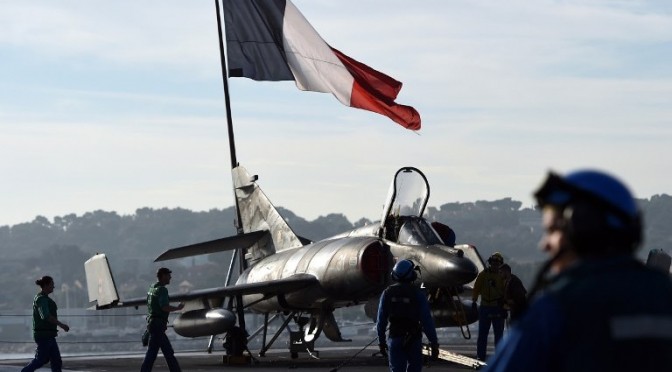
- Sam LaGrone, at S. Naval Institute News, shares two articles regarding the establishment of a Chinese military base near the Gulf of Aden as well as the French air campaign against ISIS targets in Iraq and Syria. The first article discusses the confirmation from U.S. Africa Command concerning the official formation of a Chinese forward operating base in Djibouti. The second article outlines the ongoing operations of a French carrier battle group stationed in the Mediterranean.
- Dave Majumdar, at The National Interest, explains the strategic and political consequences of Russia’s S-400 surface-to-air missile defense system being deployed to Syria in response to Turkey shooting down a Russian Sukhoi Su-24 bomber. In a second article, Mr. Majumdar describes the pair of Turkish F-16C fighters engaging the Su-24 bomber and analyzes the international response to the event.
- James Stavridis on Bloomberg Business explains the significance of the Turkish Presidential elections and the outcome it can have regarding alterations in the region’s balance of power. Additionally, ADM. Stavridis discusses the dynamics of the Syrian conflict and the requirement of both diplomatic efforts towards the Assad regime and united NATO military operations towards ISIS to stabilize the region.
- At The National interest, Ankit Panda describes major organizational changes within China’s Peoples Liberation Army. This restructuring intends to consolidate power throughout the hierarchal governance system within the army. Within the article, Mr. Panda also discusses institutional shortcomings concerning Iran’s ICBM development programs.
At CIMSEC we encourage members to continue writing, either here on the NextWar site or through other means. You can assist us by emailing your works to dmp@cimsec.org.
Sam Cohen is currently studying Honors Specialization Political Science at Western University in Canada. His interests are in the fields of strategic studies and defense policy and management.
[otw_shortcode_button href=”https://cimsec.org/buying-cimsec-war-bonds/18115″ size=”medium” icon_position=”right” shape=”round” color_class=”otw-blue”]Donate to CIMSEC![/otw_shortcode_button]
NORDEFCO Cooperation and the Russian Threat
The following piece by guest author Michael E. Lambert is from our partners at the CDA Institute as part of an ongoing content-sharing relationship. You can read the article in its original form here.
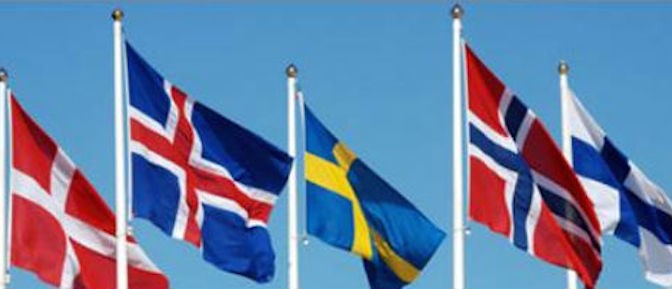
Military cooperation between Northern European countries has been difficult to implement, especially because of diverging interests among countries bordering the Baltic Sea. This unique space includes Russia and its military outpost located in the oblast of Kaliningrad, NATO members that remain outside the European Union (Norway), members of the European Union outside of NATO (Sweden and Finland), and finally both NATO and EU member countries (Denmark, Germany, Poland, Estonia, Latvia, Lithuania).
With the recent claim by Moscow to the United Nations of 1.2 million square kilometres of territory located on the Arctic sea shelf, and suspicion of getting ready for another hybrid war in Estonia, the Nordic Defence Cooperation (NORDEFCO) arrangement seems more essential than ever to thwart Russian ambitions on the Continent.
From a historical perspective, cooperation between countries in Northern Europe has always been problematic, due to the fragmentation of interests and resources committed to their respective militaries. Countries such as Sweden still claim a policy of neutrality, while seeing Finland as a buffer zone between Stockholm and Moscow. On its side, Finland has long been opposed to NATO membership, owing to continuing fear of reprisals from Russia, with which it shares a common border.
Norway still refuses to consider integration in the European Union, in order to continue to reap substantial profits by selling its oil to the EU, and sales profits are used to modernize its army. Norway therefore shows a higher military level compared to other Scandinavian countries, evidenced by the proposed acquisition of the Lockheed Martin F-35 fifth-generation aircraft, while countries like Finland attempt to optimize their smaller military budgets by exploring other options, like the Eurofighter or the Saab Gripen fourth-generation aircrafts.
These differences of equipment impede interoperability between Nordics. Also, identity is today one of the obstacle to ensure reliable safety against Moscow. For instance, Nordic countries are keen to become leaders in the field of cyber-defence, but NORDEFCO has always denied the participation of Estonia, which is the most advanced country in this field owing to its NATO Cooperative Cyber Defence Centre of Excellence in Tallinn. Although Estonia has many of the characteristics of a Nordic country, its candidacy was never taken seriously because of its occupation by the Soviet Union until 1991.
These issues explain the late launch of NORDEFCO in 2009, and even if the cooperation is presented as a way to improve security on the long run, the implementation is not so obvious and discussions still remain theoretical.
To date, it is unclear what would happen in case of potential Russian aggression. Indeed, the differences between all the countries in the North seem to be now a real issue. As an example, Finland may end up isolated due to its policy of neutrality. And NATO won’t be able to provide a coercive response by using the Article 5 of the Washington Treaty, in so far as Finland doesn’t realize that neutrality may no longer be the best option. Moreover, the refusal to include Estonia leaves Tallinn isolated vis-à-vis Finland, at a critical time when NATO has yet to find a way to counter hybrid warfare strategies.
In a rather paradoxical way, the launch of the NORDEFCO was presented as a way to enhance cooperation between countries with similar cultures and to build partnerships in the military-industrial sector. But this theoretical vision is now facing financial reality, as reflected by the military equipment acquisitions planned for the Royal Norwegian Air Force compared to that of the Finnish Air Force.
Moreover, the rejection of Estonia from “Northern Europe” shows a certain narrow-mindedness and lack of pragmatism in relation to the threat posed by Russia.
Like the current situation in the European Union, the lack of willingness to emerge as a single military power seems to be the biggest obstacle for Northern European military cooperation, abetted by their divergent national interests. Countries in the Northern part of Europe have the capabilities to give rise to the type of regional cooperation needed in the current crisis with the Kremlin, but have failed to develop a common vision despite their otherwise strong similarities.
Michael E. Lambert is a PhD student at the Sorbonne Doctoral College & University of Tampere, currently working at the French Ministry of Defence – IRSEM and Franco-German Institute on soft and smart power issues.

Russia Resurgent Week: The Conclusion
By Matt McLaughlin
The Russia Resurgent Topic Week took a big-picture viewpoint of Russia and its strategic choices – and that was perhaps a fortunate approach. With ongoing developments every day with Russian activities in Syria, anything more time-sensitive would have been quickly rendered moot by events.
These events are instructive, though, in the sense that shootdowns and other Russia-NATO incidents are far from unprecedented – it is not difficult to argue that the East-West relationship is simply returning to form. That said, 2015 is not 1985, and the Russian military, in particular its navy, will take a very different form than in the last period of such tense relations. Michael Kofman addresses this, recognizing that although Peter the Great would recognize the Russian strategic imperatives at work, the fleet itself will be oriented toward the green water more than the blue. Small ships with powerful missiles can exert substantial coercive force within their home region, while a small number of legacy platforms like Kirov-class battlecruisers can continue to project power and prestige.
Of course, Russia itself has more grandiose plans, as described by Sean MacCormac in a re-posted article from September about Russia’s new maritime doctrine. Notable strategic priorities are control of the Arctic, presence in the Mediterranean, and cooperation with India and China as means of protecting Russian interests. A great global force is envisioned to provide the operational means to achieve these objectives, though the realities of shipbuilding may intrude.
Patrick Truffer examines the future of Russia’s fleet in great detail, looking at the current structure and capacity for new construction. He assesses the Russian Navy as capable of projecting power globally, but only in a single operation on a limited time horizon. Ongoing activities in Syria are readily displaying limits on Russian logistics and its virtually non-existent amphibious lift capability. But don’t forget a Russian submarine force that remains potent at the strategic level.
Dmitry Gorenburg makes similar points about shipbuilding capacity, while adding more description of operational doctrine and a force structure to implement it. Universal vertical launch tubes filled with precision-strike anti-ship and land-attack missiles can be fitted onto many varieties of small combatants, as well as submarines. These form “the heart of Russia’s naval modernization” and provide the multi-role ships necessary for a credible regional threat.
Shifting gears, Vidya Sagar Reddy finds signs of Sun Tzu’s influence in Russian strategy. By behaving aggressively in widely-dispersed theaters such as the Pacific Ocean and Black Sea, Russia is putting its principle competitor – the U.S. Navy – off balance. This gives Russia the initiative and ability to strike when and where its enemy is weakest.
Robert C. Rasmussen introduces readers to one of the tools Russia has been using to unbalance its foes – Reflexive Control Theory. If applied doctrinally to strategic communication, Reflexive Control Theory helps Russia keep outside powers uncertain as to real Russian intentions and operations. The end result is to induce foreign powers to make decisions favorable to Russian interests. This obfuscation has contributed, most notably, to keeping foreign powers from intervening in Ukraine, and (to use the most recent news) is probably at work in Russian accounts of its Syrian air strikes.
Despite superficial success – they’re operating in the Med, right? – Ben Hernandez asks if Russian maritime strategy is in fact adrift. This essay, re-posted from August, notes the extreme mismatch between rhetoric about the future and capability to build it. This has been described in other posts this week, but Ben adds that Russia could easily “paint itself into a corner” if it continues down this road. With nuclear weapons as the most cost-effective means of destruction, their employment in a fit of bellicosity grows more likely when Russian conventional capabilities cannot deliver the desired effects.
Finally, our gaze shifts to the Arctic, which appears in Russian strategic planning and is the subject of two posts. Laguerre Corentin makes the case that, in contrast with the bellicose rhetoric described in prior articles, Russia is positioned to pursue its objectives through application of international law and custom. It has had success with this approach since Czarist days, and is likely to continue to do so as long as its interests align with such methods.
Providing further analysis of Russia’s role in the Arctic, we reprise Sally DeBoer’s contribution from August about rival nations’ claims to Arctic territory. She examines Russian claims of the North Pole and other parts of the “donut hole” of high seas at the top of the world, as well as competing claims.
And closing out the week is a graphic depiction of the Soviet fleet of 1990 compared with the Russian fleet of 2015, researched and designed by Louis Martin-Vezian. The scale of the work ahead if Russia intends to reach the maritime heights of 25 years ago becomes clear.
Some have said over the years that post-Soviet Russia was only relevant on account of its nuclear arsenal. This was merely an excuse to ignore it in favor of other things as we met the supposed End of History. The fact is, Russia is, well, Russia – and as long as people call that territory home, those people will have certain interests that are not going away. Read a map; read a book; read the news. This week’s discussions have certainly not provided all the answers on Russian resurgence, though we hope to have offered a meaningful contribution; but to ignore the discussion and downplay Russia as a relic of the Cold War is folly. Russia is right where we left it, and will continue to make its impact felt.
Matt McLaughlin is a U.S. Navy Surface Warfare Officer. His opinions do not represent the Department of the Navy.