Tag Archives: Counterinsurgency-COIN

Why the United States Won’t Need Troops in Afghanistan After 2014

U.S.-soldiers-returning-from-Afghanistan-300x198
U.S. soldiers board an Air Force C-130 as they depart Afghanistan. Image: U.S. Department of Defense

General Joseph Dunford, the International Security Assistance Force (ISAF) commander, recently told the New York Times that America’s “presence post-2014 is necessary for the gains we have made to date to be sustainable.” His reasoning was that although the Afghan National Security Forces (ANSF) are bearing the brunt of fighting, “at the end of 2014, [they] won’t be completely independent” operationally and logistically.

Since the Obama Administration is already considering either a “zero option”—whereby there will be no American troops after 2014—or an earlier withdrawal, General Dunford’s plea for America’s continued involvement in Afghanistan will not likely be taken seriously. For one, according to a recent Washington Post-ABC News poll, 67 percent of Americans surveyed believe that the Afghan War is not worth fighting. Moreover, the recent video conference between President Obama and President Karzai proved that their relationship has deteriorated considerably due to lack of trust and miscommunication.

bilde
A U.S. Army captain, center, speaks with an Afghan army officer, left, during a patrol break June 15 in Afghanistan’s Najgarhar province. (Sgt. Margaret Taylor/U.S. Army)

Yet, the issue of what the United States should do in Afghanistan is still intensely debated among foreign policy mavens. Dov S. Zakheim, a former Department of Defense official, argues that the “nature of commitment in absence of a troop presence” may deal a blow to ISAF’s nation-building efforts in Afghanistan, and may even take away “incentives” from the Taliban “to pursue talks with the Afghan government.” Ryan Evans, Assistant Director of the Center for the National Interest, also sees the strained relationship between the Obama and Karzai administrations as “a consequence of larger problems in the U.S.-Afghan relationship…[which] stem[med] from President Obama’s misprioritization of U.S. aims in Afghanistan.” While Evans does not rule out a settlement with the Taliban, he believes that it must be done in such a way that does not “obfuscate” America’s continued presence in Afghanistan past 2014 to contain terrorist networks and to provide stability in Af-Pak. To these arguments must also be added another possible “game-changer.” In the wake of Hassan Rowhani’s landslide victory as Iran’s new president, some foreign policy experts now envision a positive shift in favor of America’s primacy in the Greater Middle East, and to a lesser extent, its prosecution of the “War against Terror.”

Whatever the case may be, two things are clear. First, in the face of grim fiscal realities, the United States must fight smarter to contain terrorist networks. Second, the United States should allow the Afghan people to figure out for themselves how they want to live.

With respect to the first, the United States can successfully contain terrorist networks without massive troop presence in Af-Pak. In the face of drastic sequestration cuts in the upcoming fiscal years, it makes sense to work with whosoever will rule Afghanistan while adopting selective targeting of America’s adversaries. Thus, in addition to unilaterally employing SOF (Special Operations Forces) and UAVs (Unmanned Aerial Vehicles) to track and kill terrorists, the United States can establish a good rapport with the Taliban regime, assuming it maintains a power base, by “limiting Pakistani influence in Afghanistan.”

As regards the second, according to Afghan journalist Ahmad Shafi, Afghan people have, thanks in no small measure to the American occupation, become integrated into the global community and have, therefore, become more sophisticated and cognizant of global affairs. In fact, Shafi wrote in June that while the Western media likes to “embellish” the threat of an impending civil war, most Afghans “‘beg to differ en masse’ on the magnitude of threat posed…by a bunch of violent extremists, whose grim visions are so far away from the realities of today’s Afghanistan.” One reason for this “discrepancy” between Western media perceptions and those of Afghan citizens, according to Shafi, is due to “radically different” political dynamics at play whereby the warlords and the Taliban find it “increasingly difficult” to connect with the new generation of Afghan citizens most of whom are under the age of 25. Simply stated, it is too early to draw conclusions about the supposedly ominous fate awaiting our Ngo Dinh Diem in Kabul or ordinary Afghan citizens.

Despite the gloomy assessment by General Dunford that the United States needs to extend its troop commitment past the 2014 deadline, there is little reason to worry. True, as Zachary Keck argues, “there are no ideal conclusions to the Afghan conflict available” at present. Nevertheless, the much-feared Taliban takeover may or may not take place. And even if the Taliban successfully returns to power, one way or the other, the United States can work with the fundamentalist regime to contain the international terrorist network. As to the now-common comparisons between a possible Taliban takeover and those of the North Vietnamese and Khmer Rouge victories in April 1975, only time can tell how the events will unfold. In the end, no matter the outcome, the Afghan citizens, as with Vietnamese and Cambodians before them, will sort out their own fate.

This article was originally published in its original form in the Georgetown Journal of International Affairs and was cross-posted by permission. Read the original post here.

Jeong Lee is a freelance international security blogger living in Pusan, South Korea and is also a Contributing Analyst for Wikistrat’s Asia-Pacific Desk. Lee’s writings have appeared on various online publications, including East Asia Forum, the Georgetown Journal of International Affairs and the USNI Blog.
Anecdotal Economics from the Long War

Our nation is closing its chapter on the Long Wars as 2014 approaches. While there will be no single demarcation of when we become a “nation at peace”, we will settle into the same minimal focus and consciousness (if we are not there already) regarding Afghanistan as we did in Iraq when a no-fly zone was enforced for more than a decade following the Gulf War. I do not yet wish to comment on the national reflection that needs to take place, but in terms of military science I believe our introspection is flawed. Many studies and after action reviews have been undertaken examining generic trends or qualitative assessments, but very few have examined the input/output efficiencies that were or were not achieved by units, systems, and methods. It’s reasonable that such studies cannot be expected to be coldly objective in their analysis while active combat operations are ongoing. Never the less, there will be no “Victory over the Long War Day” which clearly marks the end of war and the start of peace, so a more robust critical analysis can not wait till there is no more emotion associated with our recent wars. Below are the least efficient input/output trends that I observed from my brief service in our Long War. These are my own, and derived only by my own anecdotal experience.

At what cost this noble mission?
                                                A noble mission – but at what cost?


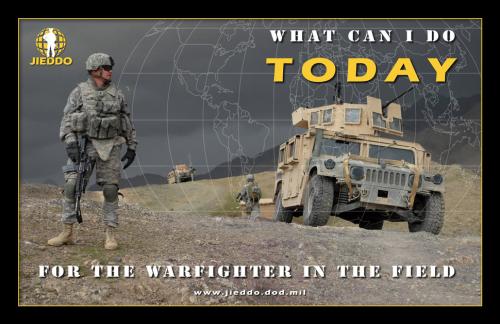
1.Counter-Improvised Explosive Devices (IED): By this I mean the big government counter-IED response, of which the Joint IED Defeat Organization (JIEDDO) is the prime example. This is an emotional topic for many, including myself, as friends of mine were killed by such devices – devices that are not new technologies that emerged in Iraq and Afghanistan, as many have portrayed them. The big government/higher headquarters response to Counter-IED might represent one of the worst returns on investment in annals of American war. When organizations such as JIEDDO consume vast swathes of money, the outlay is assumed to have achieved the effect of decreasing casualty incidents from such devices. However, such spending has actually had negligible results decreasing the harm caused to our forces. The past few years have seen millions more  spent on high-tech counters to IEDs while the devices themselves are becoming cheaper and wounding or killing more of our forces. Anecdotally, for all the amazing technology I witnessed and/or used while in Afghanistan, solutions that were top-down or directed from high-level headquarters generally had much less impact on preventing casualties than those that were bottom-up. Fantastic technology had the same results as very basic know-how applied by 19-year-olds facing death, and contained decreased opportunity costs from draining huge coffers of money to address simple tactical problems. The data sets surrounding the issue are very difficult to comprehensively discern, as we are measuring the safety of our troops, and the spillover effects of some of the work taken by organizations like JIEDDO is likely large. But in aggregate it is hard to argue that we have not spun ourselves in circles looking for a technological answer to an eternal human problem of warfare.

IEDs are, and will remain, a weapon that leverages a stronger force’s weaknesses against it. Planning to counter them in way that seems more in line with nuclear deterrence or research into ballistic missile defense seems to be a misplaced strategy. Historically there have been many examples of emerging technologies or tactics used by foes to exploit a gap in our own equipment or tactics, but we have traditionally let forces and commanders find the best way to meet those advances. Outsourcing much of the solution to large, bureaucratic organizations is not an “Occam’s Razor” solution. Money spent creating force fields more akin to Flash Gordon than Sgt Rock would have been better utilized providing realistic training for units, enabling commanders to address problems in their areas of operations according to their judgment, or, sadly the most radical suggestion for the DOD, saved for the rainy fiscal day that is upon us.

2. Growth in Networks: Inefficiency has also formed due to the gap between the vast growths in network capability of the U.S. military compared with its human processing ability. IT and communications technology allowed the U.S. military to enter into the Long War with an unparalleled ability to sense, collect, and distribute data. The largest problem is that our human processing ability – the capability to process such data into tangible and useful results – has not caught up. I was amazed as to what an infantry battalion in Afghanistan had at its disposal in terms of networks and databases, but disheartened when I tried to pull meaning out of those same networks and databases. Simply put, there has been a glut in the supply of information provided by networks and our cognitive demand has not caught up.

Commanders are shown amazing examples and case studies of networks helping find a bad guys, save a patrol, or magically reveal what an insurgent will do. In all these examples it seems as if Apple designed our systems, and upon a few clicks of the mouse the answer will appear. Generally such outcomes occurred when there was a merging of the right person/people, events, knowledge, and required training. Such a confluence was a rare occurrence, and to raise expectations that they were common is irresponsible and shows expectation bias by allowing the cherry picking of results to justify larger, more complex systems. The most critical ingredients to cook up the perfect network-enabled operation – training and judgment – are the most difficult to inculcate in the 18-22-year-olds using the systems. It is true we need graduate-level thinking in our warriors to conduct counter-insurgency (COIN), but saying we need it and providing the time necessary to obtain it are two very different things.

"Let me just make sure I've tagged everyone in this photo...."
“Let me just make sure I’ve tagged everyone in this photo….”

We can continue to build more intricate networks which add raw capability but little meaning to our command and control capabilities. I would argue the best network is not the most complex, but rather the simplest one that works the most consistently – a model our enemies seem adept at constructing. Increasing the training, judgment, and processing capacity of our forces will yield better results than expanding our digital tendrils past the point of diminishing returns of our collective nervous system. Revising our acquisitions process would help, often it seemed that new systems were shot out at the rate of how long it took a defense contractor to impress a flag officer instead an actual need occurring on the battlefield. A vetting system that involves more widespread testing at the lower ranks, and contracts which are easier to get out of if the product does not live up to expectations, could prevent debacles from seemingly simple requests that get turned into unstoppable hydras.

3. The Deification of COIN: I will preface this comment by saying that I am not a COIN naysayer who thinks that the U.S. military should only be prepared for larger force-on-force engagements a la Leyte Gulf or Kursk. I believe that the kit bag of any global power should be contain the forces necessary to interdict conflict at the low- and medium-ends of the spectrum, or before it begins. History proves that most of America’s wars have been low-intensity conflicts.

That being said there has been a fetishization with COIN, and it more proportionally affects junior leaders like myself. COIN takes much skill, has a limited bandwidth of applicability, and will always be best when its strategy comes from those closest to its application. But such characteristics are not likely to apply if high-intensity conflicts occur.

Our current rebalance to the Pacific is based on the likelihood for fast, large-scale, and highly violent conflict. Such a conflict will weigh heavily on junior leaders, but not in the way they are used to. They will have to rely on senior leadership to coordinate and enable their actions, because without strong, decisive higher headquarters guidance a danger of the second coming of Task Force Smith exists. While deployed in the hinterlands of Helmand, many lieutenants had to craft their own guidance and operate with the slimmest of intent. The vast majority did so well; they also came away from the experience rightly confident in their abilities and skeptical of the perspective higher headquarters had. In a vast ocean and littoral battlefield, those same independent operators will have to accept the fact they will not see the whole picture. Our forces have done extremely well fighting over long tours interspersed with moments of violence, but have had more limited exposure to highly kinetic battles that take place over months and require management of rates of fire, triage, and difficult decisions about weaponeering. Most of the choices were easy in a COIN fight, as the majority of the time the decision was always not how to use the most force but how to use the least. While the strong experiences that have been formed over the past ten years of small unit actions are priceless, it must not be treated as sacrosanct in all circumstances. Future junior leaders may not be in command of the lone patrol base for miles, or if they are, they might only be effective if they are aware of the fight going on at higher levels. We have rarely been able to choose our wars, and even when we do the enemy casts votes that are rarely predicted. Raising an officer corps to worship at the altar of COIN is no healthier than those who refused to accept COIN’s viability in the early stages of Iraq and Afghanistan.

There are enormous amounts of knowledge to be extracted from the previous decade of war, and efforts to refine that knowledge into a powerful, efficient fuel that can power our military to train for future conflicts needs to occur as a logical study of our efficiencies. We have had many qualitative accounts of battles and campaigns that have aptly described what was or was not done. There have not been as many quantitative studies of what provided the most for the least cost. Such an examination will be boring, and necessarily ignorant of the emotional side of our conflicts, but is required as it will be best way to extract meaning that will be useful in future wars.

About the Author: Chris Barber is a Captain in the United States Marine Corps. The views presented here are his own and not official policy of the USMC, DOD, or United States Government. They also are insanely clever for a gentlemen educated in public school that might not be able to spell COIN if not for spell check.

Game of Marines

The Left...
                                     The Left…

Pop culture cannot seem to escape the allure of dragons and white walkers, as HBO’s Game of Thrones (GoT), based on the book series A Song of Ice and Fire by R.R. Martin, has enthralled millions. On the face of it the fictional setting of Westeros bear little resemblance to that in which the Marines traditionally operate (commercials not included). However, examining that world, and in particular the fate of two of its warring factions, provides interesting insights for current Marine Corps issues. Both groups, despite their seemingly polar opposite nature, are at critical junctures and face decisions as to how they will conduct operations in the future – offering alternative frameworks that I believe improve upon the “middleweight” force that the Corps seeks to become.

House Greyjoy (motto: “We do not sow”) could reasonably be classified as Westerosi Marines. They are a small, intensely martial, and overwhelmingly amphibious force that has little trouble succeeding tactically, but do not always employ their forces with deep strategic foresight. They are relatively poor when compared to other noble houses, and, without large lands to farm or grow on, rely on their raiding abilities and superior military skills. The correlation with many current and historical USMC trends is readily apparent. Importantly, the “Ironborn,” as they are known, make several strategic errors when they decide to stretch their force and capabilities over a large band of conflict by taking large fixed defense castles while simultaneously raiding along the coastline.

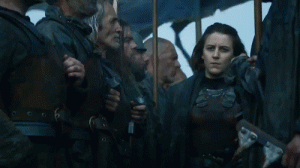
A different group from the series is the “Brotherhood without Banners,” an insurgent group made of deserters, POWs, and other flotsam from the horrible conflict driving the story’s main narrative. These men and women unite under a radical new philosophy that rejects many of the “truths” the lands’ lords hold. They are quite successful at insurgency using methods that refuse to acknowledge the rules governing other forces’ military action, and are keen trainers of indigenous forces. Their doctrine comes only from what they have learned by blood and conflicts with the conception of warfare held by elder kings and knights. They have skills of proven utility, but it is unclear as the series now stands how the brotherhood will parlay those skills into victory in a changing conflict.

I highlight these two fictional accounts to bring to light what I consider to be the main challenges facing the Marine Corps. Will the Corps steam fully ahead into its self-proclaimed “middleweight” future and retain the hard-won lessons of 10 years of insurgency combat? Will it regain its slightly rusty amphibious roots to meet the strategic needs of our Nation? Or, will it just be a group of raiders who have little ability to affect change across the shoreline? These are all questions the Marine Corps is currently grappling with, and I offer a few observations within the GoT analogy.

Both the Brotherhood and Ironborn suffer – not when they leverage their core competencies, but when they venture outside of them. The Ironborn repeatedly face disaster when they decide to commit to larger, set-piece battles with land powers where they incur strategic losses. The Brotherhood would be better served by raising indigenous forces that can help give those who have suffered the most from war a chance at self-security rather than relying on the major houses to try and supplement their fighting abilities, as they try to do as they move south. The Brotherhood is also at risk of a lack of a coherent strategic vision, fighting only against what exists rather than spelling out a vision of their own.

Back in the real world, the Marine Corps is progressing back to its Ironborn origins by returning to its amphibious roots. This return is irrefutably necessary as the worry of many Marines is that recent events have turned the Corps into a second land army. But many of its junior leaders are equally worried the lessons they paid for in blood will be forgotten as they were after previous wars. Vital capabilities to train indigenous forces, conduct preemptive counter-insurgency (COIN), and use a light footprint to get to the “strategic left side of boom” will increasingly be at risk as more Marine Corps “meat and potato” deployments take the place of COIN operations. Our advisor capability (read: Brotherhood without Banners) is unlikely to go away completely, but it is not likely to receive the same emphasis it has had over the past few years.

Likewise, the stretching nature of a “middleweight” force seems to necessitate straddling a larger spectrum of conflict than focusing on one or two Marine Expeditionary Brigades (MEB) denied entry operations. Middleweight fighters are multi-use. But they are also slow when going up against lightweights and unable to throw knockouts against heavyweights. By shooting for the gap between “small” SOF and “big” Army are we searching to find a rationalization instead of focusing on what we have done successfully? I see this problem as similar to the Ironborn deciding to commit to taking the stronghold of Winterfell and other lands, while still conducting coastal raids, and thereby doing neither well.

...and Right Sides of "Boom."
                      …and Right Sides of “Boom.”

I propose that the Corps refocus on amphibious operations, but primarily towards kinetic denied entry operations at the Marine Expeditionary Unit (MEU) level or higher. With this capability available, our secondary effort should be towards robust engagement vis-a-vis security cooperation, advisor capability, and retention of the lessons from COIN. A “middleweight” force is inherently focused on numbers and end strength – but this is only one consideration of organizing for future conflicts. An alternative framework would be to focus the Corps’ composition on time-based crisis response, with advisor formations to prevent conflicts and larger elements strictly focusing on highly kinetic operations at the beginning of those conflicts that do erupt. This framework would allow Marines to better focus training, equipment tables, and procurement. Operational units would be designed for long-duration advisor missions or kick the door into highly kinetic situations before letting larger Army units take over. Many might say that is or should be USMC doctrine, but a look back at the past ten years of war contradicts such a statement.

I highlight again the faults of the Ironborn in focusing on the tactical considerations of what they could capture and how, and not paying attention to the political aspects of the conflict around them. One tactical commander, Theon Greyjoy, thought that by taking Winterfell as quickly as possible his force would secure a great victory, when in fact they only rushed themselves into a strategic dead-end. A di-polar force that is focused on when to respond in a crisis allows us to focus on our historic strengths while not losing our recent capabilities. The Marine Corps must strive to think of innovative approaches to these challenges so we do not become the tactically successful, but strategically insignificant Brotherhood, nor, the operationally brilliant but strategically harebrained Ironborn as we navigate our real-world military problems in light of a coming fiscal winter.

Capt Christopher Barber is an officer in the U.S. Marine Corps who has deployed twice to Helmand Province, Afghanistan. The views expressed above are solely those of the authors and do not necessarily represent those of the U.S. Marine Corps, the Department of Defense, or the Center for International Maritime Security.