Tag Archives: China

A Cyber-Information Operations Offset Strategy for Countering the Surge of Chinese Power Pt. 2

The following is a two-part series on how the U.S. might better utilize cyberspace and information operations as a Third Offset. Part I evaluated current offset proposals and explores the strategic context. Part II provides specific cyber/IO operations and lines of effort. Read Part One here.

By Jake Bebber

Targeting China’s ability to control information is an efficient means to offset Chinese power. To be effective, the United States should adopt a “whole of government” approach, leveraging cyberspace and other information related capabilities that can hold China’s domestic internet filtering, censorship, and information dissemination capabilities at risk. This campaign should operate across the entire spectrum of conflict and engagement, from public diplomacy and strategic communication, to battlespace preparation, limited conflict, and if de-escalation is unsuccessful, full-spectrum military operations. It will likely require coordination and administration at the highest civilian leadership level. This will be a long-term campaign aiming to counter China during the critical window in the next ten to twenty years when Chinese economic and military power will surge, and then subside as demographic factors limit its growth causing China to enter into a period of decline and inherently shifts its focus inward to to maintain stability.

The United States will have to address three broad issues: access, authorities, and capabilities. Internet access into China is restricted from the outside, and it is reasonable to assume that during a period of rising tensions or even conflict, traditional means of accessing China’s “red space” (civilian, military, and government networks) will not be available. The U.S. will need alternative avenues into Chinese networks, which may take the form of radio frequency injection into wireless networks (Bluetooth, WiFi and WiMAX)[i] to other methods targeting the physical and logical network layers and cyber-persona layers[ii] of cyberspace for preplacement of access.

Figure 1. The Three Layers of Cyberspace[iii]
The Three Layers of Cyberspace [iii].

The authority of the U.S. government to operate in cyberspace crosses boundaries and jurisdictions, and largely depends on the function of the agency or entity. Traditional military activities conducted by the Department of Defense are covered under Title 10 of U.S. Code, with the principal being the Secretary of Defense. Other titles supporting cyberspace operations include foreign intelligence collection (Title 50), domestic security (Title 6), law enforcement (Title 18) and government information technology security and acquisition (Title 40).[iv] These authorities will have to be aligned and deconflicted.

The capabilities required run the spectrum. They can include fully attributable on-net operations, such as a Foreign Service Officer participating in an online forum or social network to communicate U.S. policy, to the development of tools and malware that can degrade and disrupt command and control networks. Other possibilities include the distribution of encrypted personal communication devices and unattributable social media and organizing applications that permit dissident groups within China to maintain situational awareness.

There have been attempts to respond to China’s growing Internet censorship capabilities by those in the telecommunications industry and by the U.S. government. The Global Network Initiative was started in 2008 by industry, civic organizations, and universities to “promote best practices related to the conduct of U.S. companies in countries with poor Internet freedom records.” In 2011, the President issued the “International Strategy for Cyberspace.” Its goals include “enabling continued innovation for increasing economic activity, increasing individuals’ ability to communicate with one another, safeguarding freedom of expression, association, and other freedoms, and enhancing both individual privacy and national and international security.” The U.S. Department of State includes Internet freedom as a part of its global human rights agenda. In 2006, State formed the Global Internet Freedom Taskforce which later became the NetFreedom Taskforce, to coordinate State Department efforts monitoring Internet freedom. Both the State Department and U.S Agency for International Development have received funding for the development of Internet censorship circumvention technologies, training of non-government organizations and activists, media assistance, and leading international policy formulation on Internet freedom.[v]

The Broadcasting Board of Governors, which oversees the Voice of America (VOA) and Radio Free Asia (RFA) programs, also supports counter-censorship and circumvention software development and distribution. The VOA sends daily emails to “8 million Chinese citizens … with international and domestic news stories as well as information about how to use proxy servers.” The RFA has implemented the Freedom2Connect program to “research, develop, and deliver online tools for Internet users in China to securely browse online and send secure e-mail.”[vi]

While important, the current response by industry and government lacks both the senior policy coordination required of a grand strategy or adequate funding to keep up with China’s growing Internet monitoring and censorship capabilities. They do not fully leverage other assets and tools at America’s disposal. The U.S. can and should be doing much more to attack China’s critical vulnerabilities in information control.

Lines of Effort

Public Diplomacy – At the interagency level, the United States should continue pursuing bilateral, multilateral, and international agreements such as those mentioned above which promote freedom of information, expression and freedom from government oversight and censorship. The U.S. should also continue to strengthen international regimes against cybercrime and intellectual property theft. Internet norms and rules should be standardized across political boundaries where practical. This diplomatic effort ties into longstanding American policy of supporting freedom of speech and protection of universal human rights.

Economic Policy and Trade – Here again, longstanding American policy supporting property rights and free trade legitimize the continued advocacy of international agreements and accords promoting freedom in cyberspace. At the same time, the U.S. must tighten technology export controls to nations like China that continue to restrict access. In the event of industrial espionage or even cyber-attack, the U.S. can impose real economic costs and sanctions. The U.S. can also move on the Global Online Freedom Act, which would, among other things, prohibit U.S. companies from cooperating with foreign governments that engage in censorship or human rights abuses, require the U.S. Trade Representative to report on trade-related issues that arise out of a foreign government’s censorship policies, and impose export controls on telecommunications equipment that can be used to carry out censorship or surveillance.[vii] Some of these provisions can be waived when it suits American interests. In other areas, the U.S. can also promote public cybersecurity regimes, such as international risk insurance tools and accreditation that encourage network protection and hardening in the private sector.

Strategic Communication – In modern war, the actions of a single Soldier, Sailor, Airman or Marine can have a far-reaching impact on national strategy. While this is often used to highlight the potential implications of an untoward or controversial event, the reverse also holds true. The actions of every member of the U.S. government, from Foreign Service officer, embassy staff and humanitarian assistance officer to those of the military can have an equally positive impact if the appropriate messages are coordinated and timed to unfolding events. The United States should expand strategic communication tools such as Radio Free Asia and Voice of America. Using new capabilities in cyberspace and in personal communications, a comprehensive program of unbiased news delivery and strategic messaging to the Chinese public on a much larger scale can, over time, provide alternatives to Chinese government propaganda. Not to be forgotten, approximately two million Chinese visit the United States each year as tourists[viii], and around a quarter of a million Chinese students attend college in the U.S.[ix] Each visitor and student represents an opportunity for engagement.

Cyberspace Operations – Being able to deliver effects in and through cyberspace to China is a question of both access and capabilities. China has one of the most robust and sophisticated information control systems in the world, with multiple internal security and military organizations and tens of thousands of Chinese working daily to censor communications and filter access within China and between China and the world. Network penetrations and preplacement access generation needs to occur now, during peacetime, and continue throughout in order to assure capabilities can be delivered when needed. The fact is that when tensions escalate and China erects more firewalls, penetration becomes that much more difficult, if not impossible. This leaves military commanders and policy-makers little choice but to revert to traditional kinetic tools to dissuade Chinese aggression – exactly the scenario they hope to avoid – and plays to China’s strengths. Developing multiple access vectors now with the capability to hold at-risk, at a time and place of our choosing, information control systems in the long run represent an efficient means of directly attacking China’s most critical vulnerability and holding the Communist Party’s political control at risk. This represents an asymmetric counter to China’s growing A2/AD capabilities, and is a far more efficient and economical alternative.
bebber1
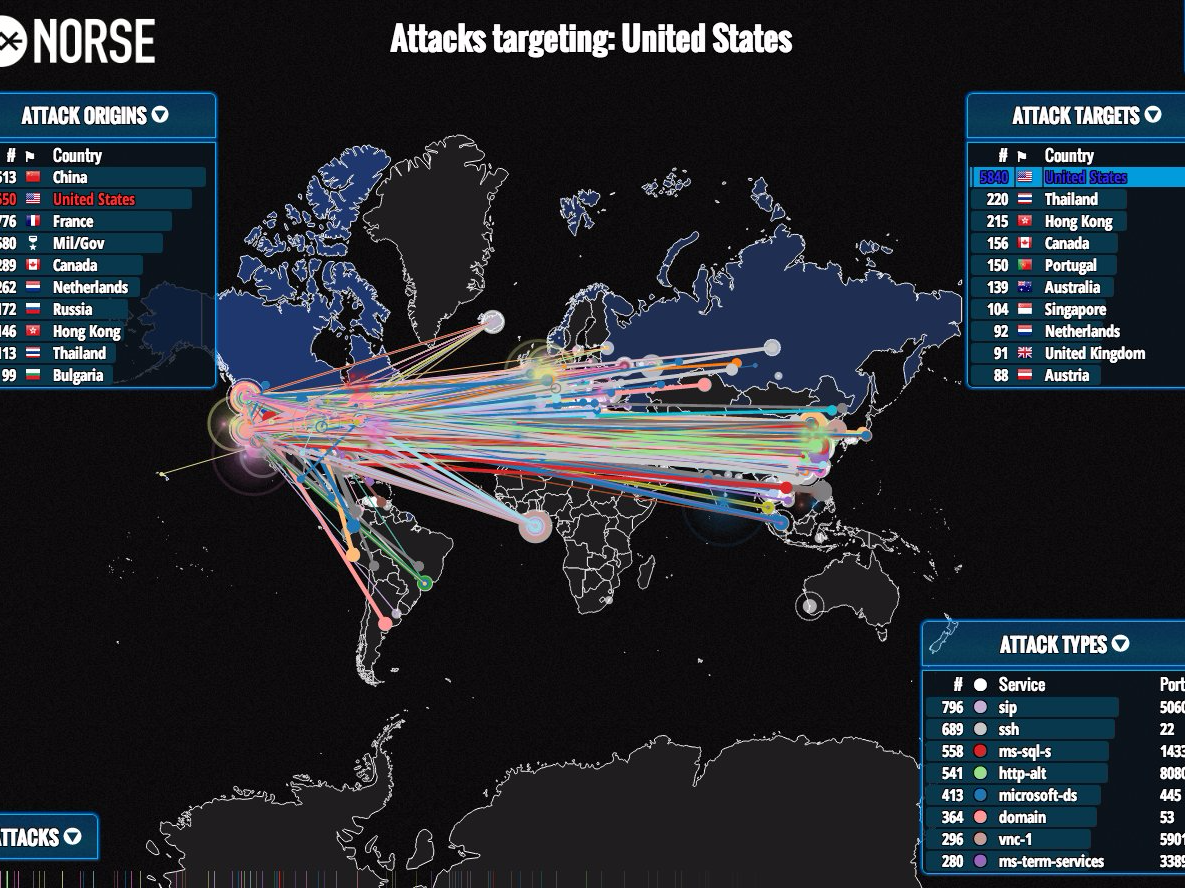
A snapshot image of cyber attacks. Source: Norse Corp.

Cyberspace operations reside on a continuum, sometimes offensive, sometimes defensive and sometimes both simultaneously. At the same time the U.S. is developing access vectors and tools to exploit China’s information control systems, it must also harden its own military, government, and civilian critical infrastructure networks. Research suggests that improving cyber defenses limit incentives to infiltrate networks for espionage, intellectual property theft, or cyber-attack. A resilience model should be adopted. Instead of building “cyber walls” using a traditional warfare model, cyber defense should model biological systems that can adapt and recover. Systems can be designed to turn the table on intrusions, misdirecting them down false alleys or “sinkholing” them in so-called “honeypots” for study. This can even be effective in passing back false information or simply causing the attacker to waste time and resources chasing phantoms.[x] On the offensive side of the continuum, experts like retired Army Lieutenant Colonel Timothy Thomas see the development and fielding of 13 offensive cyber warfare teams as significant. According to him, the Chinese “now know we are ready to go on the offense. There’s something that’s been put in place that I think is going to change their view.”[xi]

Clandestine Action – Due to the difficulties in acquiring and maintaining access in closed networks, the United States will have to undertake clandestine efforts, both in cyberspace and through traditional means. Policy makers should be careful, however, not to be lulled by the lure of technologically-based cyberspace operations as the preferable alternative to traditional human intelligence operations. While the U.S. is right to continue to pursue advances in unmanned vehicles, radio-frequency and electro-magnetic operations, and space-based computer and communication operations, obtaining and maintaining access  in many cases will require mixed-mode penetration: human and cyber action. Cultivating human sources to gain insight into leadership intentions, network configurations, and potential areas of exploitation remain a critical part of a broad information operations campaign. As China continues to pursue clandestine operations against the U.S., both to gather traditional intelligence and to enable their own cyberspace operations, our own counter-intelligence and cyberspace defense capabilities will become that much more important.

These lines of effort will have to be synchronized in a mutually supporting effort. Public diplomacy and strategic communication can be enabled in and through cyberspace. Clandestine action may be required to obtain and maintain access to critical networks. Economic incentives, technology export controls and sanctions will play critical roles at times to advance America’s interests to degrade or disrupt China’s information control systems.

It will be necessary to develop options which degrade China’s information control capabilities incrementally while preserving significant reserves. Historically, this has been especially tricky. Past experience, such as the Vietnam War, suggests that the incremental application of force with too fine of control tends to condition the adversary rather than compel the adversary. The U.S. will need to be able to send “warning shots” that indicate to the CCP that we possess capabilities that will cause them to lose control entirely and threaten their hold on power, allowing the U.S. to prevail. Of course, given that many cyberspace and IO capabilities are perishable once used, the U.S. will need to maintain a host of capabilities able to be delivered across multiple vectors and times and places of our choosing.

One must be mindful that while China’s information controls systems are a critical vulnerability, they are not a gateway to the overthrow of the CCP and the establishment of a democratic government, at least not right away. Data suggests that the vast majority of the Chinese public who utilize the Internet and social media are quite happy with the amount and variety of content available. Only about 10 percent use the Internet for political purposes with the remainder, like their American counterparts, using it for entertainment and socializing.[xii] Therefore, strategic messaging will have to be much less overt and subtler.

We should utilize the natural advantages the U.S. has in the entertainment and public relations world to encourage the public to put pressure on the government gradually, perhaps not directly in the political sphere but rather on natural fissures and tensions already resident, such as corruption, mismanagement, ethnic strife, uneven development, environmental degradation, and the growing wealth gap in China. Consider the recent effort by the U.S. Department of State to publicly highlight air quality in Beijing, resulting in embarrassment as well as change in China’s environmental policies.[xiii] Similar efforts, both public or through providing covert support to internal groups in China, would hopefully have similar impact. The goal will be to keep the CCP looking inward, concerned about social stability, rather than outward, projecting power.

To be successful, it will be necessary to understand at the highest level of detail possible not only the technical aspects of China’s information control apparatus but also its command, control and communication pathways, chain of command, and decision making calculus. Technical intelligence requirements would include network configuration pathways, router and server equipment models, operating and surveillance software versions, administrative controls, wireless hot points and air gaps and fiber network systems. The U.S. will need to know which agencies and bureaucracies are responsible for various kinds of surveillance and what their resident capabilities, gaps and scope of responsibility is. It would be helpful to identify key personalities and understand the resource competition between them in order to exploit them. We need to know how commands are passed down from leadership to operators, and if it is possible to deny, degrade, and in some way get in the middle of those communication pathways. We will also need to know the decision calculus of the Central Standing Committee. What will cause them to want to tighten control, or perhaps better yet, what might they simply ignore? This is certainly not an exhaustive list of intelligence requirements, but gives a sense of the kinds of information that a successful strategy will require.

China’s Response

In war, the enemy gets a vote, so policy makers and military commanders must carefully consider and “wargame” China’s response to a U.S. effort threatening its information control systems. By doing so, the U.S. can better prepare courses of action that counter potential Chinese responses. Traditionally, planners will break down adversary responses into two categories: most likely and most dangerous.

China’s responses are naturally shaped by their historic understanding of their place in the world, and especially the recent “Century of Humiliation” and the role that historical grievance plays in this understanding.[xiv] Attempting to shape the CCP’s ability to control information within China has a direct impact on the regime’s need to mobilize popular support in times of crisis or even war. The CCP has come to realize that “it cannot simply demand compliance and access to materials, people or facilities” as it probably once could during the days of Mao Zedong. The CCP and the PLA have undertaken “a systematic attempt to plan for mobilization, integrating it into economic development.”[xv] This planning includes “information mobilization” due to the “central role of information and information technology, especially in the context of informationized warfare.”[xvi] The various activities proposed here to attack critical vulnerabilities in China’s strategy should be viewed by policy-makers on a continuum of escalation. Public information campaigns highlighting air quality in Beijing will annoy the CCP in a much different way than denying China the ability to filter Internet content or threatening regime legitimacy.
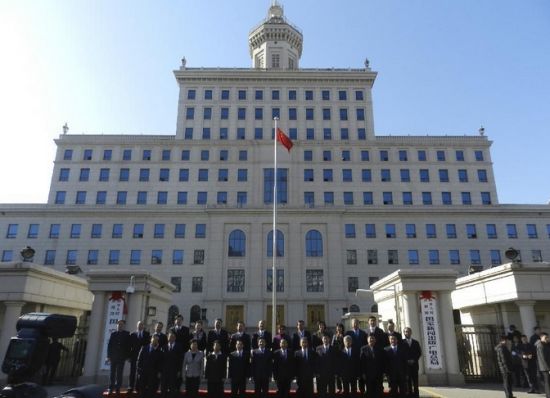
March 22, 2013: Staff members of the newly-merged State General Administration of Press, Publication, Radio, Film and Television pose for group photos during a ceremony to hang the new nameplate in Beijing (Photo Credit: Xinhua/Wang Zhen).
March 22, 2013: Staff members of the newly-merged State General Administration of Press, Publication, Radio, Film and Television pose for group photos during a ceremony to hang a new nameplate in Beijing (Photo Credit: Xinhua/Wang Zhen).

China’s most likely course of action will be to continue to “plug the gaps” that any U.S. program creates in their information control system. This is a beneficial byproduct since the Chinese will continue to expend time and resources with an inward focus, possibly diverting some of its effort away from cyber espionage, or change its focus of cyber espionage from intellectual property theft to countering U.S. efforts. It will continue to partner with “like minded” regimes such as Russia, Iran, and Venezuela, perhaps targeting U.S. allies in Asia, Africa, and the Middle East, to advance an alternative international rule set and standard. China’s “Internet Agenda” will continue to focus on international recognition of state sovereignty over cyberspace, a global internet regulatory scheme that targets cybercrime and terrorism (with sufficiently vague definitions of “crime” and “terrorism” to allow for maximum latitude), and the legitimate role of the state to remain the “gatekeeper” to their country’s access to the internet.[xvii]

We can surmise what effect this strategy might have by examining world events and how the PRC responded when it felt threatened by internal pressures. For example, China has had a difficult relationship with some Muslim nations due to persecution of Uighurs in Xinjiang province. The recent decision by Thailand to repatriate nearly 100 Uighurs back to China was met with harsh criticism from the United Nations Refugee Agency and the international non-governmental organization Human Rights Watch. Reporting suggests that Beijing may have pressured Bangkok, and Chinese persecution has strained relations with Turkey, which has both ethnic and religious ties to the Uighurs in Xinjiang.[xviii] In September of 2014, Ilham Tohti, an economics professor and member of the CCP, was sentenced to life in prison  by a Xinjiang court for “inciting separatism” and inviting “international opprobrium,” according to Georgetown University professor James A. Millward.[xix]

China’s continued crackdown on Internet access appears to be having a direct impact on business and foreign investment, according to surveys conducted by the European Union Chamber of Commerce in China and the American Chamber of Commerce. Respondents noted that foreign firms feel “less welcome,” poor air quality makes it harder for firms to recruit executives, and that recent regulatory enforcement campaigns “target and hinder foreign companies.”[xx]

These two examples – internal repression, censorship and the impact on international relations and foreign investment – expose vulnerabilities in how China chooses to stem threats, which come at a cost to China. Therefore, we have insight into how proposed information activities which parallel previous events might look and the anticipated costs. A Cyberspace/IO Offset targeting China’s information control systems can be expected to result in more extreme or diverse efforts to clamp down on information and economic exchange, perhaps ratcheting up internal dissent or imposing economic costs as foreign investment slows.

Conclusion

By targeting China’s information control system, the United States can directly attack China’s most critical vulnerabilities and weaken its center of gravity, the Chinese Communist Party. By placing these controls at risk, PRC leadership will come to believe that their hold on power and ability to maintain domestic harmony is in jeopardy. This will permit the United States to effectively and efficiently counter Chinese power during a critical window of the next ten to twenty years, when demographic and economic headwinds will cause China to enter a period of decline.

A whole of government approach is often advocated but exceedingly difficult to execute in our federal system. The strategy will require careful coordination and long-term vision, two capabilities that Western democracies are notoriously deficient in. Due to the nature of the strategy, lines of effort and operations can become quickly compartmentalized in classified channels, which will make coordination that much more difficult. Importantly, much like the policy of containment against the Soviets, it will require buy in from across the political spectrum, also no easy task.

Ultimately, a Cyberspace-IO Offset permits the United States to leverage its unique advantages, both technological and historically ideological, to attack China’s critical vulnerabilities asymmetrically. Despite the challenge this strategy poses, the U.S. has shown historic resiliency and proven adaptability in the past, and the present is no different.

LT Robert “Jake” Bebber USN is a Cryptologic Warfare Officer assigned to United States Cyber Command. His previous assignments have included serving as an Information Operations officer in Afghanistan, Submarine Direct Support Officer and the Fleet Information Warfare Officer for the U.S. Seventh Fleet. He holds a Ph.D. in Public Policy from the University of Central Florida. His writing has appeared in Proceedings, Parameters, Orbis and elsewhere. He lives in Millersville, Maryland and is supported by his wife, Dana and their two sons, Vincent and Zachary. The views expressed here are his own and do not reflect those of the Department of Defense, Department of the Navy or U.S. Cyber Command. He welcomes your comments at jbebber@gmail.com.

[i] George K. Kostopoulos,  Cyberspace and Cybersecurity. (Boca Raton, FL: CRC Press, 2013).

[ii] Joint Publication 3-12 Cyberspace Operations defines the Physical Network Layer as “comprised of the geographic component and the physical network components. It is the medium where the data travel;” the Logical Network Layer as consisting of “those elements of the network that are related to one another in a way that is abstracted from the physical network, i.e., the form or relationships are not tied to an individual, specific path, or node;” and the Cyber-Persona Layer as “the people actually on the network. Cyber-personas may relate fairly directly to an actual person or entity, incorporating some biographical or corporate data, e-mail and IP address(es), Web pages, phone numbers, etc. However, one individual may have multiple cyber-persona, which may vary in the degree to which they are factually accurate. A single cyber-persona can have multiple users.”

[iii] Joint Chiefs of Staff. Joint Publication 3-12 (R): Cyberspace Operations. (Washington, D.C.: Department of Defense, 2013).

[iv] Joint Chiefs of Staff. Joint Publication 3-12(R): Cyberspace Operations.

[v] Thomas Lum, Patricia Moloney Figliona, and Matthew C. Weed. China, Internet Freedom, and U.S. Policy.

[vi] Ibid.

[vii] Ibid.

[viii] Chen Weihua. “2.1 Million Chinese to Visit US This Year.” China Daily USA, May 23, 2014, accessed December 24, 2014. http://usa.chinadaily.com.cn/us/2014-05/23/content_17538066.htm

[ix] Institute of International Education. “Top 25 Places of Origin of International Students, 2011/12-2012/13.” Open Doors Report on International Educational Exchange. 2013.

[x] P.W. Singer and Allen Friedman. “Cult of the Cyber Offensive.” Foreign Policy. January 15, 2014, accessed Demcember 24, 2014. http://foreignpolicy.com/2014/01/15/cult-of-the-cyber-offensive/

[xi] David Fieth. “Timothy Thomas: Why China Is Reading Your Email.” The Wall Street Journal. March 29, 2013, accessed September 24, 2015 . http://www.wsj.com/articles/SB10001424127887323419104578376042379430724

[xii] Thomas Lum, Patricia Moloney Figliona, and Matthew C. Weed. China, Internet Freedom, and U.S. Policy.

[xiii] David Roberts. “How the U.S. Embassy Tweeted to Clear Beijing’s Air.” Wired, March 6, 2015, accessed April 2, 2016. http://www.wired.com/2015/03/opinion-us-embassy-beijing-tweeted-clear-air/

[xiv] Zheng Wang. In China, History is a Religion. The Diplomat, June 16, 2014, accessed April 2, 2016. http://thediplomat.com/2014/06/in-china-history-is-a-religion/

[xv] Dean Cheng, Converting the Potential to the Actual: Chinese Mobilization Policies and Planning, in The People’s Liberation Army and Contingency Planning in China, Ed by Andrew Scobell, Arthur S. Ding, Phillip C. Saunders and Scott W. Arnold (National Defense University Press: Washington DC, 2015). P. 130-131.

[xvi] Dean Cheng, Converting the Potential to the Actual. p 111.

[xvii] John Jamison. “China’s Internet Agency.” The Diplomat, December 23, 2014, accessed December 28, 2014. http://thediplomat.com/2014/12/chinas-internet-agenda/

[xviii] Oliver Holmes. “Thailand forcibly sends nearly 100 Uighur Muslims back to China.” The Guardian, July 9, 2015, accessed September 24, 2015.. http://www.theguardian.com/world/2015/jul/09/thailand-forcibly-sends-nearly-100-uighur-muslims-back-to-china

[xix] James A. Millward.“China’s Fruitless Repression of the Uighurs.” The New York Times. September 28, 2014, accessed September 24, 2015.. http://www.nytimes.com/2014/09/29/opinion/chinas-fruitless-repression-of-the-uighurs.html

[xx] Calum MacLeod. “Foreign firms in China gripe about Internet, pollution.” USA Today, February 12, 2015, accessed Septmeber 24, 2015.http://www.usatoday.com/story/money/2015/02/12/china-internet-curbs-hurt-us-business/23283491/
Asymmetric Maritime Diplomacy: Involving Coastguards, Maritime Militias in China Dealings

By Alex Calvo

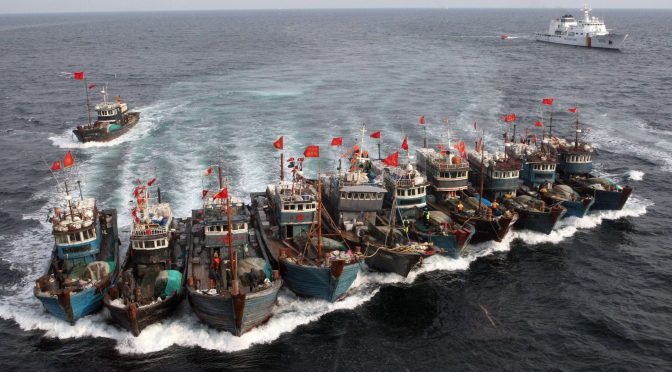
Any objective assessment of developments in the South China Sea over the last few years cannot but conclude that Beijing is successfully expanding and achieving its goals, the ultimate being complete mastery over this body of water. Please note that we can no longer talk about “dispute” since this word fails to capture the essence of the conflict. There is also no point in demanding a “clarification” of Beijing’s objectives in a wishful attempt at integrating China into the post-war liberal order. Third, and most crucially, given that China is deploying a combined force made up of the PLAN (People’s Liberation Army Navy), a number of Coastguard-like agencies, and a maritime militia, military to military contacts involving only the former are not only useless, they are counterproductive. By engaging the PLAN, in a bid to build trust and work toward agreements, such as the much touted Code of Conduct in the South China Sea, maritime democracies are dangerously ignoring China’s playbook. The PLAN does not operate in isolation. Instead, it follows a carefully orchestrated script featuring an internal division of labour, the coastguard agencies, and the maritime militia. Each has its role, and in some situations and missions they act separately, while in others they work as a team. Broadly speaking, most of the “dirty work” is carried out either by militia-crewed (or at least coordinated) “civilian ships” or by their coastguard counterparts, with the PLAN free to play the “good guy” role in a discreet second line.

This division of labour extends to diplomacy and military to military contacts: PLAN officers meet foreign counterparts, coast guard personnel keep a much lower international profile, and the maritime militias remain a domestic affair. This means that the objectives of these contacts are impossible from the start. What is the point of in engaging only the PLAN when it is just one part of the Chinese forces expanding in the South China Sea? How can we dream of integrating the PRC’s naval and maritime forces into some semblance of an international liberal order when the vast majority of their forces do not even take part in the exchanges and activities designed to bring this about?

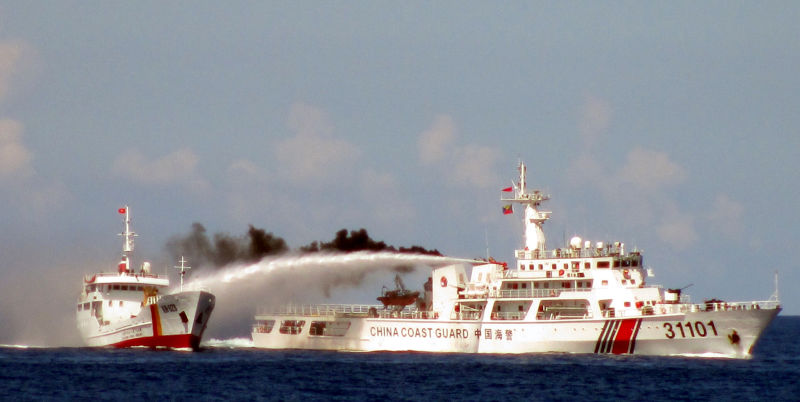
 Heated altercation between a Chinese Coast Guard Cutter and a Vietnamese vessel in the South China Sea.
Heated altercation between a Chinese Coast Guard Cutter and a Vietnamese vessel in the South China Sea.

One of the eternal principles of war is the need to seize the initiative. For too long maritime nations in the South China Sea have simply been reacting to Chinese moves, playing into Beijing’s script. The solution is not to complain more loudly every time Beijing expands, or to rearm at the conventional level only, the solution involves seizing the initiative, playing by different rules (not China’s), and forcing the PRC to react for once. This has already happened in some instances, most notably the Philippines’ lawsuit under UNCLOS, but must now become the norm, not the exception.

In accordance with this need to seize the initiative, the following changes are necessary in military to military contacts and negotiations:

A) Maritime nations must refuse to take part in any negotiations where China’s Coastguard agencies and maritime militias are not represented. Dealings must take place only with delegations made up of the full range of institutions involved in territorial aggression in the South China Sea.

B) In order to make the above possible (and prevent Beijing from claiming that they are only sending PLAN personnel because they are just meeting naval officers), maritime nations must also include all equivalent agencies in their own delegations.

C) Third, when a maritime democracy does not have a maritime militia, it must be created. This can be accomplished, for example, by resorting to reserve personnel, maritime industries, and yacht owners associations.

Maritime democracies may also need to adopt measures to grow their fishing and merchant fleets in order to acquire the necessary dual-use assets to wage the non-lethal confrontation seen in the seas near China. 

Adopting an integrated approach to military to military contacts with China may require some cultural and institutional changes. It may be understandable for a naval officer to prefer the company of a fellow officer from another country to that of a fisherman. Equally understandable may be an officer’s somewhat detached view of clashes among fishing boats, or landings by civilian “activists,” but the nature of the mixed warfare being waged by China means that superior conventional naval forces cannot simply wait for war to break out in order to defeat the enemy in a conventional battle. A war may be lost while waiting for it to break out. In theory, Chinese expansion could be checked by drawing a line in the sand and employing conventional force if necessary. However, this is politically unrealistic, given that not even economic sanctions have been discussed in Washington and pacific rim capitals. If the United States and her partners are not even ready to make China pay an economic price for aggression, can they be expected to go to war? The answer cannot be any other than a clear and loud no, and the Chinese are fully aware of it. Hence their “salami slicing” strategy.

coast-guard-june14
US Navy Arleigh Burke-class Destroyer and US Coast Guard Hamilton-class High Endurance Cutter at sea.

If we rule out appeasement and surrender, then the only alternative left is to fight. Not to fight the war we would like, a war that is simply not on the menu, but the existing war being waged, and the one, we must regrettably say, which is being lost to date. In this war, the enemy is not simply using conventional forces, but a mixture of naval, non-naval state, and dual-use private assets. It is this complex reality that must be engaged with in attempts at confidence building and agreements negotiations. If it is not just PLAN officers working to conquer the South China Sea, what is the point in just talking to them? Shouldn’t we also be talking to their coast guard and militia counterparts?

This broad approach to military to military contacts is the only realistic approach to the current situation in the South China Sea (and the wider Indo Pacific). If actually resulting in agreements, they will be more likely to be respected, given that they will have been negotiated by the whole range of actors involved. If unsuccessful, then naval and maritime personnel from the nations of these contested waters will have gained a much better understanding of their foes. This will not only give them a clearer picture of the opposition, but will also help them make the necessary but often difficult and even painful cultural transition from leaders used to thinking in terms of conventional sea power to officers equally at ease when facing a trawler or a submarine, a missile fired in anger or a ramming fishing boat. Successful riverine operations in South Vietnam are a good example of a similar cultural and organizational change brought about by the need to fight a dual war, and the resulting transformation is a reminder that this is indeed possible.

Alex Calvo, a guest professor at Nagoya University (Japan), focuses on security and defence policy, international law, and military history, in the Indian-Pacific Ocean Region. He tweets at Alex__Calvo and his work, which includes “China’s Air Defense Identification Zone: Concept, Issues at Stake and Regional Impact”, Naval War College Press Working Papers, No 1, US Naval War College, 23 December 2013, available at http://www.usnwc.edu/Publications/Working-Papers/Documents/WP1-Calvo.aspx, can be found here.

India’s Role in the Asia-Pacific Topic Week Wraps Up on CIMSEC

By Dmitry Filipoff

We received a strong and quality response to our Call for Articles requesting publications on India’s Role in the Asia-Pacific. Our authors were diverse in background and experience. Their analysis highlighted competition between India and China in the maritime domain, various foreign policy initiatives of the Modi administration, and India’s aspiration to assume greater influence and responsibility on the international stage. We thank our authors for their excellent contributions.

Below is a list of the articles that featured during the topic week, with relevant excerpts outlining the main thrust of each publication’s analysis. 

India as the Pivotal Power of the 21st Century Security Order by MAJ Chad Pillai

“As the United States increasingly faces challenges to its global power by Iran, Russia, and China, its relationship with India will grow in strategic importance.”

How The Indian Ocean Remains Central to India’s Emerging Aspirations by Vidya Sagar Reddy

“Safe maritime connectivity, external trading, and overseas investments require India develop political confidence in its neighborhood and a dedicated navy to ensure secure seas.”

India-China Competition Across the Indo-Pacific by David Scott

“Implicit competition in what has been dubbed “a new great game for influence in the Indo-Pacific” between these two rising powers is the order of the day in the Indian Ocean, the South China Sea, the West Pacific, and the South Pacific.”

Sino-India Strategic Rivalry: Misperception or Reality by Ching Chang

“Whether the maritime competition between China and India is in the Indian Ocean or the South China Sea may prove to be only an elusive speculation though seemingly plausible.”

Diluting the Concentration of Regional Power Players in Maldives by MAJ Ahmed Mujuthaba

“Even though it is popular for its crystalline waters and sun bathed beaches, recently Maldives has been appearing on the minds and finds of security strategists. So why have strategists shifted their gaze to this tiny tourist destination all of a sudden?  Two reasons: India and China.”

Strategic Maritime Balancing in Sino-Indian Foreign Policy by Ryan Kuhns

“Not only have the mountain passes and peaks of the Himalayas become zones for potential conflict, where in the past they served as natural buffers, but the shared space of the Indo-Pacific also links the interests and security concerns of present day India and China.”

India in the Asia-Pacific: Roles as a ‘Balancer’ and Net Security Provider by Ajaya Kumar Das

“While India’s ascendance to great power status will take time, owing to domestic constraints, how India positions itself in the Indo-Pacific balance of power and rises as a ‘net security provider’ will contribute significantly to its security and status.”

Modi’s Asia-Pacific Push by Vivek Mishra

“The Modi government’s strongly maritime oriented foreign policy launched in 2014 has proven somewhat rewarding, particularly in helping the Indian Navy transcend its image of a force that punches below its weight. The politico-strategic recalibration by India in its Asia-Pacific policy has sought to retool its mid-1990s Look East policy with more purpose.”

Understanding Sino-Indian Relations – A Theoretical Perspective by Byron Chong

“The analysis will show that Sino-Indian relations reflect a peculiar kind of stability: although their relationship will continue to be marked by distrust and intermittent disputes, the risk of escalation to war remains unlikely. In general, Sino-Indian relations are influenced by four factors: (1) their history of enmity; (2) strategic competition; (3) nuclear relations; and (4) trade.”

India as a Net Security-Provider in the Indian Ocean and Beyond by VADM Pradeep Chauhan (ret)

“The Prime Minister’s firm declaration of national intent for India to be a net security-provider in the Indian Ocean and beyond, means the various connotations of maritime security (defined as freedom from threats emanating ‘in’, ‘from’, or ‘through’ the medium of the sea can no longer be denied centrality in any serious consideration of India’s national security.” 

Dmitry Filipoff is CIMSEC’s Director of Online Content. Reach the CIMSEC editorial team at Nextwar@cimsec.org.

Understanding Sino-Indian Relations – A Theoretical Perspective

India’s Role in the Asia-Pacific Topic Week

By Byron Chong

Sino-Indian relations have become increasingly complex in the last few years. Though bilateral trade and cooperation has been growing, relations have been increasingly strained by mutual suspicion and intermittent disputes. Given the huge influence the two Asian giants have over the global strategic environment, a key question that arises will be whether they can maintain a stable relationship amidst their growing distrust.

This paper will analyse their relationship through the perspectives of the three major international relations (IR) theories of realism, liberalism, and constructivism and will be split into two parts. The first will describe the main factors that influence bilateral relations. The second will analyse these factors using the three main IR theories as mentioned. The analysis will show that Sino-Indian relations reflect a peculiar kind of stability: although their relationship will continue to be marked by distrust and intermittent disputes, the risk of escalation to war remains unlikely. In general, Sino-Indian relations are influenced by four factors: (1) their history of enmity; (2) strategic competition; (3) nuclear relations; and (4) trade.

History of Enmity

China and India share a number of similarities. Both take pride in their historical past as ancient civilizations and aspire to great power status. Both have nuclear weapons, fast growing economies, and are currently rising powers[1]. Despite their many similarities, their geographical proximity to each other has inevitably created friction.           

Indeed, China and India share a long history of enmity. Between them, they have an ongoing territorial dispute that stretches over 4,057 kilometers. This dispute produced a war in 1962, followed by crises in 1967 and 1986[2]. Throughout the decades, despite repeated attempts to come to an agreement, the demarcation of the Line of Actual Control (LAC) remains highly disputed.  

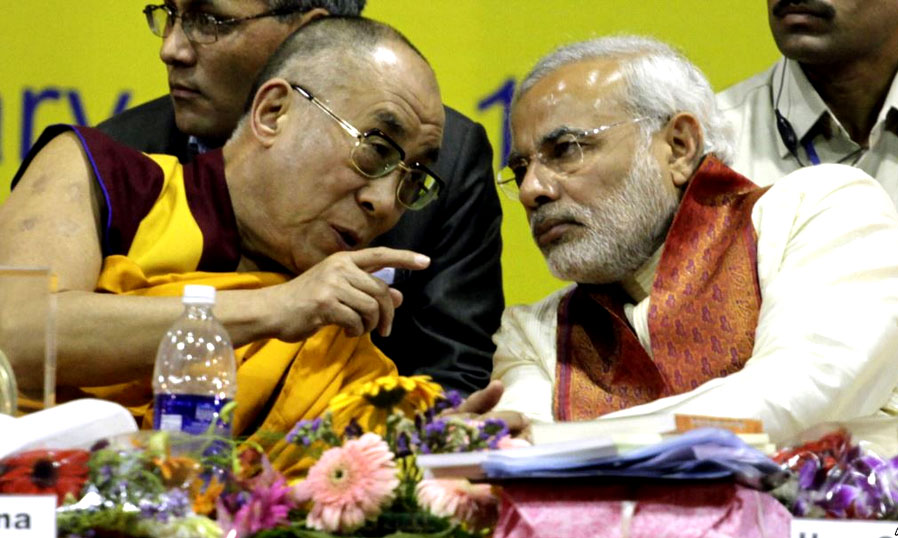
China’s occupation of Tibet since 1950 has been another contentious issue. India’s strategic interests in Tibet as a buffer state led it to support Tibetan rebels fighting Chinese rule in the mid-1950s. The Indian government also allowed the Dalai Lama to form the Tibetan government-in-exile in India to conduct “anti-China activities”[3]. For China, India’s continued support to the Dalai Lama is seen as a sustained attempt to undermine Chinese control over Tibet[4].

The Dalai Lama, left, speaks with the former Gujarat state Chief Minister Narendra Modi during an international seminar on Buddhist Heritage in Vadodara, south of Ahmadabad, India, Friday, Jan.15, 2010.
The Dalai Lama, left, speaks with then Gujarat state Chief Minister Narendra Modi during an international seminar on Buddhist Heritage in Vadodara, south of Ahmadabad, India, Friday, Jan.15, 2010.

Growing disagreements with India eventually pushed China to align itself more closely with Pakistan[5]. It was believed that the two-front threat to India from Pakistan and China would distract India from intervening in Tibet. China has supported Pakistan militarily, first with conventional arms and later with nuclear and missile technology[6]. India’s animosity with Pakistan has produced four wars (1948, 1965, 1971, 1999), repeated border skirmishes, terrorist attacks in India, continued tensions over Kashmir and a wider strategic competition for influence in South Asia[7]. The fact that China continued to support to Pakistan even after a warming of Sino-Indian ties simply perpetuated New Delhi’s distrust of Beijing[8]

Both sides have attempted to repair their relationship with various confidence-building measures (CBMs) like reciprocal state visits, signing of various bilateral agreements, joint military exercises, and strengthening of bilateral trade[9]. However, these CBMs have been undermined by intermittent crises which flare up over the historical disputes including occasional border skirmishes and incursions into each other’s territory[10], the stapling or outright denial of visas to those from the disputed states of Kashmir and Arunachal Pradesh by Chinese immigration[11], visits by the Dalai Lama to Arunachal Pradesh[12], and even alleged Chinese diversion of rivers flowing into India[13].

Strategic Competition

While India and China have previously cooperated on issues like climate change and trade[14], international forums have gradually become a competitive arena for the two, where they have attempted to marginalize or deny access to each other. For instance, in 2008, China tried to oppose the Indo-US deal that would allow the Nuclear Suppliers Group (NSG) to trade nuclear materials with India[15]. Similar ‘Chinese’ roadblocks have been encountered by India at the East Asia Summit (EAS), Asia-Europe Meeting (ASEM), Asian Development Bank (ADB), etc. Where India has greater influence, it has similarly tried to restrict Chinese access or influence, such as at the Bay of Bengal Initiative for Multi-Sectoral Technical and Economic Cooperation (BIMSTEC) and Mekong Ganges Cooperation (MGC) forums[16].  

Their competition has also expanded into the maritime sphere. In recent years, China has become increasingly dependent on maritime trade with 82% of its oil imports transiting the Indian Ocean (IO) and the Malacca Straits[17]. Protection of its sea lines of communications (SLOCs) in the IO has become a driving force behind China’s plans for a ‘blue water’ navy with greater power projection capabilities. The Chinese navy has also increased its naval activity in the IO with increased port calls at Karachi, Colombo, Chittagong[18] and anti-piracy operations in the Gulf of Aden[19]. Most worryingly, China has been increasing its political and economic relations with India’s neighbours, raising concerns about a “string of pearls” of potential bases in Pakistan, Sri Lanka, Bangladesh, and Myanmar[20].  

This conflicts with India’s aspiration towards strategic leadership in the IO[21]. It sees Chinese presence as an incursion into its strategic backyard and perhaps an attempt at “strategic encirclement”[22]. India has responded in two ways. Firstly, its military has been improving its power projection capabilities with plans to acquire new aircraft carriers, naval aircraft[23], and upgrades to its missile capabilities[24]. Secondly, India has been building strategic and economic partnerships with states in the Western Pacific like Singapore, Japan, South Korea, Australia, and most importantly, forging a global partnership with the United States (US). Such agreements have increased India’s presence in East Asia, leading some in Beijing to see this as an attempt to weaken China’s influence in the region and make a ‘counter-encirclement’ attempt[25]. This competitive behaviour in both the international and maritime sphere has led to increased friction and distrust in their relationship.

Such friction has been tempered by a level of restraint on both sides. Despite the many strategic agreements with each other’s neighbours, none of these involve any actual military alliances that may draw them into wider disputes. Both have also resisted deploying a significant naval presence in each other’s strategic sphere, with China limiting its major deployments in the IO to anti-piracy operations, and India avoiding the establishment of a permanent naval presence in the Western Pacific[26].

Nuclear Relations

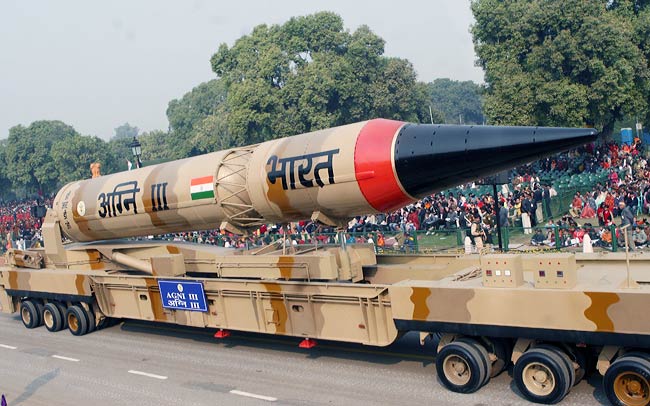
The nuclear capabilities of both sides demonstrate the existence of mutual hedging strategies. China’s Dongfeng (DF) 31 missiles have the range to hit all parts of India but little of US territory. The basing of medium-range missile systems in Tibet is clearly targeted at India[27].  India in turn, has begun development of an Anti-Missile Defence (AMD) system and longer range missiles such as the Agni-III, which has been called “China-specific”[28].

India's Agmi-III intermediate range ballistic missile.
India’s Agmi-III intermediate range ballistic missile.

While such hedging strategies could potentially drive rapid armament leading to instability, this likelihood is tempered by ‘escalation-resistant’ policies of both sides. Both adhere to minimalist nuclear doctrines, preferring relatively small numbers of weapons and platforms. While China maintains a numerically larger and more sophisticated arsenal, India has not shown any interest in closing this gap. This acceptance of ‘unequal’ capabilities reduces the possibility of an escalatory nuclear arms race[29]. Moreover, despite the intermittent friction in their relationship, none of their disputes have ever had a nuclear element to them[30]

Trade

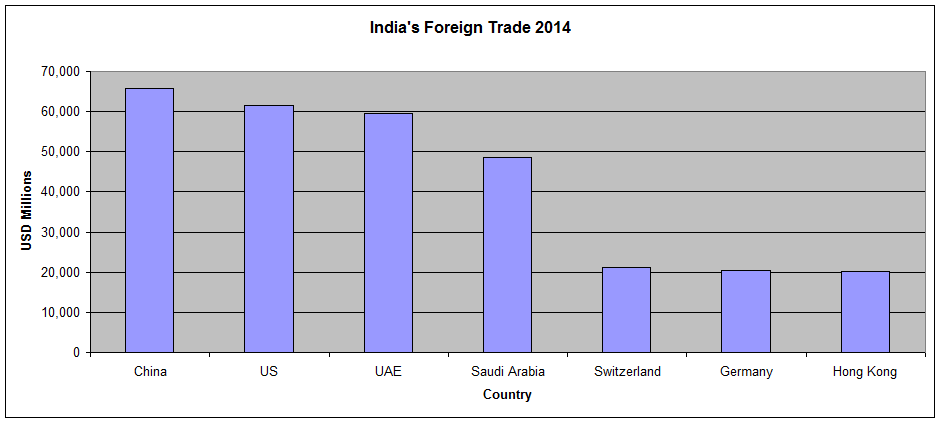
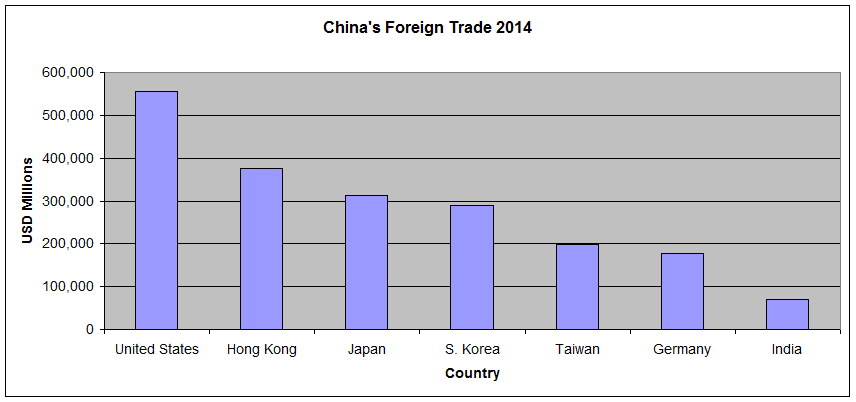
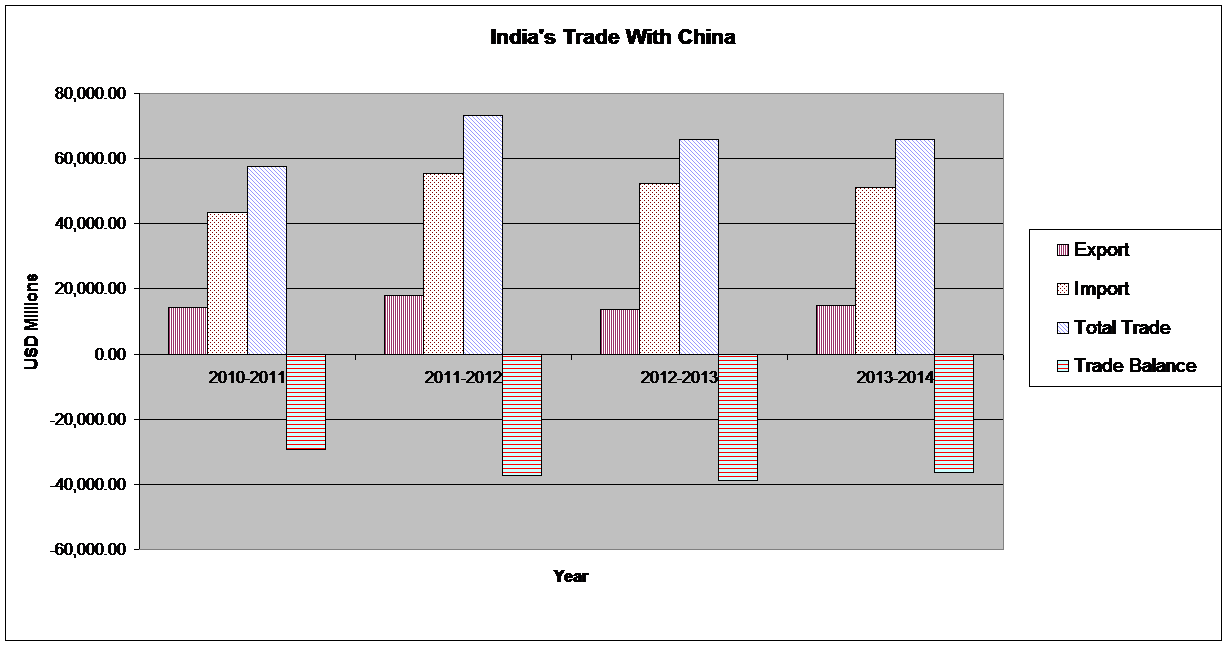
Bilateral economic trade has been growing the last few decades. From a mere US$ 133.5 million in 1988, total trade reached nearly US$ 70 billion in 2014[31]. However, two asymmetries exist within this relationship. Firstly, bilateral trade is less important to Beijing than to New Delhi. Charts 1 and 2 show that while China is India’s top trading partner, their trading volume is only a fraction of the total trade China has with others like the US, South Korea and Japan. Secondly, their bilateral trade has been heavily skewed in China’s favour. Almost 90% of India’s exports to China are low-cost raw materials and iron ore. In contrast, imports from China consist mostly of higher-value finished goods[32]. The result as shown in Chart 3 is a growing trade deficit for India which has become a source of disagreement between the two. India has been pressuring China to import more products in the areas of pharmaceuticals, agricultural produce, energy, etc, and in turn has set high tariffs to protect Indian industries[33]

Chart 1: India’s Foreign Trade in USD Millions (2014)[34]

indiatrade

Chart 2: China’s Foreign Trade in USD Millions (2014)[35]

india foreign trade

Chart 3: India’s Trade with China in USD Millions (2010-2014)[36]

india trade

Analysis

Characteristics of all three IR theories are reflected in Sino-Indian relations. Realism in general assumes that there is no central power governing the international system. States therefore prioritise self-interest over collective interest and have to accumulate power in order to survive. Such thinking drives states to attain a favourable balance of power and compete for influence. Balancing can consist of internal balancing – building up one’s own power, or external balancing – accumulating power through external relations[37].  Liberalism focuses more on cooperation between states. States that are mutually dependent incur greater political costs in conflicts, and thus choose to pursue peaceful relations. This includes commercial interdependence for trading nations and strategic interdependence for states with nuclear weapons. Participation in international organizations is also believed to promote cooperation, leading to peace. Lastly, constructivism stresses the importance of identities, perceptions, and norms in determining how decisions are made.

For constructivists, the early disputes that marred Sino-Indian relations created a perception of mistrust and hostility. This perception was kept alive and reinforced by the periodical crises arising out of their many unresolved disputes. This situation is further exacerbated by their inescapable geographical proximity and near simultaneous emergence as rising powers. Combining elements of realism and constructivism, it can be argued that competition and friction between the two Asian giants will be inevitable since their common aspiration for great power status would force them to compete for influence, resources, and markets within the same strategic neighbourhood.

This does not mean that war is inevitable. For liberalists, the awesome power of nuclear weapons serves as a major restraint to conflict. Indeed, while crises and even limited conflict has occasionally flared up between past nuclear rivals like US-Soviet Union, India-Pakistan, and China-Soviet Union, caution and restraint was always shown when the danger of escalation loomed[38]. This stability is strengthened when we consider the escalation-resistant nuclear policies of the Sino-Indian nuclear dynamic.

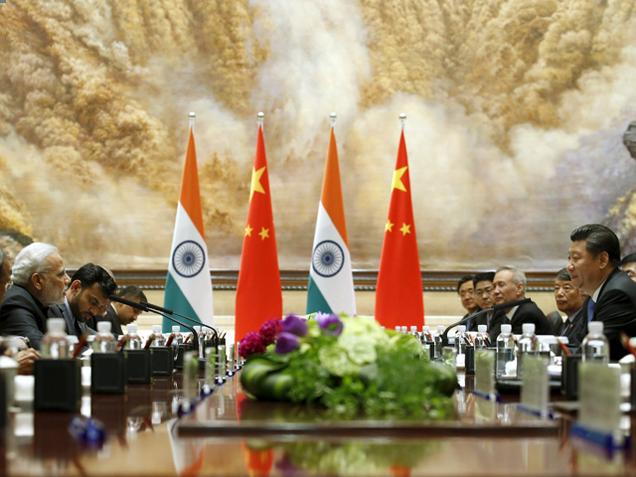
Narendra Modi and Chinese President Xi Jinping hold a meeting in Xian, Shaanxi province in May 2015.

This however, has not prevented their strategic competition which has led to mutual balancing strategies seen in international forums and in the maritime sphere. Both India and China have balanced internally by strengthening their military, and also externally by building relations with each other’s neighbours. Again, their behaviour reveals a convergence of realism and constructivism. Firstly, India has shown greater willingness to work with the US – the preeminent superpower – in order to balance China – whom it perceives as the greater threat. This behaviour demonstrates Stephen Walt’s balance of threat thinking[39], as opposed to balance of power. Secondly, both India and China’s mutually balancing behaviour is driven by the fear of each other’s growing power and their own need to accumulate power for security. This creates an action/reaction dynamic known as a security dilemma which is potentially destabilizing as it creates a negative spiral of increasing tensions and perception of insecurity on both sides. 

The security dilemma however, is tempered by policies which seem somewhat inconsistent with realist balancing strategies. First, restraint has been shown in the military-strategic sphere. Both sides have been careful to moderate their actions and avoid getting into strategic agreements that may get them involved in major disputes with each other. Second, is their growing economic interdependence. Such engagement is extremely rare between balancing rivals as it usually leads to dependence of the weaker power upon the stronger[40]. Yet, India has embraced economic trade with China. Thirdly, although they see each other as rivals, their participation in CBMs reveal a genuine interest in strengthening ties.

Their relationship thus reveals an almost paradoxical policy of limited engagement and restrained balancing. What could be the motivation behind such behaviour? Noted political scientist Avery Goldstein provides a clue. He argues that China’s overwhelming imperative since the late 1990s has been to strengthen its economic and military strength while avoiding any external conflict[41]. This “strategy of transition” which is expected to last another thirty to forty years[42], inevitably raises questions about China’s intentions once this transformation is complete.

It is this uncertainty over China’s long-term intentions which has forced India into this two-pronged strategy of engagement and balancing. In the long run, India engages its neighbour both economically and politically to improve ties and hope a friendly China emerges. Simultaneously, India also strengthens its military, preparing itself for the worst case scenario (i.e. internal balancing). It also strengthens ties with China’s neighbours for the purpose of external balancing and to gain access to larger regional trade organizations like the Asia-Pacific Economic Cooperation (APEC).

China’s behaviour mirrors India’s. It pursues engagement since a stable regional environment facilitates the build up of its national strength. China also balances India through internal and external balancing while avoiding overly confrontational behaviour. But while India views bilateral trade through liberalist lenses, China sees it with a realist tinge. Indeed, there have been accusations that China’s trade policies have been designed to weaken her competitors and rivals, which may account for India’s large trade deficit vis-à-vis China[43].

Conclusion 

As the analysis has shown, strands of realism, liberalism, and constructivism are inseparably interwoven into Sino-Indian relations. The central motivation for both state’s behaviour is however, fundamentally realist, undergirded by liberalist and constructivist thinking. The ultimate goal for both sides is the accumulation of power. Trade, international cooperation ,and friendly relations are encouraged since it facilitates this power accumulation. For India, such engagement also increases the chances that a friendly China emerges. In parallel, both states seek to expand their influence into each other’s backyard, as a means to accumulate more power and at the same time, undermine their potential future competitor. But this is done in a cautious manner to avoid destabilising relations which would hinder power acquisition.  

What does this mean for Sino-Indian relations? With both sides focused on accumulating power and avoiding open conflict, one would expect their relationship to be broadly stable. However, the mutual distrust emanating from unresolved historical disputes coupled with their ongoing competition for overlapping spheres of influence makes it inevitable that intermittent crises will occur. These recurring crises will make complete rapprochement difficult, if not impossible.

Yet, these crises are unlikely to result in escalation for two reasons. Firstly, both India and China have demonstrated great discipline in moderating their military-strategic behaviour. Secondly, the mere presence of nuclear weapons encourages even greater caution and serves to minimise the risk of war. The result is thus, a long-run stability punctuated by occasional disputes and crises. While resolution of their rivalry remains improbable, escalation to war is similarly unlikely. In the long-run, the stability of their relationship will depend on how well both states can manage their competitive strategies and resolve their disputes, which in turn will limit the frequency of crises. There is no doubt however, that nuclear weapons will continue to serve as major limiting factor to war even in the future.  

Byron Chong is currently pursuing his Masters in Strategic Studies at the S. Rajaratnam School of International Studies. A passion for history and international politics drew him to this field of study after his first degree in engineering. His current research interests lie in the strategic and security affairs of the Asia Pacific region.

Bibliography

Basrur, R. “India’s Escalation-Resistant Nuclear Posture.” In Escalation Control and the Nuclear Option in South Asia, edited by Michael Krepon, Rodney W. Jones, and Ziad Haider, 56-74. Washington, DC: Henry Stimson Center, 2004.

Basrur, R. “The Politics of Sri Lanka’s Economic Relations with India.” In International Relations Theory and South Asia, Vol. I, edited by E. Sridharan, 242-259. New Delhi: Oxford University Press, 2011.

Basrur, R. “India and China: Nuclear Rivalry in the Making?” RSIS Policy Brief (2013): pp. 1-8. Accessed April 21, 2016. https://www.rsis.edu.sg/wp-content/uploads/2014/07/PB131001_India_and_China_Nuclear_Rivalry.pdf

Basrur, R. “Nuclear Deterrence: The Wohlstetter-Blackett Debate Re-visited.” RSIS Working Paper, No. 271 (2014): 1-29. Accessed April 2, 2016. https://www.rsis.edu.sg/wp-content/uploads/rsis-pubs/WP271.pdf

Brewster, D. “Beyond the ‘String of Pearls’: Is there really a Sino-Indian security dilemma in the Indian Ocean?” Journal of the Indian Ocean Region 10, No. 2 (2014): 133-149.

Egreteau, R. “The China-India Rivalry Reconceptualized.” Asian Journal of Political Science 20, No. 1 (2012): 1-22.

Frankel, F. R. “The Breakout of China-India Strategic Rivalry in Asia and the Indian Ocean.” Journal of International Affairs 64, No. 2 (2011): 1-17.

Garver, J. W. “The Security Dilemma in Sino-Indian Relations.” India Review 1, No. 4 (2002): 1-38.

Goldstein, A. “An Emerging China’s Emerging Grand Strategy.” In International Relations Theory and the Asia-Pacific, edited by John Ikenberry and Michael Mastanduno, 57–106. New York: Columbia University Press, 2003.

Goldstein, A. Rising to the Challenge: China’s Grand Strategy and International Security. Stanford: Stanford University Press. 2005.

India Department of Commerce, “Export Import Data Bank.” Ministry of Commerce and Industry, 2015. Accessed January 21, 2016, http://commerce.nic.in/eidb/iecntq.asp

Jacob, J. T. “India’s China Policy: Time to Overcome Political Drift,” RSIS (2012): 1-8. Accessed January 21, 2016, from RSIS: https://www.rsis.edu.sg/wp-content/uploads/2014/07/PB120601_India_China_Policy.pdf

Kumar, V. “India well positioned to become a net provider of security: Manmohan Singh.” The Hindu, May 23, 2013. Accessed January 21, 2016. http://www.thehindu.com/news/national/india-well-positioned-to-become-a-net-provider-of-security-manmohan-singh/article4742337.ece

Malik, M. China and India: Great Power Rivals. Boulder, CO: First Forum Press, 2011.

Malone, D. M., and Rohan Mukherjee. “India and China: Conflict and Cooperation.” Survival 52, No. 1 (2010): pp. 137-158.

National Bureau of Statistics of China. 2015. “China Statistical Yearbook – Value of Imports and Exports by Country (Region) of Origin/Destination.” China Statistics Press (2015). Accessed January 21, 2016. http://www.stats.gov.cn/tjsj/ndsj/2015/indexeh.htm

Panda, A. “India is capable of developing a 10,000-Kilometer range ICBM.” The Diplomat, April 6, 2015. Accessed January 21, 2016. http://thediplomat.com/2015/04/india-is-developing-a-10000-kilometer-range-icbm/

Pandit, R. “China-specific Agni III to be tested today.” The Times of India, May 7, 2008. Accessed January 21, 2016, from: http://timesofindia.indiatimes.com/india/China-specific-Agni-III-to-be-tested-today/articleshow/3016689.cms

Scott, D. “Sino-Indian Security Predicaments for the Twenty-First Century.” Asian Security 4, No. 3 (2008): 244-270.

Sitaraman, S. “South Asia: Conflict, Hegemony, and Power Balancing.” In Beyond Great Powers and Hegemons: Why Secondary States, Support, Follow, or Challenge, edited by Kristen P. Williams, Steven E. Lobell, and Neal G. Jesse 177-192. Stanford, CA: Stanford University Press, 2012.

US Department of Defence. Annual Report to Congress: Military and security developments involving the People’s Republic of China. Washington, DC: Office of the Secretary of Defence, 2012.

Walt, S. W. “Alliance Formation and the Balance of World Power.” International Security 9, No. 4 (1985): 3-43.

 [1] David. M. Malone and Rohan Mukherjee, “India and China: Conflict and Cooperation,” Survival 52, no. 1 (2010): 137-138.

[2] Rajesh Basrur, “India and China: Nuclear Rivalry in the Making?” RSIS Policy Brief (2013): 3.

[3] John W. Garver, “The Security Dilemma in Sino-Indian Relations,” India Review 1, no. 4 (2002): 6.

[4] ibid.

[5] Malone and Mukherjee, “India and China,” 142.

[6] Mohan Malik, China and India: Great Power Rivals (Boulder, CO: First Forum Press, 2011), 42.

[7] Srinivasan Sitaraman, “South Asia: Conflict, Hegemony, and Power Balancing,” in Beyond Great Powers and Hegemons: Why Secondary States Support, Follow, or Challenge, eds. Kristen P. Williams et al. (Stanford, CA: Stanford University Press, 2012), 184.

[8] Malik, China and India, 58.

[9] Renaud Egreteau, “The China-India Rivalry Reconceptualized,” Asian Journal of Political Science 20, no. 1 (2012): 9-10.

[10] ibid., 9.

[11] Malone and Mukherjee, “India and China,” 144.

[12] Francine R. Frankel, “The Breakout of China-India Strategic Rivalry in Asia and the Indian Ocean,” Journal of International Affairs 64, no. 2, (2011): 3.

[13] Jabin T. Jacob, “India’s China Policy: Time to Overcome Political Drift,” RSIS (2012): 5, accessed January 21, 2016, RSIS: https://www.rsis.edu.sg/wp-content/uploads/2014/07/PB120601_India_China_Policy.pdf

[14] Malik, China and India, 44.

[15] Malik, China and India, 55.

[16] ibid., 46-77.

[17] US Department of Defence. Annual Report to Congress: Military and security developments involving the People’s Republic of China. (Washington, DC: Office of the Secretary of Defence, 2012), 12.

[18] John W. Garver, “The Security Dilemma in Sino-Indian Relations,” India Review 1, no. 4 (2002): 13-14.

[19] David Brewster, “Beyond the ‘String of Pearls’: Is there really a Sino-Indian security dilemma in the Indian Ocean?” Journal of the Indian Ocean Region 10, no. 2 (2014): 137.

[20] Garver, “Security Dilemma,” 5.

[21] Vinay Kumar, “India well positioned to become a net provider of security: Manmohan Singh,” The Hindu, May 23, 2013,  accessed January 21, 2016, http://www.thehindu.com/news/national/india-well-positioned-to-become-a-net-provider-of-security-manmohan-singh/article4742337.ece

[22] Garver, “Security Dilemma,” 6.

[23] Brewster, “String of Pearls,” 135.

[24] Ankit Panda, “India is capable of developing a 10,000-Kilometer range ICBM,” The Diplomat, April 6, 2015, accessed January 21, 2016, http://thediplomat.com/2015/04/india-is-developing-a-10000-kilometer-range-icbm/

[25] David Scott, “Sino-Indian Security Predicaments for the Twenty-First Century,” Asian Security 4, no. 3 (2008): 259.

[26] Brewster, “String of Pearls,” 146.

[27] Scott, “Security Predicaments,” 254.

[28] Rajat Pandit, “China-specific Agni III to be tested today,” The Times of India, May 7, 2008, accessed January 21, 2016, http://timesofindia.indiatimes.com/india/China-specific-Agni-III-to-be-tested-today/articleshow/3016689.cms

[29] Rajesh Basrur, “India’s Escalation-Resistant Nuclear Posture,” in Escalation Control and the Nuclear Option in South Asia, ed. Michael Krepon, et al. (Washington, DC: Henry Stimson Center, 2004), 57.

[30] Rajesh Basrur, “India and China: Nuclear Rivalry in the Making?” RSIS Policy Brief (2013): 7, accessed April 21, 2016, https://www.rsis.edu.sg/wp-content/uploads/2014/07/PB131001_India_and_China_Nuclear_Rivalry.pdf

[31] India Department of Commerce, “Export Import Data Bank,” Ministry of Commerce and Industry, 2015, accessed January 21, 2016, http://commerce.nic.in/eidb/iecntq.asp

[32] National Bureau of Statistics of China, “China Statistical Yearbook – Value of Imports and Exports by Country (Region) of Origin/Destination,” China Statistics Press, 2015 accessed January 21, 2016, http://www.stats.gov.cn/tjsj/ndsj/2015/indexeh.htm

[33] India Department of Commerce, “Export Import Data Bank.”

[34] ibid.

[35] Malik, China and India, 46.

[36] ibid.

[37] Scott, “Security Predicaments,” 247.

[38] Rajesh Basrur, “Nuclear Deterrence: The Wohlstetter-Blackett Debate Re-visited,” RSIS Working Paper, no. 271 (2014): 15, accessed April 2, 2016, https://www.rsis.edu.sg/wp-content/uploads/rsis-pubs/WP271.pdf

[39] Stephen M. Walt, “Alliance Formation and the Balance of World Power,” International Security 9, no. 4 (1985).

[40] Rajesh Basrur, “The Politics of Sri Lanka’s Economic Relations with India,” in International Relations Theory and South Asia Vol. I, ed. E. Sridharan, (New Delhi: Oxford University Press, 2011), 244.

[41] Avery Goldstein, “An Emerging China’s Emerging Grand Strategy,” in International Relations Theory and the Asia-Pacific, eds. John Ikenberry and Michael Mastanduno. (New York: Columbia University Press, 2003), 60.

[42] Avery Goldstein, Rising to the Challenge: China’s Grand Strategy and International Security (Stanford, CA: Stanford University Press, 2005), 38.

[43] Malik, China and India, 57.

Featured Image: Chinese and Indian border troops stand together at border crossing.