Tag Archives: China

China’s Synchronization of Party and Military

By Dr. Ching Chang

The Coming Synchronization

As many political observers have already noted, the Nineteenth National Congress of the Communist Party of China is expected to be held in Beijing soon, most likely in the late fall of this year. Generally speaking, this event may lead to a major power reshuffle within the top leadership of the Communist Party of China (CCP). According to the general precedent in Chinese Mainland politics so far, the majority of the members in the Politburo Standing Committee will retire right after this meeting.

Members of the delegations from various provinces, municipalities, and People’s Liberation Army (PLA) commands will elect members and alternate members of the Central Committee as well as members of the Central Commission for Discipline Inspection. The new members of these two Central Committees form the power basis for the CCP leadership in the future. The First Plenary Session of the Nineteenth National Congress of the Communist Party of China will be held immediately after the CCP Nineteenth National Congress to elect General Secretary, members of Politburo, Politburo Standing Committee, endorse the members of the party Secretariat, and finally decide the members of the Military Commission of the Central Committee.

Per the political and strategic culture known as the principle of “the party commands the gun” established through the Sanwan Reorganization in 1927 and the Gutian Congress in 1929, the Communist Party of China is tightly linked with the military organizations of the People’s Liberation Army. As noted in the General Program of the Party Constitution of the Communist Party of China: “The Communist Party of China persists in its leadership over the People’s Liberation Army and other armed forces of the people, builds up the strength of the People’s Liberation Army, ensures that it accomplishes its historic missions at this new stage in the new century, and gives full play to its role in consolidating national defense, defending the motherland and participating in the socialist modernization drive”, the leadership over the People’s Liberation Army is absolutely non-negotiable to the Communist Party of China.

However, the party and military are interdependent in several aspects, including personnel career management and organizational alignment. Given the recent political reforms and consequences of the administrative power reorganizations in the mainland China, there are three issues concerning the synchronization of party and military that need to be well-managed in the coming CCP Nineteenth National Congress itself or the subsequent First Plenary Session of the Nineteenth National Congress.

Party Post and Military Billet

The party post is a required element for professional career development within the People’s Liberation Army and a prerequisite for further promotion. Any PLA members assigned to key leadership billets should have matching party posts compatible with their decision-making and policy formulation authorities. Those senior leaders with high military ranks who lose their party posts in the next five-year term National Congress of the Communist Party of China are likely to enter retirement in the near future.

On the other hand, under the leadership of Xi Jinping, the prerequisite of appropriate party posts, such as members and alternate members of the Central Committee as well as members of the Central Commission for Discipline Inspection for those who want to be promoted to the rank of three-star general or admiral, may be a thing of the past. Since his inauguration as the Chairman of the Central Military Commission, Xi has personally handpicked five senior military members, two on July 31, 2015 and another three on July 28, 2017, to be promoted to the rank of the three-star general officers with no proper party post in the top tier of the Communist Party of China. Among these five senior newly promoted high rank general officers, none of them owns the party post such as members or alternate members of the Central Committee or even members of the Central Commission for Discipline Inspection. Apparently, there is a certain gap between party post and military billet developing in the top layer of the PLA leadership.

Three-Star PLA General Officers Promoted by Xi With No Proper Party Post

Name Billet as Promotion Promotion Date
宋普選Song, Puxuan Commander, Northern Theater Command July 31, 2015
李作成Li, Zuocheng Commander, Chengdu Military Region

(Now, Chief of Staff, the Joint Staff Department of the Central Military Commission)

July 31, 2015
韓衛國Han, Weiguo Commander, Central Theater Command

(Now, Commander, PLA Ground Force)

July 28, 2017
劉雷Liu, Lei Political Commissar, PLA Ground Force July 28, 2017
于忠福Yu, Zhongfu Political Commissar, PLA Air Force July 28, 2017

There are various interpretations to explain why the mismatch of the party post and military billet may occur in such a high tier of the PLA leadership. Natural attrition together with unexpected disciplinary actions disrupted original leadership echelon arrangements is perhaps the most acceptable explanation to PLA observers. After all, a total of 24 incumbent, former, or alternate members of the Central Committee and members of the Central Commission for Discipline Inspection have been disciplined, including one former Politburo Standing Committee member and four present or former Politburo members under Xi’s leadership.

Other interpretations may include that Xi is basically following the tradition to promote those senior officers with party posts unless their specialties are in areas where appropriate military billets cannot be assigned. As no suitable candidate with proper party post may be available, the selection list may naturally extend to those without a party post in the high tier of the Communist Party of China.
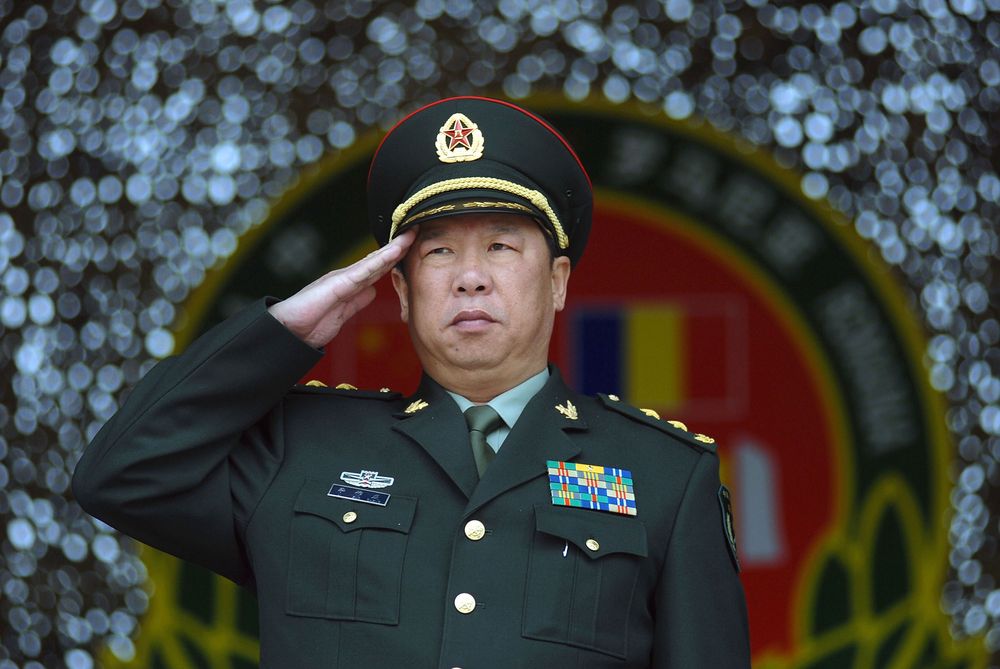
General Li Zuocheng, who was newly promoted to Chief of the People Liberation Army’s Joint Staff Department. (Ren Dong/Color China Photo via AP Images)

In any case, the personnel reshuffle is unavoidable in the coming Nineteenth National Congress of the Communist Party of China in order to let the military billets match with party post. Further, certain military elites with strong professional career potential also appeared in the list of members and alternate members of the Central Committee as well as members of the Central Commission for Discipline Inspection. Most importantly, members given positions on the new list will likely have a better potential for further promotion since they are chosen by Xi and he may stay in power for at least another five years.

Reinstitutionalization of the CMC after Military Reform

The second issue concerning the synchronization of party and military is the possibility of re-institutionalizing of the Central Military Commission after the PLA military reform. Members of the Central Military Commission were not matched with military posts until the Fourth Plenary Session of the Sixteenth National Congress of the Communist Party of China on September 16, 2004, when Jiang Zemin resigned the chairmanship of the Central Military Commission.

As Hu Jintao succeed Jiang to be the new CMC Chairman, several senior members were selected into the Central Military Commission as new members according to their military billets. Members of the Central Military are institutionalized since then by the following order:  Defense Minister, Chief of the General Staff Department, Chief of the General Political Department, Chief of the General Logistics Department, Chief of the General Equipment Department, Commander, Commander of the PLA Navy, Commander of the PLA Air Force, and Commander of the Second Artillery Corps. Apart from the Chairman of the CMC, two senior military professionals will be appointed as the deputy Chairman of the CMC. An extra First Deputy Chairman of the CMC is likely to be appointed for the next generation of leadership. This similar practice was adopted for the cases both for Hu Jintao and Xi Jinping.
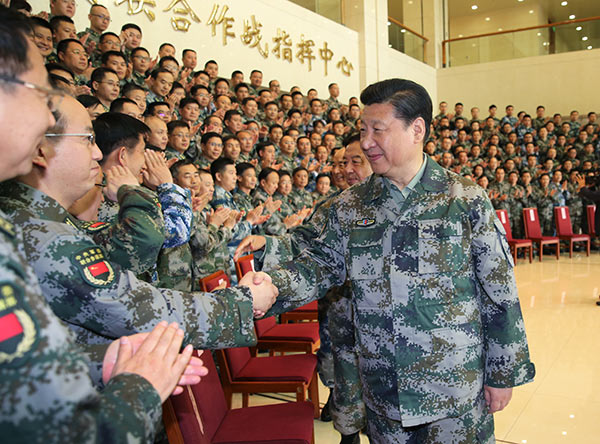
President Xi Jinping greets personnel at the Central Military Commission’s Joint Command Headquarters, where he called on the Chinese military to continue improving its capabilities for joint command. (Photo by Zhou Chaorong/China Daily)

So far, this institutionalized Central Military Commission structure was followed in the Seventeenth and Eighteenth Military Commission of the Central Committee of the Communist Party of China. Following selection of the Central of Military Commission membership, the National People’s Congress will elect another set of the members, drawing on the same pool of candidates, to the National Central Military Commission in late March after the National Congress of the Communist Party of China in the previous year. Obviously, there is a gap between the establishment dates of these two Central Military Commissions of the party and the nation separately. Nonetheless, the existing National Military Commission will somehow automatically cease to function in order to assure the synchronization of party and military.

The Central Military Commission is the highest mechanism for determining the military and defense policy proposals prior to submittal to the Politburo for further discussion and review. As we already know, there have been many organizational revisions in the People Liberation Army’s administrative chain of command and operational command and control structure. It is necessary to reorganize the members of the Central Military Commission to reflect the present PLA administrative and command structure. For instance, a new service equivalent organization known as the PLA Strategic Support Force was established in January 2016. The Joint Logistics Support Force directly subordinated to the Central Military Commission is another significant reorganizational arrangement. Four General Departments are reorganized into fifteen functional departments or agencies. Most importantly, there is no representative for the newly formed PLA Ground Force, the army equivalent, as the member of the Central Military Commission so far.

Due to the recent reforms noted above, the current PLA organization structure and the organization of the Central Military Commission are obviously not aligned. These reorganizations likely need to be matched with newly institutionalized Central Military Commission representation structure in order to assure their smooth operation. It is a reasonable prediction that this reorganization of the Central Military Commission will be a priority in the coming First Plenary Session of the Nineteenth National Congress of the Communist Party of China right after the CCP National Congress itself.

Revision of Associated Party Constitution

Last but not the least, the PRC’s National Defense and Military Reform is a part of overall social reform policies as noted by a policy document known as “The Decision on Major Issues Concerning Comprehensively Deepening Reforms” (中共中央關於全面深化改革若干重大問題的決定) that was approved by the Central Committee of the Chinese Communist Party at the Third Plenary Session of the Eighteenth Chinese Communist Party Central Committee on November 12, 2013. It is naturally no surprise that numerous institutions need to be amended and experience organizational reforms in various aspects of Chinese political, legal, and social systems. This is also the case for the PLA organizational reform.

For instance, the previous General Political Department of the Chinese People’s Liberation Army was consolidated into a newly established organization known as the Political Work Department of the Central Military Commission on January 11, 2016. It remains the chief political organ under the Central Military Commission and still leads all political activities in the People’s Liberation Army.

Nonetheless, after this reorganization process, the authorities of this new Department are inconsistent with the Article 23 of the Constitution of the Communist Party of China:

“Party organizations in the Chinese People’s Liberation Army carry on their work in accordance with the instructions of the Central Committee. The political work organ of the Military Commission of the Central Committee is the General Political Department of the Chinese People’s Liberation Army; the General Political Department directs Party and political work in the army. The organizational system and organs of the Party in the armed forces are prescribed by the Military Commission of the Central Committee.”

Although clearly the Political Work Department of the Central Military Commission is intended to succeed the previous General Political Department of the Chinese People’s Liberation Army with all its powers, it is still necessary to revise the bureaucratic language in the Constitution of the Chinese Communist Party to fit with the new military establishment.

Since, per the point four of the Article 19 of the same constitution: “The functions and powers of the National Congress of the Party are as follows: ………4) To revise the Constitution of the Party;” we should expect certain work for revising the Constitution of the Communist Party of China will be taking place in the coming Nineteenth National Congress of the Communist Party of China.

During his inspection of the PLA Hong Kong Garrison Force in this June, Xi Jinping himself called for efforts to build a highly centralized and unified military force, and run the military in accordance with law to forge a strong force with ironclad belief, faith, discipline, and responsibility. We should expect the synchronization of party post and military billet, institutionalization of the CMC after reform, and revision of the Chinese Communist Party Constitution to align with new military structures that will be a part of Xi’s legacies in the coming Nineteenth National Congress of the Communist Party of China and its subsequent First Plenary Session of the Nineteenth National Congress in October 2017.

Dr. Ching Chang was a line officer in the Republic of China Navy for more than thirty years. As a very productive commentator on the Chinese military affairs, he is recognized as a leading expert on the People’s Liberation Army with unique insights on its military thinkings.

Correction: The month which the Nineteenth National Congress will occur is in October, not November.

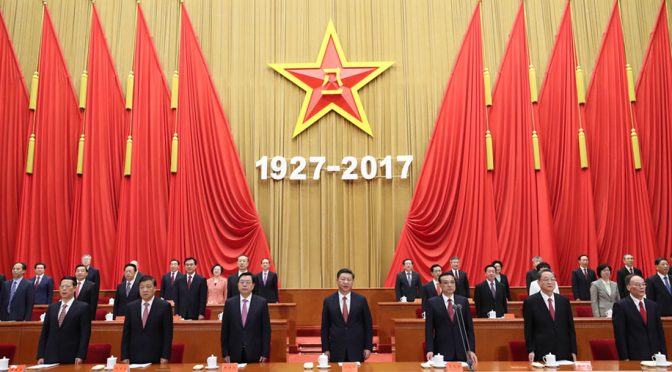
Featured Image: President Xi Jinping, also general secretary of the Communist Party of China Central Committee and chairman of the Central Military Commission, and other senior leaders Li Keqiang, Zhang Dejiang, Yu Zhengsheng, Liu Yunshan, Wang Qishan and Zhang Gaoli attend a grand gathering in celebration of the 90th founding anniversary of the People’s Liberation Army at the Great Hall of the People in Beijing, capital of China, Aug 1, 2017. (Xinhua)
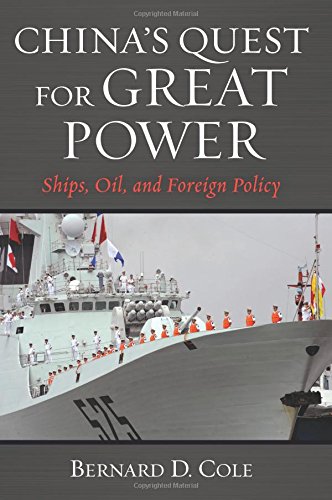
China’s Quest for Great Power: Ships, Oil, and Foreign Policy

Bernard D. Cole, China’s Quest for Great Power: Ships, Oil, and Foreign Policy. Naval Institute Press, 2016 304pp. $34.95

By John Bardenhagen

China’s Navy is emerging as a force capable of global reach following three decades of focused modernization, a transformation that has been fueled by China’s economic growth. Military analysts and Asia Pacific scholars closely watch China’s naval modernization in order to discern whether and in what ways China’s Navy will pose a threat to the United States and its interests. To understand the trajectory of China’s Navy, one must also examine the trajectory of China’s economy and how its growth fits into China’s overarching foreign policy and the stability of the PRC government. Author Bernard Cole accomplishes this In China’s Quest for Great Power: Ships, Oil, and Foreign Policy.

Reading this book left me with two primary impressions. First, I was impressed with how much it covered. The titles of the book’s chapters highlight the breadth of topics: maritime world, PRC maritime forces, maritime strategy, economy, energy security, foreign policy in the making, and foreign policy in action. Entire books could, and have, been written on each of these individual topics. This is also apparent through a review of the notes and bibliography sections of the book, which, at 75 pages, are nearly a third of the length of the book. Second, I was impressed with how succinctly Cole tackles each subject.

The strength of this book is Cole’s ability to break down such an expansive and complicated topic into neatly crafted subunits. In the Navy, we use the term ‘wave tops’ to describe the highlights of a much more thorough recounting of an event or analytical product. This book is a careful threading of the ‘wave tops’ of recent events, historical context, and Cole’s own analysis of the subject. The sole weakness of this book is that it is never allowed to deeply delve into one specific area. Though succinctness and breadth was the author’s intent and also the source of the book’s strength, the lack of depth makes this book more of a launching point toward further and greater research than a single, comprehensive resource.

For those new to the China’s foreign policy and maritime development, this book will surely be an invaluable resource. As a naval intelligence professional, my early education of the region was primarily focused on military capabilities and largely avoided the topics of economics and foreign policy. Greater context, however, was severely lacking, and such a lack of context lessens the ability to understand the particular drivers behind a foreign military’s actions whenever a significant event occurs. China’s military, like those of other nations across the globe, does not operate in a vacuum. To better understand the Chinese navy we must all broaden our scope to cover other tangential but intertwined areas. Reading this book serves as a good step in that direction.

For those scholars on the subject, the so-called “China Hands,” this book will help readers keep current to the late 2015, early 2016 timeframe with the added benefit of doing it in as few pages as possible. Specifically, Cole’s book incorporates the PRC’s newest leadership statements, defense white papers, and other official documents to bolster his analysis and infer the direction in which China’s Navy is headed. Most prominent of the recently released official documents cited in this book was China’s 2015 Defense White Paper which was used to support Cole’s thesis: China’s pursuit of continued naval expansion is both a priority and directly tied to China’s economic expansion.  Furthermore, Cole argues that China’s economic expansion is directly tied to regime stability, which he uses as a basis for assessing the trajectory of China’s Navy. For Cole, and I personally agree, the direction in which China’s Navy and interests are headed is ever outward and forward.

Cole highlights China’s reference of the United States as its primary security concern in its 2015 military strategy (p.200). While eventual war with China is not a foregone conclusion, the threat of conflict has increased as the balance of power between the United States and China has leveled, making pursuit of greater understanding of China’s Navy, foreign policy, and future growth all the more important. This will become increasingly true as China further expands its global reach and finds itself competing with the United States for control over limited resources essential for growth in both countries.

Lieutenant John A. Bardenhagen III is currently stationed at U.S. Pacific Command’s (PACOM) Joint Intelligence Operations Center (JIOC). He has previously served on the U.S. Seventh and Third Fleet Staffs, at the Chief of Naval Operations-Intelligence Plot, and on the COMPHIBRON FIVE Staff aboard the USS MAKIN ISLAND (LHD-8). He recently graduated in 2016 from the Naval Postgraduate School in Monterey with a Master of Arts Degree in national security affairs, specializing in Far East Asian regional studies. His opinions do not represent those of the U.S. Government, Department of Defense, or Department of the Navy. 

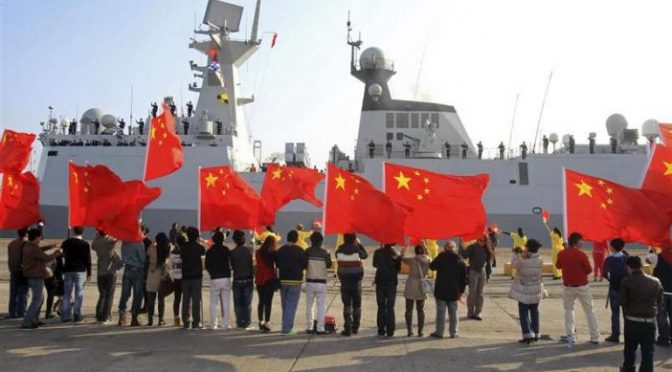
 Featured Image: Chinese nationals living in Cyprus wave Chinese national flags as the Chinese frigate Yancheng comes in to dock at Limassol port, January 4, 2014. (Reuters/Andreas Manolis)

Sea Control 142 – The Blue Economy and Ocean Clusters with Kate Walsh

By Matthew Merighi 

Join us for the latest episode of Sea Control for a conversation with Professor Kate Walsh of the U.S. Naval War College about the Blue Economy, ocean clusters, and their relevance for maritime security. It’s a conversation about innovation, organization, and competition between the U.S. and China.

Download Sea Control 142 – Blue Economy and Ocean Clusters with Kate Walsh

For additional information on this topic, take a look at the following links:

The Ocean Economy in 2030 (OECD)

Center for the Blue Economy (Middlebury Institute of Monterey)

CMSI Workshop on U.S. and Chinese Perspectives on the Blue Economy (U.S. Naval War College)

Vision for Maritime Cooperation under the Belt and Road Initiative

A transcript of the interview between Professor Walsh (KW) and Matthew Merighi (MM) is below. The transcript has been edited for clarity. The views in this interview do not reflect those of the U.S. Naval War College, Navy, Department of Defense, or Federal Government.

MM: As is Sea Control tradition, please introduce yourself.

KW: I teach at the U.S. Naval War College as an Associate Professor of National Security Affairs. I teach officers and others policy analysis, which is basically policy decision-making in the U.S. and how it works or doesn’t work in some cases. I am also an affiliate with the China Maritime Studies Institute (CMSI) where I do research on China.

I came to the Naval War College as a former think tanker and consultant in Washington, DC. In 1997, I was offered a project in the Commerce Department to look at China and issues of technology transfer. That’s where I started on a different area of research focusing on science, technology, and innovation in China. I’ve stuck with it since then. In 2013 or thereabouts, I started to find references to the Blue Economy in that research. I started asking around what the was and didn’t get any good answers. I found since then that this idea is one which China and others are developing.

MM: Let’s dive into the idea of the Blue Economy. I’ve noticed that there’s a general lack of awareness on what the Blue Economy is. Tell us more about what it is, what industries are involved, and how is it relevant to your maritime work.

KW: One of the challenges is the different terminology whether you call it the Blue Economy, Ocean Economy, or Marine Economy. The definitions are not set yet so it’s hard for the U.S. and China to know what the other is talking about.

It’s organized around clusters where industries, such as fishing and shipbuilding, ones which deal with marine issues, are clustered together in a coastal area. It follows on earlier research done in the 1990s on innovation clusters in Silicon Valley. The ocean clusters build on that original research because it’s not just about innovation but also conservation. There’s the industry, innovation, and conservation aspects in ocean clusters. Some of the industries involved include oil and gas, shipbuilding, fishing, fisheries, conservation NGOs, government departments including navies and coast guards, and anyone having to do with anything wet or ocean or coastal or water. But the terminology differs in different areas.

MM: You mentioned different time periods. From your research, how long has this ocean cluster concept been around? Is it new or is it new branding for an existing trend?

KW: I’m still investigating this as I know you and others are as well. My best understanding is that they build on earlier research but focusing on an area which doesn’t get a lot of attention. My sense is that the cluster concept only goes back to about the late 2000s or 2010. Iv’e been focusing mostly on China’s Blue Economy concept which dates to a policy from Hu Jintao in 2010. China’s concept was built on earlier work in Europe and the U.S., so dating it is difficult. It’s definitely still new, which is what makes the terminology so difficult. That terminology is a real world problem. Just recently I was at an event and these definitional issues were raised because it hasn’t really been decided what they mean even in the U.S. It’s a new field in early days, which is exciting.

MM: Have you discovered why the Blue Economy is going unnoticed? A lot of our listeners are likely already literate in ocean issues but why is the broader academic enterprise ignoring this area?

KW: I don’t have the definitive answer but my sense is that a lot of the actors and interest is there but that the cluster idea is new. What I’m seeing regionally in Rhode Island is people saying they already have the parts that go into clusters: the academics, industries, and entrepreneurs. What they don’t have is an approach to network and connect these different players in a way that is beneficial to all of them.

There’s a natural resistance with some of these actors, such as ocean researchers and fishermen who are in competition with each other over use of water resources nearby. It takes work to overcome these differences; they don’t happen organically most of the time. I think there’s an interest, as globalization is progressing, to connect people together in ways which promotes cooperation, new ideas, and new opportunities. When I look at China, it’s first Special Economic Zone (SEZ), which in itself was a cluster, dates back to 1979. The focus on the ocean and adding of blue conservation in a way that serves everyone’s interest in the long term is the new part. The ocean is already under threat due to climate change and overfishing which I think has increased the focus on the ocean as an area of study.

MM: You mentioned geopolitical entities of various sizes ranging from China to Rhode Island. Clearly the cluster concept is happening in a lot of different places. Which areas, whether its counties, cities, or regions, have the most dynamic ocean cluster systems?

KW: I started my research with China and I would put them high on the list because they’ve been thinking about this for almost a decade now. Other countries are looking to China for their expertise, including countries in Africa. China is a big player there not only because of their size but because of their interest in this issue for such a long period of time. Under Xi Jinping, it’s been enhanced. Also of course the U.S.

We have a very different approach from China but the idea is not new here; in San Diego, L.A., and Monterey, they’ve been studying this idea for a while. San Diego is particularly strong. They have a virtual network of companies called The Maritime Alliance to foster and collaborate on opportunities. They’re providing a lot of advice to other countries now in Europe and elsewhere. Europe is the birthplace of the Blue Economy concept, so a number of countries there are pursuing this in their own way. Iceland comes up quite a lot and is prominent, along with other Scandinavian countries. Ireland has a Blue Economy effort underway. There are other countries in Asia beyond China, particularly in Small Island Developing States. It’s a global enterprise and the attraction is universal. I think this will be a growing area of study. In the U.S., there’s a number of different pockets: Maine, parts of Massachusetts, Rhode Island, and Alaska, among others.

MM: You mentioned different approaches in these different clusters. You said the U.S. and China models have the largest different. What is the biggest difference between them?

KW: I alluded to China’s system, which is top-down like most of their innovation programs. The plan comes from Beijing and trickles down to the province and local level. It’s the same with the Blue Economy. In the U.S. it tends to be more organic, more locally driven. Many of them start because something was already happening and there was a clear opportunity for more. It comes from an opportunity to be entrepreneurial and seeing that the actors are there. All that’s missing is the coordination and collaboration. It just takes one person to start that.

For example, in San Diego, The Maritime Alliance started when its founder, Michael Jones, started talking to people and trying to get people connected. In Rhode Island, there’s an effort to develop a cluster with an international linkage between a local city with a sister city relationship in China. At the end the day, it’s all about global networking.

MM: What is the most pressing or relevant aspect of the cluster model for maritime security and national security?

KW: Building on the idea of global networking, this is a cooperative opportunity, but also a competition in terms of who does this better. Because global population is increasing and food and energy are depleting, the ocean is being looked at as more of a resource but one which is very unexplored. There’s competition to be the one who exploits the resources more effectively. I use the term exploit very carefully here to mean “understand what opportunities the ocean provides.”

One of the differences between the U.S. and China I’ve found is how they look at the ocean. Americans see the ocean as tourism, as recreation, and beach-going as well as industry. In China, it’s very different because they had a land-based mentality for a long time. They look at the ocean as an extension of the land. Conservation is the last priority. It is a part of their model but it’s not a priority; the priority is industry and innovation. There’s opportunity for cooperation but there’s going to be competition. And whoever competes better is going to have an economic advantage.

On the science and technology side, this is part of the consideration when evaluating the South China Sea or Arctic or Antarctica. What comes back is about Exclusive Economic Zones (EEZs), mineral rights, and economic rights with these zones. Part of the Blue Economy efforts have to do with planning who will be able to use which parts of the ocean and who can’t. Of course, in the Asia-Pacific much of this is under dispute. There’s a lot of uncertainty in that relationship and that has to do with the nature of the ocean itself. The ocean connects us whether we like it or not. And if countries start to fight over ocean spaces, this could become more a conflict driver than cooperation driver. On the positive side, we’re involved with a number of Track 2 discussions with our Chinese colleagues. I think we have similar goals but different approaches to developing the the Blue Economy, especially for disputed EEZs.

MM: For those who are interested in ocean clusters, what are the short and long term trends to see how this concept develops?

KW: I’m going to be a bit parochial with my interest in China. One of the things I’ve seen that is important to the U.S. government and U.S. Navy is China’s plans for the Maritime Silk Road. Xi Jinping announced in 2013 a new One Belt, One Road plan; a very ambitious plan to connect China to parts of the old Silk Road on both land and sea. The maritime part of that plan includes the Blue Economy and ocean clusters along the way. If you look at the map, there are dots along the route where China hopes to develop the maritime road. There’s an action plan that came out March 2015 that has considerable detail. These includes developing ocean clusters, SEZs, and Blue Economy zones along this route. It takes China’s model and develops them overseas.

There’s a question as to whether or not the U.S. and its allies, partners, and friends will be able to be a part of this effort as collaborators and investors. China just recently announced a new maritime vision which is even more ambitious than the original plan. That’s important because it puts Xi Jinping’s stamp on what was originally Hu Jintao’s concept. This new maritime vision has a number of different initiatives which have the word blue attached to them: Blue partnerships, Blue carbon efforts, and Blue conservation efforts. The Blue Economy idea will be a carrot to other countries along the Maritime Silk Road. I don’t see anything in competition with this coming from the U.S., so it’s something to keep an eye on.

It seems to me that these zones and cluster are to be driven by Chinese investment, developed by Chinese infrastructure, using Chinese telecommunications, possibly with Chinese labor, all along the Chinese cluster model. This is not necessarily bad but it opens questions on how much the U.S. and its allies could be able to be involved. This is going to be somewhat of a race to see who can exploit these opportunities in a way that doesn’t undermine conservation. The ocean is a lot of ungoverned space with a lot of unknowns. We’ll have to work hard to make sure that, if it is a competition, that it’s a benign economic and industrial competition.

MM: What things would you recommend to learn more about the Blue Economy and ocean clusters? Beyond that, are there any other interesting things you’re reading now?

KW: There’s a great study by the OECD from 2016 which looks at the Blue Economy through 2030. It’s quite long but it is a good introduction and those with a strategic mind will find its future orientation useful. Those interested in the economic aspect, the Center for Blue Economy at the Middlebury Institute in Monterey, has a journal which is worth looking at. They’re trying to come up with economic metrics to measure what the Blue Economy is and how much it contributes to GDP.

Those interested in the China question, CMSI held a workshop in late 2014 addressing U.S. and Chinese perspectives on the Blue Economy to understand the similarities and differences. The Center for American Progress, a think tank in DC, has done a number of studies on the Blue Economy and U.S.-Chinese issues. They’ll be coming out with a report soon from a June dialogue which focused on the Blue Economy, fisheries, and the Arctic.

Those interested in the Maritime Silk Road should read the maritime vision white paper which China put out on 20 June to get a sense of how they promoting new blue partnerships not just domestically but in the entire region. In terms of other things, because I teach policy analysis, I picked up John Farrell’s new Nixon biography. I’m also just starting The Beautiful Country by John Pomfret.

Kathleen (Kate) Walsh is an Associate Professor of National Security Affairs in the National Security Affairs Department at the US Naval War College (NWC), where she teaches Policy Analysis. She is an affiliate of the China Maritime Studies Institute  and participates in NWC’s Asia Pacific Studies Group

Matthew Merighi is the Senior Producer of Sea Control and Assistant Director of Fletcher’s Maritime Studies Program.

Chinese UAV Development and Implications for Joint Operations

By Brandon Hughes

Drone Diplomacy

On December 15, 2016, a United States Navy (USN) unmanned underwater vehicle (UUV) was seized by the Chinese People’s Liberation Army Navy (PLAN) about 80 miles from Subic Bay, Philippines (Global Times, December 17, 2016). This was met with quick negotiations and the agreed return of the $150,000 research drone following complaints to Beijing. The then President-elect, Donald Trump, condemned the action from his twitter feed and responded, “Keep it!”, further escalating the situation and casting an unknown shadow on the future of the U.S.-China relationship (Reuters, December 18, 2016). Almost immediately, the seemingly mundane deployment of UUVs and unmanned aerial vehicles (UAVs) in the South China Sea became a potential flashpoint in the ever-contentious territorial disputes.

Countering President Trump’s South China Sea endeavors is a legislative move by Beijing to require all foreign submersibles transiting in China’s claimed territorial waters to travel on the surface and or be subject to confiscation (China News Service, February 15, 2017). The proposed change to the 1984 China Maritime Traffic Safety Law compares to China’s East China Sea Air Defense Identification Zone (ADIZ), set up in 2013. Codifying domestic maritime law further adds a layer of validity in the event a UAV or UUV is captured while patrolling in a disputed area. Assuming a more severe response is unlikely from the U.S., Beijing may use the law as an excuse to reduce unmanned foreign Intelligence, Surveillance, and Reconnaissance (ISR) assets in its periphery, regardless of international opinion.

While demonizing foreign ISR activities, China continues to bolster its own ISR efforts for deployment in maritime disputes, foreign surveillance, and warfighting capacity. Advances in armed/unarmed and stealth UAVs will further integrate UAVs into the Chinese People’s Liberation Army (PLA) joint forces array. Advances such as satellite data-link systems not only extend the range of these assets, but also allow for a more seamless integration of command and control (C2). This further enhances relatively low cost and low risk surveillance mechanisms.

UAVs are already an emerging capability within the PLA, law enforcement, and civil agencies and are playing a more prominent role in operations. Real-world testing will refine the PLA doctrinal use of these systems. Control, direction of development, and interoperability in joint operations are all questions yet to be answered. Developing an understanding of how these systems are incorporated into the PLA force structure may give insight into developing doctrine and political considerations. A clear understanding of both may support a potential framework for de-escalating unmanned vehicle incidents between nations where China has interests.

Deployment

On January 20th, 2017, the Chinese North Sea Fleet (NSF) received a request for help with a distress call initiated from the rescue center in Jiangsu Province to aid in the search and rescue of 13 crew members aboard a Chinese fishing boat that sank around 6 am that morning. The PLAN NSF dispatched two navy frigates, the ‘Suzhou’ and ‘Ji’an’ to the East China Sea to search for the crew of the lost fishing vessel, named the Liaoda Zhongyu 15126. What made this search-and-rescue effort unique was the announcement that a surveillance UAV (make unknown) aided in the search.

The deployment of a UAV with two naval frigates, in coordination with a maritime rescue center, demonstrates the multi-functionality and capability of China’s UAVs. Additionally, it is likely the UAV was deployed from a non-naval platform due to the size of the helicopter deck and lack of hangar on a ‘Suzhou’ and ‘Ji’an’, both Type 056/056A corvettes (Janes, November 3, 2016; Navy Recognition, March 18, 2013). This proof of concept highlights the interoperability of air, land, and sea assets coordinating for a common purpose. What is unknown, specifically, is where the UAV was launched, who controlled it, and whether it was using a line-of-sight (LOS) or extended control system.

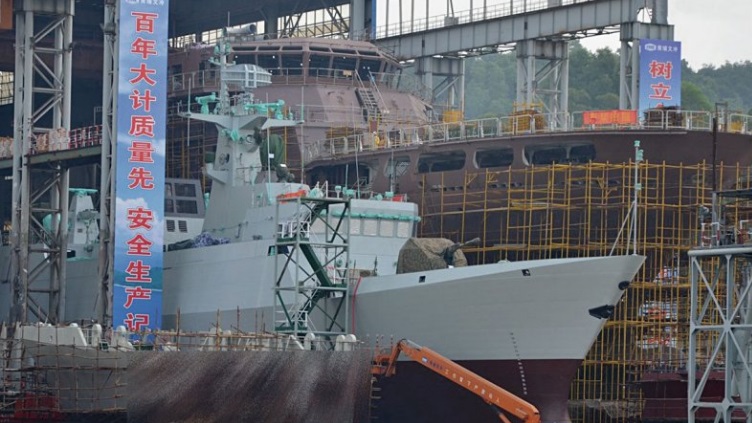
China’s 40th Jiangdao-class (Type 056/056A) corvette shortly before being launched on 28 October at the Huangpu shipyard in Guangzhou. (fyjs.cn)

Capitalizing on peacetime operations validates control and communication hand-offs and will integrate intelligence platforms, such as the PLAN’s newest electronic surveillance ship, the Kay Yangxin (开阳星 ), vastly expanding the reach of Chinese ISR. Additionally, integration of satellite-linked communication packages, utilizing the domestic constellation of GPS satellites known as the Beidou, or Compass, will continue to improve UAV navigation and targeting systems. These improved navigation and satellite aids will be integrated into existing UAV datalink systems and developed with future ISR systems in mind.

Command Guidance

The use of UAVs for military and ISR purposes can have unintended political and military consequences. The PLA command structure has always focused around centralization to retain political power over the military. It is fair to assume that the guidelines for deployment of UAVs used for strategic intelligence missions are developed at a high level. On November 26, 2015, President Xi Jinping rolled out one of the many updates to the Soviet-style military system that was part of a recent effort to make the PLA more efficient. According to Yue Gang, a retired Colonel in the PLA’s General Staff Department, placing all branches of the military under a “Joint Military Command” was the “biggest military overhaul since the 1950s.” On February 1, 2016, a few months after Yue Gang’s comments, China’s Defense Ministry Spokesman Yang Yujun stated that the PLA was consolidating seven military regions into five theater commands, a move likely to streamline C2 (China Military Online, February 2, 2016). The theater commands will be presided over by the Central Military Commission for overall military administration (See China Brief, February 4, 2016 and February 23, 2016).

Centralizing and reducing the number of commands will allow for each individual military component to focus on their own training objectives (China Military Online, February 2, 2016). This concept promotes component independence to enhance capability, but doesn’t talk to efforts to enhance integration of forces in joint military exercises. The logistical and financial burden of large-scale exercises naturally limit the frequency of exercises each region can conduct per year. What is not clear, yet important to understand for a high-end conflict, is how joint operations between military regions will be executed. Chinese Defense Ministry Spokesman Yang Yuju added that the new structure allows for the commands to have more decision-making power in responding to threats and requesting CMC support. (China Military Online, February 2, 2016).

Utilizing UAVs in regional operations to patrol disputed regions indicates that tactical control would be conducted at the highest level by a chief staff at a joint command center, but more likely relegated to a lower echelon headquarters element closer to the front lines. These lower-tiered units are likely bound by the strict left and right limits on where they patrol. Advances in simultaneous satellite data-link systems will allow for a more seamless handoff of ISR/strike assets between commands in a robust communications environment. The fielding of enhanced and interoperable satellite communications is likely to bolster the deployment of UAVs and further integrate them into PLA doctrine by supporting the “offshore waters defense” and “open seas protection” missions, as outlined in the PLA’s 2015 White Paper on Military Strategy (China Military Online, May 26, 2015).

Direct operational control of the PLA’s UAVs is generally given to the commander of the next higher echelon or to a commander on the ground. UAV technicians depicted on Chinese military websites tend to hold the ranks of junior non-commissioned officers E-5/OR-5 (Sergeant) to O- 2/OF-1 (First Lieutenant). This is similar to certain units of the United States Army, where platforms are directly controlled by enlisted and warrant officers. However, just like the U.S., guidance and direction is usually “tasked down” by a higher echelon, and UAVs with a strike package will likely be controlled or employed by officers under orders from above.

UAV units in the PLA are likely to be attached to a reconnaissance or communications company. Likewise, the PLA Air Force (PLAAF) and PLA Navy (PLAN) will likely have UAV-specific units. Advancements in communication will enable various command levels (i.e. company, battalion, brigade) to simultaneously pull UAV feeds and give guidance to the operator. Based on the size of various exercises, the training indicates UAV control is given down to the lowest level of command but under extremely strict guidance. Additionally, the authority to deploy or strike is likely to be held at the regional command level or higher. Specific rules of engagement are unknown, but those authorities will be developed through trial and error during a high-intensity conflict.

Interoperability

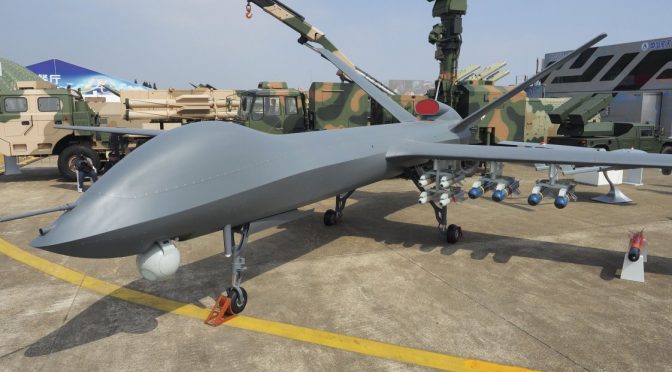
Communications infrastructure improvements are evident in the development of over-the-horizon satellite datalink programs and communication relays. The CH-5 “Rainbow” (Cai Hong) drone, for example, resembles a U.S. Atomic General MQ-9 “Reaper” and is made to function with data systems capable of integrating with previous CH-4 and CH-3 models (Global Times, November 3, 2016). The newest model is capable of 250 km line-of-sight datalink, with up to 2000 km communications range when linked into a secure satellite (Janes, November 7, 2016).

It is likely that improvements in interoperability will be shared among service branches. Recent developments in Ku-Band UAV data-link systems, highlighted during the 11th China International Aviation and Aerospace Exposition in November 2016, will further synchronize intelligence sharing and over-the-horizon control of armed and unarmed UAVs (Taihainet.com, November 2, 2016).

PLA Signal Units already train on implementing UAV communication relays (China Military Online, April 8, 2016). Exercises like these indicate a desire to increase the interoperability in a joint environment. UAVs with relay packages will improve functionality beyond ISR & strike platforms. Units traversing austere environments or maritime domains could utilize UAV coverage to extend the range of VHF or HF radios to direct artillery or missile strikes from greater distances. If keyed to the same encrypted channels, these transmissions could be tracked at multiple command levels.

Joined with a UAV satellite datalink, ground or air communications could be relayed from thousands of kilometers away. At the same time, a Tactical Operations Center (TOC) could directly receive transmissions before passing UAV control to a ground force commander. In a South China Sea or East China Sea contingency, UAVs could link unofficial maritime militias (dubbed “Little Blue Men”) via VHF to Chinese Coast Guard Vessels or Naval ships. These messages could also be relayed to PLA Rocket Force units in the event of an anti-access area denial (A2AD) campaign.

Capping off China’s already enormous communication infrastructure is the implementation of dedicated fiber-optic cables, most likely linking garrisoned units and alternate sites to leadership nodes. Future use technologies such as “quantum encryption” for both fiber-optic and satellite based communication platforms could lead to uninhibited communication during a military scenario (The Telegraph, November 7, 2014; Xinhua, August 16, 2016).

Functionality 

Based on the use of Chinese UAVs overseas and in recent exercises, UAVs will continue to be utilized on military deployments in the South China Sea for patrol and ISR support. In the event of a contingency operation or the implementation of an A2/AD strategy, UAVs will likely be used for targeting efforts, battle damage assessments, and small scale engagements. Against a low-tech opponent, the UAV offers an asymmetric advantage. However, the use of UAVs for something other than ISR would be greatly contested by more modern powers. UAVs are generally slow, loud, and observable by modern radar. Many larger UAVs can carry EW packages, although there is little information on how the datalink systems handle EW interference. Ventures in stealth technology, such as the “Anjian/ Dark Sword,” (暗剑) and “Lijian/ Sharp sword” (利剑) projects, would increase Beijing’s UAV survivability and first strike capability if deployed in a contingency operation (Mil.Sohu.com, November, 24, 2013). However, a large-scale deployment of stealth UAV assets is not likely in the near future due to cost and material constraints.

To reduce the risk of high-intensity engagements, China may expand its reliance on UAVs to harass U.S., Taiwanese, Japanese, Philippine, and Vietnamese vessels. Additionally, UAVs may be utilized abroad in the prosecution of transnational threats. So far, China has stuck to a no-strike policy against individuals, although it was considered as an option to prosecute a drug kingpin hiding out in Northeast Myanmar (Global Times, February 19, 2016). The “Rainbow/Cai Hong” variant and “Yilong / Pterodactyl,” made by Chengdu Aircraft Design & Research Institute (CADI), represent some of the more well-known commercial ventures used by the PLAAF (PLA Air Force) and sold on the global market. These variants are often used for ISR in counter-insurgency and counterterrorism operations (The Diplomat, October 6, 2016; Airforce-technology.com, no date).

Strike capability, aided by satellite datalink systems, is another growing capability of China’s UAV programs (Popular Science, June 8, 2016). In late 2015, the Iraqi army released images from a UAV strike against an insurgent element utilizing the Chinese-made export variant “Rainbow 4” (彩虹 4) running on a Window’s XP platform (Sohu.com, January 2, 2016; Popular Science, December 15, 2015). PLA UAVs already patrol border regions, conduct maritime patrols, and assist in geological surveys and disaster relief.

The arrival of off-the-shelf UAVs contributes to the growing integration of dual-use platforms. Technology and imagination are the only limits to the growing UAV industry. Additionally, the export of high-end military UAVs will only continue to grow as they are cheaper than U.S. models and growing in capability. The profit from these sales will certainly aid research and development efforts in creating a near-peer equivalent to the U.S. systems. For a struggling African nation held hostage by rebels (e.g. Nigeria) or an established U.S. ally in the Middle East (e.g. Jordan), the purchase of UAVs at a relatively low price will increase good will and allow for an operational environment to refine each platform’s own capability (The Diplomat, October 6, 2016; The Daily Caller, December 2, 2016).

Conclusion

UAVs for military operations are not new, however, improvements in lethal payloads, targeting, and ISR capabilities will change the role in which UAVs are utilized. Considering China’s own drone diplomacy, the deployment of UAVs is as much a political statement as it is a tactical platform. State-run media has highlighted the successes of its drone program but has not been clear on who, or at what command level, operational control of UAVs is granted. Due to Beijing’s standing policy against lethal targeting, release authority is most likely relegated to the Central Military Commission, or even President Xi himself.

The extent that doctrine has been developed in planning for a high or low-intensity conflict is still unclear. The advent of satellite data-links and communication relays means the tactical control of UAVs may be seamlessly transferred between commanders. The rapid development of UAVs will continue to be integrated into the joint forces array but must be done as part of an overall doctrine and C4ISR infrastructure. Failure to exercise their UAVs in a joint environment will affect combined arms operations and reduce the PLA’s ability to synchronize modern technology with centralized command decisions and rigid doctrine.

Brandon Hughes is the founder of FAO Global, a specialized research firm, and the Senior Regional Analyst-Asia for Planet Risk. He has previously worked with the U.S. Army, the Carnegie-Tsinghua Center for Global Policy, and Asia Society. He is a combat veteran and has conducted research on a wide variety of regional conflicts and foreign affairs. Brandon holds a Masters of Law in International Relations from Tsinghua University, Beijing and has extensive overseas experience focused on international security and U.S.-China relations. He can be reached via email at DC@FAOGLOBAL.com.

Featured Image: CASC’s CH-5 strike-capable UAV made its inaugural public appearance at Airshow China 2016 (IHS/Kelvin Wong)