
By Ryan Walker
It came as a great surprise to me that, despite disliking being a submariner in a shipyard, I quite enjoyed working as a test engineer/technician at Electric Boat. Shipyards have defined my adult life, and despite my current career forcing me to move away from them, I greatly appreciate the experience. From both a yardbird on the deck plate and a shipyard historian, there were a few things to take into consideration.
In the short-term, existing shipyards are the only production environments on which we can reasonably depend. While funding is flowing to shipyards, the customer (Congress) is not always reliable, incredibly demanding (for good reason), and shipyard production is a diseconomy of scale that relies on a high level of capital investment with relatively low margins restricted by the customer. It is an unattractive prospect for a private company to decide to venture into. This assumption has thus far proven correct, as no new shipyard is projected to open by 2029, though there does appear to be diversification of the shipyard’s work and supply network.
The question shifts to how to accelerate production with facilities today without waiting for a miracle or new production facility. My experience standing midwatch at Portsmouth Naval Shipyard and being the Third-Shift “Operability” technician at Electric Boat taught me that fewer personnel are present outside of First Shift. Current shipyard operations concentrate too much work into first shift, creating bottlenecks in tight spaces and diminishing returns, oftentimes well past the point where returns are negative (and makes parking a nightmare).
The solution is a modified Dupont shift schedule, an 8-4-2-10 model, that could sustainably increase shipyard output without burning out the workforce. This schedule divides the labor pool into two ten-hour shifts across an eight-day cycle, with each crew working four days on, four days off. By spreading work across two balanced shifts, we reduce congestion, improve coordination, and extend productive hours from 60–76 per week to potentially 140.
The benefits go beyond productivity. A predictable four-day-off cycle improves morale, attracts new talent, and offers resilience in the face of illness, burnout, or future disruptions. It also creates a built-in training pipeline: experienced workers on staggered shifts can mentor new hires and build institutional knowledge while preparing for future expansion. The 8-4-2-10 is a modern adaptation of the Second World War-era production tempo, designed to meet today’s labor realities while maximizing throughput.
This proposal requires buy-in from labor unions, management, and policymakers. It challenges the cultural norm of the five-day workweek and demands investment in oversight, scheduling, and support infrastructure. But the alternative is continued stagnation or waiting for another miracle of production. We cannot afford to wait for new shipyards to come online while our current facilities operate below capacity.
I recommend the Chief of Naval Operations push the 8-4-2-10 as a potential realistic solution rooted in historical insight, operational experience, and a deep respect for the challenges facing the shipyard worker. If implemented thoughtfully, the 8-4-2-10 schedule could become a model for other defense programs, reinforcing readiness while preserving workforce well-being.
Ryan C. Walker served as a submariner in the USN from 2014-19. Ryan is currently a PhD researcher at the University of Portsmouth and an Adjunct Naval History Professor at the United States Naval Community College. His first book, The Silent Service’s First Hero and has published several articles and chapters in edited collections on American submariners, American Naval-Capital towns, and British Private-Men-of-War. The opinions expressed are those of the author alone.
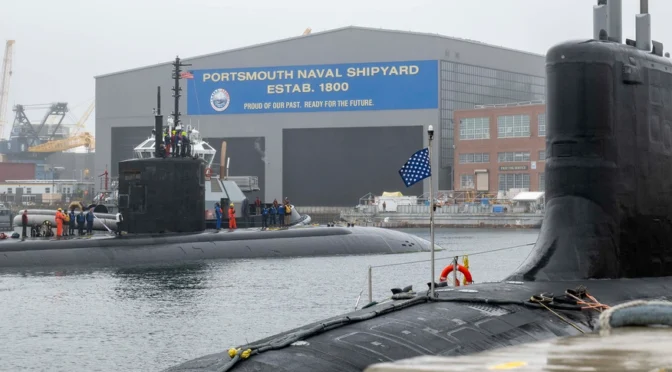
Featured Image: KITTERY, Maine (Nov. 21, 2024) — The Los Angeles-class attack submarine USS Hampton (SSN 767) arrives at Portsmouth Naval Shipyard, Kittery, Maine, for a scheduled maintenance period. (U.S. Navy photo by Mass Communication Specialist 1st Class Charlotte C. Oliver)
Discover more from Center for International Maritime Security
Subscribe to get the latest posts sent to your email.
I like the concrete, specific nature of this proposal.
Most of the warships (other than Amphibs) built in WW2 were built in government owned & run shipyards. The solution to me seems simple —re-nationalize the shipyards that build warships. It’s a national emergency. It can be done. It should be done.
Dr John T Kuehn
CDR Usn (retired)