Competing with China for a Free and Open Indo-Pacific

This article originally featured in the September-October 2019 edition of Military Review and is republished with permission. Read it in its original form here.

By Gen. Robert B. Brown, U.S. Army, Lt. Col. R. Blake Lackey, U.S. Army, and Maj. Brian G. Forester, U.S. Army

As China continues its economic and military ascendance, asserting power through an all-of-nation long-term strategy, it will continue to pursue a military modernization program that seeks Indo-Pacific regional hegemony in the near-term and displacement of the United States to achieve global preeminence in the future.

Summary of the 2018 National Defense Strategy

We are at a strategic inflection point. A hypercompetitive global environment coupled with accelerating technological, economic, and social change has resulted in an incredibly challenging and complex twenty-first-century operating environment. Nowhere is this more apparent than in the Indo-Pacific as the People’s Republic of China (PRC), under the leadership of the Chinese Communist Party (CCP), seeks to undermine the rules-based international order that has benefitted all nations for over seventy years. The PRC’s intentions are clear: to shape a strategic environment favorable to its own national interests at the expense of other nations. Recognizing the growing global challenges emanating from the region, our national leaders have offered a contrasting vision: a “Free and Open Indo-Pacific.”1 Since the end of World War II, the substance of that vision has benefitted all nations and none more than China. As an integral part of the U.S. Indo-Pacific Command’s joint and combined approach to realize that vision and maintain the advantage against the PRC, Army forces are actively competing for influence in the region. Maintaining an Indo-Pacific that is free and open will require us to continue competing with Beijing by forward posturing combat-credible forces, strengthening our regional alliances and partnerships, and tightly integrating with the combined joint force to succeed in multi-domain operations.

A Revanchist China

The CCP’s unabashed vision for the future is the “great rejuvenation of the Chinese nation.”2 Beyond just words, this blueprint has manifested itself in actions such as China’s One Belt, One Road initiative, wherein the CCP promises loans for infrastructure development across the Asia-Pacific region and, increasingly, the globe. In 2018, China expanded One Belt, One Road to include arctic regions as the “Polar Silk Road” and emphasized its growing status as a “Near-Arctic State.”3 Exploiting the resources of other nations for China’s benefit, One Belt, One Road development agreements often come with harmful, mercantilist terms that result in host-nation corruption, crippling debt, and Chinese takeover of critical infrastructure. For example, Chinese loans to Sri Lanka for a port project in Hambantota ultimately resulted in political turmoil and debt default. In 2015, Sri Lanka was forced to hand the port over to China along with fifteen thousand acres of coastline.4 This and other examples represent the type of “debt-trap diplomacy” that typifies the predatory economic practices under China’s One Belt, One Road.5

Beyond simple regional influence, the CCP has a long-term vision for global preeminence.6 President Xi Jinping has offered a plan to guide China through domestic transformation and realize the “Chinese dream.”7 This plan includes “two 100s,” a symbolic representation of the CCP’s and the PRC’s one hundred-year anniversaries (2021 and 2049, respectively). By 2021, the CCP aims to achieve status as a “moderately prosperous society,” doubling its 2010 per capita gross domestic product and raising the standard of living for all Chinese citizens.8 By the PRC’s one hundredth anniversary in 2049, the CCP envisions the nation as “fully developed, rich and powerful,” with an economy three times the size of the United States backed up by the world’s premier military power.9 Collectively, the “two 100s”—with 2035 as an interim benchmark year—outline China’s self-described path to revitalization as a superpower. This future vision is evident in the rhetoric and views of People’s Liberation Army (PLA) leaders. Command level engagements with PLA officers indicate that they no longer fear the United States. Twenty, or even ten, years ago, it was evident that the PLA viewed the United States with a healthy dose of both respect and fear. That view has noticeably changed in recent years. While the PLA still respects our military capability, it no longer fears us, which is reflective of its confidence in its growing relative military power.

China has been utilizing the current peaceful interlude in international relations to aggressively modernize its military force. From 2000 to 2016, the CCP increased the PLA’s budget by 10 percent annually.10 And while the CCP has voiced its intentions to achieve a fully modernized force by 2035, its actions indicate a far earlier target.11 Capitalizing on the research-and-development efforts of other nations, frequently through underhanded means, the PLA is rapidly expanding its arsenal, focusing less on conventional forces and more on nuclear, space, cyberspace, and long-range fires capabilities that enable layered standoff and global reach. The PLA’s updated doctrinal approach to warfighting envisages war as a confrontation between opposing systems waged under high-technology conditions—what the PLA refers to as informatized warfare.12 In short, this is using information to PLA advantage in joint military operations across the domains of land, sea, air, space, cyberspace, and the electromagnetic spectrum. Additionally, recognizing the need to carry out joint operations in a high-tech operating environment, the PLA is in the process of reforming its command-and-control structure to resemble our own theater and joint construct.13 In sum, the CCP characterizes the PLA’s military modernization and recent reforms as essential to achieving great power status and, ultimately, realizing the “great rejuvenation of the Chinese nation.”14

Our Competing Vision

It is against this backdrop that U.S. Indo-Pacific Command is implementing a strategy toward our national vision of a “Free and Open Indo-Pacific.”15 As stated by Adm. Phil Davidson, commander of U.S. Indo-Pacific Command:

We mean ‘free’ both in terms of security—being free from coercion by other nations—and in terms of values and political systems … Free societies adhere to the shared values of the United Nations Charter and the Universal Declaration of Human Rights, respecting individual liberties.16

By “open,” we mean that “all nations should enjoy unfettered access to the seas and airways upon which our nations and economies depend.” This includes “open investment environments, transparent agreements between nations, protection of intellectual property rights, fair and reciprocal trade—all of which are essential for people, goods, and capital to move across borders for the shared benefit of all.”17The substance of this vision is not new; “free and open” have buttressed our regional approach for over seventy years. As an enduring Pacific power, we aim to preserve and protect the rules-based international order that benefits all nations, and it is this objective that underpins our long-term strategy for Indo-Pacific competition.18

Despite our conflicting visions, we must not overlook areas of common interest with China. As noted by then Acting Secretary of Defense Patrick Shanahan at the recent IISS (International Institute for Strategic Studies) Shangri-La Dialogue in Singapore, “We cooperate with China where we have an alignment of interests.”19 We have strands of commonality—especially in the military realm—notably related to humanitarian assistance and disaster relief. U.S. Army Pacific annually participates in the largest exercise with the PLA that focuses on disaster response. We can and should find common ground to build trust and stability between our two nations. But, as Shanahan went on to say, “We compete with China where we must,” and though “competition does not mean conflict,” our overarching goal is to deter revisionist behavior that erodes a free and open Indo-Pacific and, ultimately, win before fighting.20 Land forces play a key role in competing to deter the PRC. Deterrence is the product of capability, resolve, and signaling, and there is no greater signal of resolve than boots on the ground. Forward-postured Army forces, alongside a constellation of like-minded allies and partners, provide a competitive advantage and a strong signal of strength to potential adversaries. Should deterrence fail, forward-postured land forces support a rapid transition to conflict, providing the Indo-Pacific commander additional options in support of the combined joint fight. In an environment where anti-access aerial denial systems provide layered standoff, forward-postured land forces can enable operations in the maritime and air domains if competition escalates to crisis or conflict, which we have demonstrated in tabletop exercises, simulations, and operational deployments.
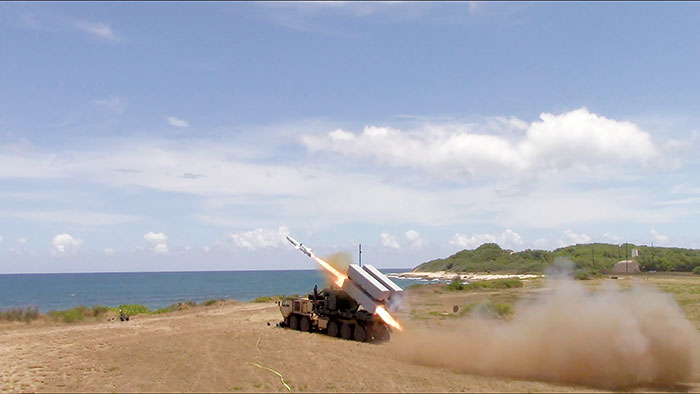
Naval-missile-launch
A Naval Strike Missile fires from an Army Palletized Load System truck 12 July 2018 before hitting a decommissioned ship at sea during the world’s largest international maritime exercise, Rim of the Pacific, at the Pacific Missile Range near Kekaha, Hawaii. This was the first land-based launch of the missile. (Photo by David Hogan, U. S. Army Aviation and Missile Research Development and Engineering Center Weapons Development and Integration Directorate)

Competition with the PRC is happening now, and the twenty-five thousand islands in the Indo-Pacific will be a key factor in any crisis scenario we may encounter. U.S. Army Pacific delivers several advantages to the combined joint force as America’s Theater Army in the Indo-Pacific. This summer, U.S. Indo-Pacific Command completed the first ever certification of U.S. Army Pacific as a four-star combined joint task force (CJTF). This historic certification not only signifies the integral role of land forces in the Indo-Pacific, but it also provides the combatant commander the option of a land-based CJTF. Additionally, Army forces contribute to an agile and responsive force posture that ultimately strengthens the joint force’s capacity for deterrence.

Now in its seventh year, the Pacific Pathways Program is evolving to meet the demands of increased competition. Under Pathways 2.0, U.S. Army Pacific forces are now west of the international dateline ten months of the year, and the Pathways Task Force, which is growing from under 1,000 to approximately 2,500 troops, will remain static in key partner nations—especially in the first island chain—for longer periods.21 Doing so benefits the partner forces by increasing the depth of training and relationships, enhances the combat readiness of the deployed task force, and allows the dynamic force employment of smaller units to outlying countries. For example, in May of this year, we operationally deployed a rifle company from the Pathways Task Force based in the Philippines to Palau for combined training with the local security forces—the first time in thirty-seven years Army forces have been in Palau. Pathways 2.0 and other Army force-posture initiatives are expanding the competitive space, providing opportunities to compete with the PRC for influence in previously uncontested regions of the Indo-Pacific.

Operating among the people, our land forces are especially suited to strengthening the alliances and partnerships in a complex region containing over half of the world’s population. Everything we do in the region militarily is combined; we will never be without our allies, partners, and friends. Relationships must be built before—not during—a crisis. We strive every day to form our team in the Indo-Pacific so that when a crisis occurs, we are ready. During U.S. Army Pacific’s recent certification as a CJTF, key allies and partners provided critical capabilities that made the entire team better. The exercise exemplified the importance of forming the team prior to crisis, strengthening our capacity for deterrence to ensure a free and open Indo-Pacific. Because fear and coercion are central to the PRC’s regional approach, mutually beneficial and purposeful engagements build trust among our partners and enable us to cooperatively counter China’s intimidation. During this fiscal year alone, U.S. Army Pacific conducted over two hundred senior leader engagements, seventy subject-matter expert exchanges, and over thirty bilateral and multilateral training exercises involving thousands of soldiers. These partner engagements reinforce the message that nothing we do in the theater will be by ourselves; it is only by working together that we can achieve a free and open Indo-Pacific.

Army forces also strengthen regional partnerships by enhancing interoperability among militaries. We often focus interoperability discussions on technical systems (communications, fires, logistics, etc.). The hard reality is that our systems will always have challenges with communication, and though we should not stop pursuing perfection, we must not forget the other dimensions of interoperability: procedures and relationships. Procedural interoperability involves agreed upon terminology, tactics, techniques, and procedures that minimize doctrinal differences. While we will always remain frustrated by—and often focused on—systems interoperability, procedural interoperability should not be overlooked as a way to enhance our cooperative effectiveness. The most important dimension of interoperability is personal relationships. Strong relationships among partners can overcome the friction inherent in today’s complex operating environment, especially at the outset of crisis, and they are a critical component of long-term strategic competition with China.

Finally, our strategic approach to the Indo-Pacific embraces the reality that current and future operations will be multi-domain. In competition and conflict, all domains—land, air, maritime, space, and cyberspace—will be contested. The combined joint force will have to seize temporary windows of opportunity to gain positions of relative advantage. Considering the geographic complexity of the Indo-Pacific across twenty-five thousand islands, land forces will play a pivotal role in supporting operations in other domains whether during competition, crisis, or conflict. Exercises and simulations have demonstrated the value of land-based systems—integrated with cyber and space capabilities—in enabling air and maritime maneuver. For over two years, U.S. Army Pacific has been leading the Army’s Multi-Domain Task Force (MDTF) Pilot Program; through exercises and experimentation in the Indo-Pacific, we are driving the development of multi-domain operations (MDO) doctrine and force structure. Earlier this year, we activated the first Intelligence, Information, Cyber, Electronic Warfare, and Space (I2CEWS) Detachment, which serves as the core of the MDTF’s forward-deployed capability to strengthen our capacity for deterrence.
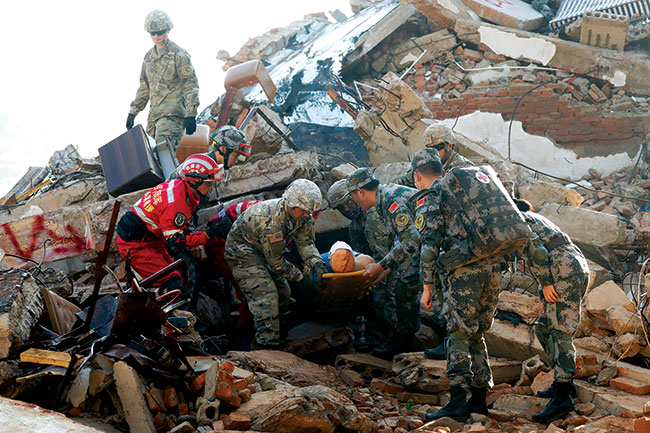
US-China-exercise
Soldiers from Chinese People’s Liberation Army (PLA) Southern Theater Command and the U.S. Army Pacific carry an injured man 18 November 2016 as they conduct a search-and-rescue operation at a simulated earthquake-collapsed building during the U.S.-China Disaster Management Exchange drill at a PLA training base in Kunming in southwestern China’s Yunnan Province. (Photo by Andy Wong, Associated Press)

Succeeding in multi-domain competition with China will require an unprecedented level of U.S. joint force integration. In the past, we have waited for conflict to begin for jointness to take hold, but we cannot afford to do so now. And while we are well practiced at joint interdependence in conflict—notable examples include Operations Desert Storm and Iraqi Freedom—MDO will require the “rapid and continuous integration of all domains of warfare to deter and prevail as we compete short of armed conflict.”22 Accomplishing this level of joint integration will require us to break down existing service stovepipes, overcome our tendency to seek service-centric solutions, and integrate doctrine, training, and modernization efforts to mature MDO into a joint warfighting approach. The Indo-Pacific is truly a combined and joint theater, and we must seek combined and joint solutions to the problem of competition with China.

Our Advantage

We should be clear-eyed about the PRC’s demonstrated intentions to undermine the rules-based international order and shape a strategic environment favorable to its interests at the expense of other nations. No one seeks conflict, but as George Washington once said, “To be prepared for war is one of the most effectual means of preserving peace.”23 U.S. Army Pacific, as part of a lethal combined joint team, contributes to deterrence through the forward posture of combat-credible forces, the strengthening of our regional alliances and partnerships, and a joint approach to MDO. We will cooperate with China where we can but will also compete where we must to maintain a free and open Indo-Pacific and preserve the rules-based order that has been at the heart of the region’s stability and prosperity for over seventy years.

Strategic competition with China is a long-term challenge, exacerbated by the accelerating complexity of the global security environment. Within this challenge, though, is the opportunity to leverage our greatest long-term advantages: our partnerships and our people. Everything we do in the Indo-Pacific is in partnership with other nations. We must maintain strong alliances and partnerships, leveraging our combined forces to ensure a free and open Indo-Pacific. And as Gen. George Patton said, “The soldier is the Army. No army is better than its soldiers.”24 Though our combined joint force is the envy of the world, we have “no preordained right to victory on the battlefield.”25 We must actively invest in the development of our people now in order to retain the advantage in MDO. Leaders who can thrive—as opposed to just survive—in ambiguity and chaos are essential if we are to maintain a combat-credible force that can succeed in a complex, multi-domain operating environment. We are confident in our greatest assets—our people, in cooperation with our great allies and partners. Investing in our advantage today will ensure we can compete, deter, and, if necessary, win as part of a lethal combined joint team.

Gen. Robert B. Brown, U.S. Army, is the commanding general of U.S. Army Pacific (USARPAC). He has served over fourteen years with units focused on the Indo-Pacific region, including as commanding general, I Corps and Joint Base Lewis-McCord; deputy commanding general, 25th Infantry Division; director of training and exercises, United States Indo-Pacific Command (USINDOPACOM) J7 (now J37); executive assistant to the commander, USINDOPACOM; plans officer, USARPAC; and commander, 1st Brigade Combat Team (Stryker), 25th Infantry Division. Assignments in the generating force include commanding general, U.S. Army Combined Arms Center, and commanding general, Maneuver Center of Excellence.

Lt. Col. R. Blake Lackey, U.S. Army, is executive officer to the commanding general, U.S. Army Pacific. He has served in Stryker and light infantry formations in the Indo-Pacific, most recently commanding 1st Battalion, 5th Infantry Regiment at Fort Wainwright, Alaska.

Maj. Brian G. Forester, U.S. Army, is speechwriter to the commanding general, U.S. Army Pacific. He most recently served as the operations officer for 1st Brigade Combat Team (Stryker), 25th Infantry Division at Fort Wainwright, Alaska.

Notes

  1. Alex N. Wong, “Briefing on the Indo-Pacific Strategy,” U.S. Department of State, 2 April 2018, accessed 5 July 2019, https://www.state.gov/briefing-on-the-indo-pacific-strategy/.
  2. Rush Doshi, “Xi Jinping Just Made It Clear Where China’s Foreign Policy is Headed,” Washington Post (website), 25 October 2017, accessed 5 July 2019, https://www.washingtonpost.com/news/monkey-cage/wp/2017/10/25/xi-jinping-just-made-it-clear-where-chinas-foreign-policy-is-headed/.
  3. Jack Durkee, “China: The New ‘Near-Arctic’ State,” Wilson Center, 6 February 2018, accessed 5 July 2019, https://www.wilsoncenter.org/article/china-the-new-near-arctic-state.
  4. Maria Abi-Habib, “How China Got Sri Lanka to Cough up a Port,” New York Times (website), 25 June 2018, accessed 5 July 2019, https://www.nytimes.com/2018/06/25/world/asia/china-sri-lanka-port.html.
  5. “The Perils of China’s ‘Debt-Trap Diplomacy,’” The Economist (website), 6 September 2018, accessed 5 July 2019,https://www.economist.com/asia/2018/09/06/the-perils-of-chinas-debt-trap-diplomacy.
  6. Michael Pillsbury, The Hundred-Year Marathon: China’s Secret Strategy to Replace America as the Global Superpower(New York: St. Martin’s Press, 2015), 28.
  7. Robert Kuhn, “Xi Jinping’s Chinese Dream,” New York Times (website), 4 June 2013, accessed 5 July 2019, https://www.nytimes.com/2013/06/05/opinion/global/xi-jinpings-chinese-dream.html.
  8. Ibid.
  9. Pillsbury, The Hundred-Year Marathon, 28.
  10. Defense Intelligence Agency, China Military Power: Modernizing a Force to Fight and Win (Washington, DC: Defense Intelligence Agency, 3 January 2019), 20, accessed 5 July 2019, http://www.dia.mil/Military-Power-Publications.
  11. Ibid., 6.
  12. Ibid., 24.
  13. Ibid., 25.
  14. Ibid., V.
  15. The White House, National Security Strategy of the United States of America (Washington, DC: The White House, December, 2017), 46, accessed 5 July 2019, https://www.whitehouse.gov/wp-content/uploads/2017/12/NSS-Final-12-18-2017-0905.pdf.
  16. Philip Davidson, “A Free and Open Indo-Pacific” (speech, Halifax International Security Forum, Halifax, Nova Scotia, Canada, 17 November 2018), accessed 5 July 2019, https://www.pacom.mil/Media/Speeches-Testimony/Article/1693325/halifax-international-security-forum-2018-introduction-to-indo-pacific-security/.
  17. Ibid.
  18. Patrick M. Shanahan, preface to Indo-Pacific Strategy Report: Preparedness, Partnerships, and Promoting a Networked Region (Washington, DC: Department of Defense, 1 June 2019), accessed 5 July 2019, https://media.defense.gov/2019/Jul/01/2002152311/-1/-1/1/DEPARTMENT-OF-DEFENSE-INDO-PACIFIC-STRATEGY-REPORT-2019.PDF.
  19. Patrick M. Shanahan, “Acting Secretary Shanahan’s Remarks at the IISS [International Institute for Strategic Studies] Shangri-La Dialogue 2019” (speech, Shangri-La Hotel, Singapore, 1 June 2019), accessed 5 July 2019, https://dod.defense.gov/News/Transcripts/Transcript-View/Article/1871584/acting-secretary-shanahans-remarks-at-the-iiss-shangri-la-dialogue-2019/.
  20. Ibid.
  21. The “first island chain” is a term used to describe the chain of archipelagos that run closest to the East Asian coast.
  22. U.S. Army Training and Doctrine Command (TRADOC) Pamphlet 525-3-1, The U.S. Army in Multi-Domain Operations 2028 (Fort Eustis, VA: TRADOC, 6 December 2018), accessed 5 July 2019, https://adminpubs.tradoc.army.mil/pamphlets/TP525-3-1.pdf.
  23. George Washington, “First Annual Address to Both Houses of Congress” (speech, New York, 8 January 1790), transcript available at “January 8, 1790: First Annual Message to Congress,” University of Virginia Miller Center, accessed 5 July 2019, https://millercenter.org/the-presidency/presidential-speeches/january-8-1790-first-annual-message-congress.
  24. George S. Patton Jr., “Reflections and Suggestions, Or, In a Lighter Vein, Helpful Hints to Hopeful Heroes” (15 January 1946), quoted in “Past Times,” Infantry 78, no. 6 (November-December 1988): 29.
  25. Summary of the National Defense Strategy, 1.

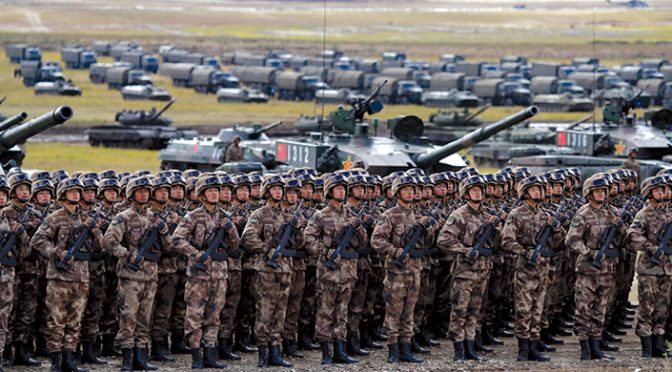
Featured Image: Chinese troops on parade 13 September 2018 during the Vostok 2018 military exercise on Tsugol training ground in Eastern Siberia, Russia. The exercise involved Russian, Chinese, and Mongolian service members. Chinese participation included three thousand troops, nine hundred tanks and military vehicles, and thirty aircraft. (Photo by Sergei Grits, Associated Press)
Learning From Success: Advancing Maritime Security Cooperation in Atlantic Africa

By Dr. Ian Ralby

The M/T MAXIMUS and the M/T ANUKET AMBER are vessels that have tested the cooperative architecture for maritime security in West and Central Africa. The MAXIMUS is considered a great success story, and the ANUKET AMBER was at least a partial success. Though each involved a different type of maritime crime, a common element between them is that they helped highlight key areas where further effort is needed to achieve the goal of collective and comprehensive maritime security in Atlantic Africa. It is vitally important to celebrate the successes that have occurred in recent years, and there are quite a few. But even in reviewing success stories there is room for teasing out lessons in how to improve. When viewed as a pair of cases, these two distinct matters help point toward how West and Central Africa can proceed to enhance maritime security in the years to come.

The Case of the M/T MAXIMUS

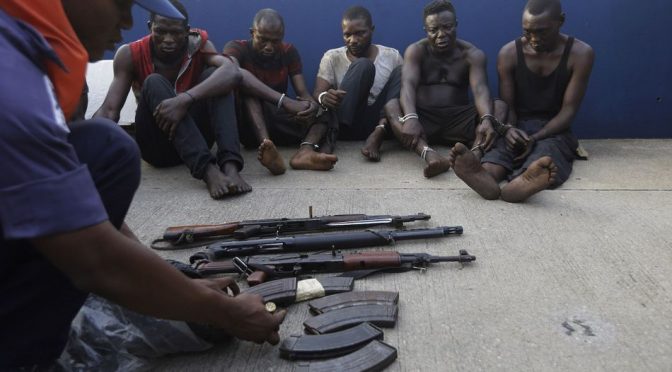
Relative to other piracy cases in the Gulf of Guinea, a lot has been written about the hijacking and successful recovery of the MAXIMUS. One reason for the attention is that, perhaps more than any other incident, this one demonstrated the value of the cooperative architecture set forth in the 2013 Code of Conduct Concerning the Repression of Piracy, Armed Robbery Against Ships, and Illicit Maritime Activity in West and Central Africa (Yaoundé Code of Conduct). In February 2016, the MAXIMUS was overrun by pirates about 60 nautical miles off the coast of Côte d’Ivoire. The maritime law enforcement agencies of Côte d’Ivoire, Ghana, Togo, Benin, Nigeria and São Tomé and Príncipe all cooperated in tracking the vessel across their respective Exclusive Economic Zones (EEZs). Ultimately, the Nigerian Navy performed an opposed boarding, killed one pirate, captured the remainder and freed both the hostages and the vessel. At the time, the incident was heralded as the “coming of age” of navies in the region.

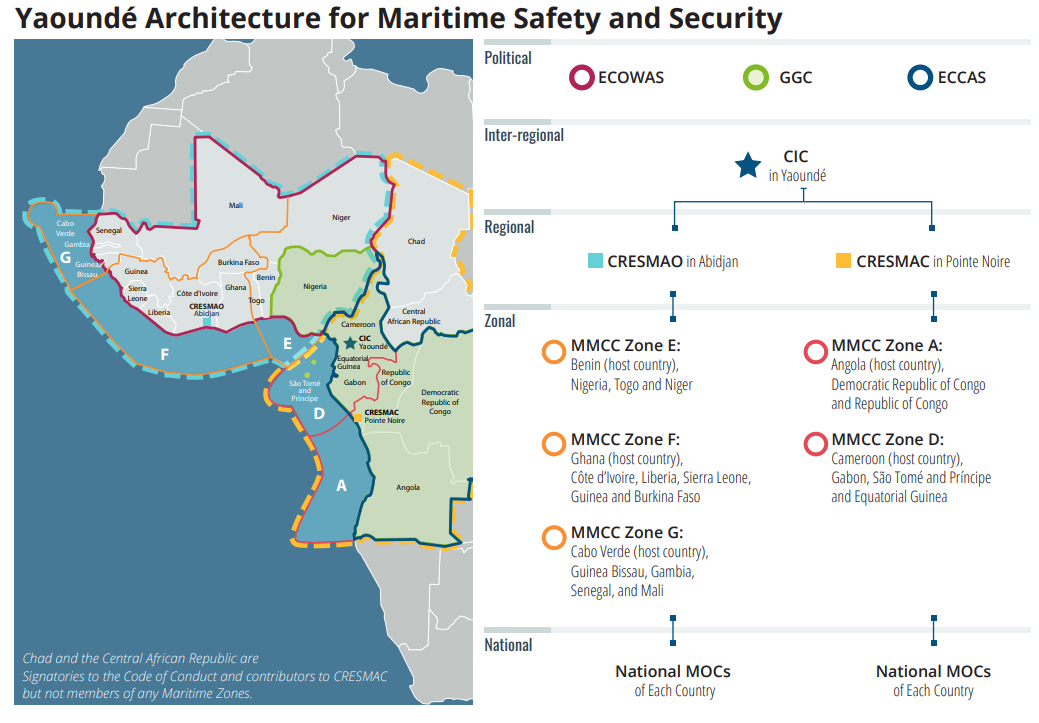
While nothing can detract from the success of the MAXIMUS case, there are some key issues that the incident revealed, several of which remain unaddressed. Perhaps the most prominent is the ongoing challenge of closing the seams between regions. The ultimate interdiction of the MAXIMUS occurred on the fault line between the Economic Community of Western African States (ECOWAS) and the Economic Community of Central African States (ECCAS), and thus on the line between the West African Maritime Security Center (CRESMAO, though not manned until 1 September of that year) and the Central African Maritime Security Center (CRESMAC), as well as between Maritime Zones E and D.

Complicating matters further, the Joint Development Zone between Nigeria and São Tomé, created by treaty in 2003, creates an overlap between those regions and zones. Theoretically, the cooperative mandate of the Yaoundé Code should resolve any tensions arising out of incidents that cross zones and regions, but the practical realities imply challenging issues of command and control. If crossing from Zone E to Zone D, should the chain be from the Nigerian maritime operations center (MOC) to the Zone E Maritime Multinational coordination center (MMCC), to CRESMAO to the Interregional Coordination Center (CIC), to CRESMAC, to the Zone D MMCC, to Cameroon or São Tomé’s MOC? 

Zones within the Yaoundé architecture and the associated command and control relationships (Julie Tucker of I.R. Consilium, printed with permission) [Click to expand]
This is a highly inefficient and ineffective approach, requiring steps be taken to ensure that the Yaoundé architecture is not breaking down some barriers to cooperation only to create new ones. While matters of trust between neighboring states can mitigate in favor of a more regionally or zonally oriented system of command and control, such a structure must be considered carefully in order to prevent it from becoming a burdensome mechanism that actually hinders the ability to respond in real-time to undesirable events on the ocean.

Additionally, the story of the MAXIMUS is often told as an operational success, despite, in many regards, being a legal failure. When the Nigerian Navy hailed the MAXIMUS, renamed by the pirates the M/T ELVIS 5, the pirates actually challenged the Nigerian officers, claiming they were in international waters and that the Nigerians had no legal authority to act. That baseless legal argument nevertheless slowed the Nigerians’ advance, as it caused them to take several hours to question their legal authority. Furthermore, since the case concluded, debates have continued as to why Nigerian vessels could interdict a pirated vessel in another country’s EEZ.

The legal confidence to recognize that piracy, as a matter of international law, is a crime of universal jurisdiction has been compromised by the painfully slow process of updating national legislation to even outlaw piracy. While the MAXIMUS is one of the region’s most famous piracy cases, it is not a piracy case in the court. Rather, the responsible individuals have been tried for such crimes as conspiracy, firearms violations, and mishandling of petroleum resources. While the long-awaited piracy bill in Nigeria – to outlaw the crime under national law – was finally signed by President Buhari in July 2019, it has yet to be implemented. Work has proceeded since February 2016 to build both Nigeria’s and the wider region’s legal capacity, but more work is needed.

These lessons regarding closing the seams between cooperative mechanisms and enhancing the legal wherewithal of maritime law enforcement agencies were more recently reinforced by the case of the M/T ANUKET AMBER.

The Case of the M/T ANUKET AMBER

There are actually two separate incidents involving the ANUKET AMBER  tanker that occurred in the autumn of 2018 – the first has been publicized, but the second has not. On 29 October, while engaged in a ship-to-ship (STS) bunkering operation with an LNG tanker off the Republic of Congo, both the ANUKET AMBER and the ARC TZE, the vessel to which she was coupled, were pirated. In one of the only incidents of double piracy the region has seen, it took several months for the hostages to be released. In the meantime, the ANUKET AMBER itself was abandoned and recovered in Togo’s waters at the beginning of November.

The second incident, however, is the one that bears greater attention. On 17 December the Maritime Multinational Coordination Center (MMCC) for ECOWAS Zone F alerted the states of Ghana and Côte d’Ivoire that the ANUKET AMBER was engaging in systematic STS transfers in the previously disputed area of the EEZ between the two countries. On 18 December, one of the vessels with which it had rendezvoused, the MSC MARIA, actually entered the port of San Pedro in Côte d’Ivoire, where Ivorian authorities detained it. At the same time, Ghanaian and Ivorian naval operators agreed that they needed to arrest the ANUKET AMBER. While operational cooperation existed in so far as there was a good relationship between the two navies, the potential political backlash of crossing the, until recently, disputed maritime boundary rendered them hesitant.

Through activating a network of relationships with international partners and the United States government, coordinated in part by CRESMAO, both countries were able to get the political top cover needed to go and arrest the vessel. On 21 December, both navies sent vessels in pursuit of the ANUKET AMBER. Ghana’s vessel arrived first and brought her back to Tema. If the matter had ended there, this would have been a great success story in regard to the relationships of trust that have been built in the region in recent years. While Ghana later claimed that they fined the ANUKET AMBER for failure to notify them as the coastal state, they did not find the legal means to hold the vessel, and let her go on 23 December without notifying the Ivorians. That, in turn, destroyed the Ivorians’ case against the MSC MARIA, which was then let go as well.

While there are many things to celebrate about this incident – from the interaction and coordination among CRESMAO, the Zone F MMCC, and both countries involved to the immediate ability of both navies to talk with each other and reach out to international partners – this matter ultimately brought out three key issues. First was the lack of an operational memorandum of understanding (MOU) within Zone F to allow for the seamless invocation of hot pursuit, not so much as a legal matter, but as one with political implications for the two countries involved. In other words, there needed to be a standing order for them to be able to exercise the legal right of hot pursuit without fear of political backlash. Second was the lack of legal expertise to be able to at least investigate potential charges for the vessels involved. The final issue was the lack of communication between the states after the operation. While they had coordinated getting the vessels, there was no interaction when the decision was made to release the ANUKET AMBER. This suggests a need for stronger cooperative mechanisms between states during the legal finish phase of an operation.

Learning from Success

In both of these cases, the greatest success may not have been what happened on the water, but what happened in response to the shortcomings identified. On the one hand, the capacity and capability of a number of navies have improved since February 2016, suggesting the MAXIMUS case might have been resolved faster if it had happened now. Additionally, increased focus on legal understanding has improved the resilience of the navies, and new laws, like Nigeria’s long-anticipated piracy bill, serve as key tools in the fight against maritime crime. Furthermore, some of the inter-regional operational concerns that threatened the success of the MAXIMUS interdiction have been resolved. More work is likely needed to ensure smooth command and control and seamless cooperation, but there has been significant improvement in recent years.

The deficiencies recognized in the ANUKET AMBER case, however, were addressed even more swiftly and aggressively. Even during the incident, notes were being taken as to what needed to be improved. In early 2019, Côte d’Ivoire held a national debriefing on the matter and, recognizing the need for stronger laws, began work on improving its legislation regarding STS transfers.

Thereafter a multilateral debriefing involving all the parties – Ghana, Côte d’Ivoire, MMCC Zone F and CRESMAO – on 25 February 2019 identified the key takeaways from the experience. First and foremost was developing an operational MOU for MMCC Zone F to avoid encountering some of the same operational challenges as the states had in December. The speed with which this was addressed – exactly five months after that meeting – is a tremendous credit to the drive of the states involved as well as to the leadership of both the MMCC Zone F and CRESMAO. The MOU was largely drafted in March 2019 and subsequently signed on 25 July.

Lessons on the Horizon

In the spirit of continual improvement, it is worth noting that these structures of security cooperation under the Yaoundé Architecture are going to be challenged time and time again. Notwithstanding the spike in piracy in and around Nigeria, there are plenty of other transnational maritime threats that will likely help to both validate and further refine the architecture. For example, fishing vessels registered in one state that are fishing in the EEZ of a nearby state and then dragging nets on the way home across a third state, or complex networks of offshore transshipments, are the sorts of scenarios that are not yet fully capturing the attention of maritime law enforcement agencies but will likely become a key test of the cooperative mechanisms in the months and years to come. That said, the prompt response of the region to incorporate lessons learned provides cause for optimism that the Yaoundé Architecture will be able to adapt to threats as it matures. While learning from failure is often a necessity, these cases involved learning from what were otherwise important successes, and that is truly something to celebrate.

Dr. Ian Ralby is a recognized expert in maritime law and security and serves as CEO of I.R. Consilium, a family business with leading expertise in maritime and resource security. He is also a Maritime Crime Expert for UNODC’s Global Maritime Crime Program and a Senior Fellow at the Atlantic Council. He previously spent four years as Adjunct Professor of Maritime Law and Security at the United States Department of Defense’s Africa Center for Strategic Studies.  

Featured Image: Arrested pirates who hijacked the MT Maximus last month. (Sunday Alamba/AP)

Call for Articles: PEO USC Launches CIMSEC Mine Countermeasures Topic Week

Submissions Due: October 14, 2019
Week Dates: October 21-25, 2019
Article Length: 1000-3500 words
Submit to: Content@cimsec.org

By Dr. Sam Taylor, Senior Leader, Mine Warfare
Program Executive Office, Unmanned and Small Combatants (PEO USC)

Naval experts almost universally agree that conducting effective mine countermeasures (MCM) is one of the most difficult and time-consuming missions for navies to successfully execute. Mines come in many different and increasingly deadly types, and can be deployed in deep or shallow waters, and in the surf zone. The bottom clutter and the dark, turbid ocean environment effectively helps to hide them from easy detection.

While difficult to undertake and execute well under demanding operational conditions, achieving success in the MCM world is not a mission impossible. For the U.S. Navy, MCM has been comprised of minehunting and minesweeping tactics using a dedicated force of MCM-capable ships, helicopters, and specially-trained Explosive Ordnance Disposal units. But the legacy MCM inventory is becoming increasingly costly to maintain and is rapidly approaching the end of its useful service life.

Today the Navy is approaching a strategic juncture in MCM where a host of emerging technologies provide new opportunities for widening the traditional approach to mine warfare and could, if successfully executed, bring about a 21st Century renaissance in MCM. Harnessing these new technologies to assist in resolving the very challenging MCM mission set is critical to the future of how the U.S. Navy conducts mine warfare, especially in light of emerging global great power threats.

The list of emerging technologies goes well beyond the additional capability being brought to the Fleet through the modular MCM Mission Package on the Littoral Combat Ship, to include new airborne and unmanned systems and integrated processing capabilities. These systems offer increased speed of operations, faster processing times to identify mines and other underwater objects, and fewer false alarm rates. The modular LCS MP will increase the pace at which Navy formations can clear mined waters. But this is just the beginning for how MCM can transform to conduct future mine warfare operations.

Some of the most salient technological opportunities of importance to naval mine warfare include exploring the integration of artificial intelligence and machine learning; the increasing technical maturity of unmanned underwater vehicles (UUVs) and unmanned surface vessels (USVs), combined with their expanding inventories; assessing new advances in communications, especially underwater; new algorithms being developed for the execution of swarm tactics; the assessment of advances in computer processing speeds; and modular systems engineering techniques for mine warfare.

Technologies and tactics that can help conduct in-stride mine detection are also of keen interest, because dedicated and optimized modular MCM forces will not be available everywhere and at all times. Similar to the tactics U.S. military land forces adopted in Iraq and Afghanistan over the last two decades, the Navy is keen to understand how risk to general purpose forces, operating in a distributed maritime fight, can be reduced through technological and tactical advances that can help these ships avoid the most common mine threats they may encounter. Optimization of ships and submarines for an MCM “mark and move” capability will be critical to ensuring the Navy can maintain freedom of access and maneuver during great power conflict.

To better understand the impact emerging technology poses for MCM and to jumpstart critical thinking, the Navy’s Program Executive Office for Unmanned and Small Combatants (PEO USC) is teaming with the Center for International Maritime Security (CIMSEC) to solicit new ideas. Here are some of the strategic questions that PEO USC is seeking to explore regarding the future of Navy MCM systems:

  • How do we more creatively apply new, innovative technologies to address the operational and tactical challenges posed by mines?
  • Are there better, more innovative operational constructs that can be employed to expand the use of unmanned systems to tackle MCM?
  • How can we employ more innovative operational MCM concepts that seek to take advantage of new technologies and other scientific advances while still maintaining fleet support?
  • Can we re-think the entire approach to confronting the MCM problem?
  • Were we to develop a new generation of MCM tactics and doctrine from first principles, based on our current understanding of technology trends, how might MCM fundamentally change?
  • What new areas of science, technology, or mathematics might we exploit to significantly enhance current and future MCM capabilities?
  • Are we effectively using the right set of metrics and algorithms in MCM?
  • How do we expeditiously translate these new technologies and operational concepts into more flexible and adjustable requirements?

Contributors can answer these questions and more to help chart the course for the future of U.S. Navy MCM capabilities and concepts. Please send all submissions to Content@cimsec.org.

Editor’s Note: This topic week has since concluded and its submissions may be viewed here.

Dr. Sam Taylor received his doctorate degree in Engineering from the University of Memphis in 1994, where his major was electrical engineering. He received his bachelor’s degree and master’s degree in electrical engineering from the same institution in 1990 and 1991, respectively. Dr. Taylor is responsible for the overarching leadership of the Mine Warfare portfolio within PEO USC and works to ensure the seamless delivery of mine warfare capability to the fleet. Prior to joining PEO USC, Dr. Taylor worked at the Naval Surface Warfare Center Panama City Division, Florida, in numerous positions, including the Deputy Department Head for the Littoral and Mine Warfare Systems Department and Chief Technology Officer.

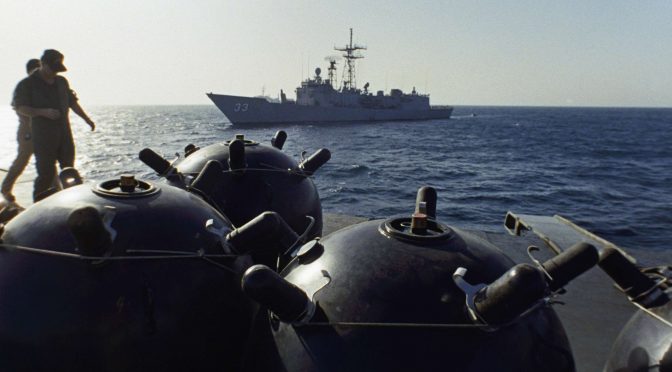
Featured Image: (September 21, 1987) Mines on the Iranian ship Iran Ajr during a personnel inspection of the USS Lasalle in the Persian Gulf. (AP Photo/Mark Duncan, Archive)

On The Decline of European Naval Power: A Conversation with Jeremy Stöhs, Pt. 2

Read Part One here.

By Roger Hilton

RH: You state that after the end of the Cold War many states had been able to consolidate their militaries despite fiscal restrictions. This all changed in 2007-2008, this groundswell of financial issues, tanking economies, and soaring national debt. You argue that even previous levels of defense spending and the corresponding force structures were unsustainable in many cases. It is evident that we have fairly polarizing periods here. On the one hand we have the reduced defense spending period of the immediate post-Cold War, and then the high defense spending in the latter 2000s, immediate post 9/11 era. Can you help us understand the short and long-term impact that the global financial crisis had on naval procurement?

JS: In the 1990s a lot of states still invested heavily in modernizing their militaries, and you see a real strengthening of naval forces. Just take a look at the Greek Navy; also the French are still spending quite a lot on national defense. The real problem really starts in the 2000s. Purely from a platform-centric point of view, much of the damage to European navies began in the 2000s I would say. You see the decommissioning of numerous vessels and platforms without replacements – the Danish submarine flotilla for example or large parts of the Dutch escort fleet. You have problems with procurement processes, you see this with the German and Spanish submarine programs. This was really exacerbated by the financial crisis, putting procurement projects on hold or canceling them outright. My British colleagues will attest to this, most infamously the cancellation of the British Nimrod maritime patrol aircraft, which left the Brits without any dedicated fixed wing maritime surveillance platform. But that’s just one of many examples.

RH: When it comes to specific examples in your book you describe a bleak picture that in the decline of the 2000s, on top of the financial crisis, it essentially removed some features of European navies, possibly for good. You cite the devastating example of the Dutch, who went from having one of the most capable Cold War fleets to what some observers describe today as a second-rate Navy. Could you elaborate a bit on this example?

JS: I think this is one of the best examples of the decline of European naval power. This also happened before the financial crisis. The Dutch defense studies postulated in 2003 and 2005, they spelled out that the Navy had to find a new balance, and this meant selling six of their frigate to Belgium, Chile, and Portugal. This would leave them with a fleet escort of a total of six frigates. And instead of buying new frigates, they would receive Holland-class OPVs, which while being the “Rolls Royce” of OPVs, don’t have the fighting power of a frigate of course.

And then you have at the same time the earlier 2000s, the fleet of Orion maritime patrol aircraft being sold to Germany, and all that happens prior to the crisis. I think what the crisis then did, including for the Netherlands, is that it significantly impacted training and readiness, and that definitely had long-term effects on naval forces. Another example is the new submarine that should be commissioned will probably be introduced sometime in 2028 or 2030, something like that, and the current submarines will have reached 40 years by then, which is quite a long period of time. So that just shows these long procurement processes and the problems they suffered.

RH: To shift to some encouraging news, despite the tight national purses that affected procurement, what are your thoughts on the FREMM project between France and Italy that was designed to build a multi-purpose frigate? In the book you said the project was deemed as a success, but is still subject to economic limitations. Today with more appetite for spending, is this a concept that can be recreated with success today?

JS:  I like the FREMM frigates not only because they are beautiful ships, both the French and Italian version, and they might also be the U.S. Navy’s next frigate, so that this is a first…but what I find interesting is that this Franco-Italian cooperation project worked relatively well. They included lessons learned from the previous cooperation which was the Horizon project, an air defense destroyer, a trilateral cooperation between the British, the French and the Italians. It ultimately produced only two destroyers for France and Italy, and the British went on to produce their own destroyer, the Daring-class. What they learned is that you don’t have to build an identical ship, but actually can have some similarities and at the end of the day you have ships that are cousins. That really is an example of how corporations in the defense sector can work. But of course the French aren’t procuring nearly as many as they initially planned, and now they’re selling some to Morocco and Egypt. There are other examples but that is one.

RH: On Greek and Turkish maritime capabilities, you established that unlike most European nations, the Hellenic Navy had seen the fewest doctrinal changes. It remained focused on defending its adjacent waters and fulfilling its NATO obligations. At the same time you assert that the naval balance of power in the region had shifted to its traditional regional competitor, Turkey. How do you forecast the competition in the maritime domain playing out between these two ‘allied’ powers?

JS: This was the most interesting case study to me because those were two countries that in the 1990s and 2000s adhered to traditional national defense strategies and did not jump on the power projection bandwagon. You only see a little bit of it in Turkey’s force structure and operations, but Greece is really still adhering to territorial defense, SLOC protection, and it has the fleet for that.

You see a similar trajectory in recent years, both have had shed unnecessary addendums and allowed the older combatants and ships to be decommissioned to more effectively modernize their fleets through this period of the 1990s and 2000s. Both of them actually have larger fleets now than they had in the 1990s, not only in regard to the order of battle, but also more capable fleets relative to other powers.

Greece was of course hit very hard economically and put a number of programs on hold such as its fast attack craft and German submarines. Turkey on the other hand has incrementally been creating a capable domestic defense sector, despite setbacks. They’re really trying to create their own capability in terms of being able to build their own weapon systems, everything from tanks, UAVs, and now up to frigates. They started building licensed, state-of-the-art German submarines. Now they are also building the Spanish-designed TCG Andalou aircraft carrier which is a very interesting development of course for power projection.

But on the other hand, two caveats I want to add here, both of them have challenges they face, and one is of course fiscal for the Greeks. For the Turks, I believe it’s hard to imagine after two consecutive purges in the military so I’m told, that that has not had a negative effect on the Navy. While the current naval officers are loyal to President Erdogan, I would be looking over my shoulder if I were them.

The Turkish Navy also has to keep a close eye on the Russian fleet, which unlike the Baltic in my opinion, is considerably more powerful than it was a couple years ago. It’s a development that is evolutionary rather than revolutionary as long as Turkey remains in NATO.

RH: For the third period you cover, 2014 to the present, post Crimea annexation, we arrive at a juncture for European navies. The annexation of Crimea set off waves of reverberations that are still being felt today. Russia’s annexation caught policymakers by surprise, and in response to bolster their defense, actions taken by NATO and the EU have attempted to address this previous complacency. Compounding matters, as you state, is the proliferation of terrorist attacks in Europe, creating a permanent sense of insecurity. Then enter a wild card – President Trump’s America First nationalist policy and Washington’s rebalancing toward the Indo-Pacific region. When taken together these events have only amplified the sense of uncertainty. Is it a little too late for European naval forces to defend themselves without the full support of the U.S.?

JS: Does the U.S. have an interest in staying engaged in Europe? There is no doubt about it. I think for the foreseeable future, it’s a pipe dream to believe Europeans will gain full strategic autonomy from the U.S. I think that is a buzzword that is being spread in Brussels and throughout Europe. There are several areas in which the European Union wants to become truly autonomous. This includes politically, operationally, and also industrially and technologically autonomous.

And while there is a sense in the globalized world that there is such a sense of technological autonomy, I find it really difficult to believe that there will be operational autonomy, in terms if when push comes to shove and European states are engaged or see a necessity to engage in high-intensity warfare or a military campaign, they will not only need the U.S. they will need other European countries to support them in some way. I don’t see any scenario where that need will be lessened at the operational level, or at the political level. What they need is as much independence as possible, but that does not mean autonomy.

RH: As a product of this tumult you state how closer cooperation between Europe’s armed forces has emerged. Can you discuss some of the future and completed programs, and if this cooperative model is sustainable in the long-term when it comes to naval forces?

JS: What I think is important is that with respect to fiscal austerity, there is a very interesting idea on how European naval forces can deal with times of fiscal austerity. It provides four possibilities on fiscal austerity. First, shortcuts, or settling for less. Next, jointness and working with other military services. Then, multilateral and combined operations in cooperating with other states. And the fourth is leap-frogging or offsetting and using asymmetric technologies. European navies have been doing a bit everything, but their governments have been choosing number one too much, namely settling for less.

They are closing their interoperability gaps, which is an obvious problem of course.  I have to say, we complain a lot, but no alliance has had better interoperability than NATO. There’s been discussion of including Japan and Germany in the Five Eyes agreement. We have a multitude of bilateral and multinational naval cooperation: the Swedish-Finnish efforts, the German-Dutch amphibious forces, the Belgian-Dutch BeNeSam; I could go on. What I would like to see is an equivalent of a NATO AWACS, or an equivalent to the aerial tanker and transport fleet. I thought when the deal didn’t go through with the Mistral-class amphibious assault ships the French were building for the Russians, that could have helped trailblaze this idea of having a ship under the NATO flag with different countries providing the crews and aviation platforms. But from what I heard it was  discussed for about ten minutes and then the idea was laid to rest. But maybe ten years from now we’ll actually see something like that happen.

At the beginning I pointed out that even a land-locked country like Austria can have agency at sea, and Austrian Special Forces were deployed and embarked on a German vessel in an EU operation at sea. If 20 years ago you had suggested that the EU would be conducting naval operations in the Med, and there would be Austrian Special Forces embarked on that vessel, they would have probably thought you were crazy. But that just goes to show what naval forces can do, and that we all can contribute and that sea power is shared.

RH: Coming to the last point here in the third period, in parallel to this cooperation theme, you stress the need for nations to strike a capabilities balance. In search of harmony, how do European navies reconcile investing resources in high-intensity capabilities aimed at deterring conflict with other navies rather than in investing in low-intensity capabilities designed for the maintenance of maritime order?

JS: In general, what I currently see, at least in some circles, is that the pendulum has swung too far in one direction. Yes, I believe naval forces are built for warfighting, that’s their primary mission and function. But people are readily forgetting about all the other things naval forces can do, from constabulary duties, the diplomatic roles, that’s often brushed aside because it’s not as glamorous. I think we have to be careful that we don’t only emphasize that because for the first time naval forces will have to do really everything because the challenges are so great. The range of missions runs the gamut of the intensity spectrum and we can’t just say, well, we’ll do collective defense or anti-submarine warfare and we won’t worry about migration, for example.

What I argued for is that niche specialization is important. It provides small countries that have very limited budgets the ability to add something to the greater whole, to NATO or the EU for example. But that can be taken too far as well or not suffice. What I argue for are baseline capabilities. Rich states such as Germany and the Netherlands can invest in having balanced navies that can conduct a wide range of missions not specialize in niches. However, I think for smaller states that specialization can be dangerous because it can limit possibilities and can make you very dependent on others for aid.

The limit of course is GDP, and whether there is funding for naval forces. For a Latvia or a Slovenia that will be difficult. But what is necessary is prudent thinking about contributing to naval operations. I mentioned earlier Austrian boarding teams that can be deployed on EU missions or the possibility of a small Swedish warship operating off the Horn of Africa.

I would also argue to not make the mistakes of the past. Perhaps as a scholar that didn’t live through the Cold War, it seems to me I see people reverting to an older, more comfortable view. Kaliningrad Oblast is often described by NATO zealots as a seemingly impenetrable fortress that renders all NATO and partner navies in that area sitting ducks. A scholar at the Center for Naval Analyses in Virginia, Steven Wills, who has a piece on CIMSEC, discussed how the West got Soviet naval strategy entirely wrong in the 1960s and 1970s. I wonder today if we’re prudent enough to get our analysis right.

RH: Let’s return to our initial question. Are European naval forces doomed to impotency, or is reform and renewed power projection possible? How do you rate their chances for success?

JS: I wrote an article recently for The Naval War College Review titled “Into the Abyss” where I argued that by 2014 the situation was quite bleak. The decline was so pronounced in many of the navies and their capabilities were so atrophied that this really called into question their ability to provide credible deterrence. And they were smaller than any time in recent history, they lost capability, and the idea of deploying them in contested environments had almost been forgotten. There was a preoccupation with low-intensity operations, counter-piracy operations, but the basic function of warfighting had been forgotten to a certain extent.

But, at the same time, I see light at the end of the tunnel. I know for a lot of people who want to see change happen quickly and see budgets rise very quickly. It bears remembering that in the 1990s they were using vessels designed in the 80s and 70s, so it will take time for the changes to take place and we have to be very smart in the risks we assume in defense spending. But I do see light at the end of the tunnel what European naval forces are concerned.

RH: This positivity you’re sharing with us is certainly an exercise in patience and prudent decision-making in defense spending. Looking to the future, do you have any last strategic takeaways that we should be conscious of?

JS: For anyone who is interested in European naval matters it is important to scale down your expectations. European navies and their militaries are sometimes seen as collectively powerful because Europe as a whole is more populous than the United States and its cumulative GDP is also higher. The United States and Europe are similar, so it seems. And that’s a very inviting idea, but it just does not work because Europe has different states with very different interests.

It’s important to remember that the individual defense budgets of the respective states are but a fraction of that of the United States. But what is more important for the smallish navies is that they still play an important role in the freedom of the seas and good order at seas, and also in military operations. There is a necessity for far greater research on European naval forces, especially of their development over the past decades. There is very little comprehensive research on what they have been doing, what their policies were, what they changed what the force structures were, and so on. So, I am just trying to contribute to that a bit.

Finally, as a strategic takeaway, without giving away too much of what’s in my book, I believe that in an age of great power competition it is very likely that the 21st century will be one of continued American naval power despite all the naysayers. I believe it will also be an era of rising (or already risen) Asian naval power. The question is really to what degree it will involve European sea power and naval power.

I encourage readers to reach out to us at ISPK and the Center for Maritime Strategy and Security to discuss these pressing questions. We believe shared knowledge is empowerment.

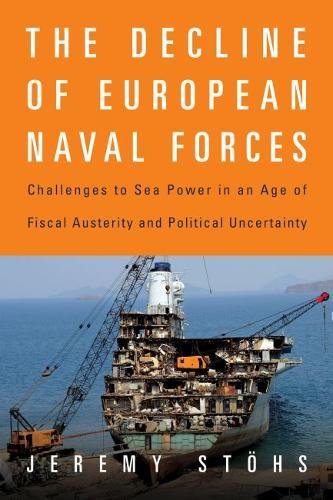
RH: On that note Jeremy, thank you for taking the time for helping us to discuss this pressing but under-the-radar issue. If our readers would like to follow up on Jeremy’s work, please check out his book The Decline of European Naval Forces. You can also look for the Routledge handbook of Naval Strategy and Forces, edited by Sebastian Bruns and Joachim Krause, which is an indispensible resource. For more info on the book and other podcasts, don’t forget to visit https://www.kielseapowerseries.com/en/ and follow us on Twitter at @SeapowerSeries for more updates.

Jeremy Stöhs is a security and defense analyst at the Institute for Security Policy at Kiel University (ISPK) and its adjunct Center for Maritime Strategy & Security as well as a fellow at the Austrian Center for Intelligence, Propaganda & Security Studies (ACIPSS).

Roger Hilton is the defence and Security stream manager at GLOBSEC, a global think-tank based in Bratislava, Slovakia  as well as a research fellow at the Canadian Global Affairs Institute (CGAI).

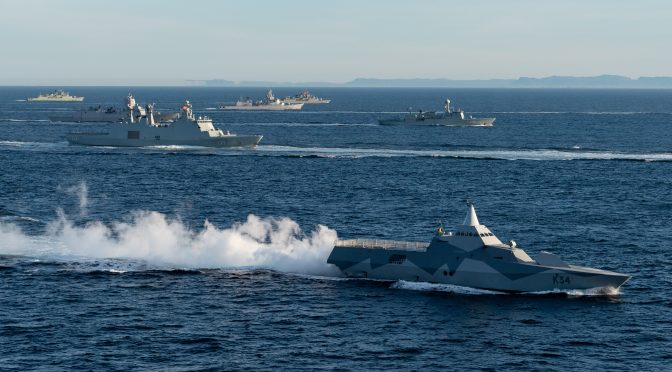
Featured Image: Norwegian Sea, Nov 7. 2018. TRIDENT JUNCTURE 18 PHOTEX. (NATO Photo by Wo Fran C. Valverde)

Fostering the Discussion on Securing the Seas.