Category Archives: Strategic Outlook

Predictions and forecasting.

Update on Polish Navy Progress

Maritime Infrastructure Protection System: The sharks with lasers are mod 2.
Maritime Infrastructure Protection System: The sharks with lasers come in mod 2.

Last week was a good one for Polish Navy. A few things happened which look minor if considered separately, but put together show a glimpse of how the Polish Navy will look in the future. As publicly available information about military matters in Poland is still scarce, there is also room to put these events in broader perspective and explore their philosophical underpinnings.

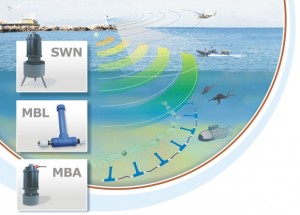
The week started with information that REMUS 100 won a tender to provide 2 systems for harbor-defense use by the naval bases in Swinoujscie and Gdynia. Later, at the Maritime Systems and Technologies 2013 Europe (MAST) conference and the NATO Naval Armaments Group meeting, both taking place in Gdansk, participants had the opportunity to see a live demonstration of Maritime Infrastructure Protection Systems, a multi-sensor maritime-monitoring system designed by CTM Gdynia. The next day, the Polish MoD issued a Request For Information (RFI) for just such a system, and, the very same day issued an RFI for patrol ships and corvettes. Little is known about these ships but the patrol ship is supposed to be in the range of 1,700 tons and possess the “capability to search and destroy naval mines and other dangerous underwater charges”. The corvette, which is officially called the Coastal Defense Ship, is expected to carry among other things weapons for “precision strike of land targets”. In parallel, the MoD prepared a tender for highly publicized project of Air and Anti-missile Defense, which will consist of 6 medium-range (100 km) and 11 short-range (25 km) batteries. Although that was not a predominantly naval development, the Navy’s modernization plan foresees 2 short-range batteries to be included in force structure. Add to that announcement the following and the overall picture becomes clearer: the newly commissioned Nadbrzezny Dywizjon Rakietowy (Coastal Defense Battery), equipped with Kongsberg NSM missiles will be extended to have a 2nd unit, there are rumors that planned submarines should be armed with “deterrence weapons”, and an ambitious plan that 3 new mine-hunters should join the fleet starting from 2016.

The first impression that comes to mind is that the protection of infrastructure and naval bases is viewed as a critical priority. This is also the message from the recently concluded mine-counter measures (MCM) exercise, IMCMEX 2013 – “It is more than just MCM”. The logic is simple – Two naval bases, one Swinoujscie and one in Gdynia, requires two sets of defensive weapons and systems. Taking a step back, the MoD seems to be building A2/AD fleet or modern version of Jeune Ecole, which is not surprising for a continentally oriented armed forces. At this point I start to have some problems with terminology in defining what kind of navy the Polish Navy will be. If we measure distance between major ports or naval bases in the Baltic Sea in a straight line we get following results:

Szczecin to Kiel, Germany: 147nm
Szczecin to Korsoer, Denmark: 139nm
Gdynia to Karlskrona, Sweden: 144nm
Gdynia to Baltijsk (In Kaliningrad, Russia): 47.5nm
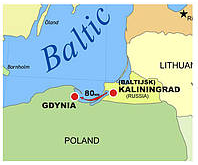
Too close for comfort, or sea control.

This situation is not unusual in narrow waters but raises the question as to what degree we can speak about “area denial” when this area is congested, contested, and probably beyond control for anybody. In such a case the term “sea control” should have a very Corbettian meaning: “here and now”. In the extreme case of Gdynia and Baltijsk we observe a sort of direct contact within the range of modern artillery. It becomes hard to speak about any area to deny.

On the other hand if we use term Jeune Ecole, which heavily relied on torpedo boats, then another question emerges: how effective was this asymmetrical weapon of époque against an enemy battle force? Sir Julian Corbett, as Prof. James Holmes recently reminded us, was very concerned by the fact that the first torpedo-armed flotillas made fleets structureless, the weapons greatly empowering small craft and upsetting defined roles. Can we say something more on that subject after 100 years of experience? My not very scientific and brief review of Conway’s Battleships reveals that out of roughly 194 battleships constructed and commissioned (including a few completed as aircraft carriers), only three have been sunk as a result of torpedo attacks of surface flotilla ships [Scott C-P did an unscientific review last year of all types of sinkings]. These were Szent Istvan, Fuso and Yamashiro. In addition four were torpedoed and sunk by submarines, which at least at the time of Corbett’s writing were considered flotilla vessels. They were Barham, Royal Oak, Courageous, and Shinano. This produces a total of 3.6% — not much, and an invitation to reconsider the viability of a coastal navy focused on asymmetric weapons only. We need some symmetry in force structure as well.

The conceptual roots of the Polish Navy maybe lies in von Clausewitz’s thesis that defense is a stronger form of war than offense, but seeks an opportunity to switch to offense as soon as possible. Using Sir Julian Corbett’s subtitle from his “Green Pamphlet”, this Navy will seek a decision on land engaging in “offensive operations used with a defensive intention”. It leads me to my final and perhaps banal conclusion that the closer to the coast the Navy acts, the more land-warfare theories apply.

Przemek Krajewski alias Viribus Unitis is a blogger In Poland.  His area of interest is broad context of purpose and structure of Navy and promoting discussions on these subjects In his country

NATO in the Arctic?

By Andrew Chisholm

An appropriate presence?
                          An appropriate presence?

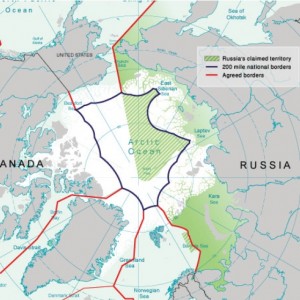
Canada’s recent assumption of the Chairmanship of the Arctic Council prompted much discussion of Arctic issues, including security, an important element of which is the ongoing tug-and-pull over whether NATO should play a role in the region. Russia is, unsurprisingly, opposed. But there is division within NATO itself: Canada against, Norway and other Nordic states for, and the United States seemingly unsure. These divisions are rooted in the varied nature of the Arctic security challenges that each state or group faces. Therefore Arctic security solutions must be equally tailored.

According to Rob Huebert of the University of Calgary, both Russia and the U.S. are viewing the Arctic in military-strategic terms. Russia aims to maintain its nuclear deterrent, including in the Arctic, through submarine-based missiles to be deployed in its Northern Fleet. Meanwhile the U.S. has bolstered its ballistic missile defence forces in Alaska, and maintains fighter and airlift squadrons as well as a naval submarine presence. Both see their own moves as crucial to national security, but likely view the other with concern, a mindset also prevalent among the Nordic states.

Norway has prioritized Northern defence, moving its operational headquarters to the High North in 2009 and working closely with other circumpolar states, including Russia. But Norway has also been pushing for a NATO presence there because of the importance of the Arctic and increasing interest around the world. It has likewise made clear that as Russia continues its military modernization, Norway sees an Arctic presence of NATO as crucial to continued Norway-Russia cooperation.

Norway’s concerns are similarly felt by Sweden and Finland, which have hosted U.S. and NATO training exercises and deepened ties with the Alliance, as well as by the Baltic states (Latvia, Lithuania, Estonia). This has lead to talk of a Nordic-Baltic alliance or perhaps even of British involvement. Regardless, it is clear that real deterrence of the interested countries’ more powerful neighbour depends on the wider NATO organization.

Top 'O the World to You
                            Top ‘O the World to You

These actions have caused concern in Russia where NATO, not to mention its expansion, has historically been viewed with suspicion. It is important that after a recent visit to Norway, NATO Secretary-General Anders Fogh Rasmussen said that NATO would not increase its presence in the region. He also noted, though, the legitimacy of Norway’s expectation that NATO principles apply to all NATO territory, including its northern reaches. So it seems that while no increase in activity is imminent, neither is a reduction, and the Nordic states will almost certainly continue to seek greater NATO involvement. But while Norway and others have good reason to look to NATO, Canada has good reason to not want an Alliance presence.

With boundary disputes set to be resolved through the U.N. Convention on the Law of the Sea and all Arctic states saying that military activities are mainly to support of commercial and other civilian priorities, Canada’s desire, especially under the current government, is to see Arctic states focus primarily on economic development. Furthermore, despite sometimes harsh public rhetoric, Canada has a good economic working relationship with Russia it wishes to maintain, as the two countries have much to offer one another. Burgeoning NATO-Russia competition in the Arctic would undermine both those goals. But Canada cannot block U.S., Russian, or Nordic strategic aims, and so it must simply do what it can to defuse Arctic tensions: work to influence the means by which security is organized in the Arctic.

Whether or not the Nordic states achieve their goal of a greater northern NATO presence will depend on the keystone of the Alliance, the United States. In some ways NATO is an attractive option for the Americans, as five of the eight circumpolar states (Canada, Norway, Denmark, Iceland, the U.S.) are member states and the Nordic-Baltic states seem fully willing to contribute to the extent of their (relatively limited) capabilities. But, as its National Strategy for the Arctic Region indicates, the United States is no more interested in de-stabilizing the region than is Canada. Therefore a tension-creating NATO presence is neither ideal nor a foregone conclusion.

This presents Canada with an opportunity to promote an alternative to NATO: NORAD, the North American Aerospace Defence Command. The NORAD option is attractive for several reasons. In concrete terms, NORAD boasts a North America-specific defence architecture (NATO does not), a connection to ballistic missile defence, and an emerging focus on the maritime domain. Through these capacities, it can support both military-strategic and economic activities. In terms of perceptions, NORAD, while closely linked to NATO, is a separate organization. Whereas a NATO presence would stretch solidly from Alaska to the Nordic region, a degree of separation between northern North American and northern European security may present a less anti-Russian and less threatening posture. In the same vein, although it was established during the Cold War NORAD lacks some of the legacy of NATO, which for decades stood at the symbolic heart of East-West competition.

It is important to remember that warfare among the Arctic states is highly unlikely. And, while there will always be disagreements and competition among all states, much of the current Arctic tension is the result of uncertainty about the shape of the Arctic security structure going forward. The task for now is to ensure that the final shape settled on is the best one to calm existing tensions and manage future disputes.

Andrew Chisholm is a Junior Research Fellow at the Atlantic Council of Canada. He recently graduated from the University of King’s College with a B.A., Combined Honours, in Political Science and History, and studied Conflict Resolution at the Rothberg International School at Hebrew University in Jerusalem. Andrew focuses his writing on contemporary Canadian foreign, defence, and security policy. His wider interests include sovereignty and governance, international diplomacy, and emerging security threats. Contact: andrewmchisholm@gmail.com

This article was cross-posted by permission from and appeared in its original form at the Atlantic Council of Canada. Any views or opinions expressed in this article are solely those of the authors and the news agencies and do not necessarily represent those of the Atlantic Council of Canada.

Thinking About Prevention, Pt. 3

Musicians from the military bands of China's People's Liberation Army and the U.S. Army take photos during a rehearsal for their joint concert in Beijing in this file photo
“So now that we’re Facebook friends we’re all good, right?”

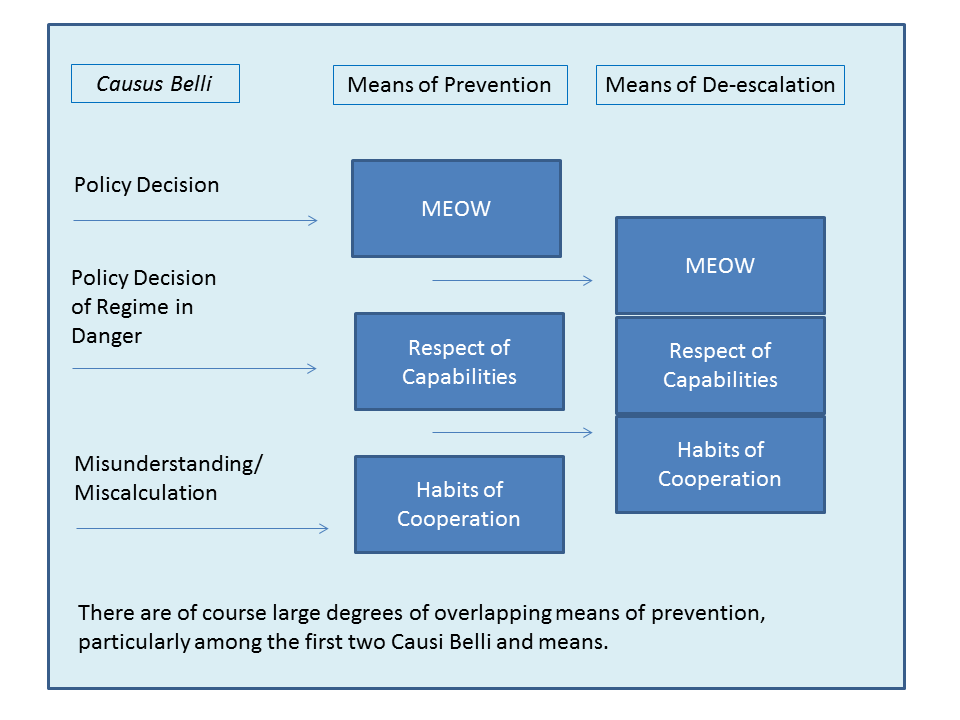
Last summer I wrote two short pieces (Part 1 here; Part 2 here) about preventing conflict between the U.S. and China in the Pacific, or reeling it in should it occur. In the posts I explained why U.S.-Chinese economic interdependence is not enough in itself to prevent the potential start of a conflict that could escalate with disastrous global consequences, or MEOW (Mutual Economic Obliteration – Worldwide).

I noted that the U.S. can take further steps to decrease the likelihood of conflict, and to bolster mechanisms for inhibiting escalating crises – either by sowing respect (often involving means/military capabilities useful in the event prevention fails) or by building “habits of cooperation”.

In part 3 of this series I had intended to lay out a model that could address the need for the second of these lines of effort, by expanded cooperation between the U.S. and Chinese militaries through humanitarian assistance / disaster response (HA/DR) exercises. Clearly, I put off writing too long.

The first thing that has changed is that LCDR Jason Grower called for a very similar approach in April’s Proceedings. I highly recommend reading Jason’s article in its entirety, but in what follows I will outline some of his more important points and highlight where my own thinking differs or builds upon his framework.  I will also note where recent developments hold promise of expanded cooperation. Let’s first recap why the U.S. should make the effort.

The Need

In the spring of 2012, my U.S. Naval War College class was split into two teams and told to identify a danger facing the U.S. in the Pacific and develop a plan to mitigate it. Team one took the more “traditional” route, identifying China’s growing military capabilities.  Team two looked at the potential second-order perils of regime collapse in North Korea. These hazards included possible blind ‘encounter’ contact between ROK (and/or U.S.) and Chinese forces as they move into to the North to stem refugee flows, secure WMDs, and attempt to stabilize the country.1 More significant than the dangers identified was the fact that the recommended mitigation action – regular HA/DR exercises with China – was roughly the same for both developments, and that both teams arrived at their solution set by following a similar logic.

PreventionWhile much attention has been given to the importance of deterring through strength (“sowing respect”), this primarily prevents conflicts of policy in the event decision makers in Beijing seek to achieve political goals “through other means.” Despite MEOW this is not an impossible scenario, especially in the event of internal power struggles or a PRC regime on the ropes. However, both teams felt that it more likely a conflict would begin out of misunderstanding, mistakes, or the misbehavior of a rogue command or commander – whether in the seas surrounding China or on the Korean Peninsula. Since such an incident would not be prevented through the normal means of MEOW or sowing respect, we therefore turned to the HA/DR exercises as efforts towards building “habits of cooperation,” thought not only “vital to diffusing those instances when misunderstanding and accidents lead to a stand-off with few face-saving options”, but also helpful in de-escalating those conflicts sprung from a different causus belli.

In his article, Jason explains the need for the exercises in several ways. Echoing the focus on building “habits of cooperation”, he states one of the primary purposes of such an HA/DR exercise would be to “heighten understanding between the two militaries and promote stable military-to-military relations.” Further, he believes it would provide an opportunity to “bolster broader U.S.-Chinese ties” and even internal Chinese military-civilian ties.

Such ties help the transformation in relationship from what conflict theorist Johan Galtung calls a ‘negative peace’, in which there is no direct violence, to a ‘positive peace’, in which an attitude shift has allowed the development of a cooperative partnership. Yet it’s important to remember that these ties are just one leg of the prevention triad – even the ties of the Union, where future foes sat side-by-side in the same military academies, could not prevent the U.S. Civil War once policy makers had settled on violence.

To his credit, Jason also looks beyond the strategic implications and discusses the direct impact a Sino-American HA/DR exercise on the affected people in the region, by increasing the “global ability to respond to disasters in the Pacific”. Familiarity between U.S. and Chinese counterparts of each other’s capabilities/standard operating procedures in HA/DR operations is particularly important, as their maritime forces are likely to work elbow-to-elbow in same operational spaces of future calamities – whether Korea or Borneo, and coordination can boost the efficacy of the response. After all, as Jason notes, “to the person whose home was decimated and needs medical care quickly, it makes no difference whether the doctors are Chinese, American, or otherwise.”

The Plan

So how would such an exercise look? I had the chance to sit down with Jason two weeks ago over the Pentagon’s finest lunch option (Peruvian chicken!) and we discussed the concept. We agreed that a “conference”, as advocated as the first step in his article, was necessary but pro forma as part of the build-up to a larger exercise or operation, typically referred to as a planning conference.

Hoping for Habit-Forming
                             Habit-forming

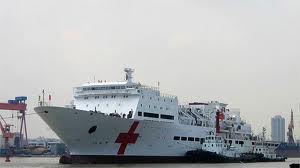
The first question really is whether to tailor it as an operation, an exercise, or both. Both nations already run their own HA operations – China aboard its Peace Ark, and the U.S. with its annual Pacific Partnership operation – performing medical procedures and building health and first-responder partnership capacities. Pacific Partnership this year is co-led by Australia and New Zealand in addition to the U.S., a set-up that demonstrates scalability, an important attribute given the propensity of China to make its participation contingent upon politically sensitive outcomes (arms sales to Taiwan, meetings with the Dalai Lama). In other words the operation can go on without China if necessary. Further, it allows both the U.S. and China to claim equal leadership, and, if conducted with vessels from each nation, should assuage the moral concerns and intelligence-gathering fears of partners and participating NGOs who might hesitate to join in an operation with China.

Nonetheless, in pursuit of building habits of cooperation2 I believe the U.S. and China would get the most bang for their (fiscally constrained) bucks and yuan through a combined large-scale DR exercise. This could be a capstone event at the tail-end of Pacific Partnership that expands involvement for interested nations and focuses on responding to likely disaster contingencies in the region. While China too recently identified HA/DR as promising common ground for expanded U.S.-China military relations3, it’s a sentiment they’ve expressed in the past and one that has not always borne out. Encouragingly, both the U.S. and China are participating in next month’s ASEAN-led disaster response exercise (ADMM-Plus)4, although the degree of participation and interaction between the two nations is not yet clear.

Still there are additional signs of burgeoning ties, including China’s invitation in January to send for the first time a ship to participate to the 2014 Rim of the Pacific (RIMPAC) naval exercise. Prevention requires more of this. And if China really wanted to show its displeasure with North Korea’s nuclear tests, what better way to do so than participating in a joint HA/DR exercise that either implicitly or explicitly prepared for a post-DPRK Korea?

Scott is a former active duty U.S. Navy Surface Warfare Officer, and the former editor of Surface Warfare magazine. He now serves as an officer in the Navy Reserve and civilian writer/editor at the Pentagon. Scott is a graduate of Georgetown University and the U.S. Naval War College.

Note: The views expressed above are solely those of the authors and do not necessarily represent those of their governments, militaries, or the Center for International Maritime Security.

1. One solution would be a pre-arranged agreement allowing only ROK troops to move north, or U.S. personnel on a solely humanitarian mission. 
2. As well as planning for a post-DPRK Korean Peninsula.
3. And is one of the few areas of military exchange not prohibited by U.S. law.
4. And perhaps just as importantly, Japan

Game of Marines

The Left...
                                     The Left…

Pop culture cannot seem to escape the allure of dragons and white walkers, as HBO’s Game of Thrones (GoT), based on the book series A Song of Ice and Fire by R.R. Martin, has enthralled millions. On the face of it the fictional setting of Westeros bear little resemblance to that in which the Marines traditionally operate (commercials not included). However, examining that world, and in particular the fate of two of its warring factions, provides interesting insights for current Marine Corps issues. Both groups, despite their seemingly polar opposite nature, are at critical junctures and face decisions as to how they will conduct operations in the future – offering alternative frameworks that I believe improve upon the “middleweight” force that the Corps seeks to become.

House Greyjoy (motto: “We do not sow”) could reasonably be classified as Westerosi Marines. They are a small, intensely martial, and overwhelmingly amphibious force that has little trouble succeeding tactically, but do not always employ their forces with deep strategic foresight. They are relatively poor when compared to other noble houses, and, without large lands to farm or grow on, rely on their raiding abilities and superior military skills. The correlation with many current and historical USMC trends is readily apparent. Importantly, the “Ironborn,” as they are known, make several strategic errors when they decide to stretch their force and capabilities over a large band of conflict by taking large fixed defense castles while simultaneously raiding along the coastline.

A different group from the series is the “Brotherhood without Banners,” an insurgent group made of deserters, POWs, and other flotsam from the horrible conflict driving the story’s main narrative. These men and women unite under a radical new philosophy that rejects many of the “truths” the lands’ lords hold. They are quite successful at insurgency using methods that refuse to acknowledge the rules governing other forces’ military action, and are keen trainers of indigenous forces. Their doctrine comes only from what they have learned by blood and conflicts with the conception of warfare held by elder kings and knights. They have skills of proven utility, but it is unclear as the series now stands how the brotherhood will parlay those skills into victory in a changing conflict.

I highlight these two fictional accounts to bring to light what I consider to be the main challenges facing the Marine Corps. Will the Corps steam fully ahead into its self-proclaimed “middleweight” future and retain the hard-won lessons of 10 years of insurgency combat? Will it regain its slightly rusty amphibious roots to meet the strategic needs of our Nation? Or, will it just be a group of raiders who have little ability to affect change across the shoreline? These are all questions the Marine Corps is currently grappling with, and I offer a few observations within the GoT analogy.

Both the Brotherhood and Ironborn suffer – not when they leverage their core competencies, but when they venture outside of them. The Ironborn repeatedly face disaster when they decide to commit to larger, set-piece battles with land powers where they incur strategic losses. The Brotherhood would be better served by raising indigenous forces that can help give those who have suffered the most from war a chance at self-security rather than relying on the major houses to try and supplement their fighting abilities, as they try to do as they move south. The Brotherhood is also at risk of a lack of a coherent strategic vision, fighting only against what exists rather than spelling out a vision of their own.

Back in the real world, the Marine Corps is progressing back to its Ironborn origins by returning to its amphibious roots. This return is irrefutably necessary as the worry of many Marines is that recent events have turned the Corps into a second land army. But many of its junior leaders are equally worried the lessons they paid for in blood will be forgotten as they were after previous wars. Vital capabilities to train indigenous forces, conduct preemptive counter-insurgency (COIN), and use a light footprint to get to the “strategic left side of boom” will increasingly be at risk as more Marine Corps “meat and potato” deployments take the place of COIN operations. Our advisor capability (read: Brotherhood without Banners) is unlikely to go away completely, but it is not likely to receive the same emphasis it has had over the past few years.

Likewise, the stretching nature of a “middleweight” force seems to necessitate straddling a larger spectrum of conflict than focusing on one or two Marine Expeditionary Brigades (MEB) denied entry operations. Middleweight fighters are multi-use. But they are also slow when going up against lightweights and unable to throw knockouts against heavyweights. By shooting for the gap between “small” SOF and “big” Army are we searching to find a rationalization instead of focusing on what we have done successfully? I see this problem as similar to the Ironborn deciding to commit to taking the stronghold of Winterfell and other lands, while still conducting coastal raids, and thereby doing neither well.

...and Right Sides of "Boom."
                      …and Right Sides of “Boom.”

I propose that the Corps refocus on amphibious operations, but primarily towards kinetic denied entry operations at the Marine Expeditionary Unit (MEU) level or higher. With this capability available, our secondary effort should be towards robust engagement vis-a-vis security cooperation, advisor capability, and retention of the lessons from COIN. A “middleweight” force is inherently focused on numbers and end strength – but this is only one consideration of organizing for future conflicts. An alternative framework would be to focus the Corps’ composition on time-based crisis response, with advisor formations to prevent conflicts and larger elements strictly focusing on highly kinetic operations at the beginning of those conflicts that do erupt. This framework would allow Marines to better focus training, equipment tables, and procurement. Operational units would be designed for long-duration advisor missions or kick the door into highly kinetic situations before letting larger Army units take over. Many might say that is or should be USMC doctrine, but a look back at the past ten years of war contradicts such a statement.

I highlight again the faults of the Ironborn in focusing on the tactical considerations of what they could capture and how, and not paying attention to the political aspects of the conflict around them. One tactical commander, Theon Greyjoy, thought that by taking Winterfell as quickly as possible his force would secure a great victory, when in fact they only rushed themselves into a strategic dead-end. A di-polar force that is focused on when to respond in a crisis allows us to focus on our historic strengths while not losing our recent capabilities. The Marine Corps must strive to think of innovative approaches to these challenges so we do not become the tactically successful, but strategically insignificant Brotherhood, nor, the operationally brilliant but strategically harebrained Ironborn as we navigate our real-world military problems in light of a coming fiscal winter.

Capt Christopher Barber is an officer in the U.S. Marine Corps who has deployed twice to Helmand Province, Afghanistan. The views expressed above are solely those of the authors and do not necessarily represent those of the U.S. Marine Corps, the Department of Defense, or the Center for International Maritime Security.