Category Archives: Strategic Outlook

Predictions and forecasting.

Video Game AI and the Future UCAV Top Gun

My brother in flight school should be glad we played so much Ace Combat 4.
Alright, Roomba, now start sweeping for enemy units.

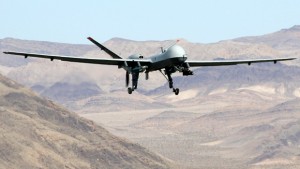
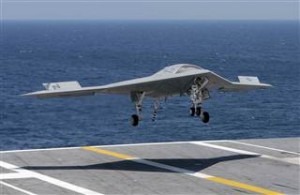
A Roomba is useful because it can sweep up regular messes without constant intervention, not because it can exit and enter its docking station independently. Although the Navy’s new X-47B Unmanned Combat Air Vehicle (UCAV) has, by landing on a carrier, executed an astounding feat even for humans, this ability only means our weapons have matured past their typical one-way trips. The real challenge will be getting a UCAV to defend units while sweeping up the enemy without remote guidance (i.e. autonomously). The answer is as close as the games running on your Xbox console.


Player One: Insert Coin
ace-combat-5-the-unsung-war-20041024114416859
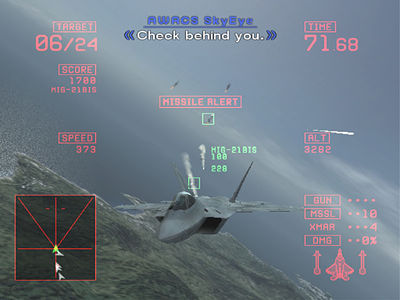
Simulated fighters are UCAVs having an out-of body experience.

Considering the challenge of how an air-to-air UCAV might be programmed, recall that multiple generations of America’s youth have already fought untold legions of advanced UCAV’s. Developers have created artificial “intelligences” designed to combat a human opponent in operational and tactical scenarios with imperfect information; video games have paved the way for unmanned tactical computers.

A loose application of video game intelligence (VGI) would work because VGI is designed to operate in the constrained informational environment in which a real-life UCAV platform would operate. Good (i.e. fun) video game AI exists in the same fog of war constraints as their human opponents; the same radar, visual queues, and alerts are provided to the computer and human players. The tools to lift that veil for computer and human are the same. Often, difficulty levels in video games are not just based on the durability and damage of an enemy, but on the governors installed by programmers on a VGI to make competition fair with a human opponent. This is especially evident in Real Time Strategy (RTS), where the light-speed all-encompassing force management and resource calculations of a VGI can more often than not overwhelm the subtler, but slower, finesse of the human mind within the confines of the game. Those who wonder when humans will go to war using autonomous computers fail to see the virtual test-bed in which we already have, billions of times.

This Ain’t Galaga
No extra lives, and forget about memorizing the level's flight patterns.
No extra lives, and forget about memorizing the level’s flight patterns.

Those uninitiated must understand how VGI has progressed by leaps and bounds from the pre-programmed paths of games such as the early 1980’s arcade shooter Galaga; computer opponents hunt, take cover, maneuver evasively, and change tactics based on opportunities or a sudden states of peril. The 2000’s Half-Life and HALO game series were especially lauded for their revolutions in AI – creating opponents that seemed rational, adapting to a player’s tactics. For the particular case of UCAV air-to-air engagements, since the number of flight combat simulators is innumerable, from Fighter Pilot on the Commodore 64 in 1984 to the Ace Combat series. Computers have been executing pursuit curves, displacement rolls, and defensive spirals against their human opponents since before I was born.

However, despite its utility, VGI is still augmented with many “illusions” of intelligence, mere pre-planned responses (PPR); the real prize is a true problem-solving VGI to drive a UCAV. That requires special programming and far more processing power. In a real UCAV, these VGI would be installed into a suite far more advanced than a single Pentium i7 or an Xbox. To initiate a learning and adapting problem-solving tactical computer, the DARPA SyNAPSE program offers new possibilities, especially when short-term analog reasoning is coordinated with messier evolutionary algorithms. Eventually, as different programs learn and succeed, they can be downloaded and replace the lesser adaptations on other UCAVs.

I’ve Got the Need, The Need For Speed
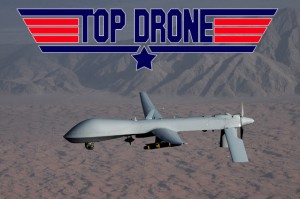
Unlike Maverick, drones will never have to go through motorcycle safety training.

When pilots assert that they are more intuitive than computer programs, they are right; this is, however, like saying the amateur huntsman with an AR-15 is lesser trained than an Austrian Arabesquer. The advantage is not in the quality of tactical thought, but in the problem solving rate-of-fire and speed of physical action. A VGI executing air-to-air tactics in a UCAV can execute the OODA loop encompassing the whole of inputs much faster than the human mind, where humans may be faster or more intuitive in solving particular, focused problems due to creativity and intuition. Even with the new advanced HUD system in their helmets, a human being cannot integrate input from all sensors at an instant in time (let alone control other drones). Human pilots are also limited in their physical ability to maneuver. G-suits exist because our 4th and 5th generation fighters have abilities far in excess of what the human body is capable. This artificially lowers aircraft tactical performance to prevent the death or severe damage of the pilot inside.

Pinball Wizard: I Can’t See!

VGI doesn’t have a problem with the how, it’s the who that will be the greatest challenge when the lessons of VGI are integrated into a UCAV. In a video-game, the VGI is blessed with instant recognition; its enemy is automatically identified when units are revealed, their typology is provided instantly to both human and VGI. A UCAV unable to differentiate between different radar contacts or identify units via its sensors is at a disadvantage to its human comrades or enemies. Humans still dominate the field of integrating immediate quality analysis with ISR within the skull’s OODA loop. Even during the landing sequence, the UCAV cheated in a way by being fed certain amounts of positional data from the carrier.

We’ve passed the tutorial level of unmanned warfare; we’ve created the unmanned platforms capable of navigating the skies and a vast array of programs designed to drive tactical problems against human opponents. Before we pat ourselves on the back, we need to effectively integrate those capabilities into an independent platform.

Matt Hipple is a surface warfare officer in the U.S. Navy.  The opinions and views expressed in this post are his alone and are presented in his personal capacity.  They do not necessarily represent the views of U.S. Department of Defense or the U.S. Navy.
Crafting a Counter-Piracy Regime in the Gulf of Guinea

The winds of global piracy have shifted, as attacks by West African pirates now exceed those of their Somali counterparts. The Nigeria-based pirates may not yet inspire Hollywood films, but they have prompted regional governments to take collective action. A June 24-25 summit in Yaounde, Cameroon brought representatives from the Economic Community of West African States, the Economic Community of Central African States (ECCAS) and the Gulf of Guinea Commission together to draft a Code of Conduct concerning the prevention of piracy, armed robbery against ships and illicit maritime activity; now signed by 22 states.

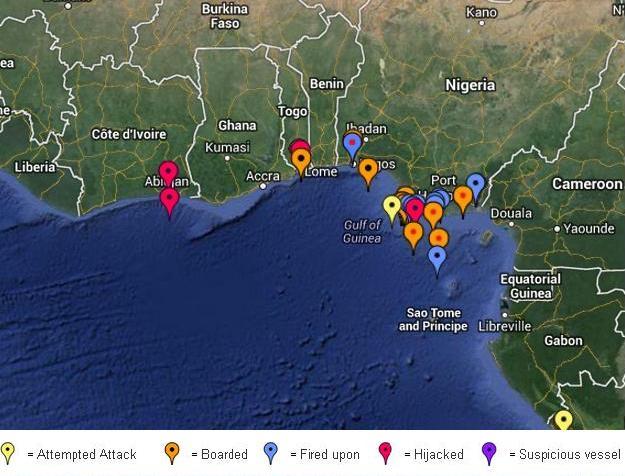
The Gulf of Guinea’s problem is not a dramatic rise in the number of attacks, but the expansion of a criminal enterprise once restricted to Nigerian waters into those of neighboring states. While support vessels operating near Nigeria’s oil fields have been pirate targets for decades, the hijacking and full-scale pilfering of oil tankers is a recent development. This modus operandi first appeared off Benin in December 2010 and has spread to the waters of Togo and Côte d’Ivoire in subsequent years. According to Risk Intelligence data, there were at least 93 tanker attacks in the Gulf of Guinea between December 2010 and May 2013, resulting in some 30 hijackings.

2013 Pirate Attacks in the Gulf of Guinea (IMB)

Tanker traffic is particularly dense in the Gulf of Guinea because Nigeria, the region’s largest oil producer, lacks the capacity to refine its own product. Crude oil is thus transported out of Nigeria, refined elsewhere, and then imported back into the country where it is sold at below market rates thanks to a government fuel subsidy. Nigerian criminal syndicates, backed by high-level political and economic patrons, are exploiting this situation by targeting specific tankers for hijacking, offloading their cargo to secondary vessels and then selling the product on the lucrative black market.

A conference of regional experts, held in preparation for the Cameroon summit, estimates that maritime crime is now bleeding the Gulf of Guinea’s states some $2-billion a year in lost port revenue, insurance premiums and security costs. West Africa has now reached a tipping point, like East Africa and South East Asia before it, where the geographic expansion of pirate activity demands a coordinated response. An examination of previous regional efforts to combat piracy thus serves as both a guide and warning for the Gulf of Guinea’s new endeavor.

Regional Counter-Piracy in Context

As a response to increased pirate attacks in the wake of the 1997 Asian Financial Crisis, 16 states drafted the Regional Cooperation Agreement on Combating Piracy and Armed Robbery Against Ships in Asia (ReCAAP) in 2004, which came into effect 2006. The organization is credited with reversing the spike in piracy that coincided with the 2009 global economic downturn, as attacks against ships in the region have steadily fallen from 2010 to 2013. Notable in this success was the establishment in Singapore of an Information Sharing Center (ISC) that facilitates the collection, analysis and dissemination of piracy information among member states.

ReCAAP obligates its members to take legal measures against vessels and individuals who commit acts or robbery or piracy; to extradite such individuals at the request of another state; and to render mutual legal assistance in such cases. Donations from member states fund ReCAAP’s central budget – Singapore and Japan being the largest donors – with additional support coming from out-of-area signatories such as Norway and the Netherlands.

Concerns over state sovereignty have prevented closer cooperation with ReCAAP, as equipment procurement and counter-piracy patrols remain the responsibility of individual states, and national security forces are unable to pursue suspected pirates across maritime boundaries. ReCAAP is also hampered by the unwillingness of Malaysia and Indonesia—the two most pirate-prone states in the region—to ratify the agreement.

As Somali piracy rapidly expanded in the late 2000s, the international community hoped to replicate the success of ReCAAP through a counter-piracy agreement encompassing Eastern Africa and the Arabian Peninsula. Steered by the International Maritime Organization (IMO), the Djibouti Code of Conduct (DCoC) was adopted by nine states in January 2009 and has since expanded to 20 signatories spanning from Jordan to South Africa.

An independent study notes that the DCoC has made significant progress in information sharing, legal reform, and the training of coastguards. At least twelve member states have introduced legal changes to cover the crime of piracy. These developments have been credited for the higher percentage of arrested pirates now being tried and prosecuted in regional courts. The DCoC’s projects are largely financed by an IMO-managed trust fund of some $14-million, funded by maritime states such as Japan, the Netherlands, Norway, and South Korea.

Heading Back West

Influenced by these previous agreements, the Gulf of Guinea’s new Code of Conduct calls on signatories to: share and report relevant information; interdict vessels suspected of engaging in illegal activities; ensure those committing such acts are apprehended and prosecuted; and facilitate the care and repatriation of seafarers subject to illegal activity.

As was done in Singapore, the West and Central African leaders aim to build a regional maritime security center, based in Cameroon, which will facilitate information sharing among governments. The center, it is hoped, will address the massive underreporting of pirate attacks that occurs in the Gulf of Guinea and improve regional maritime domain awareness. However, the examination of previous efforts reveals that regional competition and suspicion are likely to hamper this process. Malaysia refused to join ReCAAP because it viewed the ISC in Singapore as a duplicative competitor to the International Maritime Bureau’s Piracy Reporting Center based in Kuala Lumpur. Similarly, disagreements within the DCoC resulted in the establishment of three separate information sharing centers in Yemen, Kenya and Tanzania.

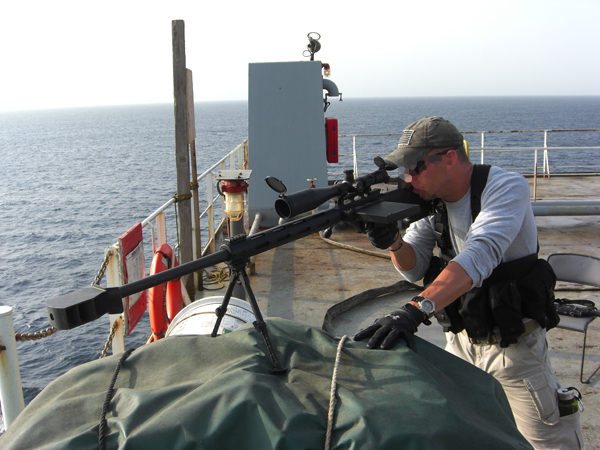
PMSCs have helped curb piracy off Somalia, but they are not allowed in the Gulf of Guinea

Absent from West Africa’s new agreement was any mention of the counter-piracy role that Private Maritime Security Companies (PMSCs) might play in the Gulf of Guinea. Foreign armed guards are not allowed in the territorial waters of local nations, forcing transiting vessels to hire military personnel from regional states and embark and disembark them along route. Several PMSCs were confident that the new agreement would allow them to operate inside the territorial waters of West African states, but concerns over state sovereignty and vested interests in the current system likely prevented such an arrangement from materializing.

Nor are international naval operations likely to be the panacea to West African piracy. At the summit, Ivorian President Alassane Ouattara called on the international community “to show the same firmness in the Gulf of Guinea as displayed in the Gulf of Aden, where the presence of international naval forces has helped to drastically reduce acts of piracy.” However, NATO and the EU have already begun to drawdown assets from their Horn of Africa operations, set to terminate at the end of 2014, and there does not appear to be the political will for cross-continental redeployment. Furthermore, while almost all Somali pirate attacks occur on the high seas, the vast majority of attacks in the Gulf of Guinea take place in territorial waters, primarily those of Nigeria. This serves to render foreign naval vessels both unwelcome, due to local concerns for state sovereignty, and ineffective, as they are unable to operate so close to the shore.

Live Together, Die Alone

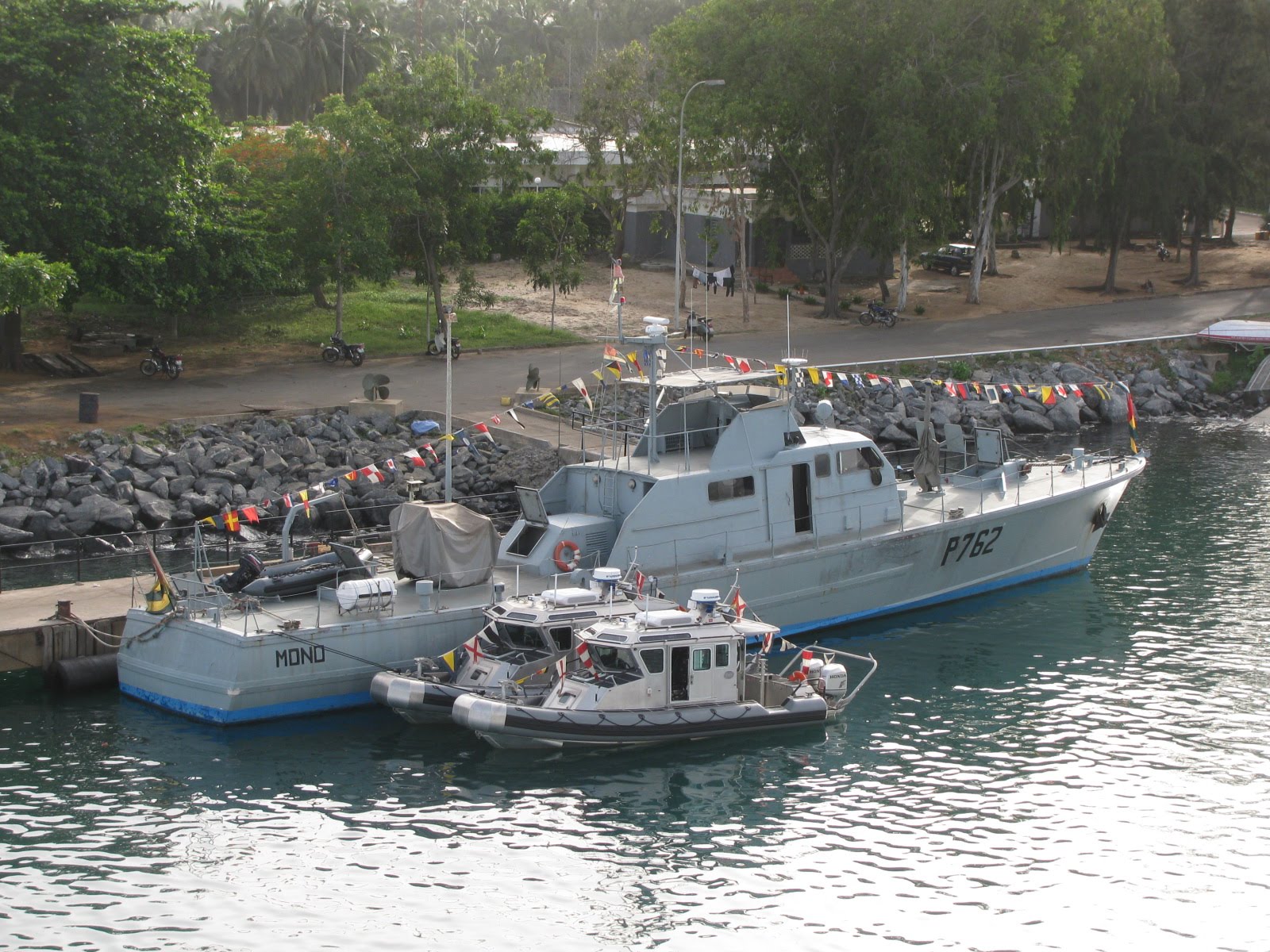
The absence of PMSCs and international naval operations means that a counter-piracy regime for the Gulf of Guinea will have to be local and regionally owned. This is a desirable and more sustainable course of action, but it means that the new Code of Conduct must contend with the low level of maritime security capacity that permeates across the region. Nigeria is the only state in the region that possesses a frigate, corvette, or aerial surveillance capacity. However, only an estimated 28% of Abuja’s navy is operational at any given time, meaning that maritime operations usually amount to intermittent sweeps, rather than a continuous patrol presence. The other littoral nations’ “navies” are more accurately described as coastguards. Taken together, West and Central African states are estimated to have fewer than 25 large security vessels available for interdiction efforts. In terms of force multiplying, Nigeria has engaged in joint patrols with Benin since 2011, but there was little indication in the new agreement that other states will join these operations.

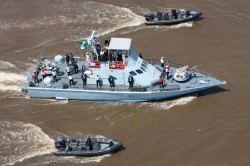
Togo's tiny navy is now on the front line in fight against piracy
Togo’s tiny navy is now on the front line in fight against piracy

As was the case with the DCoC, the IMO has established a trust fund for the Gulf of Guinea that will allow donor states to offset capacity building costs, and it is advisable that the U.S, EU, Japan and others use this as a common channel to coordinate their existing security efforts in the region. Not limiting itself to carrots, the U.S is also trying to exert pressure on Nigeria by issuing a 90-day ultimatum (set to expire at the end of August) to improve port security or face the diversion of U.S-flagged shipping.

While piracy is now a regional issue for the Gulf of Guinea, this ultimatum highlights the fact that the drivers of the crime and its ultimate solution both lay in Nigeria. The country’s fuel subsidies and the lack of local refining capacity are at the root of West Africa’s petroleum black market, and endemic corruption has protected the economic and political elites suspected of profiting from it. Inequality and local grievances in the Niger Delta have been only superficially addressed by payments from a government amnesty program, leaving a massive pool of unemployed young men who see piracy and oil theft as their ticket out of poverty.

Off the coast of Somalia, international naval operations, regional agreements and private armed guards have helped to suppress and contain piracy. In the Gulf of Guinea, enhanced regional cooperation – through information sharing, capacity building, and joint patrols – should serve to roll back the geographical expansion of Nigeria’s pirate gangs. In both cases however, a permanent solution rests within the state that gave rise to regional piracy. Closer maritime coordination in the Gulf of Guinea is a welcome development, but the road to secure marine environment will ultimately have to run through Nigeria.

James Bridger is a maritime security consultant and piracy specialist at Delex Systems Inc. He can be reached at jbridger@delex.com

Do We Need an Indo-Pacific Treaty?

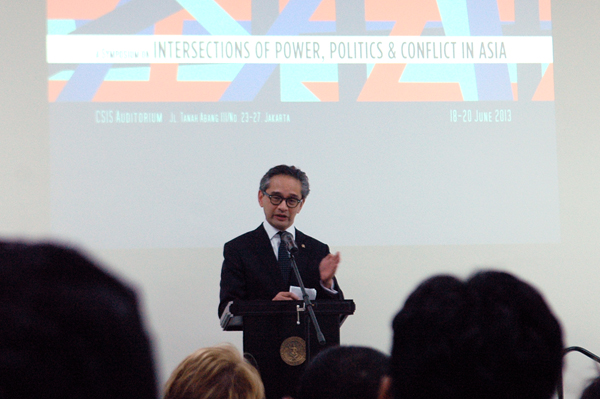
paparan-csis-1

By Natalie Sambhi

Indonesian Foreign Minister Natalegawa has recently articulated his proposal for an Indo-Pacific Treaty at no less than three different conferences (including ‘Intersections of Power, Politics and Conflict in Asia’ in Jakarta in June) and it bears careful reading because it contains ambitious ideas.

To summarise his proposal, Natalegawa sees the Indo-Pacific region as beset by a deficit of ‘strategic trust’, unresolved territorial claims, and rapid transformation of regional states and the relationships between them. The potential for these factors to cause instability and conflict requires the region to develop a new paradigm, an Indo-Pacific wide treaty of friendship and cooperation, to encourage the idea of common security and promote confidence and the resolution of disputes by peaceful means. At present, Natalegawa has only provided the broad concepts behind the treaty but a precursor question is whether a treaty is really necessary?

Natalegawa argues that the Indo-Pacific region needs to be thought of as its own separate system. By having a treaty, regional states will start to think of themselves as members of a community responsible for common security. But the appeal of the idea depends on whether you consider multilateral agreements effective in encouraging member states to cooperate. Less powerful states in the Indo Pacific have few means to contribute to regional stability other than engaging more powerful states. In talking about managing the rapid transformation of regional states, Natalegawa espouses his idea of ‘dynamic equilibrium’ which entails ‘no preponderant power’. Rather than allow the region to be dominated by bilateral tension between powerful actors, Natalegawa argues their interests are inter-linked. The US and China, along with India and Japan are thus encouraged to see their actions in the context of ‘common security’.

The Indo-Pacific is an important geostrategic and economically significant area but it’s a long way from being a formal institution. Indonesia, a non-aligned state located at the geo-strategic centre of the system, might see itself as an obvious choice of broker for this treaty. However, the Indo-Pacific is, at best, a nascent ‘system’, and there’s no central body like ASEAN driving the process for this treaty. In absence of such a framework, it’s hard to see how Indonesia will be able to bring regional countries even to the negotiating table.

The Treaty of Amity and Cooperation in Southeast Asia and the East Asia Summit’s Bali Principles both had ASEAN providing the diplomatic management for negotiating these agreements. They too encourage member states to build ‘strategic trust’, renounce the use of force and settle disputes by peaceful means, as well as include norms like the promotion of ‘good neighbourliness, partnership and community building’. Yet, they’ve had limited effectiveness as a mechanism for action or conflict prevention. Almost all of the so-called ‘Indo-Pacific’ states belong to one or both of these agreements, but no multilateral system has yet demonstrated the ability to ensure that all states adhere to those norms.

In order to effectively tackle the region’s security challenges, including the rapid social and economic transformation of states and the friction this might bring, there needs to be a strong incentive to cooperate and a mechanism for conflict management. The proposed treaty, like the previous two, provides neither.

Security issues between ASEAN states show a clear preference for bilateral resolution. Most recently, smoke from burning forests in Sumatra last month blanketed Malaysia and Singapore in the worst haze since 1997, with severe risk to health. First Singapore then Malaysia sent their representatives to Jakarta to urgently discuss a solution with the Indonesian government. An agreement signed by ASEAN states in 2002 to tackle haze hasn’t been ratified by Indonesia. Instead, at an ASEAN–China Ministerial Dialogue in Brunei earlier this week, Singapore, Malaysia and Indonesia agreed to a trilateral process to manage fires and haze in future—the three states have a clear interest in cooperating on this issue. ASEAN can provide a forum to discuss the haze but, when push comes to shove, the actions of Southeast Asian states demonstrate a tendency to bypass the ASEAN framework.

Similarly, China’s assertive and uncooperative behaviour towards the Philippines over the Scarborough Shoal is at odds with the TAC and Bali Principles. China’s made clear its preference for bilateral engagement with other territorial claimants and to avoid international courts. Without the most powerful states in the ‘Indo-Pacific system’ backing the treaty, norms (in this case, the expectation that states won’t resort to the use of force or coercion) won’t provide the restraint needed. States will continue to rely on traditional alliance partners for protection or to provide a balance to other aggressive actors.

Multilateral frameworks in parts of the Indo-Pacific have been most effective when they have formed for a clear purpose. As Victor Cha argues, coalitions have formed ‘among entities with the most direct interests in solving a problem’. I think the best we can expect for now is a complex network of overlapping agreements and groupings that form to solve clearly defined and immediate issues. Direct interests will yield definite action. The Indo-Pacific treaty could build trust in the long term and as a proposal for more order-building in a transformational Asia, it shows Indonesia trying to lead the way. But if the strategic outlook is as dire as Natalegawa describes, I’m doubtful a new treaty is what we’ll need to tackle some of the region’s most pressing security challenges.

Natalie Sambhi is an analyst at ASPI and editor of The Strategist. Image courtesy of Indonesian Foreign Ministry. This post first appeared at the Australian Strategic Policy Institute (APSI)’s blog The Strategist.

What’s at Stake in the Remote Aviation Culture Debate

It has been written that it is difficult to become sentimental about . . . the new type of seaman—the man of the engine and boiler rooms. This idea is born of the belief that he deals with material things and takes no part in the glorious possibilities of war or in the victories that are won from storms. This theory is absolutely false . . . for there is music as well as the embodiment of power about the mechanisms that drive the great ships of today.

—Capt Frank Bennett, USN
The Steam Navy of the United States, 1897

Hunting for a wingman
                                      Hunting for a wingman

From our flyboy friends in the U.S. Air Force comes the article “The Swarm, the Cloud, and the Importance of Getting There First” in the July/Aug issue of the Air & Space Power Journal (including the lead-in excerpt). In it, friend-of-CIMSEC Maj David Blair and his partner Capt Nick Helms, both manned-aircraft and drone pilots, address their vision for the future of the aviation warfare concept of operations and the cultural sea changes that must take place to accommodate it. Needless to say, such a vision is also relevant to the future of naval aviation. So if you’ve got some beach-reading time ahead of you, dig in. The link above includes the full article:

This article advocates an aviation future of manned–remotely piloted synergy in which automation amplifies rather than replaces the role of aviators in aviation. In this vision, aviators are judged solely by their effects on the battlefield. Amidst this new standard of decentralized execution is the “swarm,” a flock of highly sophisticated unmanned combat aerial vehicles that serve as “loyal wingmen” for manned strike aircraft. Here, every striker is a formation flexibly primed to concentrate effects at the most decisive times and locations. This future also includes the “cloud,” a mass of persistent remotely piloted aircraft (RPA) that provide vertical dominance through wholesale fire support from airspace cleared by the swarm. Fusion amplifies the human capacity for judgment by delegating routine tasks to automation and “demanding” versatile effects in response to fog and friction rather than “commanding” inputs.

The challenge is not technological but cultural. To realize this future, we first must accept remote aviation as a legitimate part of the Air Force story, and then we must look to deep streams of airpower thought in order to understand it. First, Gen Henry “Hap” Arnold teaches us air-mindedness—to fully leverage a technology, we must develop both humans and hardware. Second, Gen Elwood Quesada describes an aviator’s relationship with technology—the discussion is never “human versus machine”; rather, it concerns the relationship between humans and machines. Instead of a cybernetic view in which automation reduces the role of humans in the world, we argue for a capabilities-based perspective that uses automation to empower aviators to better control the battlespace. Third, Col John Boyd reminds us that identities are always in flux in response to changing technical possibilities.

Thus, the F-22 and the RPA are more akin than we realize since both embrace the power of advanced processors and networked data links. An Airman’s view of RPA futures enables manned–remotely piloted fusion, and both traditional and remote aviators must build that future together as equals. The friendly lives saved and enemy lives taken by RPAs in the air campaigns of the last decade merit this acceptance. 

Dave also recommends the article “Why Drones Work: The Case for Washington’s Weapon of Choice” by Daniel Byman.