Category Archives: History

Naval and maritime history section.

The Ram: A 19th-Century Naval Warfare Dead End

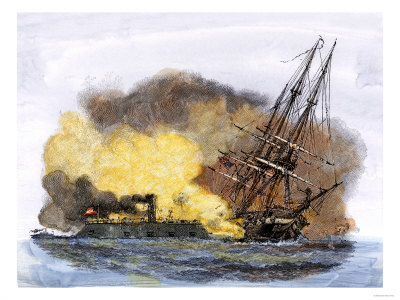
2876611-merrimac-a-confederate-ironclad-ship-rams-the-uss-cumberland-during-the-american-civil-war
CSS Virginia rams USS Cumberland

By Steven Wills

The following is part of Dead Ends Week at CIMSEC, where we pick apart past experiments and initiatives in the hopes of learning something from those that just didn’t quite pan out. See the rest of the posts here

Most naval enthusiasts are familiar with the groundbreaking 19th century warship innovations that have influenced warship design down to the present day. The revolving turret, the iron and later steel hull, armor plate, the mine and the self-propelled torpedo and steam propulsion are all familiar signposts on the way to the fleets of the 20th and 21st century. One such innovation (or retrograde feature) in warship design did not survive to see duty beyond the first four years of the 20th century despite being a prominent feature on every major capital warship from the 1860’s to 1904. The Ram bow was once considered more lethal in ship-killing than either the gun or the nascent torpedo and mine. Thanks to its accidental success in the American Civil War and in the 1866 battle of Lissa between Austrian and Italian fleets, the ram acquired a fearsome reputation not seen since ancient times. Despite it supposed potential, the ram claimed many more victims in peacetime accident than it did in war. The British, French, and even the American navies built expensive rams that wasted valuable resources and never saw combat.

Incidents such as the sinking of the USS Cumberland by the CSS Virginia in 1862 and the spectacular loss of the Italian flagship Re D’ Italia when rammed by it’s Austrian opposite number Ferdinand Max in the 1866 Austro-Prussian (and Italian) war convinced many ship designers that the ram was now a preeminent weapon in war at sea. In the words of the late British naval designer D. K. Brown, the ram was the key piece of naval technology to overcome the new iron hull and armor in place of naval guns which often failed in this endeavor.
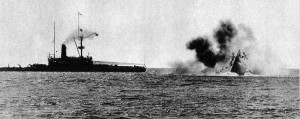
hms_victoria_sinking_foto
HMS Victoria sinks with propellers still spinning

The majority of capital ships after 1866 started to go to sea with rams, but their victims were nearly always friends and not the foes imagined. The British armored frigate HMS Iron Duke sank her sister ship HMS Vanguard in August 1875 as both ships blundered about in heavy fog. In May 1878, the German armored frigate SMS Konig Wilhelm rammed and sank the armored turret ship SMS Grosser Kurfurst in a maneuvering accident in clear weather. Finally, in a spectacular and terrible incident in 1893, the battleship HMS Camperdown rammed and sank the flagship of the British Mediterranean fleet HMS Victoria, who took 358 men and the commanding Admiral of the fleet Sir George Tryon to the bottom off Beirut, Lebanon.

While most rams were mere add-ons to capital ships, some were purpose built with no other combat function. HMS Polyphemus was built in the late 1870’s for over 170,000 pounds sterling. Although she was the first British warship to have an electric light and be painted a gr250px-PolyphemusShipay color for camouflage, Polyphemus was an expensive experiment soon overtaken by the technology of rapid fire guns. While the Polyphemus also had torpedoes as a weapon, the USS Katahdin,commissioned in 1893 at a cost of over $900,000 was a pure ram with only light weapons. Painted green to camouflage herself in coastal waters, Katahdin was a harbor defense weapon against invading enemy fleets seeking to shell U.S. cities.  Although briefly in commission for the Spanish American war, Katahdin saw no combat and little active service before being sunk as a target off the mouth of the Rappahannock river in 1909.
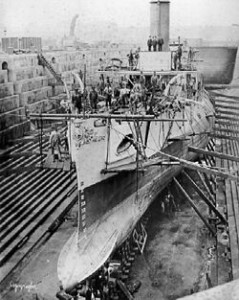
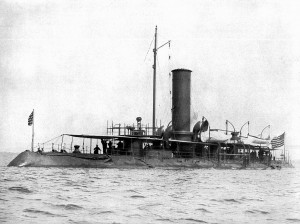
uss_katahdin
USS Katahdin

The ram is another example of a so-called “transformative” weapon that in reality was a retrograde feature in warship construction. The steady march of conventional weapon technology in the form of accurate, long range, director-fired guns and faster, longer-range torpedoes eventually overcame any potential held by the ram. Most importantly, the ram bow was a tactical misconception that was rarely tested in peace or evaluated in wartime use, but remained an integral and expensive element of warship design for nearly 50 years. In an ironic twist of fate, the first modern battleship without a ram bow, the famous HMS Dreadnought, actually rammed and sank a German U boat in March 1915. It was an even more bizarre event in that the commander of the rammed submarine was Kapitanleutant Otto Weddigen, who in 1914 helped to inaugurate the modern era of naval warfare by sinking 3 British cruisers by submarine torpedoes in the space of an hour.

Steve Wills is a retired surface warfare officer and a PhD student in military history at Ohio University. His focus areas are modern U.S. naval and military reorganization efforts and British naval strategy and policy from 1889-1941. He posts here at CIMSEC, sailorbob.com and at informationdissemination.org under the pen name of “Lazarus.”
Confederate Aft End Was a Dead End

The following is part of Dead Ends Week at CIMSEC, where we pick apart past experiments and initiatives in the hopes of learning something from those that just didn’t quite pan out. See the rest of the posts here

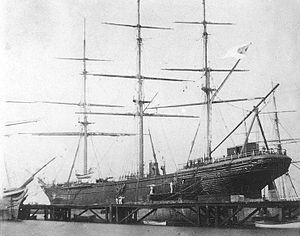
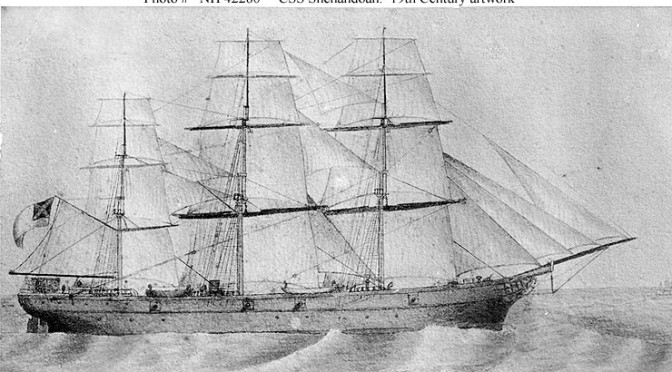
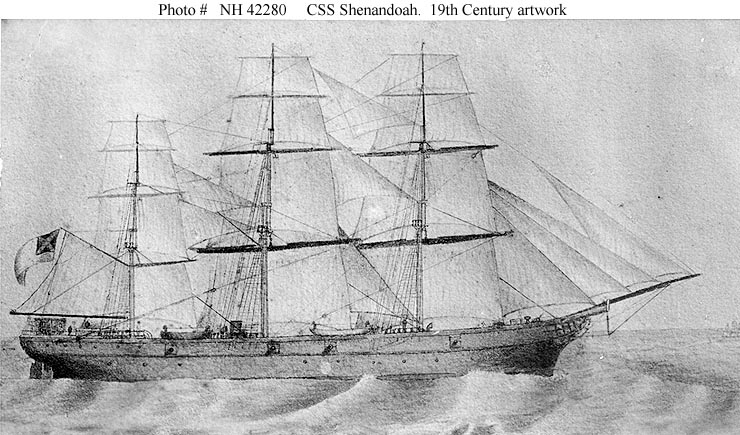
Looking for whalers - CSS Shenandoah under sail
Looking for whalers – CSS Shenandoah under sail

The history of the American Civil War has very little to say on the Confederate Navy. What it does say focuses on commerce raiding, mostly by the CSS Alabama, which is well-known enough to be in high school history texts. But others were out there, too, such as the CSS Shenandoah.

Shenandoah was most notable for raiding whalers in the Pacific for months after the war was over (the news travelled to them slowly), and its flag was thus the last to fly in the Confederacy’s name. But for our purposes here the ship’s propulsion, not its politics, are our concern.

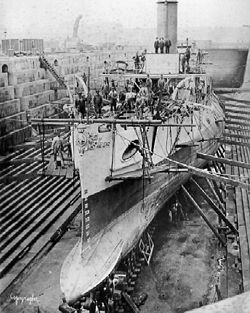
As was common in the mid-19th century, Shenandoah had a hybrid sail/steam system. When winds were good, the crew hauled up sails, and when the wind ceased, they lit off the boiler. What made this ship unique was a retractable propeller that (theoretically, anyway) reduced drag and increased the ship’s speed while under sail.

CSS Shenandoah drydocked

Did it work any more effectively than opening (or was it closing?) the tailgate on a pickup truck helps fuel efficiency? Apparently sailors of the time thought it did. Whatever the answer, it soon became a moot point as sails disappeared entirely from merchant and military fleets around the world. The retractable propeller truly was a dead-end technology, designed to address what turned out to be only a transient problem. As other technologies and procedures developed, the propeller “hoist” became a solution without a problem to solve.

A note on sourcing: While I did find online references to the propeller hoist, this post is mostly based on my memory of “Last Flag Down,” an account of Shenandoah’s cruise by John Baldwin and Ron Powers – a book I cannot recommend highly enough. For a short description of the voyage, see the family history of the XO, Lt. Conway Whittle (near the bottom of the page).

Matt McLaughlin is a Navy Reserve lieutenant who never quite figured out the tailgate thing and ended up selling his pickup. His opinions do not represent the Department of the Navy, Department of Defense or his employer.

These Dead Ends Go To Eleven

The following is part of Dead Ends Week at CIMSEC, where we pick apart past experiments and initiatives in the hopes of learning something from those that just didn’t quite pan out. See the rest of the posts here

Dead ends aren’t always failures of the innovation. Sometimes good ideas are drowned by bureaucracies. In the 1994 paper “The Politics of Naval Innovation” released through the Center for Naval Warfare Studies at the Naval War College, contributor Jeffery Sands states that military organizations are large, conservative, and hierarchical. Resistance exists because: 1) the free flow of information is restricted in hierarchical organizations; 2) leaders have no interest in encouraging their own obsolescence by introducing innovations; and 3) organizations such as the Navy, which are infrastructure-intensive and where changes to that infrastructure are both expensive and lengthy, need some modicum of stability.

The failure of leadership to innovate can be found through two nameless British dockyard models from the Henry Huddleston Rogers Collection at the United States Naval Academy Museum, which has the second largest collection of dockyard models outside of the National Maritime Museum in Greenwich, England.

Waiting for an outboard motor...
Waiting for an outboard motor…

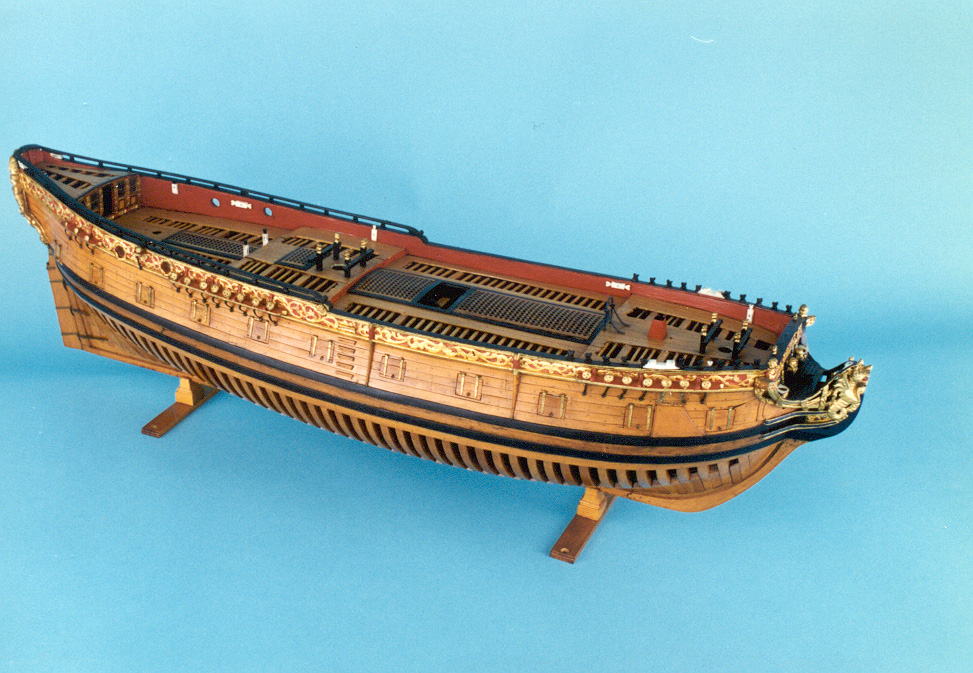
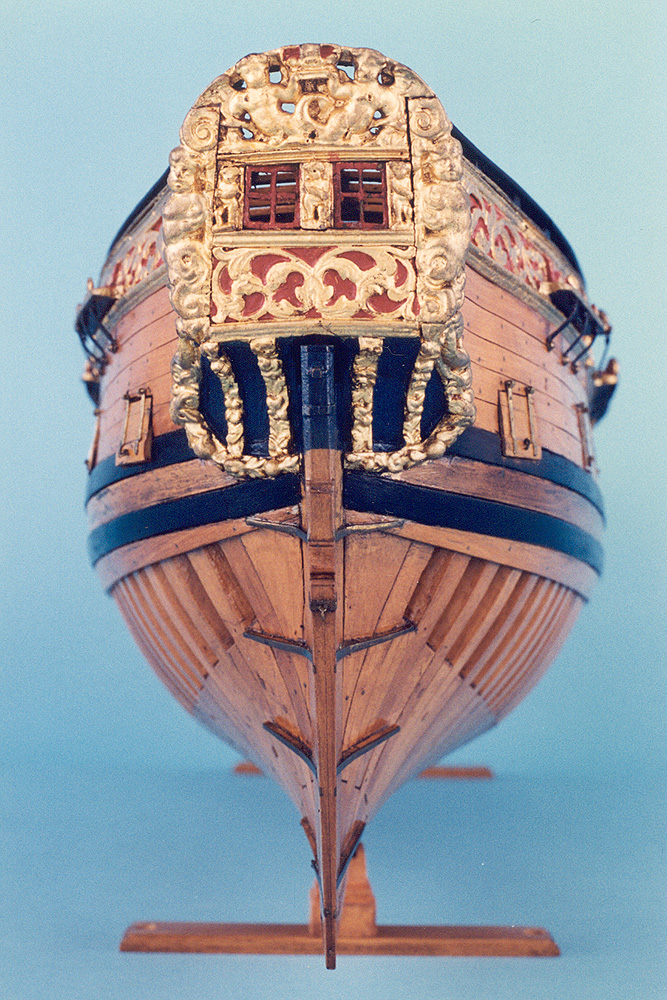
The model pictured at right is a Royal Navy Board hull model of a three-masted, 24-gun Sixth Rate with a pinched (or “pink”) stern, a design not seen in any other known age-of-sail model. The sterns of most English rated warships of the 17th and 18th centuries were burdened by heavy, overhanging square sterns and quarter galleries attached to the hull only at the ends and supported by a series of horizontal transoms. This made the ship difficult to maneuver, particularly in following seas, much like a small car towing a U-Haul in windy conditions. The stern was, of course, where the cabins were located for the captain and, in larger ships of the line, an admiral.

The pinched stern arrangement transferred the weight of the stern on vertical timbers that were taken down to the keel.  That made the stern much sturdier. The designer proposed this innovative ship to improve the ship’s maneuverability, survivability, and speed advantages in a fight. The design would, however, have eliminated the precious cabin space for the senior officers. Although two pink stern hulls were eventually built, the Admiralty demonstrated its resistance to this innovative design simply because of the loss of their comfort and cabin space.

“But there’s no room for the pool table!”

HRR Model No. 14

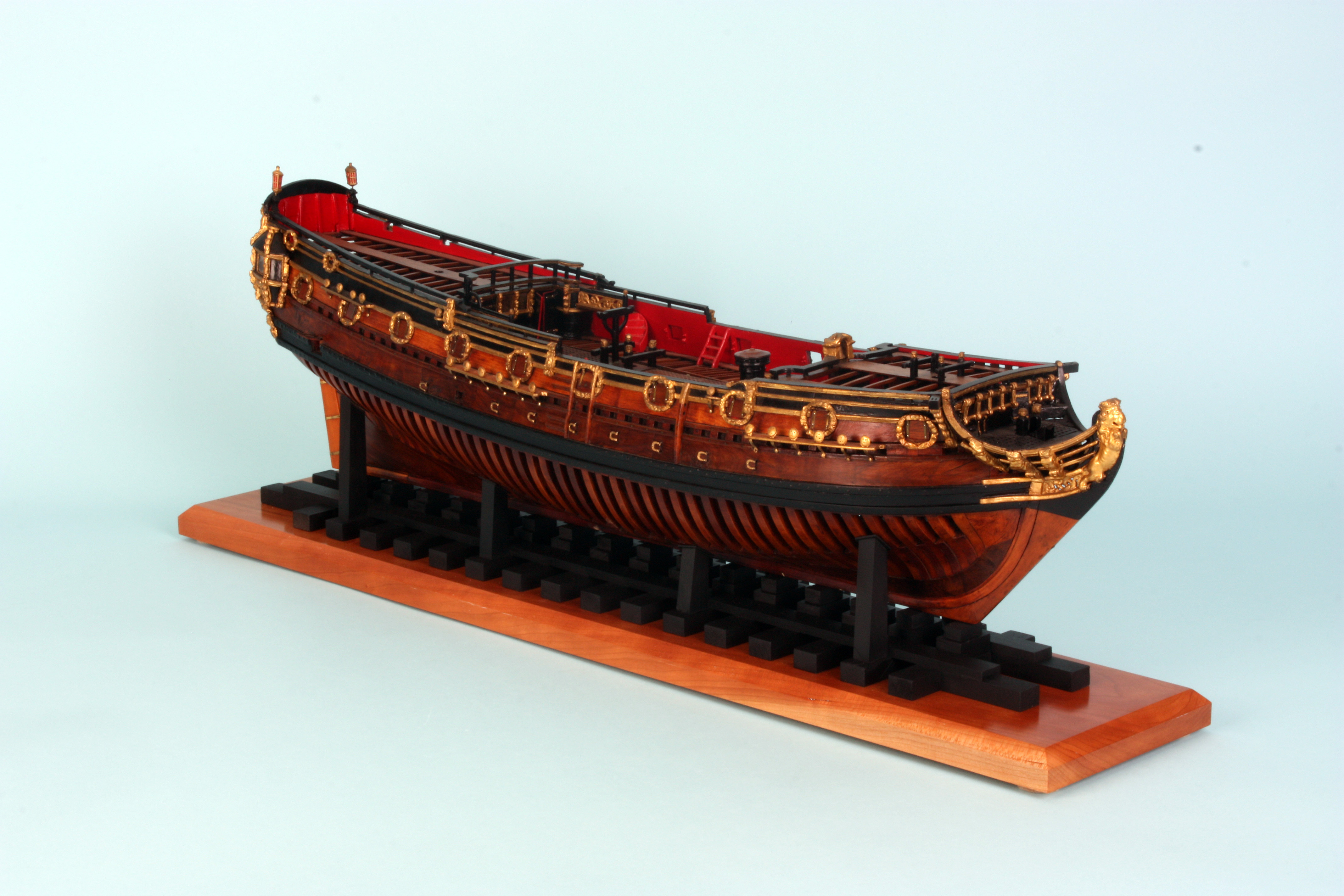
In the 1984 mock rockumenatory “This is Spinal Tap,” lead guitarist (portrayed by Christopher Guest) explains to the interviewer that his amps “go to eleven” because they’re “one louder.” The interviewer asks him why he doesn’t just adjust the amps so that “ten” is louder. The perplexed Tufnel pauses for a moment and then simply reiterates: “These go to eleven.” The similar befuddled intransigence to a naval modification is exhibited in HRR Model No. 14, an English Fifth Rate 32-Gun ship.

The ship was proposed in 1689 or 1690. British ships of that period fell into one of three classes: ships-of-the-line generally with three decks of guns, frigates with two gun decks, and smaller ships with one gun deck. Model No. 14 is the grandfather of what became the true British frigates in the late 18th century.

Lurking in there somewhere is a second gundeck…

Arthur Herbert, Earl of Torrington (incidentally the first person to use the term “fleet in being”), was a battle-scarred veteran of the Dutch Wars and realized that the Royal Navy needed large numbers of a new kind of robust and maneuverable cruiser capable of remaining at sea for long periods of time. To be truly effective, they should be able to employ their main battery of guns even in regions of rougher weather since heavy guns on the lower deck were normally too near the waterline to be used in battle except in optimal weather conditions. The original concept was that the lower deck was to be left completely unarmed without any gunports. The Admiralty board balked.  The debate likely went something like this:

Torrington: “We’ve improved the design by having the guns on the upper deck.”

Admiralty: “But a frigate has two gundecks.”

Torrington: “Yes, but by having all the guns on the upperdeck she has better seakeeping.”

Admiralty: “But a frigate has two gundecks.”

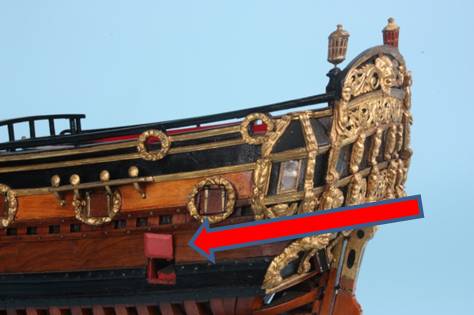
(Fast forward as Torrington modifies the dockyard model to add one small gunport on each side of the stern pictured below.)

Torrington: “Here’s your second gundeck.”

Admiralty: “Ah, a frigate has two gundecks!  Well done!”

Yep, there it is.
Yep, there it is.

This evolution became symptomatic of the British for the next century to build light originally but then modify the ships with more guns than for which they were originally designed. Ultimately it would be another century before the Admiralty adopted a frigate that had a seven-foot freeboard as the standard.

Claude Berube is the Director of the Naval Academy Museum and instructor in the Department of History. He is the author of several books and more than forty articles. The author notes the extensive research on the dockyard models done by specialist Grant Walker at the Naval Academy Museum.

Landing Gear is for Pansies

The following is part of Dead Ends Week at CIMSEC, where we pick apart past experiments and initiatives in the hopes of learning something from those that just didn’t quite pan out. See the rest of the posts here

Despite (or possibly, because of) Washington Naval Treaty cutbacks in the 20s and the Depression-induced budget troubles in the 30s, the U.S. Navy experienced quite a period of experimentation during the interwar decades. Without a doubt, the most glamorous example was the airship program, which featured yet another ship called Shenandoah, and culminated in the rigid airships USS Akron and USS Macon (ZRS-4 and ZRS-5).

Imagine riding this up to Fleet Week.

But we are not here to talk about those, strictly speaking – we’re here to discuss their parasites. Parasite aircraft, that is. Akron and Macon were flying aircraft carriers, each carrying three or four scout aircraft to serve as the long-range eyes of the fleet below.

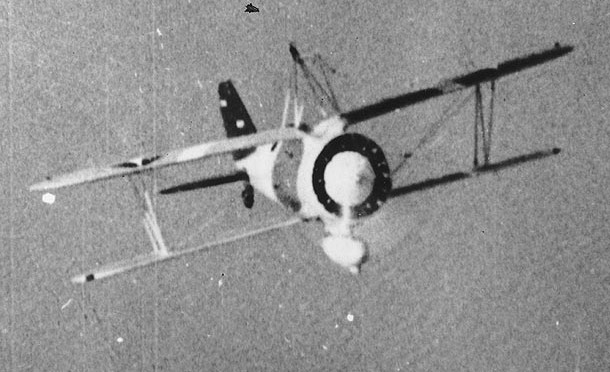
The Curtiss F9C Sparrowhawk originated in a 1930 Navy requirement for a small carrier-based fighter. It ended up not performing too well in that role, but was retained in service as the only aircraft small enough to fit through the hanger doors of Akron, then under construction.

Here’s the dead end – the truly daring, truly paradigm-shifting dead end. How many planes have you ridden in that possessed some form of landing gear? I trust that it was every single one. So what do you do with a plane that takes off and “lands” via a hook above the fuselage? If you’re the Navy in the 1930s, you ditch the landing gear. No fixed gear, no retractable gear – simply no wheels at all. The Goodyear company would have been very fearful at the lost business, if they weren’t also the ones building the giant ships carrying the tire-less biplanes. All in all, probably a good deal for them.

Hooking into the trapeze aboard the Macon… the parallel parking of the skies.

But aircraft that never kissed ground were not long for this Earth. The Navy’s lighter-than-air fleet followed the general trend of rigid airships, in which they died violent deaths. Akron went down in a storm in the Atlantic (killing Rear Admiral William A. Moffett) in 1933, and Macon went down in the Pacific while operating out of Moffett Field just two years later. Sparrowhawks lost their niche and paradigms were brought back to normal.

Still, it is worth pondering the lesson of the Sparrowhawk. It took something that every single aircraft must have in some form or another, and just did away with it when the need disappeared. It didn’t end up working out – but it deserves to be admired.

Matt McLaughlin is a Navy Reserve lieutenant who doesn’t usually discuss parasites as frankly as he does here. His opinions do not represent the Department of the Navy, Department of Defense or his employer.