Category Archives: Global Analysis

A Geographical Breakdown of What’s Going on in the World

Cyber Power: A Personal Theory of Power

This essay by Billy Pope is part of the Personal Theories of Power series, a joint Bridge–CIMSEC project which asked a group of national security professionals to provide their theory of power and its application. We hope this launches a long and insightful debate that may one day shape policy.

Cyberspace is enabling new forms of communication, influence, awareness, and power for people around the world. Families use cyberspace to communicate face-to-face over great distances. Financial institutions execute global business and commodity trades at the speed of light through the cyberspace domain. The world’s citizens are granted unprecedented access to information, facilitating more awareness and understanding than at any time in history. Yet the same cooperative domain that fosters so much good for mankind also offers a tremendous source of power. The antithesis of the mutually beneficial electronic environment is a cyberspace where competition and fear overshadow collaboration. This conundrum, however, is not new. Hobbes, in his fundamental law of nature, warns, “That every man, ought to endeavour Peace, as farre as he has hope of obtaining it; and when he cannot obtain it, that he may seek, and use, all helps and advantages of Warre.”[i] Cyberspace will continue to civilize. As the domain matures, however, so too will the forces that aim to use the cyberspace domain to project power.
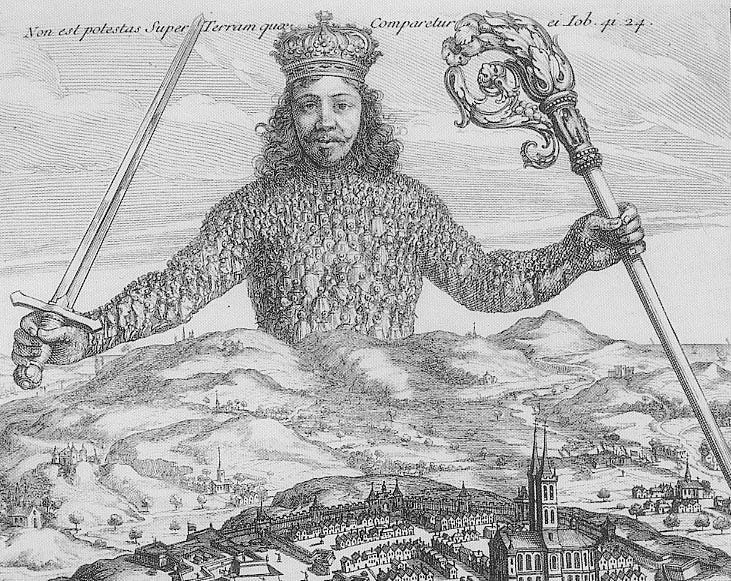
Hobbes’ Leviathan


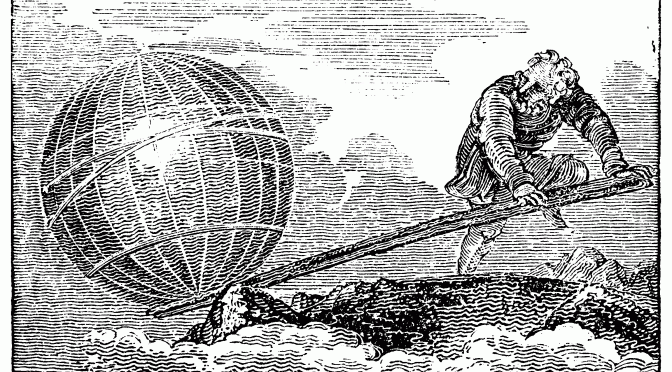
Before diving into the concept of cyber power, one must first frame the term power itself. Power, in its most basic form equates to might: the ability to compel a person or group to acquiesce through force. Thucydides captured this concept in his artful depiction of the Melian Dialog, penning the famous phrase, “the strong do what they can and the weak suffer what they must.”[ii] Hobbes, too, warned that power possessed is power to be used, suggesting every man lives in a state of constant competition with every other man.[iii] In this way, power is the ultimate arbiter, framing both what a man can do and what he should do in the same breath.

The close cousin to might is coercion. Thomas Schelling suggests “Coercion requires finding a bargain, arranging for him to be better off doing what we want — worse off not doing what we want — when he takes the threatened penalty into account.”[iv] Unlike a strategy centered on might, coercion requires insight. Military strategists and theorists who emerged from the Cold War coalesced around a single basic tenet of coercion: one must attempt to thoroughly understand an adversary before coercion can succeed.[v] Hearkening Sun Tzu’s notion that one must “know the enemy,” this community of great minds suggests in-depth analysis helps determine the bargaining chips in the coercion chess match.[vi]

Coercion is not limited to massive Cold War-styled conflicts. Non-state actors and other asymmetric threats may also be influenced through coercive strategies. Emile Simpson, in his book War From the Ground Up, infuses current counterinsurgency strategies with Aristotle’s concepts of logos, ethos, and pathos to distill the concepts of modern coercion.[vii] Simpson argues the vital importance of information as a source of power. He suggests the very definition of success in asymmetric conflicts is framed by one’s ability to compel an adversary to accept an imposed strategic narrative. Simpson writes, “In this sense, success or failure in war are perceived states in the minds of one’s intended audience.”[viii] In wars where annihilation cannot even be considered as a feasible strategy, one must win with ideas. Coercion offers a framework of thought that centers on this very approach.
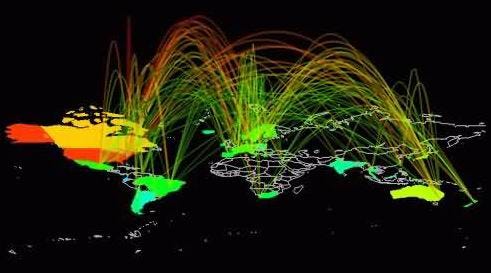
Artist’s depiction of cyberspace, Feb 2011 via Cameroon’s Ministry of Defense


Why focus so much of an essay on cyber power theory to a lengthy discussion on traditional forms of power? Quite simply, cyber power is still just power at its core. Cyber power will not change the nature of war. Cyber power, at least in the foreseeable future, will not reorganize the international consortium of states, leaving the Westphalian system to flounder in a new electronic world order. Cyber power offers tremendous opportunities to enhance how people interact, cooperate, and even fight. It does not, however, make traditional forms of power obsolete.

Overzealous futurists exuberantly claim that cyber power is a game changer, saying things like, “Cyber war is real; it happens at the speed of light; it is global; it skips the battlefield; and, it has already begun.”[ix] The attuned strategist will peer through the chafe, realizing that cyber power offers new, innovative methods by which to project power. The same savvy practitioner will also appreciate that power and conflict are grounded in basic human requirements, psychology, and relationships. Neither Thucydides’ realist notions of fear, honor, and interests, nor Keohane’s collaborative concepts of cooperation and interconnectedness were developed with cyberspace in mind.[x] Cyberspace, and in turn any notion of cyber power, however, contains these concepts in troves.

What, then, is cyber power specifically? This author argues it takes two forms. First, cyber power extends and accentuates existing forms of military power. It helps shape the battlefield through intelligence collection and information operations. In some cases it facilitates military effects that were previously only achievable through kinetic means. Second, cyber power is a unique political instrument. Most military professionals are all too familiar with the elements of national power marched out during professional education courses: diplomatic, informational, military, and economic. Cyber power connects to each of these components but also offers new options. Stronger than diplomacy and sanctions, yet not to the level of Clausewitzean war, cyber power expands the spectrum of power projection available to policy-makers.
The Aviationist, March 2013


In its militaristic form, cyber power has proven its worth as an accoutrement to traditional military engagements. Two historical examples of air power employment serve as cases in point. When the United States repelled Iraq’s invasion of Kuwait in 1991, the American Air Force disabled Iraq’s integrated air defense system by permanently destroying radar sites, anti-aircraft systems, and electrical switching stations.[xi] In 2007, the Israeli Air Force penetrated Syrian airspace en route to an alleged nuclear reactor at Dier-ez-Zor. Israeli pilots simply flew past Syria’s air defense systems undetected. While Israeli officials have never confirmed the details of this operation, it is widely accepted that a cyber attack blinded the air defense systems, achieving the desired effect, while preserving the systems and their associated personnel from physical destruction.[xii] By producing military effects, cyber power enhances more traditionally understood forms of power in terms of might and projection.

The second framework of cyber power, however, places more emphasis on the combination of interdependence and leverage than military might. In this way, the concept of coercion again takes center stage. The United States serves as an appropriate case study. America is the most technologically advanced nation on Earth. The U.S., after all, invented the Internet and gave rise to the framework for cyberspace. Until very recently, the United States maintained control over the mechanisms that form the central nervous system of the Internet and its interdependent connections.[xiii] This outright advantage, however, also translates into a serious vulnerability. The U.S. and other similarly connected nations are more dependent on cyberspace for normal societal functions like banking, municipal utilities, and interstate commerce.

Prominent powers are incentivized to exercise cyber power to achieve political effects while attempting to limit vulnerabilities to the same types of actions. Largely non-lethal and quite influential against nations that find themselves dependent upon the domain, cyber power offers attractive options. Some states will attempt more cooperative approaches to limit vulnerability, as Keohane’s post-hegemonic theoretical approach would suggest. At a minimum, capable entities will communicate their abilities to exert influence in the cyber domain to influence the strategic narrative Emile Simpson so aptly describes. The ability to project power in the cyber domain becomes an important source of influence alongside economic, military, informational, and diplomatic leverage. It is in this grand-strategic purview that cyber power holds the most potential.
The difference between these two aspects of cyber power is both strategic and philosophical. In the militaristic sense, cyber might conjures a Clausewitzean approach where engagements form the foundation of strategy and digital blood is the price of victory.[xiv] A strategy centered on coercion, leverage, and dependence, however, falls into the realm of Sun Tzu and Liddell Hart where perfect strategies involve very little actual confrontation on the way to achieving political objectives.[xv] Familiar in concept yet quite novel in execution, these two methods produce power where none previously existed. Both approaches, however, must be considered as parts of a greater whole that includes the full spectrum of power and political will. Cyber power is poignant and increasingly relevant, but it is not sufficient in and of itself.

While some soothsayers predict cyberspace will reshape the global landscape and the power structures that govern it, this author suggests otherwise. So long as people depend on the physical domains of air, land, and sea for basic survival needs, the physical powers used to protect these domains will remain relevant. That is not to say, however, that cyber power is flaccid. Nations that depend on cyberspace can be held at risk through the exploitation of cyber power for political effects. Whether through direct engagement or a more indirect approach, cyber power is capable of swaying political decisions in the same way others sources of power influence policy. Cyber power is a force to consider as military leaders and statesmen alike contemplate all dimensions of national power.


[i] Thomas Hobbes, Leviathan, Rev. student ed, Cambridge Texts in the History of Political Thought (Cambridge ; New York: Cambridge University Press, 1996), 92.

[ii] Thucydides, History of the Peloponnesian War, [Rev. ed, The Penguin Classics (Harmondsworth, Eng., Baltimore]: Penguin Books, 1972), 406.

[iii] Hobbes, Leviathan, 88.

[iv] Thomas C. Schelling, Arms and Influence (New Haven, CT: Yale University Press, 2008), 4.

[v] Graham T. Allison, Essence of Decision: Explaining the Cuban Missile Crisis, 2nd ed (New York: Longman, 1999), 404; John J Mearsheimer, The Tragedy of Great Power Politics (New York: Norton, 2001), 338; Emile Simpson, War from the Ground up: Twenty-First Century Combat as Politics (New York, NY: Oxford University Press, 2013), 206; Robert Anthony Pape, Bombing to Win: Air Power and Coercion in War, Cornell Studies in Security Affairs (Ithaca, N.Y: Cornell University Press, 1996), 20. This list is not exhaustive, but is representative of the importance the community of scholars places on understanding one’s adversary.

[vi] Sun Tzu, The Illustrated Art of War (New York: Oxford University Press, 2005), 205.

[vii] Simpson, War from the Ground up, 202–203.

[viii] Simpson, War from the Ground up, 61.

[ix] Richard A. Clarke, Cyber War: The next Threat to National Security and What to Do about It, 1st ed (New York: Ecco, 2010), 30–31.

[x] Thucydides, History of the Peloponnesian War, 20–21; Robert O. Keohane, After Hegemony: Cooperation and Discord in the World Political Economy, 1st Princeton classic ed, A Princeton Classic Edition (Princeton, N.J: Princeton University Press, 2005), 243.

[xi] Michael R Gordon and Trainor, The Generals’ War: The inside Story of the Conflict in the Gulf (Boston: Little, Brown, 1995), 112.

[xii] Charles W. Douglass, 21st Century Cyber Security: Legal Authorities and Requirements, Strategic Research Project (U.S. Army War College, March 22, 2012), 14.

[xiii] “NTIA Announces Intent to Transition Key Internet Domain Name Functions | NTIA,” accessed May 7, 2014, http://www.ntia.doc.gov/press-release/2014/ntia-announces-intent-transition-key-internet-domain-name-functions; “US Transitioning Internet DNS Control,” accessed May 20, 2014, http://cyberlaw.stanford.edu/blog/2014/03/us-transitioning-internet-dns-control.

[xiv] Carl Von Clausewitz, Michael Howard, and Peter Paret, On War (Princeton: Princeton University Press, 2011), 128, http://site.ebrary.com/id/10578581.

[xv] Basil Henry Liddell Hart, Strategy, 2nd rev. ed (New York, N.Y., U.S.A: Meridian, 1991), 324.
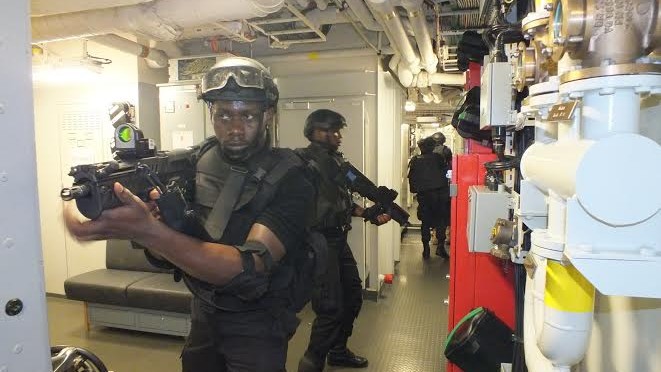
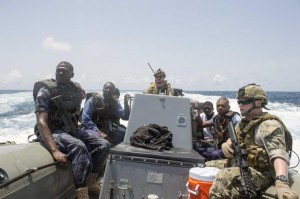
OBANGAME EXPRESS 2014: Together. Forward. Slowly.

Background

(April 2, 2014) - U.S. Sailors, U.S. Coast Guardsmen and Ghanaian maritime specialists, all embarked aboard joint, high-speed vessel USNS Spearhead (JHSV 1), ride in a rigid-hull inflatable boat (U.S. Navy photo by Mass Communication Specialist 2nd Class Jeff Atherton/ Released)
(April 2, 2014) – U.S. Sailors, U.S. Coast Guardsmen and Ghanaian maritime specialists, all embarked aboard joint, high-speed vessel USNS Spearhead (JHSV 1), ride in a rigid-hull inflatable boat (U.S. Navy photo by Mass Communication Specialist 2nd Class Jeff Atherton/ Released)

The Gulf of Guinea has a problem: Nigerian-driven maritime crime. Nigeria’s problem in turn is a thoroughly criminalised political and commercial elite and a largely disenfranchised electorate. The fallout of that state of affairs has an impact on the region’s security and stability. There is no short-term fix and it has become fashionable to recommend “improved governance” and anti-corruption measures to remedy the situation in the long run. This sort of advice is cheap. Beyond the obvious truth contained in them, there is little in such recommendations as to how to operationalise them or how to address the situation in practical terms as it is and will likely remain for the next years if not for decades.

The efforts of the African Partnership Station (APS) and the Africa Maritime Law Enforcement Partnership (AMLEP) are two military-political initiatives that seek to overcome the lack of practical value of general policy recommendations and to utilise the will and the resources that exist in the region to make the best of it in the maritime environment. Within this setting OBANGAME EXPRESS is an annual test since 2011 of what has been and what still needs to be achieved in West Africa’s maritime domain. APS and AMLEP, together with the French “Operation Corymbe” are the only sustained efforts to build and maintain regional maritime security capabilities in a region characteristic for its sea blindness and mutual distrust.

With the emergence of the Gulf of Guinea Code of Conduct in 2013 and subsequent agreements between various signatories, such as the Zone E Agreement between Nigeria, Benin, Togo and Niger, West Africa makes an attempt to replicate some of the hot pursuit agreement already in existence between Nigeria, Niger, Chad and Cameroon in the borderlands of the Nigerian North and North-East and transfer that model to a maritime environment. The chief difference is that the Gulf of Guinea Code of Conduct provides a multi-lateral approach with obvious political advantages, but equally obvious operational challenges given the widely divergent maritime security agendas (where they exist) of the signatories. This problem has been circumvented for the time being by breaking down the entire region encompassing the states of the Economic Community of West African States (ECOWAS) and Economic Community of Central African States (ECCAS) into manageable “zones” in order to be able to implement practical measures on the basis of the Code of Conduct more rapidly instead of having them negotiated by the entire forum. The zonal approach also allows individual states to shape the Code of Conduct according to their specific maritime security needs.

It is important to point out that maritime piracy (of whichever definition) is only one of many issues and for many regional states it is not even the most important or pressing one and thus not the driving force behind the Gulf of Guinea Code of Conduct. While piracy is costing the shipping industry and the region millions every year, the annual lost revenue from illegal fishing probably ranges in the several hundreds of millions while Nigeria alone loses approximately US$ 8bn per year from illegal bunkering and illegal crude oil exports. Much of the stolen oil leaves Nigeria by sea. The nexus of those criminal activities is transnational crime, often under the patronage of Nigerian elites. This makes it even more sensible to address the entire complex of maritime security as one and not just focus on a single symptom, however much this may exercise the pundits in the shipping journals and maritime security blogs.

OBANGAME EXPRESS 2014

Purpose

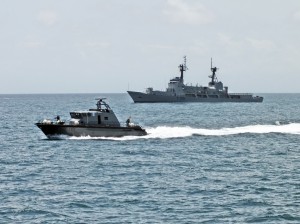
Cameroon Navy patrol boat LE LOGONE (foreground) and the Nigerian flagship NNS THUNDER during Exercise OBANGAME EXPRESS 2014 (Photo: Dirk Steffen)

This year’s exercise OBANGAME EXPRESS was meant to be a litmus test of the applied Zone E Agreement, both on a command & control (C2) level as well as on a tactical level – chiefly by rehearsing vessel board seize & search (VBSS) procedures, rules of engagement (ROE) and maritime interdiction operations (MIO) with boarding teams. The purpose of OBANGAME EXPRESS 2014 was thus “to exercise and evaluate the regional interoperability, multinational command and control relationships, and proficiency of the regional maritime partners in the Gulf of Guinea.”

West African statesmen like to ascribe many if not all of the region’s maritime security woes to external factors and routinely call on the international community for support to resolve the problem. This year, their call was answered during OBANGAME EXPRESS 2014 which lasted from 16 April to 23 April 2014 and included extra-regional support beyond APS from Belgium, Germany, Turkey and Spain. “During the at-sea phase of the exercise, 11 nations, including were represented on board 36 different vessels hosting 20 different boarding teams. The boarding teams completed 47 boarding drills during three days of operations” summarised Exercise Director, Captain Nancy Lacore. Several Maritime Operation commands (MOC) were involved, specifically the Regional Maritime Awareness Centre (RMAC) at the Nigerian Navy’ Western Naval Command in Lagos, the ECCAS Centre pour la Coordination Multinationale (CMC) in Douala (Cameroon) and the Battalion d’Intervention Rapide MOC in Idenau (Cameroon). This was augmented by an embarked staffs, including a regional staff led by a Ghanaian admiral on the German combat support ship Bonn.

Conduct at sea

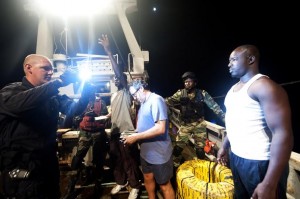
(July 17, 2011) - Petty Officer 2nd Class James Haurand (LEFT) takes an identification photo of a crewmember aboard a Senegalese fishing vessel as part of an African Maritime Law Enforcement Partnership (AMLEP) boarding mission with Coast Guard and Senegalese boarding teams. (U.S. Coast Guard photo by Petty Officer 2nd Class Etta Smith/RELEASED)
(July 17, 2011) – Petty Officer 2nd Class James Haurand (LEFT) takes an identification photo of a crewmember aboard a Senegalese fishing vessel as part of an African Maritime Law Enforcement Partnership (AMLEP) boarding mission with Coast Guard and Senegalese boarding teams. (U.S. Coast Guard photo by Petty Officer 2nd Class Etta Smith/RELEASED)

The at-sea phase was preceded by a pre-sail training for the MIO-teams by US, German and Spanish instructors. The at-sea phase from 19-21 April 2014 covered a range of scenarios including illegal fishing, arms smuggling, human trafficking, illegal bunkering and piracy. With the exception of the Bonn, which served as the embarked staff’s flagship, all extra-regional warships and some Nigerian Navy vessels served as target ships for the MIO-teams.

The experience made on board the German frigate Hamburg was representative for the conduct of the exercise and challenges experienced by the MIO teams and their proficiency. Teams from Benin, Nigeria and Togo boarded the Hamburg which alternatingly assumed the role of an illegally fishing vessel and a gun runner. The scenarios had been scripted by the American-led exercise control staff.

Of the three MIO-teams the Nigerian Special Boat Service (SBS) team deployed from NNS Thunder displayed the highest degree of professionalism, tactical acumen and ability to graduate their approach. Although clearly trained and conditioned with the hostile opposition of illegal bunkerers, kidnappers and hijackers in mind they were able to exercise restraint and judgement appropriate to the situation. In spite of good tactical procedures their primary challenge was communication between team elements as well as with their mothership. The latter in turn suffered from poor responsiveness of the MOC, which resulted in the SBS team being “stranded” on the target vessel for 2 hours until a decision to detain the suspect vessel and provide back-up for the team could be obtained.

The Beninese boarding team from the patrol boat Oueme was representative of the average MIO teams deployed by minor West African coastal states. The recent expansion of Nigerian piracy into Beninese waters and the aggressive response that Benin launched together with Nigeria in the form of “Operation Prosperity” had shaped their approach to VBSS. The team carried out the boarding with a high degree of pre-emptive violence including death threats. Modestly equipped and with poor communications to their own ship, the team was clearly aware of its vulnerability and consequently tense throughout the scenario.

The Togolese team, finally, represented the low end of experience found amongst some of the very small and unseasoned West African navies. The absence of even the most basic equipment for VBSS operations was reflective of the Togolese Navy’s operational readiness for this type of maritime security activity. When the team boarded the Hamburg it was only their third boarding (in the course of the exercise) and the third boarding of this kind ever conducted by the Togolese Navy. At that point all equipment – weapons, helmets, life vests and RHIB (including coxswain) had to be borrowed from the German Navy. Consequently they were tactically unready, though clearly willing to learn. Nevertheless, at that point they were overwhelmed by the scenario originally envisaged for them and ended up conducting a boarding of a very compliant fishing vessel under supervision of their instructors.

Conduct on shore

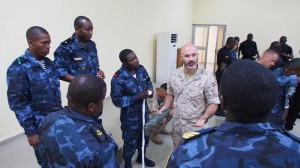
A Spanish instructor from ESPS INFANTA ELENA provides classroom training to Equatoguinean naval personnel in the pre-sail phase of OBANGAME EXPRESS 2014. (Photo: Alexander Drechsel/Adrian Kriesch)

Command and Control – and the inadequacy of it as it was displayed during the exercise – was a recurring theme. This was not just a view of the exercise controllers but an almost universal complaint by commanding officers of most participating units, who felt they received neither the guidance nor the information they expected and needed to carry out their mission.

The exercise exposed significant deficiencies in the MOCs’ (especially RMAC’s) ability to build and maintain a situation picture and to share maritime domain awareness (MDA) information and to process requests for decision-making. Although technical shortcomings were cited during the debrief it was clear that the issue was really an organisational and training shortfall. This includes to some extent the ability to utilise technology at hand.

The RMAC used a commercially available AIS-tracking programme called Sea Vision in order to maintain a situation picture. Because many vessels in Nigerian coastal waters do not send AIS signals, it was to be augmented by an integration of radar pictures from coastal stations and assets afloat. This solution was only implemented belatedly (with the assistance of U.S. Navy personnel) and in the meantime the Nigerian Navy resorted to only monitoring AIS signals.

The effectiveness of the RMAC suffered further from a staff organisation that in addition to not having been prepared for the exercise also appeared to be less than capable of dealing with real world incidents and reports, some of which were forwarded directly to the RMAC by participating units or MOCs. Decision-making, even for pre-authorized scenarios, was routinely escalated to flag-officer level resulting in considerable delays or even in no decision being taken at all. Interagency information sharing and exchange of maritime domain awareness information, such as with NIMASA or NPA, or the Maritime Trade Information & Security Centre (MTISC) in Ghana, which was part of the exercise brief, was not evidenced – be it for exercise purposes or in real life.

Hot wash

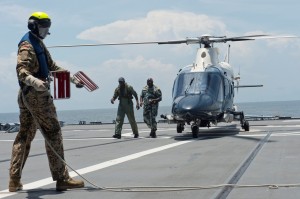
(April 20, 2014) – Nigerian Navy Rear Adm. S. I. Alade, flag officer commanding Western Naval Command, arrives by helicopter to the German ship FGS Bonn (A-1413) during Obangame Express 2014. (U.S. Navy photo by Mass Communication Specialist 2nd Class John Herman/Released)

The exercise ended, predictably, with much back-patting of (especially Nigerian) top brass for a job well done. Clearly, the conduct of the exercise in itself is valuable and necessary, and arguably holding the exercise in that form was no mean feat (though the credit belongs mostly to the organisers from the U.S. Navy) however, more work needs to be done to achieve even a basic maritime security capability in the region. Beyond the preening of the Nigerian flag officers at the closing ceremony this challenge is largely understood and accepted on a working level of most Gulf of Guinea navies (ships’ commanders and exercise observers), many of whom expressed a genuine desire to continue their working relationships with the extra-regional navies. It will take time for this insight to permeate into the West African navies and until then it will need to be constantly refreshed in the minds of the West African senior naval officers and politicians.

Frustration over perceived African nonchalance or foot-dragging will continue to be a key experience for many U.S. and European participants in OBANGAME EXPRESS exercises in the foreseeable future. “FUBAR” as an American exercise staff member put it was probably the strongest characterization of what went during the exercise on at times, but as a Nigerian participant pointed out: just putting Nigerians and Cameroonians into the same room would have been unthinkable a year ago. So, is there hope after all?

Conclusion

The Gulf of Guinea continues to present the vexing challenge that those countries that jealously guard their right to establish maritime security are singularly incapable of doing so. Nevertheless, continual efforts like APS, AMLEP and Corymbe will provide incremental improvements or provide support for regional initiatives aimed at improving regional maritime security. Better operational maritime security capabilities will not address the problems of corruption, lack of prosecution or even the underlying transnational criminal structures, but as one of several practical measures for improving security they can encourage the willing and contain the unwilling and contribute to an improved security environment. Experience from other theatres, not least the Indian Ocean, have shown that such measures, while not eradicating the symptoms, can at least ameliorate them. While the complexity of this year’s OBANGAME EXPRESS may have overwhelmed some of the regional participants, it is important to keep the momentum going. Equally, extra-regional participants should not be discouraged by what may be perceived as slow (or non-existent) progress. It will be a long haul, measured in decades rather than years.

Dirk Steffen is a Commander (senior grade) in the German Naval Reserve with 12 years of active service between 1988 and 2000 and was assigned to the German Battlestaff of TG 501.01 on board FGS HAMBURG during Exercise OBANGAME EXPRESS 2014. He is normally Director Maritime Security at Risk Intelligence when not on loan to the German Navy. He has been covering the Gulf of Guinea as a consultant and analyst since 2004. The opinions expressed here are his alone, and do not represent those of any German military or governmental institutions.

Troubles Of Our Own: Why 2014 Is Not Like 1914 (But Is Scary Anyway)

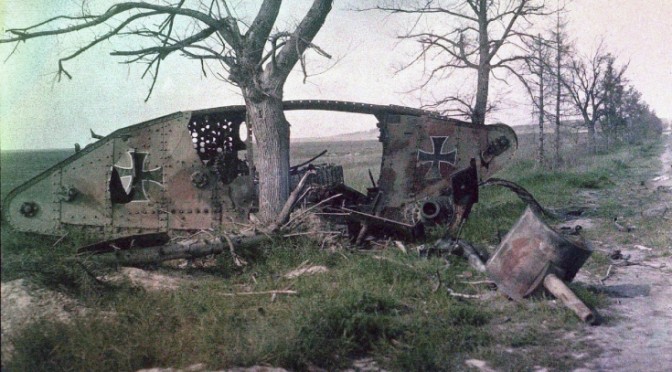
It has become fashionable, on the eve of the centennial of the outbreak of World War One, to ask, or worry about, whether it could all happen again. This vague sense of anxiety – this sense of how good we have it now, and how it could all be gone tomorrow – is perhaps fitting, given that it has become an accepted (if debatable) point of history that neither the decision-makers nor the publics of the various European powers expected a prolonged and civilization-devastating war. Such anxiety has a long pedigree: Kipling, writing a poem for Queen Victoria’s Diamond Jubilee a mere decade and a half before the war broke out, chose to quietly shelve his now-infamous imperialist tribute, “The White Man’s Burden,” for another occasion, in favor of publishing the more sombre and (at the time) jarring “Recessional,” which reminded its reader that all glory is fleeting and God alone is permanent (“Far-called, our navies melt away/On dune and headland sinks the fire/Lo, all our pomp of yesterday/Is one with Nineveh and Tyre…”).

In fact, the war’s outbreak and subsequent course probably were predictable in advance, and if anything reflected what we would now call a failure of analysis, either on the part of the leaders of the European states, or on the part of their people. The prescient military analyst Ivan Bloch had warned that carnage, stalemate, and industrial exhaustion were practically inevitable in modern warfare; the general staffs on what were to become both sides were at least dimly aware of this reality. Diplomatically, Europe had bounced from crisis to crisis in the preceding decade. Its people were all trained for war and (particularly, but not only, in Germany) cheered their respective militaries and military leaders with a fervor now reserved for football fans. One would have had to be blind not to see it coming.

Millions were. Millions paid.

In that spirit, it would be foolish indeed to believe that major war is now a thing of the past, or that a terrible catastrophe could not befall us. Indeed, the belief that such catastrophes are a thing of the past appears to be a prerequisite for their occurrence. And the rise of other military powers relative to the U.S. should indeed give us pause: this is the sort of time when we should be worried.

But for all that, there are key differences between the modern world and the world of 1914. They suggest that, at a minimum, the kind of wars we have seen in the past are unlikely to repeat themselves. Something altogether different awaits us. This in itself is ominous, because there are no recent historical models to guide us or point the way; avoiding repeating the past is not as simple as learning from a mistake. This, too, is a lesson of the past: World War One did not resemble the Napoleonic Wars, and Europe in 1914 did not resemble Europe in 1789. But understanding the present in light of the past is necessary all the same.

I therefore submit, for consideration, some key differences between 1914 and now.

1. We have nuclear weapons now, and we don’t make light of them. Two points must be understood. In the first place, invading the home territory of an adversary in a modern war between great powers will sooner or later (and probably sooner) result in the destruction of both. Notwithstanding innumerable debates about when, exactly, it would be “rational” to employ nuclear weapons in self-defense, the presence of nuclear weapons places an upper limit on warfare between the major powers. Marching on Paris (or Beijing, or Moscow, or Washington, or Brussels) is less an inevitable goal of military operations than an exercise in playing with fire (or plutonium). And, in the second place, this point is understood by most of the decision makers involved: the carnage on the Somme was a distant hypothetical in 1914; the devastation of Hiroshima can be viewed online.

Of course, decision makers can miscalculate. Just as the European political leadership in 1914 and after were apparently unaware of how to stop what had been started or how bad things could get, so too it is difficult in a crisis for modern decision makers to know where the lines are. That, of itself, may point the way to where things will (may?) someday go wrong. The possible future addition of other nuclear states to the mix will merely make things more complicated.

2. It is more difficult to hold onto conquered territory now, and less useful to do so. A mainstay of European warfare for probably two centuries or more prior to World War One had been the assumption that land could be taken for sovereign use, that a treaty at the end of the war would legitimize the winner’s gains, and that docile civilians would sit by and not care too much to whom they ultimately would pay taxes. In fact, the Napoleonic Wars (which saw the first nationalist partisans) and the Franco-Prussian War (in which German troops had to contend with irregular “franc-tireurs”) had already called this issue into question by 1914, and it is significant that Bismarck, in an earlier era, sought to avoid peace treaties that required Germany to integrate too many non-Germans. But whatever problems European states had in this area by 1914 are multiplied tenfold now.

The world is awash in cheap former Soviet weaponry, and it is all too easy for a rival power, if it decides it is worth its while, to arm an insurgent faction anywhere where government is less than perfectly stable. The tactics and strategy of insurgent warfare were perfected in the wake of World War Two by Mao Zedong, Ho Chi Minh and Vo Nguyen Giap, the Algerian FLN, and others; mass-casualty terrorism was perfected by Al Qaeda. As Thomas Hammes notes in The Sling And The Stone, modern communications technology and cheap transportation make coordinating an insurgent group much easier. Since the Arab Spring and the Euromaidan, a viable model exists for coordinating quasi-peaceful, quasi-violent opposition to a government; it is now more dangerous than ever for a government to be both weak and illegitimate at the same time, and this is the position a conquering force effectively starts from. Twitter, YouTube, and a sympathetic globalized media ensure that atrocities committed to quell a rebelling populace will receive widespread attention, even as they allow protesters to coordinate their actions. If a state does succeed in overcoming all of these problems, it is less certain now than in 1914 (notwithstanding anything else one might say) that its actions will have international legitimacy. And, needless to say, the destruction wrought by resistance to occupation renders any conquered territory inherently less valuable.

This is not to say it is impossible for a state to conquer territory in the modern world and hold it. It is to say that the costs of doing so have gone up and the benefits have gone down. This, rather than anything the international community did, may be the main reason Vladimir Putin chose to overtake parts of Ukraine by fomenting unrest and sending covert thugs rather than by force majeure: a country roughly the size of the American Midwest with 44 million people is difficult to swallow even in part, and certainly not with only a few divisions.

But it is also easy to see how these changes could pave the way for the next conflict. If invading another great power’s territory is out of the question, indirect methods may be the preferred course. Therein may lie danger.

3. There is no military conscription in most great powers today, and there are demographic and technological reasons why it is unfeasible. In Europe in 1914, every able-bodied male citizen of every great power except Britain and the U.S. performed military service upon reaching adulthood, and was subject to reserve service and periodic refresher training thereafter. Older men carried military identity cards that told them where to go if called up. This was an accepted way of life in virtually every European state, and there was even a movement in favor of conscription in Britain. It did not dampen public enthusiasm for war when war came, and may have inured the publics of the various states to war’s hardships.

Except for Russia, no great power employs military conscription today. Nor can they. As Edward Luttwak has noted, low birthrates and smaller families mean that losses are more keenly felt in wartime; this of itself makes drafting eighteen-year-olds impracticable; indeed, historically wars have been fought by states with rising populations, not populations that have plateaued or are falling. In the west, public cynicism over Vietnam and Iraq further dampens enthusiasm for any sort of civic militarism that imposes costs on the general public.

If the teenagers of the respective great powers are reluctant to serve, the militaries in question are reluctant to receive them: not only are discipline problems associated with unwilling recruits, but mass conscription of its nature implies a choice of quantity over quality – in modern, technologically reliant armies, training a soldier to use his equipment well takes more time than the average conscript would normally spend in the army, and requires more training resources than would be available on a universal basis. The Russian Ground Forces’ experience with conscription is the exception that proves the rule: draft-evasion is rampant, morale is low and discipline is often shoddy (a situation abetted by horrific hazing practices), and readiness is affected by the need to achieve technical proficiency that cannot be learned in the time available.

Some of the factors driving the trend towards professionalism and away from military conscription might be reversed, while others are more permanent – but the kind of national mobilization that was part and parcel of early twentieth century warfare is not possible at the moment. What applies to manpower applies to machines as well: as is readily apparent in observing the procurement process for ships and aircraft, the replacement of lost equipment will be a more complicated matter in any future war than it was in 1914.

It is ambiguous what this might mean for great power war in the future. On the one hand, it is indicative of a more pacific-minded public; on the other hand, it means that the costs of such a war will be borne by a few until they are borne by many.

4. The great powers are broke. With the possible exception of Russia, all of the major powers are carrying huge loads of public and private debt – including national debts, provincial and municipal debts, and private debt. (Yes, this includes China; it’s just that in the latter case the figures are more carefully hidden, which is in itself terrifying.) Economic growth is slowing across the developed world, including, most ominously, in China, which relies on double- or high-single-digit growth to appease its restive population and provide jobs for its surfeit of young men (the combination of the One Child Policy and traditional sexism having run its logical conclusion).

In financial terms (and solely in those terms), the world today more closely resembles the world before World War Two than it does the world before World War One. This is not necessarily reassuring.

5. Finance is globalized. The great powers’ national debts are publicly traded. It is tragically amusing to note that a war with China would mean the U.S. would have to find a new foreign creditor, and quickly. This is in stark contrast to the financial world of 1914, in which governments overwhelmingly owed money solely to their own citizens, and the purchase of government debt in wartime could be sold to the public as a patriotic duty or contribution.

6. And finally: people are older, richer, more heavily taxed, more heavily subsidized, and more cynical. It’s quite obvious, but it must be said: a prolonged war today would require financial sacrifice from the publics of the various great powers that they would not easily make. Government spending and taxation relative to private income is stratospheric compared to 1914 levels, and in the West the overwhelming majority of this spending is repaid to the public at large via entitlements. The percentage varies from great power to great power (it is higher in Europe), but it is high across the board. All of the great powers have aging populations that are, on average, much older than in 1914. All of their populations, in a period of prolonged great power peace, have structured their lives (particularly, the size of their houses and the size of their debts) on the assumption that current levels of income, taxation, and benefits will be roughly stable. The sacrifices necessary to pay for a war (even the economic damage caused by a disruption of trade in the event of a war) might be less severe than in 1914, but would be felt more keenly by publics that are not only used to comfort but in fact rely on it. (One cannot make one’s house smaller and easier to pay for, magically reduce one’s mortgage, or easily accept early twentieth century levels of medical care.)

Such sacrifices are bearable if a war is about something. But whereas in 1914 the publics of the European powers believed in all too many cases that the nation was an end in itself, modern publics are less idealistic. Particularly in Europe, but also in the U.S. and to some extent in China, if only because of the experience of two world wars, let alone the more recent experiences of Vietnam and Iraq, calls to sacrifice for the nation when there is money to be made and a comfortable life to be lived will ring hollow, particularly if the war is not about anything. The levels of nationalism that drove the world to war in 1914 are not only absent today, but are often the subject of derision.

This is not to say that war is impossible for this reason, either. As was the case before World War Two, we may yet decide that war is not worth fighting only to find ourselves in a situation where we have no choice. Cynicism and complacency are rarely wise.

But it is to say that today is not yesterday. Those who fear that 2014, or the coming years, will be like 1914 can probably rest easy. Today’s problems are not like yesterday’s.

They are different.

Martin Skold is currently pursuing a PhD in international relations at the University of St. Andrews, with a dissertation analyzing the political strategies of states engaged in long-term security competition.

West Africa: More Dangerous Pirates, Less Adequete Security

West Africa is home to the world’s most violent pirates—who are now proving capable of overwhelming armed guards. Last month pirates killed a crewmember during an attack on German-owned oil tanker. Instead of fighting off the pirates, the embarked security team retreated to the ship’s citadel safe room.

For the shipping and insurance worlds, the widespread adoption of armed guards aboard vessels essentially ‘solved’ Somali piracy, as no vessel employing them has been hijacked by pirates. An attempt to transfer this panacea to the pirate-prone waters of West Africa, however, has proven inadequate and ill-suited to local conditions.

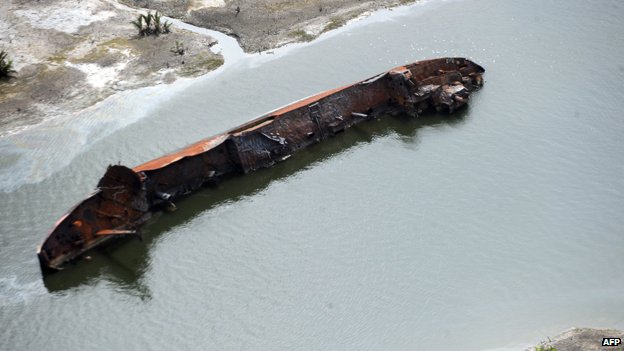
On the night of April 29, pirates attacked SP Brussles 35 nautical miles off the coast of Nigeria. Local security forces guarding the vessel were unable to prevent the pirates from boarding and retreated to ship’s citadel along with the crew. The guards did not emerge until the following morning, only to find that the ship’s chief engineer had been killed and another crewmember injured as they failed to reach the citadel.

This incident and others like it highlight three important issues that distinguish West African from maritime crime in other parts of the world.

First is the distinctive operating environment in which international naval patrols are absent, the response capacity of regional security forces is limited, and the use of foreign armed guards is prohibited.

Second, is the uniquely violent nature of Nigerian pirates and their propensity to engage in shootouts with security forces.

Finally, are the multiple shortcomings of using local armed guards aboard vessels and the inherent danger the shipping industry faces in being overly reliant on this measure.

Getting Around the Neighborhood

Piracy in the Gulf of Guinea is a Nigeria-centric problem that primarily occurs within 100 nautical miles of the coast and targets the ships plying the regional oil trade. Local naval forces have provided a modicum of security for transiting vessels, but their ability to respond to pirate attacks outside of territorial waters and secure anchorages is limited. The pirate’s proximity to shore coupled with local concerns over state sovereignty has prevented international naval operations from deploying as they have off Somalia.

These same confines have restricted Private Maritime Security Companies (PMSCs) from operating in the region as national laws prohibit foreign guards from carrying weapons within the 12nm limit of territorial waters. For embarked security, shipowners are forced to rely on armed guards contracted from littoral states. These guns on deck, drawn from national police and naval forces, are often poorly trained and undermanned, making them ill equipped to match the threat they face.

Ultraviolence

A recent UN report found that pirate attacks in West Africa from 2006 to 2013 have been proportionally more severe (involving vessel hijacking, hostage taking and violent acts towards crew members) than those in the Western Indian Ocean and South East Asia. West African pirate attacks have also become more violent over time, the report notes, particularly from 2011 onwards. International Maritime Bureau data records show more crewmembers were injured and killed off Nigeria than other country from 2012 to first quarter of 2014.

Regionally distinct pirate ‘business models’ partially explain this phenomenon. When Somali pirates hijack a vessel, they must ensure that the hostages are kept alive so that ransom negotiations for the return of the entire crew and ship can proceed smoothly.

West African hijackings, by comparison, are usually “extended duration robberies,” in which the crew and vessel are only held hostage until the ship can be pumped of its petroleum cargo. When maritime kidnappings occur, pirates take only the most valuable (usually Western or Asian) officers for ransom while leaving the rest of the crew and vessel behind. Under both scenarios, the majority of the crewmembers hold no value for the pirates and are thus considered disposable assets.

Armed to the Teeth

West African pirates are also better armed and trained than other maritime criminals, reportedly wielding heavy machines guns, such as M60s, and RPGs. Many of these weapons are ‘legacy firearms’ circulating from previous African conflicts, while others are sold or rented from corrupt security forces.

This heavy armament is a product of the pirate’s proximity to their onshore bases in the Niger Delta, which allows them to carry more weight in weapons and ammo and less in fuel and water than their Somali counterparts. Nigerian pirates also display military-grade tactics, explains Kevin Doherty, Owner of PMSC Nexus Consulting, “they know how to skillfully maintain and fire their weapons, they ambush security forces, and they board vessels with tactical precision.”

The weapons and tactics displayed by the pirates are often superior to those of the security personnel hired to protect vessels, notes a report from the counter-piracy think tank Oceans Beyond Piracy. As a result, local soldiers contracted to guard ships have reportedly hidden during pirate attacks. “They hide, just like that,” exclaimed a regional seafarer, “When we ask them why they hide, their answer is simple, ‘The weapons of rebels and pirates are stronger.’” An alternative, often anecdotally reported explanation is that naval guards have colluded with pirates in exchange for a share of profits.

Nigerian pirates are often undeterred by onboard security forces and willing to use deadly force to achieve their objectives. While shootouts between pirates and embarked security are exceedingly rare in the Indian Ocean, they are becoming increasingly common in the Gulf of Guinea, resulting in multiple casualties.


Fatal Nigerian Pirate Attacks 2012-2014*
Date & Location Incident Details Casualties
February 13, 2012100 nm South of Lagos, Nigeria Pirates fired on, boarded, and robbed a drifting bulk carrier, MV Fourseas, off the coast of Nigeria. The pirates killed the ship’s Master during the robbery, while Chief Engineer died from injuries sustained during an attempted escape. Master and Chief Engineer killed.
August 3, 201245nm SW of Bonny Island, Nigeria Pirates armed with AK 47s overpowered the Nigerian naval personnel guarding an oil barge, Jascon 33, and kidnapped four crewmembers for ransom. Two Nigerian guards killed, two guards injured, four crewmembers kidnapped.
December 13, 201225nm SW offshore, Bayelsa, Nigeria Pirates armed with machine guns attacked an offshore supply vessel, PM Salem, and engaged in a 20-minute firefight with onboard security guards before retreating. One Nigerian guard killed, one guard injured.
February 4, 2013Lagos Anchorage, Nigeria Pirates attacked and boarded an anchored chemical tanker, Pyxis Delta, conducting STS operations off Lagos. The onboard naval security returned fire and eventually repelled the attackers. One crewmember died from injuries sustained during the firefight. Two pirates were also killed.
February 5, 2013Near Angiama, Niger Delta waterway, Nigeria Gunmen ambushed an Indian-owned oil barge as a Nigerian military detachment escorted the ship through the Niger Delta. Two Nigerian soldiers killed, one crewmember killed, three crewmembers wounded.
April 29, 201435nm W offshore Bayelsa, Nigeria Armed pirates boarded a product tanker, SP Brussels, underway. The onboard security forces fired at the pirates before retreating to the citadel along with most of the crew. Chief Engineer killed, Third Officer wounded. Two pirates were also killed.


The Wrong Answer

Armed guards aboard ships in West Africa do not provide the silver bullet security solution that PMSCs have in the Indian Ocean.

A key differentiator in the latter theatre is that ship owners have a number of tools for vetting the quality and compliance of the armed security they hire.

For example, the GUARDCON contract developed by BIMCO, the largest international shipping association, provides a standard agreement between ship owners and PMSCs that covers guidance on Rules of Force and other security issues. In addition, there is the ISO/PAS 28007 accreditation that allows PMSCs to certify their compliance with appropriate regulations and best practices.

Vetting and compliance is much more problematic in West Africa as vessel owners and Masters have far less oversight over the armed guards they bring aboard. Owners can either hire security forces directly through a local agent, or engage a PMSC to act as an intermediary to employ local guards and provide unarmed logistical support and leadership. In either case, BIMCO notes, the local security forces will operate under their own rules of engagement and cannot be bound to the provisions of GUARDCON.

When a vessel contracts local security, it is the soldiers’ commander, not the shipowner, who usually controls the number of guards posted. An undermanned and poorly drilled guard team bears responsibility for the fatality aboard the SP Brussels, argues Rene Toomse, CEO of the PMSC Aburgus. “What was missing,” Toomse explains, “was a guard assisting all the crew into the citadel while others were fighting with the criminals.” The vessel had only two armed guards onboard at the time of the attack, rather than the BIMCO recommended staffing of four.

Maritime insurers and PMSC owners have privately expressed reservations that an overreliance on onboard guards is contributing to lax safety and security standards in West African waters. One source close to the London insurance market noted a particular problem of vessels with embarked security rejecting advisories to avoid prolonged exposure in high risk-areas close to the Niger Delta, opting instead to save time and fuel by using shorter routes and “shooting their way out” of any potential pirate attacks. The majority of these incidents, it was further noted, are never reported to authorities and thus contribute to a cycle of inaccurate threat perceptions and inadequate security measures.

Multiple Layers

It is very unlikely that the laws barring foreign armed guards from West African territorial waters will change, despite pressure from PMSCs and shipping organizations. Concerns over sovereignty and control understandably run deep, particular in Nigeria, and the current regime of renting local guards to foreign ships is too lucrative to give up. Unarmed PMSC advisors working with local guards offers an improved measure of security, but BIMCO still warns that the ability of PMSC leaders to effectively control their teams will be limited.

As no single defense against West African piracy is impenetrable, a multi-layered security system must be implemented. This begins with a pre-transit risk and security assessment and requires up-to-the-minute information on pirate activity and vessel vulnerabilities. Communication security is also essential, as pirates are known to select their targets by obtaining route and cargo information from open and private sources. Vessel hardening measures such as the use of citadel safe rooms are key, but it is also imperative that crews are regularly drilled for emergencies. Vessels also need a well-staffed 24-hour watch duty as West African pirates primarily attack at night.

Even with all these measures in place, the most important lesson to draw from the SP Brussels and other fatal pirate attacks is that no vessel should ever be lulled into a false sense of security.

James M. Bridger is a Maritime Security Consultant with Delex Systems Inc. in Herndon, VA. His current areas of focus and expertise address piracy, terrorism, and other irregular threats to global maritime transportation. He can be reached at jbridger@delex.com