This article was originally posted at India’s National Maritime Foundation. It is republished on CIMSEC with the author’s permission. Read the piece in its original form here.
By Gurpreet S. Khurana
During the ‘Raisina Dialogue’ held in March 2016 at New Delhi, Admiral Harry Harris, the Commander of United States (US) Pacific Command (USPACOM) referred to the first ever tri-lateral (Australia, Japan and India) [i] ministerial discussions held in September 2015. ADM Harris’ comments addressed “maritime security – including freedom of navigation patrols,” and proposed “expanding this tri-lateral to a quadrilateral venue” by involving the US.2 Later, while addressing questions, the crux of his message was that the high level of ‘inter-operability’ achieved during complex India-US Malabar exercises should not be an end into itself, but translated into “coordinated operations.”[iii] Admiral Harris’ answers suggested– albeit implicitly –that India undertake ‘coordinated freedom of navigation patrols’ in the South China Sea (SCS). Evidently, such patrols could be used to restrain China’s growing military assertiveness in the SCS, and its process of legal “norm-building” in the maritime-territorial disputes with the other littoral countries of the SCS.
PACOM Chief ADM. Harry Harris gives a speech at the Raisina Dialogue on March 2, 2016, in New Delhi, India. Read the Admiral’sspeech here.
India has consistently upheld the US position in terms of being a non-party to the SCS disputes by supporting dispute-resolution through well-established norms of international law and freedom of navigation in international waters, including the SCS. Nonetheless, Indian Defence Minister Mr. Manohar Parrikar lost little time in clarifying India’s position, saying that “As of now, India has never taken part in any joint patrol; we only do joint exercises. The question of joint patrol does not arise.”[iv]
The case indicates an ‘apparent’ mismatch between US expectations for India, and what New Delhi is willing to deliver to its ‘strategic partner.’ This can be contextualized and explained through analytical insight into the salient policy pronouncements from either side. The most instructive among these are those articulating India’s role as a ‘net security provider’ in Asia. This essay aims to analyse such a role to understand the ‘aberration’ in the otherwise healthy trajectory of India and the United State’s contemporary strategic relationship and in doing so, enable a better comprehension of the India’s perspective on its compelling strategic and foreign policy considerations.
America’s Articulation
The ‘net security provider’ concept emerged during the 2009 ‘Shangri La Dialogue.’ when then-US Secretary of Defence Mr. Robert Gates stated,
“When it comes to India, we have seen a watershed in our relations – cooperation that would have been unthinkable in the recent past… In coming years, we look to India to be a partner and net provider of security in the Indian Ocean and beyond.”[v]
This sentiment of the USA was thereafter reiterated on various occasions – both formally and otherwise – including in the 2010 US ‘Quadrennial Defense Review’ (QDR). The statement in QDR-10 predicted,
“India’s military capabilities are rapidly improving through increased defense acquisitions, and they now include long-range maritime surveillance, maritime interdiction and patrolling, air interdiction, and strategic airlift. India has already established its worldwide military influence through counterpiracy, peacekeeping, humanitarian assistance, and disaster relief efforts. As its military capabilities grow, India will contribute to Asia as a net provider of security in the Indian Ocean and beyond.”[vi]
India’s Articulation
India’s political leadership and policymakers clearly supported the proposed role for India in principle. Addressing the top brass of the Indian Navy and Defence Ministry in 2011, then-Indian Defence Minster Mr. AK Antony emphatically assured India’s maritime neighbours of “unstinted support for their security and economic prosperity.” He continued to say that the Indian Navy has been:
“mandated to be a net security provider to island nations in the Indian Ocean Region… most of the major international shipping lanes are located along our island territories. This bestows on us the ability to be a potent and stabilising force in the region.”[vii]
“We have…sought to assume our responsibility for stability in the Indian Ocean Region. We are well positioned… to become a net provider of security in our immediate region and beyond.”[viii]
These seminal articulations represent a valuable starting point in analyzing India’s projected role as a ‘Net Security Provider.’ This is divided into three parts for the sake of objectivity, with each one analyzing a specific facet of India’s broader national-strategic imperative to fulfill such a role. These aspects are Geographical Area, Capacity and Capability, and Cultural Ethos.
Geographical Area
Primary Area of Interest
By virtue of its geographic location and peninsular disposition, India’s most critical national interests are closely connected with events in the Indian Ocean. This is broadly so for the northern Indian Ocean, and more specifically for regions categorized as ‘primary areas of maritime interest’ in the Indian Maritime-Security Strategy, 2015 (IMSS-15). [ix]
In nearly all articulations of India’s role as a ‘net security provider’ – both Indian and American – the ‘Indian Ocean” is a ‘common thread’ while the phrase “…and beyond” has never been specifically defined. Arguably, the latter phrase would refer more accurately to the Persian Gulf or Red Sea as India’s ‘primary areas of maritime interest,’ rather than the SCS that – notwithstanding India’s increasing economic and strategic stakes there – is a ‘secondary area of maritime interest.’ (Such classification does not, however, undermine the criticality of the SCS to India’s vital interests). In this context, India’s Professor Mahapatra aptly inquires:
“If India and the U.S. have not contemplated similar kinds of patrol in Indian Ocean, what could justify India and U.S. patrolling waters of South China Sea?”[x]
Geo-Strategic Frontiers
A related, though distinct, definition of ‘Geo-Strategic Frontiers’ is also relevant here. As part of a country’s military-strategic calculus, this phrase refers to geographical boundaries necessary for that country to achieve ‘strategic depth’ against a potential State adversary. Recent American analyses, such as the one by Professor James Holmes on ‘Get Ready, India: China’s Navy is Pushing West’[xi] (towards the Indian Ocean), are indeed instructive for India, and add to trends that were noted in India nearly a decade ago.[xii] However, it is unlikely that India would need to extend its strategic depth vis-à-vis China eastwards beyond the Southeast Asian straits. Notably, these maritime choke-points constitute a major strategic challenge for the PLA Navy itself.
The ‘Geo-Strategic Frontiers’ of a country are also contingent upon the ‘capacity’ and ‘capability’ of its own and friendly military forces to influence events in the area within the said frontiers. This aspect is addressed below.
Capacity and Capability[xiii]
In 2012, the IDSA undertook a study on Out of Area Contingency (OOAC) missions by Indian armed forces. The study deduced that:
“the reach of current air and sealift capabilities means that, realistically speaking, India can conduct OOAC operations only within the Indian Ocean region (IOR).”[xiv]
Even while India’s strategic sealift and airlift capacities are being augmented, the finding of the aforesaid study is likely to remain valid for the foreseeable future. The same is true for India’s capability in other forms of maritime power projection.
The new Indian Maritime Security Strategy (IMSS-15) aptly emphasizes the term ‘net security’, rather than ‘net provider [of security].’ Further, it pegs India’s role as a ‘net security’ provider to the question of ‘capability.’ Accordingly, it defines the term ‘net security’ as:
“a state of actual security available in an area, upon balancing prevailing threats, inherent risks and rising challenges in a maritime environment, against the ability to monitor, contain and counter all of these.”[xv]
The analysis of IMMS-15 clearly indicates that the Indian Navy seeks to contribute to maritime security and stability in its primary and secondary areas of interest, broadly constituting the entire swath of the Indo-Pacific region. To do so, India is not only developing its own capabilities for distant operations, but also providing ‘capacity building’ and ‘capability enhancement’ assistance to friendly countries in the region. However, since the November 2008 seaborne terrorist attacks against Mumbai, the sub-conventional threats to India’s coastal and offshore security will continue to pose major challenges for the Navy. These challenges will require it to deftly balance its force expansion and modernization between the two competing imperatives of ‘blue water’ and ‘brown water’ operations.[xvi]
Cultural Ethos
As stated above, IMSS-15 dwells upon India’s regional role as a “provider of net security” rather than a ‘net provider of security.’ Ostensibly, an additional aim is to dispel any notion that India seeks to act as a hegemonic power or a ‘policeman’ in the region. Such intent flows from India’s cultural ethos and is closely linked to its evolution as a modern nation-state.
IMSS-15. Click to read.
Another facet of cultural ethos is the pride with which Indians identify themselves based on their civilizational genesis, something more profound and deep-seated than the concept of ‘nationalism’. Together with the aforementioned non-hegemonic stance, this facet manifests in India’s long-standing policy of not involving itself in coalition military operations, except those mandated by the United Nations. This policy also manifests in the operational domain. Unless operating under the UN flag, Indian military forces are averse to undertaking ‘joint’ (or “combined”) operations, like joint patrols, since such operations would involve placing Indian forces under foreign Command and Control (C2). The Indian Defence Minister’s negation of the possibility of ‘joint (naval) patrols’ may be seen in this context.
Other conditions notwithstanding, the statement by ADM Harris at the Raisina Dialogue deserves more attention than it has received. He proposed turning India-US “joint (naval) exercises” into “coordinated (naval) operations.” His preference for the term ‘coordinated’ rather than ‘joint’ is noteworthy. While in common English parlance, the two terms may be considered synonymous, the difference is significant in ‘operational’ terms. Whereas a ‘joint’ operation involves a unified C2 of military forces, a ‘coordinated’ operation permits the forces to maintain their respective national C2 structures. In the past, the Indian Navy has indeed undertaken ‘coordinated’ operations with the US Navy on various occasions. The examples include the 2002 escort missions for US high-value ships in the Malacca Straits and the 2004-05 Humanitarian Assistance and Disaster Relief (HADR) mission in the aftermath the Indian Ocean Tsunami. Even during more recent anti-piracy missions to escort merchant vessels in the Gulf of Aden, the Indian Navy coordinated its operations with the US-led coalition naval forces, as well as other navies deployed for the same mission. The notable commonality among these operations, however, was that these were all conducted in the Indian Ocean or its contiguous straits.
Concluding Remarks
The subtext of the US-India Joint Statement of January 2015on “our diversified bilateral strategic partnership”[xvii] clearly indicates our broader strategic convergence, and the fact that India needs the strategic partnership of America as much as the other way around. However, occasional dissonance in the bilateral relationship cannot be ignored. Notwithstanding the diplomatic ‘refrain’ as a natural occurrence between two major democracies, the dissonance cannot be slighted, particularly in the light of the emerging regional security environment. Also, the discord may not lie in Indian’s longstanding foreign policy tenet of ‘Strategic Autonomy’ (or ‘Non-Alignment 2.0’), as is usually touted. As with other facets of the bilateral relationship, the occasional discord mostly manifests at the functional level. In context of India-US military strategic cooperation in the Indo-Pacific region, the aberrations at this level could be addressed by bridging national policymaking with strategy formulation of the military forces.
Given America’s ‘overstretched’ maritime-military resources and its increasing contribution to capability and capacity in the Indian Navy over the years, a US expectation for India to provide for regional security and stability in the maritime-centric Indo-Pacific region is not misplaced. At the operational level too, the US expectation for India to convert ‘joint’ naval exercises into ‘coordinated’ operations may be justifiable. However, it seems that India’s broader strategic imperatives in terms of the three key facets of Geographical Area, Capacity and Capability, and Cultural Ethos are not in consonance with such expectations, at least not yet.
Captain (IN) Gurpreet S Khurana, PhD is Executive Director, National Maritime Foundation (NMF), New Delhi. The views expressed are his own and do not reflect the official policy or position of the NMF, the Indian Navy, or the Government of India. He can be reached at gurpreet.bulbul@gmail.com.
[vii] ‘Indian Navy-Net Security Provider to Island Nations in IOR: Antony’, Press Information Bureau, Government of India (Ministry of Defence), 12 October 2011, at http://pib.nic.in/newsite/PrintRelease.aspx?relid=76590
[viii] PM’s speech at the Foundation Stone Laying Ceremony for the Indian National Defence University at Gurgaon, Press Information Bureau, Government of India (Prime Minister’s Office), 23 May 2013, at http://pib.nic.in/newsite/mbErel.aspx?relid=96146
[xiii] The ‘capacity’ of a military force refers to its wherewithal in the limited context of its hardware. ‘Capability’ refers to the ability of the force in a more comprehensive sense encompassing not only its physical capacity, but also the conceptual and human components. For details, see Gurpreet S Khurana. Porthole: Geopolitical, Strategic and Maritime Terms and Concepts (Pentagon, New Delhi: 2016), pp.30-31
[xiv] Net Security Provider: India’s Out-of-Area Contingency Operations (IDSA/ Magnum Books, October 2012), p.53
Featured Image: ADM. Harris speaking at the Raisina Dialogue in March, 2016. Photo courtesy of Embassy of the United States of America-New Delhi/Released.
On 2 May, the French amphibious assault ship FS Tonnerre arrived in the Cam Ranh International Port (CRIP) for a four day visit. It was the third international visit to the newly established CRIP, nee Cam Ranh Bay, following the mid-March visit of a Singaporean naval vessel and a mid-April visit by two Japanese Maritime Self Defense Force ships. These three visits reflect Vietnam’s strategic interests, most importantly, the development of an omni-directional foreign policy. While much attention will be paid to President Obama’s visit to Vietnam this month, it is important to note both how far bilateral relations have come, but also how much they are only a piece of Vietnam’s overall strategic framework.
The decision to give Cam Ranh the moniker “International Port” was a strategic one. Hanoi has long been called on to open up the port to foreign vessels transiting the region, but wanted to make sure that it was not aimed at any one country. Thus the port, which is one of the finest deep-water ports in the entire region and is full of new construction after the inauguration such as a new berthing area, pier, quay wall, and was opened up to all on a “commercial basis.” This is in line, if not a creative work around, with Hanoi’s “3 Nos” foreign policy (no alliances, no foreign military bases, and no policies that could be construed as being directed against any one state). The argument that any one foreign country could try to gain exclusive access to the port is nonsensical.
State President Truong Tan Sang at the grand opening ceremony of the Cam Ranh International Port in Khanh Hoa Province, Vietnam, March 8, 2016. Photo: Tuoi Tre.
Indeed, in bilateral defense talks held at the end of March 2016, Vice Minister of Defense Nguyen Chi Vinhsaid that Vietnam had actively invited Chinese vessels to visit Vietnamese ports, including CRIP. Even though it was an unpopular move domestically, it signals the leadership’s intention that CRIP not be directed against any one country.
While it is clear that Vietnam-U.S. defense cooperation has deepened considerably over the last few years and will continue to do so, both sides seem to be content on the pace with which the relationship is moving for various reasons.
Vietnam clearly has a strategic interest in a more robust U.S. presence in the region, and has actively championed the right of U.S. Naval vessels to conduct freedom of navigation operations (FONOPs), including past features that Vietnam itself claims and occupies. Vietnam also looks to the United States as the only thing between China and the declaration of an Air Defense Identification Zone (ADIZ).
However, although Hanoi is keen to further deepen ties with the United States, there remain many real impediments, including history, the continued legacy of Agent Orange, and the enormous costs associated with the cleanup of Bien Hoa, and criticism over human rights. Indeed, this year, Hanoi responded to the U.S. State Department’s annual human rights report, calling it “biased,” something it has not done and downplayed in the past few years. Furthermore, despite its embrace of the Trans Pacific Partnership, Hanoi is cautious about growing too close to the United States in the security realm, for fear of provoking a harsh reaction from China, hence its intention of displaying CRIP as a neutral, open-to-all port.
From 22-24 May, President Barack Obama will visit Vietnam, reciprocating the historic July 2015 visit to the United States by Vietnam Communist Party chief Nguyen Phu Trong. While many hope that President Obama will fully lift the arms embargo, others argue that Vietnam simply has too many human rights abuses to merit a full lifting. Indeed, his Secretary of Defense recently endorsed lifting the embargo in a Congressional hearing with Senator John McCain, a long proponent of ending the embargo. In early May, right before Obama’s visit, Vietnam hosted a defense symposium to which top U.S. arm corporations, such as Boeing and Lockheed Martin, were invited. This will be more of a symbolic gesture, but in diplomacy, especially in such a historically fraught relationship, symbols matter.
U.S. President Barack Obama and Vietnamese General Secretary Nguyen Phu Trong in the White House in Washington, DC, July 7, 2015. AFP PHOTO / SAUL LOEB
But even still, limits exist. There are longstanding concerns about selling advanced technology to Vietnam for fear that it will be shared with Russia. Again, human right issues also interfere with the decision. Nevertheless, this is not to say that Vietnam’s purchase of U.S. weapons is impossible.
The one area that does seem ripe for sales is maritime aviation capabilities, something that the U.S. does have a stark comparative advantage in. Vietnam has expressed an interest in a stripped down P-3 Orion. In April 2016, a group of Vietnamese naval officers visited U.S. Patrol Squadron 47 in Hawaii and notably toured a P-3C in order to better understand its capability. Vietnam has also seen the P-3 in action in January 2016 during a joint HADR exercise between Vietnam and Japan. Boeing has suggested that one of its Intelligence Surveillance and Reconnaissance (ISR) suites would fit Vietnam’s needs.
Despite the regular presence of U.S. Naval vessels, which spend some 700 ship days a year in the South China Sea, and the recent visit by the USS Stennis to the Philippines, and the recent refusal of port access in Hong Kong by China, to date no U.S. vessel has called on CRIP.
Furthermore, Vietnamese rules stipulate that foreign naval vessels, including those of the U.S., can only call on Vietnamese ports once a year. Nevertheless, U.S. logistical ships have visited the port before for repair and maintenance service. In June 2012 USNS Richard E. Byrd, a Military Sealift Command supply ship, stopped at Cam Ranh’s repair facilities, and then-Secretary of Defense Leon Panetta gave a speech on board the moored ship, promising a stronger relationship between the two nations. The U.S. Navy has used their port call annually since 2009, albeit not at Cam Ranh Bay. Furthermore, when reporting the inauguration of CRIP, Vietnamese official media mentioned the possibility of U.S. aircraft carriers calling on the port by mentioning that CRIP can “accommodate military and civilian ships like aircraft carriers of up to 110,000 DWT (deadweight tonnage).” Hence, it is likely that a U.S. Navy ship will call on Cam Ranh Bay in the near future.
Secretary of Defense Leon Panetta speaks to the crew of the USNS Richard E. Byrd docked at Vietnam’s Cam Ranh Bay in June 2012. AFP/Getty Images.
In addition, the U.S. government has awarded Vietnam $40.1 million in FY2015-16 as part of its Maritime Security Initiative in order to “bolster its maritime Intelligence, Surveillance, and Reconnaissance (ISR) and command and control within Vietnam’s maritime agencies.” The funding will also support the purchase of maritime defense equipment and support training and bilateral HADR exercises to improve interoperability.
The visit by the Singaporean naval vessel should have come as no surprise. ASEAN – for all of its faults and limitations – remains the cornerstone of Vietnamese foreign policy. It works assiduously to counter China’s aggressive moves to divide the grouping, especially ahead of the Permanent Court of Arbitration’s expected ruling. Vietnam and Singapore have pledged to deepen ties and have suggested future bi and multi-lateral defense exercises.
Soon after, Vietnamese naval vessels and special forces soldiers participated in a regional counter-terrorism and anti-piracy exercise with Singapore, Brunei, Thailand and Indonesia. Interestingly, Vietnam sent HQ-381, a BPS-500 type missile corvette instead of its Gepard frigates. The HQ-318 was the first missile corvette built domestically in Vietnam in 1999, and it underwent capability upgrades in 2014. Vietnam has also increased its participation in multilateral exercises, including sending Hospital Ship 561 to the 2016 Komodo naval exercises in Indonesia in April 2016. Vietnam has extended maritime cooperation to entirely new partners as well, including a five day on-shore multilateral course by the Royal Navy’s Maritime Warfare School on EEZ enforcement.
The visit by the French ship capped a week of the re-emergence of France as a player in Asian security, with the agreement in principle to supply Australia with 12 Barracuda submarines; beating out the Japanese Soryu-class. But the presence of one of France’s largest vessels at CRIP also suggests the potential for defense deals with Vietnam, which has hinted that it wants to reduce its dependence on Russia for its advanced weaponry. Vietnam has already purchased military lift planes from the French-led Airbus consortium. SIPRI, in its arm transfer database, shows that Vietnam has taken delivery of Exocet anti-ship and MICA anti-air missiles from France for its Dutch SIGMA-9814 corvettes; yet, as the negotiation for the corvettes seems to have been suspended, the fate of these missiles is uncertain. Reuters also reported that the Vietnamese military is currently in talk with Dassault on the Rafale multirole fighter as a possible replace for its antiquated but numerous MiG-21s. However, the Rafale’s high cost makes this procurement less likely.
But it is the relationship with Japan that portends the greatest potential. There have now been six high level strategic dialogues, and Japanese ships have made some nine port calls, the majority of which happened in the last five years. There are routine high level engagements. Although Japan has not sold any weapons to Vietnam, in 2014 it pledged to transfer six maritime patrol craft; the last were delivered in November 2015.
Japan’s Defense Minister Gen Nakatani (R) and his Vietnamese counterpart General Phung Quang Thanh (2nd L) talk at the Ministry of Defense in Hanoi, Vietnam November 6, 2015. REUTERS/Stringer.
The potential for deeper ties is clearly there. A meeting between the respective foreign Ministers in early May 2016 led to calls for deepened defense relations as well as the provision of more maritime patrol craft. As Japan experiences the loss of the Soryu class vessels sale to Australia, Tokyo still needs a major arms sale to break into the world of the global arms industry. But while Japanese equipment is expensive and r technology transfer is unlikely, the defense relationship, including recent HADR operations, is growing so quickly that it might become a natural byproduct.
Both countries have called for a rules-based system in the South China Sea. Both would like each other to step up their respective operations in the South China Sea. Prime Minister Nguyen Xuan Phuc recently called on Shinzo Abe’s government to make “effective efforts” in the South China Sea, but there are limits. Vietnam in unlikely to be overly confrontational towards China. And while many have called for Japan to join U.S. FONOPs, that is unlikely, simply as China has the ability to escalate its operations in the contested waters around the Senkaku/Diaoyutai Islands. Intercepts of Chinese planes in Japan’s southwest quadrant alone already account for over 50 percent of overall intercepts of foreign aircraft. In 2015, there were 571 intercepts of Chinese planes, a 23 percent increase from 2014, taxing the Japanese military.
Despite these improvements and deepening cooperation with new defense partners, it is the bilateral defense relationship with Russia that remains the strongest. Newly elected Minister of National Defense Ngo Xuan Lich made his first overseas trip to Russia, where he reiterated that Vietnam will continue to rely on Russiafor much of its weaponry and advanced training. Newly elected Prime Minister Nguyen Xuan Phuc will also make Russia his first foreign destination in mid-May, ahead of President Obama’s visit.
Vietnam’s third Gepard class frigate was recently floated in a Russian shipyard, with the fourth to be launched soon and delivered by September. There are reports that Vietnam will order another two, a total of six, while it has increased production of Molniya class missile ships under license from Russia. Five out of six Kilo submarines that Vietnam ordered from Russia have been delivered, and Russia is helping Vietnam construct the submarine base at Cam Ranh as part of the deal. Vietnam’s recent announcement that it was moving the Ministry of National Defense’s Ba Son Shipyard to a new location, increasing its production capabilities to 2,000 dead weight tons, also suggests increased domestic production under further Russian license.
A Gepard-class frigate built by Russia’s Gorky Zelenodolsk Plant. Photo credit: Gorky Zelenodolsk Plant.
When Vietnam purportedly “invited” Russia back to Cam Ranh, it should not be taken as meaning a reopening of their Cold War era naval base, which closed in 1991, but simply as a commercial user of CRIP facilities. Nonetheless, in 1993 Moscow and Hanoi signed a 25 year agreement that allowed Russia to continue using a facility in Cam Ranh Bay for limited signals intelligence gathering. More recently Russia has deployed aerial refueling tankers from CRIP to support bombers that have flown “provocatively” near US airspace in Guam. U.S. calls on Vietnam to restrict such operations have fallen on deaf ears. Furthermore, in 2014, the procedure for Russian ships calling on Cam Ranh Bay was simplified: they only have to notify Vietnamese authority before doing so.
While there have been occasional reports that Vietnam wants to diversify its sources of advanced weaponry, the reality is Russian equipment is tried and true, very cost effective, and the Vietnamese have long trained on it. Most importantly, the Russians transfer a lot of technology to Vietnam, which produces an array of missiles and ships under license. Vietnam’s relationship with India, also gives it access to the advanced Brahmos anti-ship missiles developed with Russia. This is an enduring strategic defense relationship.
Yet, small diplomatic rifts between Vietnam and Russia have emerged, in particular over Moscow’s support for Beijing over the South China Sea and Permanent Court of Arbitration’s forthcomingruling. In April 2016, Russian Foreign Minister Sergei Lavrov commented in an interview that claimants in the South China Sea dispute should resolve the matter among themselves and not attempt to internationalize the issue. Vietnamese Ministry of Foreign Affairs immediately rebutted Lavrov by announcing that the dispute should be “settled by all countries concerned,” not simply through bilateral negotiation. Notably, Lich’s visit to Russia occurred only two weeks after this incident. It should be closely watched whether this diplomatic rift will negatively affect Moscow-Hanoi defense relationship in any way.
In sum, since the 12th Party Congress in January 2016, and the early election of key state leaders to their posts ahead of President Obama’s visit, Vietnam has continued with their defense policy: a cautious attempt to bolster defense relations with regional and extra-regional states, the gradual diversification of its arms suppliers, and partaking in joint exercises. While it has brought a lot of new equipment online, giving the country unprecedented power projection capabilities, it is yet to be seen whether they have developed a corresponding doctrine. While no one should underestimate Vietnam’s will and capability to act in self-defense, that robust strategic culture has faltered at the hands of China’s maritime-militia and Coast Guard sovereignty enforcement operations and island construction. However, as Vietnam’s capability improve, it remains cautious about provoking a harsh reaction from Beijing. Yet, at the end of the day, Hanoi’s primary concern continues to be regime survival. The government responded quickly when environmental protests went national, and the regime seems very concerned regarding its ability to control its very wired and socially active population.
Zachary Abuza, PhD, is a Professor at the National War College where he specializes in Southeast Asian security issues. The views expressed here are his own, and not the views of the Department of Defense or National War College. Follow him on Twitter @ZachAbuza.
Nguyen Nhat Anh is a student of International Political Economy at the University of Texas at Dallas. You can follow him on Twitter @anhnnguyen93.
Gepard, Molniya class warships in Cam Ranh naval base. TTVNOL.com.
This publication originally featured on Bharat Shakti and is republished with permission. It may be read in its original form here.
The article will be presented in two parts. In this part, the author explores China’s dependence on crude oil that traverses across the oceans to feed the country’s growth. These circumstances have prompted China to develop its naval forces, since its greater security concerns are in the oceans. The author initiates his discourse on Chinese strategy by detailing the foremost core imperatives that drive the Communist Party of China and its stated core national interests.
By Vice Admiral Pradeep Chauhan AVSM & Bar, VSM, IN (Ret.)
Much thought needs to be given to possible politico-military circumstances under which the Government of India might realize that a Sino-Indian military build-up, stand-off or confrontation is no longer a mere skirmish between their respective armies but a clash in which the Republic of India in its entirety becomes engaged in armed conflict against the People’s Republic of China. Within the context of these circumstances—themselves a matter of both conjecture and debate—this article seeks to initiate an analysis of contemporary Chinese military strategy, using the concept of “reach.”
In common with many such analyses, China’s White Paper of May 2015 forms the basis of our understanding of China’s Military Strategy, i.e. the plans by which the country’s military seeks to achieve national objectives at the strategic level.
Chinese military parade. Image Courtesy: Reuters
The core imperatives that drive the Communist Party of China’s relationship to the State and the State’s relationship with the world at large include: 1) regime survival 2) “saving face” 3) domestic stability and 4) territorial integrity.
These resonate well with the more formally-stated six core national interests of China: 1) state sovereignty 2) national security 3) territorial integrity 4) national reunification 5) China’s political system established by the Constitution and overall social stability and 6) basic safeguards for ensuring sustainable economic and social development.
The commonly used term core interest, as used by the Chinese leadership, does not have direct correspondence with the same term used by India or, for that matter, by almost all other nation-states. The People’s Republic of China uses the term “to signal a more vigorous attempt to lay down a marker, or a warning, regarding the need for the United States and other countries to respect (indeed, accept with little if any negotiation) China’s position on certain issues”—in other words, “issues it considers important enough to go to war over.”
Along with the exponential growth of China’s “outward-leaning” economy in recent decades the country has experienced an equally meteoric increase in the geopolitical clout that it wields. Geopolitics is largely the sum of geoeconomics and geostrategy. Consequently, as China’s geoeconomic power has affected and dwarfed other regional and State economies, its asserted geostrategy has incrementally incorporated an number of geographic regions as its “core interests.” Examples include Xinjiang, the Tibet Autonomous Region (TAR), the Diaoyu/Senkaku islands in the East China Sea, and very nearly the whole of the South China Sea.
Image Courtesy: Defence Alert.
China’s geoeconomy has not only generated a more aggressive geostrategy but has also marked an inclination for other nation-states to acquiesce to China’s latest “core interest.” Within the Chinese state-apparatus, this acquiescence appears to have been understood as tacit acknowledgement of China’s intrinsic and inherent superiority to all other geopolitical entities and peoples. This concept of self is driven by the millennia-old Chinese belief that China is the “Middle Kingdom,” at the very center of global civilization, surrounded by barbarian vassals. It is a view that largely defines China’s sense of national identity. Thus, amongst the Chinese power-elites within the Communist Party of China (CPC) and the Central Military Commission (CMC), the lack of any “pushback” from other global and regional powers to China’s assertions has led to a sense of disdain bordering on hubris.
Image Courtesy: NDTV
In analyzing China’s military strategy, it is essential to understand three central features of the People’s Republic. The first is the critical importance of continuity and supremacy of the CPC. The second is the Chinese economy. The third is the uniquely Chinese concept of “face.” All three are closely linked. If the economy should falter or fail, the continuity of the CPC (regime continuity), or at the very least its continued supremacy, will become uncertain. Likewise, the Chinese sense of identity is inextricably linked to this concept of face and a national loss of face is likely to be far less acceptable than a mere “temporary” loss of territory or military assets. This critical feature offers India several military-strategic options in dealing with China.
The 2015 White Paper clarifies that China characterizes outer space and cyberspace as the “new commanding heights in strategic competition among all parties.” It likewise declares China’s intent to focus upon building a reliable second-strike capability. However, the sharpest thrust has been reserved for the oceans, which is understandable given the prominence that the 2015 White Paper accords to the contemporary strategic concerns of the People’s Republic. These strategic concerns include America’s pivot towards the Indo-Pacific, Japan’s recasting of its military and security policies, and the resistance being offered by Philippines and Vietnam to China’s 9-Dash Line and its assertive activities in the Spratly Islands.
The Chinese Armed Forces are charged with the preservation and protection of the country’s core interests, and this tasking determines China’s military strategy. As war evolves towards “informatization,” a key strategic task of Chinese armed forces is safeguarding China’s security interests in new domains such as Global Positioning Systems, Electronic Warfare (EW) and Cyber/Information Warfare. The latest White Paper has also reaffirmed the centrality of active defense as the guiding strategy for China’s military forces. Thus, offense at the tactical and operational levels is consistent with an overall defensive orientation at the strategic level. By this logic, cyber-attacks are integral elements of the Chinese military’s efforts to “resolutely safeguard China’s sovereignty, security and development interests” in cyberspace. Indeed, in the cyber and maritime domains alike, Beijing consistently rationalizes assertive activities as justified responses to prior provocations.
Despite the inevitable hype that has accompanied analyses of the 2015 White Paper, this is a Chinese strategic concept that predates the People’s Republic itself. Its first articulation within China may be attributed to Mao Zedong, the CPC’s founding chairman, who codified it in a much studied 1936 essay on the “Problems of Strategy in China’s Revolutionary War,” which outlined “the strategy that the Red Army used in order to overcome stronger Nationalist and Japanese opponents—right from the Party’s inception in 1921 until its greatest triumph in 1949.”
Image Courtesy: AFP
“Active defense may be accurately described as a strategically defensive posture that a big, resource rich but (militarily) weak combatant assumes to weary and turn the tables on a stronger antagonist. Such a combatant needs time to tap its resources—natural riches, manpower, martial ingenuity—so it protracts the war. It makes itself strong over time, raising powerful armed forces, while constantly harrowing the enemy. It chips away at enemy strength where and when it can. Ultimately the weaker becomes the stronger contender, seizes the offensive, and wins. It outlasts the foe rather than hazarding a battle early on—a battle where it could lose everything in an afternoon.”
Obviously, a nation needs physical and strategic maneuvering space to work this strategy. Originally, this strategy was confined solely to the geospatial imperatives of the land war fought by the Red Army, wherein Mao’s peasant troops had the luxury of withdrawing into the remote interior of China. This move forced the enemy forces to choose between breaking contact and ceding the initiative or giving chase and overextending themselves. In the latter case, Red Army units, operating closer to their own logistics base could raid and harry the overstretched enemy, cut supply routes, and fall upon and annihilate isolated units. It was a strategy that the Russians, too, had used a century earlier when, in 1812, they seduced Napoleon deep into the Russian interior, leading to military disaster for France.
The term active defense remains contemporary in militaries other than the People’s Republic of China. The US Department of Defense, for instance, also uses the term, albeit predominantly (if not solely) with distinctly tactical connotations and defines it as “the employment of limited offensive action and counterattacks to deny a contested area or position to the enemy.” The Chinese, however, apply this as a general strategic principle applicable across all levels, from the tactical to the strategic. At the level of geostrategy, the required “maneuver space” shifts from the hinterland to the largely maritime expanse of the Indo-Pacific.
Here, the concept of strategic maneuver has intimate linkages with geoeconomics, much of which, as a result of the geographic element within that term, is maritime in nature. As the renowned Chinese Professor Lexiong Ni put it, “When a nation embarks upon a process of shifting from an ‘inward-leaning economy’ to an ‘outward-leaning economy,’ the arena of national security concerns begins to move to the oceans. This is a phenomenon in history that occurs so frequently that it has almost become a rule rather than an exception.”
Perhaps a good way to understand the application of this strategy at the grand-theater level is to simply abandon the lexicon of the standard Western approach to active defense, which in Indian analyses is all too frequently simply “copied-and-pasted,” and instead examine this stated strategy through a different prism, one that I call “reach.” We need to consider reach as an overarching ability with internal (e.g., political/societal) as well as external (geopolitical) facets and with spatial as well as temporal dimensions.
Internal reach may be considered as the ability to tap into the intrinsic sources of China’s strength—its people (including its global diaspora) and their conditioned sense of identity, their value system with the centrality that it gives to the concept of “face,” their industriousness, their innovativeness, their ability to reverse-engineer everything from contemporary and evolving concepts to cutting-edge and state-of-the-art military-hardware, their fierce determination to regain “face” that was lost in the Century of Humiliation and to not lose it ever again, etc. This is, in effect, the contemporary re-creation of the Chinese people as a roughly homogeneous mass—the peasant army in a modern, sophisticated avatar—no longer peasants but retaining the quality of “mass” all the same.
At the geoeconomic level, economic reach is the ability of China to build its own economy and sustain its economic growth by gaining and maintaining access to geographically diverse external sources of economic wealth (whether by way of access to raw materials from foreign lands or through market expansion of Chinese products in foreign lands). China’s geostrategy translates economic reach into geographical reality over a time frame that is predetermined by the state.
In other words, at the geostrategic level, strategic reach is the ability to shape the probable battlespace by enabling access and logistic support to Chinese commercial and State entities (including military entities) throughout China’s areas of geopolitical interest, so as to enable and/or facilitate economic reach while avoiding placing all geoeconomic eggs in a single basket.
In some cases, this geoeconomic reach can be realized within a purely land-centric (continental) frame of geographic access. For instance, Mongolia, which has substantial reserves of high quality coking coal, is an important focus of China’s overland strategic reach. Likewise, Russian overland exports of oil, gas and
minerals (especially iron ore) increasingly feed the voracious economic appetite of China and have catapulted China into Russia’s largest trade partner, ahead of Germany. In the case of Vietnam, too, where the principal exports to China are oil and coal, a significant amount of the trade is overland, since the 1,300 km border is shared between the Chinese provinces of Yunnan and Guangxi and eight provinces of Vietnam. Both China and Vietnam have invested billions in highway and railway infrastructure to facilitate their bilateral overland trade. China’s significant imports of refined copper and copper ore from Laos also move predominantly along overland trade routes.
However, to meet the ever-growing demand for mineral resources and petroleum-based energy that is required to sustain China’s economic growth, the bulk of China’s imports of these resources are being drawn from increasingly distant areas that are either accessible only by sea or where seaborne transit offers the most cost-effective movement in terms of volume, time, and space. In fact, the maritime component of her geostrategy is so large that China is increasingly forced to venture into the uncertainties of becoming very nearly a pure maritime power. In China today, there is widespread recognition that a competent and well-balanced blue-water navy is the only military instrument that can obtain and sustain a favorable geopolitical situation in all the dynamic shifts that characterize international relations between China and the nation states upon which her geoeconomy depends. Indeed, the economy is simultaneously China’s greatest strength and its greatest vulnerability, and therefore, it is the centerpiece of the country’s policy and strategy. This is, of course, true of India as well.
An ever-increasing demand for energy fuels China and India’s economic growth. Although the share of coal is still the largest in the energy-basket of both countries, oil consumption is growing so rapidly that it is driving the foreign policy and security perspectives of both China and India. In 1985, China was East Asia’s largest exporter of oil. In 1993, China became a net importer, and in 2015, she became the largest importer of crude oil on the planet. By April 2015, China was importing a staggering 7.4 million barrels per day (bbd) and by 2020, China will be importing an estimated 9.2 million bbd of crude-oil.
For all the marvelous engineering, the three main crude oil pipelines into China (the Eastern Siberia-Pacific Ocean pipeline (ESPO), the Kazakhstan-China oil Pipeline and the Myanmar-China oil pipeline), taken in aggregate, cater for a mere 15% of China’s crude oil imports. Almost all of the enormous quantity of crude oil that China imports either lies within or must travel across the Indian Ocean and must transit one or more of the chokepoints that connect the Indian and the Pacific Oceans. These are: the Malacca Strait, the Sunda Strait, the Lombok strait, and the Ombai-Wetar strait. Of these, the Malacca Strait and the Lombok Strait of are particular importance to China and constitute what Chinese leaders term the “Malacca Dilemma.”
It is prudent to remember that the terms “energy security” and “security-of-energy” are not mere semantic variations. Energy security is the degree to which the available or assured and affordable energy exceeds the demand. The security-of-energy, on the other hand, is the physical security of the energy as it flows across or under the sea or over the land. Consequently, China, as a country, concerns itself with energy security, while the Chinese Navy concerns itself with the security-of-energy.
Conscious of all this, China is executing a geostrategy that will enable her to assure her geoeconomic needs. As in the famous Chinese game of Go, the People’s Republic is putting in place the pieces that will shape her desired geopolitical space.
The second part of this article will explore China’s geostrategic execution further.
Vice Admiral Pradeep Chauhan retired as Commandant of the Indian Naval Academy at Ezhimala. He is an alumnus of the prestigious National Defence College.
Tanmen Militia’s Leading Role in the 2014 Haiyang Shiyou (HYSY)-981 Oil Rig Standoff, Spratly Features Construction, and Beyond
By Conor M. Kennedy and Andrew S. Erickson
Our series on the leading maritime militias of Hainan Province continues with this second installment in a two-part in-depth examination of the maritime militia of Tanmen Township. Since its founding in 1985, this force has transformed from an entrepreneurial fishing collective on China’s marine frontier to a reliable frontline unit in increasingly vigorous sovereignty promotion. In part one we discussed the role Tanmen’s maritime militia played in the 2012 Scarborough Shoal Incident that resulted in a Chinese takeover of the feature from the Philippines. After the Communist Party of China (CPC) officially declared the new national goal of becoming a maritime power at the 18th National Congress, newly appointed Chinese President Xi Jinping marked the Tanmen Militia unit as the model for emulation in maritime militia building. A subsequent deluge of delegation visits further reinforced the significance of this unit. Part two will focus on other major events involving the Tanmen Maritime Militia, particularly its participation in the 1995 Mischief Reef Incident and China’s sea-based defense of the HYSY-981 oil rig off the southern Paracel islands in 2014 (which also involved the Sanya militia, as the first article in this series discussed) and China’s multi-decade augmentation of its Spratlys outposts. This article will also probe the Tanmen militia’s organization and leadership, the challenges and opportunities associated with its management and motivation, and will raise the possibility that the Tanmen militiamen’s mission at Scarborough Shoal may not yet be finished.
After Xi Jinping’s visit in 2013, Tanmen Township quickly became ground zero in China’s discussion about the future direction of militia work. The township was host to the 2014 National Border and Coastal Defense Work Conference. Additionally, Tanmen People’s Armed Forces Department (PAFD) Head and Maritime Militia Company Commander Zhang Jiantang attended the Fifth National Conference on Border and Coastal Defense Construction Work in Beijing in June 2014. There he received awards on behalf of his company for its bravery in defending China’s maritime sovereignty. One month prior, he and his men were involved in one of the most volatile showdowns between Vietnam and China since their border war in 1979, the Haiyang Shiyou (HYSY)-981 Oil Rig Standoff of 2 May-15 July 2014.
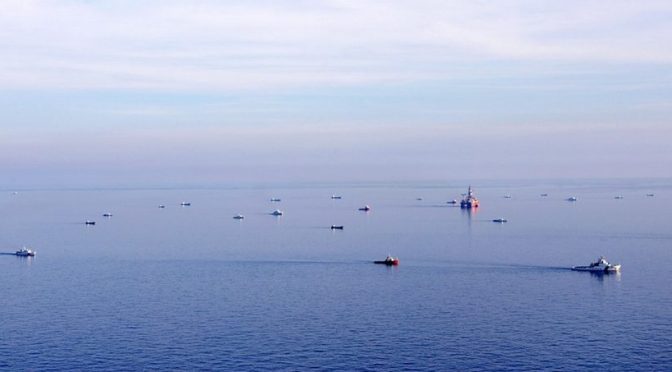
On 6 June 2014, Vietnamese Ministry of National Defense newspaper The People’s Army stated that China was maintaining between 110 and 115 vessels around China National Offshore Oil Corporation’s (CNOOC) HYSY-981 oil rig. This included 35-40 coast guard vessels, 30 transport ships and tugboats, 35-40 “fishing vessels,” and four naval ships. These forces assembled to form what the PRC Ministry of Foreign Affairs referred to in English as a “cordon” around the oil rig, effectively preventing Vietnamese vessels from approaching the platform. For China’s maritime forces it was an escort mission to protect HYSY-981 during its operations. In early May, the Chinese government issued Maritime Notice 14034 warning foreign vessels not to enter within three nautical miles of the location of the rig at these coordinates (15°29’58.0”N 111°12’06.0”E). However, Vietnamesereports state China expanded its cordon radius and would confront approaching vessels 9.5-10 nautical miles out from the rig. It appears that Vietnam’s fishing vessels could not fish near the platform because of heavy Chinese interference, so they opted to fish outside of the Chinese cordoned area to display presence in their “traditional fishing grounds.” They were not safe, however, as vessels from China’s maritime militia sallied forth to repel the Vietnamese vessels, using non-military forces against non-military forces as a deliberate means of preventing escalation. One report describes Chinese fishing vessel Qiongdongfang 11209 (琼东方11209) ramming and sinking Vietnamese fishing vessel No. 90152 during an encounter 17 nautical miles from the rig, where Vietnamese fishing vessels were surrounded by 40 Chinese fishing vessels. Video footage of Qiongdongfang 11209 running down the smaller Vietnamese vessel can be seen below. Moreover, Vietnam’s smaller wooden-hulled fishing vessels were outclassed by China’s larger tonnage steel-hulled fishing vessels.
News reportsput the number of Chinese vessels present in the area around HYSY-981 at twice that of Vietnam’s. China’s Ministry of Foreign Affairs stated that by early June there were as many as 63 Vietnamese vessels in the area. While the number of these vessels present fluctuated over the course of the confrontation, Hainan’s key maritime militia units accounted for many of the Chinese fishing vessels operating on the front lines. Tanmen Maritime Militia Company Deputy Commander Wang Shumao’s web profile on the Qionghai City government website chronicles his force’s mobilization to protect the cordoned zone surrounding HYSY-981 in May 2014. Wang led ten of the company’s militia vessels and 200 militiamen to the platform’s location south of Triton Island to block Vietnamese attempts to disrupt the platform’s operations. Sanya’s maritime militia contributed 29 fishing vessels to the oil rig’s defense. This number, combined with the 10 sent by the Tanmen militia, correlates closely with Vietnamese estimates of the number of Chinese fishing vessels present. While detailed discussion of the fact is beyond this article’s scope, it is clear that maritime militia units from other areas also participated in this incident. The aforementioned Qiongdongfang 11209, for instance, hails from Dongfang City, located on Hainan Province’s western coast between Sanya and Danzhou cities. Dongfang City established its first maritime militia uniton 8 May 2013, with a smaller contingent of 64 fishermen. The sheer scale of the “rights protection” action to defend the cordon around HYSY-981 was surely unprecedented for new units and the more experienced Tanmen maritime militia alike.
In his interviews with the Tanmen fishermen, Zhang Hongzhou of the S. Rajaratnam School of International Studies found that although many of the fishing vessels defending the rig were from Tanmen, many fishermen actually did not respond to the Chinese government’s request to mobilize, citing a lack of incentive to do so. To be sure, if a more robust incentive structure were instituted, perhaps a greater number of Chinese fishing vessels would have turned out to completely envelope the oil rig. However, our research indicates that the Tanmen Maritime Militia Company was not simply requested to go, but was ordered to do so—and indeed met its obligations. Local military and government officials likely recognize the difference in reliability between disciplined militia forces and other fishermen and will continue to act accordingly in the future. Furthermore, many Chinese reports on the maritime militia indicate that entry into the militia requires members to submit “National Defense Obligation Registration Certificates” (民兵国防义务登记证) that are reviewed annually. Abandoning one’s duties as a member of the Maritime Militia could result in punishments or in some cases criminal prosecution, according to China’s “Military Service Law,” which specifies rules governing the service of active duty military, People’s Armed Police, and the reserves. Maritime Militia-specific punishments might include fines, withheld fuel subsidies, suspension of trips, or revocation of fishing licenses as described in an articlewritten by the Zhoushan Garrison Commander in Zhejiang Province in 2014. Although it remains unclear to what extent such requirements are actually enforced, militia may respond better to encouragement from local leaders in the form of incentives, whereas overly zealous punishments could dampen the willingness to serve among this amalgamation of irregular volunteers.
Tanmen maritime militia report for duty in uniform, likely a training exercise. Source: National Defense (July 2013).
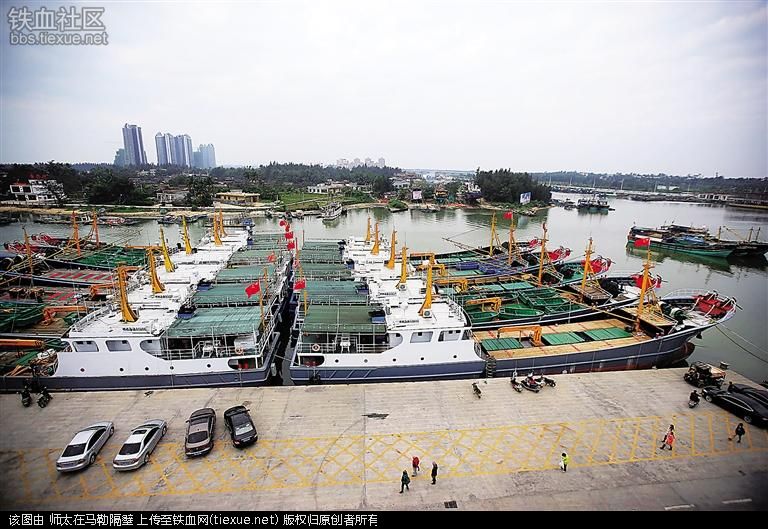
Certainly, economic incentives matter in multiple ways. Given overall trends, in which a rising tide of economic growth and government investment may be channeled to raise all boats, officials in key localities of Hainan Province are able to foster maritime militia construction while furthering their other goals. Tanmen Township, for its part, has leveraged its contributions to China’s pursuit of “maritime rights and interests” to expand the scope of its infrastructure and economy. This includes constructing the new Tanmen Bridge to the prosperous Bo’ao Township and developing the clam and turtle industries and tourism. The aim is to transcend exclusive reliance on Tanmen’s fishing industry, while diversifying its services. Still the very picture of a small, sleepy fishing village on the outside, Tanmen has slowly expanded its infrastructure for the fishing industry. Approved by the provincial government, the Tanmen Harbor expansion project broke ground in late August 2006, turning Tanmen fishing harbor into a “core fishing port.” The project entailed dredging out the harbor, greatly expanding the dock space, and expanding shore-side facilities to support the fishing fleets. Through heavy central and local government investment, Tanmen Harbor now reportedly has capacity for one thousand 100-ton fishing vessels. A February 2015 government reportput Tanmen’s marine fishing fleet at 786 vessels, with 174 large and medium distant-water vessels and 612 small near-seas vessels. Enjoying great political and financial support, Tanmen harbor is well positioned to support the region’s fishing industry as well as its own burgeoning fishing communities.
Current Force Structure
As with so much else in China, the Party’s leadership role—considered critical to control of the militia and the fishing community more broadly—is central to the Tanmen Militia’s employment in the HYSY-981 incident and to its broader development. To facilitate Party oversight of the Tanmen Militia, a “South China Sea Fisheries Party Branch” was created in 2006 to organize the Party members among the Tanmen fishermen and the vessel owners. The position of Party Chief in this organization is held concurrently by a Tanmen Township Party Committee member. This branch organizes rescue and self-defense training events for the fishermen and implements a system of Party control aboard each fishing vessel. This entails a requirement that there be at least one party member per vessel and the formation of a temporary “Party Small Group” (PSG, 党小组) out of 5-7 vessels that go to sea. These are formed to manage both the fishermen and the militia, ensuring a Party presence for supervising fishermen’s behavior during regular trips out to sea. Each PSG will have a single experienced Party member or vessel captain in command. During Luo Baoming’s 2012 visit to Tanmen Township to inspect the fishing community, he publicly made aradio call at the fisheries management station to one such PSG operating at Johnson South Reef. On the receiving end, PSG leader Shi Kexiong thanked the Central Party enthusiastically for supporting his group’s work. The conversation was a signal to the Tanmen fishermen of the increasing importance of their efforts to advance China’s maritime rights and interests and of the necessity of a Party presence aboard their vessels, even as far away as the Spratlys.
In keeping with China’s parallel Party-State and military structure, Tanmen’s maritime militia members are also directly subject to the PLA chain of command. The principal civilian and military leaders of Tanmen Township, Qionghai City, and Hainan Province are all responsible for militia work within their respective jurisdictions. This dual-responsibility system is at the core of Chinese civil-military integration efforts and ensures ‘Party control of the gun’—in this case, the local military forces including the maritime militia. The Tanmen Maritime Militia is currently led by the Commander Zhang Jiantang (also head of Tanmen PAFD), and Political Instructor Pang Fei, the current Tanmen Township Party Chief. The Tanmen grassroots-level PAFD manages the maritime militia directly and reports back to the Qionghai City county-level PAFD, which is manned by active duty PLA personnel. These PAFDs are at the bottom-tier of the provincial military headquarters system that manages local forces.
The Qionghai City government website description of Tanmen’s involvement in the HYSY-981 incident suggests that on-site authority is delegated to the company’s deputy commander Wang Shumao, who reports back to his superiors in Tanmen. As we previously documented in our article on Sanya City’s maritime militia, the Guangzhou Military Region command mobilized the local forces of the Hainan Military District. It has become clear that a mobilization order also made its way down the chain to the Tanmen PAFD, which then gave its company orders to deploy and defend the HYSY-981 oil rig. While details of the Tanmen Maritime Militia’s specific involvement in that incident remain unclear, the overall process of its participation illuminates how China’s maritime militia is mobilized for maritime rights protection.
Chinese reporting on the Tanmen Maritime Militia varies in its descriptions of the company’s organizational structure. As reported in 2014, Tanmen Maritime Militia units are organized roughly as follows:
Militia Company – Approximately 128 personnel / 12 fishing vessels
Headquarters – 8 personnel
4 Platoons = 12 squads / 10 personnel each
A company of approximately 128 personnel aboard 12 fishing vessels makes up the bulk of the force, with 8 personnel at the maritime militia headquarters. While it is difficult to track the exact composition of any particular unit, Chinese sources help clarify that a single vessel is considered a “squad” and three vessels form a “platoon.” Three platoons composed of nine vessels in total would form a “company.” However, another report in 2013 put the number at 150 personnel and 21 vessels. This suggests a change in the total size of the force over time. The total number of vessels in the militia seems to have shrunk, likely because of the replacement of old wooden-hulled vessels with larger, more capable steel-hulled vessels.
Through various Chinese reports, we have identified the following eleven trawlers as Tanmen Maritime Militia vessels. Their captains typically have specific leadership roles as cadres in the paramilitary organization:
Qionghai 02048 – Wang Shubiao (Captain) – Platoon Leader
On the basis of the organization outlined above, the Tanmen Maritime Militia Company is following a “Maritime Militia Operational Model” that integrates several concepts. The fishing vessels serve as “carriers” or transports (载体), “sovereign islands and reefs” are the “battlefield,” and the home port is the “base.” The company is assigned important roles and missions: displaying a sovereign presence, controlling the marine resources among the islands and reefs, and assisting the troops garrisoned in the South China Sea and assisting maritime agencies in conducting rights protection missions. Tanmen militiamen are also tasked with collecting information on foreign activities in China’s claimed waters and fulfilling other support functions for both the fishing industry and government agencies overall.
Tanmen Militia Training
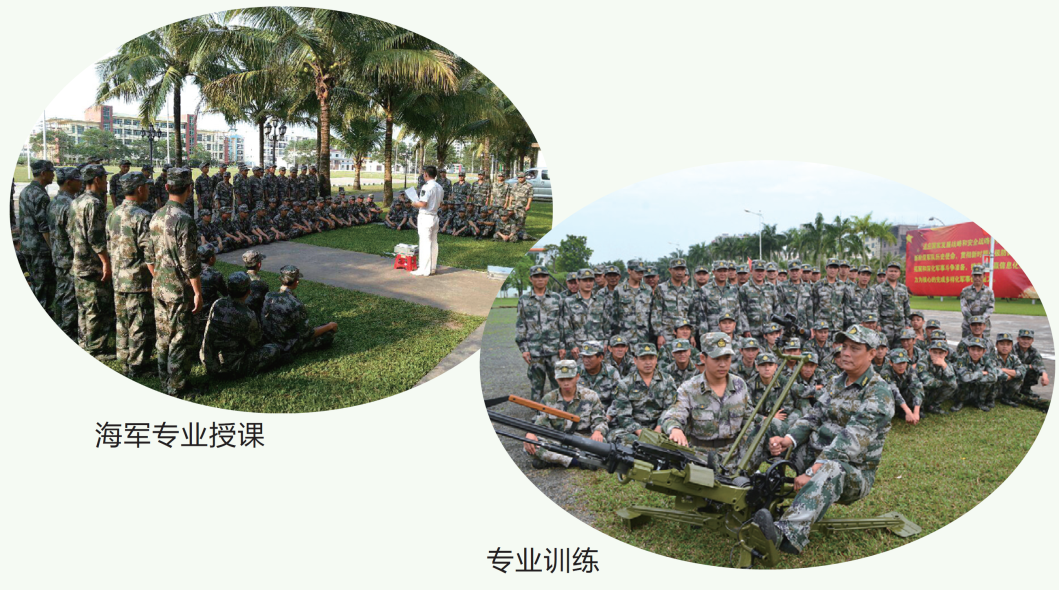
In 2013, the Tanmen Maritime Militia Company completed 32 days of conventional training and 18 days of high-intensity training. To date, experts from the Sanya Naval base have been invited to train the Tanmen maritime militia twice, focusing on reconnaissance and surveillance skills.
Photo from the Hainan Provincial Military District’s Mobilization Office of Tanmen Maritime Militia members receiving instruction from PLAN officers in 2013. Deputy Commander Wang (on the right) mans an anti-aircraft machine gun during weapons training. Source: National Defense (July 2013).
Similar to that for other maritime militia, training will focus on cadres, captains (船老大), and unit leaders, all of whom will in turn provide leadership to individual militiamen on the boats. These personnel, including squad leaders Chen Zebo and Xu Detan (both present at the 2012 Scarborough Shoal standoff), constitute an important “backbone force” in the militia. More politically reliable and experienced than their militia crews, they can exercise leadership over them. This management role is particularly critical, as there may be significant fluctuation in crew composition because the industry relies on Chinese migrant workers who periodically enter and exit the fishing fleet. On 2 February 2013, two months before Xi’s visit, Tanmen Township held a collective training session for such “backbone cadres” in its maritime militia. The session recognized their contribution to protecting maritime rights and sovereignty in 2012 (particularly during the Scarborough Shoal incident) and stressed the role of each cadre as a model representing Tanmen Township, Qionghai City, and Hainan Province. Later that month, Qionghai City held a training event for the Tanmen Maritime Militia Company to plan the year’s training objectives and schedule. Qionghai City Deputy Mayor Fu Chuanfu called for strengthening maritime militia military training to prepare for manifold emergency situations and even high-tech local wars. These meetings, just months before Xi’s visit, were also likely to ensure that the maritime militia members were primed for the political wave about to arrive.
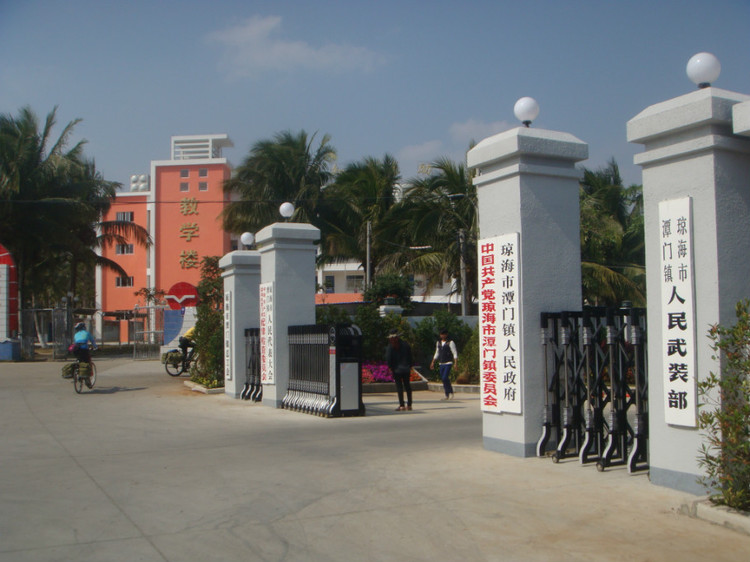
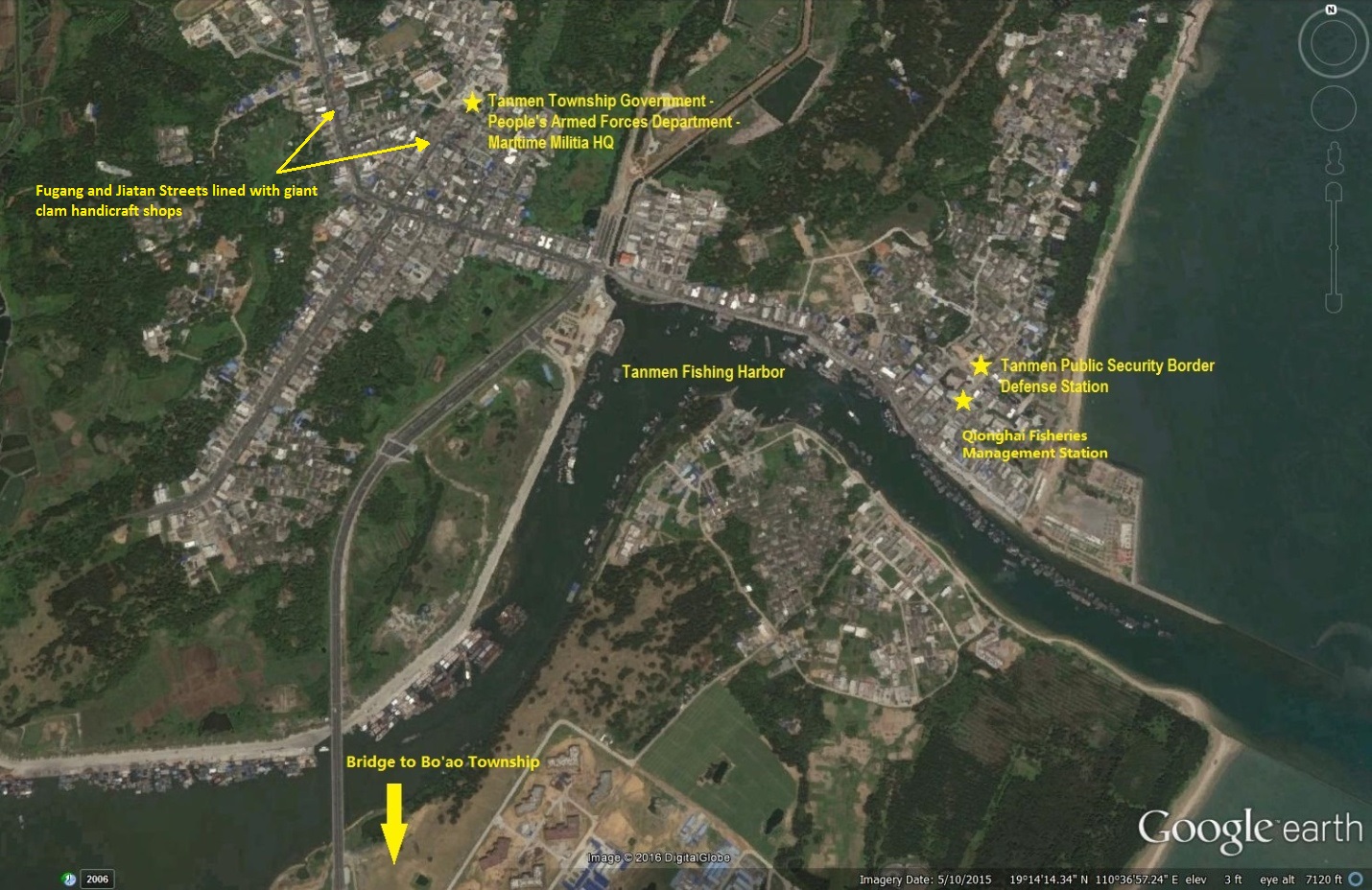
Front gate of Tanmen government compound and PAFD.Map depicting Tanmen fishing harbor and key institutions for the maritime militia.
Based inside the Tanmen government compound, the Tanmen Maritime Militia Headquarters is co-located with the People’s Armed Forces Department, which exercises daily command and management of the maritime militia in Tanmen.
Arms and Uniforms
Although Tanmen’s maritime militia do not appear to be regularly armed, they do receive live-fire arms training. In 2013 they held nine live-fire training sessions. Weapons for the Tanmen maritime militia are likely stored in and serviced by the Qionghai CityMilitia Armory, which is run by the Qionghai City PAFD according to regulations on militia weapons and equipment promulgated by the General Staff Department—now under the responsibility of the newly created National Defense Mobilization Department of the Central Military Commission. Staff responsible for 24-hour management and guarding of the armories are selected from “politically sound” demobilized veterans and they receive salaries and social benefits. Grassroots level PAFDs, like Tanmen, will also have secure weapons rooms, but will likely need to request distribution of the weapons from the Qionghai Armory, as militia weapons and equipment are supposed to be concentrated in the county-level militia armories. If mission requirements call for the Tanmen Militia to be armed, they would need to submit a request up the PLA chain of command for the distribution of weapons. While Tanmen’s maritime militia members are unlikely to be regularly armed at sea, China may, in time, allow its fishermen to defend themselves with light arms. The Hainan Provincial Military District commander major general Zhang Jian wrote in an October 2015 National Defense article that maritime militiamen would receive “defensive combat weaponry” (自卫作战武器) according to their mission.
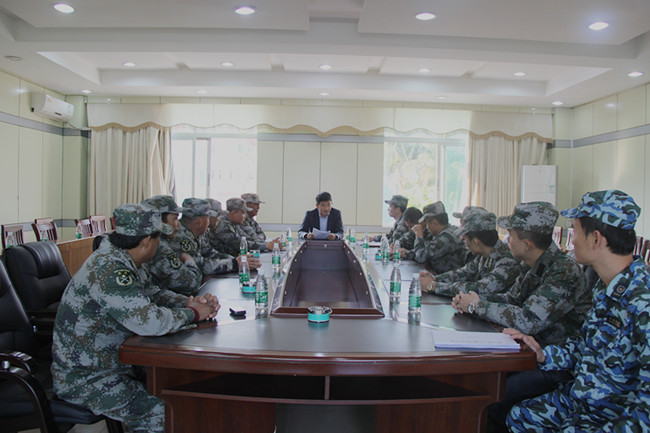
December 2013: Tanmen deputy Party Secretary Pang Fei holds a meeting with members of the maritime militia company before they go to sea. News reports state that Tanmen’s maritime militiamen undergo an “ideological mobilization” before heading out to fish. Uniforms are mostly a formality worn during training and meetings. They are not typically worn at sea. The personnel shown in this photo are likely the vessel captains concurrently serving as squad or platoon leaders. Note the blue uniform of the closest individual on the right. The Tanmen Maritime Militia appear to wear different types of uniforms as shown in this video news coverage of their training.Tanmen Maritime Militia Company personnel wearing blue uniforms in 2014.
Tanmen’s “Island” Builders
The origins of the Tanmen Maritime Militia’s status as a uniformed force whose members often work with the PLAN dates to the government-led buildup of the past three decades. Many years prior to that, Tanmen Maritime Militia personnel and regular fishermen took it upon themselves to develop many of South China Sea islands and reefs for their own economic benefit, often landing and camping out on such features. They officially became involved in the state’s development of the Paracels and Spratlys in late 1988 when the then-Deputy Party Secretary of Tanmen accepted the mission after a visit with naval engineers at the PLA Navy’s South Sea Fleet base in Zhanjiang. Upon returning to Tanmen they quickly began selecting the members of the maritime militia and vessels to undertake this effort. Platoon Leader Wang Shumao (today Deputy Company Commander) and several other militia captains were chosen to begin assisting PLA troops in the construction of Chinese-controlled features in the Spratlys, delivering stone, rebar, and concrete. During this period, Tanmen maritime militiamen reportedly made 580 trips to the Spratlys and delivered 2.65 million tons of materials to assist the navy in constructing docks on all seven of the Chinese-occupied Spratly features. They also helped deliver provisions to the troops stationed on those features, alleviating the supply concerns of those responsible for remaining in the harsh conditions of remote island and reef garrisons. Tanmen’s current company commander, Zhang Jiantang,explains that the naval vessels’ draughts were too deep to reach the shallow-water features, so they used Tanmen fishermen aboard fishing vessels and small motorboats to transport building materials to the construction sites. This demonstrates that, at least in the early years of PRC presence in the Spratlys, the Tanmen Militia was a critical enabler of China’s sustained occupation of its features.
Below is abrief timeline describing the construction work of Tanmen Maritime Militia forces on Spratly reefs. Identified by name where possible, some of the fishing vessel captains involved in this early construction are publicly recognized leaders of Tanmen’s militia today.
February 1989 – The first group tasked with the construction was composed of five fishing vessels and 120 fishermen. They worked for six months on Fiery Cross, Cuarteron, Johnson South, Hughes, and Gaven reefs. This included vessels Qionghai 00206, 00265 (with Wang Shumao as captain), 00805, 0056, and 00441.
February 1990 – Qionghai 00206 and Qionghai 00265 (with Wang Shumao as captain), with 48 fishermen, spent six months performing construction work at Subi Reef. Qionghai 0480and its captain/militia member “Old Qiu” (老邱) is also reported to have worked at Subi Reef for three months.
February 1992 – Qionghai 00226 (with Wang Shubiao as captain), Qionghai 00267 (with Wang Shumao as captain) and Qionghai 00269, with 72 fishermen, spent three months engaged in construction at Fiery Cross, Cuarteron, Johnson South, Hughes, and Gaven reefs.
February 1995 – Qionghai 00265 (with Wang Shumao as captain), Qionghai 00226 (with Wang Shubiao as captain), Qionghai 00437, and Qionghai 00208, with 96 fishermen, spent six months doing construction work at Mischief Reef.
Deputy Commander Wang Shumao went on all the construction trips reported here and current Platoon Leader Wang Shubiao is reported to have gone on two of them. Despite brutal working conditions and likely using only manual labor, they were able to help construct bunker-style stilted structures and two helicopter pads, and even cut breaks in the reefs for vessels. The sweat shed by the Tanmen Maritime Militia in building these first-generation Chinese structures helped anchor a military presence on disputed features for decades, literally laying a foundation for the PRC’s recent construction of artificial islands on those very same sites.
Participation in the 1995 Mischief Reef Incident
The final construction trip reported above coincides with the Chinese takeover of Mischief Reef in January 1995, when the PRC stationed naval vessels at the reef and erected permanent structures. Chinese opensourcesconfirm that it was the Tanmen Maritime Militia that assisted in transferring the construction materials from PLAN transport ships onto the construction site of the three-stilted structures. Their stated purpose as a “shelter” for Chinese fishermen did little to allay Philippine concerns over Chinese expansion in the Spratlys. As negotiations between Beijing and Manila failed to gain traction, Philippine naval forces set forth to destroy Chinese sovereignty markers on several features. On 25 March 1995, the Philippine navy arrested a group of Chinese fishermen operating south of Mischief Reef for poachingendangered species and planting territorial markers. The four boats detained were Tanmen Maritime Militia vessels led by platoon leader Wang Qiongfa, who helped keep the 62 jailed fishermen from accepting Philippine demands that they sign statements recognizing Manila’s sovereignty over the features. The benefits of a strong Party and militia presence became clear as Wang Qiongfa and his fellow militia unit leaders maintained their staunch verbal defense of China’s South China Sea sovereignty claims, even in a Philippine jail cell. The presence of another group of Tanmen maritime militia members near the site of the standoff indicates that additional units were dispatched to further assist Beijing’s effort to consolidate control over Mischief Reef.
Managing the Militia
While the Tanmen Militia of yesterday and today has contributed greatly to the furtherance of Chinese national objectives, to ensure its dedication to future achievements in the South China Sea’s increasingly roiled waters, further work is needed to control and incentivize its efforts. As they engage in maritime militia construction to meet provincial and national objectives, local officials must balance competing objectives. Three major areas of official effort in this regard are mitigating poaching, providing financial incentives, and monitoring and coordinating fleets.
Poaching, for instance, can reap greater returns in a high-risk environment, especially as traditional fishing yields decline and subsidies fail to compensate. Tanmen officials appear to be making efforts to increase the fishermen’s respect for the rule of law and safety. Because China would like to assert the validity of its domestic law over the sea areas it claims, it is important for the fishermen that regularly populate those waters to recognize China’s domestic law. All along China’s coast, local governments are therefore taking multiple approaches to reconcile these competing incentives. First, they are increasing investment in fishing fleets’ electronic communications equipment, using systems such as the Beidou satellite navigation system and its unique features—such as positioning, messaging, and distress reporting functions—to increase monitoring of them. Second, they are improving the fishing population’s education and training. Tanmen Township officials released notices and held conferences on safe fisheries production for the fishing vessel captains. Third, they are imposing punishments, such as fines or revoking of fishing licenses.
One example that embodies the competing priorities local officials must confront is a large land reclamation project nearby that has alarmed hundreds of Tanmen fishermen. The Provincial Ocean and Fisheries Bureau approved the project in 2010. The project is meant to boost tourism by building a five-star resort hotel, vacation condominiums, parks, and facilities for yachts. The fishermen are worried the increased tourism and related activities will harm their harbor’s environment and their livelihoods. Officials including the head of Qionghai City’s Ocean and Fisheries Department have dismissed the fishermen’s concerns, reaffirming that they do not own the land and therefore have no right to compensation. The company in charge of the reclamation work distributed “compensation” to each village committee in the form of 120,000 RMB (18,534.78 USD), essentially a bribe to preempt opposition from grassroots officials. Other construction work, such as the aforementioned recently-built bridge across Tanmen Harbor, also received some opposition from the local fishermen. While these projects align well with the national mandate to develop Hainan province into an international tourism destination, the rapid changes surrounding such a long-established fishing harbor may foster tensions with the local fishermen, in addition to mounting pressures they face from reduced catches and friction with foreign vessels in the South China Sea.
Such local conditions directly influence the vitality of maritime militia organization. Government support, such as vessel construction and fuel subsidies, help raise the scale of the fishing community’s production, thereby increasing their ability to make profits on each fishing trip. It also helps alleviate any misgivings locals may have over development projects that will likely change the structure of the local economy, especially for a township as small as Tanmen. It also has the dual benefit of both improving their livelihoods and increasing their ability to support China’s maritime claims further out in the South China Sea. The strong political and economic support to this community will be essential if it is expected to continue the struggle for maritime rights and interests in places as far as the Spratlys. It will also help reduce the amount of illicit activities tempting the fishermen, thereby reducing moral erosion in what is supposed to be China’s leading model maritime militia unit.
In 2014 Tanmen implemented a “Fishing Vessel Upgrade and Modification Program,” whereby over 50 wooden-hulled fishing vessels were reconfigured into 300-to-500-ton steel-hulled vessels. Additionally, the Hainan Provincial Government and the Qionghai County Government subsidized construction of twenty-nine 500-ton displacement steel-hulled fishing vessels, most of which have been delivered. The subsidies amounted to more than one-third the cost of the vessels’ construction. They reportedly possess modern equipment and communications gear and provide greater sea keeping and operational ranges. Twelve of these 500-ton vessels are confirmed to have entered service in the Tanmen Maritime Militia, which coincides with the organizational structure outlined above. Tanmen Township is also currently building a new maritime militia detachment; its size and mission focus remain uncertain.
24 December 2015: Tanmen Maritime Militia’s newly-delivered 500-ton fishing vessels stand ready at Tanmen Harbor’s pier.
Poaching and its Mitigation
As might be expected among irregular frontiersmen, illicit enrichment through irresponsible fishing in troubled waters remains a perennial problem. Tanmen village’s fishermen are notorious for their illegal fishing activities, despite local officials’ admonitions and neighboring countries’ opposition. While poaching is not exclusive to Tanmen, its fishermen have been caught repeatedly harvesting endangered species of turtles and giant clams. The ever-present demand for products derived from this ‘aquatic ivory’ fuels the high prices Tanmen fishermen can charge. For example, giant clam processing and handicrafts represent an important industry in Tanmen. The Tanmen Township 2014-2030 Marine Economy Industrial Park Plan states that giant clam processing currently constitutes 70% of all the enterprises in operation. Apparently enjoying a plum position in keeping with her family’s disproportionate contribution to the local economy, government policies, and community norms that literally make patriotism pay, Chen Zebo’s wife staffs Tanmen’s clam handicraft shop while he is out to sea. Tourism, in turn, furthers demand for these products. One month after the Scarborough Shoal incident, Tanmen fishermen were busy bringing in large hauls of giant clams, this time under the protection of Chinese MLE escorts.
Returning to the waters near Palawan Island, two Tanmen fishing vessels were caught poaching endangered turtles by the Philippines near Half Moon Shoal on 6 May 2014. One of the vessels, Qionghai 03168, escaped, while Qionghai 09063 was detained. After boarding Qionghai 09063, Philippine authorities immediately shut offthe boat’s Beidou Satellite Navigation Transmitter, as indicatedby the Tanmen Fisheries and Fishing Harbor Management Station Chief Wang Qizhen. After losing contact with the fishing boat’s Beidou terminal and receiving reports from the fleeing Qionghai 03168, Chinese Fisheries Law Enforcement and Coast Guard forces began searching the area for the lost boat. They sent orders via the Beidou system to fishing vessels Qionghai 03168 and Qionghai 05067 to return to the area of last contact to conduct a search. China Coast Guard vessel 3102 was also pulled away from its task of blockading Second Thomas Shoal to support the search.
17 May 2012: Heap of the endangered giant clams harvested by Tanmen fishing vessel Qionghai 05008.16 September 2015: Over 150 fisheries and public security personnel make a show of authority, inspecting Tanmen boats and handicraft stores for evidence of endangered species harvesting. Reports state, improbably, that they found no evidence of illegal harvesting.
The poaching is detrimental to the overall narrative Beijing promotes regarding the South China Sea. This narrative involves China’s effective “administrative control” (管控) over disputed waters. Domestic Chinese regulations and the Convention on International Trade in Endangered Species of Wild Fauna and Flora, to which China is a party, both declare the harvest of endangered species such as Tridacnidae (giant clams) to be illegal. Yet Tanmen fishermen blatantly ignore these prohibitions, damaging China’s image both in terms of environmental conservation and effective control over the activities that take place in its claimed waters. The latter is likely a far greater concern for Beijing, considering the scale of reef destruction caused by China’s construction of artificial “islands.” Asia analyst Victor Robert Lee has documented much of the environmental destruction wrought by the giant clam industry, while BBC reporter Rupert Wingfield-Hayes has personally witnessed Tanmen fishermen in the act of poaching. Additionally, continuous arrests of Tanmen’s fishing vessels by Philippine authorities for poaching not only increases China’s diplomatic challenges, but also strengthens the Philippine narrative that it is taking action to protect the marine resources within its maritime claims. The reality at sea may be more complicated, since one Tanmen fishing captain recalledin 2012 that boarding and inspection by Philippine troops is common and he always brings enough cigarettes and alcohol to “pass” the imposed inspection.
There appears to be some effort by China’s local government authorities to reduce illicit harvesting. Recently, meetings were held withmany of the fishing boat captains to instruct them not to fish illegally, poach endangered clams or turtles, enter sensitive waters, shut off their Beidou locating transmitters, or take private trips for rights protection. Tanmen officials may be taking heat for lax management of fishermen, especially since Xi placed his seal of approval on the Tanmen fishermen. Local officials may also worry about enthusiastic citizens, incited by official patriotic rhetoric, getting excessively involved in the state’s business of protecting China’s maritime claims.
These bureaucrats may be making parallel efforts in support of specific objectives. First, they seek to gain control over the wayward fishing population, to prevent tensions from flaring because of rising nationalism and illegal activities, to increase safe working conditions, and to demonstrate effective control in disputed sea areas. Second, Chinese leaders seek to maintain a civilian presence in disputed waters to reinforce China’s claims and to create demand for administrative services in the form of MLE protection. Economic realities and the threat of foreign interception can place these efforts in contradiction. Third, development of a more politically motivated, trained, and obedient maritime militia to conduct the state’s business in the South China Sea could be China’s answer to regular MLE presence in its disputed waters.
Financial Incentives
Incentives in the form of fuel subsidies, a special Spratly fishing subsidy, and money to build larger steel-hulled vessels have been implemented to induce Chinese fishermen to build better vessels and to spend the extra time and fuel to travel to more distant waters. With this support, Tanmen fishermen have reportedlyordered 29 new 500-ton fishing vessels from a shipyard in Ningbo, Zhejiang Province; most are already delivered. In 2011, Tanmen fishermen reported receiving a one-time subvention of 35,000 RMB (5,404.48 USD) and 82 RMB (12.66 USD) per KW of engine power in the fishing vessel for each trip taken to Scarborough Shoal or the Spratlys. For example, if known Tanmen maritime militiamen Ke Weixiu takes his new 500-ton fishing vessel with its 700 KW of power to Scarborough Shoal, he will receive 76,000 RMB (11,734.55 USD) for the first trip and 41,000 RMB (6,330.03 USD) for each consecutive trip taken. While this may not be sufficient to incentivize every fisherman to enter contested waters, maritime militia receiving these subsidies can in many cases legally apply for compensation for material losses and personal harm while executing mission orders. One Tanmen fishing captain interviewed by the Australian Broadcasting Corporation stated “We won’t go there [to the Spratlys] if the Government doesn’t pay us subsidies of about $20,000 each time, and we only get it if we commit to going four times a year. We don’t make money from the fishing.” Armed with more capable vessels and subsidies in hand, Tanmen maritime militia likely make more frequent trips to disputed waters than regular fishermen. This elite presence is precisely what China seeks to promote in sensitive waters.
Fleet Monitoring and Coordination
China’s indigenous Beidou/Compass satellite navigation system, a regional rival of the American global satellite positioning, navigation, and timing (PNT) system and now installed on thousands of Chinese fishing vessels, appears frequently in state news. This system is an important tool for government departments monitoring China’s fishing fleets. Chinese media report that China’s fishing vessels receive government warnings when they cross into foreign waters that Beijing does not claim. Interestingly, for this to occur the Beidou system must possess a defined set of coordinates for China’s U-shaped maritime boundary claim that enables warnings to be issued when a fishing vessel ventures beyond “China’s waters.” Unfortunately, these coordinates for China’s “nine-dashed line” remain unknown to outsiders.
The Beidou system’s marine vessel monitoring system integrates positioning with communication, featuring a unique 120-character short-messaging service and an emergency distress button that instantly alerts fisheries authorities. Akin perhaps to a silent alarm used to catch bank robbers, this allows fisheries authorities to determine the vessel’s position and dispatch rescue forces to the location. The widespread installation of these satellite PNT systems, in combination with other communications gear given to the maritime militia, allows Chinese authorities to essentially form a “maritime border early warning” (预警国家海上边界) network. In the case of the People’s Armed Police Border Defense Station in Tanmen Township, Fu Shibao mans what has become colloquially known as the “South China Sea 110” (China’s equivalent to America’s 9-1-1 emergency service). His shore station uses the Beidou system, radios, and cellular coverage to maintain communications with approximately 135 of Tanmen’s vessels operating in the Paracels, Spratlys, and Macclesfield Bank. Each day he spends hours contacting these vessels at sea to check their status, provide weather updates, and disseminate important information about neighboring countries that would be of concern to the fishermen. Despite his assignment to a grassroots-level station, Fu and others manning the Tanmen Border Defense Station are able to provide disproportionate, continuous contributions to China’s overall maritime domain awareness in the South China Sea. Such a role was seen during the Scarborough Shoal standoff, wherein timely militia-to-police grassroots-level reporting provided the awareness for more professional forces to respond.
Given overall trends, in which a rising tide of economic growth and government investment may be channeled to raise all boats, local officials are able to foster maritime militia construction while furthering their other goals. Nevertheless, significant mission-incentive misalignments persist, requiring further efforts at their reconciliation.
Conclusion: A Frontline Force Today… and Tomorrow
Xi Jinping’s designation of the Tanmen Maritime Militia as the model for others to emulate is no coincidence. Even among the leading maritime militias of Hainan Province, no other unit has made such significant contributions over time to Chinese feature construction and “rights” promotion in the increasingly-contested South China Sea. This long track record and official sanction has left a lengthy paper and electronic trail, a gold mine for open source research. This article has therefore examined in particular depth the Tanmen militia’s structure, missions, and management in order to better understand this leading organization, which remains a trusted tool of Beijing’s maritime policy, and to appreciate the lessons that other irregular Chinese sea forces may be drawing from its elevation.
The Tanmen Maritime Militia’s recent popular history is one of a small fishing village on the edge of a large civilization, working to address a tide of foreign encounters and national-level political movements. While most Tanmen fishermen did not previously consider their work to have national ramifications, recent Central Party policies and initiatives are changing that. President Xi and numerous other officials’ visits to Tanmen and elsewhere in the past few years have officially politicized the operations of China’s fishermen in the South China Sea. Local Party officials are re-invigorating an old communist tactic of ensuring Party control over China’s fishing fleets, with Tanmen’s maritime militia designated the exemplar for all others to follow. Tanmen Maritime Militia Company, with growing government support and guidance, will be expected to lead the fishing fleets to China’s claimed waters and provide support in the everyday struggle against foreign “aggression” in the South China Sea. Already, Tanmen Militia forces have helped to consolidate Chinese control over Mischief Reef and Scarborough Shoal, and to defend the HYSY-981 oil rig. Having long supported feature augmentation and facilities construction in the Spratlys, they might again be called to do so—particularly in situations calling for low-profile activity.
While this two-part article focuses primarily on activity after the modern Tanmen Militia’s formal establishment in 1985, Tanmen fishermen have a much longer relationship with the South China Sea. They are considered by Beijing to have stood the test of time, making their very existence and presence of value to its far-reaching maritime claims. Numerous instances of daring rescues and unshakeable nerve in the face of foreign attempts to contest maritime rights notwithstanding, the Tanmen Maritime Militia also represent an important model for emulation by other localities’ officials building up their own maritime militia.
Looking forward, recent reports suggest increased Chinese survey activity on Scarborough Shoal, with sources pointing to possible land reclamation efforts there later this year—perhaps as partial retribution for the forthcoming Philippine Arbitration ruling, likely to be issued in June 2016. Just as the Chinese government insisted so vehemently on having civilian designs in the feature augmentation and development it conducted in the Spratlys, any reclamation at Scarborough Shoal will likely be under the same pretext. Growing regional tensions over this possibility may prompt China to instead use the Tanmen Maritime Militia once again to construct a first generation of civilian structures, which might serve as the foundation for future artificial island bases. Underpinning this next step in Chinese geo(political)-reengineering would be the fishermen and maritime militia of Tanmen Township, who have paid the human price to maintain a Chinese presence at Scarborough Shoal. As U.S. Freedom of Navigation operations and other foreign activities occur in proximity to Beijing’s sweeping claims, Tanmen militiamen are likely to continue their frontline role as irregular defenders of the nation’s “maritime rights and interests.”
The next article in our series will delve into the establishment and development of the maritime militia of Sansha City, China’s newest city located on Woody Island in the Paracels. Often living on the Chinese occupied features of the South China Sea, Sansha City’s maritime militia are the true front-line defenders of China’s maritime claims. Surrounding these largely-transplanted island people is a growing torrent of reclamation and infrastructure investment in an increasingly (para)militarized South China Sea.
Dr. Andrew S. Erickson is a Professor of Strategy in, and a core founding member of, the U.S. Naval War College’s China Maritime Studies Institute. He serves on the Naval War College Review’s Editorial Board. He is an Associate in Research at Harvard University’s John King Fairbank Center for Chinese Studies and an expert contributor to the Wall Street Journal’s China Real Time Report. In 2013, while deployed in the Pacific as a Regional Security Education Program scholar aboard USS Nimitz, he delivered twenty-five hours of presentations. Erickson is the author of Chinese Anti-Ship Ballistic Missile Development (Jamestown Foundation, 2013). He received his Ph.D. from Princeton University. Erickson blogs at www.andrewerickson.comand www.chinasignpost.com. The views expressed here are Erickson’s alone and do not represent the policies or estimates of the U.S. Navy or any other organization of the U.S. government.
Conor Kennedy is a research assistant in the China Maritime Studies Institute at the US Naval War College in Newport, Rhode Island. He received his MA at the Johns Hopkins University – Nanjing University Center for Chinese and American Studies.
Featured Image:“Escort Fleet” protects the HYSY-981 Oil Rig. Source: Phoenix News

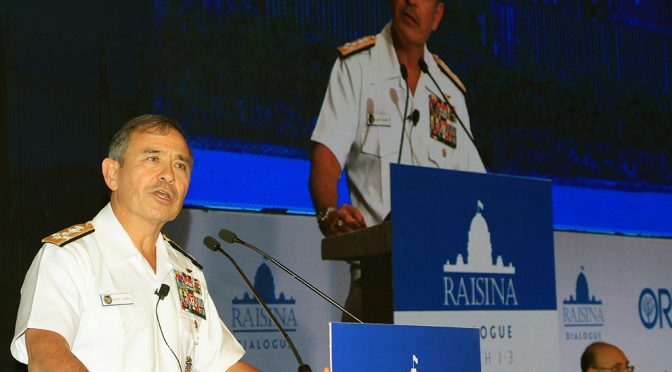
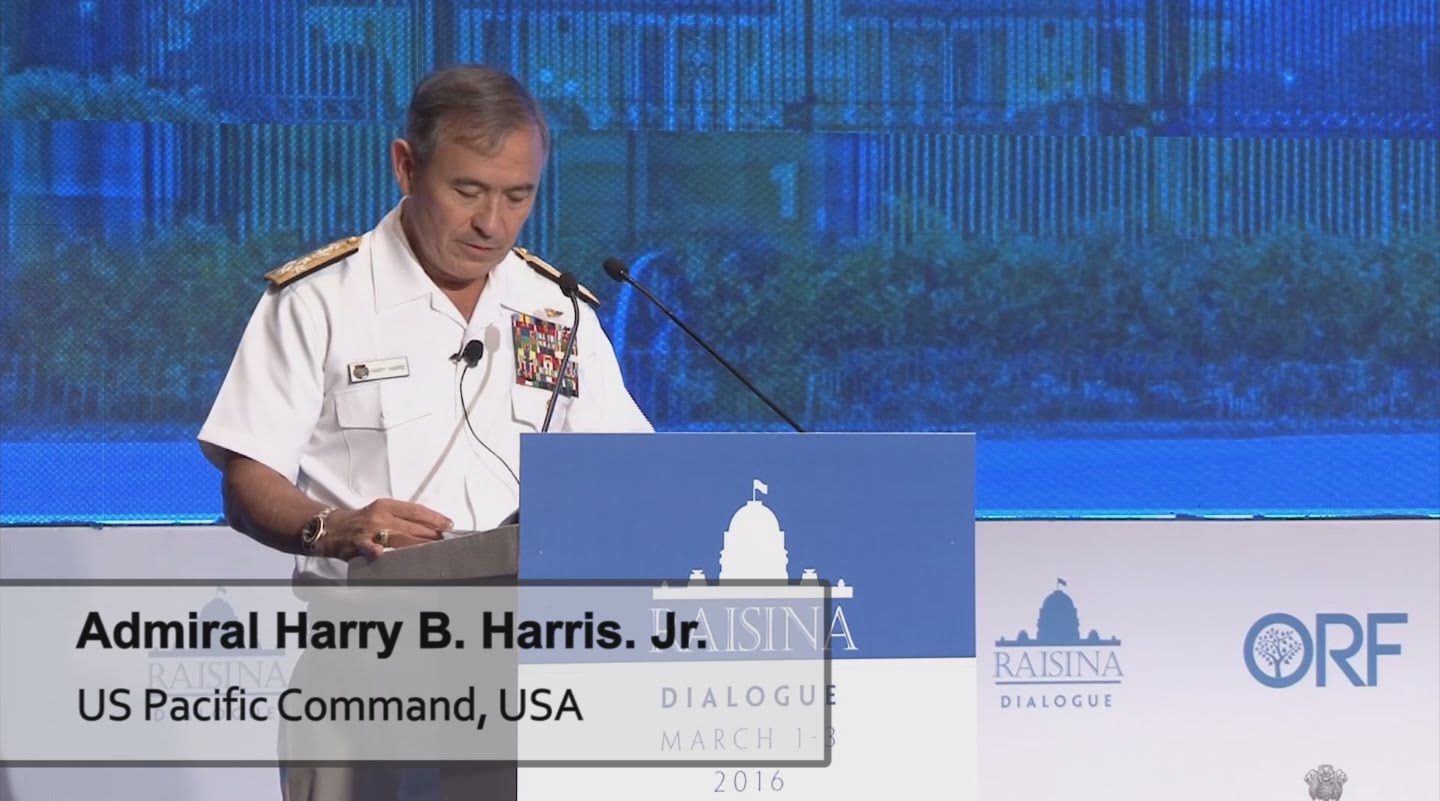
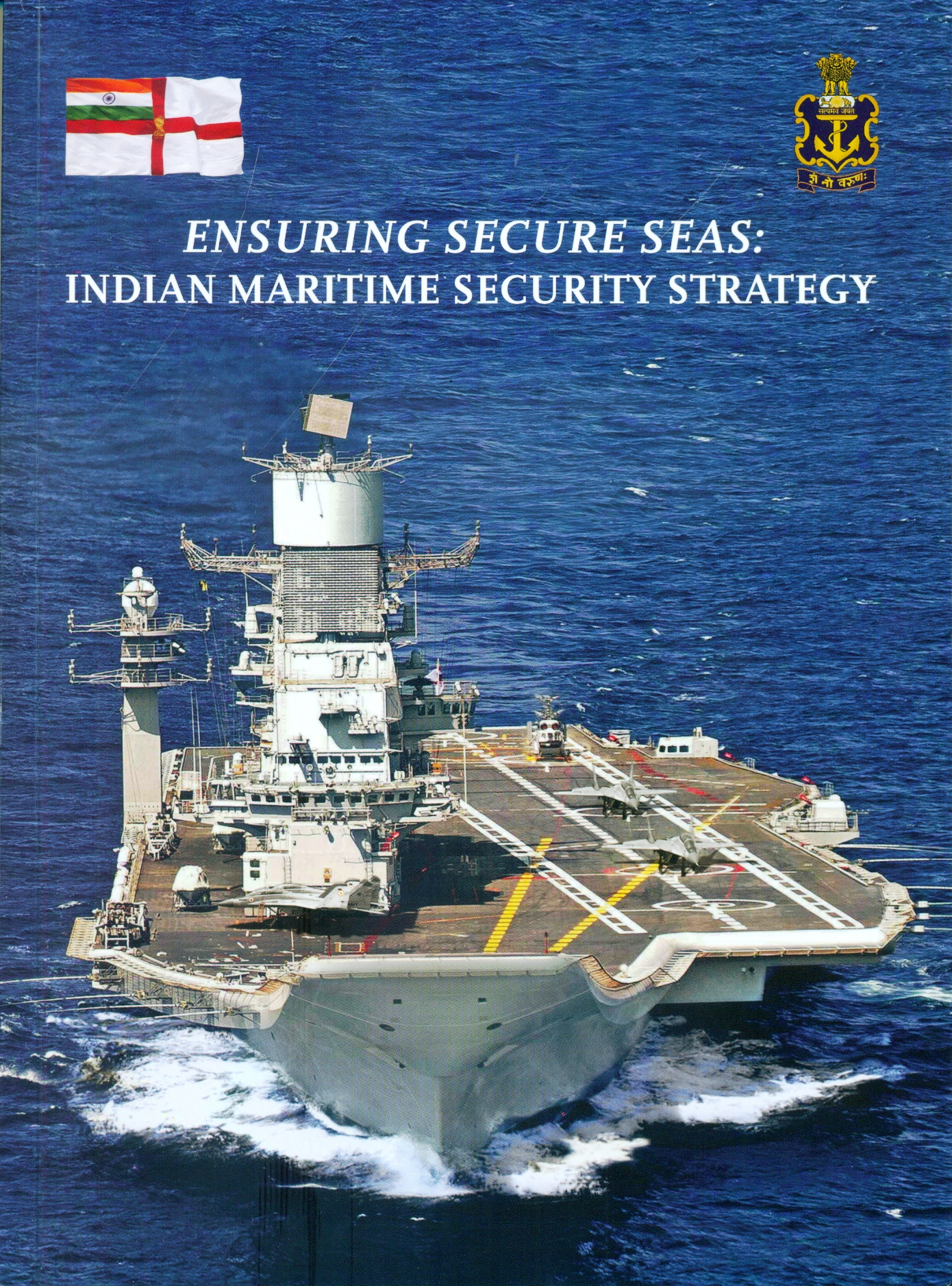
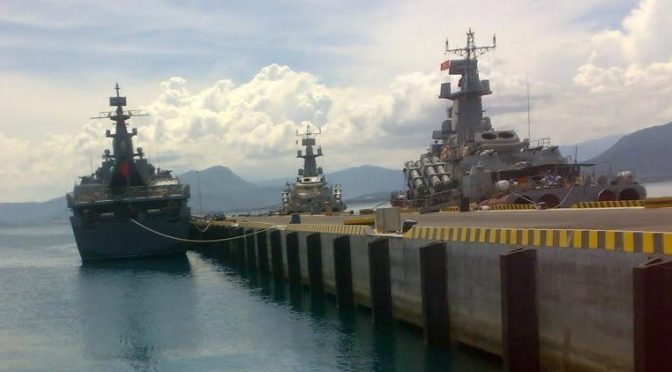
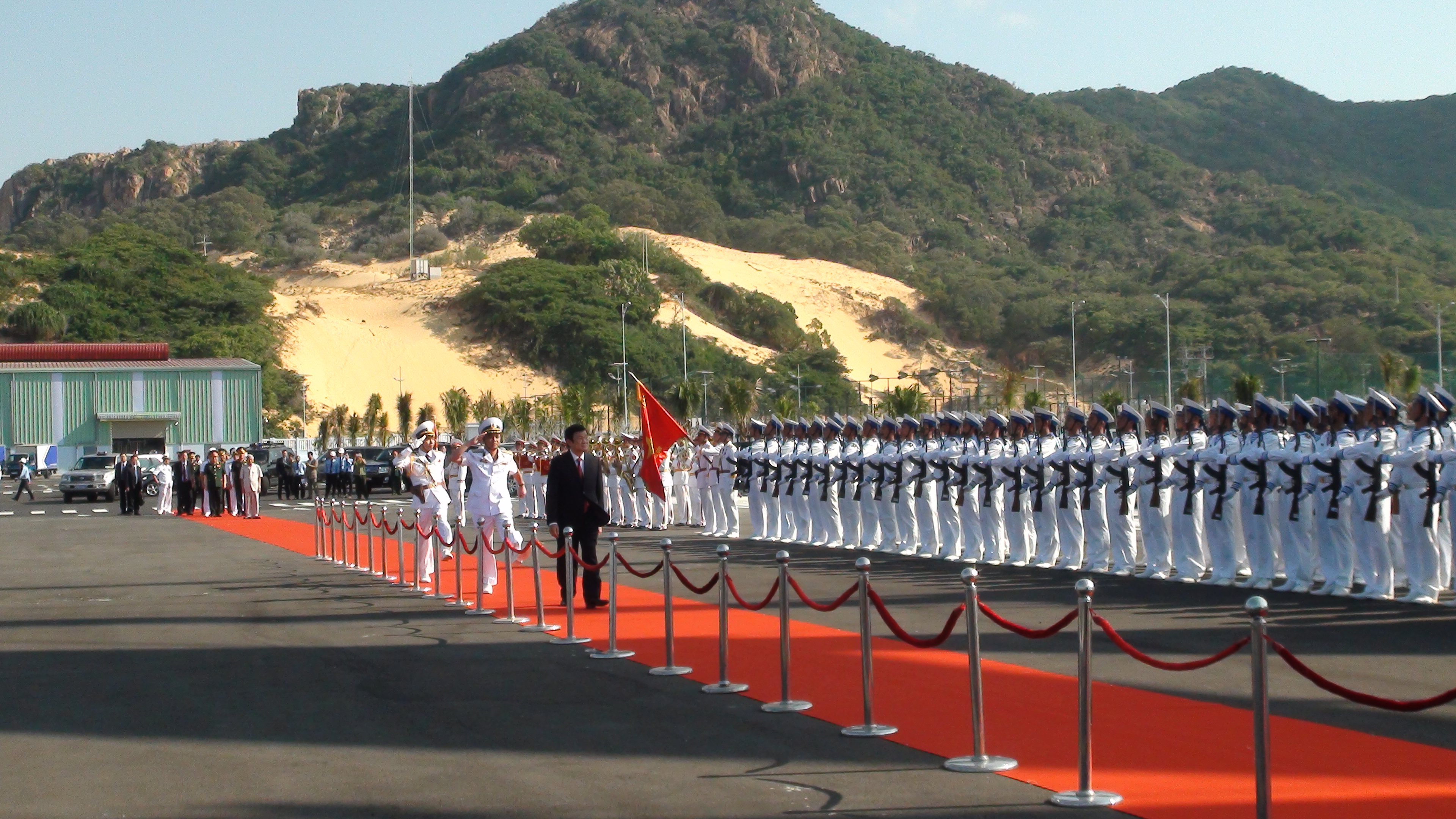
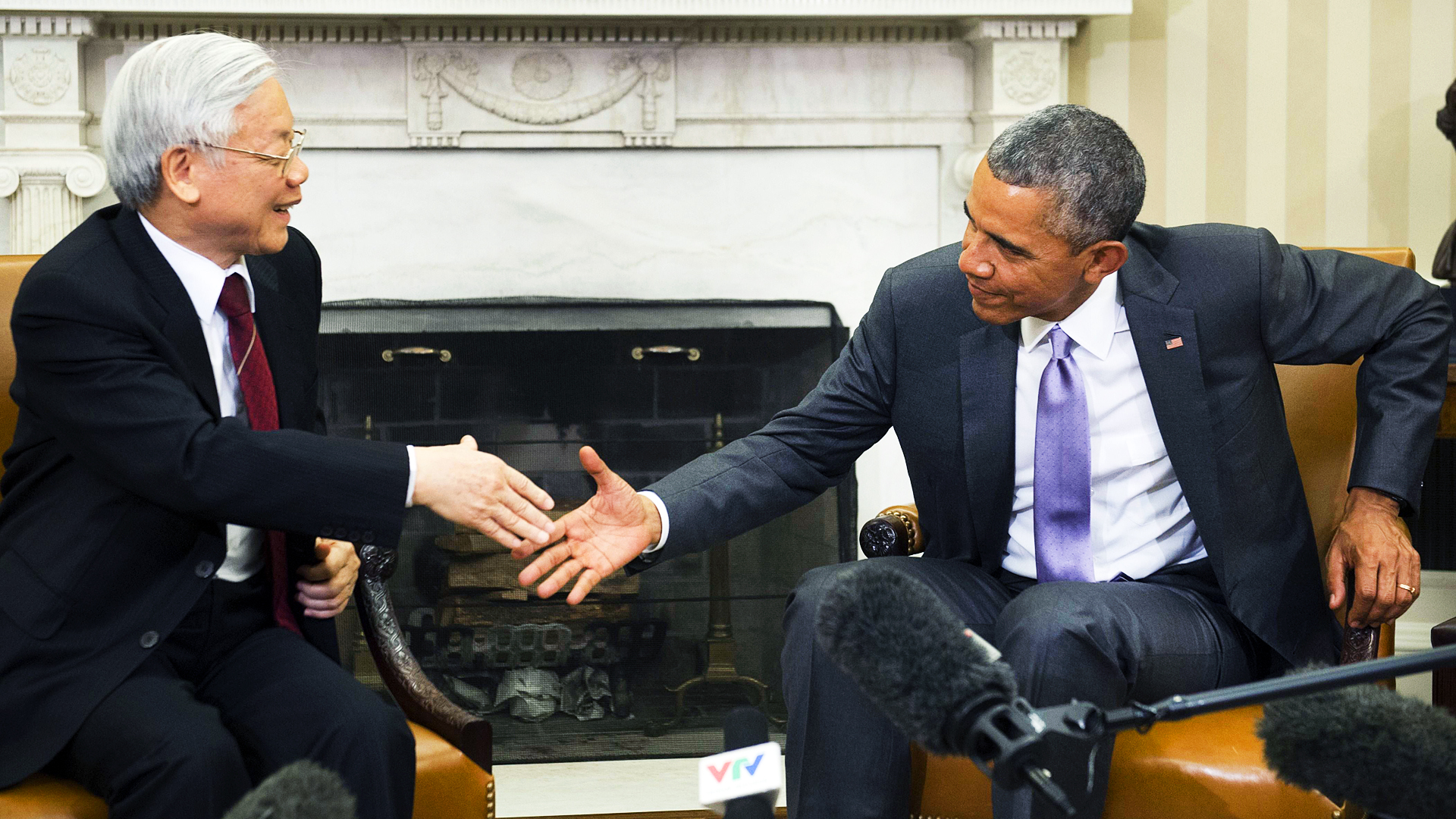
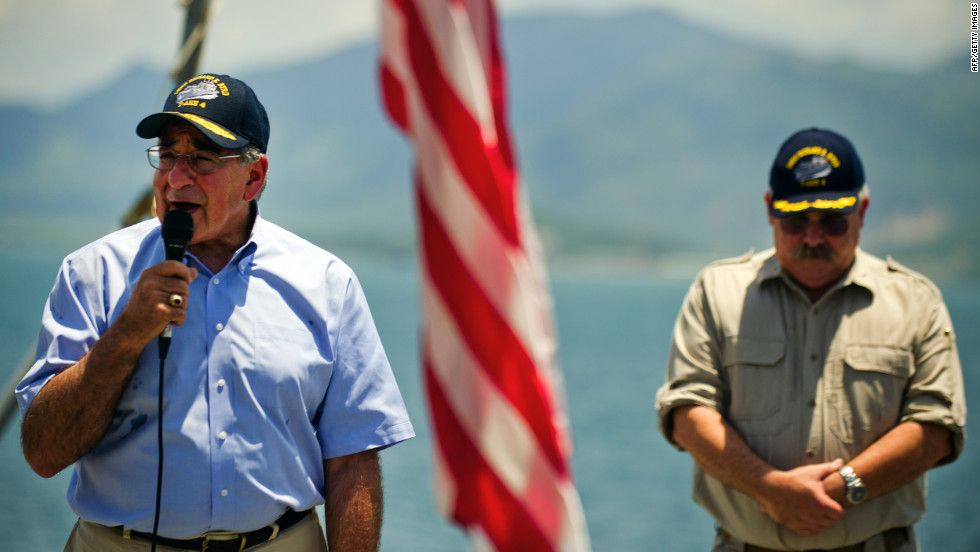
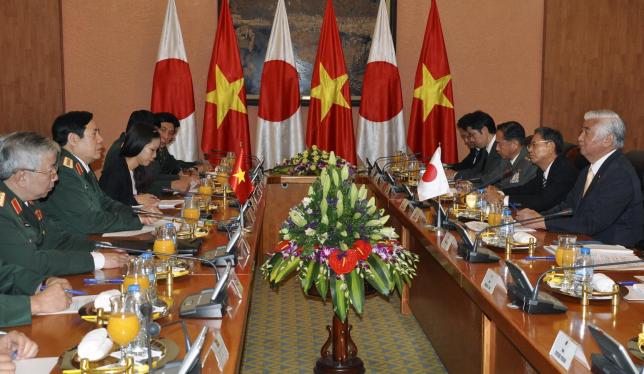
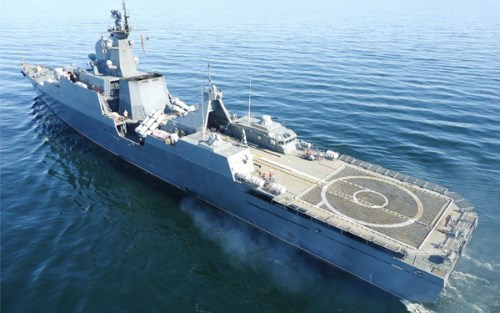
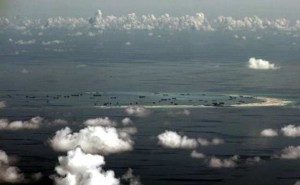

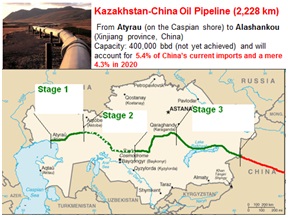 However, to meet the ever-growing demand for mineral
 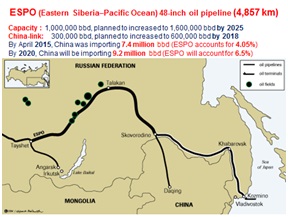 An ever-increasing demand for energy fuels China and India’s economic growth. Although the share of coal is still the largest in the energy-basket of both countries, oil consumption is growing so rapidly that it is driving the foreign policy and security perspectives of both China and India. In 1985, China was East Asia’s largest exporter of oil. In 1993, China became a net importer, and in 2015, she became the largest importer of crude oil on the planet. By April 2015, China was importing a staggering 7.4 million barrels per day (bbd) and by 2020, China will be importing an estimated 9.2 million bbd of crude-oil.
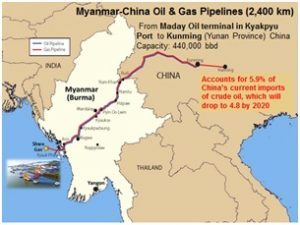 For all the marvelous engineering, the three main crude oil pipelines into China (the Eastern Siberia-Pacific Ocean pipeline (ESPO), the Kazakhstan-China oil Pipeline and the Myanmar-China oil pipeline), taken in aggregate, cater for a mere 15% of China’s crude oil imports. Almost all of the enormous quantity of crude oil that China imports either lies within or must travel across the Indian Ocean and must transit one or more of the chokepoints that connect the Indian and the Pacific Oceans. These are: the Malacca Strait, the Sunda Strait, the Lombok strait, and the Ombai-Wetar strait. Of these, the Malacca Strait and the Lombok Strait of are particular importance to China and constitute what Chinese leaders term the “Malacca Dilemma.”