Category Archives: Current Operations

On-going Naval Ops or Maritime Current Events

How the Fleet Forgot to Fight, Pt. 7: Strategy and Force Development

Read Part 1 on Combat Training. Part 2 on Firepower. Part 3 on Tactics and Doctrine. Read Part 4 on Technical Standards. Read Part 5 on Material Condition and Availability. Read Part 6 on Strategy and Operations.

By Dmitry Filipoff

Force Development

Exploring the future of conflict while preparing to wage it is a daunting task. Military forces are constantly attempting to perceive how war is evolving, and subsequently orienting their institutions along that vision in order to be ready. However, what makes a military unique from most other organizations is that it does not execute its primary function (aside from deterrence) until war breaks out. This makes it especially difficult to prepare for major war since it is a rare experience that usually cannot be fully understood until it finally occurs. When war arrives, years of preparation are immediately put to the test, and deficiencies are violently revealed. How well a military has prepared for conflict in peace helps determine how much it will have to adjust in war. In this sense, force development is the peacetime equivalent of wartime adaptation. 

The term force development has been used here in place of a term that is often used to describe military evolution, “modernization,” which tends to have an inherent bias toward high-end capability and not full-spectrum competence. The idea of “modernizing” implies a focus on pushing for better technology, yet “modernization” 20 years ago could have meant preparing for low-end conflicts where technological superiority conferred little advantage. The term “modernization” can also encourage a habit of using the procurement of newer systems as a major milestone for progress, and promote the fallacy that once new technology is bought and fielded a shortfall has been filled or an advantage has been gained. What has to be recognized is that once the taxpayer has purchased new military tools the warfighter has an obligation to execute follow-through in the form of developing new tactics and training around those tools. Otherwise, the benefits or pitfalls of new technology will not be fully realized.

Force development as it has been described here intends to convey that the institutions that focus on tactics and doctrine, not procurement, are what primarily drive competitive military advantage. It intends to convey that operator understanding of how to execute and evolve tactics and doctrine is how to best define warfighter competence. Tactics and doctrine must not only be well-understood by the warfighter, they must be thoroughly validated so that they actually make sense in application. The professionalism of the force will punch far below its weight if warfighters are well-versed in warfighting concepts that turn out to be brittle.

Force development still occurs even in the middle of war, but it takes on a far more urgent character. Militaries are often forced to innovate and experiment in the middle of conflict, and spend precious time and resources on force development when those resources could be applied to the battlefield. However, even in the middle of a war (or especially so) militaries often choose to make those considerable investments because wartime adaptation can be decisive. Wartime force development can seek to correct deficiencies revealed by combat experience, rapidly field new capabilities built on fresh tactical insight, or remain ahead of the curve in a general sense as all sides continually pursue better tactics. If a force can enter a conflict with sturdier warfighting concepts then it can focus more of its wartime force development on proactive evolution instead of painful corrective action.

An example of failed peacetime force development and a subsequent effort to urgently correct deficiencies in the middle of war can be found in the U.S. submarine force. The submarine force entered WWII with ill-conceived concepts of operation, a highly risk-averse culture, faulty weapons, and underdeveloped tactics. Submariners at first expected to mostly use sonar to attack their targets (a dubious tactic at the time), were equipped with torpedoes that often failed to detonate upon impact, and had little doctrine for unrestricted anti-submarine warfare. These deficiencies forced American submariners to experiment with new tactics and doctrine in the midst of conflict.1 This force development failure happened in spite of the interwar period wargames, Fleet Problem exercises, and Admirals King and Nimitz both having a decent amount of submarine experience. U.S. naval commanders even had the especially useful experience of watching German U-Boats earn combat experience as they sunk hundreds of merchant ships in the Atlantic before America entered the war. However, as a result of poor force development, U.S. submarines punched far below their weight for many months while the rest of the force still relied heavily on them to take the fight to enemy home waters.

The U.S. military suffered a historically painful force development experience in recent years. Despite after crushing the initial opposition in the opening phases, the wars in Iraq and Afghanistan began to falter hard as insurgents made impressive gains in territory and manpower. The counterinsurgent fight proved to be extremely difficult in these countries due to the complexity of interagency operations, unfamiliar frontline roles, war-torn societies, and a host of many other significant challenges. But as the Department of Defense sought to adapt itself to a difficult fight it at least had the benefit of history. Insurgency is perhaps the most common form of warfare, with around 100 such conflicts in the past century.There was no shortage of case studies to learn from.

The Navy’s current situation couldn’t be more opposite. High-end fleet combat between great powers using precision weapons has never happened before. This is why realistic exercising for the sake of experimentation and investigation is so important. Because there are zero historical examples to draw on, the Navy must dedicate an especially large effort toward building its own case studies of networked fleet combat actions in the form of unconstrained, large-scale exercises. However, the Navy’s long tradition of highly unrealistic exercising translates into very poor institutional understanding on many specifics of future combat.

The Navy’s chronic lack of realistic exercising and its bloated certification system reveal a force development enterprise in disarray. The Navy has many institutions that produce tactical memoranda, concepts of operation, and doctrine, all of which seek to evolve the force. Yet many of these ideas have not been effectively validated because exercises were not used to meaningfully test ideas in realistic environments. The few tactical and doctrinal ideas that did have the opportunity of being tested in large-scale exercises were likely pitted against handicapped opposition forces. This undercuts the process tremendously. Scripted exercises that guarantee easy victory are far more likely to produce brittle tactics and doctrine. These concepts will rarely experience multiple rounds of revision and refinement born from a series of iterative exercises. Clearly there will be many rounds of trial and error if one is testing warfighting ideas against capable opposition. As a result of using weak opposition to validate warfighting concepts many of the Navy’s most important wargames, tactical memoranda, concepts of operation, and doctrine never left the level of a rough draft.

Even if it was effectively validating concepts through realistic exercises, the Navy’s ability to teach the average Sailor new tactical lessons is severely handicapped. Warfighting certifications are supposed to institutionalize the Navy’s force development, but the bloated character of the certification system is strangling the Navy’s ability to become a learning organization. Tactical and doctrinal products cannot turn into meaningful learning if they take the form of just another certification event or inspection Sailors have to check off among the dozens if not hundreds of other events. Many Sailors already feel it is virtually impossible for them to get good at the numerous certifications that have been forced upon them. Because of this, institutions that work on producing tactics and doctrine are having many of their efforts effectively wasted because their products simply cannot compete for time within the certification system. And even if the Navy somehow made enough time for Sailors to effectively study tactical and doctrinal publications, they are being given little opportunity to use meaningful exercises to distill those lengthy publications into actionable and digestible insights. The scarcity of meaningful exercising and the bloated certification system have combined to produce numerous warfighting ideas that are untested, unrefined, and untaught.  

Under these conditions, the U.S. Navy is hard-pressed to define requirements that can remain durable in great power war. There should be absolutely no doubt that an incredible number of latent problems have been accumulated over the years as a result of lax force development and using weak opposition to validate concepts. If the Navy decides to embark on a serious path of transformation for the high-end fight then it must steel itself for difficult corrective actions, stubborn bureaucratic pushback, and the possibility that it may be stuck with tactically disadvantageous investments that could prove fatal in war.

Wargaming

Soon after leaving his term as the first president of the Naval War College he founded, Stephen B. Luce grew frustrated. Just before opening the War College, Luce commanded the North Atlantic Squadron, a unit he used to test warfighting concepts through at-sea experimentation and exercises. After finishing his term at the War College, Luce came back to the Squadron, hoping to conduct more exercising in pursuit of new tactics. Others had something else in mind.

After rejoining the Squadron, Luce’s attention was almost immediately diverted by higher ups. He was ordered to handle brewing fishing disputes that consumed much of his attention for the first year of his command. Unrest in Haiti prompted the Navy to detach one of his ships to the Caribbean. A request from the State Department took another ship. Not long after Luce’s flagship was also stripped from his command to serve elsewhere, the Navy Department inquired about his summer training plans.

Luce had finally had enough. With only two ships remaining under his command Luce fired off a stern letter to Secretary of the Navy William Whitney, and described how a fundamental mission of the Naval War College was being undermined:

“The fundamental idea (emphasis added) is to make theoretical instruction and practical exercise go hand in hand; or, in other words, to correlate the work of the Squadron and that of the College. In the lecture room certain tactical propositions are laid down, or war problems given out, to the officers under instruction. Their merit is then tested in the School of Application, the Squadron, and the result afterwards discussed in the lecture room. This system raises our Squadron exercises to a higher plane than those of any other known to me, and places our Navy, comparatively insignificant in all else, in advance of the Navies of the world in respect to professional education.”3

Today, the Naval War College stands as one of the most important institutions to the Navy’s force development. Aside from educating cohorts, the College performs critical force development functions for the Navy by playing a leading role in its wargaming enterprise. These wargames seek to answer some of the most critical questions of strategy and future development. They can inform war plans, test contingencies, and support major programmatic decisions such as future warship procurement. They can explore new tactics, doctrine, and warfighting concepts. However, the problem that afflicted Luce’s squadron also holds true today. The Navy has allowed operational demand to strip units away from its wargaming enterprise, and no serious effort has been made for decades to “correlate the work of the Squadron and that of the College.”

The Navy continues to use wargaming to make major decisions and provide important insights. However, the validity of wargaming is being diminished by both the rising complexity of networked warfighting and a lack of real-world testing. The Navy is heavily leaning on a tool that is growing ever more dependent on real-world testing for the sake of accuracy, yet the Navy’s exercise agenda appears to rarely reflect major wargaming initiatives. 

Wargames, because they are virtual simulations of conflict, operate on a far wider spectrum of tactical assumptions than real-world exercises. Attempting to recreate tactical accuracy in wargames stretches them to their limits and takes considerable effort. High-fidelity wargames can be extremely intricate programs, requiring meticulous inputs, powerful processing capabilities, and are governed by many rules. Elements of chance can be introduced through randomized results, similar to a dice roll.

Exercises and wargames must work together when exploring tactics and doctrine. Wargames can play out many scenarios in a preliminary manner to narrow down options and ideas. What remains can then be played out in the real world using exercises. In addition to testing out the ideas themselves, exercises can uncover assumptions and collect important technical data that can update the models the wargames operate on. This point was elaborated on by renowned wargamer Peter Perla:

“Careful observation, reconstruction, analysis, and interpretation of exercise events and system and unit performance can provide the insights and data to improve the form of mathematical models and the quality of parameter estimates. In addition, the physical execution of maneuvers and procedures required to carry out the operation can help to identify important operational opportunities or potential problems that the analysis and wargaming may have downplayed or failed to consider at all.”4

As powerful and complex wargames are, they are still only simulations, and cannot come close to the realism of exercises. Exercises have to be used to refine wargames in a continual feedback loop for the sake of refinement, and to keep wargames grounded in reality. Many types of wargames are not supposed to be static, but fluid simulations that are continuously updated through exercises to improve their realism and ensure their accuracy. Significant tactical discoveries should also be enough to prompt the replaying of certain wargames. Exercises can help wargamers more precisely understand the very things that make a wargame artificial, such as factors that must be reduced to dice rolls, inputs, and rules. In short, exercises help wargamers understand their assumptions.

The complexity of Information Age warfighting is one of the most powerful forces diminishing the value of tactical- and operational-level wargaming. As warfare becomes more complex, it becomes more difficult to simulate. This holds true for both exercises and wargames, but it is especially more true for the latter given they are simulations and not real maneuvers. The world of inputs required to accurately simulate warfare has grown to unprecedented heights, especially because so much decisive tactical space now exists within electronic means that are especially difficult to replicate in a simulation.

Networked warfare involves many complex and nuanced electronic interactions between opposing forces. The nature of sensing, deciding, and engaging has become an ambiguous electronic battlefield. Opposing sides will seek to jam, intercept, and deceive communications and sensors across the spectrum. Cyber attacks will seek to cripple systems, collect sensitive information, and proliferate throughout infrastructure. As an anti-ship missile closes in, its seeker can use a variety of sensors to pinpoint its target, and a variety of countermeasures such as electronic warfare will respond in an attempt to confuse the seeker. Bandwidth limitations will shape decision-making, and data will be processed and refined by both man and machine. Operators and autonomous actors will attempt a variety of real-time workarounds in response to electronic attack, and these attacks can cause them to lose confidence in their equipment and each other.

It is already extremely difficult to replicate many of these network combat dynamics in exercises, and for wargames many elements are outright impossible. While a wargamer can make due by using dice rolls to distill combat ambiguity into specific outcomes, this will not often satisfy the tactician or the trainer. Even the supposed strengths of wargaming are challenged by networked warfare. According to Perla, wargaming “is a tool for exploring the effects of human interpretation of information. Wargames focus on the decisions players make, how and why they are made, and the effects that they have…The true value of wargaming lies in its unique ability to illuminate the effect of the human factor in warfare.”5 Yet so much decision-making in modern war is completely beholden to electronic nuances that wargames struggle to replicate, and decision-making is often the direct objective of electronic attack.

Because networked warfare poses immense realism challenges to wargaming, a force development strategy in the modern era demands an especially exercise-heavy process of tactical investigation. Wargames have become more dependent than ever on exercises because exercises can probe whether decisive tactical truth lies undiscovered within the seams of simulation.

Exercises are indispensable to wargames because they can provide the important baseline input of the competence of the force. Even though it can be difficult to program human performance factors into a simulation, these are some of the most important variables to know for the sake of realism. By benchmarking human performance through exercises, wargames can have a realistic baseline of how well the force can perform and then build ideas within the limits of that potential. Otherwise, wargames will be misaligned with the training of the force, and can run the grave risk of producing tactics, doctrine, and war plans that are beyond the ability of the force to execute. To paraphrase a certain quote, you go to war with the fleet you trained, not the one you wargamed.

Force Structure

Soon after guiding at-sea experiments to test future warship concepts, Wayne Hughes became frustrated. The USS ­Guam had been modified to test concepts for the Sea Control Ship (SCS), a warship concept touted by then-Chief of Naval Operations Admiral Zumwalt who desired a large platform dedicated to anti-submarine warfare. However, according to Hughes, the tests were hamstrung by a lack of imagination and poor understanding of how to use exercises to make a warship concept come alive:

“It was my task to design an experiment from which as much information as possible could be gleaned during ten days of intensive interactions between submarines, their target (played by the Guam), and the assorted screening units…SCS success depended on new tactics (emphasis added), which we didn’t have, and the tactical commander’s staff lacked enthusiasm to develop. I had frustrating conversations with the admiral, who thought his responsibility began and ended by rigidly following the test plan…An exercise at sea is as much for tactical development and training as it is for statistical testing. Most new weapons, sensors, and command-and-control systems entail new tactics to reach their full potential.”6

This experience points to a fundamental principle of designing military forces: force structure is founded on tactics.

How a fleet will be used in war is fundamental to its design, and the shape of force structure is guided by a perception of what capabilities and tactics will dominate. When it appeared advantageous to use aircraft to attack ships, nations built aircraft carriers. When a torpedo fired from an undersea platform could produce a powerful combination of surprise and lethality, nations built more submarines. When aerial threats took the form of missile salvos the U.S. Navy led the way in building warships focused on long-range air defense. When platforms were deemed to have lost their tactical relevance, whether ships of sail, ironclads, or big-gun battleships, nations stopped making them.

Three congressionally mandated force structure studies set out to understand what the future fleet could look like, and examined various considerations such as cost, forward presence models, and national strategies. However, while a force structure assessment can be shaped by many factors, the assessment is inherently incomplete if it does not attempt to understand how future tactics and doctrine will define the composition of forces. While the studies took various analytical approaches, the assessment conducted by the Center for Strategic and Budgetary Studies stands out in this regard. 7 It devoted extensive attention to trying to understand the character of future conflict, how capability development is trending across numerous warfare areas, and what new operating concepts may require. All of the studies acknowledged to some extent that visions of tactics and operating concepts are fundamental to designing force structure.

The existence of a platform or payload is solely justified by the tactical options and advantages it offers. The structure of a fleet is therefore the embodiment of concepts of operations that are built on tactics that are meant to work well together. However, the extent to which those warfighting concepts are proven or not is another question. Aligning force structure planning with an ever-evolving vision of future war is a major strategic challenge, and goes to the very core of force development. This point was made clear by maritime strategist Julian Corbett:

“The truth is, that the classes of ships which constitute a fleet are, or ought to be, the expression in material of the strategical and tactical ideas that prevail at any given time…It may also be said more broadly that they have varied with the theory of war…It is true that few ages have formulated a theory of war, or even been clearly aware of its influence; but nevertheless such theories have always existed, and even in their most nebulous and intangible shapes seem to have exerted an ascertainable influence on the constitution of fleets.”8

Those who favored battleships in the interwar period did not accurately predict their fate because their “theory of war” had failed to keep pace with change. They had a flawed understanding of how future war at sea would develop at the tactical level, especially with respect to how the air domain could dominate the surface domain. The American capital ships that were long expected to be the dominant offensive platform for anti-surface warfare instead spent most of their fleet combat actions serving as ships focused on the defensive anti-air mission. New tactical truth led to battleships being modified in the middle of the war to carry additional anti-air weapons and bolster their defensive firepower. However, their enormous guns, the core weapons that originally justified their construction, were totally irrelevant in this new role. If the interwar Navy had accurately predicted the tactical fate of the battleship would it have built them differently? Would it have built them at all?

For all the good the interwar period wargames and Fleet Problem exercises did for the Navy’s force development they often made one major mistake – scripting battles to guarantee a clash between the battleline.9 The potential of the aircraft carrier was rapidly growing, but in the minds of many interwar leaders the fleet combat actions of the era would still frequently feature fights between battleships. Interwar period exercises and wargames were artificially fulfilling this warfighting theory, thereby lending weight to programmatic decisions to procure battleships. It is quite possible that if not for the revealing combat experiences of WWII then navies would have continued building big-gun warships.

Modular force structure can act as an insurance policy against the sort of tactical irrelevance that befell the battleship. Modularity helps ease both peacetime force development and wartime adaptation. A “payloads not platforms” approach can help a force compensate for poorly-adjusted warship designs once conflict reveals hard lessons. Deep magazines and the large variety of missile payloads could allow a modern ship to change its mix of capabilities in far less time than it took a battleship to undergo a refit.

However, net-centric warfare has made adapting modern warships more difficult in certain respects, even with modularity. A key challenge will be in trying to ascertain how tactical outcomes heavily influenced by ambiguous electronic effects will translate into an ideal mix of capabilities. If defensive electronic warfare or jamming proves to be especially capable at defeating missile seekers then an adaptation could take the form of equipping a different missile loadout. Missile loadouts could also be affected by how well datalinks and network nodes can concentrate fires while being degraded by electronic attack. If the network is less resilient than anticipated, then a new missile loadout could focus on making a warship more independent from forces it would have originally relied on for networked fires.

An enduring principle of successful warfighting is optimizing the concentration of firepower. This principle has especially dominated naval force structure, and can be seen in how successive capital ship designs often grew larger and larger to concentrate more firepower. Preferable ways to concentrate firepower through force-wide tactics can also translate into how a fleet is built. Ships of various sizes offer different levels and types of firepower, and the way tactics affect concentration can translate into an ideal mix of platforms. Interwar period navies did not build fleets of only the most powerful platforms in the form of battleships or carriers even though large-scale fleet combat featured prominently in their minds. Rather, their fleets struck a balance between large capital ships and many smaller combatants such as cruisers and destroyers. They felt that their visions of fleet combat created relationships between tactics and concentration that encouraged a degree of platform variety.

Optimizing platform variety has become far more difficult in the age of networked warfare because assumptions about network performance can have a powerful effect on designing force structure. Network resilience will strongly dictate the extent to which capabilities can be effectively distributed and concentrated in combat, but the distribution and concentration of capability is also exactly what force structure seeks to optimize. A fleet that is built on a vision of a well-functioning network could very well have a vastly different composition compared to a fleet that anticipates fighting mostly in the dark.

To use a modern example, a U.S. Navy cruiser has 122 launch cells and a possible version of the Navy’s future FFG(X) frigate could have 16 launch cells. Would the Navy be better served by buying 20 frigates or 10 cruisers, where the cruiser could cost twice as much as the frigate but has seven times the missile capacity? A well-grounded understanding of how retargeting and engage-on-remote tactics shape a distributed force’s ability to mass firepower should inform such a debate.

Today the Navy finds itself at a critical inflection point in building the future fleet. It is currently finalizing designs and requirements for the next generation of surface warships in the form of a future frigate FFG(X), and a family of future surface combatants (FSC). The FFG(X) frigate and FSC warships are expected to serve well into the latter half of the 21st century. The request for proposals for the FFG(X) frigate offers interesting concepts of operation for how the Navy intends to use the platform:

“This platform will employ unmanned systems to penetrate and dwell in contested environments, operating at greater risk to gain sensor and weapons advantages over the adversary. The FFG(X) will be capable of establishing a local sensor network using passive onboard sensors, embarked aircraft and elevated/tethered systems and unmanned vehicles to gather information and then act as a gateway to the fleet tactical grid using resilient communications systems and networks…In terms of the Navy’s Distributed Maritime Operations (DMO) Concept, this FFG(X) small surface combatant will expand blue force sensor and weapon influence to provide increased information to the overall fleet tactical picture while challenging adversary ISR&T efforts.”10

This is a preview of future tactics and missions, but it hints at a major force development challenge. Requirements for these ships have to try to align with major transformations the Navy has planned. The Distributed Maritime Operations Concept is still in its early stages. The Distributed Lethality concept envisions numerous surface action groups that combine various types of ships into tailored force packages. Networked warfighting can feature various multi-domain tactics and distributed fleet formations, each with a different ability to concentrate firepower and facilitate command and control. Tactics for key capabilities like NIFC-CA, CEC, retargeting, and engage-on-remote will be the bread and butter of networked warfighting. An unprecedented increase in long-range anti-ship firepower is about to hit the Navy as a new generation of anti-ship missiles is fielded.

In short, these future ships must somehow reflect the implications of many net-centric tactics and roles the Navy has yet to develop or discover.

The Navy is heavily relying on simulations such as wargames and tabletop exercises to test concepts of operations for these future ships. According to Navy officials, the FSC program was “preparing for a big wargame…to test out ideas for the FSC family of systems” and that “Based on the outcome of the June wargame, officials should have a ‘surface force initial capabilities document’ written by July to get FSC into the acquisition pipeline.” One Navy official emphasized, “We’ve got to get these wargames right…”11

The Navy’s void of high-end experience is now a critical foundation upon which it is deciding its future. The Navy is led by officers who spent most of their careers in a fleet that failed to train them in sea control, abstained from equipping them with essential weapons like anti-ship missiles, and neglected to give them enough opportunity to test their tactical imagination in exercises. Many of the Navy’s most important wargames and simulations have not been properly tested or refined by real-world experimentation. The Navy has virtually no concrete doctrine for a very complex form of warfare that’s never happened before. This is a recipe for producing flimsy requirements for future capability. 

The experience of testing the Sea Control Ship concept suggests there may be merit to the idea of using real ships to test ideas for future ships. The Navy’s surface warfare directorate has already teased the idea of standing up an “experimental squadron” within the next year, and include a Zumwalt-class destroyer, a Littoral Combat Ship, an Arleigh-Burke-class destroyer, and an unmanned surface ship.12

However, compared to most other force development missions, the enormous investment that comes with a new generation of force structure should already pose one of the strongest possible demand signals for rigorous at-sea experimentation. The modern fleet should already be acting as an experimental squadron for the future fleet. But it appears the Navy is making some of the most important naval force structure decisions of the 21st century without using a series of major exercises to inform requirements. Now the Navy is poised to set sail into the future with a new generation of ships inspired by doctrine born in a simulation, and not in the fleet.


The eighth and final part will offer a Force Development Strategy.


Dmitry Filipoff is CIMSEC’s Director of Online Content. Contact him at Nextwar@cimsec.org.

References

1. F.G. Hoffman, “The American Wolfpacks: A Case Study in Wartime Adaptation,” Joint Forces Quarterly, January 2016. https://ndupress.ndu.edu/Media/News/Article/643229/the-american-wolf-packs-a-case-study-in-wartime-adaptation/

2. Christopher Paul et. al, Victory has a Thousand Fathers: Detailed Counterinsurgency Case Studies, RAND, 2010. https://www.rand.org/content/dam/rand/pubs/monographs/2010/RAND_MG964.1.pdf

3. James C. Rentfrow, “The Squadron Under Your Command: Change and the Construction of Identity in the U.S. Navy’s North Atlantic Squadron,1874-1897,” 2012. https://drum.lib.umd.edu/bitstream/handle/1903/12855/Rentfrow_umd_0117E_13092.pdf;jsessionid=A0AEFD1C57596CDFFEAF23292597ECA4?sequence=1 

4. Peter Perla, The Art of Wargaming, U.S. Naval Institute Press, 1990. 

5. Ibid.

6. Captain Wayne P. Hughes Jr., USN, “Navy Operations Research,” Operations Research, 2002. https://pubsonline.informs.org/doi/pdf/10.1287/opre.50.1.103.17786 

7. Bryan Clark et. al, Restoring American Seapower: A New Fleet Architecture of the U.S. Navy, Center for Strategic and Budgetary Assessments, 2017. https://csbaonline.org/uploads/documents/CSBA6292-Fleet_Architecture_Study_REPRINT_web.pdf 

8. Julian Stafford Corbett, Some Principles of Maritime Strategy, 1911http://www.gutenberg.org/ebooks/15076?msg=welcome_stranger

9. Albert Nofi, To Train the Fleet For War, Department of the Navy, 2010. 

Excerpts: 

“While no fleet problem was scripted from start to finish, some portions of each were usually set-up in order to play out certain ideas or test particular tactics. After all, the actual playing out of a scenario might not have resulted in a particular type of action developing, such as a battleline clash. So the stage was often set for these, in order to test ideas, new or old. Unfortunately, pre-planned portions of the fleet problems seem to have led to many officers to draw the wrong conclusions about the future of naval warfare. As Mark Allen Campbell observed, ‘The dramatic images of battle lines engaged in long-range gunnery duels with one another may very well have persisted longer in the memories of the officers present than the remembrance of the artificial conditions necessary to get the dreadnoughts into firing range of each other.'”

“For example, as late as 1940 Admiral Richardson concluded that the fleet problems demonstrated carriers needed to stay close to the battleline, in order to be protected by its heavier firepower. Concern about the potential value of the autonomous carrier task force was not necessarily the result of blind unwillingness to see the obvious. Carriers had been “sunk”or “damaged” by surface ships during Fleet Problems IX (1929), X (1930), XII (1931), XIV (1933), XV (1934), and XVIII (1937), and had come under “gunfire” on numerous other occasions. It was not until almost literally the end of 1941 that the Navy had dive bombers and torpedo bombers capable of harming heavy ships in long range operations or fighters with the “legs” to escort and protect them. Until then carriers had to take great risks in order to be effective. The possibility that a carrier might be caught by surface forces was very much on the minds of senior naval officers during the 1920s and 1930s, as can be seen by the 8-inch guns carried by Lexington and Saratoga.”

For Wargaming see: John M. Lillard, Playing War, Potomac Books, 2016.

10. RFI: FFG(X) – US Navy Guided Missile Frigate Replacement Program, Department of the Navy, July 10, 2017. https://www.fbo.gov/index?s=opportunity&mode=form&id=cdf24447b8015337e910d330a87518c6&tab=core&_cview=0 

11. Megan Eckstein, “Wargames This Year to Inform Future Surface Combatant Requirements,” U.S. Naval Institute News, February 21, 2017. https://news.usni.org/2017/02/21/wargames-future-surface-combatant-requirements 

12. Ibid.

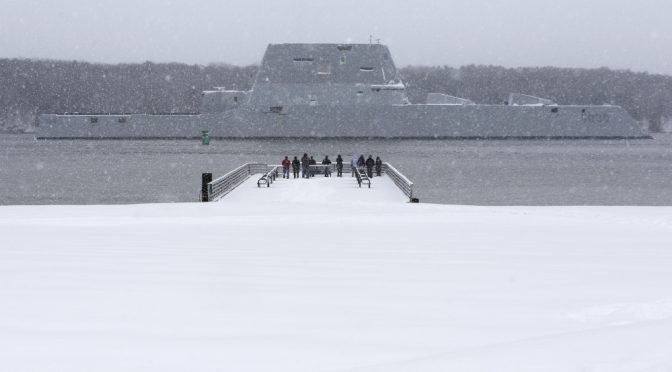
Featured Image: The USS Zumwalt makes it way down the Kennebec River as it heads out to sea. (The Associated Press/Robert F. Bukaty)

Maritime Partnerships and the Future of U.S. Seapower in the Indo-Pacific

By LCDR Arlo Abrahamson

Introduction

“Relationships don’t stay the same, they either get better or they get worse.” These were the words of U.S. Defense Secretary James Mattis at the 2018 Shangri-La Dialogue in Singapore. Mattis was speaking about the importance of avoiding the status quo in America’s defense relationships by exercising “strategic reliability” through enduring military presence and meaningful security cooperation.1

Mattis’ concept of strategic reliability is an appropriate frame to examine the future of U.S. seapower in the Indo-Pacific. America’s rise as a naval power was predicated on the ability to form alliances and partnerships with nations that believe cooperative maritime security benefits common interests and enhances regional and global stability. The backbone of these alliances and partnerships derives from a fundamental belief in freedom of the seas, a central tenant of the international rules-based order, to which the former Commander of the Indo-Pacific Command Admiral Harry Harris said “ensures all nations, big or small, have equal access to the shared  domains.”2 Since the fall of the Soviet Union, in what the late Charles Krauthammer described as “America’s unipolar moment,” U.S. seapower, along with the alliances and partnerships that bolster its preeminence in the Indo-Pacific, has largely gone unchallenged.3 However, with a rising China and its focus on building its own world-class, blue water navy, the future of U.S.-led, cooperative maritime security in the Indo-Pacific cannot be taken for granted.

The underlying question is can U.S. seapower with its existing framework of maritime alliances and partnerships remain the leading guarantor of Indo-Pacific  maritime security, or will China take on that role? The collective wisdom is that the U.S. Navy will continue to lead and foster cooperative maritime security efforts in the Indo-Pacific, but only with a careful reexamination of how the U.S. projects its seapower and postures itself in a new era of great power competition with China.

Alliances and Partnerships, the Foundations of U.S. Seapower  

With the presence of the U.S. Asiatic squadrons in the 19th century, the U.S. Navy made its debut in the Indo-Pacific region. Like most global navies, the U.S. Navy emerged in the region to protect and promote America’s growing interests in commercial trade and diplomatic relations. From the U.S. Navy’s debut in the region, alliances and partnerships helped bolster and sustain U.S. seapower in the Indo-Pacific. Those alliances and partnerships were cemented with the spoils of victory in World War II, with the establishment of U.S. naval bases and forward operating locations throughout the region.

Today, the U.S. Navy enjoys unprecedented access to the Indo-Pacific region, with naval forces forward or rotationally deployed in Guam, Japan, Korea, Okinawa, and Singapore, and visiting force agreements in the Philippines and Australia. This access enables the U.S. Navy’s power projection in the region and yields opportunities for the U.S. to play a constructive role in strengthening cooperative maritime security networks by, with, and through the assistance of allies and partners.

In February 2018 while underway in the South China Sea, Rear Admiral John Fuller, commander of the USS Carl Vinson Strike Group, told a group of academics and reporters that “nations in the Pacific are maritime nations. They value stability…That’s exactly what we are here for. This is a very visible and tangible presence. The United States is here again. U.S presence matters.”4

The prosperity and upward economic trajectories of Indo-Pacific nations are a byproduct of the relatively stable period that emerged after World War II. This prolonged period of regional stability was underwritten for the last 75-plus years in part due to unfettered U.S. naval presence. Sustained by a strong network of alliances and partnerships, the U.S. Navy has focused its forward presence on deterring conflict, ensuring access to the global commons, protecting U.S. commerce, while promoting U.S.-led security cooperation.

The U.S. Cooperative Strategy for 21st Century Seapower underscores the value of maritime security cooperation directly tied to U.S. interests, particularly in the economic and security spheres:

“By expanding our network of allies and partners and improving our ability to operate alongside them, naval forces foster the secure environment essential to an open economic system based on the free flow of goods, protect U.S. natural resources, promote stability, deter conflict, and respond to aggression.”6

The Indo-Pacific region features a complex stratosphere of global and economic interests with growing importance for the U.S., China, and the international community at large. The United Nations estimates more than 80 percent of global trade by volume travels by sea; with 60 percent of seaborne trade volume traveling through the Indo-Pacific region.7 Moreover, $5.3 trillion in seaborne trade passes through the South China Sea each year, nearly a third of all global trade. This includes $1.2 trillion in trade destined for U.S. ports and 80 percent of China’s hydrocarbons that pass through the strategic chokepoints of the Straits of Malacca and Singapore and onward to the South China Sea.

In such a dynamic maritime environment, the existing framework of rules, standards, norms and laws that assures free access to the global commons and open sealanes remains essential for regional stability. James Manicom notes that  “free access to the seas fosters not only economic growth within individual East Asian states, but also the creation of robust economic interdependence between East Asian states that creates a powerful disincentive for war.”9 A strong belief in free and open sealanes has not lost its relevance among Indo-Pacific nations, even with the threat of a rising and revisionist power in China that seeks to adjust the international order to benefit its own interests. Accordingly, great power competition with China presents both challenges and opportunities for the U.S. Navy in the Indo-Pacific. While Indo-Pacific nations make room for China’s rise as a maritime power, U.S. seapower should remain focused on preserving the rules-based order while enhancing stability that binds its existing network of allies and partners.10

Forward Presence and Cooperation in the Midst of a Rising Maritime Power

A rising Chinese maritime power harkens to the realities of geo-strategic position. The U.S. Navy serves as a mostly non-resident, yet established maritime power in the Indo-Pacific while China is embracing its role as the resident, emerging maritime power.

Against the backdrop of the routine presence of the U.S. Navy across the Indo-Pacific, nations are increasingly hosting the People’s Liberation Army-Navy (PLAN) in their waters and ports. The PLAN is growing rapidly as a regional maritime powerhouse and blue water navy, and nations in the Indo-Pacific know they must cooperate and work with their Chinese neighbors at sea to maintain cordial and friendly relationships with the fledgling superpower.

In August 2018 China conducted its inaugural multilateral exercise with Association of Southeast Asian Nations (ASEAN) noting the maritime drills aimed “to expand China and ASEAN’s military communications and security cooperation.”11 Singapore, currently at the helm of the rotational leadership of ASEAN, lauded the exercise as a notable first step in enhancing interoperability with the PLAN. “At the end of the exercise, we have strengthened our ability to work together,” said Colonel Lim Yu Chuan, commanding officer of the Singapore Navy’s 185 Squadron.12

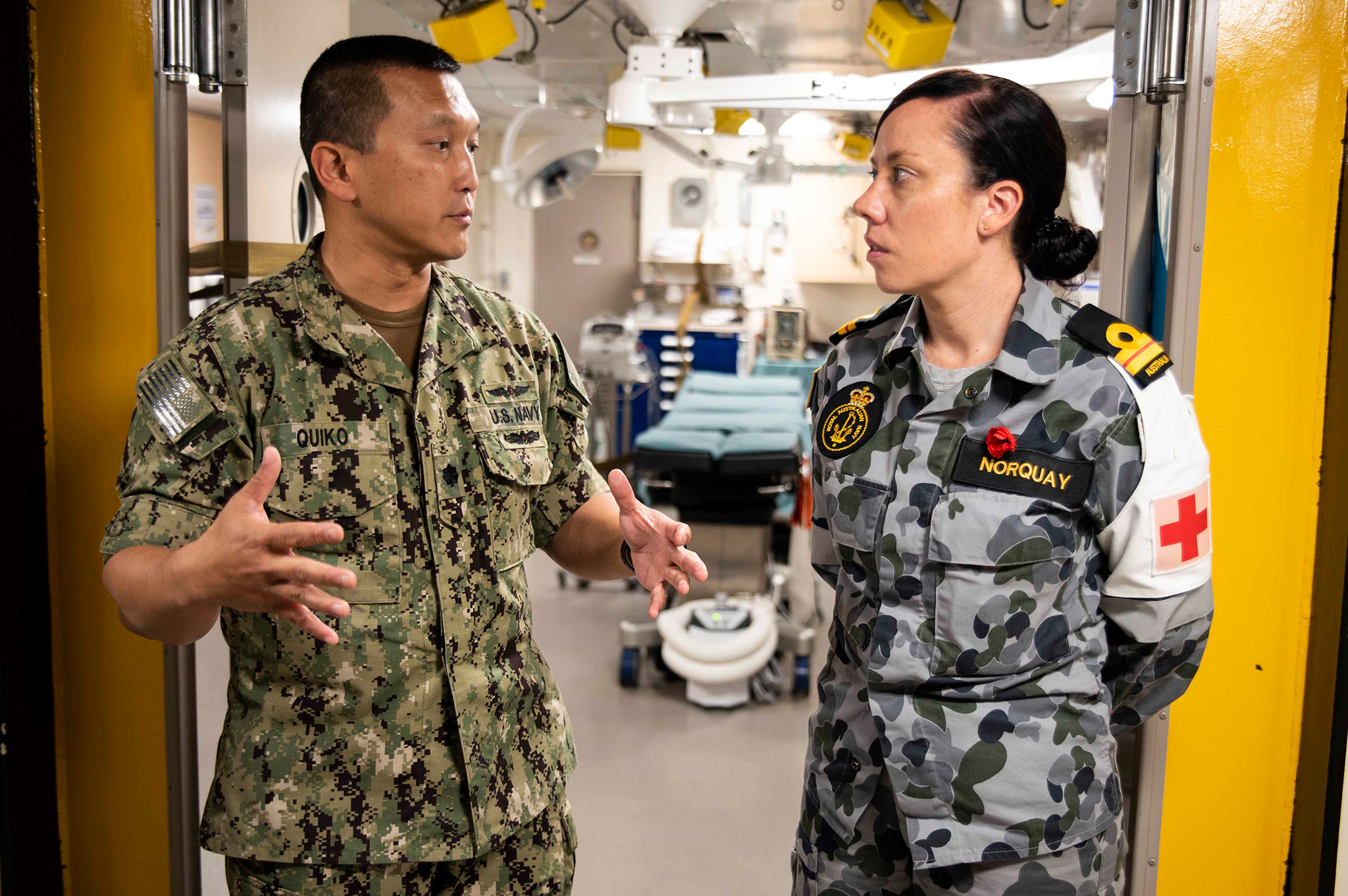
PORT MORESBY, Papua New Guinea (Nov. 16, 2018) Cmdr. Albin Quiko, assigned to the Expeditionary Resuscitative Surgical System (ERSS) team, discusses medical capabilities with Lt. Miranda Norquay, the medical officer aboard the Royal Australian Navy landing helicopter dock ship HMAS Adelaide (L01), in the surgical room of the amphibious transport dock ship USS Green Bay (LPD 20) during a tour. (U.S. Navy photo by Mass Communication Specialist 2nd Class Anaid Banuelos Rodriguez/Released)

Despite the emergence of China as a rising maritime power, the U.S. still embodies its role as the principal leader of cooperative maritime security in the Indo-Pacific region. The U.S. Navy facilitates multilateral, cooperative security engagements such as Rim of the Pacific (RIMPAC), Malabar alongside the Japanese and Indian navies, and Southeast Asia Cooperation and Training (SEACAT) that enables the U.S. to operate with ASEAN and South Asian partners such as Sri Lanka and Bangladesh. When manmade and natural disasters afflict the region, nations in the Indo-Pacific frequently request the assistance of the U.S. Navy in relief operations such as in the Philippines after Typhoon Haiyan in 2013, the search and rescue of Air Asia Flight 8501 that crashed into the Java Sea in 201, and more recently to assist in flood relief efforts in Sri Lanka in 2017.

Collin Koh, maritime studies researcher at the Rajaratnam School of International Studies (RSIS), notes that nations in the Indo-Pacific generally regard U.S. naval presence as constructive in promoting collaborative partnerships, capabilities, and stability:

“The U.S. naval presence is still seen as a stabilizing element in a geopolitically uncertain time in the region. Operationally, regional militaries see their engagements with the U.S. as a vehicle for extracting knowhow, expertise, and best practices for their own capacity building processes.”13

The U.S. Navy should use its credibility in the Indo-Pacific to advance the National Defense Strategy that advocates for strengthening the U.S. network of alliances and partnerships through “mutually beneficial collective security,” “reinforcing regional coalitions and security cooperation,” and “deepening interoperability.”14 Indo-Pacific nations have no choice but to cooperate with China as the emerging, resident maritime power, but that doesn’t diminish the U.S. Navy’s role in the region. In fact, fears of how China is using its rising maritime power may even strengthen it.

Focusing on Relationships as a Means to Balance China’s Influence

Edward Luttwak postulates that seapower during peacetime equates to “passive suasion” that can reassure allies and/or influence the behavior of nation states.15 In an increasingly competitive and contested maritime environment in the South China Sea and

Northeast Asia, the U.S. Navy’s mere presence in the region is increasingly viewed by nations within the context of strategic hedging of great power capabilities. In Richard Fontaine’s view, this hedging is “creating regional security challenges that incentivize cooperation and counterbalancing.”16

While some Indo-Pacific nations are careful to temper their public sentiment regarding U.S. naval presence, countries of the region clearly support U.S. seapower and continue to enable it. James Manicom argues that by virtue of Chinese maritime assertiveness in contested waters, “there is clearly still an appetite for U.S. seapower among East Asian states, which reinforces the legitimacy of American power.”17

In recent years the Philippines, Australia, and Singapore have upgraded their enhanced defense cooperation agreements with the U.S. that allows rotational deployments of ships and aircraft. Moreover, the U.S. has significantly enhanced maritime security cooperation, information sharing, and logistical support agreements with Vietnam, Sri Lanka, and India.18

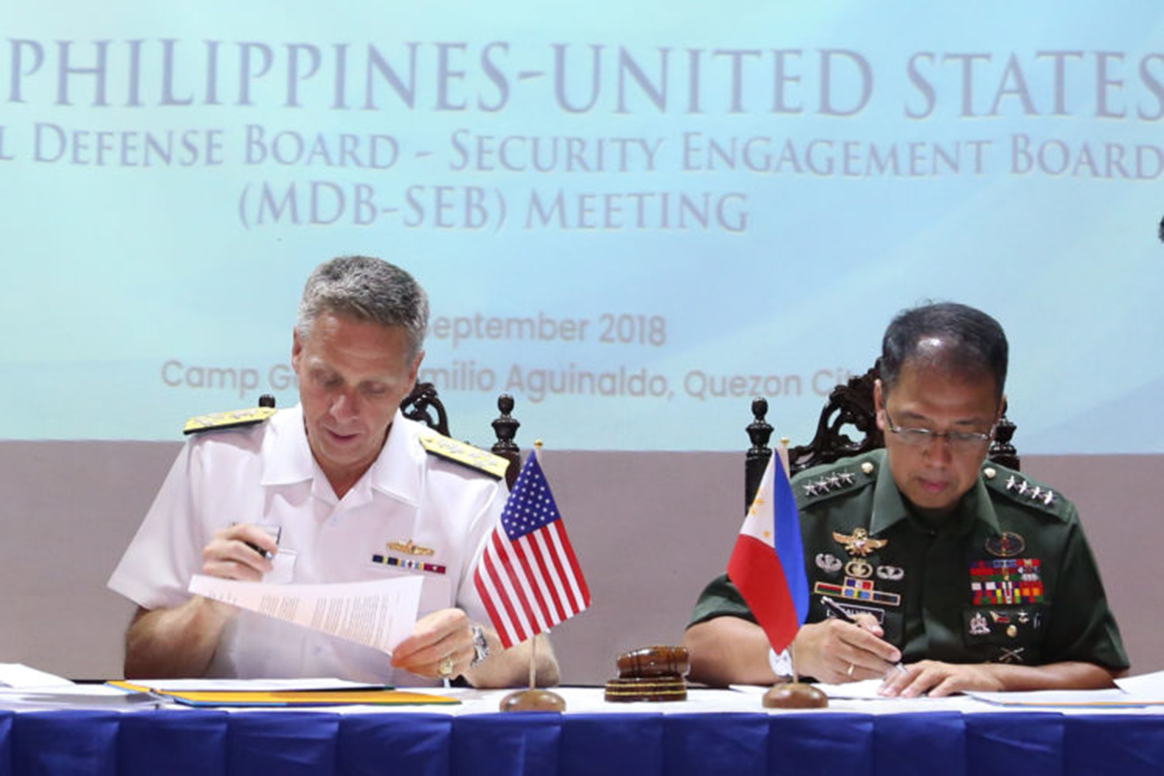
MANILA, Philippines (Sept. 27, 2018) – Adm. Philip Davidson, Commander of the U.S. Indo-Pacific Command, and Gen. Carlito Galvez, Chief of Staff of the Armed Forces of the Philippines, sign agreements on security cooperation activities for 2019 at this year’s Mutual Defense Board and Security Engagement Board Meeting at Tejeros Hall, AFP Commissioned Officers Club, Camp Aguinaldo, Quezon City. (Photo by SN1 Donald Viluan PN/PAOAFP)

Despite its strong regional security networks and amicable relations with allies and partners, the U.S. Navy cannot take its status quo for granted. An easy assumption may be that maritime alliances and partnerships can endure through periods of non-engagement when priorities for naval platforms and people are needed for other pressing operations. This would be a strategic mistake for the U.S. in an environment where China is eager to fill even the smallest void left by the U.S. Navy’s competing priorities. Consequently, U.S. strategic choices in projecting routine naval presence and its investment in long-term military relationships correlate directly with Mattis’ concept of strategic reliability. On the operational and tactical levels, this translates to meaningful and routine maritime security cooperation where relationships form the foundation of trust for the alliance or partnership.

Dzirhan Mahadzir, former researcher at Malaysia’s Maritime Institute, notes that while fostering relationships through routine engagement is paramount, these relationships and persistent naval presence also “dissuades or prevents countries like China from diminishing the U.S. role in leading cooperative security.”19

Every time the U.S. Navy conducts a security engagement or exercise with its allies and partners, it sends a strategic message that aligns with America’s stated commitments to the Indo-Pacific. Moreover, in the age of tweets and 24-hour news cycles where organizational memories are short, the Navy’s engagement with allies and partners must be routinely executed to demonstrate U.S. resolve and commitment. Rest assured, U.S. friends and allies will take note of how it postures its seapower and forward presence to match words with deeds.

What could marginalize U.S. Seapower in the Indo-Pacific?

The task of fulfilling global commitments remains a challenge for the U.S. Navy with competing priorities both globally and domestically. Critics can point to the findings of the Navy’s reviews of surface force incidents that the U.S. 7th Fleet is overstretched in both commitments and platforms, a challenge complicated by the sheer geography of plying the waters of a vast Indo-Pacific operating area.20

After at-sea collisions by USS Fitzgerald near Japan and USS John S. McCain in the Singapore Strait, China took full advantage of the disarray and characterized the U.S. Navy in its state-run press as dangerous and undependable for Indo-Pacific nations.21 The U.S. Navy cannot be everywhere, and it certainly is not immune to accidents, but the solution to restoring any lack of faith in U.S. seapower in the Indo-Pacific is to remain engaged and double down on the U.S. commitment to free and open seas and regional stability by way of its alliances and partnerships.

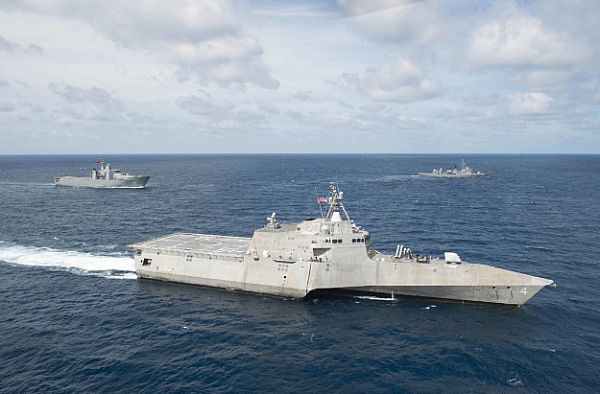
GULF OF THAILAND (June 3, 2017) The littoral combat ship USS Coronado (LCS 4) is underway in formation with ships from the Royal Thai Navy as part of a division tactics exercise during Cooperation Afloat Readiness and Training (CARAT) Thailand. (U.S. Navy photo by Mass Communication Specialist 3rd Class Deven Leigh Ellis/Released)

William Choong, Senior Fellow for Asia-Pacific security at the International Institute for Strategic Studies (IISS), posits that “Southeast Asian countries usually prioritize economic development over U.S. military presence in the region” as means for advancing their upward economic mobility.22 This trend in the region will continue and China is equipped to assert its economic leverage through ambitious programs such as the One-Belt, One Road initiative, which could be a potent undercurrent in nations’ decisions to engage with the U.S. in the maritime security sphere.

However, even with growing economic ties between Indo-Pacific nations and China, Collin Koh notes China’s economic influences have not discouraged most allies and partners from working closely with the U.S. in security cooperation engagements:

“Even as Indo-Pacific countries move toward China in economic ties, we don’t see a let down in enhancing and building security relations with the U.S. This can only mean these governments are intent on keeping these military ties with the U.S. in the midst of their wariness towards a growing Chinese shadow.”23

The U.S. Navy possesses adequate technology, diverse naval platforms, and perhaps most important, the creativity and ingenuity in its people, to remain relevant and engaged with allies and partners across the Indo-Pacific and retain its principal leadership role. Yet with the realities of great power competition, skepticism will not cease completely, and tepid or inconsistent engagement will cast doubts of U.S. resolve. In essence, any marginalization of U.S. seapower in the Indo-Pacific will be a strategic choice, not a preordained destiny.

Practical Considerations for Sustaining U.S. Seapower

The National Defense Strategy contends the U.S. military must “outthink, out maneuver, out-partner, and out-innovate” America’s adversaries and competitors.24 In this vein, practical considerations for cooperative maritime security engagement should be considered carefully. The U.S. Navy must continue to demonstrate credible, lethal, and distributed seapower.25 This must be accomplished using the full breadth of naval power and associated platforms that can operate adeptly in the littorals, global commons and in contested grey zone spaces.

The 3rd Fleet forward initiative is a prudent step to deploy additional naval assets to the Indo-Pacific to enhance presence operations and maritime security cooperation engagements and exercises. Moreover, the U.S. Navy should continue to harness the employment of Military Sealift Command (MSC) ships in security cooperation engagements ranging from logistics interoperability to operating with partner navies at sea. Progress has already been made with the inclusion of expeditionary fast transport ships (EPF) and expeditionary transfer docks (ESD) in a number of exercises and engagements throughout the region.26 The value of security cooperation with small, expeditionary units should not be underestimated. Diving and salvage subject matter expert exchanges, explosive ordnance disposal team engagements, civil engineering exchanges with Seabees, and small boat operations are in high demand for many of the U.S. Navy’s partners in the region, particularly in South and Southeast Asia.27

Lastly, the U.S. Navy should seek more opportunities to work jointly with other U.S. military services during cooperative security engagements. Partnering with other U.S. services, including the U.S. Coast Guard, increases opportunities, scope, and the quality of engagements with allies and partners while prudently managing finite resources in manpower and available platforms.

In practical terms, maritime security cooperation is military diplomacy. As with all forms of national diplomacy, the task is never quite finished.28 The byproduct of a broad cooperative maritime security strategy is cumulative when measuring the value of all engagements and activities. The late Admiral J.C. Wylie posits that cumulative operations, much like effective diplomacy, can advance national interests systematically:

 “…the entire pattern is made up of a collection of lesser actions, but these lesser or individual actions are not sequentially interdependent. Each individual one is no more than a single statistic, an isolated plus or minus, in arriving at the final result.” 29

Wylie’s view of cumulative operations provides a suitable template to assess the value of cooperative maritime security engagements across the Indo-Pacific. Engagements large and small all matter when assessed holistically and contribute toward the greater goal of advancing U.S. interests and strengthening seapower.

More importantly, the cumulative effect of sustained U.S. naval presence and engagement sends an important message to allies, partners, and adversaries alike that America is an Indo-Pacific maritime power that remains committed to its role as the principle guarantor of regional stability.  

Conclusion

The future of U.S. seapower in the Indo-Pacific is filled with challenges yet ripe with opportunity. As the National Defense Strategy notes, “the willingness of rivals to abandon aggression will depend on their perception of U.S. strength and the vitality of our alliances and partnerships.” 30

China’s rising maritime power should not threaten U.S. maritime superiority. U.S. seapower will only be marginalized by inaction induced by lack of will or by strategic choice. While both the U.S. and China have an important role to play in preserving peace in the Indo-Pacific, the U.S. Navy is uniquely positioned to remain a regional leader of cooperative maritime security due to the values it promotes and the stability it underwrites through sustained naval presence.

Competing operational priorities and finite resources are a reality for a forward-deployed maritime power. Yet these challenges should not deter routine security cooperation with allies nor should it equate to neglect of smaller, less strategic maritime partners. China’s growing economic influence, sometimes coercive in nature, also raises doubts about the sustainability of U.S. alliances and partnerships.

The future of U.S. seapower in the Indo-Pacific remains viable so long as it remains embedded in the alliances and partnerships that sustain it. This requires routine naval presence, reassurance when necessary, meaningful military relationships, and as Secretary Mattis suggested, these actions culminate in strategic reliability. In this frame, U.S. seapower in the Indo-Pacific remains as relevant today as it ever was.

Lt. Commander Arlo Abrahamson is a career public affairs officer with the U.S. Navy and current graduate student at the U.S. Naval War College in Newport, Rhode Island. He has served operational and staff tours in Japan, Korea, and Singapore with the U.S. 7th Fleet operating as a spokesperson for the U.S. Navy while supporting major exercises and security cooperation engagements across the Indo-Pacific. Abrahamson holds a Masters Degree in Mass Communication from San Diego State University.

References

1. James Mattis, Remarks at Plenary Session of Shangri-La Dialogue, 2 June 2018, accssed 25 Sept, 2018,  https://dod.defense.gov/News/Transcripts/Transcript-View/Article/1538599/remarks-by-secretary-mattis-at-plenary-session-of-the-2018-shangri-la-dialogue/

2. Harry B. Harris,  Keynote Remarks at the Galle Dialogue, 28 Nov 2016, accessed 11 Sept 2018, http://www.pacom.mil/Media/Speeches-Testimony/Article/1013623/sri-lanka-galle-dialogue/

3. Charles Krauthammer, The Unipolar Moment, 20 July 1990, accessed 22 Sept 2018, https://www.washingtonpost.com/archive/opinions/1990/07/20/the-unipolar-moment/62867add-2fe9-493f-a0c9-4bfba1ec23bd/?utm_term=.d50667a20b8a

4. Agence France Press (AFP), U.S. Admiral: U.S. Presence Matters, 15 Feb 2018,  accessed 15 Sept 2018, https://www.scmp.com/news/asia/south-asia/article/2133506/us-presence-matters-admiral-aboard-uss-carl-vinson-says-carrier

5. U.S. Navy. A Cooperative Strategy for 21st Century Seapower, 9 March 2015. Accessed 10 September 2018, http://www.navy.mil/local/maritime/150227-CS21R-Final.pdf

6. U.S. Navy. A Cooperative Strategy for 21st Century Seapower. 9, March 2015. Accessed 10 September 2018, http://www.navy.mil/local/maritime/150227-CS21R-Final.pdf

7. CSIS Chinapower, How Much Trade Transits the South China Sea, 2018,  accessed 14 Sept 2018, https://chinapower.csis.org/much-trade-transits-south-china-sea/

8. New York Times, “The South China Sea, explaining the dispute,” 15 July 2016,  accessed 20 Sept 2018, https://www.nytimes.com/2016/07/15/world/asia/south-china-sea-dispute-arbitration-explained.html

9. James Manicom, “Chinese and American Seapower in East Asia, Is Accomodation Possible?,” Journal of Strategic Studies, 37, No. 3 (2014): 345-371. DOI: 10.1080/01402390.2014.900753

10. Tan Weizhen, “China’s military and economic power cannot be denied and the U.S. has to make room,” 17 Sept 2018, accessed Sept 25, https://www.cnbc.com/2018/09/18/china-military-is-growing-us-must-make-room-eurasia-groups-kaplan.html

11. Fathin Ungku (Reuters News), “China, Southeast Asia Kick Off Inguaral Mariime Drills”,  Reuters.com, 3 Aug 2018, accessed 11 Sept 2018, https://www.reuters.com/article/us-asean-singapore-navy/china-southeast-asia-kick-off-inaugural-maritime-drills-idUSKBN1KO0S7

12. IBID.

13. Dr. Collin Koh (Rajaratnam School of International Studies RSIS), email correspondence to author, Sept 21, 2018.

14. U.S. Department of Defense,  U.S. National Defense Strategy, Washington, D.C.: Secreatary of Defense, 19 Jan 2018.

15. Edward Luttwak, “Political Uses of Seapower,” Studies in International Affairs (The Johns Hopkins University Press), 23 (1974).

16. Richard Fontaine, “Networking Security in Asia,” The Washington Quarterly, Vol. 40, No. 3 (2017), 45-62.

17. James Manicom, “Chinese and American Seapower in East Asia, Is Accomodation Possible?,” Jounal of Strategic Studies 37, no. 3 (2014), 345-371. DOI: 10.1080/01402390.2014.900753

18. Congressional Research Service, “U.S. Strategic and Defense Relationships in the Asia-Pacific Region,” Foreign Affairs, Defense, and Trade Division, January 2007, accessed Oct 1 2018. https://fas.org/sgp/crs/row/RL33821.pdf

19. Dzirhan Mahadzir (Maritime Institute of Malaysia), email correspondence to author, 22 Sept, 2018.

20. U.S. Navy, Comprehensive Review of Recent Surface Force Incidents, March 2018,  accessed 19 Sept 2018, https://www.public.navy.mil/usff/Pages/usff-comprehensive-review.aspx.

21. Hueling Tan, “USS John McCain collision met with applause in China, state run media reports”, CNBC.com, 21 Aug 2017, accessed 26 Sept 2018, https://www.cnbc.com/2017/08/21/uss-john-s-mccain-accident-created-applause-chinese-state-media.html.

22. Dr William Choong, email correspondence to author, Oct 20, 2018.

23. Dr. Collin Koh (RSIS), email correspondence to author, Sept 21, 2018.

24. U.S. Department of Defense,  U.S. National Defense Strategy, Washington, D.C.: Secretary of Defense, 19 Jan 2018.

25. Thomas Rowden, VADM,  Peter Gumataotao, RDML,  Peter, Fanta, RDML,  “Distributed Lethality”,  U.S. Naval Institute,  January 2015, accessed Sept 24, 2018. https://www.usni.org/magazines/proceedings/2015-01/distributed-lethality

26. Mahadzir, Dzirhan,  “U.S. Plans to Expand Naval Engagements in Southeast Asia using LCS and EPFs”, USNI News, 21 Nov 2017, accessed 24 Sept, 2018, https://news.usni.org/2017/11/21/u-s-plans-expand-naval-engagements-southeast-asia-using-littoral-combat-ships-epfs

27. Doornbos, Caitlin,  “Navy and Marine Corps begins this Year’s  CARAT Drills in Thailand”,  Stars and Stripes,  14 June 2018,  accessed 27 Sept, 2018. https://www.stripes.com/news/pacific/navy-marine-corps-begin-this-year-s-carat-drills-in-thailand-1.532680

28. Adams, Gordon, Murray, Shoon, Mission Creep, The Militarization of Foreign Policy? (Washington, D.C.: Georgetown University Press, 2014).

29. J.C. Wylie, Military Strategy: A General Theory of Power Control (Annapolis: Naval Institute Press 1989), 22.

30. U.S. Department of Defense,  U.S. National Defense Strategy, Washington, D.C.: Secretary of Defense, 19 Jan 2018.

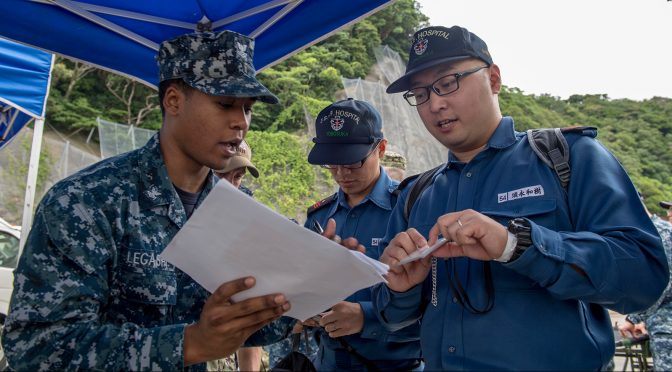
Featured Image: YOKOSUKA, Japan (June 14, 2018) Hospital Corpsman 2nd Class Joey Legaspi (left) verifies a Japanese Maritime Self Defense Force (JMSDF) patient during a mass patient disembarkation bilateral training exercise between the United States and JMSDF. (U.S. Navy photo by Mass Communication Specialist 2nd Class Kelsey L. Adams/Released)

Strategic Loss: How EU Sanctions Affect Russia’s Ability to Replace its Sunken Dry-Dock

By Lieutenant Commander Peter Barker, RN

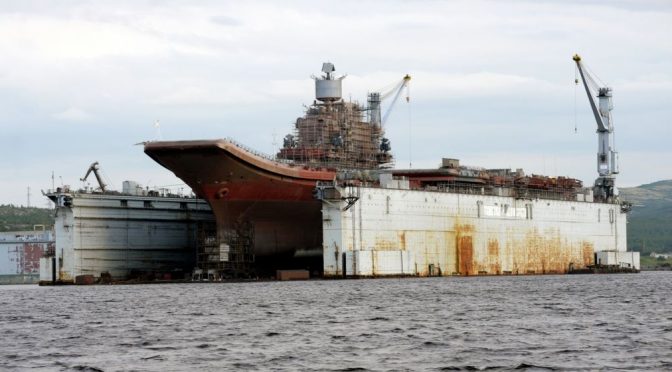
The icy waters of Murmansk harbor now cover one of the world’s largest floating dry-docks. Last week, a catastrophic power failure seems to have caused the dock’s pumps to jam, rapidly flooding the ballast tanks. As a result, PD-50, the largest floating dry-dock of the Russian Navy, sank to the bottom of the shipyard and now lies 160 feet below the surface.

Much attention has focused on damage to Russia’s sole aircraft carrier, the Admiral Kutznetsov, which was in PD-50 at the time of the incident. However, the loss of the dry-dock may have a more significant long-term impact on Russia’s ability to sustain its Northern Fleet. As a consequence, the ability of Russia to recover, repair, or even replace the dock assumes considerable importance because it is a maintenance asset of strategic import.

Russia’s ability to overcome this setback is further complicated by European Union (EU) sanctions, where the legal and practical effects of the EU sanctions regime will strongly affect Russia’s ability to replace this key maritime asset.

Sanctions and Dry Docks

The EU sanctions regime against Russia is conducted under the auspices of the Common Foreign and Security Policy. It is directly applicable in EU law, meaning that it takes effect without the need for national legislation (in fact, most countries have no separate national sanctions regime against Russia). EU sanctions were established in March 2014 as a response to Russia’s activities in Ukraine. They have remained in force since and are reviewed at six-month intervals by the EU Council. The sanctions recently were extended until 31 January 2019. Further, the EU Council has stated that it will continue renewing these sanctions until the complete implementation of the Minsk agreement.

The EU sanctions are a range of measures including asset freezing, an import ban on items from the Crimea and Sevastopol, and a ban on tourism to the same areas. More pertinently for this discussion, sanctions have been enacted in specific economic sectors. This includes a ban on arms sales to Russia (article 4 Council Regulation (EU) 833/2014) and an export ban on dual-use goods (article 2 Council Regulation (EU) 833/2014), with minor amendments being made in Regulations 960/2014 and 1290/2014.

Proceeding on the assumption that these sanctions will remain in place for the foreseeable future, the question is whether the export ban on arms or dual-use goods includes replacement parts for PD-50—or indeed an entirely new dock—if supplied from within the EU.

Looking first at the arms question arising from article 4, the list of prohibited equipment is detailed in the EU Common Military List (2015/C 129/01). The most relevant items are ML9.1 (“vessels (including components) designed or modified for military use”) and ML17b (“construction equipment specifically designed for military use”). Although a floating dry dock, or the components to repair it, may fit the description of a “vessel” or “construction equipment,” it would be difficult to argue that a floating dry dock is designed for military use. It is even harder to conclude that a floating dry dock is specifically designed for military use. Components for a floating dry dock (or even a dock itself) are therefore unlikely to be considered arms under article 4 and would not be caught by the ban on arms sales.

The ban on dual-use goods, set forth in article 2, is more likely to be applicable. Dual-use items are defined in Council Regulation (EU) 428/2009 and include all items that can be used for civil and military purposes. Military end-use includes the “use of production equipment and components for the maintenance of military items,” as stated in article 4(2)(b). Although PD-50 is owned and operated by a private company, this definition focuses on the use of the equipment rather than the owner. The use of a dry-dock for the maintenance of an aircraft carrier (indisputably a military item) strongly suggests that it is caught by this provision. One could argue that this is an unduly broad interpretation of the phrase “production equipment,” but a contextual reading of the article clearly shows that these provisions are intended to cover a wide range of items that may be used to support military infrastructure.

This conclusion is bolstered by article 2(1) of Reg. 833/2014. Article 2(1) states that where the end-user is the Russian military, any dual-use item shall be deemed to be for military use. Again, an argument could be constructed that the private ownership of the dock places it outside the scope of the provision by asserting that the end-user is the company rather than the Russian military. However, given the almost exclusive use of the dock for warship repair and maintenance, a strong case can be made that, appearances aside, the end-user of the dock (or any replacement) would be the Russian military, even if the actual ownership rests elsewhere.

The only caveat to the above analysis is that the sanctions do not affect the completion of contracts entered into before 1 August 2014. It is possible that the purchase agreement for the dock included an ongoing contractual obligation to provide replacement parts. If so, this would be unaffected by the sanction regime. In reality, it is very unlikely that such a provision was included and thus, this caveat can probably be discounted.

Conclusion

Unsurprisingly, there are few concrete details about the state of PD-50 and the prospects for the recovery of this strategic asset. Even a Russian news agency has accepted that this is a complex operation and unlikely to be completed within six months. A rapid repair or replacement of the dock is required to avoid severe pressures on the maintenance and availability of crucial Northern Fleet units and to conduct complex modernization work. Any support for this work is likely to be hampered by the EU sanctions regime, which now assumes additional significance following the sinking of PD-50.

Lieutenant Commander Peter Barker is a serving Royal Navy officer and barrister. He is currently the Associate Director for the Law of Coalition Warfare at the Stockton Center for the Study of International Law (@StocktonCenter), part of the U.S. Naval War College. He can be contacted at peter.barker.uk@usnwc.edu.

These views are presented in a personal capacity and  are the author’s own and do not necessarily represent the views of any ministry or government.

Featured Image: Russian aircraft carrier Admiral Kutznetsov in dry-dock PD-50. (Lev Fedoseyev via Tass)

The Bad Day Scenario and Shaping the Navy for Global Responsiveness, Pt. 1

By Jimmy Drennan

At 0830 Monday morning “BREAKING NEWS” banners start flooding cable news broadcasts, home pages, and Twitter feeds, but the headlines are not all telling the same story. One network reports a British-flagged crude oil tanker suffered a catastrophic explosion in the Strait of Bab el Mandeb, the critical chokepoint just south of Yemen through which nearly all maritime commerce flows between the Middle East and the Western World. Initial reports point to a naval mine strike. Separately, various websites are reporting heavily armed military vehicles and masked troops with no flags storming an Eastern Turkish town. Meanwhile, Twitter is erupting with the hashtag #WarWithChina after Chinese military officials claimed responsibility for the downing of a U.S. Navy reconnaissance plane in the South China Sea, saying the aircraft had violated its territorial airspace.

As the U.S. military’s top brass gathers around a conference table in the Pentagon a question is being muttered around the room before the Secretary of Defense steps in. It’s the same question many are probably asking themselves at home in their living rooms and kitchens: “Can this really be happening?”

Thankfully this is a purely hypothetical “Bad Day,” but who can say that some nightmare scenario like the one described above will not occur someday? Similar events have independently taken place in the past and conditions exist today for history to repeat itself. In fact, the multitude of regional conflicts affecting the U.S. and its allies today makes it more likely that multiple trigger events will occur near simultaneously. Not through some coordinated, multi-pronged attack from an Axis of Evil, but rather because America has so many potential adversaries and they don’t tend to de-conflict their calendars. As threats to U.S. national security and interests continue to proliferate, the Bad Day Scenario described above becomes increasingly likely.

As one might expect, this is not the first attempt to consider the implications of a worst case scenario for the Navy. In his article “The Hunt for a Small Surface Combatant,” Dr. Norman Friedman described a Navy briefing entitled “A Bad Day in 2003” which examined multiple independent crises in the wake of 9/11 and the wars in Iraq and Afghanistan. As in today’s scenario, one obvious answer was the Navy needed more ships. Back in 2003, the focus was on the new Littoral Combat Ship (LCS) with its high speed, modular, and (supposedly) low-cost design. But the focus today should be on fleet design, not ship design. No matter how you cut it, the Bad Day Scenario would be difficult to address for even the most advanced navy in history. A solution will not be found simply in fielding a new type of ship or by building more ships.

This series will consider the Bad Day Scenario, how the Navy could respond to such a challenge today, and what steps it could take to be better postured to respond in the future. Examining emerging technologies and operational concepts to respond to such a scenario reveals opportunities to make the U.S. Navy even more capable and lethal in the future. These insights could be applied every day, not just in times of crisis, making more common scenarios all the more manageable.

If the Navy had to Fight Tonight

If we woke up to the Bad Day Scenario one day the first challenge would be to verify the accuracy of the news reports. Even if the U.S. Government had its own intelligence to corroborate, would the events merit a military response? Against whom? If the decision were made to utilize military power, employing the Navy would be an ideal response . The wheels could be set in motion quickly, but leaders would still retain decision space if a non-military solution could be achieved. Still, setting the wheels in motion would not be easy. Under the Navy’s traditional force structure and operational patterns, responding to the Bad Day Scenario would involve complex, improvised planning and re-coordination, incurring great cost and risk to current and planned operations.

As multiple independent crises break out could the Navy deploy or reposition these assets to several separate regions at the drop of a hat? Possibly, but it would involve more than a little luck. The trigger events suggested above occurred in three different military theaters – the oil tanker struck by a mine in the Central Command (CENTCOM) area of responsibility (AOR), the attack on the Turkish town in the European Command (EUCOM) AOR, and the downed aircraft in the Indo-Pacific Command (INDOPACOM) AOR. One should look at how the Navy might respond to the Bad Day Scenario if it had to use the assets it has today or, as many military commanders like to say, “fight tonight.”  The Navy would likely default to applying its premier force packages – Carrier Strike Groups (CSG), Amphibious Readiness Groups (ARG), Expeditionary Strike Groups (ESGs) and fast attack and guided missile submarines (SSN / SSGN) – to the maximum extent possible.  A deployed CSG or ARG would often have to be in the right place at the right time. Forces in port would need to be in the right phase of the training and maintenance cycles in order to be primed for a surge.  

The Pacific Fleet would clearly respond to Chinese aggression with its assigned CSG, but even if PACFLT could spare a CSG for CENTCOM or EUCOM it could take days to weeks to respond simply due to distance. After 9/11, the Navy began continuously deploying at least one CSG to CENTCOM, and occasionally two during times of heavy tension. But times have now changed. In 2015, for the first time in eight years the Navy suffered a gap in its CSG presence in the CENTCOM AOR, citing a strain on resources. With the advent of Dynamic Force Employment, an innovative but nascent approach to more agile deployments, it will soon be more noteworthy for a CSG to be stationed in the Middle East than not. Even with Dynamic Force Employment  it stands to reason the Navy would still fall back on a more traditional deployment model.

Even if we assume CENTCOM has a CSG at its disposal, could it respond to the incident in Turkey, a NATO ally whom the U.S. is sworn to aid through a mutual defense agreement? Intelligence reports and common sense could point to Russia as the faceless aggressor, and there are almost always Russian naval forces operating in the Black Sea and Mediterranean. Yet, if the U.S. decides to shift the CSG to the EUCOM AOR to deal with the higher-end threat, the carrier and her escorts still have to get through the Strait of Bab el Mandeb. The latest reports indicate the tanker that exploded in the strait was struck by a floating mine, and Houthi rebels in Yemen have already proclaimed their ability to close the strait. The risk to a CSG could be unacceptable. While the Navy is deciding how to hold a Russian naval force at risk until a second CSG can surge deploy from the East Coast (days? weeks? months later?), the international community is clamoring for the U.S. and its allies to clear the strait so vital commerce can continue unmolested. As national leadership tries to balance these concerns, the limits that stem from force structure and potential combat operations would shape options for employing the Navy.

A New Navy Ready for Surprise

No doubt the Navy would eventually respond to the Bad Day Scenario with today’s force structure, but it could incur significant cost in terms of money, time, relationships, and strategic objectives. The Bad Day Scenario would be difficult for today’s Navy to address, but emerging trends in technology, management, and operational concepts can present a new option for the Navy: a disaggregated, lethal, and resilient fighting force that can turn a bad day into an unparalleled triumph.

Jimmy Drennan is the Vice President of CIMSEC. These views are the author’s alone and do not necessarily reflect the position of any government agency.

Featured Image: PACIFIC OCEAN (March 15, 2018) – An MV-22 Osprey assigned to Marine Medium Tiltrotor Squadron (VMM) 262 prepares to land on the flight deck of Nimitz-class aircraft carrier USS Carl Vinson (CVN 70). (U.S. Navy Photo by Mass Communication Specialist 3rd Class Matthew Granito) 180315-N-LK571-0025