CIMSEC is interested in publishing informed analysis on several trending issues outlined below. There is no deadline for submissions on the topics described. Draft articles, writing ideas, and questions should be sent to Nextwar@cimsec.org.
Navy Overhauls Enlisted Career Management
Navy leadership announced that it will end the use of the rating system in favor of a system of addressing rank similar to what is practiced in the other services. Statements from Navy spokesmen describe the intent of the change is “to develop a new approach to enlisted ratings that would provide greater detailing flexibility, training and credentialing opportunities, and ultimately translate Navy occupations more clearly to the American public.” Read NAVADMIN 218/16 here.
U.S.-Philippine Alliance
Philippine President Rodrigo Duterte made public statements that challenge the U.S.-Philippine alliance and mil-to-mil relationship. President Duterte said “I would serve notice to you now that this will be the last military exercise,” and “Jointly, Philippines-US, the last one.” The State Department responded by stating “The bottom line is that we have significant security commitments with the Philippines,” and that “We’re committed to meeting those commitments and to furthering this relationship.”
New U.S. Marine Corps Operating Concept
The Marine Corps recently released a new operating concept to guide its development and remain relevant in future threat environments. The concept describes its central problem as “The Marine Corps is not organized, trained, and equipped to meet the demands of a future operating environment characterized by complex terrain, technology proliferation, information warfare, the need to shield and exploit signatures, and an increasingly non-permissive maritime domain.”
A summary of the concept states “The 21st century MAGTF conducts maneuver warfare in the physical and cognitive dimensions of conflict to generate and exploit psychological, technological, temporal, and spatial advantages over the adversary. The 21st century MAGTF executes maneuver warfare through a combined arms approach that embraces Information Warfare as indispensable for achieving complementary effects across five domains – air, land, sea, space, and cyberspace. The 21st century MAGTF avoids linear, sequential, and phased approaches to operations and blends maneuver warfare and combined arms to generate the combat power needed for simultaneity of action in its full range of missions. The 21st century MAGTF operates and fights at sea, from the sea, and ashore as an integrated part of the Naval force and the larger Combined/Joint force.” Read the concept here.
Dmitry Filipoff is CIMSEC’s Director of Online Content. Contact him at Nextwar@cimsec.org.
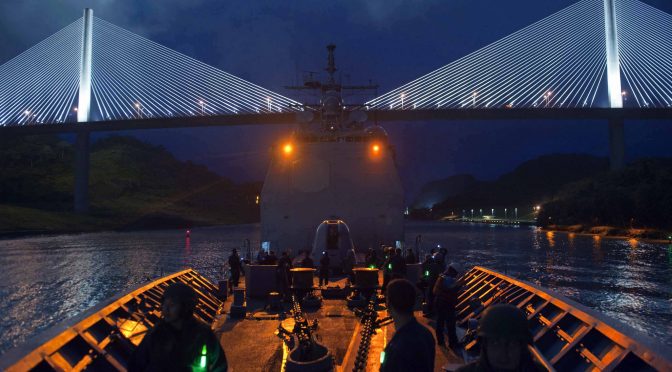
Featured Image: PANAMA CANAL (August 13, 2012) Sailors aboard the Ticonderoga-class guided-missile cruiser USS Cape St. George (CG 71) watch as the ship travels through the Centennial Bridge during its transit through the Panama Canal on its return to the Pacific Ocean. (U.S. Navy photo by Mass Communication Specialist 3rd Class Christopher S. Johnson/Released).
Imagine a day sometime in the near future where tensions between the United States and Russia are high and ships are at sea, ready to strike each other at a moment’s notice if given the word. As his ship glides to the surface of the ocean, the enemy submarine commander raises his periscope and with it the electronic surveillance antennae. It picks up multiple signals of U.S. aircraft in the immediate vicinity. But the commander is not worried. These aircraft, their radar, and their weapons are optimized for attacks against land targets; they won’t see his periscope, and even if they did, they wouldn’t have the weapons to do much about it. As long as he can avoid U.S. ships and submarines, which are spread out and in short supply, he knows he and his comrades have the upper hand in gaining control of the sea. As he leaves the surface, he works unimpeded toward his target, the American aircraft carrier.
At the same time, hundreds of miles away, a U.S. submarine commander is moving toward the enemy’s surface action group. He knows if he can get close enough and sink these ships, he can help ensure control of the sea for the rest of the force. Suddenly, the sound of weapons dropped from enemy helicopters fills the ship. He runs deep and aggressively, maneuvering to negate the threat. But in doing so, he loses contact with the group. And without an ability to shoot the helicopter, he misses an opportunity to take down an archer, who will now be able to shoot future arrows at him and his compatriots.
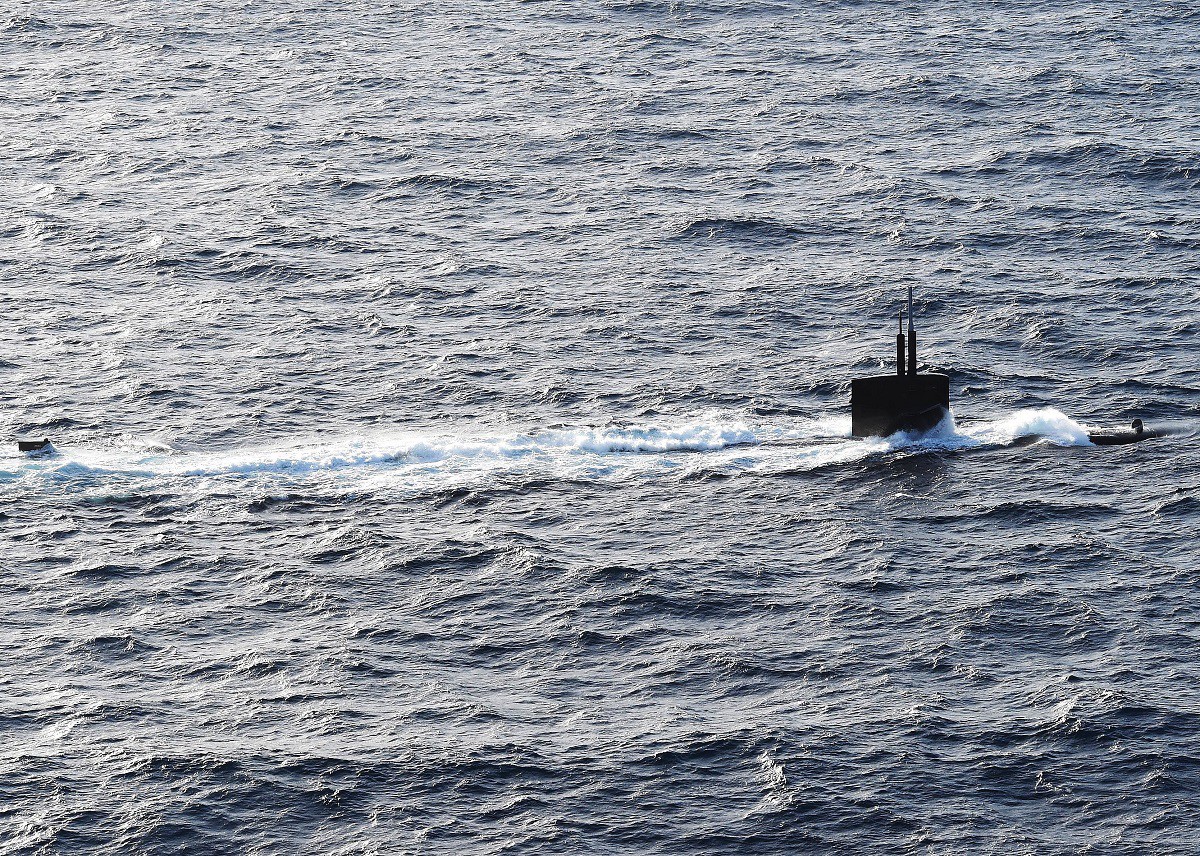
ATLANTIC OCEAN (March 24, 2016) The Los Angeles-class attack submarine USS Helena (SSN 725) transits the Atlantic Ocean with the USS Dwight D. Eisenhower (CVN 69), the flagship of the Eisenhower Carrier Strike Group. (U.S. Navy photo by Mass Communication Specialist 1st Class Rafael Martie/Released)
Ten years ago, this scenario would have been a work of pure fiction, unimaginable to most national security experts and military leaders. But today, the rapid spread of technology, the rise of near peer competitors, and the proliferation of advanced weapons make this scenario more plausible than ever. If the Navy is to counter the above scenario, it must start emphasizing sea control while retaining power projection capability. That change will require the Navy to accelerate its approach to this mission set, both in strategic terms of shifting mental focus and in more tactical terms of rapid repurposing of current platforms and payloads. While the Navy works to determine its future force structure, it must innovate beyond the traditional roles that ships and aircraft currently play. Designing and building new naval platforms takes time we don’t have, and there is still abundant opportunity to make the most of existing force structure. Fortunately for the Navy, histories of previous wars are a good guide for future action. World War II is an excellent model in particular, but the Navy must first recognize the historical context of its current predicament.
Bringing the Navy Back to the Sea
Alfred Thayer Mahan wrote extensively on how nations throughout history have used control of the seas to spread national power by ensuring freedom of trade and access. Over the course of the last century, the Navy’s primary focus of force application has shifted from sea control to power projection.
Arguably, the battle for control of the seas culminated in WWII, when massive navy-on-navy engagements raged in enormous clashes such as the Battles of the Atlantic, Midway, and Leyte Gulf. Navy strike groups were challenged by Axis Powers throughout the world’s oceans.
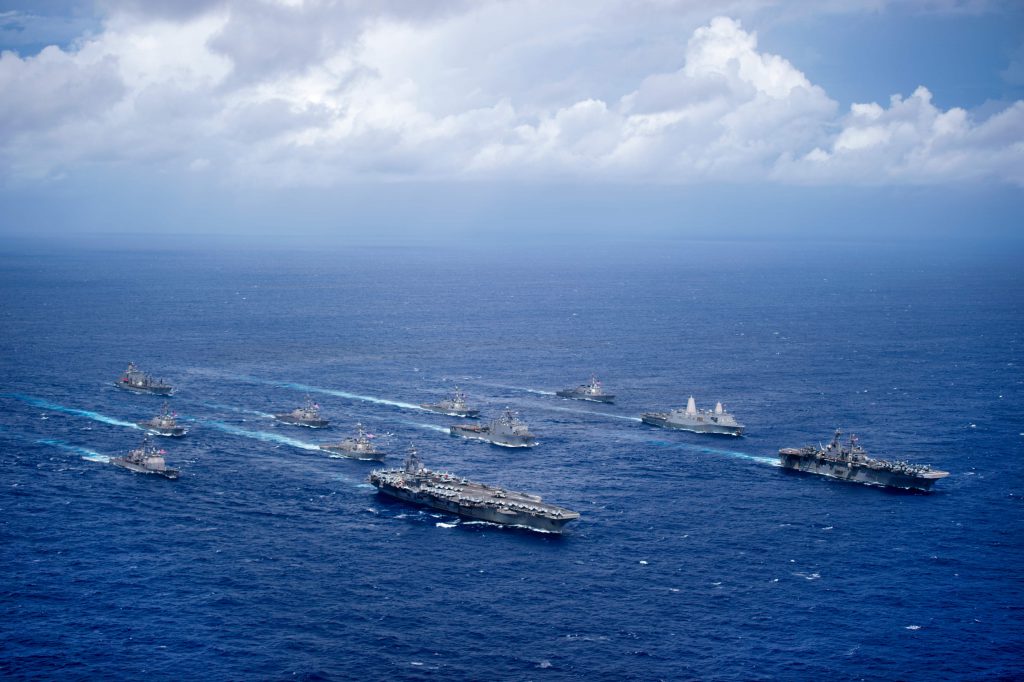
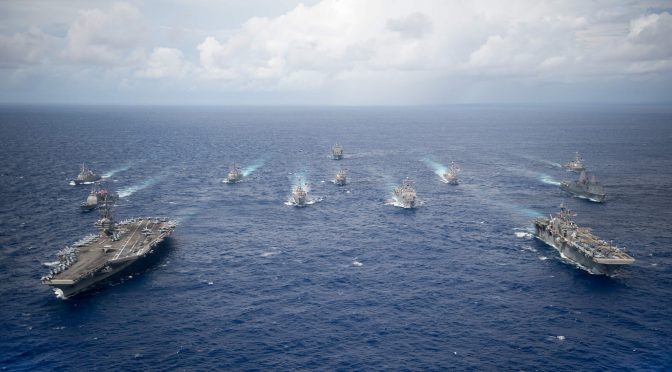
PHILIPPINE SEA (Sept. 23, 2016) USS Ronald Reagan (CVN 76) and USS Bonhomme Richard (LHD 6) lead a formation of Carrier Strike Group Five and Expeditionary Strike Group Seven ships including, USS Momsen (DDG 92), USS Chancellorsville (CG 62), USS Stethem (DDG 63), USS Benfold (DDG 65), USS Curtis Wilbur (DDG 54), USS Germantown (LSD 42), USS Barry (DDG 52), USS Green Bay (LPD 20), USS McCampbell (DDG 85), as wells as USNS Walter S. Diehl (T-AO 193) during a photo exercise to signify the completion of Valiant Shield 2016. Valiant Shield is a biennial, U.S. only, field-training exercise with a focus on integration of joint training among U.S. forces. This is the sixth exercise in the Valiant Shield series that began in 2006. (U.S. Navy photo by Mass Communication Specialist 2nd Class Christian Senyk/Released)
Following WWII, the U.S. had a massive navy and no real threat to its control of the oceans. The Navy and the nation were now unsure of the Navy’s role in this new world. The Navy received assistance from a 27-year-old theorist, Samuel Huntington. Writing in 1954, he had a clear vision for how the Navy should evolve in the second half of the 20th century: “Its purpose is not to acquire command of the sea, but rather to utilize its command of the sea to achieve supremacy of the land.” The Navy began shifting its focus to power projection, refining amphibious warfare techniques, developing a long range land attack missile, and building generations of air wings capable of delivering ordnance ashore. Even so, as the Cold War intensified and the Soviet Navy grew throughout the 50’s and 60’s, this focus ashore was balanced by the continuing requirement of maintaining control afloat.
Following the end of the Cold War and the dissolution of the Soviet Navy, the U.S. Navy’s focus on sea control diminished and the pendulum swung squarely over to power projection. Anti-surface missiles were removed from ships, Trident missile submarines were converted to fire Tomahawks, and the carrier’s S-3 Viking anti-submarine aircraft were stripped of much of their anti-submarine warfare gear and were later retired. Major force structure investments were made in ships geared towards littoral power projection such as the LCS and Zumwalt-class destroyer. Generations of Sailors during the Cold War were trained to achieve sea control – it was part of their DNA. When the Cold War ended, and with it the Soviet Navy, that DNA withered away.
When trying to convert this shift in focus to the platforms that will execute sea control, it is time to heed the old dictum, “If you want a new idea, read an old book.” Just as the Navy had to do in WWII, it is time to focus on repurposing platforms it already has rather than relying on new platforms.
Looking back to its height of sea control capability, the Battle of Midway in WWII, carrier air wings (at the time known as carrier air groups) consisted of about 72 aircraft, one squadron each of dive bombers, fighters, torpedo bombers, and scout planes (which could also carry bombs). Compare that with today’s air wing. While the number of aircraft is about the same, its composition has changed dramatically, with four fighter/attack squadrons, one electronic attack squadron, one command and control squadron, and two helicopter squadrons. The biggest difference is the shift in focus of the air wing from fighting other navies for control of the seas to a focus on delivering power ashore.
At over 40 years old, the USS Nimitz is the oldest carrier in the U.S. inventory. The reason she has survived is due to upgrades to her air wing. There is debate currently over whether the Nimitz, and follow on carriers are still valid in a world of anti-access and area denial. This debate centers on the Navy’s role in power projection but speaks little to its return to sea control. While the carriers are still the best platform for delivering power without the need for foreign basing permissions, adding an anti-submarine and anti-surface role to its newest fighters is necessary. Similar to efforts by the surface warfare community to modify the SM-6 anti-air missile for strikes against ships, the Navy should modify those ASW and ASUW weapons currently used by the MH-60R helicopter for use by its fighter-attack jets. Just as in WWII, not all aircraft would be configured for surface or subsurface missions, but providing that latent capability will certainly ensure enemy ships and subs will think twice when they see the radar signature of a U.S. fighter.
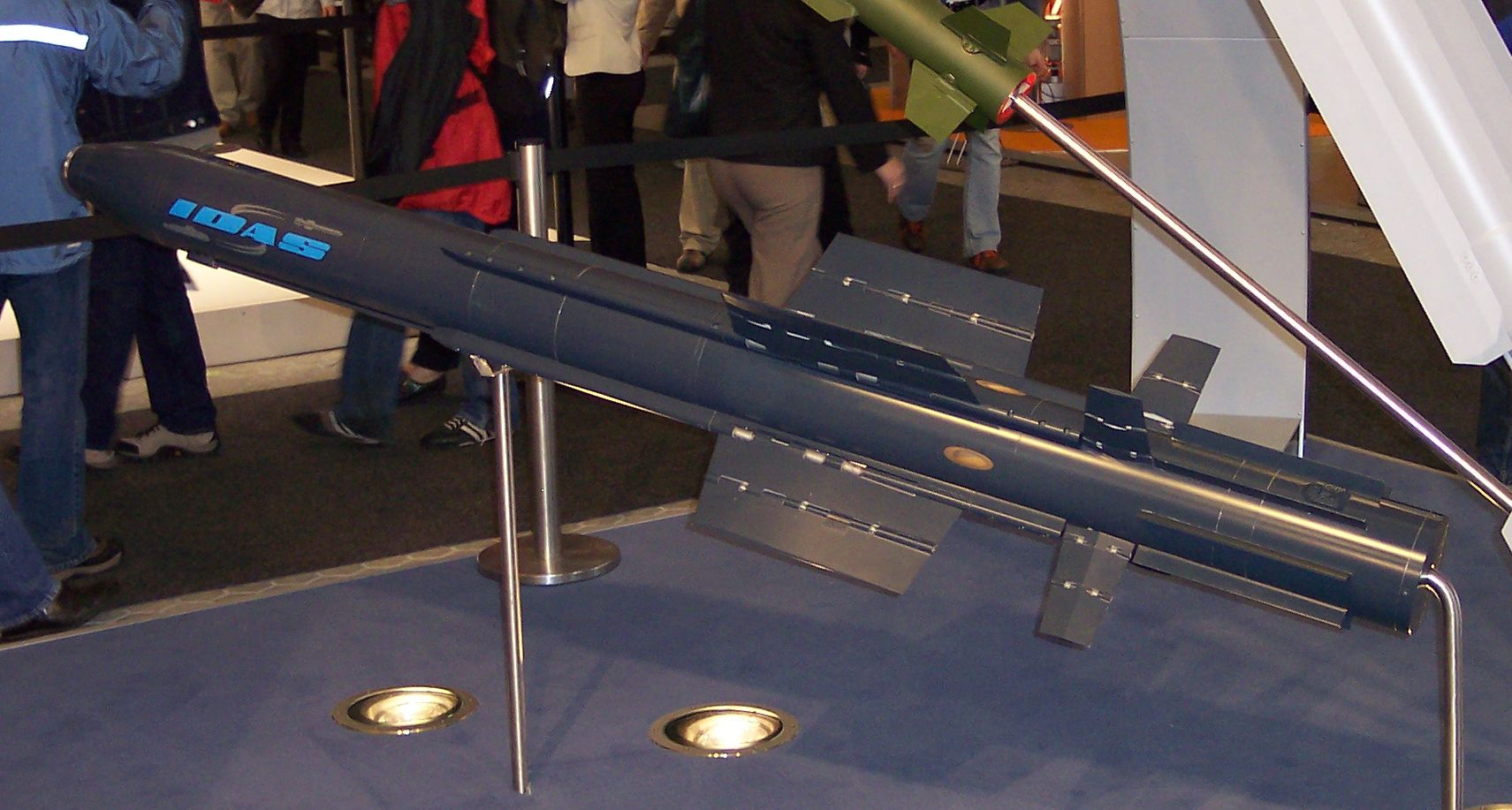
Submarines are very effective at what they do – sinking other submarines and attacking surface ships – but many potential adversaries have fleets of helicopters designed to hunt them. Simply giving subs a basic anti-air warfare capability against these platforms would certainly give adversaries cause for concern. This system already exists in the German Navy. The Interactive Defense and Attack System for Submarines (IDAS) is currently being built for the German Type 212 submarine. With a 12-mile range, it will certainly make helicopters think twice as they drop their buoy search patterns. Submarine attacks against aircraft are not a new concept. In WWII, 120 Allied aircraft were shot down by German U-Boats.
As the challenges on the world’s oceans continue to rise, the challenge of sea control rises with them. With rapid repurposing of various platforms and payloads, the Navy can quickly adapt and overcome if and when required to fight and win this nation’s wars. By looking back at history, sometimes we can find the tools for the future.
Captain Robert N. Hein is a career Surface Warfare Officer. He previously commanded the U.S.S Gettysburg (CG-64) and the U.S.S Nitze (DDG-94). You can follow him on Twitter @the_sailor_dog. The views and opinions expressed are his own and do not reflect those of the Navy or the Department of Defense.
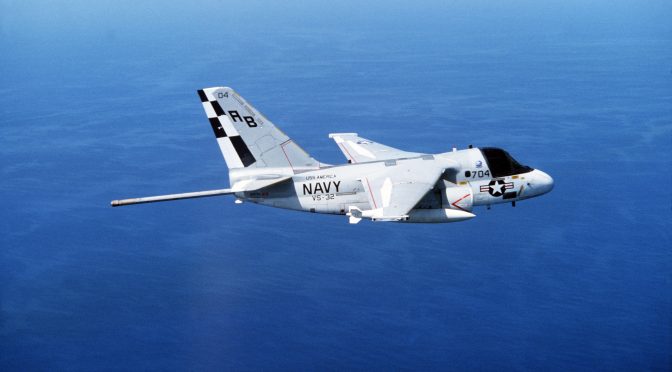
Featured Image: A U.S. Navy Lockheed S-3A Viking aircraft (BuNo 159755) assigned to anti-submarine squadron VS-32Maulers on the aircraft carrier USS America (CV-66), on 6 May 1982. (W. M. Welch, USN)
This week CIMSEC is hosting articles that explore alternative naval force structures. Naval force structure is the composition of a fleet and is guided by strategic imperatives, technological enablers, and has far-reaching implications for activities across the naval enterprise and maritime space. The Call for Articles may be read here. Below is a list of articles featuring during the topic week, which will be updated as the topic week rolls out and as prospective authors finalize additional publications.
Dmitry Filipoff is CIMSEC’s Director of Online Content. Contact him at Nextwar@cimsec.org.
Featured Image: PHILIPPINE SEA (Sept. 23, 2016) USS Ronald Reagan (CVN 76) and USS Bonhomme Richard (LHD 6) lead a formation of Carrier Strike Group 5 and Expeditionary Strike Group 7 ships including USS Momsen (DDG 92), USS Chancellorsville (CG 62), USS Stethem (DDG 63), USS Benfold (DDG 65), USS Curtis Wilbur (DDG 54), USS Germantown (LSD 42), USS Barry (DDG 52), USS Green Bay (LPD 20), USS McCampbell (DDG 85), as well as USNS Walter S. Diehl (T-AO 193) marking the completion of Valiant Shield 2016. Valiant Shield is a biennial, U.S. only, field-training exercise with a focus on integration of joint training among U.S. forces. This is the sixth exercise in the Valiant Shield series that began in 2006. (U.S. Navy photo by Mass Communication Specialist 2nd Class Christian Senyk)
On December 25, 1991, following a year and a half breakup of Soviet states, the flag of the Soviet Union was lowered at the Kremlin for the last time and the flag of the Russian Federation was raised. The next day, the Supreme Soviet voted the Soviet Union out of existence. It was a great victory for the United States and what was dubbed the “First World.” They were victorious in the Cold War, a different kind of war, but a war nonetheless. A war between east and west; a war between communism and capitalism; a war fought using all elements of national power – diplomatic, intelligence, military, and economic – which never erupted into combat between the major powers of NATO and the Warsaw Pact.
(Oleg Nikishin/Getty Images)
Though the war did not involve combat, discussions of conflicts such as Korea and Vietnam aside, the U.S. military was in a near constant state of preparing for the Soviets to push through the Fulda Gap and for a great naval battle in the Norwegian Sea.
But suddenly, the adversary was gone. For nearly five decades the Soviet Union provided focus and direction for what to buy, how to train, and what to study. What now? In 1991, China was not the military power of today and the idea of a Global War on Terrorism couldn’t have been further from mainstream military thought. A look at the 1991 U.S. National Military Strategy makes only generic mentioning of terrorism and shows an isolationist view of China:
“China, like the Soviet Union, poses a complex challenge as it proceeds inexorably toward major systemic change. China’s inward focus and struggle to achieve stability will not preclude increasing interaction with its neighbors as trade and technology advance. Consultations and contact with China will be central features of our policy, lest we intensify the isolation that shields repression.”
The potential threat of China and the actual threat of terrorism did not reveal themselves in force until the early 2000s. The 1990s were a sort of rudderless decade for the U.S. military. With no major perceived enemy to fight, budget cuts commenced. Military spending in the 1990s quickly dropped by a third of its Cold War levels. Intervention in failing or failed states was the name of the game, and American technological superiority, specifically airpower, was the weapon of choice in places such as Iraq, Bosnia, and Serbia.
The Navy found itself without an enemy to confront at sea and with a rapidly shrinking budget. Control of sea lines of communication became assumed and the Navy gradually disarmed itself for fighting a major sea battle in the 1990s through decisions like discontinuing the UGM-84A submarine launched Harpoon anti-ship missile and converting remaining R/UGM-109B Tomahawk anti-ship missiles (TASM) into the Tomahawk land-attack missile (TLAM) R/UGM-109C. The last combatant commissioned equipped with anti-ship missiles was the USS PORTER (DDG 78) in1999.
Idle hands may be the devil’s workshop, but an idle Navy surely is the bureaucrat’s and the administrator’s. Without war or the real risk of war, Navy culture shifted. Instead of warriors patrolling the oceans and maintaining freedom of the seas from the Soviet Navy, it became about management and process improvement. The MBA became the graduate degree of choice and process improvement models such as Deming’s Total Quality Management – rebranded as Total Quality Leadership of course – became the norm.
Admiral James Stavridis had command of the USS BARRY (DDG 52) from 1993 to 1995. He maintained a diary while in command which was published as Destroyer Captain: Lessons of a First Command. Within it he makes some very astute observations of the Navy of the 1990s:
“[W]e have become a navy that specializes in safety, communicating, inspecting, engineering, administering, retaining, and counseling. There is too little emphasis on shiphandling, warfighting, battle repairing, and leading…As an example of how we are a bit out of whack is that if I charted my personal time, I suspect I spend virtually my entire day working the first list and precious little devoted to the latter…If I completely reversed my priorities – and focused exclusively on shiphandling and warfighting, I would be in some danger of being relieved for cause within ninety days…But in some not-too-far-distant decade, I think ships will be hit by cruise missiles, they will sink, men and women will die bad deaths. And hard questions will be asked about the Navy of the 1990s and its priorities and beliefs.”
Admiral Stavridis tells a grim but honest tale of the culture of the Navy in the 1990s, but is it a really a story of the past or is it a story of what has continued to this day? If you compared the Navy of 1995 and the one of today, what cultural differences would you see? Have we turned the tide and placed a focus back on mastering our trade of warfighting? The recent establishment of the Naval Surface and Mine Warfighting Development Center (NWMWDC) and Undersea Warfighting Development Center (UWDC) in 2015 is a positive start. Is attending the War College viewed as career enhancing? Recent discussions with officers indicate it may be currently viewed as not career hindering at the least. What is truly viewed as more important today: understanding tactical employment of a ship, fleet, or nation, or efficiently managing a major maintenance availability and developing and executing a shipboard training plan?
Yes, management of programs is a skill needed in any organization, especially in one as complex as the Navy and as unforgiving as life onboard a ship. But does it define that organization, is it what that organization’s culture is centered around, and can someone survive and even succeed in that organization simply being a manager and administrator instead of a leader and a warfighter? These are simple yet hard questions which must be asked in order to heed Admiral Stavridis’s warning of the Navy’s priorities and beliefs from the 1990s which have continued to today.
Harkening back to another famous admiral, Arleigh Burke, may help with some simple guidance from his Destroyer Squadron 23 Doctrine in World War II. These tenets (paraphrased for modernity) were the most basic guidance to his Commanding Officers while he was Commodore:
“If it will help kill [the enemy] it’s important. If it will not help kill [the enemy] it’s not important. Keep your ship trained for battle! Keep your material ready for battle! Keep your boss informed concerning your readiness for battle!”
Simple yet powerful tenets which serve to maintain the focus where it belongs, ensuring our ships and sailors are ready to sail into harm’s way to take the fight to the enemy. It becomes easy to be distracted by inspections, paperwork, and watchbill management. Items which are easier to audit and assess tend to get the energy and attention over warfighting effectiveness and combat readiness. Potentially at great peril during the next war at sea.
LT Jason H. Chuma is a U.S. Navy submarine officer currently serving as Navigator and Operations Officer onboard USS SPRINGFIELD (SSN 761). He is a graduate of the Citadel, holds a master’s degree from Old Dominion University, and has completed the Intermediate Command and Staff Course from the U.S. Naval War College. He can be followed on Twitter @Jason_Chuma.
The opinions and views expressed in this post are his alone and are presented in his personal capacity. They do not necessarily represent the views of U.S. Department of Defense or the U.S. Navy.
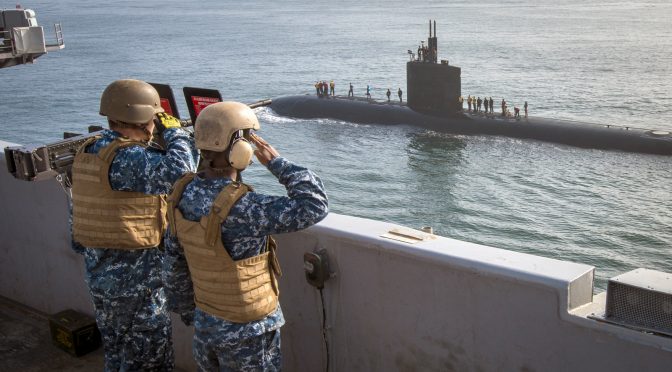
Featured Image: PACIFIC OCEAN (Aug. 30, 2016) Sailors on board the aircraft carrier USS Carl Vinson (CVN 70) render passing honors to the fast-attack submarine USS Pasadena (SSN 752) as it transits the San Diego Bay. Carl Vinson is currently underway in preparation for an upcoming deployment. (U.S. Navy photo by Mass Communication Specialist 3rd Class Sean M. Castellano/Released)