Category Archives: Capability Analysis

Analyzing Specific Naval and Maritime Platforms

OBANGAME EXPRESS 2014: Together. Forward. Slowly.

Background

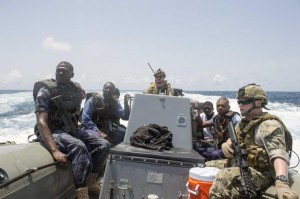
(April 2, 2014) - U.S. Sailors, U.S. Coast Guardsmen and Ghanaian maritime specialists, all embarked aboard joint, high-speed vessel USNS Spearhead (JHSV 1), ride in a rigid-hull inflatable boat (U.S. Navy photo by Mass Communication Specialist 2nd Class Jeff Atherton/ Released)
(April 2, 2014) – U.S. Sailors, U.S. Coast Guardsmen and Ghanaian maritime specialists, all embarked aboard joint, high-speed vessel USNS Spearhead (JHSV 1), ride in a rigid-hull inflatable boat (U.S. Navy photo by Mass Communication Specialist 2nd Class Jeff Atherton/ Released)

The Gulf of Guinea has a problem: Nigerian-driven maritime crime. Nigeria’s problem in turn is a thoroughly criminalised political and commercial elite and a largely disenfranchised electorate. The fallout of that state of affairs has an impact on the region’s security and stability. There is no short-term fix and it has become fashionable to recommend “improved governance” and anti-corruption measures to remedy the situation in the long run. This sort of advice is cheap. Beyond the obvious truth contained in them, there is little in such recommendations as to how to operationalise them or how to address the situation in practical terms as it is and will likely remain for the next years if not for decades.

The efforts of the African Partnership Station (APS) and the Africa Maritime Law Enforcement Partnership (AMLEP) are two military-political initiatives that seek to overcome the lack of practical value of general policy recommendations and to utilise the will and the resources that exist in the region to make the best of it in the maritime environment. Within this setting OBANGAME EXPRESS is an annual test since 2011 of what has been and what still needs to be achieved in West Africa’s maritime domain. APS and AMLEP, together with the French “Operation Corymbe” are the only sustained efforts to build and maintain regional maritime security capabilities in a region characteristic for its sea blindness and mutual distrust.

With the emergence of the Gulf of Guinea Code of Conduct in 2013 and subsequent agreements between various signatories, such as the Zone E Agreement between Nigeria, Benin, Togo and Niger, West Africa makes an attempt to replicate some of the hot pursuit agreement already in existence between Nigeria, Niger, Chad and Cameroon in the borderlands of the Nigerian North and North-East and transfer that model to a maritime environment. The chief difference is that the Gulf of Guinea Code of Conduct provides a multi-lateral approach with obvious political advantages, but equally obvious operational challenges given the widely divergent maritime security agendas (where they exist) of the signatories. This problem has been circumvented for the time being by breaking down the entire region encompassing the states of the Economic Community of West African States (ECOWAS) and Economic Community of Central African States (ECCAS) into manageable “zones” in order to be able to implement practical measures on the basis of the Code of Conduct more rapidly instead of having them negotiated by the entire forum. The zonal approach also allows individual states to shape the Code of Conduct according to their specific maritime security needs.

It is important to point out that maritime piracy (of whichever definition) is only one of many issues and for many regional states it is not even the most important or pressing one and thus not the driving force behind the Gulf of Guinea Code of Conduct. While piracy is costing the shipping industry and the region millions every year, the annual lost revenue from illegal fishing probably ranges in the several hundreds of millions while Nigeria alone loses approximately US$ 8bn per year from illegal bunkering and illegal crude oil exports. Much of the stolen oil leaves Nigeria by sea. The nexus of those criminal activities is transnational crime, often under the patronage of Nigerian elites. This makes it even more sensible to address the entire complex of maritime security as one and not just focus on a single symptom, however much this may exercise the pundits in the shipping journals and maritime security blogs.

OBANGAME EXPRESS 2014

Purpose
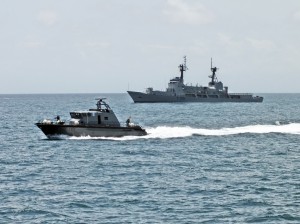
Cameroon Navy patrol boat LE LOGONE (foreground) and the Nigerian flagship NNS THUNDER during Exercise OBANGAME EXPRESS 2014 (Photo: Dirk Steffen)

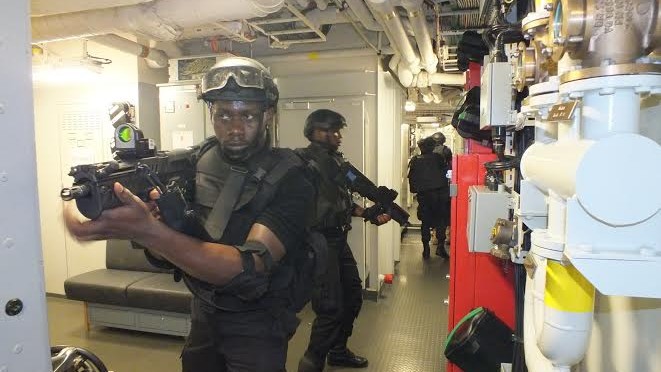
This year’s exercise OBANGAME EXPRESS was meant to be a litmus test of the applied Zone E Agreement, both on a command & control (C2) level as well as on a tactical level – chiefly by rehearsing vessel board seize & search (VBSS) procedures, rules of engagement (ROE) and maritime interdiction operations (MIO) with boarding teams. The purpose of OBANGAME EXPRESS 2014 was thus “to exercise and evaluate the regional interoperability, multinational command and control relationships, and proficiency of the regional maritime partners in the Gulf of Guinea.”

West African statesmen like to ascribe many if not all of the region’s maritime security woes to external factors and routinely call on the international community for support to resolve the problem. This year, their call was answered during OBANGAME EXPRESS 2014 which lasted from 16 April to 23 April 2014 and included extra-regional support beyond APS from Belgium, Germany, Turkey and Spain. “During the at-sea phase of the exercise, 11 nations, including were represented on board 36 different vessels hosting 20 different boarding teams. The boarding teams completed 47 boarding drills during three days of operations” summarised Exercise Director, Captain Nancy Lacore. Several Maritime Operation commands (MOC) were involved, specifically the Regional Maritime Awareness Centre (RMAC) at the Nigerian Navy’ Western Naval Command in Lagos, the ECCAS Centre pour la Coordination Multinationale (CMC) in Douala (Cameroon) and the Battalion d’Intervention Rapide MOC in Idenau (Cameroon). This was augmented by an embarked staffs, including a regional staff led by a Ghanaian admiral on the German combat support ship Bonn.

Conduct at sea
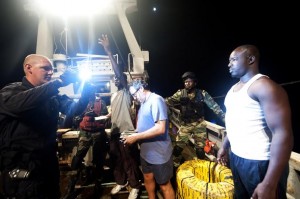
(July 17, 2011) - Petty Officer 2nd Class James Haurand (LEFT) takes an identification photo of a crewmember aboard a Senegalese fishing vessel as part of an African Maritime Law Enforcement Partnership (AMLEP) boarding mission with Coast Guard and Senegalese boarding teams. (U.S. Coast Guard photo by Petty Officer 2nd Class Etta Smith/RELEASED)
(July 17, 2011) – Petty Officer 2nd Class James Haurand (LEFT) takes an identification photo of a crewmember aboard a Senegalese fishing vessel as part of an African Maritime Law Enforcement Partnership (AMLEP) boarding mission with Coast Guard and Senegalese boarding teams. (U.S. Coast Guard photo by Petty Officer 2nd Class Etta Smith/RELEASED)

The at-sea phase was preceded by a pre-sail training for the MIO-teams by US, German and Spanish instructors. The at-sea phase from 19-21 April 2014 covered a range of scenarios including illegal fishing, arms smuggling, human trafficking, illegal bunkering and piracy. With the exception of the Bonn, which served as the embarked staff’s flagship, all extra-regional warships and some Nigerian Navy vessels served as target ships for the MIO-teams.

The experience made on board the German frigate Hamburg was representative for the conduct of the exercise and challenges experienced by the MIO teams and their proficiency. Teams from Benin, Nigeria and Togo boarded the Hamburg which alternatingly assumed the role of an illegally fishing vessel and a gun runner. The scenarios had been scripted by the American-led exercise control staff.

Of the three MIO-teams the Nigerian Special Boat Service (SBS) team deployed from NNS Thunder displayed the highest degree of professionalism, tactical acumen and ability to graduate their approach. Although clearly trained and conditioned with the hostile opposition of illegal bunkerers, kidnappers and hijackers in mind they were able to exercise restraint and judgement appropriate to the situation. In spite of good tactical procedures their primary challenge was communication between team elements as well as with their mothership. The latter in turn suffered from poor responsiveness of the MOC, which resulted in the SBS team being “stranded” on the target vessel for 2 hours until a decision to detain the suspect vessel and provide back-up for the team could be obtained.

The Beninese boarding team from the patrol boat Oueme was representative of the average MIO teams deployed by minor West African coastal states. The recent expansion of Nigerian piracy into Beninese waters and the aggressive response that Benin launched together with Nigeria in the form of “Operation Prosperity” had shaped their approach to VBSS. The team carried out the boarding with a high degree of pre-emptive violence including death threats. Modestly equipped and with poor communications to their own ship, the team was clearly aware of its vulnerability and consequently tense throughout the scenario.

The Togolese team, finally, represented the low end of experience found amongst some of the very small and unseasoned West African navies. The absence of even the most basic equipment for VBSS operations was reflective of the Togolese Navy’s operational readiness for this type of maritime security activity. When the team boarded the Hamburg it was only their third boarding (in the course of the exercise) and the third boarding of this kind ever conducted by the Togolese Navy. At that point all equipment – weapons, helmets, life vests and RHIB (including coxswain) had to be borrowed from the German Navy. Consequently they were tactically unready, though clearly willing to learn. Nevertheless, at that point they were overwhelmed by the scenario originally envisaged for them and ended up conducting a boarding of a very compliant fishing vessel under supervision of their instructors.

Conduct on shore
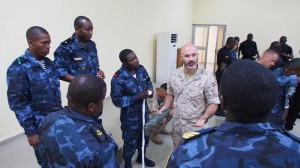
A Spanish instructor from ESPS INFANTA ELENA provides classroom training to Equatoguinean naval personnel in the pre-sail phase of OBANGAME EXPRESS 2014. (Photo: Alexander Drechsel/Adrian Kriesch)

Command and Control – and the inadequacy of it as it was displayed during the exercise – was a recurring theme. This was not just a view of the exercise controllers but an almost universal complaint by commanding officers of most participating units, who felt they received neither the guidance nor the information they expected and needed to carry out their mission.

The exercise exposed significant deficiencies in the MOCs’ (especially RMAC’s) ability to build and maintain a situation picture and to share maritime domain awareness (MDA) information and to process requests for decision-making. Although technical shortcomings were cited during the debrief it was clear that the issue was really an organisational and training shortfall. This includes to some extent the ability to utilise technology at hand.

The RMAC used a commercially available AIS-tracking programme called Sea Vision in order to maintain a situation picture. Because many vessels in Nigerian coastal waters do not send AIS signals, it was to be augmented by an integration of radar pictures from coastal stations and assets afloat. This solution was only implemented belatedly (with the assistance of U.S. Navy personnel) and in the meantime the Nigerian Navy resorted to only monitoring AIS signals.

The effectiveness of the RMAC suffered further from a staff organisation that in addition to not having been prepared for the exercise also appeared to be less than capable of dealing with real world incidents and reports, some of which were forwarded directly to the RMAC by participating units or MOCs. Decision-making, even for pre-authorized scenarios, was routinely escalated to flag-officer level resulting in considerable delays or even in no decision being taken at all. Interagency information sharing and exchange of maritime domain awareness information, such as with NIMASA or NPA, or the Maritime Trade Information & Security Centre (MTISC) in Ghana, which was part of the exercise brief, was not evidenced – be it for exercise purposes or in real life.

Hot wash
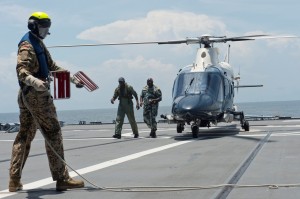
(April 20, 2014) – Nigerian Navy Rear Adm. S. I. Alade, flag officer commanding Western Naval Command, arrives by helicopter to the German ship FGS Bonn (A-1413) during Obangame Express 2014. (U.S. Navy photo by Mass Communication Specialist 2nd Class John Herman/Released)

The exercise ended, predictably, with much back-patting of (especially Nigerian) top brass for a job well done. Clearly, the conduct of the exercise in itself is valuable and necessary, and arguably holding the exercise in that form was no mean feat (though the credit belongs mostly to the organisers from the U.S. Navy) however, more work needs to be done to achieve even a basic maritime security capability in the region. Beyond the preening of the Nigerian flag officers at the closing ceremony this challenge is largely understood and accepted on a working level of most Gulf of Guinea navies (ships’ commanders and exercise observers), many of whom expressed a genuine desire to continue their working relationships with the extra-regional navies. It will take time for this insight to permeate into the West African navies and until then it will need to be constantly refreshed in the minds of the West African senior naval officers and politicians.

Frustration over perceived African nonchalance or foot-dragging will continue to be a key experience for many U.S. and European participants in OBANGAME EXPRESS exercises in the foreseeable future. “FUBAR” as an American exercise staff member put it was probably the strongest characterization of what went during the exercise on at times, but as a Nigerian participant pointed out: just putting Nigerians and Cameroonians into the same room would have been unthinkable a year ago. So, is there hope after all?

Conclusion

The Gulf of Guinea continues to present the vexing challenge that those countries that jealously guard their right to establish maritime security are singularly incapable of doing so. Nevertheless, continual efforts like APS, AMLEP and Corymbe will provide incremental improvements or provide support for regional initiatives aimed at improving regional maritime security. Better operational maritime security capabilities will not address the problems of corruption, lack of prosecution or even the underlying transnational criminal structures, but as one of several practical measures for improving security they can encourage the willing and contain the unwilling and contribute to an improved security environment. Experience from other theatres, not least the Indian Ocean, have shown that such measures, while not eradicating the symptoms, can at least ameliorate them. While the complexity of this year’s OBANGAME EXPRESS may have overwhelmed some of the regional participants, it is important to keep the momentum going. Equally, extra-regional participants should not be discouraged by what may be perceived as slow (or non-existent) progress. It will be a long haul, measured in decades rather than years.

Dirk Steffen is a Commander (senior grade) in the German Naval Reserve with 12 years of active service between 1988 and 2000 and was assigned to the German Battlestaff of TG 501.01 on board FGS HAMBURG during Exercise OBANGAME EXPRESS 2014. He is normally Director Maritime Security at Risk Intelligence when not on loan to the German Navy. He has been covering the Gulf of Guinea as a consultant and analyst since 2004. The opinions expressed here are his alone, and do not represent those of any German military or governmental institutions.
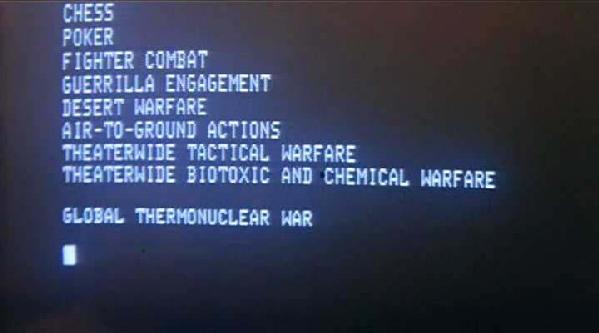
Welcome to Wargaming Week


wargames

Checkers, Risk, Command & Conquer, and Fencing…since childhood, humans are exposed to games in various forms. From basic to advanced and from purely fun to cut-throat poker matches – we are continuously given opportunities to challenge ourselves and compete against fellow man in the arena (or on the screen).

The United States military has numerous, robust and mature wargaming departments that have been developing complex scenarios for more than 75 years. It is not just recreating history merely for recreational purposes, but instead it captures the vast capabilities of Naval Fleets of today, placed at the hands of military professionals to face wicked problems and thinking enemies. This week CIMSEC will explore how wargaming specifically has been used by military and security professionals for gaming’s intrinsic conflict qualities and also why Wargaming is still relevant. This week we will ask readers to consider the strengths and weaknesses of current wargaming endeavors and to propose games that we are not playing, but are inherently part of maritime security.

As we look to the future, how shall we best capture the gaming process and synchronize the structure with technology? During peacetime, gaming is one effective tool for testing the commander for the friction of combat (See Sumida on Clausewitz). This week we ask what else can and should be considered in future wargames to fully challenge the commander-of-tomorrow and to prepare the forces for the demands of confrontation in the maritime domain. What can future technology bring to further enhance our cognitive ability and challenge the profession of arms?

We look forward to your comments, critiques, and discourse.


Tomahawks No More? Not So Fast


Editor’s Note: To allay some confusion, this article is about the end of the Tomahawk program, not the elimination of existing stocks.

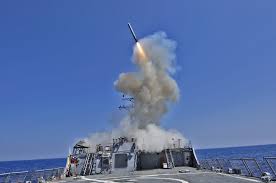
imagesTomahawks are on the chopping block. The most recent Defense budget, announced this month, outlined plans to shrink the number of Tomahawk Land Attack Missiles (TLAM) for use by U.S. Navy ships and submarines. And the cuts are drastic – $128 Million in Fiscal Year 2015, reducing the number to just 100 next year and zero in 2016. Phasing out weapons systems in favor of new systems capable of meeting current and future threats is a normal course of action. Cutting a highly successful program when there is no replacement on the horizon is shortsighted and threatens to eliminate the Navy’s offshore strike capabilities.

TLAMs have a long and decorated service history. They were first deployed onboard Iowa-Class Battleships, as well as integrated into the Navy’s Vertical Launch System (VLS), installed on Destroyers and Cruisers. They were also installed on some submarines. During the Persian Gulf War, Navy surface combatants struck targets within Kuwait and Iraq throughout the conflict. Superior performance during the Gulf War made TLAM  a preferred stand-off weapon throughout the 1990s, and was utilized during Operations Allied Force and Deliberate Force in the former Yugoslavia. In the War on Terror, TLAMs have been used to strike al-Qaeda training camps in Sudan and Afghanistan, as well as during Operation Iraqi Freedom. Most recently, over 120 TLAMs were fired by US and UK assets at targets in Libyan territory in 2011.

TLAMs provide the capability to strike deep into hostile territory, eliminating communications, air defense, and command and control from a safe distance, assuring successful secondary strikes by air and ground forces. Further developments have made TLAMs even more versatile – they can be prepped and ready for launch on short notice, and upgraded models can receive in-flight targeting updates and loiter in-air until ready to strike. TLAMs have been revamped and re-introduced multiple times throughout their history, and the latest block is a mainstay of offensive naval force.

Despite its success, replacement is inevitable. The platform is over 30 years old, and it is only a matter of time before a new system, upgraded with the latest technology and engineered to meet today’s threats, replaces the reliable TLAM. However, the new defense budget is instead stripping the U.S. arsenal of a proven strike capability and leaving it gapped for upwards of ten years.

The Long Range Anti-Ship Missile (LRASM) is a much-needed weapon to replace the aging Harpoon anti-ship missile and maintain superiority in surface warfare and Anti-Access/Area Denial (A2/AD). It has also, for some reason, been mentioned as a replacement for the TLAM. This isn’t a viable replacement. LRASM has a range less than half of that of TLAMs, and isn’t designed for deep strike into hostile territory. Even as a stopgap measure, LRASM isn’t an optimal strike weapon and in any case won’t be operationally ready until 2024. As a result, the U.S. will be without a primary strike weapon for the foreseeable future.

Operating with a tight budget, lawmakers are looking for any way to trim defense spending. Eliminating a weapon that is a proven success and vital for offshore strike demonstrates a complete disregard for warfare requirements and unnecessarily places warfighters in harm’s way, without a vital support weapon.

Tomahawk won’t be around forever; but it’s a vital weapon that has pulled its weight for 30 years. The U.S. already has outdated weapons systems and requires upgrades to keep pace with a rising Chinese military. Cutting more weapons systems and eliminating strike options in the name of fiscal restraint is the definition of shortsighted.

LTJG Brett Davis is a U.S. Navy Surface Warfare Officer. He also runs the blog ClearedHot and occasionally navigates Twitter. His opinions are his own and do not represent the views of the U.S. Navy or Department of Defense.

Surface Warfare: Lynchpin of Naval Integrated Air/Missile Defense

By CAPT Jim Kilby

“Events of October 1962 indicated, as they had all through history, that control of the sea means security. Control of the seas can mean peace. Control of the seas can mean victory. The United States must control the seas if it is to protect your security….”

– President John F. Kennedy, 6 June 1963, on board USS Kitty Hawk.

Introduction- Our Changing World

As America begins its drawdown in Afghanistan and embarks upon the Asia- Pacific rebalance, the U.S. Navy urgently needs to assess its approach to Integrated Air and Missile Defense (IAMD) and integrate emerging IAMD capabilities that will enable the fleet to successfully contend with our new reality.  This discussion addresses the high and unforgiving end of the operational spectrum and calls for renewed emphasis on innovation and proficiency in IAMD.  Substantial enhancements in the operational concepts and offensive warfighting capabilities of near peer competitors significantly shift the operational environment. In light of emerging capabilities and in order to maintain combat advantage, especially in the areas of tactical thought and doctrine development, we will accrue great benefits with a re-immersion into the art and science of IAMD.

What Has Changed? Back to the Future

The operational environment and technology that drove the need for innovation and proficiency in air warfare during the Cold War belong to a fleeting past  only a few active duty Sailors can recall.  Yet, the emerging challenges we face today mirror those faced not only a generation ago, when advances in warfighting technology demanded both technical and tactical innovation. Once again, we must master sophisticated threats and tactics in the aerospace domain.

The blue-water operational environment of the Cold War, relatively uncluttered by land mass reflections, dense commercial air traffic, and threats from non-state actors, envisioned a battle thick with hostile aircraft, surface combatants, and submarines launching saturation cruise missile attacks.  Especially in the 1980s, AW tactics evolved rapidly to keep pace with advances in both air threats and fleet air defense capabilities.  A well-organized spectrum of training, from classrooms ashore to advanced fleet exercises with allies, maintained tactical proficiency and often included proficiency firings of all AAW capable weapon systems.  While generally confined to the carrier battle group, some excursions ventured into multi-battle group combined operations.  Manual tactics, techniques and procedures (TTP) perfected by frequent drill and regular live fire exercises achieved high degrees of proficiency and integration.

 A syndicate of naval officers renowned for their expertise in air defense came of age with the proliferation of ‘G’ (guided missile) ships and reached the pinnacle of their influence in the early days of the AEGIS program.  Commanding a cruiser designated as the Battle Group ‘Alpha Whiskey’ marked the brass ring of a Surface Warfare career.

The demise of the Soviet Union began a period without a credible naval competitor and the following thirteen years of fleet operations primarily focused on support for strike, counter-insurgency and anti-terrorism.  The Fleet’s warfighting emphasis migrated from the primary sea-control missions of the Cold War to contemporary operations in the littorals and resulted in a drift away from a fleet-wide emphasis on air defense.   Anti-piracy, maritime interdiction, strike, and other operations in support of land operations prevailed.  Absent pressing credible threats, few ships distinguished themselves in this particular warfare area.

With our focus elsewhere, technology enabled the development of increasingly sophisticated threats and countermeasures.  Today’s cruise missile threats are stealthy, extremely fast, and can be employed at great ranges, using multiple independent seekers and dramatic terminal maneuvers.  The full range of ballistic missiles display similar capabilities, in addition to being longer range, widely dispersed, and capable of carrying weapons of mass destruction.  Mobile launchers that quickly relocate and change launch axis, and theater ballistic missiles that dispense decoys and obscurants allow more capable adversaries to present daunting threats. In essence, ballistic missiles have become an asymmetric air force.

Finally, small, slow and numerous reconnaissance unmanned aerial vehicles, intrusive cyber capabilities, and space based surveillance now threaten presumed net-centric advantages. We seldom contemplate the major or total loss of supporting information networks.  In most A2AD scenarios, these threats will impede the freedom of access and action of commercial shipping, naval forces, and defended assets ashore and hold them at risk of damage.

In response, we have fielded an impressive array of material solutions.  The AEGIS Weapon System remains the world’s preeminent air defense system and is evolving to include advanced IAMD capabilities.  Today our navy has thirty cruisers and destroyers capable of conducting Ballistic Missile Defense with additional ships undergoing installation and certification.  Additionally, if properly employed with the right tactics, Navy Integrated Fire Control-Counter Air (NIFC-CA), the next variant of the Standard Missile family (SM-6), the E-2D with Cooperative Engagement Capability and 5th generation F-35 fighter aircraft will be IAMD game changers.

The emergence of these quantum leap capabilities compels us to re-evaluate how we train, maintain, command, control, and employ these forces.  Efficient and effective command and control (C2) of IAMD forces ensures that we employ these new capabilities to their maximum effectiveness, which requires moving beyond the C2 approach under which we currently operate.

Fighting multiple engagements in today’s fight is likely.  We will achieve success by developing innovative C2 based on rigorous experimentation by the Aviation and Surface Warfare communities using both high fidelity simulation and fleet wargames.  The initial NIFC-CA CONOPS is currently under stakeholder review and will require testing and refinement as we deliver the tactics, techniques and procedures needed to exploit our new IAMD capabilities.  In this process, we need to apply the focus, rigor, and innovation, which enabled us to master AAW in the 1980s.

Starting at the Beginning: Warfighting Expertise

The complexity of this mission boggles the mind, spanning the warfighting spectrum from strategic defense against intercontinental ballistic missiles to defeating small, slow, drones with nothing more than a camera and a radio transmitter as their main battery.

We already possess formidable IAMD capabilities and even more potent ones are on the way.  In order to exploit these systems, there must be a relevant operational vision, a concept of operations, and updated tactics, techniques and procedures and a cadre of experts who understand the employment of joint and combined IAMD capabilities against current and emerging threats.   All of these begin with the operational idea of gaining and maintaining air superiority in the vicinity of defended assets at sea and ashore.

The inherent mobility, persistence and responsiveness of naval forces to conduct IAMD have never been more relevant.  More than ever, naval officers must think in terms of surface forces as the nucleus of IAMD forces in both developing and mature Theaters.  They must also view naval IAMD in the context of joint and combined operations.

The effort required to formulate the tactics to employ emerging capabilities is already underway in a series of wargames sponsored by Commander, U.S. Fleet Forces Command.  Operationally experienced SWOs and aviators are collaborating to develop innovative tactics for these advanced weapons systems.  We require pioneering naval officers to master 21st century warfighting technology, discard outdated ideas, and generate, sometimes from scratch, the tactics, techniques and procedures essential for effective employment of new weapons systems.  

A philosophy of mission command lies at the heart of this innovation.  Mission command’s three elements of trust, understanding and commander’s intent are perfectly suited to high end IAMD.  The principle understanding demands not only the “I know my wingman so well, I know what he will do next” but also, “I know this system of systems so well, I know what it will not do next.”  Highly structured and static command and control fails to optimize the new systems’ agility and full design potential.

Air Warfare has for the past 20 years been a highly scripted undertaking, yet, the modern IAMD operational environment is ill-suited to scripted solutions, and the nature of the IAMD mission demands trust in and understanding of the capabilities of the other participants in the IAMD Fight.  This will come as the result of an increased emphasis on experimentation, wargaming and integration.

Because complex new IAMD systems rely on precise technical and operational integration and a high degree of proficiency and teamwork, it is becoming increasingly apparent that we must dedicate periods of integrated IAMD training as a crucial part of deployment work-ups.  Commanders, strike leaders, pilots, TAO’s and crews from ships and air wings outfitted with these new IAMD systems must fully integrate.

Many naval officers have strong opinions, often negative, about the relevance of operational doctrine.  Doctrine presents fundamental principles that guide the employment of forces in coordinated and integrated actions toward a common objective.  It promotes a common perspective from which to plan, train, and conduct military operations and represents what is taught, believed and advocated as what works best.  It provides distilled insights and wisdom gained from employing the military instruments of national power in operations to achieve national objectives. [1]

Over the last 15 years, the lack of a pressing air threat and the reduction of commands dedicated to doctrine hindered the normal doctrine update cycle.  During this same period, the advent of ballistic missile defense, the rapid deployments of U.S. and adversary capabilities, and the introduction of IAMD as an operational concept, rendered much of the existing doctrine obsolete.  While the Navy Air and Missile Defense Command (NAMDC) and the Surface Tactics Development Group have taken steps toward improving the situation, the Navy is at a disadvantage in trying to formally articulate its IAMD equities in joint and combined arenas.  This sophistication of IAMD in this new age and the revolutionary capabilities described in the next section demand updated doctrine.

We must do better.

In a significant and profound step, the Surface Warfare community launched a commitment to develop expertise in IAMD.  NAMDC established a 19-week course that will deliver subject matter experts to the Fleet.  The IAMD Weapons Tactics Instructor (WTI) course focuses on the advanced IAMD training for individuals with the goal of improving unit level and strike group proficiency in IAMD.  Candidates will be challenged, as they become experts in the latest capabilities, TTP’s, training strategies and threats.  As the IAMD WTIs begin to reach the Fleet, their influence will extend well beyond the lifelines and impact both Fleet and Joint Operations.

Our Center for Surface Combat Systems and Afloat Training Groups developed Advanced Warfare Training (AWT) for all AEGIS ships.  AWT consists of multi-week classroom and hands on system training with individual watchstander and team training in a scenario environment.  This is a critical step in AEGIS baseline training, ensuring shipboard competency and improved performance executing the IAMD mission.

Capability to Defeat the Threat

AEGIS Wholeness – Sustaining the World’s Best Weapon System

The AEGIS Weapons System (AWS) remains the finest and most advanced IAMD system ever put to sea.  In 2011, the Navy initiated AEGIS Wholeness, a no-holds-barred approach to improving AEGIS Readiness.  Many facets comprised this effort: Interoperability, Technical Support, Logistics, Type Commander sponsored SPY radar maintenance program, replacement of high failure SPY parts, and a revival of the SM-2 Fleet Firing Program. Impressive gains realized over the past two years include, increasing operational availability of deployed ships to over 96%.  There is simply no substitute for continuous attention to the details of AWS material readiness.  The effectiveness of the AWS strongly depends on how conscientious Captains and crews are about its material readiness.

Navy BMD – From Pioneering Capability to Primary Mission

Over the past decade, Navy Ballistic Missile Defense grew from a pioneering vision to a National Defense mission.   Given the proliferation of ballistic missile described above, BMD garners the highest priority maritime missions of Combatant Commanders and as a result, AEGIS BMD ships have the highest optempo in the fleet.  BMD is an inherently joint mission and AEGIS BMD ships (and soon, AEGIS Ashore) frequently integrate into the Ballistic Missile Defense System, a globally distributed and highly integrated combat system with elements from all the services and Functional and Geographic Combatant Commanders.  As complex as BMD technology already is, radar and missiles continue to grow in sophistication.  Mastery of the BMD mission requires sequential assignments at sea and ashore.  Additionally, BMD Specialty Career Path officers are a start, but we must increase our cadre of BMD experienced Sailors at sea.

Revolution at Sea: No Kidding, Truly Integrated Air and Missile Defense (IAMD)

Our newest AEGIS Baseline 9 represents our first true IAMD AEGIS Combat System computer program.  Unlike previous BMD computer programs which had either AAW or BMD, both functionalities in Baseline 9 now reside in a single Combat Systems computer program.  This combat system program is being tested in USS JOHN PAUL JONES (DDG 53).  One of the key features of this baseline is the Multi-Mission Signal Processor (MMSP), which allows operators to dynamically allocate radar resources in response to specific threats.

The most notable feature of Baseline 9 is the ability to conduct “integrated fires.”  Integrated fires can occur between ships and between aircraft, but the most complex variant is NIFC-CA.  NIFC-CA employs ships and aircraft to consummate missile engagements beyond the radar horizon.  This execution is operational rocket science. Those who master it will be identified as the best and brightest.

What we must change – Culture and Focus

The U.S. Navy is developing and putting to sea revolutionary IAMD capabilities with the potential to be credible deterrents to war and if necessary, decisive factors in battle.  However, in order to exploit these incredible advantages, Surface Warriors must embrace the art and science of IAMD.  As sophisticated as they may be, these sophisticated weapons will require the sharpest operational minds using the best new tactics flowing from the crucibles of experimentation in stressing virtual warfare simulation and realistic fleet exercises.

Developing a career long vocation as an IAMD expert must not be viewed as professionally stifling.  Like other specialties, the IAMD mission is so incredibly broad, deep and complex, that it takes a significant amount of education, training, and experience for any officer to master.  This is a professional commitment to which young officers must commit and senior officers must foster.  The Weapons Tactics Instructor program initiated by NAMDC is a step in the right direction.

While individual training provided ashore and within the lifelines Advanced Warfare Training are first important steps, we must redesign and revitalize our IAMD training for the Air and Missile Defense Commander (AMDC) and supporting elements within the Strike Group.  This includes building block courses prior to the Warfare Commander’s Conference for the IAMD team.  Putting NIFC-CA, SM-6, AEGIS Baseline 9, CEC, E-2D and F-35 to sea demands that we assemble Strike Group Staffs, ship crews and Air Wing personnel for significant, dedicated planning and integration periods to develop the mutual trust and the deep understanding of system capabilities and commander’s intent essential to successful operations.

These efforts, though significant, are not enough.  We must start to live and breathe Integrated Air and Missile Defense.  IAMD must become the first, the last and the many in between thoughts of the Surface Warrior’s professional day.

CAPT Jim Kilby is the Deputy for Ballistic Missile Defense, AEGIS Combat Systems and Destroyers in the Surface Warfare Directorate (N96).  He commanded USS RUSSELL (DDG 59) and USS MONTEREY (CG 61).  In MONTEREY, he deployed as the first ship to support the European Phased Adaptive Approach for Ballistic Missile Defense.


[1] Joint Electronic Library – http//www.dtic.mil/doctrine/new_pubs/jpintpub.htm

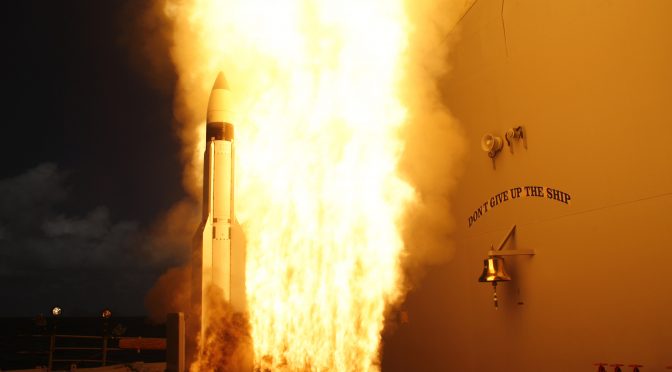
Featured Image: Guided missile cruiser USS Lake Erie (CG 70), during a joint Missile Defense Agency, U.S. Navy ballistic missile flight test. Approximately three minutes later, the SM-3 intercepted a unitary (non-separating) ballistic missile threat target, launched from the Pacific Missile Range Facility, Barking Sands, Kauai, Hawaii. Within moments of this launch, the USS Lake Erie also launched a Standard Missile-2 (SM-2) against a hostile air target in order to defend herself. The test was the eighth intercept, in 10 program flight tests. The test was designed to show the capability of the ship and its crew to conduct ballistic missile defense and at the same time defend herself. This test also marks the 27th successful hit-to-kill intercept in tests since 2001. U.S. Navy photo (RELEASED)