Category Archives: Alliances and Partners

It’s Time to Invite Taiwan to RIMPAC

By Jim Halsell

The Taiwan Strait remains one of the most volatile flashpoints in the world. With the People’s Republic of China (PRC) accelerating its coercive behavior aimed at “reunifying” Taiwan with the mainland, the United States must adopt a clearer, more deliberate strategy to bolster deterrence and reassure regional partners. One measure that should be taken is to include Taiwan in the world’s largest multinational maritime exercise – the Rim of the Pacific (RIMPAC). Doing so would be consistent with U.S. policy under the Taiwan Relations Act, align with the values of collective defense and democratic solidarity, and signal to Beijing that any use of military force against Taiwan will result in a unified, multinational response.

Taiwan’s Strategic Significance

Taiwan occupies a central position in the First Island Chain and plays a crucial role in the balance of power in East Asia. It is a thriving democratic society of 23.4 million people and a key node in global semiconductor supply chains. Beijing’s claim to the island is tenuous, supported by a campaign of intimidation and “gray zone” tactics that aim to coerce Taiwan into capitulation without war.

Though lacking official recognition as an independent country by the United States and many of its allies, Taiwan is not isolated. U.S. policy, as codified in the 1979 Taiwan Relations Act (TRA), commits the United States to make available “defense articles and defense services in such quantity as may be necessary to enable Taiwan to maintain a sufficient self-defense capability,” and to “maintain the capacity of the United States to resist any resort to force or other forms of coercion that would jeopardize the security” of the people of Taiwan. Inclusion in RIMPAC would help operationalize this policy while remaining consistent with the U.S. One China policy.

Why Include Taiwan?

Deterrence requires both capability and credibility. While Taiwan continues to acquire U.S. military hardware and reform its defense posture, the question of whether the United States and its allies would support Taiwan in a contingency remains deliberately ambiguous. Strategic ambiguity may help manage escalation risk, but it risks failing to deter if Beijing concludes that the costs of aggression are tolerable.

Involving Taiwan in RIMPAC would signal a broader multinational investment in regional peace. Beijing is pursuing two parallel lines of effort to pressure Taiwan: coercion without violence and the looming threat of military force. Both avenues can be countered through stronger integration with partners, transparent signaling, and public commitments to Taiwan’s survival as a free society.

A Republic of China Navy Tuo Chiang-class corvette. (Photo via Ann Wang/Reuters)

The inclusion of Taiwan in RIMPAC would not require diplomatic recognition of Taiwan as a sovereign state. RIMPAC has previously included diverse participants with some participating only as observers. Taiwan could be invited under a similar framework—e.g., “Taipei Navy—Observer”—that would align with RIMPAC precedent, and would not constitute formal U.S. recognition. It would, however, reinforce the deterrent message that a conflict in the Taiwan Strait would not remain a bilateral issue between Washington and Beijing.

Reinforcing the Taiwan Relations Act

The TRA provides a clear legislative foundation for actions that enhance Taiwan’s defense and deter coercion. The Act affirms that “the United States will consider any effort to determine the future of Taiwan by other than peaceful means…a threat to the peace and security of the Western Pacific area and of grave concern to the United States.”1 Participation in exercises like RIMPAC would help Taiwan prepare for defense without crossing the line into formal alliance, thereby avoiding a breach of the One China policy.

Congress continues to reaffirm bipartisan support for Taiwan’s self-defense. The FY2025 National Defense Authorization Act (NDAA) includes provisions to strengthen military cooperation and enhance deterrence through initiatives like the Taiwan Security Cooperation Initiative. Including Taiwan in exercises alongside Japan, Australia, and other regional partners would be a natural extension of these legislative efforts.

Operational and Symbolic Value

Beyond signaling, there are tangible military benefits. Taiwan’s military operates U.S.-made systems and is transitioning toward an asymmetric defense model, emphasizing survivability and denial. Interoperability with U.S. and allied forces, especially in joint maritime operations, will be essential in any scenario short of or including conflict.

As the Council on Foreign Relations notes, “Taiwan likely doesn’t have the capabilities to defend against a Chinese attack without external support,” despite pledging nearly $20 billion in defense spending for 2025.2 Enhancing operational coordination before a crisis emerges is not only prudent, but operationally essential.

Symbolically, inclusion in RIMPAC would acknowledge the democratic values that Taiwan shares with other regional partners. This is particularly important as Taiwan remains diplomatically isolated, with only eleven countries maintaining official relations. Participation in multinational military activities would help offset this isolation without provoking conflict, provided it is managed diplomatically and clearly communicated.

Would Other Nations Support Taiwan’s Inclusion in RIMPAC?

One of the central concerns surrounding Taiwan’s potential inclusion in RIMPAC is whether key U.S. allies and regional partners would support such a move or whether they would balk at the political risk of antagonizing the People’s Republic of China. However, recent geopolitical trends suggest that support for Taiwan’s participation in multinational defense activities is quietly growing, particularly among Indo-Pacific democracies that share an interest in preserving regional stability and resisting Chinese coercion.

Japan is perhaps the most likely partner to welcome Taiwan’s inclusion. Tokyo has become increasingly vocal about the importance of Taiwan to Japan’s national security, with senior officials, including former Prime Minister Shinzo Abe, stating that “a Taiwan contingency is a Japan contingency.” Japan’s Self-Defense Forces have increased coordination with the U.S. military and have participated in bilateral and trilateral exercises that implicitly prepare for scenarios involving Taiwan. Given Japan’s growing anxiety over China’s assertiveness and its own constitutional reinterpretation on collective self-defense, Tokyo would likely support Taiwan’s inclusion in a multilateral setting like RIMPAC, especially if coordinated in advance with careful diplomatic messaging.

Australia has also strengthened its strategic alignment with the United States and Japan, particularly through the AUKUS agreement. Canberra has voiced concerns about China’s regional behavior and recently joined Washington in emphasizing the importance of peace and stability in the Taiwan Strait. While Australia might be more cautious about formal diplomatic gestures, it is unlikely to oppose Taiwan’s participation in a non-sovereign capacity, especially if framed as a security-enhancing measure rather than a political endorsement.

Other Indo-Pacific states, such as India, Philippines, and Vietnam, have growing interests in counterbalancing Chinese maritime assertiveness. India has long advocated for a multipolar Asia and may view Taiwan’s inclusion as consistent with its own efforts to build regional coalitions. The Philippines, under President Ferdinand Marcos Jr., has deepened security ties with the United States and allowed expanded access to military bases in response to PRC aggression in the South China Sea. Vietnam, while traditionally wary of foreign alignments, has clashed with China over maritime claims and may be open to Taiwan’s inclusion in an observer or limited functional role.

European states that have participated in recent RIMPAC iterations such as France, Germany, and the United Kingdom have also increasingly signaled concern over Taiwan’s security. They conducted transits of the Taiwan Strait, and their defense white papers mention the Indo-Pacific as a zone of strategic interest. While these countries may not be vocal advocates for Taiwan’s inclusion, they would be unlikely to withdraw or protest if the decision were led by the United States with appropriate multilateral coordination.

Ultimately, the determining factor may be how the invitation is framed. If Taiwan’s participation is defined not as a sovereign equal to other states but rather as a security partner or “participant entity,” other nations could find it diplomatically palatable. This would mirror Taiwan’s existing participation in multilateral forums such as the Olympics, the World Trade Organization and the Asia-Pacific Economic Cooperation forum, where it joins under the name “Chinese Taipei.”

RIMPAC’s Flexible Participation Model

RIMPAC’s long history as a multinational exercise underscores its diplomatic flexibility. Since its inception in 1971, RIMPAC has included a diverse array of participants, including states with varying degrees of political alignment with the United States, non-ally partners, and even, at times, strategic competitors. This precedent offers a viable pathway for Taiwan’s inclusion without triggering a fundamental break in U.S. policy or alienating key participants.

A notable example is the People’s Republic of China, which was invited to participate in RIMPAC in both 2014 and 2016. Despite growing tensions in the South China Sea and concerns about Chinese military transparency, the Obama administration included the People’s Liberation Army Navy (PLAN) in an effort to promote professional military dialogue and reduce the risk of miscalculation. China sent surface combatants, auxiliary vessels, and observers to participate in non-combat aspects of the exercise. This inclusion was reversed in 2018 following the continued militarization of artificial features in the South China Sea, but the precedent remains: even states that do not share U.S. values or alliance structures have participated in RIMPAC under constrained formats.

Similarly, RIMPAC has welcomed non-allied or non-aligned states such as Vietnam, India, and Brunei, each of which participated in observer or limited operational capacities. These arrangements allowed for diplomatic inclusivity without compromising the exercise’s core focus on interoperability and security cooperation. India was first invited as an observer in the early 2000s before gradually expanding its participation, culminating in the deployment of naval assets by the 2010s. This incremental approach demonstrates RIMPAC’s capacity to accommodate partners with unique diplomatic statuses or sensitivities.

The American Institute in Taiwan (AIT), established under the Taiwan Relations Act as the vehicle for unofficial U.S.-Taiwan relations, could serve as the conduit for managing Taiwan’s RIMPAC participation. AIT-coordinated representation would allow the United States to maintain consistency with its One China policy while exercising its commitment to Taiwan’s self-defense.

Managing PRC Backlash

Inevitably, Beijing would likely respond harshly to Taiwan’s inclusion in RIMPAC, as it has to other perceived infringements on its sovereignty claims. Large-scale military drills, economic sanctions, diplomatic condemnation, and cyber operations are all part of the PRC’s well-established retaliation playbook. Yet the United States and its partners must resist the temptation to let their Taiwan policy be dictated by fears of PRC outrage. This reactive posture grants Beijing a de facto veto over democratic decision-making and emboldens further coercion.

China has escalated its pressure campaign on Taiwan even in the absence of provocations. Since the election of Democratic Progressive Party (DPP) President Tsai Ing-wen in 2016, Beijing has employed what Richard Bush calls “coercion without violence,” a deliberate campaign to wear down Taiwan psychologically, politically, and economically without firing a shot.3 This has included near-daily air and naval incursions into Taiwan’s air defense identification zone (ADIZ), cyberattacks on government agencies, diplomatic isolation, and targeted disinformation campaigns.

These actions have continued even as Taiwan’s leadership has treaded cautiously. President Tsai’s tenure was marked by efforts to maintain the cross-Strait status quo and avoid unilateral declarations of independence. Her successor, President Lai Ching-te, has pledged to do the same, calling for “dialogue instead of confrontation” in his 2024 inauguration address. Nevertheless, Beijing has continued to characterize Lai as a “separatist” and launched punitive military exercises following both his inauguration and Taiwan’s National Day celebrations.

This pattern reveals a key truth: Beijing’s escalatory behavior is not a response to specific actions by Taipei or Washington, but part of a long-term strategy to bring Taiwan under PRC control. As such, restraint has not yielded peace; resolve may. Integrating Taiwan into multinational military exercises like RIMPAC would impose reputational and strategic costs on Beijing’s aggression by signaling that Taiwan’s security is a shared interest among responsible stakeholders in the Indo-Pacific.

Conclusion

Ultimately, deterrence fails when adversaries perceive inaction as weakness. Taiwan’s participation in multinational exercises is not merely symbolic. It is a necessary step to ensure that coercion is met with collective resolve. The message to Beijing must be unmistakable: the democratic world will not stand by while one of its own is bullied into submission.

It is time for the United States and its Indo-Pacific allies to move from passive deterrence to active deterrence. The inclusion of Taiwan in RIMPAC would send an unmistakable message to Beijing: any aggression against Taiwan risks triggering a multilateral response from a network of regional powers united by shared values and interests. Including Taiwan in RIMPAC would fulfill the spirit of the Taiwan Relations Act, enhance deterrence, and stand as a visible affirmation of America’s commitment to a free and open Indo-Pacific.

Lieutenant Commander James Halsell is a submarine warfare officer. His most recent assignment at sea was engineer officer on board the USS Topeka (SSN-754). He is the Federal Executive Fellow at the U.S. Naval Institute, and a doctoral student at Johns Hopkins School of Advanced International Studies, researching the potential impact of deep-seabed mining on maritime sovereignty assertions.

References

1. Lawrence, Susan V. 2024. “Taiwan: Background and U.S. Relations.” Congressional Research Service, IF10275, updated December 26, 2024. https://crsreports.congress.gov/product/pdf/IF/IF10275.

2. Maizland, Lindsay, and Clara Fong. 2025. “Why China–Taiwan Relations Are So Tense.” Council on Foreign Relations, March 19, 2025. https://www.cfr.org/backgrounder/china-taiwan-relations-tension-us-policy-trump.

3. Bush, Richard C. 2024. “Why Does the U.S. Security Partnership with Taiwan Matter?” Brookings Institution, September 16, 2024.

Featured Image: Multinational ships sail in formation July 22, 2024, off the coast of Hawaii during Exercise Rim of the Pacific 2024. (U.S. Navy photo by Mass Communication Specialist 1st Class John Bellino)
Why the U.S. Should Support South Korea’s Naval Expansion

By Ju Hyung Kim

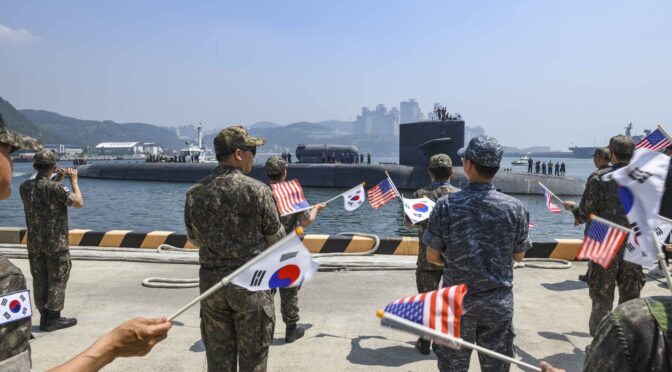
When people think about the U.S.-ROK alliance, they often envision the Korean Peninsula: joint ground drills, combined air exercises, and the perennial challenge of deterring a North Korean invasion. But the next chapter of this alliance is unfolding at sea. With the U.S. Navy stretched across multiple theaters—from the Mediterranean to the South China Sea—South Korea’s maritime ambitions are no longer a peripheral concern. They are a strategic asset.

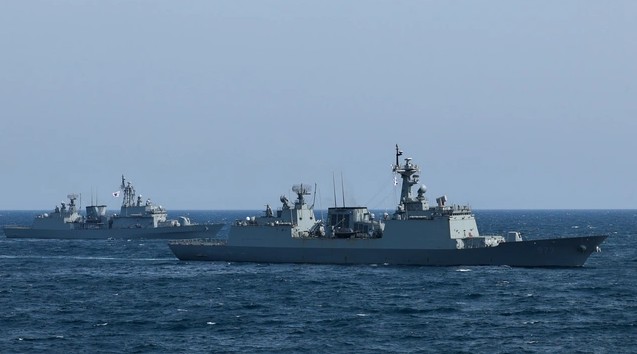
The first-in-class destroyer ROKS Gwangaeto the Great (DDH 971), left, and the Chungmugong Yi Sunsin-class destroyer ROKS Dae Jo-yeong (DDH-977), right, sail in formation during Maritime Counter Special Operations Exercise (MCSOFEX) May, 8, 2025. (Photo: Gavin Arnoldhendershot)

South Korea is undertaking a deliberate and ambitious transformation of its navy into a blue water force capable of regional power projection. This evolution is not simply about prestige or symbolism. It is a calculated move rooted in geostrategic necessity. As tensions rise in the Taiwan Strait and Chinese naval power expands across the first and second island chains, Washington should see Seoul’s naval modernization not as redundant or overlapping, but as a critical force multiplier.

This is especially relevant in the Yellow Sea, where a better-integrated U.S.-ROK naval posture could significantly enhance sea denial capabilities South Korea’s geographic proximity to China’s northern coastline presents a strategic opportunity to constrain the PLA Navy’s North Sea Fleet, which is headquartered in Qingdao and tasked with defending China’s most vulnerable maritime approaches. By jointly developing anti-access/area-denial (A2/AD) strategies focused on the Yellow Sea, the alliance could effectively impose strategic costs on China’s northern naval operations and blunt its access to the first island chain.

The Rise of South Korea’s Blue-Water Navy

The Republic of Korea Navy (ROKN) has traditionally played a coastal defense role focused on deterring North Korean provocations in the Yellow Sea and the Sea of Japan. But over the past two decades, a combination of economic capability, strategic awareness, and domestic political will has pushed Seoul to rethink its naval posture.

The evolution began with the KDX series of destroyers—KDX-I, KDX-II, and the 10,000-ton KDX-III (Sejong Daewang-class guided-missile destroyers)—equipped with Aegis combat systems, long-range anti-air missiles, and sophisticated sensors. These ships have given the ROKN capabilities far beyond the littorals. More recently, the KDDX program—slated to deploy stealthier, AI-integrated destroyers by the early 2030s—signals an even greater leap in warfighting capability.

Beneath the surface, South Korea is producing the Jangbogo-III class submarines, featuring Air-Independent Propulsion (AIP), advanced sonar, and the ability to launch indigenous cruise missiles. These quiet, long-endurance platforms are designed for regional influence, extending beyond traditional deterrence roles.

Then there is the controversial CVX program, which remains stalled due to political debate and lack of budgetary support. Initially conceived as a 30,000-ton light aircraft carrier to deploy short take-off and vertical landing (STOVL) aircraft like the F-35B, CVX was intended to give Seoul the ability to project power far from its shores. Critics within Korea have questioned its cost and doctrinal utility, and recent administrations have deprioritized the project in favor of counter-North Korean capabilities. Still, the strategic rationale behind the program reflects Seoul’s growing maritime confidence and its long-term ambition to contribute more meaningfully to regional security.

Strategic Drivers of Naval Expansion

South Korea’s shift toward a maritime posture is driven by three primary strategic imperatives. First, North Korea’s expanding maritime threat has grown increasingly sophisticated. Pyongyang’s development of submarine-launched ballistic missiles (SLBMs), its recent experimentation with unmanned maritime strike systems, and its emphasis on asymmetric naval tactics all underscore the need for a robust undersea deterrent. A capable Republic of Korea Navy (ROKN) is essential not only for defending territorial waters, but also for denying North Korea sanctuary beneath the surface. It is worth noting that the Atlantic Council’s recent report, “A Rising Nuclear Double-Threat in East Asia: Insights from our Guardian Tiger I and II Tabletop Exercises,” demonstrates how a naval skirmish in the Yellow Sea between North and South Korea could plausibly escalate—by 2030—into a dual contingency, triggering simultaneous crises on the Korean Peninsula and in the Taiwan Strait.

This scenario underscores the critical importance of effective naval deterrence and denial capabilities against North Korean maritime threats. It also implies a wider operational logic: improved U.S.-ROK naval integration could serve not only to deter North Korea but also to enhance regional readiness for broader contingencies involving both China and Russia. As Russia’s Pacific Fleet increases its operational tempo in the Sea of Japan—particularly near Vladivostok, its key naval hub—a forward-deployed and interoperable ROK Navy can play a vital role in surveillance, anti-submarine warfare, and presence operations. Greater alliance coordination in these waters would enable the U.S. Navy to retain pressure on Russian forces without further stretching its already overtasked carrier and submarine assets.

Second, South Korea’s economic vulnerability via its sea lines of communication (SLOCs) compels a more active naval presence. As a global trading nation heavily dependent on maritime imports—particularly energy—South Korea is acutely exposed to regional disruptions in maritime routes. Any conflict in the South China Sea or Taiwan Strait would pose serious risks to these lifelines, and protecting them requires more than the reach of coast guard patrols.

Third, shifts in U.S. force posture are creating strategic space—and necessity—for capable allies to assume greater responsibilities. As the United States confronts the demands of great power competition and redistributes its naval resources, a strengthened and regionally integrated South Korean navy can help relieve pressure by taking on critical missions in Northeast Asia, thereby enabling U.S. forces to concentrate on high-end deterrence operations elsewhere.

Naval Power and the U.S.-ROK Alliance

Historically, maritime coordination has not been the centerpiece of the U.S.-ROK alliance. While Combined Forces Command (CFC) has focused primarily on land and air integration, naval cooperation has traditionally been limited to joint drills and port visits—though this has begun to evolve in recent years with increased trilateral and ASW cooperation. But this is beginning to change.

The U.S. Indo-Pacific Strategy explicitly calls for networked security architecture, encouraging allied navies to coordinate maritime domain awareness (MDA), logistics, ISR (Intelligence, Surveillance, Reconnaissance), and undersea capabilities. South Korea has begun participating more actively in multilateral exercises like RIMPAC and Pacific Vanguard. Trilateral maritime exercises with the U.S. and Japan have also become more routine, despite political sensitivities in Seoul. However, these efforts remain fragmented and largely ad hoc, lacking the continuity and command structure necessary for sustained strategic impact. As the alliance faces increasingly complex, multi-domain maritime challenges—ranging from North Korean subsurface threats to regional contingencies involving China and Russia—the case for deeper institutional coordination becomes compelling. One promising pathway is the establishment of a Combined Maritime Command: a mechanism that could integrate planning, synchronize task force deployments, and enable real-time information fusion.

Unlike the existing ground-focused Combined Forces Command, such a structure would reflect the evolving character of naval warfare and anchor maritime cooperation in a permanent, mission-ready framework. Additionally, both Washington and Seoul are exploring data sharing and co-development in AI-enabled maritime systems. Seoul’s defense sector, spearheaded by companies like Hanwha Ocean and LIG Nex1, has the technological foundation to contribute to next-generation maritime warfare, from unmanned surface vehicles (USVs) to AI-supported sonar systems.

Policy Recommendations for Washington

Supporting South Korea’s naval rise requires more than rhetorical endorsement; it demands a set of deliberate and concrete policy actions by Washington. First, the United States should identify opportunities for joint research and development as well as limited technology transfer in key areas such as undersea warfare, autonomous maritime systems, and AI-enhanced command and control. Co-developing these capabilities with a trusted ally like South Korea would not only bolster interoperability but also strengthen Seoul’s defense industrial base.

Second, Washington should work with Seoul to institutionalize robust maritime intelligence-sharing mechanisms. Drawing inspiration from frameworks like the Five Eyes, a Northeast Asian naval intelligence partnership could significantly enhance regional maritime domain awareness and sharpen tactical decision-making across allied navies.

Third, joint training and exercises should be expanded beyond the waters near the Korean Peninsula. South Korea should be regularly included in U.S.-led naval operations throughout the second island chain, including in the Philippine Sea, South China Sea, and broader Western Pacific. Such participation would normalize long-range ROKN deployments and allow the U.S. Navy to maintain presence across a wider expanse without overstretching its own assets.

Finally, the alliance should explore the creation of a combined maritime command structure that parallels the existing Combined Forces Command on land. Although politically sensitive—particularly in light of ongoing discussions around OPCON transfer—such a structure would better reflect the realities of modern maritime warfare and the shared regional burdens that come with it. More concretely, a Combined Maritime Command could offer a standing bilateral mechanism for coordinating patrol areas, real-time sensor fusion, and logistics prepositioning. It would also allow for joint operational planning in response to overlapping threats from North Korea, China, and Russia—threats which increasingly defy traditional geographic boundaries. A permanent command structure would facilitate the joint execution of distributed maritime operations (DMO) and enable more dynamic force employment (DFE) within the alliance, aligning with current U.S. Navy doctrinal trends. However, such an initiative would need to overcome several significant hurdles.

Domestically, South Korea’s evolving but cautious posture on OPCON transfer and joint command structures could stir political controversy, especially amid ongoing debates over military sovereignty. Bureaucratically, the absence of a tradition of joint maritime commands within South Korea’s naval doctrine would necessitate a paradigm shift in command culture and planning processes. Operationally, issues such as legal authorities, peacetime rules of engagement, and joint logistics would need to be ironed out. To navigate these complexities, a phased approach may be prudent—starting with joint maritime planning groups, mission-specific task forces, and gradually evolving toward a permanent Combined Maritime Command as trust, interoperability, and strategic alignment mature.

Why the U.S. Needs a Strong South Korean Navy

Critics may ask whether the U.S. really needs another blue-water ally when it already works closely with Japan and Australia. But the answer lies in geography, capability specialization, and political flexibility. Japan’s navy is world-class in terms of technology and training, fielding advanced destroyers, submarines, and even F-35B-capable carriers. Yet it remains politically constrained by constitutional limitations—most notably Article 9—and cautious public sentiment that continues to shape the scope of Japan’s overseas military activities. Even after the 2015 legislative reforms and revised U.S.-Japan defense guidelines, Tokyo’s ability to engage in high-intensity or preemptive operations remains narrowly defined and heavily restricted. Australia, meanwhile, boasts potent naval assets but is geographically removed from key Northeast Asian flashpoints. South Korea, by contrast, offers an increasingly capable and politically willing partner, situated at the frontline of regional hotspots: the Yellow Sea, the East China Sea, and even the Taiwan Strait. Its navy is not only modernizing rapidly but is also unconstrained by many of the domestic limitations that hinder its allies.

Moreover, South Korea brings industrial capacity to the table. Its shipbuilding firms are already among the best globally. If the U.S. seeks to build a coalition-based maritime deterrent in the Indo-Pacific, Seoul is indispensable—not just as a consumer of U.S. systems, but as a producer of regionally relevant platforms.

At a time when the U.S. Navy is confronting widening capability gaps, the need for trusted, interoperable allies is more pressing than ever. Chronic delays in shipbuilding—exacerbated by industrial base constraints, workforce shortages, and budget uncertainty—have slowed the delivery of key platforms like the next-generation DDG(X) destroyers and the Columbia-class ballistic missile submarines. Meanwhile, maintenance backlogs have reduced the operational availability of existing surface combatants and submarines, straining fleet readiness. Carrier strike groups are being over-deployed to meet simultaneous demands in the Middle East, Europe, and the Indo-Pacific, often without sufficient dwell time, degrading both materiel and personnel endurance. Amphibious readiness is also under pressure, with debate continuing over the future of the LPD and LHA programs. In this environment, having a capable ally like South Korea—with Aegis-equipped destroyers, modern submarines, and ambitions for its own light aircraft carrier—is not a luxury or symbolic gesture. It is a strategic necessity. Seoul’s platforms are increasingly interoperable with U.S. systems, and their regional positioning allows the ROK Navy to help secure key maritime corridors and reinforce deterrence at precisely the time and place where U.S. naval bandwidth is most strained.

Conclusion: A Maritime Alliance for the Indo-Pacific Era

The U.S.-ROK alliance was forged in ground combat but will be tested in maritime competition. As the Indo-Pacific becomes the primary arena of strategic contestation in the 21st century, navies—not just armies—will shape deterrence outcomes.

Washington must therefore adapt its mindset. Supporting South Korea’s naval expansion is not about shifting the burden, but about co-creating a more resilient, integrated, and capable maritime network. Seoul is rising to meet the challenge. The U.S. should meet it alongside.

From undersea sensors to carrier decks, the next phase of alliance credibility will be forged at sea. It is time to set sail together.

Dr. Ju Hyung Kim, President of the Security Management Institute—a defense think tank affiliated with the South Korean National Assembly—led a study commissioned by the South Korean Navy titled ‘Regional Naval Modernization Trends and Future Directions for the ROK Navy’s Core Capabilities.’

Break China’s Grip on Shipping with the Multilateral Maritime Alliance

By Blaine Worthington

The United States has a shipping problem and everybody knows it. From combatant commands to congress and maritime security outlets to the White House, everyone is talking about America’s lack of maritime capacity.1 America, it seems, is waking up to its maritime problem and is ready to roll up its sleeves and start solving it in the only way it knows how—mostly alone. While there have been some nods to bilateral cooperation in shipbuilding, the United States has not made a concerted effort toward a robust, multilateral counter-China maritime strategy. That needs to change. A coordinated, multinational approach is required to counter Chinese shipping dominance. The US and its allies should form a Multilateral Maritime Alliance to secure maritime trade and create critical sealift capacity to sustain expeditionary combat operations.

The crux of the problem is that the United States cannot compete with Chinese shipping or shipbuilding. The United States flagged merchant fleet currently sits at 185 ships.2 China (including Hong Kong) has a fleet of 7,838.3 In 2023, the United States built 0.1% of the world’s ships. In the same year, China built 50.7%.4 In 2024, 2.16% of the global merchant fleet was owned by US companies. China owned 19%.5 The scale of China’s shipping and shipbuilding advantage gives it tremendous economic leverage over the United States during peacetime. At the same time, this lack of domestic shipping means the United States does not have a merchant marine robust enough to support sustained expeditionary combat in the event conflict with China.6 It is understandable that the United States wants to rebuild its maritime sector. It must, and it must do it quickly.

The United States is not alone in this situation, however. Its close friend and ally Australia suffers from a similar ill. As Canberra-based maritime expert Richard Dunley has noted, “99 per cent of Australia’s trade moves by sea, supporting 45 per cent of the country’s national income. And virtually all of this travels in foreign flagged and foreign owned vessels. In 2021, 6,170 individual foreign flagged vessels called at Australian ports. By contrast, there are only four Australian flagged vessels on international trade and these are LNG carriers, exporting Australian hydrocarbons to customers in north-east Asia.”7

This situation is not lost on the Australian government either. Prime Minister Anthony Albanese and the Labor Party made the development of a “Strategic Fleet” of privately owned and Australia-flagged merchant vessels a plank of the party platform during the 2022 election.8 In 2023, the Albanese government released a report detailing the scale of the problem and proposing many solutions similar to those now on offer in the United States, including government subsidies, cargo preference measures, and maritime workforce development efforts—largely measures aimed at bolstering domestic capacity.

BAY OF BENGAL (Oct. 17, 2021) Ships and aircraft from the U.S. Navy, Royal Australian Navy, Japan Maritime Self-Defense Force (JMSDF), and U.K. Royal Navy transit in formation as part of Maritime Partnership Exercise (MPX). (U.S. Navy photo by Mass Communication Specialist 2nd Class Haydn N. Smith)

These efforts, like their American counterparts, will take many years, if not decades, to take effect, however. There is no switch to flip that will suddenly cause shipyards to spring up, full of trained and qualified workers, with healthy, consistent, reliable demand for ships operated by American or Australian crew while relying solely on domestic solutions. As the Davidson Window – the most likely window in which China might attempt to take military action against Taiwan – closes and the clock ticks down to 2027, there simply is not enough time to wait for the domestic industry to come online.9

If a domestic ramp-up cannot provide an immediate solution, the obvious answer is to look abroad. In the United States, this effort has focused on the shipbuilding side of the coin. In recent testimony, Congressional Research Service analyst Ronald O’Rourke typified this perspective by highlighting US allies in Japan and South Korea as obvious partners to address US shipbuilding needs.10 Australian officials seemed to have reached a similar conclusion in strongly considering the Japanese Mogami-class frigates in their upcoming procurement.11 These solutions, however, leave two problems remaining. First, all Japanese and South Korean shipyards are within China’s Weapons Engagement Zone (WEZ). This is a concern not just for the US and Australia, but also for Japan and Korea, who would need access to shipyards with some standoff from China in the event of conflict. Second, even if shipbuilding partnerships can be achieved in the medium term, the United States and Australia will still lack sufficient sealift capacity to compete with China in the immediate term.12

To solve these problems, the United States and Australia should engage with their regional partners in South Korea, Japan, and the Philippines—who have been partnering with the Koreans to develop their own shipbuilding prowess—to create a counter-China maritime bloc: the Multilateral Maritime Alliance (MMA). The MMA would achieve the following objectives:

1. Establish economic incentives to promote sea trade via vessels owned or flagged within the MMA, protecting market access for domestic shippers and breaking Chinese economic leverage over member states.

2. Formalize cooperation amongst MMA members to develop shipbuilding and shipping capacity in Australia and the United States, establishing robust and redundant allied maritime capacity outside the WEZ.

To achieve the first objective, the MMA should negotiate collective cargo preferences, port privileges, and trade incentives to immediately shift demand away from Chinese carriers. Many countries, the United States included, maintain cargo preference policies, which are designed to ensure demand for domestically flagged shipping. Under the MMA, similar preference policies would be shared amongst MMA countries. Collective preferences could include requiring that a percentage of all imports or exports be carried on MMA shipping, providing front-of-the-line privileges for MMA ships in ports of member states, and the blanket reduction or elimination of import tariffs on all goods shipped via MMA shipping. If necessary, the MMA could even resort to establishing shipping quotas to be shared by participating countries to ensure all members have an opportunity to develop and sustain their domestic industries. By coordinating cargo preferences and other incentives, the MMA immediately counters China’s maritime dominance—dominance obtained by decades of subsidies, artificially low freight rates, and unfair labor practices.13 Breaking China’s grip on maritime trade is a necessary condition for future domestic investments in shipping and shipbuilding to be globally competitive.

For the second objective, the MMA can create formal dialogue between countries to allow for the strategic planning and coordination of shipbuilding and repair capacity development. While many of these discussions are already occurring on a bilateral basis, the MMA would ensure that these existing actions are undertaken thoughtfully, do not unwittingly compete against each other, or otherwise compromise the strategic integrity of this shipbuilding or repair capacity. The MMA would effectively serve as an industrial alliance, similar to those found in the European Union. These alliances bring together academia, policymakers, and industry to coordinate policy and investment to achieve strategic ends by finding opportunities for collaboration at all levels of the value chain.14 This could build on cooperative efforts such as the production of Virginia-class submarines under AUKUS or the potential Mogami-class procurement project between Australia and Japan. MMA collaboration could generate opportunities to jointly design, procure, and build future ships in ways that allow each member state to strategically contribute to the supply chain. Additionally, the MMA could allow for the development of formal technical and workforce exchange programs that would enable US and Australian workers and management to work alongside their Korean and Japanese counterparts to develop expertise in current best practices and bring these skills back to their home countries. It would also allow for Korean, Japanese, and Philippine workers with shipbuilding experience and expertise to travel to the US or Australia to seed their nascent workforces and provide immediate access to the skilled labor necessary to ramp up shipbuilding and repair capacity beyond the WEZ.

These solutions are not intended as a replacement for efforts currently underway in the United States or Australia. These efforts to develop their respective domestic maritime sectors must continue. However, purely domestic efforts to rebuild the industry will take time that neither country can afford, and bilateral efforts fail to effectively address the scale of Chinese anti-competitive practices and the strategic vulnerability created by further concentrating capacity inside the WEZ. The MMA, however, will set conditions to allow those domestic investments to be competitive in the long term by breaking the Chinese stranglehold on the shipping industry in the short term. It also formalizes strategic cooperation among all parties to ensure that collective risks are mitigated with collective solutions.

Finally, this civil maritime coordination will lay the foundation for further cooperation between member states in the event of conflict with China, when the demand for sealift will be acute, and all parties will have a role to play in meeting that need. The time for unilateral and bilateral action has passed. The United States, Australia, South Korea, Japan, and the Philippines should form the Multilateral Maritime Alliance now and break the Chinese stranglehold on maritime industries—before it is too late.

Blaine Worthington is a graduate student at the UC San Diego School of Global Policy and Strategy. He is a graduate of the US Naval Academy and served as Logistics Officer in the United States Marine Corps and continues to serve as a member of the Marine Corps’ Independent Ready Reserve. Opinions expressed are his own and do not represent the positions of any institution, corporation, or government.

References

1 Mallory Shelbourne, “PACFLEET CO Warns a Weak Maritime Sector Risk in Conflict with China,” USNI News (blog), February 1, 2024, https://news.usni.org/2024/02/01/pacfleet-co-paparo-warns-a-weak-u-s-maritime-sector-risk-in-conflict-with-china; “Sen. Kelly, Sen. Young, Rep. Garamendi, Rep. Kelly Introduce SHIPS for America Act to Revitalize US Shipbuilding and Commercial Maritime Industries,” Senator Mark Kelly (blog), December 19, 2024, https://www.kelly.senate.gov/newsroom/press-releases/sen-kelly-sen-young-rep-garamendi-rep-kelly-introduce-ships-for-america-act-to-revitalize-us-shipbuilding-and-commercial-maritime-industries/; Cmdr. Sonha Gomez, USCG, “Rebuild the Merchant Marine,” Proceedings 150, no. 10 (October 2024), https://www.usni.org/magazines/proceedings/2024/october/rebuild-merchant-marine; Cmdr. Ander S. Heiles, USN, “Rebuild Commercial Maritime Might to Restore U.S. Sea Power,” Center for International Maritime Security, January 31, 2025, https://cimsec.org/rebuild-commercial-maritime-might-to-restore-u-s-sea-power/; Mallory Shelbourne, “Trump’s ‘Make Shipbuilding Great Again’ Order Calls for Wholesale Overhaul of U.S. Maritime Industry,” USNI News (blog), March 5, 2025, https://news.usni.org/2025/03/05/trumps-make-shipbuilding-great-again-order-calls-for-wholesale-overhaul-of-u-s-maritime-industry.

2 “Number and Size of the U.S. Flag Merchant Fleet and Its Share of the World Fleet,” Bureau of Transportation Statistics, accessed February 25, 2025, https://www.bts.gov/content/number-and-size-us-flag-merchant-fleet-and-its-share-world-fleet.

3 “Merchant Fleet by Flag of Registration and by Type of Ship, Annual” (UN Trade & Development, June 5, 2024), https://unctadstat-api.unctad.org/bulkdownload/US.MerchantFleet/US_MerchantFleet.

4 “Ships Built by Country of Building, Annual” (UN Trade & Development, June 5, 2024), https://unctadstat.unctad.org/datacentre/reportInfo/US.ShipBuilding.

5 “Merchant Fleet by Country of Beneficial Ownership” (UN Trade & Development, June 5, 2024), https://unctadstat.unctad.org/datacentre/reportInfo/US.FleetBeneficialOwners.

6 Shelbourne, “Maritime Sector Risk.”

7 Richard Dunley, “Australia Needs to Resource a Merchant Fleet,” The Interpreter, November 14, 2023, https://www.lowyinstitute.org/the-interpreter/australia-needs-resource-merchant-fleet.

8 “Labor Will Create a Strategic Fleet to Protect Our National Security and Economic Sovereignty,” Anthony Albanese, PM, January 3, 2022, https://anthonyalbanese.com.au/media-centre/labor-create-strategic-fleet-protect-national-security-economic-sovereignty.

9 “CNO Remarks at America’s Future Fleet: Reinvigorating the Maritime Industrial Base,” United States Navy, accessed March 12, 2025, https://www.navy.mil/Press-Office/Speeches/display-speeches/Article/3986010/cno-remarks-at-americas-future-fleet-reinvigorating-the-maritime-industrial-base/https%3A%2F%2Fwww.navy.mil%2FPress-Office%2FSpeeches%2Fdisplay-speeches%2FArticle%2F3986010%2Fcno-remarks-at-americas-future-fleet-reinvigorating-the-maritime-industrial-base%2F.

10 Chris Panella, “Naval Affairs Specialist Says Pacific Allies Might Just Have Answers to US Shipbuilding Problems,” Business Insider, accessed March 13, 2025, https://www.businessinsider.com/pacific-allies-may-have-answer-to-us-navy-shipbuilding-problem-2025-3.

11 Nishank Motwani, “Strategic and Industrial Factors Favour Japan for Australia’s Frigate Project,” The Strategist (blog), February 27, 2025, https://www.aspistrategist.org.au/strategic-and-industrial-factors-favour-japan-for-australias-frigate-project/.

12 Shelbourne, “Maritime Sector Risk.”

13 “Report on China’s Targeting of the Maritime, Logistics, and Shipbuilding Sectors for Dominance,” Section 301 Investigation (Washington, D.C.: Office of the U.S. Trade Representative, January 16, 2025), https://ustr.gov/sites/default/files/enforcement/301Investigations/USTRReportChinaTargetingMaritime.pdf.

14 “Industrial Alliances,” European Commission, accessed March 2, 2025, https://single-market-economy.ec.europa.eu/industry/industrial-alliances_en.

Featured Image: BATH , Maine (Dec. 14, 2012) The 1,000-ton deckhouse of the destroyer USS Zumwalt (DDG 1000) is craned toward the deck of the ship to be integrated with the ship’s hull at General Dynamics Bath Iron Works. (U.S. Navy photo)

The Swedish Navy in NATO: Opportunities and Challenges

This article was first published in the KÖMS’s journal, No. 4/2022 and is republished with permission.

By Dr. Sebastian Bruns

With its significant geopolitical, strategic and military changes stemming from Russia’s war against Ukraine, 2022 has the potential to go down in history as a true watershed year. Among many other critical developments, Sweden’s decision to apply for NATO membership constitutes another significant departure from its long tradition as a non-aligned nation.It is with much political fanfare that Stockholm and Helsinki are expected to join a reinvigorated transatlantic alliance that not only finds an old nemesis on its Eastern front, but also renewed American leadership in the post-Donald Trump U.S. presidency. Experts are looking in particular at what military capabilities Sweden and Finland will bring to NATO.2 This article will provide some thoughts on the Swedish Navy, what it will bring, what NATO needs from it and where some overlaps and opportunities exist.3

For starters, the Tre Kronor Navy celebrated its 500th anniversary this year. Founded in 1522, it therefore brings to the forefront a very long tradition as a sea power. If one does not follow conventional wisdom, sea power status does not depend solely on the size of a country’s navy, but also the maritime mindset of a country’s people. By way of comparison, the German Navy will celebrate its 175th anniversary in 2023, a much more modest commemoration due to Germany’s checkered naval history. Since its post-World War II rebirth, the West-German Bundesmarine and its post-Cold War successor, Deutsche Marine, have had laudable successes as alliance navies, usually operating internationally under an EU, NATO or UN mandate. The Swedish Navy might look to their example as it seeks to create a mindset that covers national, territorial and alliance defense.

If anything, Sweden’s rich naval tradition can help re-navalize NATO. The Alliance is coming off two decades of land-centric counterinsurgency, counterterrorism and state-building operations in Afghanistan, which has created an officer and political-strategic corps of continentally-thinking individuals. While Russia’s 2014 annexation of Crimea and incursion into Eastern Ukraine began to change NATO’s mindset drastically towards more conventional aspects of deterrence and warfighting across domains, it remains very much culturally dominated by army and air force generals, despite carrying the “North Atlantic” in its name. Given the maritime component of the new era’s challenges – such as Russian undersea activity, a focus on the Arctic, Baltic, Black, and Mediterranean Seas, as well as the increasingly confrontational posture of the Chinese Navy in their Indo-Pacific backyard and beyond – it is high time for NATO to focus on the naval aspects of its members’ security.

The Swedish Navy brings to the table a wide experience in national and territorial defense at sea and in the protection of commercial shipping, two core naval missions spanning a wide spectrum. Moreover, the Swedish Navy has some experience in multilateral maritime operations, such as the EU’s counterpiracy mission ATALANTA (2010) and the UNIFIL maritime task force (2006-2007). More recent NATO accessions include former Warsaw Pact countries that had little to no joint and combined naval expertise.

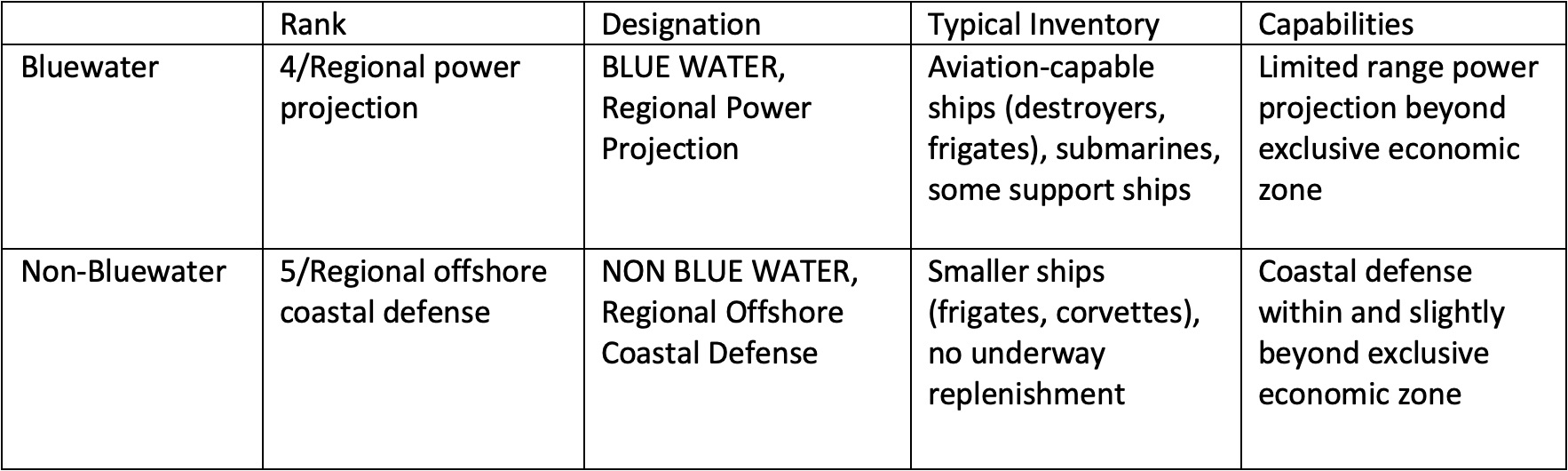
From a naval perspective, NATO is currently dominated by the large and capable navies of the United States, the United Kingdom, and France. The U.S. Navy and Royal Navy have driven naval rejuvenation in the Baltic Sea more so than NATO’s Baltic members. This is hardly surprising and should empower littoral states to follow suit, where possible.4 In addition, smaller but potent maritime powers such as Italy, Spain, France, the Netherlands and Denmark are part of the Alliance and can serve to re-focus on the maritime flanks and fronts of NATO.According to Geoffrey Till, noted navalist and sea power expert, the Swedish Navy could be understood as falling right between a type 4 blue-water navy, the lowest in that category, tasked with regional power projection, and the most capable non-blue water navy, a type 5 regional offshore coastal defense navy.6

While such attempts to rank navies should be taken with caution – the risk of comparing apples and oranges is real, even at sea – such conceptual undertakings offer hints at levels of ambition for a navy, as well as their potential to add to NATO’s capabilities for combined operations. At the same time, as Austrian naval doyen Jeremy Stöhs has pointed out, Western navies face a true dilemma in the accelerating quest for high-end technology and the political, operational and financial costs this incurs on small- and medium-size navies.7

A different approach for sizing up navies was offered in 1995 by naval historians Jon Sumida and David Rosenber, aptly grouped as “Five Ms”:

  1. Men (and Women), or the naval personnel;
  2. Machinery, or the types of ships, aircraft and other vehicles that navies employ;
  3. Management, or the type of command structure as well as the political framework that shapes a navy’s roles and missions;
  4. Money, or the kind of funding into navies which, at the core, are long-term supply-based financial investments rather than demand based;
  5. Manufacturing, or the industrial base in a country to sustain a navy.

In 2000, the late German naval historian Wilfried Stallmann added a sixth “M”: Mentality, or a navy’s strategic culture.8 A more contemporary and potentially more quantifiable approach would look at the size and nature of the fleet, its geographic reach, its functions and capabilities, its access to high grade technology, its reputation and the technological excellence it provides. While an in-depth discussion of these aspects is beyond the scope of this article, the technological excellence that Sweden can potentially bring to NATO and its navies is worth a closer look.

The Swedish naval capability contribution covers four notable assets, including small combatants, amphibious boats, and forthcoming submarines and signals intelligence ships.

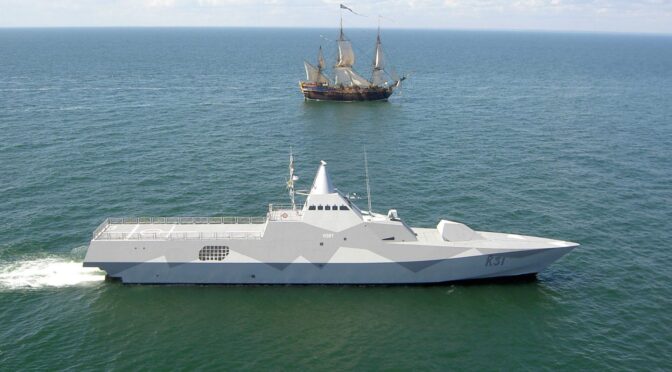
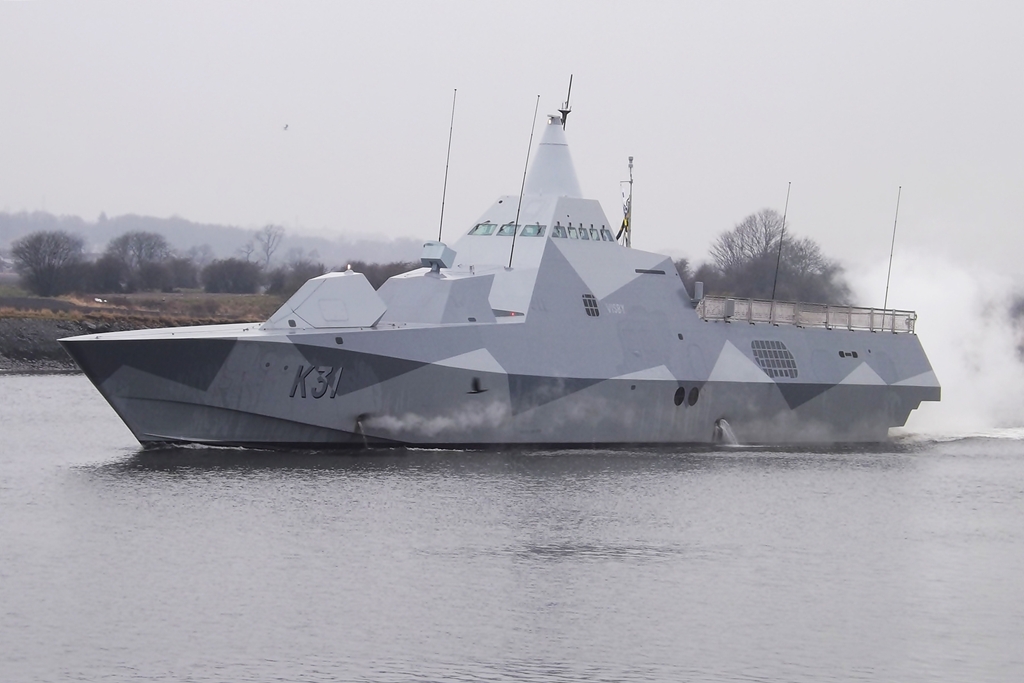
The Visby-class corvettes are a sleek and capable class of ships that are optimized for Sweden’s rugged coastlines. Their low radar signature can help “hide” them from enemy sensors. They will provide assets to the Standing NATO Maritime Groups that operate in the Baltic and Northern flank area, lending much needed credibility to NATO’s littoral components. Last but certainly not least, their very modern design, which one hopes will be continued somewhat in a prospective successor class, serves to display the technological superiority that NATO member states’ shipyards can churn out. Navies, which often operate “out of sight, thus out of mind,” need to impress upon their peoples their role to create the critical support for such long-term investments. Short of frigates, corvettes like the Swedish ones could be interesting for other Baltic littoral states that do not yet operate such medium-sized warships.

Visby-class Corvette of the Swedish Navy. (Photo via Wikimedia Commons)

Sweden’s amphibious assault element, in particular the CB-90 fast boats, which have garnered interest around the Baltic littoral states (e.g. in Germany), is another worthwhile contribution to the alliance and the Northern flank. Amphibious warfare has gained significant attention in the Baltic Sea, whether through pre-2022 Russian Navy drills, allied amphibious elements operating as part of the Joint Expeditionary Force (JEF), or repeated visits by the U.S. Navy’s USS Kearsarge (LHD-3) amphibious readiness group this past summer. While the big decks represent the high end of amphibious warfare, Baltic littoral states and NATO should train and exercise offensive and defensive small boat operations from the sea as well.

Finally, two technological features that are not yet in the water. First, the future Swedish A-26 submarine – an ambitious project for a next generation undersea capability – is likely to be a contender for NATO’s preferred non-nuclear boat. ThyssenKrupp MarineSystem’s air independent propulsion submarines (type 212A/CD) remain the challenger, while the Netherlands and others look for a proper model for their force regeneration. A more competitive market ought to help NATO member states in general, though Kockums has not built an indigenous submarine in more than 25 years. To their enduring credit, Swedish submarines continue to have a high standing in the United States, due in part to its lease of HSwMS Gotland from 2005-2007. Another asset that still has to prove its viability is the future HSwMS Artemis, a signal intelligence ship that is currently two years overdue amidst the reverberations of the pandemic as well as major hick-ups in this Swedish-Polish joint venture.

With its rich partnership with NATO navies, Sweden will be well placed to get underway. NATO navies, whether on individual and national deployments or as part of rotational Standing NATO Maritime Groups (SNMG), are a significant presence in the Baltic Sea. NATO operates two of these standing groups in the Northern European area of operations, a larger surface ship group (SNMG 1, the former Standing Naval Force Atlantic, STANAVFORLNT), and a mine countermeasures group (SNMCMG1, the former Standing NATO Force Channel, or STANAVFORCHAN, and Mine Countermeasures Force North Western Europe, or MCMFORNORTH, respectively) grouped around smaller surface combatants and tenders.

The Swedish Navy, upon gaining the operational prowess and formal legitimation to integrate, could dispatch one or more of its warships into the groups. At the same time, exercises such as the annual Baltic Operations (BALTOPS) and Northern Coasts (NoCo) will provide ample opportunity to train with other NATO navies in a joint and combined effort. NATO will likely require the Swedish Navy to account for regular but flexible naval presence as well. This should come as no surprise for Sweden given its frontline statues in the Baltic Sea, and it should use every opportunity to work with other NATO navies. A broader mindset, keeping in mind the military, constabulary and diplomatic use of the sea by navies,9 should yield a dedicated national naval or maritime strategy that addresses some of the trajectories outlined above.

It remains unclear whether NATO’s own “Allied Maritime Strategy,” published in 2011, will be rewritten – the need for which has been addressed in public forums repeatedly.10 In light of this, and absent a top-down effort, a bottom-up strategic effort would be very welcome by allied navalists. This ought to include some dedicated investments in the military-intellectual complex as well, given the need to study, research, advise, critique and explain naval matters to counter the infamous, often diagnosed “sea blindness.”

NATO, at least in the Baltic Sea and along its northern flank, is looking for cooperation agreements and a concurring mindset, not necessarily commands. There is much activity in the Baltic Sea in the latter field, and the Swedish military – already likely to be challenged to fill NATO billets around Europe and in North America – will be stretched to cover both staffing and operational requirements. Germany, for instance, is pushing hard for formats that attempt to offer new command, control and coordination functions in the Baltic Sea area, triggering some envy in other member states and the real risk of over-complicating NATO’s effectiveness in the region.11 Advanced Swedish-Finnish naval integration in recent years might offer a unique opportunity for true burden-sharing of two smaller militaries in NATO, and a chance to revive allied pre-2014 pooling and sharing initiatives in a meaningful way.

With the accession of Sweden and Finland into Norway, one discussion likely to resurface is whether or not the Baltic Sea is a “NATO lake.” As Hamburg-based Baltic Sea expert Julian Pawlak has rather brilliantly put it, “Designating the Baltic Sea as a ‘NATO lake’ is fatal in many ways. Besides the fact that, following such logic, it would already have been an ‘EU lake’ for some time, the use of the term suggests that the Baltic could be handled more or less exclusively by NATO, as an inland sea (which it almost is, politically), leading to the subsequent fallacy of complete sea control (which is certainly not the case).12 Sea strategists know that maritime territory can and will never be controlled in a manner that militaries do on land. In addition, if history is any guide, places such as the Mediterranean and the Atlantic have at one point been designated as NATO lakes – until they no longer were, with the incursion of then-Soviet submarines and naval assets in the Cold War and more recently by the aspiring Chinese Navy.13

Baltic navies would be well advised not to close or cordon off seas, and countries such as Germany have gone a long way to conceptualize that the Baltic Sea is intimately connected to the more contested and to the rest of the globe. Legal and etymological concerns aside, Baltic navies will still have to exercise sea control and all forms of naval warfare on the whole spectrum of conflict. A self-serving description of the Baltic as a “NATO lake” amounts to detrimental whistling in the woods at best, or wishful thinking and the willful degeneration of naval strategic thought and practice at worst.

The Swedish Navy can and must play an important role in the Alliance, and it should be encouraged to infuse its professionalism and maritime strategic culture into NATO, as well as identify partners with which it can aggressively pursue bilateral and multilateral programs so that NATO as a whole can be strengthened. Given existing formats, examples could be joining the German-Dutch amphibious cooperation to make it tri-partite, participating in the German-Danish-Polish (though for the time land-focused) Multinational Command East (MNC E) in Szczecin (Poland), offering its next-generation light corvettes/light frigates to partner navies, etc. Finally, the Swedes would also be well advised not to overstretch and avoid making the same mistakes as their soon-to-be fellow allies have done with regards to atrophying naval power in favor of a diffuse land power argument. Balancing national and alliance defense with international crises management remains the key challenge of the day for those wearing the uniform with the Tre Kronor.

Dr. Sebastian Bruns is a Senior Researcher at the Institute for Security Policy Kiel University (ISPK), where he served as the founding father of the adjunct Center for Maritime Strategy & Security, 2016-2021. From 2021-2022, he was the inaugural McCain-Fulbright Distinguished Visiting Professor at the United States Naval Academy, Annapolis, Maryland (USA). Since 2021, he is also a Senior Associate at the Center for Strategic and International Studies (CSIS) in Washington, DC, and a Corresponding Fellow at Kungl. Örlogsmannasällskapet (KÖMS).

[1] At the time of writing, NATO member states’ parliaments are still in the process of deliberating the Swedish (and Finnish) requests. Two countries – Turkey and Hungary – are still in the decision-making process.

[2] For a broader and more operational discussion on the military issues, see John R. Deni, “Sweden and Finland are on their way to NATO membership. Here’s what needs to happen next.” Atlantic Council Issue Brief, 22 August 2022.

[3] This essay is based on the author’s Royal Swedish Society of Naval Sciences’ inaugural lecture, given on 24 August 2022 at the Swedish Maritime Museum, Stockholm.

[4] See, for instance, Sebastian Bruns, “From show of force to naval presence, and back again: the U.S. Navy in the Baltic, 1982–2017,” Defense & Security Analysis, Taylor & Francis Journals, vol. 35(2), pages 117-132, April 2019; Bruce Stubbs, “US Sea Power has a Role in the Baltic,” USNI Proceedings, Vol. 143/9/1,375, September 2017.

[5] For a discussion of the evolution of European naval power since 1990, see Jeremy Stöhs’ study, The Decline of European Naval Forces. Challenges to Sea Power in an Age of Fiscal Austerity and Political Uncertainty, USNI Press: Annapolis, MD 2018. Sweden is covered on pp. 161-167.

[6] See Geoffrey Till, Seapower. A Guide for the 21st Century. 4th edition, Routledge: Milton Park, New York 2018, p.147ff.

[7] Jeremy Stöhs, “How High? The Future of European Naval Power and the High-End Challenge,” Center for Military Studies University of Copenhagen, 2021.

[8] Cited in Sebastian Bruns, US Naval Strategy and National Security. The Evolution of American Maritime Power, Routledge: Milton Park, New York 2018, p. 32f.

[9] See “Triangle on the Use of the Sea,” based on Ken Booth (1977) and Eric Grove (1990), and vastly expanded, cited in Till, Seapower, p. 362.

[10] See Kiel International Seapower Symposia 2018 (on allied maritime ends), 2019 (on means) and 2021 (on the ways). Reports on each conference can be obtained through www.kielseapowerseries.com. For more in-depth coverage on current issues that should drive an alliance-wide rework of its maritime strategy, see Julian Pawlak/Johannes Peters, From the North Atlantic to the South China Sea. Allied Maritime Strategy in the 21st Century, Nomos: Baden-Baden 2021 (=ISPK Seapower Series, Vol. 4).

[11] Edward Lucas, “Close to the Wind. Too Many Cooks, Not Enough Broth,” Center for European Policy Action (CEPA), 9 September 2021.

[12] Julian Pawlak, “No, Don’t Call the Baltic a ‘NATO Lake’”, RUSI Commentary, 5 September 2022. For a counter position, see Edward Lucas, “The Baltic Sea Became a Nato Lake,” Finnish Business and Policy Forum – EVA, 27 June 2022.

[13] For use of the term “NATO lake”, see Christina Lin, “The Dragon’s Rise in the Great Sea. China’s Strategic Interests in the Levant and the Eastern Mediterranean,” in Spyridon N. Litsas, Aristotle Tziampiris The Eastern Mediterranean in Transition: Multipolarity, Politics and Power, Routledge: London 2015.