All posts by Guest Author

Advocating by Doctrine: The Pakistan Navy’s Experience

This article is adapted from from a research paper published in Comparative Strategy, Volume 42 – Issue 4. 

By Dr. Khuram Iqbal and Muneeb Salman

Written military doctrines should inform the most basic principles on “how to fight.” But what happens when a doctrine does not primarily concern itself with this question and instead resorts to advocacy? Take, for example, Indian Maritime Doctrine, to which Indian naval expert Iskander Rehman ascribed an advocatory function. In a recently published paper, we argue that the strategic culture of the Pakistan military, characterized by an aversion to documented instructions and the perception of advantage in maintaining strategic ambiguity, led to a similar expression of advocacy in the Maritime Doctrine of Pakistan. The strategic cultural imprint is so strong that it has allowed only limited change in response to external factors, such as the intensifying major power competition and changing strategic stability in the adjoining maritime region. Developments like these can have implications on how military-strategic doctrines are seen, especially in developing countries with smaller navies.

Military Doctrine in Pakistan

The strategic culture of Pakistan is rooted in a quest for security that is influenced primarily by three factors: perceived hostility with India due to contentions following partition, including the war in Kashmir; the threat of a two-front war due to tensions with Afghanistan; and the perception of lack of strategic depth due to the concentration of Pakistan’s population and infrastructure along the Indus River. These factors prompted Pakistan to adopt a policy of opposition to India, prioritizing defense by procuring foreign (mostly Western) weapon systems and seeking diplomatic and military alliances. These policy choices became a part of the country’s overarching strategic culture.

The military-strategic doctrine of the country also evolved in the same strategic cultural context. Due to the perception of lack of strategic depth, the overall strategic doctrine was based on deterrence by denial and, in the event of war, starting a limited conflict that would terminate early due to high costs and third-party intervention. The same concept was extended to the use of nuclear weapons after nuclear tests by both India and Pakistan in 1998, when Pakistan rejected a mutual ‘no first use’ offer by India. Despite these developments, the military doctrine of the country remains informal and ambiguous. This is due primarily to two reasons: the military forces of Pakistan inherited the British aversion to written doctrines, and the intentional strategic ambiguity that Pakistan maintains to have leverage over a disparately advantaged adversary.

The British military has a long history of avoiding written doctrine and relying instead — like many allied countries in the years during and after the Second World War — on joint doctrinal documents, such as the NATO Allied Tactical Publication series. The first British Naval War Manual came out in 1960, yet there was a 35-year gap between the Manualissued in 1960 and British Maritime Doctrine adopted in 1995 for the Royal Navy. In Pakistan, all the manuals and guiding documents of doctrinal nature used in the armed services have been either classified or restricted. Even the latest military doctrines of the Pakistan Army (2010) and Pakistan Air Force (2007) are restricted to authorized service personnel only.

There is also a tendency of adopting ambiguity at a doctrinal level due to Pakistan’s conventional asymmetry vis-à-vis the traditionally perceived adversary India. Decision-makers in Islamabad believe that maintaining an ambiguous doctrine and posture will leave India without any firm estimates about the cost of war with Pakistan, thereby deterring war. This view has been accepted by scholarship both at home and abroad.

Doctrinal Culture in the Pakistan Navy

Doctrinal ambiguity also persists in the Pakistan Navy, and it is most pronounced in the area of nuclear deterrence. The development of the service’s sea-based nuclear capability started as a response to the perceived threat of India’s rapidly developing naval nuclear program. Senior naval officials in Pakistan claimed to have the capability to deploy strategic weapons at sea as early as 2008. While the Naval Strategic Forces Command was established at the Naval Headquarters in Islamabad in 2012, Pakistan did not test fire the Babur-3 submarine launched cruise missile (SLCM) until 2017. However, ambiguity around second-strike capability persists because the Babur-3 SLCM is not capable of long-range strategic (counter value) targeting. Contributing to this ambiguity, the Maritime Doctrine of Pakistan (2018) states that “Attainment of sea-based second strike capability in the neighborhood demands a robust sea based strategic deterrence. Completion of nuclear triad would enable Pakistan Navy to reinforce strategic deterrence in the region.”

Another reason for the lack of written doctrinal documents in the Pakistan Navy is that a culture of reading is absent in the ranks and ratings, and most instructions and orders are learned and communicated through customary practice and oral communication. One of the few doctrinal documents in the Pakistan Navy is the restricted Compendium of Fleet Orders that describes the role, functions, tasks, code of conduct, etc. for all officers and ratings in four volumes; however, it has little readership even among the officer cadre, which relies largely on customary conduct and anecdotes. Importance of the latter is reflected in the fact that anecdotes from the Navy were collected by a retired officer Rear Admiral Mian Zahir Shah and published in two volumes by the Pakistan Navy Book Club in years 2001 and 2016.

Ripples of Major Power Competition in the Indian Ocean

Across the border, the Indian Navy has also strived for increasing its influence among the armed services. Rehman’s assessment of the Indian Maritime Doctrine as an advocatory document was rooted in the oft quoted status of the Indian Navy as a “Cinderella service” — in reference to the neglected sister in the Disney story — and its limited involvement in Indian strategic decision-making. Yet, the Indian Navy supplemented its advocatory doctrine by an Indian Maritime Strategy published in 2007, and consequent updates of both the Indian Maritime Doctrine (2009) and the Strategy (2015). The Indian Navy also built a case for itself and succeeded in initiating major plans for modernization thanks to the increasing volume of India’s economy and the country’s strategic leaning towards its status as a “net security provider” in the region.

The strategic environment in the Indian Ocean region has transformed rapidly in the past decade. The Quad that formed in 2007 as a coalition for disaster relief and non-traditional security concerns has now consolidated into a regular platform for military exercises between India, the United States, Australia, and Japan. The India-U.S. partnership has cemented with the signing of the Basic Exchange and Cooperation Agreement (BECA) and its associated agreements, as well as the increasing procurement of military platforms, including the P8I Poseidon maritime patrol aircraft. India and France have also been expanding their military cooperation with permanent deployments at Reunion.

At the same time, the United States deployed a nuclear ballistic missile submarine at Diego Garcia last year, a rare move for the U.S. Navy at its remote base in the Indian Ocean. Lately, the AUKUS deal has also sparked debate on increasing nuclearization of the Indian Ocean region with the Indian strategic community particularly divided on the matter. These webs of alliances in the region are all concerned with one security risk as their referent: China.

China’s interests in the Indian Ocean have increased significantly over the past decades. Even though they are primarily commercial, the basing of Chinese Navy ships at Djibouti and the commercial acquisition of Gwadar and Hambontota ports have raised eyebrows in India and the West. The presence of Chinese survey vessels have also increased in the region, which India frequently protests and even resists. China has its own reservations in the broader Indo-Pacific region against the formation of an “Asian NATO” that includes India in its web of Western alliances.

Amidst these changes in the Indian Ocean region, the Indian Navy successfully put in pipeline plans to modernize and grow its fleet to 170 ships, including eighteen conventional submarines, six nuclear submarines, and at least two aircraft carriers by 2030. However, given the present resource allocation and fleet size of 130 ships, the Indian Navy may fall short of its target. Regardless, the present fleet with an aircraft carrier and a nuclear ballistic missile submarine, and another one of each platform under construction, has enough potential to create ripples and disturb any perceptions of strategic stability in the Indian Ocean region.

The Pakistan Navy’s Course in the Indian Ocean

Situated within intertwining alliances and the interactions of great powers, Pakistan finds itself between a rock and a hard place. The country has been a traditional Western ally, assisting the West and the United States intimately during the Cold War, from the U2 crisis to the Soviet-Afghan war, and later after the Cold War in the War on Terror. Pakistan has also been an important maritime partner in the Combined Maritime Forces (CMF) coalition that started in 2004 to ensure maritime security in the Western Indian Ocean. Subsequently, the Pakistan Navy commanded CMF’s Combined Maritime Task Forces 150 (Maritime Security) and 151 (Counter-Piracy) on 12 and 10 occasions respectively, the most among all participating countries. However, Pakistan’s close diplomatic and security ties to China and its participation in the China-Pakistan Economic Corridor (CPEC) led to a debate both within and outside on whether the country did, or needs to, change sides. Given this backdrop, Pakistan now situates itself for navigating the rough waters of increasing major power competition in the Indian Ocean region.

Returning to the doctrinal aspect, if the Pakistan Navy falls in line with the culture of maintaining ambiguity and is inclined to operate in the absence of widely documented doctrines, why did the service release a formal service doctrine in 2018? The official press release announcing the doctrine stated that the “MDP [Maritime Doctrine of Pakistan] will act as a stimulus in sensitizing the public at large, shape opinions and become instrumental in providing a sense of direction to the national maritime sector of Pakistan.” This is an affirmation of the advocatory purpose of the document, resulting from the fact that the Pakistan Navy has been the most under-resourced of the country’s military services despite dealing with the gap in nuclear deterrent capability and embarking on an ambitious fleet modernization program in the mid-2010s to offset conventional asymmetry. The outgoing Naval Chief Admiral Zafar Mehmood Abbasi in 2020 announced the target for a 50 ship fleet by the next decade. However, for this to materialize, the Navy needs more resources.

Vying for a Greater Slice of the Pie

Resource allocation has always been a problem for the Pakistan Navy. During the first budgetary year (1947-48), the government of Pakistan spent around 70 percent of the budget on defense, amounting to Rs. 43.2 million per month. The Navy only received Rs. 18.1 million for the whole budgetary year, while the rest was allocated to the Army fighting India in Kashmir. The budgetary issues continued for years, leading to the resignation of the naval chief HMS Choudri in 1959. After suffering losses during the 1971 war with India, the Navy adopted a strategy of sea control within a “defensive zone” to avoid a blockade of the country’s ports. The war experience and threat perceived from India continue to drive the Navy’s strategic considerations to date, very much in line with the overall strategic culture. Therefore, the increasing fleet size as well as augmentation of nuclear deterrent of the Indian Navy necessitates sharply the qualitative expansion of the Pakistan Navy to maintain strategic stability vis-à-vis India.

In addition to seeking greater resource allocation, the Navy also enjoys considerable influence in providing direction and expertise to the maritime sector. The Navy dominates key positions in several maritime institutions, including the Karachi Shipyard and Engineering Works, Karachi Port Trust, and the Pakistan National Shipping Corporation. The government tasked the Pakistan Navy with formulating a National Maritime Policy and National Maritime Strategy in 2010. Both documents, prepared in 2011, are still awaiting cabinet approval. Lack of government interest in maritime issues also incentivized the Navy to advocate for the overall development of the maritime sector of Pakistan. The present emphasis by the Navy is on a greater share of the budget for itself and for development of the maritime sector to uplift the national economy and support the defense budget.

The Pakistan Navy’s doctrinal experience shows that written military doctrines may carry other objectives than improving warfighting, such as advocating for greater relevance of a particular service or increasing government policy attention. Regardless of the objectives, such advocatory doctrines still reflect military-strategic cultural considerations even if they deviate from established norms, which in Pakistan’s case are the norms of doctrinal ambiguity and the absence of documented doctrine. The strategic-cultural considerations mediated the influence of major power competition upon the development of the Pakistan Navy’s doctrine. However, the service’s immediate priority still appears to be balancing parity with India rather than picking sides in the regional competition.

Dr. Khuram Iqbal is an Honorary Associate Professor in the Department of Security Studies and Criminology at Macquarie University, Australia. He previously served as the Head of Department at the Department of International Relations, National Defence University Pakistan, where he also lectured for the National Security and War Course.

Muneeb Salman is an Assistant Research Associate at Islamabad Policy Research Institute, a think tank affiliated with the National Security Division of Pakistan. He previously worked for more than two years at the Maritime Study Forum, an Islamabad based think tank focused on maritime studies.

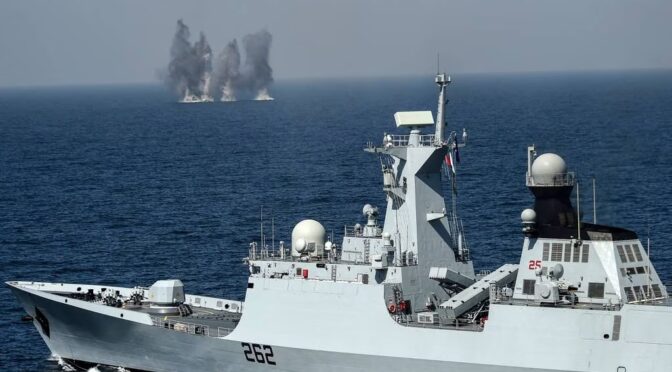
Featured image: KARACHI, Pakistan (Feb. 13, 2023) The Pakistan Navy ship Taimur fires rounds during the multinational naval exercise Aman near the country’s port city of Karachi. (Asif Hassan/AFP via Getty Images)
Submarine Rescue Forensics: Lessons from the ARA San Juan (S-42) Tragedy

By Andrew Song

In the race against time, recent history demonstrates that technology remains limited for submarine search and rescue efforts. The November 2017 disappearance of the Argentinian Navy submarine, the ARA San Juan (S-42), highlights the particular hardship confronting submarine recovery. After completing a naval exercise near Tierra del Fuego, the diesel-electric submarine ARA San Juan (S-42) departed from the city of Ushuaia to return to its home port in Mar de Plata. The boat transmitted its last signal on November 15th, 2017 and its failure to report twice to its command the next day prompted an international search and rescue operation starting November 17th.1 This case study examines the limits of aquatic-based forensic methods along with institutional shortcomings that inhibited the investigation. It furthermore underlines how contemporary submarine search tools – for rescue, post-mishap investigation, or espionage – remain underdeveloped and require further attention.

Searching for the ARA San Juan (S-42)

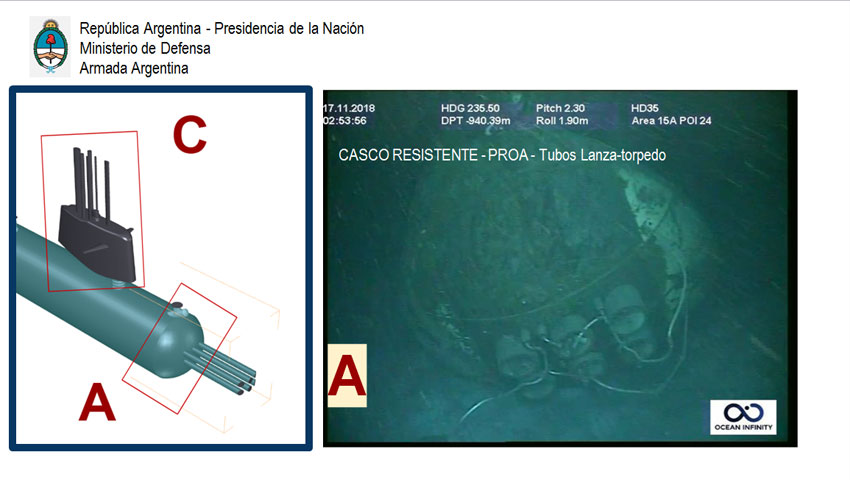
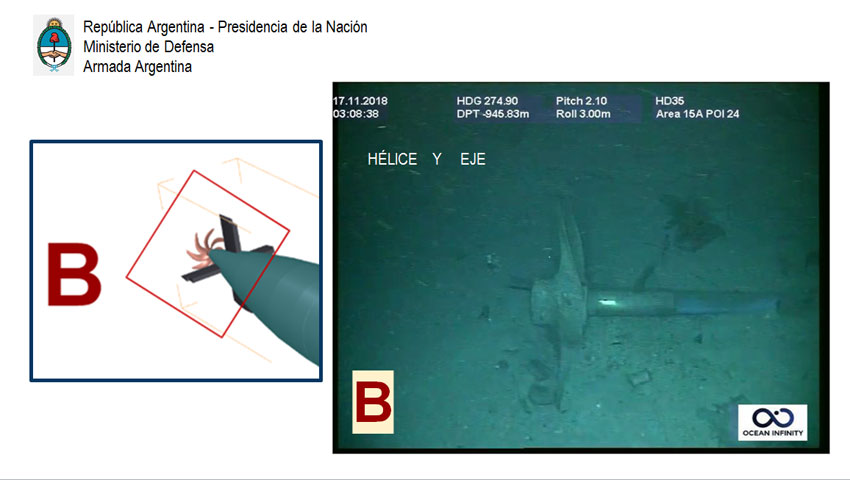
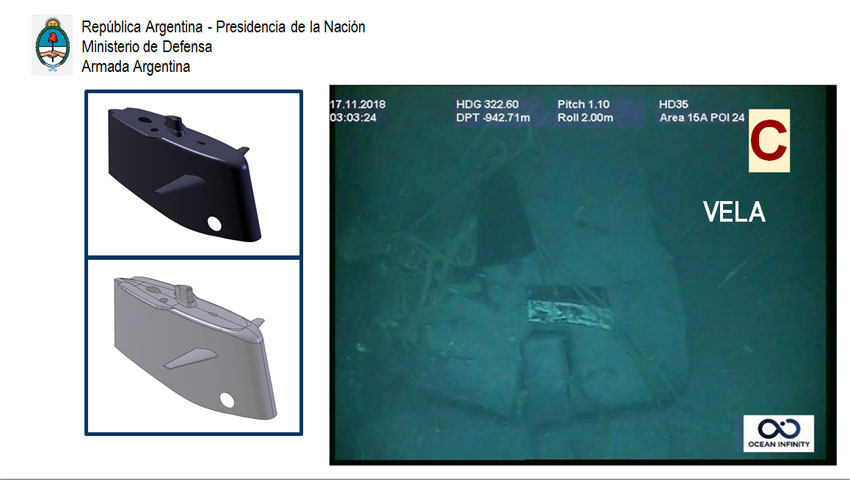
On its one-year anniversary of the San Juan’s disappearance, Ocean Infinity – an American private seabed explorer company contracted by Buenos Aires – located the missing submarine 270 nautical miles off Argentina’s nearest coastal city at a depth of 2,976 feet – roughly three times the nominal test depth.2 Photographs taken by Ocean Infinity’s ROVs portrayed a compromised hull with propellers and a bow section discernibly separated.3 Although presumed beforehand, the imagery eliminated any possibilities that there had been survivors on the ARA San Juan.

Revisiting the initial search operations on the 17th sheds light into the immediate challenges of the submarine search and rescue operations. Argentinian Navy helicopters, U.S Navy P-8A Poseidon, and NASA P-3 Orion aircraft began search efforts with sonobuoys that possessed limited range, but which could be rapidly and widely deployed. It became apparent that space and time disadvantaged the emergency responders: The initial search box was larger than the size of Iraq.4 The ARA San Juan only had a submerged oxygen supply of seven days, giving a five-day rescue window after the last communication. Moreover, the remoteness of the search area and the tardiness in support diminished the probability of success. Over 11 countries sent nine ships and 13 aircraft to the search area, but the additional manpower and vessels arrived by November 21st (T-3 rescue window), requiring aerial-deployed sonobuoys to spearhead localization efforts – not side-scan sonars. 5 These sonobuoys offered a medium to hear distress transmissions from submarine, including via active sonar, underwater telephone, echo sounder, emergency location beacons, and hull tapping.

Other obstacles included unfavorable weather conditions. In the rescue window, investigators battled swells that reached 10 meters and wind speeds in the South Atlantic recorded around 100km/h.6 Yet, the most disappointing element to the abrupt search operation was the abundance of false signatures. In the critical rescue window, multiple incidents hindered search progress by draining resources from follow-up investigations. Table 1 summarizes these sources of hope that were later met with frustration.7

Table 1: Summary of False Leads and Later Determined True Origin

Date Observed IncidentLater Determined CauseLocation
NOV 20Satellite Calls on same frequency used by San JuanCommercial VesselUnspecified
NOV 21Faulty identification of possible banging on metal from passive sonarBiological Unspecified
NOV 21Magnetic anomaly with heat signatureEquipment 430km from coast
NOV 213 Flares seen in vicinity of last locationNot Same Color FlaresUnspecified
NOV 22Object found near area of San Juan’s last signal Unrelated debris 270km from coast

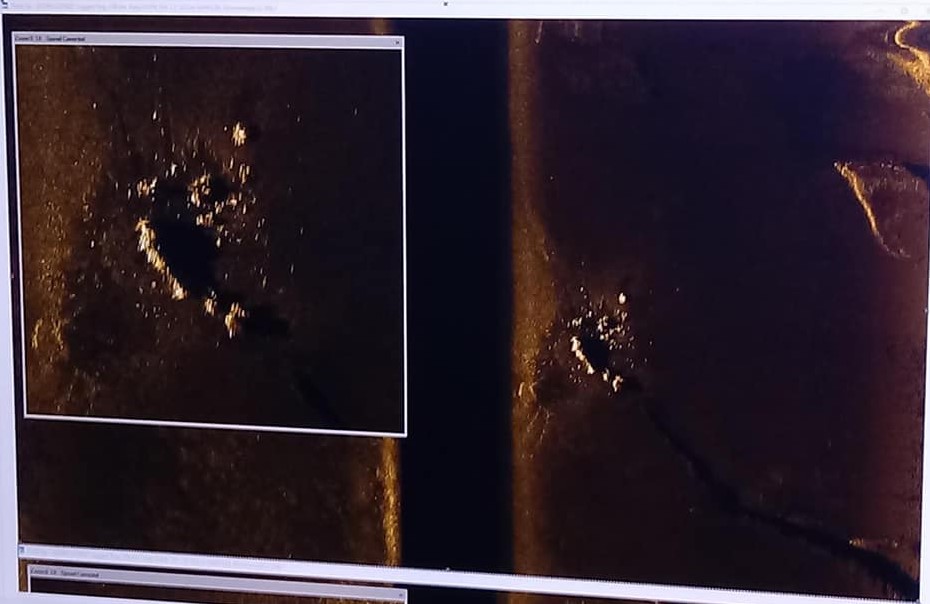
The Argentinian Navy declared the rescue aspect of the search operation to be over on November 30th, 2017 after planners eliminated an extreme survival situation. At its height, the search operation constituted over 4,000 personnel from over 13 countries and surveyed over 200,000 square miles.8 On November 16th, 2018, a Houston-based hydrographic survey company, Ocean Infinity, used a Norwegian multipurpose ship to investigate a possible ping on the San Juan’s potential position in the middle of a sea canyon.9 Finally, Ocean Infinity confirmed discovery of the San Juan on November 17th, 2018 and handed over data and visual evidence of the wreckage for forensic investigators to determine cause. Ocean Infinity’s use of five autonomous undersea vehicles (AUVs) for exploring the wreck site suggested that extensive use of AUVs was integral to the mission’s success.

Argentine Navy photos showing the submarine’s bow section, sail, and propeller that were torn off in the implosion. (Argentine Navy photo)

Forensic Shortcomings and New Questions

In the case of the San Juan’s disappearance, investigators must ask themselves about failures in the search phase and prescribe future procedures to avoid such pitfalls. The disappearance of the ARA San Juan disturbingly mirrors the loss of the Kursk in 2003, apart from the evidence that the Kursk had initial survivors post-implosion. First, the Comprehensive Nuclear Test Ban Treaty Organization (CTBTO) in Vienna did detect a hydro-acoustic anomaly from its Ascension Island and Crozet Island stations that seemed consistent with an underwater explosion on November 15th around 30 nautical miles from the San Juan’s last known bearing in the morning.10

Unfortunately, the CTBTO’s automatic processing algorithm used to detect nuclear explosions did not flag the registration of the two hydrophone station’s recording.47 In an effort to minimize false alarms, the CTBTO incidentally failed to exploit data that could have been used towards the calculation of a coverage ellipse for the San Juan. CTBTO could have directed their waveform analysts to immediately deploy their standard iterative dual correspondence (IDC) automatic localization algorithm to produce a spatial diagram of the detonation’s coordinates from iterative minimization of the origin time and azimuth residuals from the seismic data.

This had been done before as Koper details how four land-based seismometers detected the Kursk’s torpedo misfire on August 10th, 2000.11 Collation of the data in the Kursk case allowed for there to be a preliminary ellipse-shaped search parameter for the Kursk. The ARA San Juan’s implosion likely mimicked features of the Kursk’s explosion – compressive first motion, significant variation and high ratio of Sn to Lg, and shear wave generation in the seismic record. The oversight in the hydroacoustic anomaly, although eventually rectified through manual processing, caused the CTBTO to inform Argentina on November 22nd about a possible localization tardy in the search phase.12 Earlier consultation between Argentina and CTBTO and better automated processing for significant non-nuclear seismic events could have produced a more refined search box sooner.

State capabilities also hampered search execution. Ocean Infinity discovered the San Juan in a grid site that had a 90 percent probability of wreckage to be found – at the beginning of search planning.13 Argentinian officials defended themselves by stating that sub-canyons presented a hazard that its Navy could not outmaneuver. In other words, even if the crew was deemed to be alive, Argentina lacked methods and technology like a McCann Rescue Chamber or Deep Submergence Rescue Vehicle (DSRVs) required for a delicate retrieval operation. This deflection of blame, however, shared no merit as U.S operators from Undersea Rescue Command in San Diego arrived with Submarine Rescue Diving and Recompression System and a tethered Pressurized Rescue Module Remotely Operated Vehicle (ROV) in only two days.14

Comodoro Rivadavia, Argentina (Nov. 26, 2017) U.S. Navy Undersea Rescue Command (URC) sailors and Argentine construction workers prepare the motor vessel Sophie Siem for the installation of the Submarine Rescue Diving and Recompression System (SRDRS) which operates the deep diving rescue vehicle, the Pressurized Rescue Module (PRM). (U.S. Navy photo by Mass Communication Specialist Christopher Lange)

Lastly, the relegation and sidelining of side-scan sonar and UUVs contributed to inefficiency and lack of coverage. Tardiness in the arrival of logistical support signified that these methods could not be practically implemented so total blame could not be place on the planners. Absence in information regarding scenarios and hypotheses did not allow for Bayesian search strategies to be fully utilized, although submarine officers blame a short-circuit in the battery tray in the prow due to water intake from the submarine’s snorkel as a precedent event to the suspected implosion.

That being said, forensic investigators still confront distinct challenges irrelevant to traditional geophysical investigations. Unlike terrestrial-based forensics, pre-established knowledge of a local maritime environment is sparse. Scientists have mapped 1/5th of the sea floor to modern standards with 100m resolution, but that means almost 290 million square kilometers of seafloor – twice the surface area of Mars – has not yet been surveyed. The absence of existing charts, therefore, necessitates simultaneous 4-D mapping of the area.15 Submarine debris are unidentifiable in satellite and aerial images due to surface opacity and the extreme depth of wrecks. Stratification conceals wrecks and clearing sedimentary buildup becomes extremely complicated due to sheer volume. An onsite “walk-over” survey, as described by Fenning and Donnelly in their description of geophysical methodologies, is simply impossible in a marine environment.16 Acidity and pH levels of the water also influence rates of decomposition, and must be considered for a simulation in the casualty scenario. In the future, the undersea recovery field must overcome these variables in order to find any success in submarine search and rescue.

A screenshot showing the wreckage of the ARA San Juan laying 920 meters below the surface. (Argentine Navy photo)

The loss of the ARA San Juan devastated the Argentinian public and had harmful repercussions on its naval service. Not only did Argentina lose 44 sailors, but one of the San Juan’s crewmembers was the first female submarine officer (Lieutenant Eliana Krawczyk) in Argentina’s history.17 Federal policemen raided the Navy’s headquarters for document requisition to piece together culpability and allocate responsibility. Argentina’s Minister of Defense unceremoniously fired Marcelo Srur, the Navy’s Chief of the General Staff, and the events surrounding the ARA San Juan’s mission — tracking British assets near the Falkland Islands — was publicly leaked by an Argentinian media source, further embarrassing the Navy.18

Conclusion

The task of finding lost submarines is an enigma complicated even further by the very reason these boats exist: to be undetectable assets for national security. Unlike their geologist peers, marine forensic investigators rely on robotics and invisible sound waves as surrogate sensors to hands and eyes. The development of side-scan sonar systems, and the consolidation of UUVs for search operations and site verification amalgamate the practice of maritime search into a forensic field heavily invested and intertwined with technological innovation. When establishing an inaugural search parameter, best practices in Bayesian search strategy call for officers and scientists to weigh qualitative hypotheses in order to allocate priorities to search boxes that will offer maximum efficiency.

The ARA San Juan represents a recent case, where these methods did not seem utilized to the fullest capacity. Prior success in the history of these methodologies being used for finding WWII vessels demonstrate that perhaps governments must rethink quick reaction plans to lost submarines. In order to save lives and honor the gravesites of individuals lost in times of conflict, advancement of these methods and a reevaluation of the ARA San Juan’s loss will be beneficial for the global submarine community and for navies around the world.

Ensign Andrew Song is a U.S. Navy submarine officer assigned to the USS San Francisco (MTS-711). His past publications have appeared in peer-reviewed military journals and outlets including Military Review, Journal of Indo-Pacific Affairs, USNI Proceedings, Yale Review for International Studies and the Wall Street Journal. He graduated from Yale University with a B.A. in Global Affairs.

Endnotes

1. Politi, Daniel; Londoño, Ernesto (30 November 2017). “Hope for Argentina Submarine Crew Fades”. The New York Times. Nov 30, 2017.

2. “First photos of submarine emerge as families implore Argentine government to recover wreck”. NewsComAu. 18 November 2018.

3. “ARA San Juan.” Ocean Infinity, June 16, 2020. https://oceaninfinity.com/projects/ara-san-juan/.

4. Kirby, John. “Argentine Navy Says Sounds Detected Aren’t from Missing Sub.” CNN. Cable News Network, November 21, 2017. http://edition.cnn.com/2017/11/20/americas/argentina-missing-submarine/index.html.

5. Ibid.

6. Pecoraro, Natalia. “El Fuerte Viento Demora El Operativo y Complica Las Tareas De Rescate.” La Nación, November 26, 2017. https://www.lanacion.com.ar/politica/el-fuerte-viento-demora-el-operativo-y-complica-las-tareas-de-rescate-nid2085829/.

7. “Avanza Un Operativo Donde Hace 8 Días Se Detectó Una ‘Anomalía Hidroacústica.’” Télam, November 23, 2017. https://www.telam.com.ar/notas/201711/225405-ara-san-juan-busqueda-armada-argentina-ruido-anomalia-hidroacustica.html (2) Goni, Uki. “Argentina’s Navy Says Fresh Noises Are Not from Missing Submarine.” The Guardian. Guardian News and Media, November 21, 2017. https://www.theguardian.com/world/2017/nov/20/missing-argentina-submarine-running-out-of-air-as-search-enters-critical-phase.

8. “San Juan Submarine: ‘Explosion’ Dashes Crew Survival Hopes.” BBC News. BBC, November 23, 2017. https://www.bbc.com/news/world-latin-america-42100620.

9. “ARA San Juan.” Ocean Infinity, June 16, 2020. https://oceaninfinity.com/projects/ara-san-juan/.

10. Nielsen, P.L., Zampolli, M., Le Bras, R. “CTBTO’s Data and Analysis Pertaining to the Search for the Missing Argentine Submarine ARA San Juan.” Pure Appl. Geophys. https://doi.org/10.1007/s00024-020-02445-9. January 31 2020.

11. Koper, K. D., et al., 2001. Forensic seismology and the sinking of the Kursk, Eos, 82, 45-46.

12. Politi, Daniel, and Mihir Zaveri. “Argentina Minister Says Country without Means to Rescue Submarine.” thestar.com, November 17, 2018. https://www.thestar.com/news/world/2018/11/17/missing-argentine-submarine-found-at-bottom-of-atlantic-one-year-after-disappearance.html.

13. Ibid.

14. “Argentina Missing Navy Submarine: Search Stepped Up.” BBC News. BBC, November 18, 2017. https://www.bbc.com/news/world-latin-america-42030560.

15. Amos, Jonathan. “One-Fifth of Earth’s Ocean Floor Is Now Mapped.” BBC News. BBC, June 20, 2020. https://www.bbc.com/news/science-environment-53119686.

16. Fenning, P. J., Donnelly, L. J., 2004. Geophysical techniques for forensic investigation. Geological Society of London Special Publications, 232, 11-20.

17. Argentina: Wreck of ARA San Juan Submarine Found after One Year . Al Jazeera English, 2018. https://www.youtube.com/watch?v=MxufaPwlTOA.

18. Gidget Fuentes, Special Correspondent. “Specialized Undersea Rescue Force on Call to Aid Submariners in Trouble.” Seapower, October 20, 2020. https://seapowermagazine.org/specialized-undersea-rescue-force-on-call-to-aid-submariners-in-trouble/.

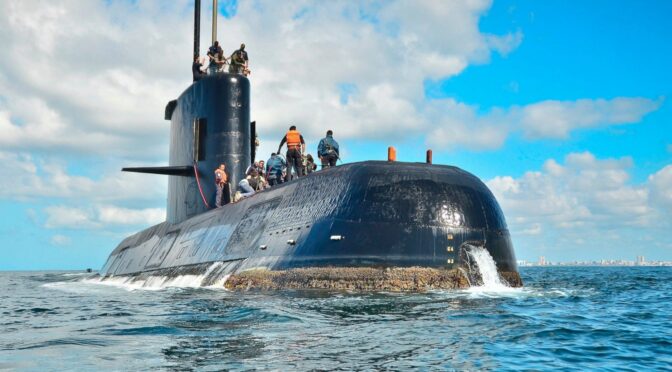
Featured Image: The ARA San Juan of the Argentine Navy. (Argentine Navy photo)

Be Mindful of JADC2’s Emission Risks

Notes to the New CNO Series

By Richard Mosier

The Joint All-Domain Command and Control (JADC2) concept is totally dependent on radiofrequency (RF) communications to connect military assets across the space, air, land, and sea domains. This plethora of RF emissions from U.S. radars, communications systems, data links, and navigation aids presents a lucrative signals intelligence target that could undermine JADC2.

While net-centric concepts such as JADC2 enjoy broad endorsement, the elephant in the room is the underlying risk associated with adversary intelligence collection and exploitation. RF emissions present the best source for channeling enemy wide-area search, classification, and tracking. If U.S. emissions are sufficiently frequent, they provide the basis for maintaining the track continuity required for targeting long-range anti-ship missile strikes. The U.S. should not underestimate the ability of adversaries to take full advantage of the RF opportunity presented by U.S. net-centric operations.

In contrast with the JADC2 concept, service concepts such as Distributed Maritime Operations (DMO) and Expeditionary Advanced Base Operations (EABO) are based on the force being hard-to-find. Recognizing the risk of enemy exploitation of RF emissions, the hard-to-find objective is achieved in large measure through operating in RF silence.

The JADC2 net-centric concept and concepts based on being hard-to-find both make sense, but need to be made more complementary. If the enemy does not know where U.S. units are located, the strategy would be to operate in RF silence to remain hard-to-find, thereby avoiding premature engagements and maintaining the advantage of surprise. When the hard-to-find strategy fails and the U.S. force is facing attack, the strategy would be to rapidly transition to unconstrained RF emissions to leverage the substantial advantage of net-centric operations.

The Navy should request that the Defense Intelligence Agency conduct an assessment, with Navy, NSA, and NRO participation, of the risk of Chinese exploitation of JADC2 RF emissions. If the risk is assessed as high, it would serve to persuade JADC2 advocates of the risks of enemy exploitation of RF emissions, the necessity to conduct some phases of operations in RF silence, and the need for modifications to the JADC2 concept to integrate both.

Richard Mosier is a retired defense contractor systems engineer, Naval Flight Officer, OPNAV N2 civilian analyst, and OSD SES 4 responsible for oversight of tactical intelligence systems and leadership of major defense analyses on UAVs, signals intelligence, and C4ISR.

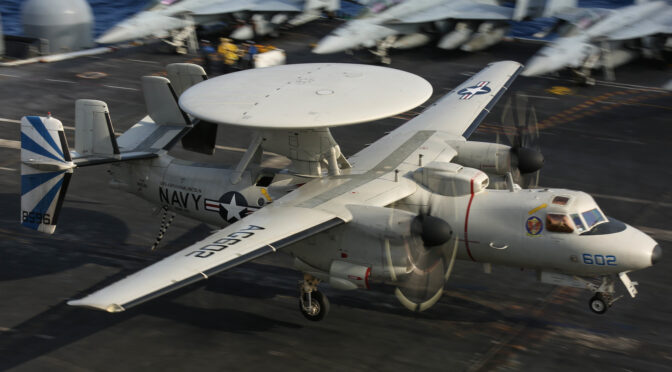
Featured Image: ATLANTIC OCEAN (Feb. 18, 2019) An E-2D Hawkeye assigned to the “Bluetails” of Carrier Airborne Early Warning Squadron (VAW) 121 performs an arrested landing on the flight deck of the Nimitz-class aircraft carrier USS Abraham Lincoln (CVN 72). (U.S. Navy photo by Mass Communication Specialist 3rd Class Amber Smalley/Released)

Ask the Public for Material Sacrifice to Narrow the Civ-Mil Divide

Notes to the New CNO Series

By Michael D. Purzycki

The civilian-military divide is often framed as a problem of cultural misunderstanding. And certainly, in an era where most Americans have not served in the military, it is natural that those who have served would feel misunderstood by those whose safety and freedom they defend. However, there is another aspect of the divide, one that if addressed forthrightly by military leadership, can narrow the gap in a more tangible way.

Given that the military is one of the most highly regarded public institutions in American society, its members are well-positioned to ask for material sacrifice from the general public. This would give civilians a chance to go beyond saying, “Thank you for your service,” and contribute in a financially meaningful way to the nation’s defenses. In an era of frequent budgetary uncertainty, any step that could help ensure a reliably funded military is worth considering.

For example, the Navy could point to the amount of petroleum it would need at its disposal to fight and win a conflict with the People’s Liberation Army over the fate of Taiwan. It could then ask Congress for a specific number of barrels of petroleum to be taken out of the civilian economy and added to Navy reserves, to ensure there is no gap between the fuel needed and the fuel available for contingencies. In the process of this request, it could quantify the increase in gasoline prices American drivers could expect to experience. Similar initiatives could be applied to other militarily significant resources and assets.

Even the people of a famously tax-averse country like the United States might accept financial sacrifice to help the troops. While today’s Americans do not have to sacrifice to nearly the extent the World War II generation did, direct requests for contribution to the armed services could help revive some of the spirit of America’s greatest military triumph. Evoking past Americans’ experience of rationing, Victory Gardens, war bonds, and the introduction of income tax withholding, while asking today’s Americans to endure a little pain at the pump, could narrow the civ-mil divide as well as help prepare the nation for future major conflict. As politically difficult as requests for sacrifice from ordinary Americans will be, scrambling to adequately resource America’s defenses in the midst of a war would likely be even more difficult.

Michael D. Purzycki is an analyst, writer, and editor based in Arlington, Virginia. He has worked for the United States Navy, Marine Corps, and Army. In addition to CIMSEC, he has been published in Divergent Options, Merion West, the Washington Monthly, Wisdom of Crowds, Charged Affairs, Braver Angels, and more. He can be found on Twitter at @MDPurzycki. The views expressed here are his own.

Featured Image: SEA OF JAPAN (Oct. 3, 2023) Sailors load a MK-46 torpedo into a surface vessel torpedo tube on the boat deck aboard the Arleigh Burke-class guided-missile destroyer USS Shoup (DDG 86) while conducting routine operations in the Sea of Japan, October 3. (U.S. Navy photo by Mass Communication Specialist 1st Class Donavan K. Patubo)