
Tag Archives: shipbuilding

Procuring Maritime Leverage

A few weeks ago I was at a conference in Portsmouth, United Kingdom, assessing the historical, contemporary, and future relationship between the Royal Navy and the nation. Amongst the discussions that took place was one chaired by the former First Sea Lord concerning the issue of construction and procurement, in particular the ability of Britain’s shipbuilding industry to meet the requirements of the RN and at what cost. The UK still produces some of the most technologically sophisticated warships and weapons systems in the world, as the Type-45 destroyers are testament to. Yet, they increasingly come at a premium at odds with the current weak state of the country’s economy and an austere government that has instigated huge cuts to its armed forces, particularly its navy, following 2010’s Strategic Defence and Security Review (SDSR). The rationalisation of Britain’s defence industry from decades of mergers and takeovers and the rise of monopolistic monoliths like BAE Systems do not help, with a lack of domestic competition for national defence contracts that might otherwise lower prices. Still, a major issue lies in the decreasing numbers and frequency of warship orders, and the higher cost per unit this inevitably produces. We’ve already seen Britain outsourcing certain shipbuilding capabilities, with four new Royal Fleet Auxiliary tankers ordered from South Korea in February of this year, and it now seems unlikely that another tanker will be produced in the UK again for the RFA, at least in the short to medium-term future, as those skills are lost from its workforce. The question is where Britain draws the line. Does the UK and RN need to make a firm decision as to what industrial capacity it should safeguard in its national strategic interest, such as nuclear submarine construction, and what could be procured from overseas without loosing too much operational capability? Smaller patrol craft and minesweepers perhaps? To do so could produce a more affordable, sustainable navy, and abate the continuous reduction in numbers.
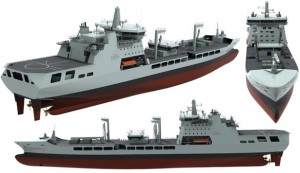
The UK’s next generation of fleet tankers will be built in South Korean not British shipyards

As a historian who studies the post-Second World War development of colonial naval forces into sovereign Commonwealth navies, this issue to me highlights a fascinating shift in strategic-economic relations that raises questions and concerns in areas of geopolitical uncertainty. For several decades, the vast majority of the world’s arms, particularly more technologically-sophisticated warships, came from the same small group of producers located in the traditional ‘First World’. The underdeveloped industries of post-colonial countries, a hangover from imperial policies to turn colonial economies into primarily suppliers of raw materials for the metropole’s industry, meant that they were often continuingly dependent on the former ‘imperial motherland’ to supply them with equipment for their nascent armed forces, subsidised by development aid packages. This was particularly the case in countries that didn’t wish to align themselves in the bi-polar international system of the Cold War, such as initially India. Countries like Britain derived not only economic benefits from such a relationship, including offloading its outdated and surplus warships, but political and strategic ones too from being able to shape the composition and capabilities of such beneficiaries to complement its own designs for ‘Commonwealth Defence’. India recognised the undesirableness of such a situation, and has made a concerted effort to overhaul its shipbuilding industry over the last fifty years, embarking upon ambitious indigenous construction programmes, including recently Shivalik-class stealth frigates and Vikrant-class aircraft carriers. Other formerly ‘developing’ countries, most notably China, also now have impressive manufacturing capabilities. With that comes opportunities for export, and as the industrial capacity of established producers in the West declines and is surpassed by the more-competitive emerging economies of the East, new defence agreements will be forged between untraditional partners. The link between economic and politico-strategic influence is intrinsic, and as countries such as Britain were once able to use naval procurement as leverage and a way of furthering their own interests, new producers such as China and India can be expected to do the same. This could lead to the creation of new strategic alliances and increased uncertainty in regions of escalating maritime tension and instability, with potentially frightening consequences for all.

Dr Daniel Owen Spence is Lecturer in Imperial and International History at Sheffield Hallam University, United Kingdom, and publishes research on nineteenth and twentieth century naval history.
3D Printing: I’ll Take a Cruiser in Pink

We’re out of toner again.

Third in our series on 3D printing.

The U.S. may not have much capability to launch humans into space these days, but in many other ways we are moving towards the sort of future envisioned in the likes of such sci-fi mainstays as Star Trek (if you are just joining this blog – I am in fact somewhat of a nerd). In our smartphones we have a close approximation to the series’ tricorders and communicators, able translate, record data, communicate and scan items. Researchers are even developing the device’s medical scanning functions as apps and add-ons. Elsewhere energy weapons and rail guns are taking shape in the labs of the U.S. military. Even the underlying science behind the series’ most fantastic device of all – transporters, able to instantaneously transmit matter and people from one location to another thousands of miles away – may have been discovered with the recent breakthroughs in quantum entanglement. So it should come as no surprise that another of the series’ future tech is already progressing through very real early stages of development, that of the replicator.

In this 3rd installment in our series on 3D printing – also known as additive manufacturing – I lay out my own thoughts on how this very real technology is impacting and will impact shipbuilding and design, particularly for the U.S. Navy.

“We’re Gonna Need a Lighter Boat”

3D printing will revolutionize the way every piece of equipment for a navy is built, and this starts at the design stage with a focus on decreasing a ship’s weight. First, the way parts can be created using 3D printing, building components as a whole rather than requiring further assembly later, allows designers to mimic the intricate internal structures found in nature to develop extremely strong parts while using lighter materials such as carbon fiber in place of steel. Second, components created a piece at a time in a traditional factory typically require additions like brackets and flanges for handling and for surfaces to bolt or weld the pieces together. Third, designers can create more rounded shapes for system components such as ducting and piping. This not only allows internal ship systems to operate more efficiently, as the rounded shapes are much more conducive to fluid flow than elbow-shaped pipes and ducts stamped out in a traditional factory, but again will decrease weight by eliminating unnecessary system volume. The Economist reports the Navy is already using “a number of printed parts such as air ducts” in F-18s for these very reasons.

As maritime professionals know, lighter does not mean weaker, but does mean faster. It also means cost savings from decreased fuel consumption, and increased operational range – less reliance on oilers and brief stops for fuel.

Heavy Metal Savings

3D printing can bring down costs in other ways. The material savings of additive manufacturing can be enormous. According to The Economist, while traditional manufacturers of parts requiring high-grade metals such as titanium for aircraft can see up to 90% of the costly material cut away and wasted, researchers at EADS show the use of titanium powder to print the parts uses only 10% of the raw material.

3D printers can similarly reduce the costs of creating prototypes in comparison with traditional methods, and because they can make the prototypes much more quickly they allow designers more time to experiment with models of everything from valve handles to hull forms.

After the printer is purchased or built, the cost to customize an item or completely switch production is primarily only the labor cost of the design change and the difference in the material. The potential savings are huge to customers such as shipbuilders and navies, where constant updates, upgrades, and requirement changes would otherwise lead to cost overruns.

I’ll Take a Cruiser in Pink

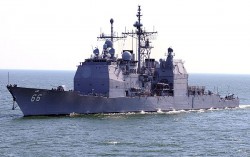
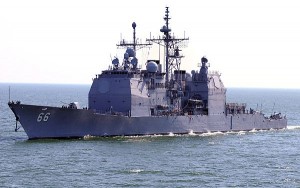
Where does this lead us? In the short-term there will still be many high-volume, high-use parts that vary little and are cheaper to make using traditional methods. But as 3D printers replace assembly lines, ever more complicated 3D printers that can produce greater portions of a finished vessel or aircraft will make their mark on the fleets of the future. Sooner than you think shipyards’ production halls may be transformed into large 3D printer complexes able to print the hull and major superstructure pieces, leveraging the ability to create highly complex internal structures and designs to bring down weight and cost.

As most of the ship design and production is nowadays done by defense contractors, sailors may be less aware of these impacts of 3D printing on their experience at sea. In the next post in our series, I respond to Matt Hipple’s and take a look at the much more direct impacts of 3D printing on life at sea, including the potential to shift supply and production from ashore to afloat.

Photo: US Navy