Tag Archives: NATO

Fast Response Not Necessarily the Best in Crimea

As matters continue to escalate between Ukraine and Russia in Crimea, many are quickly calling for action in response by the United States. They say it is our duty as a leader on the world stage, and claim that if the U.S. does not take action then it conveys to the world that we are inept and will not take action in response to aggression around the world. Of course, when people call for action they really mean military action. This is probably because utilizing the military is the most overt, visible, and rapid response. We are living in a very fast time. We used to think the 24-hour-news reporting cycle was fast, but then we discovered live-tweeting of world events. We find out about things quickly and along the same vein we want to see responses quickly. There can be no doubt in the media and public perception that if missiles start firing and troops begin landing then we are taking action. Though always defaulting to the military might convey action, it might not be the best course of action.

We too often confuse military strategy with grand national strategy and military power with national power. We oversimplify and forget the diplomatic, information, and economic aspects. When these are coupled with the military aspect we get the nice acronym DIME (diplomatic, information, military, and economic) that many of us are familiar with from doctrine. A military response would most certainly be the most rapid and overt, but those features alone do not make it the most appropriate. Military power is so much more than utilization of force. Possessing credible military capability can add validity to efforts of diplomacy, economics, and gathering of information. The military is an essential element of national power, but as the saying goes, if all I have is a hammer (or all I think about is a hammer), then all of my problems look like nails.

Unfortunately we tend to think of events in terms of a duel. Each side takes their predetermined shot and in the end whoever is left standing wins. In reality, international relations are more like a game of chess. You have many different moves at your disposal and every more you make (or do not make) will have implications for every following move. The question of what we lose or gain from action – as compared to inaction – must be asked. Inaction by a party does not imply maintaining a status quo. International relations are dynamic and continuously evolve regardless of whether the U.S. takes proactive military action or not.

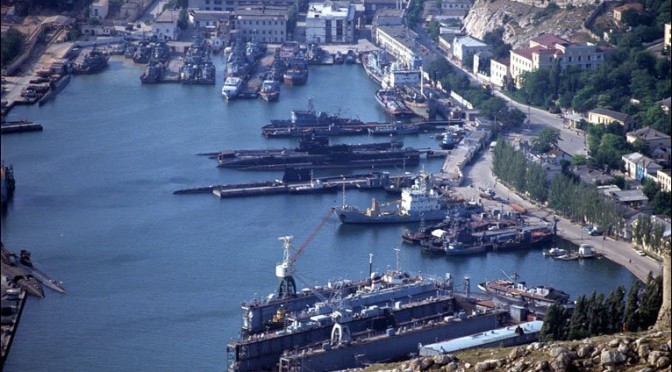
If military action is not taken by the U.S. or NATO in Ukraine, what is to gain and what is to lose? If Russia expands its sphere of influence to encompass Crimea, it will secure control of Sevastopol and its coveted warm-water port for the Black Sea Fleet. This has been a strategic goal for Russia since the 17th century, but is it worth the cost? In the end it might be that Russia is winning the battle but losing the war. An invasion of Crimea could have long-lasting political ramifications that overshadow gaining lasting control of a warm-water port. Gaining Crimea could mean Russia losing its influence in Ukraine and Georgia. Seeing Russia’s aggressiveness and willingness to take military action to achieve its goals could be just the motivation Ukraine and Georgia need to grow closer to NATO and the European Union.

This port is so nice and warm

Though it appears Russia will expand its influence to encompass Crimea, it may not be a lasting influence. The major ethnicities in Crimea are 58% Russian, 25% Ukrainian, and 12% Crimean Tatars. Even before the invasion, the Ukrainians were not very fond of the Russians, so the sentiment from Crimea’s 2nd largest ethnic group will only worsen. Along the same lines, the Crimean Tatars have been very anti-Russian since the mid-20th century. Russia may gain its coveted warm water port, but it may come with a hornet’s nest throughout Crimea that it will have to deal with for years to come.
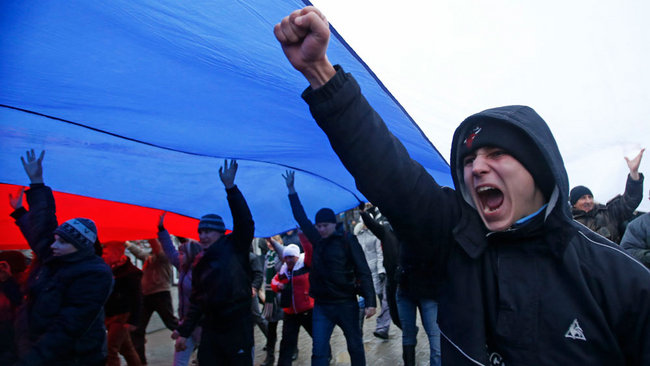
It looks like about 58% of the people like us here

Even before committing forces in Ukraine, Russia had a lease for use of the naval base at Sevastopol, so Russia gaining control of Crimea is not a significant change in that respect. What is much more significant is it coming with the opportunity to expand the influence of NATO to former Soviet bloc nations and potentially having unrest in Crimea that Russia will have to dedicate resources to address for years to come. Military inaction in favor of expanded diplomatic, information, and economic actions in the region could be the best option.

LT Jason H. Chuma is a U.S. Navy submarine officer who has deployed to the U.S. 4th Fleet and U.S. 6th Fleet areas of responsibility. He is a graduate of the Citadel, holds a master’s degree from Old Dominion University, and has completed the Intermediate Command and Staff Course from the U.S. Naval War College. He can be followed on Twitter @Jason_Chuma.

The opinions and views expressed in this post are his alone and are presented in his personal capacity. They do not necessarily represent the views of U.S. Department of Defense or the U.S. Navy.
Sea Control 21 – Threat Projection

seacontrolemblem

Today’s extended episode is a chat on future threat projection with Dennis Smith of the Project on International Peace and Security from William and Mary, Chris Peterson of the Fletcher School’s Neptune Group, and Alexander Clarke of the Phoenix Think Tank. We talk about the next 5-10 years in maritime security, concentrating on global human security, china, and the economy. Please enjoy Sea Control 21- Threat Projection (download).

Remember, we are available on Itunes, Stitcher Stream Radio, and a bunch of other places my Google data can’t identify. Please, leave a comment and a five-star rating so we can get on the front page one day.

The Albanian Navy in Action

The Republic of Albania, which joined NATO together with Croatia in 2009, has had an interesting relationship with its own maritime forces over the past two decades. Until the onset of economic crisis in 1996, the Albanian Naval Force consisted of approximately 145 vessels, many of which were obtained from China or the Soviet Union for the sole purpose of coastal defence. Illustrative of this focus on countering outside aggression, 45 of the Albanian Naval Force’s vessels were Huchuan-class torpedo boats manufactured in China.

With the onset of economic crisis in 1996, much of Albania’s maritime forces were decommissioned. Even prior to the collapse of the country’s communist regime in 1990-1991, the navy had entered a state of decline. The pride of the fleet – four Whiskey-class submarines obtained from Soviet benefactors – had essentially been mothballed by the end of the 1980s. Albania, despite its commanding position at the point where the Ionian Sea meets the Adriatic, had become a non-factor in naval affairs.

But the Albanian Naval Force has begun to experience a profound resurgence in recent years. Even prior to the country’s NATO accession, Albania committed in 2007 to participate in Operation Active Endeavour. This maritime operation is responsible for monitoring traffic in the Mediterranean Sea, intercepting illicit arms or narcotics shipments and enhancing the security of legitimate shipping in general. Since joining NATO, Albania has ramped up the modernization and expansion of its maritime forces as well. Whereas the People’s Socialist Republic of Albania once deployed sleek torpedo boats and predatory Soviet submarines in its defence, the Republic of Albania is actively acquiring patrol vessels to police Albanian waters and combat organized crime groups.

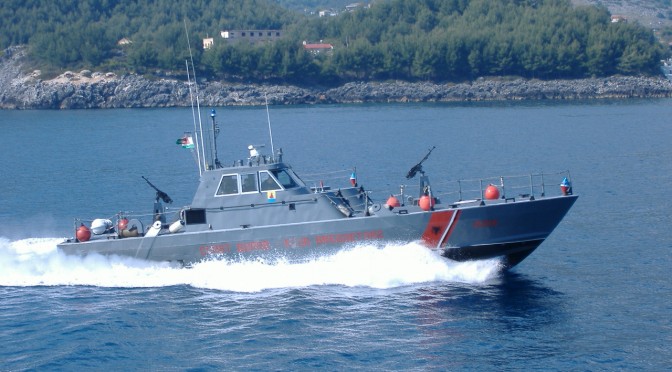
The mainstay of the new Albanian Naval Force is the Damen Stan 4207 patrol vessel, designed in the Netherlands but built for the most part in Albania. As of 2013, four vessels of this class are now in service on Albania’s coasts. It is worth noting that this design was the inspiration for the Canadian Coast Guard’s own Hero-class mid-shore patrol vessel, and that 35 vessels of the Damen Stan 4207 design are currently operated by 13 countries. The Albanian Naval Force backs up these four quality patrol vessels with an additional 27 vessels of various classes, most of which are patrol boats obtained from either the United States or the Italian Coast Guard.

But why is Albania dedicating so much of its resources toward the development of its maritime forces? The total cost of procuring the four Damen Stan 4207 patrol vessels is estimated to have been $45 million alone. The reason for this significant investment may be South Eastern Europe’s growing role as both a source of, and a transit point in, the trade of illicit narcotics. According to the United Nations Office on Drugs and Crime (UNODC), Albania has emerged as the fourth most common country of provenance for heroin, behind only Afghanistan, Pakistan, and Tajikistan. Lazarat, located in the far south of Albania, has emerged as one of Europe’s most significant centres for cannabis cultivation and the production of such cannabis-related products as hashish. Another UNODC report estimates that Albania itself is home to only 3,000 to 5,000 injection drug users, indicating that heroin entering Albania is hardly meant to remain there. Rather, the 2012-2015 UNODC Regional Programme for South Eastern Europe pegs the market value of heroin trafficked from this region to Western Europe at approximately $13 billion a year.

While some quantity of cocaine, heroin, and cannabis may take a circuitous route by land through Albania, Montenegro, and other South Eastern European countries until it reaches the territory of European Union member states, Albania’s geographic position opens up other options. The Albanian city of Vlorë is less than 100 kilometres from the Italian port of Otranto, separated only by the narrow strait that lies between the Ionian and the Adriatic proper. There are likely other sea routes which can be employed by organized crime. The Albanian Naval Force of the past would have not been well-disposed toward the interception of criminal elements transporting narcotics between these ports and others. But new patrol vessels have enhanced Albania’s capacity to address this security challenge and, with the enhanced cooperation NATO membership brings, Albania is better able to coordinate patrols and interdictions with its Italian partners.

The substantial increase in drug seizures along Albania’s coasts since 2006 is a positive sign. There is still some room for improvement in the area of inter-agency cooperation, however. On the eve of its NATO accession, Albania established an Inter-institutional Maritime Operations Centre (IMOC), intended to foster close cooperation between the Defence and Interior Ministries (as well as military and law enforcement personnel by extension). As noted in a recent review of Albania’s National Security Strategy though, IMOC has thus far been constrained by overlapping legislation and bureaucratic friction. Reforming the Albanian Maritime Code and other relevant aspects of the country’s legal framework may be necessary to ensure the efficiency and efficacy of Albania’s maritime operations.

Fortunately, the momentum is with the Albanian Naval Force in the struggle against regional narcotics trafficking. Continued support from NATO and its member states will further discourage organized crime, ending the exploitation of this proud country as a transit point for harmful drugs.

This article was originally published by the NATO Council of Canada.

Paul Pryce is a Junior Research Fellow at the Atlantic Council of Canada. With degrees in political science from universities in both Canada and Estonia, he has previously worked in conflict resolution as a Research Fellow with the OSCE Parliamentary Assembly. His research interests include African security issues and NATO-Russia relations.

Post-Election German Security Strategy

This article is a part of The Hunt for Strategic September, a week of analysis on the relevance of strategic guidance to today’s maritime strategy(ies). As part of the week we have encouraged our friendly international contributors to provide some perspective on their national and alliance strategic guidance issues.

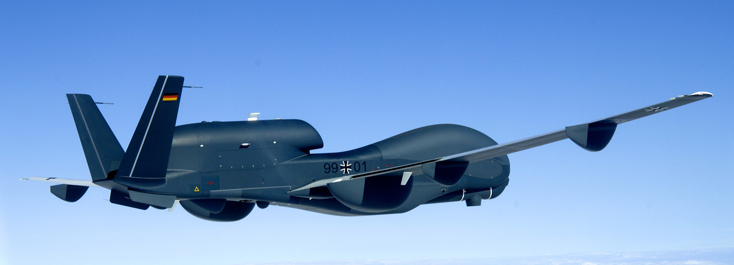
Euro HawkAfter this week’s vote in Germany Chancellor Angela Merkel is likely to govern at least until 2017. Although fundamental strategy and policy shifts are unlikely, that does not mean everything will stay the same, particularly with regards to jobs in Brussels. Moreover, Germany will face interesting arms procurement debates and may have to re-evaluate its place in Europe.

How to Read the Election Result

Security policy was not an issue during this election campaign. The withdrawal from Afghanistan is in progress and was thus no topic of concern. Hotspots like Syria, Iran, and Egypt may have occupied some time on German TV news, but did not do so in mind of the broader German public. The disaster of the cancellation of the Euro Hawk drone program affected only defense secretary De Maizière’s reputation. Therefore, security policy had no discernible impact on the election’s outcome.

While German voters actually turned right, they got a left wing majority in parliament. The CDU, FDP and the new eurosceptic AfD parties together earned 51 % of all votes. However, as the FDP and AfD missed the 5% voter threshold to enter the Bundestag, parliament now has a left-wing majority. Nevertheless, Merkel’s CDU party will keep governing. Most likely with the SPD, but maybe even with the Greens.

Programmatically, no Merkel-led coalition would face serious difficulties in security policy. The CDU, SPD, and the Greens all-support NATO and the EU’s Common Security and Defense Policy (CSDP), but have a low appetite for an active (and costly) security policy in Europe’s neighborhood let alone across the globe. After 13 years in Afghanistan, all parties will be heavily reluctant to participate in large-scale expeditionary combat missions. Thus, security policy will not be one of the controversial topics during the coming coalition negotiations.

If looking for something interesting to watch, it might be the fight for a top job for a German in Brussels next year. It is clear that Germany will claim one of the five available positions*. Which seat Germany claims and which party will send a candidate will be subject to the coalition negotiations. There were rumors that CDU defense minister De Maizière could go for Rasmussen’s job at NATO. However, it could also turn out that a Social Democrat or Green guy will run for Catherine Ashton’s position as the EU’s Foreign Affairs and Security Policy head – coalition negotiations produce all kinds of strange outcomes after all. We will see when we get there.

New Drones, Fighters and Ships?

Do not expect rising troop numbers. Either the Bundeswehr will remain at about 185,000 soldiers or it will shrink further to 150,000 or even 120,000. As it is, the army struggles for recruits enough anyway. Plans for drastic cuts in Germany’s federal budget have already been leaked. If implemented, the Bundeswehr will once again have to do its share. Too few recruits could be used in arguments for further reductions.

There will, however, be three interesting procurement debates. First, the drone debate will re-surface. Since the early 2000s, all governing parties supported the decision to buy the Euro Hawk. The need for drones is surely there. Thus, it is likely that there will be new UAV procurement decision before 2017.

Second, a topic not yet being discussed is the replacement of Germany’s aging Tornados. These are the Luftwaffe’s only jets who can contribute to NATO’s Nuclear Sharing arrangement. Hence, the question will be if Germany acquires a new fighter-bomber, invests money in making some Eurofighters nuclear-capable or leaves Nuclear Sharing after 2020. With an eye on the German budget and Europe’s financial situation, neither German parties nor the widely nuclear disarmament-obsessed media and public will support spending money on aircraft to carry nuclear warheads. In consequence, prepare yourself for another failure of Germany’s Alliance solidarity.

Third, the German Navy has repeatedly called for two Joint Support Ships (JSS), like the Dutch Rotterdam-class LPD. Such ships are desirable. The German Navy contributes simultaneously to NATO, EU, and UN operations, while participating in international maneuvers and conducting smaller own SIGINT operations. One or two JSS would be a boost for Germany’s power-projection ability and its contribution to international operations. However, it remains to be seen whether there is enough political will and cash to go for JSS.

The Bundeswehr’s New Missions

As said, due to Afghanistan, Germany’s political elite is very reluctant to grant the Bundeswehr new missions. The basic rule: The larger the number of troops, the farther away the operational theater, or the more combat involved the larger the German reluctance. For example, Berlin would ignore a UN call for 5,000 German soldiers to fight in the eastern Congo. Sending 50 officers for training or observation to some place close to Europe would probably get Merkel’s okay. As in Mali and Somalia, Germany’s land forces after Afghanistan will find themselves mostly in training, observation, and disaster relief missions.

Air operations other than NATO Air Policing will also find low support in the Bundestag, the parties, media and public. Only with a clear UN mandate might Germany be willing to send fighters for combat missions. One more reason to send fighters, when called, is to get rid of the image of being an unreliable ally. However, as it did before regarding Libya, decisions like this will not depend on any strategy, but rather on the political situation at home.

Silently, but steadily, the German Navy has done a lot in international operations, especially in the Mediterranean. However, few have recognized that there is since 2002, although within different mandates, a permanent German naval presence in the Indian Ocean. The piracy offshore West Africa makes it likely that we will see the German navy also in the South Atlantic. As German naval missions so far have involved little combat and are publicly not recognized, one can expect that Germany’s naval activities remain the same. Nevertheless, other than for friendly port visits or disaster relief, Berlin will not send warships or submarines east of Malacca.

EU Consensus is Necessary

We will see when the on-going fiscal crisis returns, but right now, it seems that EU’s December summit is really going to talk about security policy (although schedules in Brussels can change very quickly). This is truly necessary, because in the recent past the EU as a security actor has been plagued by disaster (Libya, Mali, Syria, et.al.). It is necessary to decide two things in December: The way for new common strategic vision and to how to increase integration of the armed forces.

For the first goal, Germany, France, and Britain would have to find some kind of geopolitical consensus. However, while Germany has a comfortable working relationship with the Chinese, Britain is reviving its alliance with Japan and talking about plans for troops East of Suez. The extent of the diverging security policy cultures between the Big Three was also seen in their approaches to Syria. In addition, a new coalition partner for Merkel will not change this, rather it could make things even worse, as the SPD is very attached to Russia.

To make EU security policy work, Paris and London would have to step back from their activism and go a bit more German, while Berlin would have to give up its muddling through and go a bit more Anglo-French. Here, a new European Security Strategy might help, but not one decided in one night by the governments. Instead, the EU should look to what NATO did in 2009-10. The Alliance started an open and public process with all member and partner states to debate its new strategic concept. The EU should take that as an example and start its own one- or two-year consensus-building process to debate and develop a new European Security Strategy.

Increased integration of European armed forces is the only way to prevent Europe from falling from part into complete military irrelevance. Germany has already started deeper military integration with the Netherlands and Poland. Moreover, CDU parliamentarians like Andreas Schockenhoff and Roderich Kiesewetter have called publicly for even deeper cooperation of the Bundeswehr with other European forces. But no matter who joins Merkel’s government now and no matter whether the Bundeswehr has 185,000 or 120,000 troops, there are no fundamental changes in sight. Expect Germany to muddle through international security as it did before.

Finally, only a left wing government by SPD, Greens, and Socialists would bring fundamental change to the German attitude towards military missions. In all other constellations, the approach will stay pretty much the same.

Felix Seidler is a PhD candidate at the Institute for Security Policy, University of Kiel, Germany, and a German security affairs writer. This article appeared in original form at his website, Seidlers Sicherheitspolitik.