Tag Archives: NATO

The Quebec Wars

Daniel S. Matthews brings us this fourth article for our Sacking of Rome Series.

It is the unexpected turns that vex empires the most. Rome did not expect Hannibal to cross the Alps, the French did not expect the dramatic events of Quiberon Bay, the British had their guns pointed the wrong way at Singapore, we were not prepared for World War III to start in Canada.
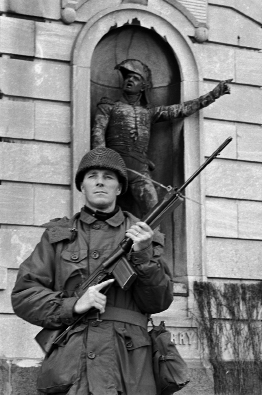
Matthews-1            Thought of Canada being the region where the sparks for World War III will be struck may not seem likely, but there is one area where a foreign foe could surprise the West: Quebec. If Quebec were to secede from Canada, two unsettling possibilities could occur. The first is that Canada could go to war with its wayward province. The second is that some power like China or Russia could build an alliance with Quebec. While such possibilities are unlikely, there are means of defense.

The Canadian Civil War


If Quebec were to secede from Canada, there are several points that could spark a civil war between the two. The least likely would be national pride. There are several economic reasons that could provide the tinder for war. Quebec controls the mouth of the St. Lawrence River, and Quebec could use that control to wage economic war with Western Canada. In addition, Quebec possesses significant reserves of natural resources that currently contribute to the North American economy on a free basis. An independent Quebec would change that. Finally, Canada proper would become a split country, with a third of Canadian provinces being geographically separated from the Capital. In light of the fact that no state wants to be divided, and Canada already has several fluttering independence movements, the urge to prevent further dissolution will be strong.


While it is true that Canada does not have a large military, and Quebec has none, it is not impossible for war to break out. The Quebec separatists have used violence before, most notably with the murder of Quebec Labour Minister Pierre Laporte, and it would be easy for a semi-independent Quebec to buy arms on the international market.


If Canada did get involved in civil war with Quebec, there are several options open to both sides if the war drags on. Canada could invoke Article 5 of the NATO treaty, which could split NATO as France has traditionally expressed support for Francophone Quebec. It is unlikely Britain would be unconcerned with a core Commonwealth state being embroiled in civil war; especially depending on how the vote for Scottish independence goes this year. The United States would be committed, as they are deeply intertwined with Canada at every level.


States like Russia, China, or Iran could use the distraction of a civil war in the very center of the Anglosphere to press their boundaries with the Western Alliance. Furthermore, they could start supporting the Quebec rebels, either directly or through third party means. If the war was presaged by an internationally recognized referendum, then Russia or China could take the position that they are upholding international norms, and paint the Western states in a negative light. Attempts at arming the rebels or openly supporting them would directly threaten the fundamental security of the United States, as it would provide a foothold on the continent from which hostile states could threaten the United States.


The Bear and the Dragon in Quebec
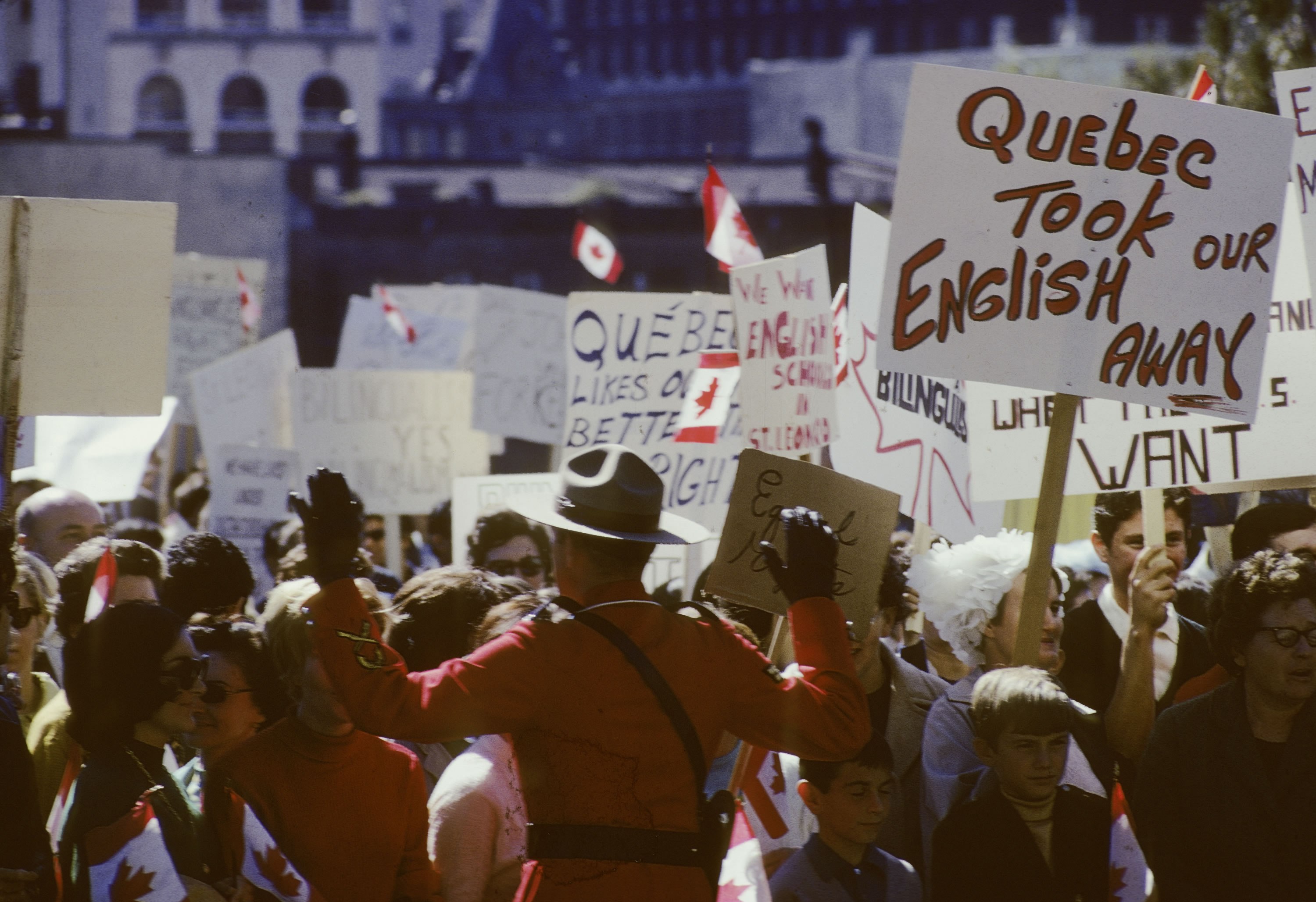
Matthews-2

While the first scenario of a successful Quebec independence movement immediately descending into world war is unlikely, the far more dangerous one of an independent Quebec making allies with states hostile to the West is possible. An independent Quebec would have the full ability to make alliances with foreign powers, and it is unlikely they would be readily welcomed into NATO, NAFTA, or other treaties with the Western powers. Canada would put pressure on any attempts to allow Quebec a seat at the table, and European countries would be wary of admitting Quebec, as it could fuel separatist movements within their own countries.


In addition, the United States would not want the possibility of Canada dissolving, even if most of the providences would likely join the United States. This method of amalgamation would be undesirable, if for no other reason than there is no guarantee that each section of Canada would join the US, and a unified Canada is better for the US than a series of states on its northern border. The dissolution of Canada could also embolden separatist movements in the United States.


Given the internal danger to Western countries an independent Quebec would present, it is likely that Quebec would be forced to look for friends elsewhere. Russia and China are the most likely candidates. Both countries would be interested in the natural resources of Quebec. China and Russia would also both enjoy the prospects of helping to develop Quebec’s Arctic resources. In addition, the possibility of a military alliance with Quebec would present an opportunity not present since Alaska became part of the United States; a land connection to the United States.


Right now the Anglosphere is protected by its island status, with no major hostile powers sharing a land border with any member. An independent Quebec would be courted by hostile powers to allow such a chance thought. Russia would view it as retaliation for NATO expanding into the Baltics, Poland, and developing close relations with Ukraine and Georgia. China would view it as a chance to have a mirror for the US alliances in China’s First Island Chain, with the added bonus of a large land connection to the American heartland, as opposed to the slender one that the US has against China on the Korean peninsula. The presence of a near-peer competitor with bases on the North American heartland would greatly reduce the flexibility of Western countries as they exert their influence on the world. Such a situation would be more bothersome to the United States and its allies than the Zimmerman telegram of a century ago, or the presence of Soviet missiles in Cuba half a century ago. It would have the same effect as Germany’s race to rival Britain on the high seas before World War I.


Possible Western Responses


Despite the perils presented by an independent Quebec, there are steps that the US and its allies can take to mitigate the dangers. The easiest remedy would be to continue the integration of the US and Canada, so that Quebec does not have economic or cultural incentives to break away. In addition, the West should focus more on promoting its unifying cultural values internally to provide less fuel for separatist movements. The US and Canada should also do more to encourage English proficiency, to increase the bonds of unity within and between both countries.


Internationally, the West should focus less on supporting the forms of Western states, elections being a key issue, and more on cultural reforms such as the acceptance of the loyal opposition, freedom of the press, and the like. Encouraging every group that wanted its own state did not work well for the peace, freedom, and stability of Europe from 1815 to 1939; it is not going to work well elsewhere. Such an approach would help cement the cultural idea that it is undesirable for states to break up along ethnic lines.


Finally, if Quebec does become independent, the West must make every effort to keep them within the Western sphere of influence. The United States should immediately offer closer association with the rest of Canada to stress the message of unity. An independent Quebec can be offered membership in the trade agreements that the Western nations have with one another and limited military exchange. Alternatively, a Canadian confederacy could be proposed where Quebec has almost total control over domestic affairs, but for international relations, it would still be part of Canada.


Militarily, Quebec already has more ties with Western countries, as they have served in the unified Canadian armed forces since that country was formed. Quebec citizens have served alongside the armed forces of other Western nations and have developed close ties; therefore, they would likely want to maintain those bonds. This should be encouraged.


As a final point, if hostile foreign powers do make inroads to an independent Quebec, the US should step up integration with its allies militarily and economically so to prevent further wedges being driven between the parts of the alliance. Alliances are easier to break apart than unified countries, and neither Russia nor China would want to face a unified power stretching from Japan to Eastern Europe.

Lieutenant Daniel S. Matthews is currently assigned to Marine Corps University, preparing to take over the role as Naval Gunfire Liaison Officer for III MEF. He has served in a wide range of sea and shore billets. LT Matthews is a native of Warrenton, Virginia, and graduated from Old Dominion University in 2007.
Europe’s Role in an East Asian War

Major war in East Asia is a very unpleasant, but not unthinkable scenario. Of course, the US would be involved from day one in any military conflict in the East or South China Seas. However, Europe’s role would be less clear, due to its increasing strategic irrelevance. Most probably, except the UK, Europeans would deliver words only.

Europe’s reactions depend on America

While Asia’s naval arms race continue, tensions are rising further in the East and South China Seas. Nevertheless, it is unlikely that any side will lunch a blitz-strike and, thereby, start a regional war. Although China is increasing its major combat capabilities, it is instead already using a salami-slicing tactic to secure its large claims. However, the worst of all threats are unintended incidents, caused for example by young nervous fighter pilots, leading to a circle of escalations without an exit in sight.

Claims in the South China Sea (The Economist)

Hence, let us discuss the very unpleasant scenario that either there would be a major war between China and Japan or between China and South China Sea neighboring countries, such as Vietnam or the Philippines. Of course, the US would be involved in the conflict from day one. But what about Europe? The Old Continent would surely be affected, especially by the dramatic global economic impact an East Asian War would have. However, reactions of European countries would largely depend on what the US is doing: the larger the US engagement, the louder Washington’s calls for a coalition of the willing and capable will count.

The UK would (maybe) go

The Royal Navy undertakes annual “Cougar Deployments” to the Indian Ocean. Therefore, the UK still has expeditionary capabilities to join US-led operations in East of Malacca. Disaster relief after Typhoon Haiyan by the destroyer HMS Daring and the helicopter carrier HMS Illustrious proved that British capability. While Daring is a sophisticated warship, the 34 year old Illustrious with her few helicopters and without fixed-wing aircraft would not be of much operational worth.

Royal Navy SSN in the Suez Canal in 2001 (The Hindu)

Moreover, since 2001, the Royal Navy always operates one SSN with Tomahawk cruise-missiles in the Indian Ocean, probably the most sophisticated high-intensity warfare platfrom the Royal Navy would have to offer for an East Asia deployment. The UK still has access to ports in Singapore and Brunei, although there is no guarantee that these countries, when not involved in the conflict, would open their ports for British ships underway to war. Australia, which is likely to join forces with the US, would be an other option for replenishment at the port of Darwin.

Polar Route (Wikipedia)

Through the Polar Route (a route European airlines used while Soviet airspace was closed) and with aerial refueling or stops in Canada and Alaska, Britain could also deploy some of its Eurofighters to Japan. As such, Britain would be capable of doing, at least, something.

 The question is,if Britain is willing to take action. Surely, UKIP’s Nigel Farage would not hesitate to use the broad public reluctance to expeditionary endeavors for his’ own cause. As in case of Syria, a lack of public support at home could prevent the UK from a military involvement. It would be hard for any UK Government to sell to the British voter to cut back public spending at home while signing checks for the Royal Navy heading towards East Asian waters.

France would not make a difference

Beside the US, France is the world’s only navy with a permanent presence through bases in all three oceans. Although, with one frigate, France’s Pacific presence of surface warships is relatively small. The one Tahiti-based French frigate deployed to an East Asian theater would not make a difference, but be a rather small show of force.

French frigate in Bora-Bora 2002 (Wikipedia)

Like Britain, France permanently operates warships in the Indian Ocean, which it could also deploy to East Asia. Its nuclear-powered carrier Charles de Gaulle and SSN would also be able to tour beyond Singapore, however with a relatively long reaction time.

Paris’ main hurdle would be the same as London’s: The lack of public support. Le Pen would do exactly the same as UKIP and mobilize publicly against a French engagement and, thereby, against the government. Moreover, France has not the money necessary for any substantial and high-intensity engagement. In addition, a weak president like Hollande would fear the political risks. Given the operation ends in a disaster for the French, e.g. with the Charles de Gaulle sunk by the Chinese, Mr. Hollande would probably have to resign. Hence, do not expect an active role of France during an East Asian conflict.

No role for NATO and EU 

On paper, NATO, with its Standing Maritime Groups, seems to be capable of deploying relevant naval forces across the globe. In practice, however, any mission with a NATO logo needs approval of 28 member states. Due to NATO’s present pivot to Russia, many members would object any new NATO involvement outside the Euro-Atlantic Area. As the US prefers coalitions of the willing and capable anyway, there would be no role for NATO in an East Asian war.

In addition, there is also no role for the EU. Since 2011, the rejections each year to the EU for observing the East Asia Summit are showing Brussels’ enduring strategic irrelevance in the Indo-Pacific. Moreover, neutral EU members, like Sweden and Austria, would never allow any active involvement. It is even questionable, if EU members could agree on a common political position or sanctions – something they have already failed to do often enough.

Dependent on the size and kind of US response, smaller European countries like Denmark, the Netherlands and Norway may join forces with the US Navy and send single vessels through the Panama Canal into the Pacific or replace US warships on other theaters. This is not far from reality, because these countries did already sent warships into the Pacific for the RIMPAC exercise. However, their only motivation would be to use these deployments to make their voices better heard in Washington.

What would Germany do?

First of all, Germany is the enduring guarantee that, when confronted with major war in East Asia, NATO and EU will do nothing else than sending out press releases about their “deep concern”. Being happy that ISAF’s end terminates the era of large expeditionary deployments, Germany’s political class would never approve an active military role in East Asia – left aside that Germany would not be able to contribute much, anyway.

Sino-German Summit 2012 (Source)

Germany would first and foremost defend its trade relationships with China, which is in its national interests. Thus, the much more interesting question is, if the German government would develop the a diplomatic solution. Germany has very good relationships with the US, China, Japan and South Korea. Vietnam and other South East Asian countries have frequently expressed greater interest in deeper cooperation with Germany.

Hence, Germany has the political weight necessary to work for a diplomatic solution. The question is whether German politicians would be willing to work for that solution themselves. Most probably, Berlin’s press releases would call for the United Nations and the “International Community” (whoever that would be in such a scenario) to take action.

What Germany could do and what would get approval at home, is to implement measures of ending hostilities and re-establishing peace – maybe by an UN-mandated maritime monitoring mission or by the build-up of a new trust-creating security architecture.

Europe’s limits

The debate about a European role in an East Asian major war is largely hypothetical. Nevertheless, it teaches us three relevant lessons.

First, we see how politically and militarily limited Europe already has become in the early stages of the 21st century. Given current trends continue, imagine how deep Europe’s abilities will have been sunk in twenty years.

Second, the main reasons for Europe’s limits are the lack of political will, public support and money. Europe’s march to irrelevance is not irreversible. However, it would need the political will for change and an economic recovery making new financial resources available

Third, we are witnessing an increasing European geopolitical and strategic irrelevance beyond its wider neighborhood. In reality, Europe’s role in an East Asian war would be nothing else but words.

Felix Seidler is a fellow at the Institute for Security Policy, University of Kiel, Germany, and runs the site Seidlers-Sicherheitspolitik.net (Seidler’s Security Policy).

Follow Felix on Twitter: @SeidersSiPo

Sea Control 36 (East Atlantic) – NATO Defense Spending

seacontrol2Your monthly East Atlantic edition of Sea Control brings you Alex Clarke with a panel on the state of NATO’s defense spending in the UK and Continental Europe, and whether this spending is sufficient to face our modern threats.
 

DOWNLOAD: Sea Control 36 (East Atlantic): NATO Defense Spending

Remember, subscribe on iTunes or Stitcher Stream Radio. Leave a comment and rate five stars!

Nordic NATO Nominees

Until recently, it was hard to imagine Sweden joining NATO. With long traditions of neutrality, Sweden and Finland had distanced themselves from the main military centers of Europe. The reason for neutrality is succinctly explained in the introduction to the book Navies in Northern Waters 1721-2000: “The present situation is a further illustration of the long-standing conflict between the legal and power-oriented approaches to disputes in the region,” with the Swedes and Finns aligned with the former. In 1994 Sweden joined Partnership for Peace (PfP) as a framework to cooperate with NATO. Still insisting on its place as a militarily non-aligned country, the Swedish Mission to NATO states that “by participating in PfP, Sweden wishes to contribute to the construction of a Euro-Atlantic structure for a safer and more secure Europe.”

Public Swedish support for joining NATO remained limited, with about 50% against as of mid-April, but supporters of this idea increased their share from 17% to 29% last year alone. In the same article we find important opinion of Finland’s Prime Minister Jyrki Katainen who said “that both Finland and Sweden should consider joining Nato when the time is right.” A small Finnish step in this direction is that this year the nation agreed to a Memorandum of Understanding with NATO, while Sweden and Finland are increasing military cooperation with each other under a landmark pact. So what caused both Nordic countries to begin reevaluate their positions? Prof. Mearsheimer in his book The Tragedy of Great Power Politics wrote:

When a state surveys its environment to determine which states pose a threat to its survival, it focuses mainly on the offensive capabilities of potential rival, not their intentions.

Living near mighty military power means that one lives in a state of permanent insecurity, so what one hopes for are benign intentions. The war in Georgia ignited doubt about one particular neighbor, but Ukraine has forced caution to give way to fear. If one can’t hide by flying “under the radar” of a big power, then what remains is to ally with another power. Appeasement doesn’t have a good track record during Europe’s last 100 years. But as Jan Joel Andersson explains in the Foreign Affairs article “Nordic NATO,” both countries need public buy-in for the solution before joining the Alliance. Although skeptical, Scandinavians seem to slowly appreciate this path and support for the idea is growing. The article lists good arguments, both political and military, for Sweden and Finland to join NATO from the Alliance’s perspective. In fact, this would be a geostrategic loss for Russia, greater probably than the gain of Crimea. From a purely military point of view, the following excerpt is critical for understanding the regional stability the additions would aid:

Even more important, Sweden and Finland’s formal inclusion in the alliance would finally allow NATO to treat the entire Arctic-Nordic-Baltic region as one integrated military-strategic area for defense planning and logistical purposes, which would make the alliance much more able to defend Estonia, Latvia, and Lithuania against Russia.

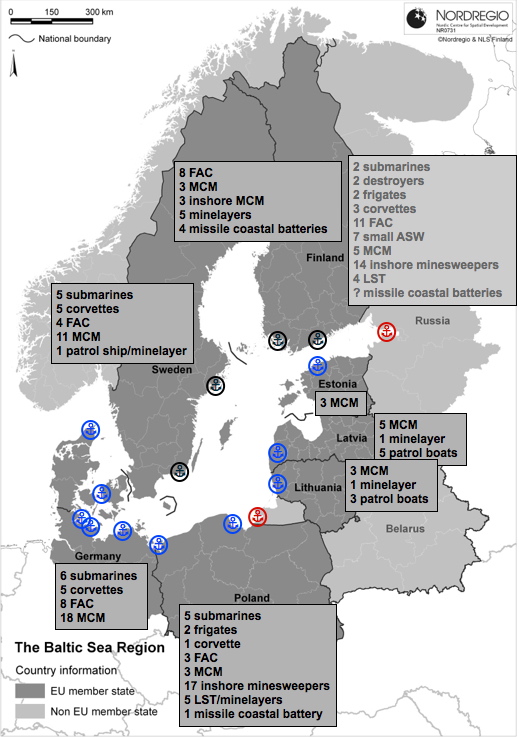
It’s worthwhile to take a look at a map, especially to highlight the maritime and naval aspects of this story.

BalticInfographic_001

In the current situation, the Baltics represent a relatively narrow strip of land, lightly defended and not offering defense-in-depth. Any sustained reinforcements could come only from sea, which would require sea control. The main NATO naval forces would likely operate from bases in Germany and Swinoujscie in western Poland, as Gdynia and Klajpeda could be put at risk by ground operations. Although it would be possible to organize a successful blockade of any opposing naval forces using the Alliance advantage in submarines, light surface forces would have tough time overcoming land-based air forces and coastal batteries. Using Adm. J.C. Wylie’s terminology, the geography of the region strongly favors sequential warfare on land instead of cumulative naval warfare for which there would be no time assuming the desire to defend the Baltics.

Swedish access to NATO would alter these considerations significantly, bringing a few additional benefits to the more-realistic defense of the Baltics:

  • Norway would no longer be an “isolated” NATO member, as its depth of defense increases.
  • Baltic Sea control could be achieved and maintained by local navies with limited support from the United States.

There are two other aspects to consider, however. For Finland, Sweden’s joining NATO would only increase its isolation as the only neutral country in the region. The preference for a sequential land warfare strategy would expose Finland for greater risk. The situation would not be so different from that of the Black Sea. Therefore the best would be a common decision of both Sweden and Finland, even if it complicates matters.It is difficult to imagine synchronization of political willingness in such sensitive area, but growing cooperation between Nordic countries could be helpful. Nordic Defence Cooperation initiative, including Sweden, Finland, Norway, Denmark and Iceland, although mostly focused on military efficiency includes already mix of NATO and EU countries, and active participation of both Finland and Sweden with NATO lower technical barriers of access. The key point remains public support for such idea, but as it was mentioned already, such support and acceptance seems to slowly grow.

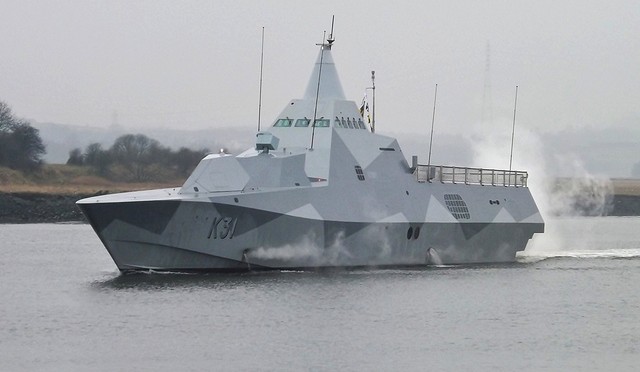
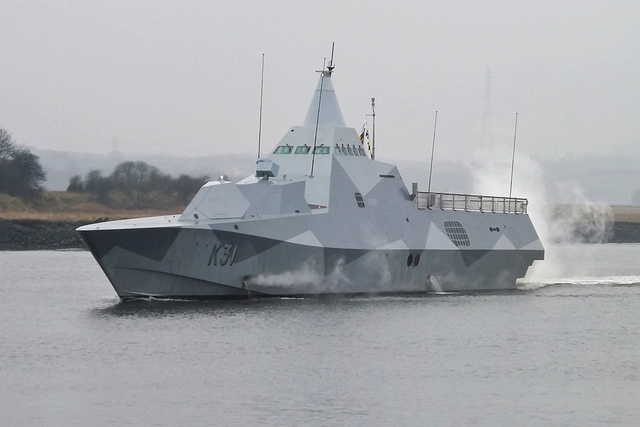
8643086211_cef286772e_zAnother issue is the opportunity to evaluate/reevaluate the concept of the U.S. Navy’s littoral combat ship (LCS) and/or its successor in the Baltic Sea security environment. Two different scenarios including Nordic countries offer very different operational possibilities. In today’s state of things, the LCS lacks offensive power of anti-ship cruise missile (ASCM). Meanwhile, pondering anti-air defense leads to the dilemma the best defined by Swedish designers of the Visby corvette – “invincible or invisible”. However, in the case of the Nordic countries belonging to NATO, LCS’s anti-submarine warfare (ASW) and mine counter-measure (MCM) capabilities would be very much appreciated. In the May issue of the U.S. Naval Institute’s Proceedings, Adm. Walter E. Carter offers some remarks on future forces in his article “Sea Power in the Precision-Missile Age:”

Based on the preceding analysis, it appears that the most significant forces for future warfare at sea include:

  • Platforms employing standoff ordinance that penetrate high-end defenses;
  • Platforms with an emphasis on offensive firepower to prevail at sea;
  • Mobile and low-observable platforms and logistics, readily dispersed, and heavily protected or hidden by decoys, obscurants, RF jammers, and signature control; and
  • Forces minimally reliant on RF networks to be employed against high-end opponents using pre-planned responses and low-data-rate, secure, and sporadic communications.

Conversely, less relevant forces of the future will include:

  • Those dependent on fixed bases;
  • Platforms within enemy missile ranges that have large signatures and are thus readily targetable;
  • Systems dependent upon long-distance, high-data-rate RF networks;
  • Platforms that must penetrate high-end defenses to deliver ordnance; and
  • Platforms whose primary means of survival rests on active defense (i.e. shooting missiles with missiles).

While this analysis seems to be a perfect description of Pacific scenarios, a narrow sea like the Baltic invites further elaboration as this environment offers little room for stand-off or escape from inference from shore based-capabilities. Striking an enemy’s shore would incentivize small, stealthy, and unmanned platforms, but keeping sea lines of communications open in the same area would be difficult without classic surface forces. So the question remains open as to how survivable these light surface forces would be in restricted waters. And in the case of submarines the weak point in narrow waters is still the naval base from which they operate.

Przemek Krajewski alias Viribus Unitis is a blogger In Poland. His area of interest is the context, purpose, and structure of navies – and promoting discussion on these subjects in his country.