What’s at Stake in the Remote Aviation Culture Debate

It has been written that it is difficult to become sentimental about . . . the new type of seaman—the man of the engine and boiler rooms. This idea is born of the belief that he deals with material things and takes no part in the glorious possibilities of war or in the victories that are won from storms. This theory is absolutely false . . . for there is music as well as the embodiment of power about the mechanisms that drive the great ships of today.

—Capt Frank Bennett, USN
The Steam Navy of the United States, 1897
Hunting for a wingman
                                      Hunting for a wingman

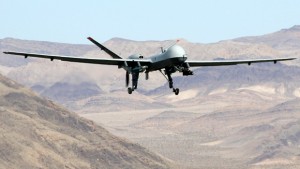
From our flyboy friends in the U.S. Air Force comes the article “The Swarm, the Cloud, and the Importance of Getting There First” in the July/Aug issue of the Air & Space Power Journal (including the lead-in excerpt). In it, friend-of-CIMSEC Maj David Blair and his partner Capt Nick Helms, both manned-aircraft and drone pilots, address their vision for the future of the aviation warfare concept of operations and the cultural sea changes that must take place to accommodate it. Needless to say, such a vision is also relevant to the future of naval aviation. So if you’ve got some beach-reading time ahead of you, dig in. The link above includes the full article:

This article advocates an aviation future of manned–remotely piloted synergy in which automation amplifies rather than replaces the role of aviators in aviation. In this vision, aviators are judged solely by their effects on the battlefield. Amidst this new standard of decentralized execution is the “swarm,” a flock of highly sophisticated unmanned combat aerial vehicles that serve as “loyal wingmen” for manned strike aircraft. Here, every striker is a formation flexibly primed to concentrate effects at the most decisive times and locations. This future also includes the “cloud,” a mass of persistent remotely piloted aircraft (RPA) that provide vertical dominance through wholesale fire support from airspace cleared by the swarm. Fusion amplifies the human capacity for judgment by delegating routine tasks to automation and “demanding” versatile effects in response to fog and friction rather than “commanding” inputs.

The challenge is not technological but cultural. To realize this future, we first must accept remote aviation as a legitimate part of the Air Force story, and then we must look to deep streams of airpower thought in order to understand it. First, Gen Henry “Hap” Arnold teaches us air-mindedness—to fully leverage a technology, we must develop both humans and hardware. Second, Gen Elwood Quesada describes an aviator’s relationship with technology—the discussion is never “human versus machine”; rather, it concerns the relationship between humans and machines. Instead of a cybernetic view in which automation reduces the role of humans in the world, we argue for a capabilities-based perspective that uses automation to empower aviators to better control the battlespace. Third, Col John Boyd reminds us that identities are always in flux in response to changing technical possibilities.

Thus, the F-22 and the RPA are more akin than we realize since both embrace the power of advanced processors and networked data links. An Airman’s view of RPA futures enables manned–remotely piloted fusion, and both traditional and remote aviators must build that future together as equals. The friendly lives saved and enemy lives taken by RPAs in the air campaigns of the last decade merit this acceptance. 

Dave also recommends the article “Why Drones Work: The Case for Washington’s Weapon of Choice” by Daniel Byman.

The Finnish Exception

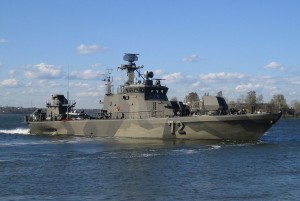
Finnish Rauma-class missile boat FNS Porvoo
         Finnish Rauma-class missile boat FNS Porvoo

A consistent challenge for NATO has been the issue of involving non-NATO partners in its interoperability and capability boosting activities. When NATO undertakes important operations at the behest of the UN Security Council, non-members have contributed forces – for example, Japanese and the Republic of Korea vessels have participated in Operation Ocean Shield, NATO’s response to piracy in the Gulf of Aden. The Partnership for Peace and similar initiatives also go some way toward enhancing political cooperation. But when it comes to training and the development of best practices, non-members have been reluctant to engage with the Alliance.

The Finnish Navy is the exception to the rule. Despite its lack of NATO membership, Finland has for many years participated in the work of the NATO Centre of Excellence for Operations in Confined and Shallow Waters (COE CSW). Coordinated by Allied Command Transformation, the Centres of Excellence are multinational institutions that, according to NATO, “train and educate leaders and specialists from NATO member and partner countries…” and assist in expanding the Alliance’s capacity to operate in varying environments under diverse conditions. Many of these COEs take the form of research hubs, with experts spending time not just training personnel from NATO and its partner countries, but also working on policy and technological solutions to specific challenges currently facing the Alliance. There are currently 17 accredited COEs, though another three are awaiting accreditation.

Based in Kiel, Germany, the COE CSW is concerned with a number of issues relevant to naval operations, such as anti-submarine warfare, mine countermeasures, as well as force and harbour protection. Aside from the Finnish Navy, participants include Germany, Greece, the Netherlands, Poland, Turkey, and the United States. It must be noted that not only is Finland the only non-member to participate in any NATO COE, but the COE CSW is also the only Centre in which Finland participates. Why is this?

A possible explanation is that the Finnish Navy has a demonstrably strong interest in operations related to confined and shallow waters. Illustrative of this, in previous years Finland has led the organization of Northern Coasts, annual large-scale naval exercises that involve several countries and take place in various parts of the Baltic Sea. The explicit objective of these exercises is to improve interoperability in confined and shallow waters among participating units and countries. By way of contrast, Finland has not participated in any of NATO’s annual Steadfast Jazz exercises, which involve all branches of military forces and also take place in the Baltic region. Aside from wishing to preserve cordial relations with the Russian Federation, Finland’s policy of abstaining from Steadfast Jazz may have a lot to do with the exercises’ lack of simulated operations in confined and shallow waters.

There are valuable lessons that can be drawn from the Finnish example. If NATO seeks to intensify engagement with partner countries, it will be necessary to identify the security interests of those states and then market NATO’s relevant capabilities to them. The activities of the COE CSW are appealing to Finland because of that country’s particular security interests. Had Finland instead been approached to engage with the NATO COE in Cold Weather Operations, it is less likely Finland would have agreed to participate, in part because the Finnish military would have contributed much expertise in exchange for comparatively less benefit.

Understanding that the Finnish Navy participates in the COE CSW because it views it as a net benefit for Finland, NATO’s Allied Command Transformation (ACT) – charged with promoting interoperability – could advance NATO’s external relations by carefully marketing NATO COEs to relevant partners. For example, with the Ukrainian government actively seeking to achieve energy independence from the Russian Federation, it could be worthwhile to seek Ukrainian participation in the newly accredited NATO Energy Security COE in Vilnius, Lithuania. Practical cooperation through these centres could build momentum toward greater political cooperation. With the diverse array of expertise and specializations represented by the accredited NATO COEs, the possibilities to engage partners are endless.

Paul Pryce is a Junior Research Fellow at the Atlantic Council of Canada. With degrees in political science from universities in both Canada and Estonia, he has previously worked in conflict resolution as a Research Fellow with the OSCE Parliamentary Assembly. His research interests include African security issues and NATO-Russia relations.

This article was cross-posted by permission from and appeared in its original form at the Atlantic Council of Canada. Any views or opinions expressed in this article are solely those of the authors and the news agencies and do not necessarily represent those of the Atlantic Council of Canada.

2013-2014 CIMSEC Elections

"Nominate Yo Self"
“Nominate Yo Self”

Members and Friends of CIMSEC,

As an all-volunteer group we rely on our officers to keep the machinery of our organization running, and July means its time for our annual elections to bring in a new group. The following is a list of board positions and responsibilities. Neither the list nor the responsibilities are all-inclusive. If there’s something you’d like to do that’s not on here, let us know.

To nominate yourself or someone you know, simply email director@cimsec.org by July 6th and let us know which position(s) you’re interested in, what you’re qualifications for that position are, and what you intend to do in that position (or the same for the person you’re nominating). We will then contact those nominated by others to confirm interest, and announce the nominees and the information you provided. Voting begins July 7th.

Note:*You can run for (and win) more than one position, in which case we will ask if you want to take on both, or choose one.

President
– Works with the Board of Directors to oversee our strategic direction. Will help develop the formal bylaws for CIMSEC. Coordinates and keeps tabs on the running of the group. Needs to be committed to regular communication with the other officers and comfortable giving direction (I will not be running for this position).

Vice President and Director of External Relations
– Works with the President on all major projects or as otherwise directed. Engages external groups for collaborative opportunities (I will be running for this position, but yes, you can run against me. Monitors from Belarus will ensure the election is “free and fair”).

Director of Operations
– Facilitates meet-ups, networking, engagement, speaking, panel, and conference opportunities.

Director of NextWar Blog
– Oversees the behind-the-scenes details on the blog. Solicits and edits blog submissions, schedules blog postings. We’ve got tools to help you out with this.

Director of Membership
– Works with the board to increase membership, readership, and develop ideas for recruitment of unrepresented segments of the international maritime community. Maintains the membership database; sends out acceptance emails; updates membership roster on the website.

Director of Social Media
– Runs and explores ways to use the tools of the internet and social media to increase CIMSEC reach and user participation. Boosts our use on such forums as Twitter, Reddit, Linkedin, Wikipedia, Facebook, etc. Not necessarily responsible for using the content (i.e. staying on twitter 24/7), rather sets up and helps our members understand the tools available. Must stay engaged with Associate Directors of Social Media. Great learning experience!

NextWar Journal Editor-in-Chief
– Oversees the submissions, editing, production, and online distribution of our new journal. Need to be willing to take the initiative on setting up a new journal from scratch, but with the tools available and a lot of content coming from the blog it’s not that difficult and you will receive much help. Great learning experience!

Treasurer
– As we get our legal ducks in a row we’ll be able to start taking in money. Sets up revenue streams (kickstarter, paypal donation buttons, etc.) and helps keep our “books”. A DC law firm is working pro bono with us, so they will be able to assist you in the legal aspects of things. Great learning experience!

Others:
– Associate Editors: If you have decent writing/editing skills, we need your help with editing the blog and/or the journal.
– Associate Directors of Social Media: Helps the Director of Social Media in their functions.
– Chapter Presidents: Live outside of DC? Want to host intellectually stimulating maritime events under CIMSEC’s name? Let’s set you up with a chapter.

Voting Eligibility
All current members of CIMSEC at the time of the announcement of the candidates will be eligible to vote. To check your eligibility, look for your name on the website’s “About Us Page” – not the “Roster” subheading – if you don’t see yourself there, make sure you’ve submitted a formal application.

Please let us know if you have any questions or suggestions!

How to Negotiate with Pirates

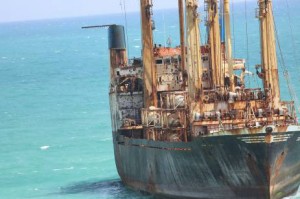
M/V Iceberg: Waiting is the hardest part.
        M/V Iceberg: Waiting when your ship’s come in.

Despite having declared a ‘comprehensive approach’ to Somalia, linking security with development, and launching the EUNAVFOR mission in December 2008, the European Union (EU) has neglected an important piece of the counter-piracy solution: negotiations for the release of European hostages held by pirates. The EU should adopt a consistent EU policy concerning the payment of ransom to pirates, set up an EU negotiation team, and identify and promulgate specific best practices in negotiation strategies.

The reduction of piracy in the Gulf of Aden is the consequence of many actions undertaken by several actors. The previous Force Commander of EUNAVFOR, Rear Admiral Philippe Coindreau, declared the “results are due to the combination of EUNAVFOR’s action, […] the use, by the maritime community, of systematic security measures on merchant vessels and high-quality cooperation with other naval forces and independent Navies”. According to Xavier Larreur, a NATO official, this is also partly due to Puntland’s efforts in arresting pirates.

However, while piracy in the Indian Ocean is on the wane, it is not yet beaten. The International Maritime Bureau (IMB) states that five boats and 77 hostages are still held by Somali pirates. In the beginning of June, a failed attack on the Indian ship Shaahi al Nuuri in the Indian Ocean led the head of operation of the EU Naval Force, Rear Admiral Bob Tarrant, to declare: “This latest attack once again shows that the threat of piracy is real. We must all remain vigilant. Earlier in the week – according to our information – several “suspicious approaches” in the Gulf of Aden were reported, but without shooting or boarding attempts.”Attacks will rise again if the naval presence is reduced or if vessels relax their vigilance.

Somali pirates are clearly organized: “Everything that you would need to run a cruise ship line, short of the entertainment, you need to run a piracy operation” says J. Peter Pham from James Madison University in Virginia. A pirate attack can cost as little as $15,000 dollars to set up and only 15 to 30 minutes to execute. But waiting for the ransom can last months.

Negotiations are the solution of last resort, taken only when preventive measures have failed to protect the ships from hijacking. Once hijacked, ransom should be paid only if it is too risky for the naval forces to attack the hijacked ship. This is typically the case, as most ships taken hostage by pirates are released by ransom rather than force, the actors involved preferring to avoid rescue missions because of the high risk of casualties. Fortunately, as pirates are not terrorists, there is not as strong a prohibition of negotiating with them for the release of hostages.

However, this solution of last resort can’t be handled individually. To avoid an increase in the amount of ransom and violence against hostages, it is necessary that Europeans better organize and coordinate the conduct of negotiations with pirates. The EU needs to create a crisis management team to provide a coordinated response to every ransom demand. By knowing how high the ransom was for each category of ship, and by understanding pirates’ negotiations styles, the EU could try to keep the price down. Indeed, countries that easily pay ransom such as Greece and Italy are paying sky-rocketing amounts. Pirates have now been securing equal or greater value for previously less-hijacked vessels. Therefore, a coordinated response could help reduce the business of piracy, or at least to not make it so attractive that new pirates get on the market, by setting a standard cap on the payment of ransoms.

A standing crisis management team would also gather and share intelligence on pirate groups to better fight them and facilitate any negotiations. Social networks, widely used by pirates, would improve knowledge of individuals and groups operating in the area. The EU’s effort must be modern – not left behind because of a heavy bureaucratic structure. Once hostages are freed, the crisis management team could systematically collect additional information on the organization of these criminal networks, working with EUROPOL and INTERPOL, who already trace criminal financial flows arising from payment of ransom.

This model can also be applied to other areas of pirate activity. The IMB again reports that the number of acts of piracy recorded off the West African coast in 2012 exceeded for the first time the attacks in the Gulf of Aden and the Indian Ocean, with 966 sailors attacked in the Gulf of Guinea, against 851 sailors off the coast of Somalia. The cost of goods stolen by West African pirates is estimated at between $34-101 million. On June 24th, the heads of state of Central and West African nations, gathered in Yaounde, Cameroon, for a summit on security in the Gulf of Guinea, requesting the deployment of an international naval force to fight piracy off their coasts.

Negotiations won’t work in every instance and they should not last long. Lengthier negotiations have not proven more successful in reducing the amount of the ransom, and their impact on the mental and physical health of hostages can be significant. In the case of the M/V Iceberg, the crew was abandoned by the owners, who did not have the requisite shipping insurance to pay a ransom. The crew was kept hostage and tortured for three years, which is the longest pirate hijacking in modern maritime history. Another tragic hijacking was the one of the Beluga Nomination, in which a sailor was killed during a failed bid to free the ship. It should be standard EU policy at some early point for the crisis team to determine whether the risk to the mariners of continued negotiations and unliklihood of an acceptable deal outweighs the risk of a rescue attempt. There is no certainty an EU crisis management team would have prevented these tragedies, but the lives of these sailors and the potential to reduce both the human and economic costs is worth it.

Alix is a political advisor in New Caledonia. She previously served as an officer in the French Navy, specialising in maritime law and maritime threats such as overfishing and piracy. Her masters thesis details the fight of the European Union against piracy.

To learn more about this subject, she suggests reading:
http://www.bruxelles2.eu/wp-content/uploads/2012/05/WILLEMEZ-A-little-guide-to-negotiations-with-Somali-pirates-for-European-negotiators-.pdf
http://www.chathamhouse.org/sites/default/files/public/Research/Africa/0812anyimadu_0.pdf
http://www.diw.de/documents/publikationen/73/diw_01.c.408689.de/diw_econsec0074.pdf

Fostering the Discussion on Securing the Seas.