Regional Strategies Topic Week Concludes on CIMSEC

By Dmitry Filipoff

CIMSEC received a tremendous response to our Project Trident’s call for articles on regional maritime powers and strategies, launched in partnership with the Yokosuka Council on Asia Pacific Studies, the Institute for Security Policy at Kiel University, and the Dominican Command and Naval Staff School. Authors from many regions of the world responded with analysis and insight on regional powers and their maritime security challenges. Among their many takeaways, several themes emerged from their contributions.

Some smaller and medium-sized nations are looking to expand their standing and roles, including going beyond being a provider of their own security to providers of regional security. Others are looking to take their own experience in dealing with local threats and export their know-how via cooperative exercises and exchanges. Some nations and navies are feeling compelled to take on a larger role in regional affairs, or are taking uncharacteristically assertive actions that are making waves, such as Turkey’s insistence on its own version of maritime rights in the Eastern Mediterranean.

The actions and ambitions of great powers are reverberating across the strategies of smaller and medium-sized nations. As great powers grow in military might and decisively alter the traditional military balance within a region, smaller powers feel compelled to adapt both militarily and diplomatically to bolster deterrence. Smaller and medium-sized nations, especially in Asia, have equipped their navies with lethal and advanced modern weaponry. They are increasingly exercising with one another and establishing deeper ties with respect to military cooperation. Great powers should take note, since as they disrupt the usual military calculations of a region they can precipitate determined countermeasures from smaller nations.

What is clear is that smaller and medium-sized navies can have major influence. Whether it be through preeminence within a nearby body of water or proximity to a heavily-trafficked chokepoint that would be highly contested in a major conflict, the roles and capabilities of regional powers should not be underestimated. Regional navies are on the frontlines of managing traditional and non-traditional threats, and are constantly mindful of the ever-evolving maritime security environment within their locales. 

Below are the articles that featured during the extended topic week, with excerpts. We thank these authors for their excellent contributions.

China’s Aircraft Carriers and Southeast Asia: Testing Coercive Naval Diplomacy?” by Shang-su Wu

“Since the People’s Liberation Army Navy (PLAN) commissioned its second aircraft carrier, the possibility of utilizing these capital ships for coercive diplomacy is becoming more real. In China’s surrounding areas, Southeast Asia would be most suitable for “carrier diplomacy” regarding the proximity, the relatively weak defenses of the regional countries, and the major territorial disputes in the South China Sea. However, Southeast Asian countries, with their military modernizations and geopolitical circumstances, would not be merely hopeless either.”

Illegal Fishing in the South Pacific: What Can the Chilean Navy Do?” by Francisco Martinez

The Chilean Navy is more than just a national warfighting force aimed at conventional deterrence. Earthquakes, volcanic eruptions, fires, and tsunamis are all examples of natural disasters that Chile faces in which the Navy is one of the first to provide support. Along with disaster relief and safeguarding life at sea, countering Illegal, Unreported, and Unregulated (IUU) fishing is one of the most economically important duties of the Chilean Navy.”

Boats, Budget, and Boots: The Colombian Navy’s Challenges in International Cooperation” by Rafael Uribe Neira

“In recent years the Colombian Navy has undergone a well-planned but less-than-well executed modernization to exert sea control and counter regional threats in both the Caribbean Sea and the Pacific Ocean. After significant changes in doctrine and procurement, the institution still struggles to contribute to regional security despite being a key U.S. partner in the region.”

The Sino-Japanese Maritime Disputes in the East China Sea” by Yoichiro Sato

“While much focus is paid to the Chinese claim of sovereignty over the Senkakus (China calls them Diaoyu), the dispute over the islands is partially nested within a larger dispute over the broader Exclusive Economic Zone(EEZ)/Continental Shelf boundary dispute between the two countries. As such, the implications of the islands’ sovereignty over the broader maritime boundary dispute and the respective strategies of China and Japan warrant closer examination.”

The Israeli Navy in a Changing Security Environment” by Ehud (Udi) Eiran

“Looking forward, the Israeli Navy is facing a number of challenges. First, if the tensions with Iran, which manifest themselves in occasional air strikes in Syria, will expand, the navy may be called to further develop capabilities to reach Iranian shores. Israel is 1,500 km away from Iran, and the sea is an attractive route to access the Islamic Republic. Israel’s recent normalization of its relationship with the UAE and Bahrain might also make future Israeli naval deployments in the Arabian Gulf easier. There is also talk of a possible Iranian naval station in Syria, which may bring the maritime conflict closer to home.”

A South Pacific Island-Led Approach to Regional Maritime Security” by Michael van Ginkel

“Given the strong influence of the maritime space on the national economies and local communities within the South Pacific, the deleterious effects of non-traditional threats to human security in the maritime domain are of significant concern to the island nations. By further enhancing MDA, maritime law enforcement capacity, and security assistance capabilities, local South Pacific island governments and multilateral organizations can protect their maritime-based economies.”

Sweden and the Blue Society: New Challenges for a Small Navy” by Lars Wedin

“A small navy like the Swedish Navy does not seek to be able to project power on a global scale – not even on a regional one. It cannot protect SLOCs in contested areas far away. But it can, and must, promote and defend its interests at sea in its own area of interest.”

Turkey’s ‘Mavi Vatan’ Strategy and Rising Insecurity in the Eastern Mediterranean” by Capt. Andrew Norris, J.D., USCG (ret.) and Alexander Norris

“For the past several years, Turkey has leveraged its regional economic, political, and military superiority to aggressively assert a claim over contested, potentially oil-rich regions of the Eastern Mediterranean. This hegemonic strategy, domestically referred to as “Mavi Vatan,” or “blue homeland,” has most recently manifested itself in Turkey’s deployment of the seismic vessel Oruç Reis with a naval escort to disputed waters south and west of Cyprus. Despite widespread and growing international criticism of this doctrine and its associated activities, Turkey has so far remained steadfast in its resolve.”

Between the Giants: The Future of the Taiwanese Navy in an Era of Great Power Competition” by Jonathan Selling

“In this new world of enhanced competition between the United States and China, no nation has more reason to be concerned than the island nation of Taiwan. Claimed by China, and largely protected by the United States, Taiwan cannot avoid being drawn into the competition. Because of its unsettled political status, Taiwan could easily become a flashpoint between the two powers.”

Vietnam’s Struggles in the South China Sea: Challenges and Opportunities” by Viet Hung Nguyen Cao

“With only weak, symbolic reactions to China’s aggression, Vietnam is without a proactive or effective strategy to fight back. There are policies that Vietnam should adopt, but at the heart of these policies is the need for more international cooperation in resolving the issues linked to China’s strategy.”

Southeast Asia: A New Strategic Nexus for Japan’s Maritime Strategy” by John Bradford

“With all branches of Japan state power now investing in Southeast Asian maritime security, this region is cementing as a new nexus in Japan’s maritime strategy. The scope, strategic intent, and likely future development of Japan’s maritime security activities in Southeast Asia merits closer examination.”

Unraveling China with Soft Balancing: Malaysia, ASEAN, and the South China Sea” by Afdal Izal

“As dynamic as the international community and regional bloc is today, can ASEAN continue to make its relations work in spite of the great power rivalry near its shores? Will each member nation play by the ‘ASEAN way’ and with ‘ASEAN centrality’ when it comes to navigating the might of the U.S. and China? Malaysia offers an interesting case study, and especially in the context of ASEAN’s historical background and recent developments.”

Italy Resurgent: Defending National Interests in the Mediterranean” by Capt. (N) Renato Scarfi (ret.)

“As much as Italy is concerned, the vital need of imports from the sea is evident, in particular because of the choice to base the national economy on strong industrialization. Although it is geographically defined as a peninsula, Italy can be likened to an island when it comes to its strong dependence on the availability of maritime lines of communication. The seas and the oceans therefore play a central role for the Italian economy because the scarcity of raw materials forces Italy to trade with foreign countries for supply.”

The Pathway Toward Containment: Fleet Actions for the United States and ASEAN Plus 5” by Captain Gregory W. Snyder, USMC

“The ongoing territorial disputes playing out in the South and East China Seas offer useful case studies for determining what nations in the western Pacific can do differently to counter malign Chinese actions. Additionally, the United States has a variety of options to employ all of its sea services to help support its allies and partners in the region.”

India’s Strategy for the Indian Ocean in Light of COVID-19 and Confrontation with China” by David Scott

“Paradoxically, though COVID-19 has weakened India’s economic ability to fund its naval infrastructure and assets program for the Indian Ocean, it has enabled India to strengthen its links with Indian Ocean micro-states through the humanitarian assistance delivered by the navy. Meanwhile, land confrontation with China at Galwan has encouraged India to deepen its military links with other maritime powers operating in the Indian Ocean. In an unstated but evident balancing fashion, this is enabling India to improve its maritime position in the Indian Ocean vis-à-vis China.”

Between Scylla and Charybdis: ASEAN and the U.S.-China Contest for the South China Sea” by Mark Valencia

“ASEAN and its members are in an increasingly dangerous dilemma. They are under mounting pressure to choose between the U.S. and China in their competition for political and military preeminence in the region. In response, ASEAN member states are maneuvering to maintain their ‘neutrality’ and pursue ASEAN ‘centrality’ in international affairs affecting the region. Their perspectives and roles in this great power competition merit closer examination, as well as how they are adapting to it, and what—if anything—ASEAN can do.”

Dmitry Filipoff is CIMSEC’s Director of Online Content. Contact him at Content@cimsec.org.

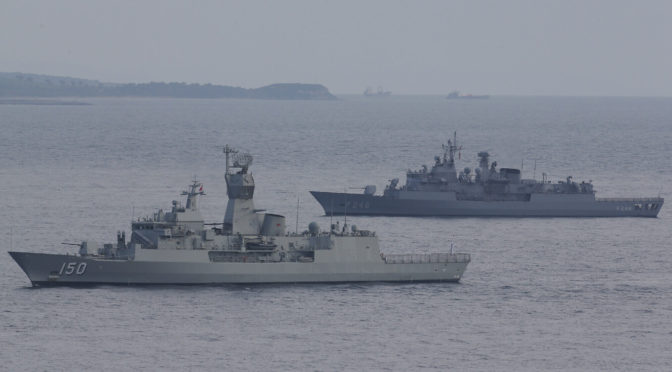
Featured Image: Turkish Navy ships in 2015 (AP Photo/Lefteris Pitarakis)
Sea Control 201 – The China-India Maritime Balance of Power

By Jared Samuelson

To conclude Regional Strategy Topic Week, Abhijit Singh and Collin Koh join the program to discuss the maritime balance of power between India and China to include a brief history of India-China relations, the recent conflict over the Line of Actual Control, India’s geographic advantage at sea, and the difficulty of conflict in a high-traffic area.

Sea Control 201 – The China-India Maritime Balance of Power

Links

1. “Will the India-China Border Conflict Lead to a Naval War,” by Abhijit Singh, The Strategist, June 26, 2020.
2. “Time to Leverage the Strategic Potential of Andaman and Nicobar Islands,” by Sujan Chinoy, IDSA, June 26, 2020.

Jared Samuelson is the Senior Producer of the Sea Control Podcast. Contact him at seacontrol@cimsec.org.

Between Scylla and Charybdis: ASEAN and the U.S.-China Contest for the South China Sea

Regional Strategies Topic Week

By Mark Valencia

ASEAN and its members are in an increasingly dangerous dilemma. They are under mounting pressure to choose between the U.S. and China in their competition for political and military preeminence in the region. In response, ASEAN member states are maneuvering to maintain their ‘neutrality’ and pursue ASEAN ‘centrality’ in international affairs affecting the region. Their perspectives and roles in this great power competition merit closer examination, as well as how they are adapting to it, and what—if anything—ASEAN can do.

Over the past year, China has taken actions that have alarmed rival South China Sea claimants and stoked the U.S. narrative that China is a threat to the region. Because these small and medium states — alone or in combination — are no military match for China, their response has been to maneuver diplomatically, both openly and behind the scenes. However, the U.S. sees this situation as an opportunity to further its own agenda vis a vis China and co-opt these states in the process.

On July 13 U.S. Secretary of State Mike Pompeo heightened tensions by announcing a ‘new’ policy on the South China Sea. The statement’s political core was that “America stands with our Southeast Asian allies and partners in protecting their sovereign rights to offshore resources­. ­The world will not allow Beijing to treat the South China Sea as its maritime empire.” Pompeo vowed that “We will support countries…who recognize that China has violated their legal territorial claims and maritime claims as well . . . We will provide them the assistance we can, whether that’s in multilateral bodies, whether that’s in ASEAN, whether that’s through legal responses. We will use all the tools we can . . .” (emphasis added). This could include military means.

U.S. Secretary of Defense Mark Esper has outlined an across-the-board reorientation of the Department of Defense with the goal of countering China’s influence in Asia. He has said that strengthening partnerships with Southeast Asian nations will provide the U.S. with an “asymmetric advantage” over China.

The U.S. followed these statements up with a diplomatic full court press on Southeast Asian countries to join it in its campaign against China’s policies and actions in the South China Sea. Pompeo called several key ASEAN foreign ministers seeking their support for the ramped up U.S. initiative. But he apparently did not receive the hoped-for response. Indeed, regional reactions ranged from cautious to negative. 

The principle target of the U.S. policy clarification was ASEAN and in particular China’s rival claimants within it: Brunei, Malaysia, the Philippines and Vietnam. But the response of ASEAN was underwhelming. The ASEAN Foreign Ministers collectively issued an unremarkable statement on ASEAN’s 53rd anniversary reaffirming their intent to maintain Southeast Asia as “a region of peace, security, neutrality and stability” amid “growing uncertainties resulting from the changing geopolitical dynamics in the regional and global landscape.” 

As William Choong of the Singapore based ISEAS-Yusof Ishak Institute put it, “Challenging China on values and democracy was ‘not going to take off’ in Southeast Asia. We are not going to see the same kind of pushback that the U.S. expects to see in ASEAN. This whole confronting China and kicking down the front door, I don’t think that’s an ASEAN way.” Some states are also concerned that like during the Cold War they could become the pawns or surrogates of great powers and suffer consequences.

Moreover, if the U.S. implements the policy, it will be a double-edged sword. As Shahriman Lockman of the Institute of Strategic and International Studies in Malaysia argued, the U.S presence “has the effect of both deterring but also potentially escalating matters with China…The worst-case scenario is for things to escalate, and then the U.S. gets distracted by something in the Middle East, and we get saddled with more Chinese ships in our waters.” 

Some are also concerned that even if they cooperate, the U.S. commitment may not continue. Indeed, some suspect that this offensive may just be a last-minute, superficial ploy to help Trump in his re-election campaign.

As Joseph Liow of Singapore’s National Technical University says, “While U.S. patrols are instrumental to regional security, no ASEAN state would ever declare that because they do not want to be seen siding with Washington against Beijing.”

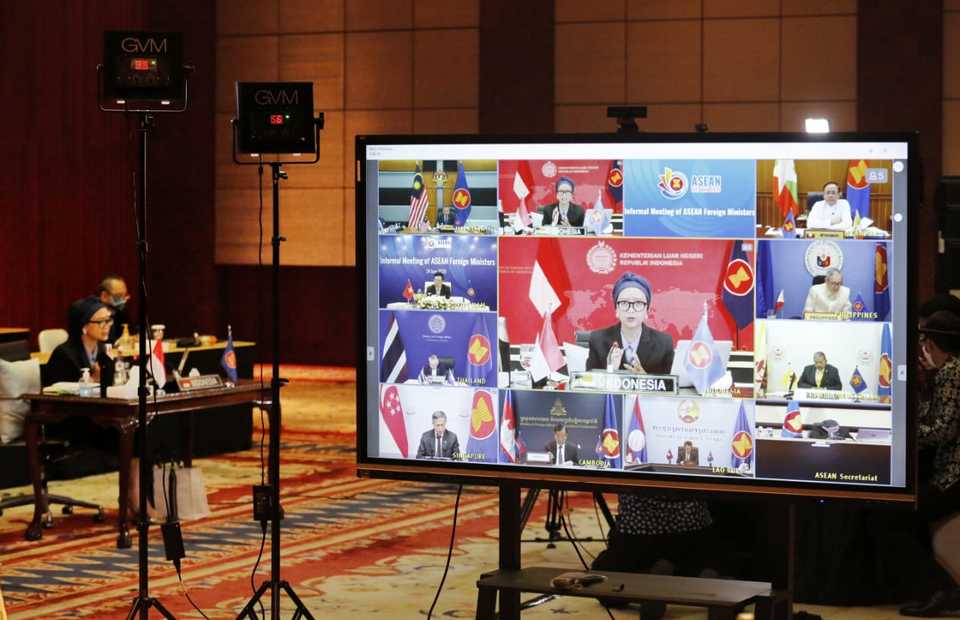
Foreign Minister Retno Marsudi attending the virtual Asean Informal Action Ministerial Meeting in Jakarta in June 2020. (Photo courtesy of the Indonesian Foreign Affairs Ministry)

Indonesia and Singapore have remained neutral regarding this new American aggressiveness. Indonesia said that any country’s support for Indonesian rights in the Natuna Sea is “normal.” Its Foreign Minister, Retno Marsudi, added, “ASEAN must always cooperate to maintain our regional peace and stability and not be dragged into the storm of geopolitical tension or be forced to choose sides.” Malaysia’s Foreign Minister Hishamuddin Hussein struck a similar note, saying Malaysia must ensure it is not “dragged and trapped” in a political tug of war between great powers. Hishamuddin is particularly concerned that the China-U.S. struggle could split ASEAN.

President Rodrigo Duterte of the Philippines publicly stated that he will form policies regarding China that are in its best interests—not necessarily those of others, including the U.S. Even Vietnam, China’s leading regional critic, did not call out China by name in response to Pompeo’s statement but only “welcomed countries’ positions on the South China Sea that are in line with international laws.”

There are good reasons why these countries have difficulty choosing between the two. While they may be more ideologically aligned with the U.S., many have economic and longer-term geopolitical reasons like relative proximity to China that make them reluctant to openly confront it militarily or diplomatically – even with U.S. backing. Beijing will likely use the economic needs of these nations as leverage to prevent their unity against China. As such, Pompeo’s policy clarification overestimated Southeast Asian countries’ overt supportiveness. 

It was never realistic to think ASEAN and its South China Sea claimants would automatically support the United States and its increasing emphasis on great power competition with China. Other than perhaps Vietnam – and its support for military intervention is questionable  it is doubtful that backing up the specifics with threats of force will be welcomed in Southeast Asia. These states are already particularly concerned with the military buildup in the region by both superpowers.

A more aggressive U.S. diplomatic and military posture could force regional nations to choose between it and China, and the U.S. may not like the outcome. Indeed, the U.S. is discovering the hard way (e.g. the Philippines) that its soft power relationships in Southeast Asia are neither as deep nor as enduring as it thought. The only way to rebuild the integrity and robustness of its relationships with Southeast Asian nations is for it to demonstrate respect and awareness of their self-defined national interests to a degree equal to its own.

ASEAN countries could contribute to conflict avoidance by individually or preferably multilaterally expressing opposition to the U.S. and Chinese military presence. There has already been some movement in this direction. After one incident in October 2018, Ng Eng Hen, Defense Minister of Singapore, a U.S. strategic partner, said that “Some of the [US-China] incidents are from assertion of principles, but we recognize that the price of any physical incident is one that is too high and unnecessary to either assert or prove your position.” 

Philippines President Rodrigo Duterte has said that the threat of confrontation and trouble in the waterway comes from outside the region. Malaysian Prime Minister Mahathir Mohamad then argued that “if the strategy does not include sending the Seventh Fleet into the area, we are welcome to that…big warships [in the South China Sea] may cause incidents and that will lead to tension.” In response to the new U.S. statement, Malaysia’s new Foreign Minister Hishamuddin Hussein called for the big powers “to avoid military posturing.”

Indonesia’s Foreign Minister Retno Marsudi has said that it is “important for ASEAN to keep sending out messages to great powers involved in the dispute to maintain regional peace and stability in the South China Sea.” Considering previous relevant statements by high-level Indonesian government officials, this appears to be a plea to both China and the U.S. to cool tensions and exercise more restraint in their military operations in the region.

However, ASEAN is far from united on this issue—in part because it primarily concerns China’s rival claimants: Brunei, Malaysia, the Philippines, and Vietnam. So far the voicing of these concerns has not had the desired effect. An escalating and strengthening chorus of concern could help reduce the potential for conflict and confrontation. As ASEAN states run out of diplomatic maneuvering space, this may become their only option other than openly casting their lot with either the U.S. or China.

Mark J. Valencia is an adjunct senior scholar at the National Institute for South China Sea Studies, Haikou, China.

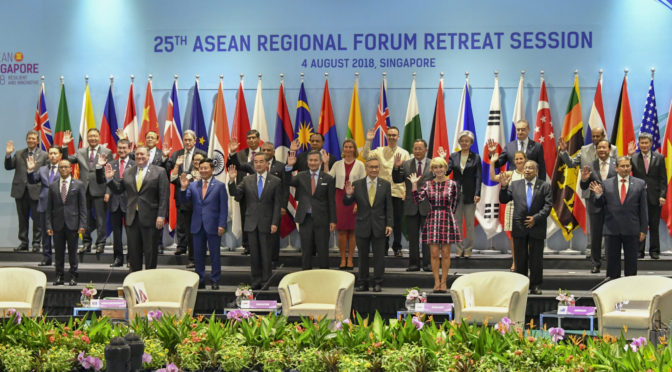
Featured Image: Participants of the ASEAN Regional Forum Retreat pose for a photo in Singapore, Singapore, August 4, 2018. (State Department Photo)

India’s Strategy for the Indian Ocean in Light of COVID-19 and Confrontation with China

Regional Strategies Topic Week

By David Scott 

Setting the Scene for 2020

Indian strategy for the Indian Ocean revolves around retaining preeminence across the body of water, tacitly seen as India’s Ocean; a term implying if not hegemony, then at least a sort of regional leadership and regional preeminence. The External Affairs Minister Subrahmanyam Jaishankar was explicit at the Indian Ocean Conference held in the Maldives in September 2019 that India’s “core interests are in Indian Ocean,” that “the fact remains that where India can really make a difference is in the Indian Ocean itself,” and that the Indian Ocean is for India “a natural arena for its influence and of overriding security consequence.” Jaishankar went on in March 2020 to argue in a speech titled “Emerging Geopolitical Landscapes” that “where maritime security is concerned, India has emerged as a key player, especially in the Indian Ocean.”

Indian strategy in and for the Indian Ocean during the 2010s has been threefold: building up its naval-maritime infrastructure (bases and support facilities), building up power projection assets, and strengthening relations with increasingly China-concerned powers.

Indian strategy for the Indian Ocean during the 2010s has involved building up its naval infrastructure out from the Indian subcontinent. This has involved development of military facilities on the Lakshadweep archipelago off the western coast, but even more so on the larger Andaman and Nicobar archipelago on the other eastern side of the Bay of Bengal at the head of the Malacca Strait.

This has also involved support facilities with sympathetic partners like Oman (Duqm), Iran (Chabahar), Madagascar, Mauritius, and Singapore. A common sub-theme is India trying to avert Chinese penetration of Indian Ocean micro-island states and littorals, where China’s Maritime Silk Road (MSR) is considered by Delhi as detrimental to Indian interests. In that vein, the Indian Navy has established Joint Exclusive Economic Zone surveillance exercises with the navies of the Maldives, Seychelles, and Mauritius; and Coordinated Patrols (CORPATs) with the navies of Bangladesh, Myanmar, Thailand, and Indonesia.

Indian strategy for the Indian Ocean during the 2010s also involved building up its naval assets, headed by aircraft carriers and nuclear submarines. The Indian Navy currently operates one aircraft carrier, INS Vikramaditya (a refurbished Soviet carrier), while the second, INS Vikrant, is under construction in Cochin, ready to commence her basin trials in September 2020, due for delivery in 2021, and active commissioning expected in 2022. Both vessels have a displacement of around 45,000 tons each. A third aircraft carrier, INS Vishal, a 65,000-ton giant with 54 aircraft, is envisaged for the longer term. India’s Navy chief Admiral Karambir Singh reiterated in December 2019 that the force’s long-term capability planning envisaged the induction of three aircraft carriers so that two are continuously available for deployment in the Indian Ocean Region, one by the Western Command, and one by the Eastern Command. The Indian Navy is expected to push for a grant of Acceptance of Necessity (AoN) clearance for the third carrier, the IAC- 2, soon.

This building up of India’s naval assets represents internal balancing. Yet the navy’s share in the defense budget declined from an 18 percent high in 2012 to a lower 13 percent by 2019-2020. Due to recent budget constraints, the requirement of 200 ships has been brought down to 175. Moreover, in February 2020 Chief of Defence Staff General Bain Rabat indicated that in competitions for resources the acquisition of new submarines might take priority over aircraft carriers.

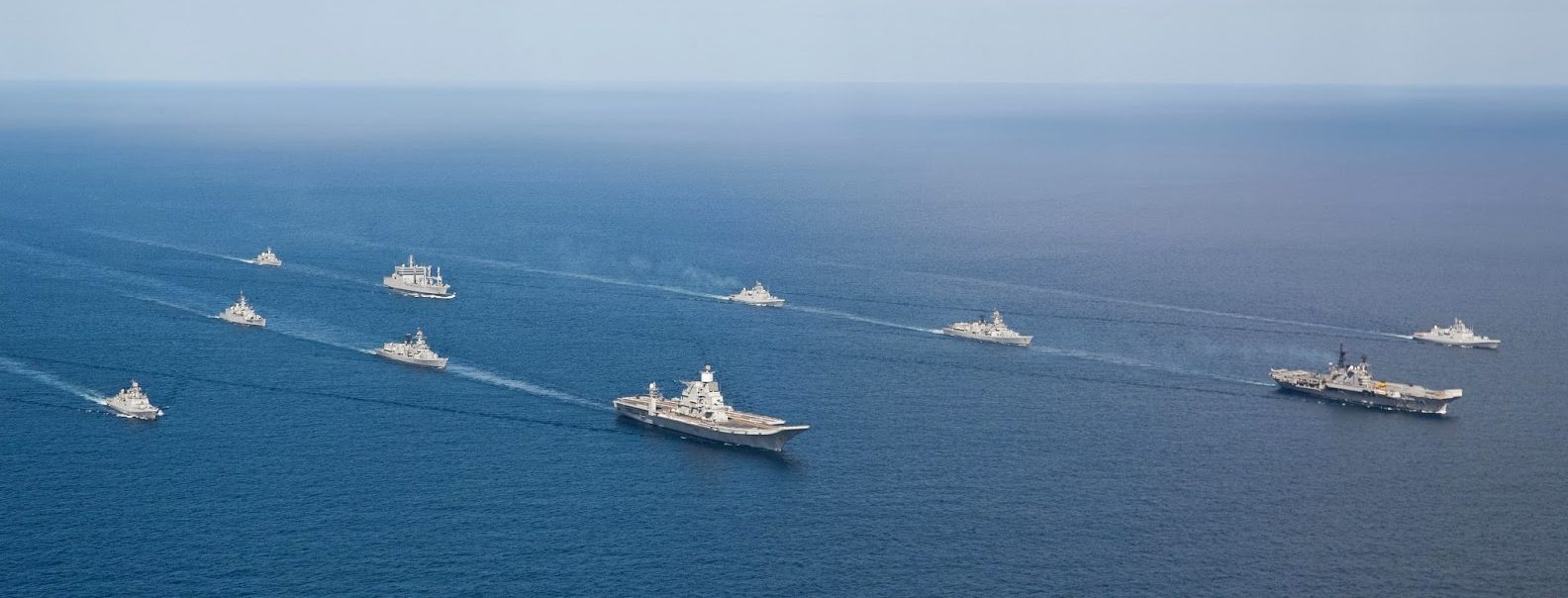
An Indian Navy flotilla of the Western Fleet escorts carriers INS Vikramaditya (R33) and INS Viraat (R22) in the Arabian Sea (Wikimedia Commons)

Thirdly, Indian strategy for the Indian Ocean in the 2010s involved strengthening cooperation in the Indian Ocean with other significant external (U.S. and Japan) and internal (France, Australia, and Indonesia) actors. Diplomatic milestones for this line of effort include:

All three elements of India’s maritime strategy are implicit levers to constrain and manage the otherwise growing Chinese presence in the Indian Ocean. This implicit leverage was demonstrated at the start of 2020 at the Raisina Dialogue, held January 14-16, which included a panel titled “Fluid Fleets: Navigating Tides of Revision in the Indo-Pacific.” On the panel, India’s Chief of Naval Staff Karambir Singh sat alongside Australia’s Vice Chief of the Defence Force, Vice Admiral David Johnston, Japan’s Chief of Staff, General Koji Yamazaki, France’s Deputy Director of Strategy at the French Ministry of the Armed Forces, Luc de Rancourt, and the U.K.’s Chief of Naval Staff, Admiral Tony Radakin. At that discussion, Admiral Singh noted of China that “they have seven to eight warships in the Indian Ocean at any given time [.…] We are watching. If anything impinges on us, we will act”; to which he gave the then-recent example of the Indian Navy escorting Chinese ships out of their sensitive Exclusive Economic Zone (EEZ) around the Andaman and Nicobar Islands in December 2019.

During 2020, two unexpected events signally affected India’s maritime strategy in the Indian Ocean. In retrospect it was no surprise that the biannual Naval Commanders’ Conference held in August 2020 particularly focused on the entry and operations of “extra-regional” forces (read: China) in the Indian Ocean Region, and operational procurements. The Ministry of Defence said that the Commanders Conference “assumes greater significance in the backdrop of recent events on our northern borders [Galwan] and the unprecedented challenges posed by the COVID-19.” Both of these issues are affecting India’s maritime strategy for the Indian Ocean. 

COVID-19 and Its Impact

COVID-19 first hit India in January 2020, with national lockdowns introduced in March, but cases were still spreading rapidly. Current figures recorded in late September listed India as having 5,487,580 confirmed cases, second only to the U.S.’ 6,883,931. India’s confirmed COVID-19 deaths number at 87,882 (third behind U.S.’ 200,710 and Brazil’s 136,895). The resulting impact of COVID-19 on Indian maritime strategy for the Indian Ocean has been fivefold.

Firstly, it disrupted basin trials of India’s second aircraft carrier, INS Vikrant, due in September 2020, with commissioning now delayed until September 2021. Secondly, Indian regional naval diplomacy was disrupted as the biannual MILAN itineration, due to be held in March 2020, was cancelled. In one sense this was a setback for Indian naval diplomacy, yet after a record number of invites (41, but not including Pakistan or China) and acceptances (over 30), it still showed India’s increased status in the Indian Ocean in 2020.

COVID-19 also meant that the INDRA exercises with Russia in September 2020 were restricted to at-sea only. Nevertheless, India’s readiness (matched by Russia) to deploy two warships and a supply tanker in the Bay of Bengal indicated India’s natural focus and locational advantage in these waters. They also were subtle message for China that its close links were not exclusive, and that China could not necessarily rely on Russia in any China-India conflict.

The pandemic enabled India to extend COVID-related assistance to various Indian Ocean states. This was on show in June 2020 with Mission Sagar, which India claimed was “a major milestone in India’s engagement with Indian Ocean region countries.” There, the landing ship INS Kesari was sent to the Maldives, Mauritius, Comoros, Seychelles, and Madagascar, complete with teams of healthcare professionals, medicines, and food onboard to help with pandemic response. Meanwhile, India’s naval might was on show in Operation Samudra Setu (Sea Bridge), in May 2020. There, INS Jalaswa and INS Magar, dispatched from India’s Southern Command at Kochi and escorted by other warships of the Western Fleet, brought back over 600 COVID-threatened Indian citizens from the Maldives.

Structurally, India slid into marked economic downturn as the COVID-19 pandemic accelerated during summer 2020. Its economy shrank 23.9 percent year-on-year in the second quarter of 2020. A 4.2 percent GDP growth for 2019-2020 (in slow decline since January 2018) is already set to be replaced by a negative 3.2 percent figure in 2020-2021. The result is that India’s capitalization program is under threat, and the drive to initiate a three-aircraft carrier program is threatened with delay at best and cancellation at worst.

Galwan and its Impact

The second major challenge facing India in 2020 was deadly confrontation with China. This was sharpest at the Galwan Valley, where China objected to Indian moves up the valley. Confrontation between forces escalated in mid-June 2020, with 20 Indian soldiers reported as killed in direct fighting with Chinese troops.

Eventual pullbacks of forces were halting and uneasily carried out in late July, but with further warnings coming from India on August 30. The Foreign Ministers’ joint press statement released by Jaishankar and Wang Yi may have had a five-point plan of action, but hardly represents something new, and left vague calls for “new confidence building measures” without any substance. Yet clearly India’s focus firmly remains on its land frontier, and the swathe of confrontation points that have opened up. The Indian Parliament was updated by Defence Minister Rajnath Singh on September 15:

“As of now, the Chinese side has mobilized a large number of troops and armaments along the LAC as well as in the depth areas. There are several friction areas in Eastern Ladakh including Gogra, Kongka La and North and South Banks of the Pangong Lake. In response to China’s actions, our armed forces have also made appropriate counter deployments in these areas to ensure that India’s security interests are fully protected.”

However, the extended confrontation and continuing standoff at Galwan has had an ambiguous two-fold impact on Indian strategy for the Indian Ocean. On the one hand this has contributed to a further deterioration in India-China relations, both at the government level, and in terms of wider public opinion. China’s growing presence in the Indian Ocean is all the more perceived in India as a threat to Indian interests, and part of a disadvantageous encirclement policy by China and an increasingly encircled position for India. On the other hand, the extended land confrontation and growing friction along the Himalayas reinforces a landward imperative and encourages reinforcement of India’s army and air force presence along its northern flank, which could come at the expense of naval acquisitions.

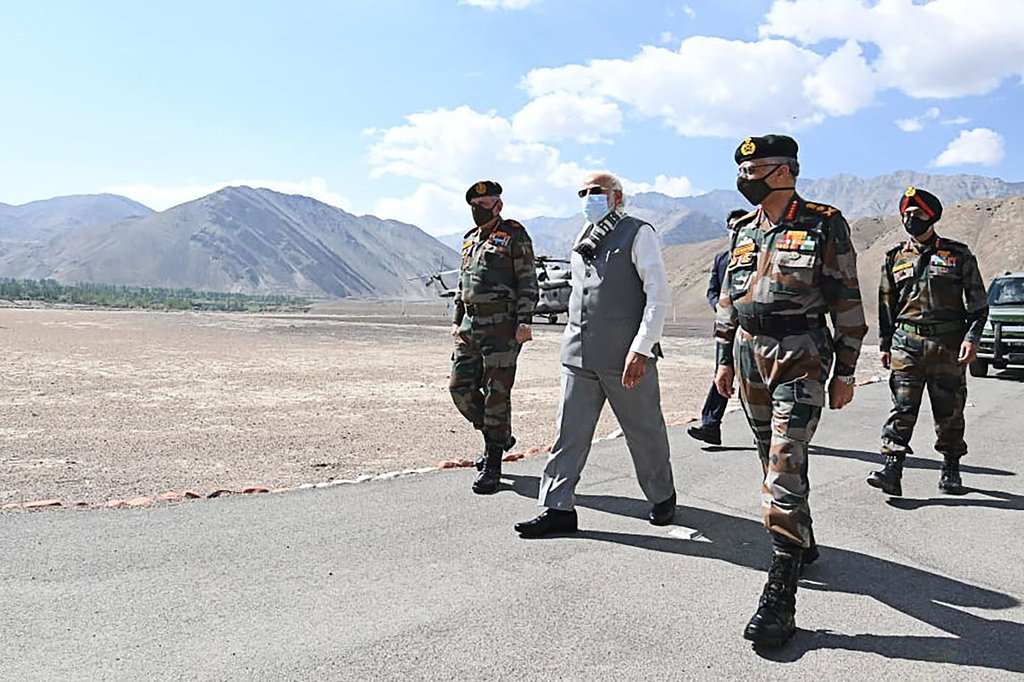
India’s Prime Minister Narendra Modi, center, visits Ladakh in July 2020 after deadly clashes between Chinese and Indian troops (Indian Press Information Bureau)

In the wake of Galwan, India has accelerated weapons purchases. India’s Ministry of Defence announced on July 2 that “in the current situation and the need to strengthen the Armed Forces for the defence of our borders” arms procurement projects worth U.S.$5.55 billion were approved. These included long-range land-attack missile systems with a range of 1,000 kilometres and Astra missiles featuring beyond visual range capability. Both “will bolster the attack capabilities of the Navy,” and “will serve as a force multiplier and immensely add to the strike capability of the Navy.”

The Indian Navy argument is that Chinese aggression in the Himalayas generates the need for a stronger Indian position in the Indian Ocean, in the face of related Chinese expansion there. Even as India reinforced its troop levels on its northern flank, simultaneously in the wake of Galwan, India’s navy was deploying more actively and dispatched in greater strength around the Malacca Strait. The navy thereby demonstrating India’s potential to threaten China’s sea lines of communication, the so-called Malacca Dilemma facing Beijing. The Indian Navy has also been pushing a sense of urgency for “Acceptance of Necessity” (AoN) for a third aircraft carrier, which has been pending since 2015.

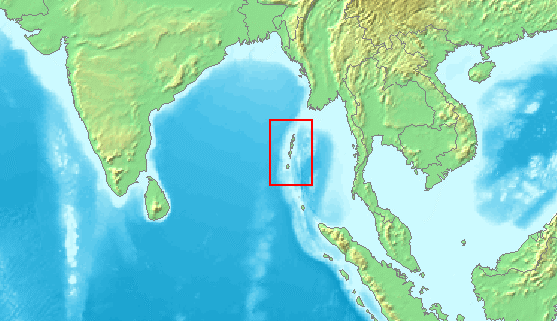
Certainly, India has immediately sought to strengthen its own position in the Indian Ocean, through an extra focus on the Andaman and Nicobar Islands. The geopolitical and military value of the Andaman and Nicobar Islands remain tangible. In conjunction with the Indian littoral and the Eastern Command at Vishvakapman, India’s possession of the Andaman and Nicobar Islands provides a firm enclosure of the Bay of Bengal, and a chokepoint onto the Malacca Strait.

Location of the Andaman islands, found east of India and northwest of the Malacca Strait (Wikimedia Commons)

Consequently, exercises in which several destroyers and frigates were joined by maritime patrol aircraft were conducted around the Andaman and Nicobar Islands in July 2020. Headed by the Eastern Command naval chief Rear Admiral Sanjay Vatsayan, units came from the Andaman and Nicobar Command (ANC), the Eastern Naval Command, and with some warships deployed near the Malacca Strait also taking part. Submarine hunting Poseidon-8I aircraft, complete with Harpoon Block-II missiles, torpedoes, rockets, and depth charges were dispatched from their base at INS Rajali naval air station in Arakkonam (Tamil Nadu). They were seen as sending “a signal to China” according to the Times of India on July 18.

Prime Minister Narendra Modi made a point of visiting the Andaman and Nicobar Islands in August 2020. This marked a explicit focus on the strategic importance of these islands by Modi:

“The Indian Ocean has been the centre of India’s trade and strategic prowess for thousands of years. Now that India is following the new policy and practice of trade and cooperation in Indo-Pacific, the importance of our islands including Andaman and Nicobar has increased further.”

Extending Strategic Cooperation in the Indian Ocean with France, Japan, Australia, and the U.S.

A tacit development since Galwan has been a push by India to strengthen its partnerships with other powers operating in the Indian Ocean that also have concerns about China’s assertiveness.

India’s support from the U.S. in the Indian Ocean continued to strengthen in 2020. India was more than happy with U.S. endorsement in February 2020 in their Strategic Convergence in the Indo-Pacific (part of their “Vision and Principles” Joint Statement) that “the United States appreciates India’s role as a net provider of security, as well as developmental and humanitarian assistance in the Indian Ocean Region.” The term “net provider of security” describes India as taking a leading regional role and providing security for others beyond India’s own immediate needs. Delivery of advanced American-made Sikorsky anti-submarine helicopters, with China in mind, was accelerated in May 2020. July 2020 also witnessed naval drills with the Nimitz Carrier Strike Group in the Andaman Sea.

India’s relationship with France has also deepened. The two navies conducted joint patrols around Reunion in March 2020. These joint activities with France represent an operationalization of the Logistics Support Agreement (LSA) that India signed with France in 2018. The LSA has expanded the presence and the type of naval operations that the Indian Navy is able to undertake in the Southwestern Indian Ocean, given that France has military facilities on the islands of La Réunion, Mayotte, and the French Southern and Atlantic Lands – all of which could now be used by India. India can also now tap into France’s base at Djibouti. This in effect further extends India’s strategic footprint and effective area of operation in the Indian Ocean further southward and westward.

June 2020 saw Indian Navy ships INS Rana and INS Kulish exercising with the Japanese Navy ships, JS Kashima and JS Shimayuki. A significant logistics development was the Acquisition and Cross-Servicing Agreement (ACSA) signed in September 2020 between India and Japan. This will enable closer cooperation with Japan in the Indian Ocean, with Japanese access to the Andaman and Nicobar islands being likely, reciprocated with Indian access to Japan’s base at Djibouti.

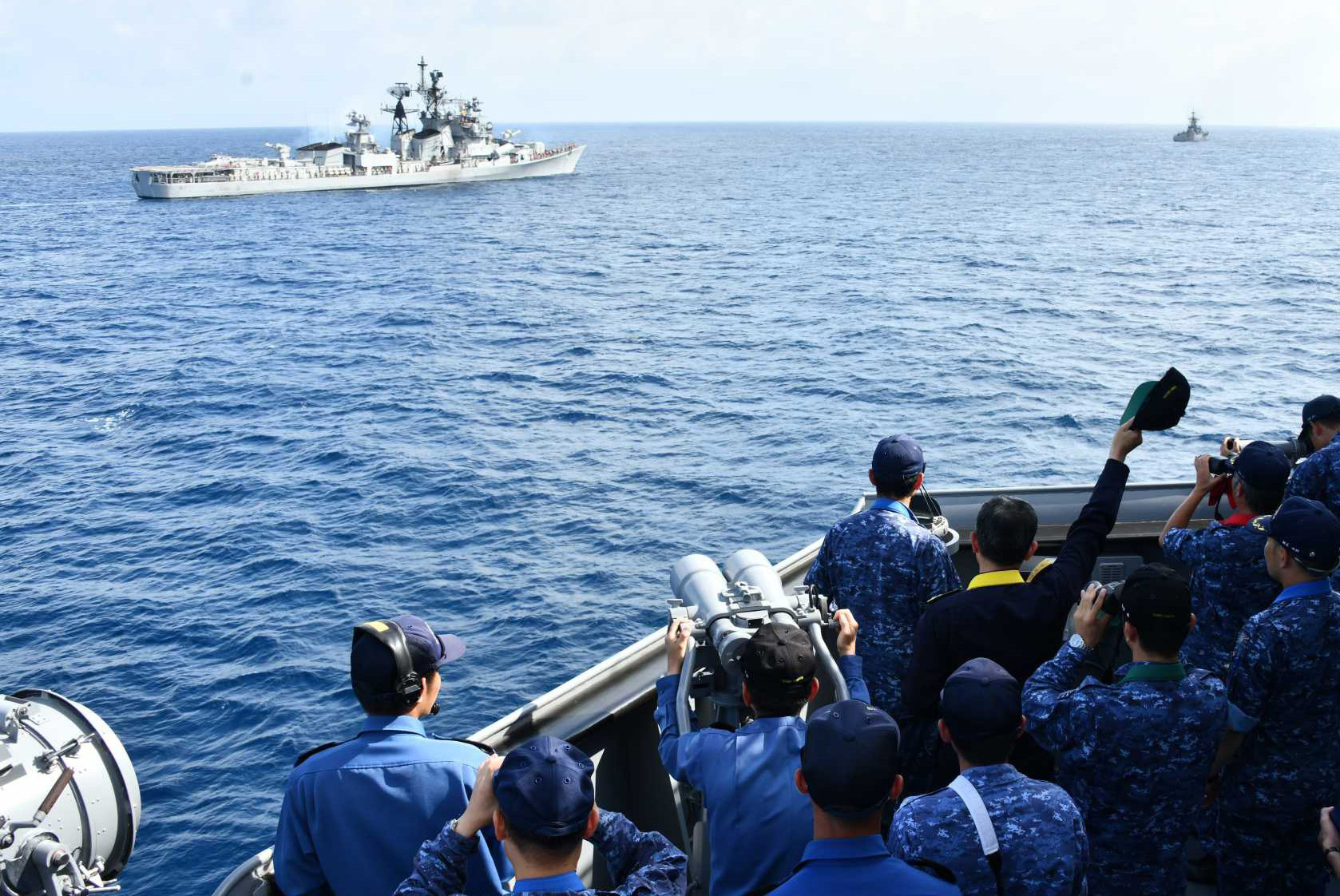
Japanese Maritime Self Defense Force sailors look upon INS Rana during a joint exercise in June 2020 (Photo via JMSDF Twitter)

Relations with Australia moved forward noticeably in 2020. Their summit in June 2020 witnessed their joint Shared Vision for Maritime Cooperation in the Indo-Pacific. It also witnessed their Mutual Logistics Support Agreement (MLSA). From India’s point of view this enables Indian use of military facilities on Australian territory in the Eastern Indian Ocean, notably Christmas Island and Cocos Island. This in effect further extends India’s strategic footprint and effective area of operation in the Indian Ocean further eastward. INS Sahyadri and INS Karmuk also carried out anti-air bilateral exercises with the Australian Navy in the eastern Indian Ocean in September.

India has also further strengthened its strategic position in the Indian Ocean with two new trilaterals.

The first India-France-Australia trilateral dialogue was held in September 2020. Harsh Vardhan Shringla, Foreign Secretary of India, met French and Australian counterparts, held virtually due to the pandemic. Their stated focus was “economic and geostrategic challenges and cooperation in the Indo-Pacific,” explicitly with regard to the pandemic, but also implicitly with regard to China. Their mutual support for the Indian Ocean Regional Association (IORA) and the Indian Ocean Commission (IOC) was stated, as was their common focus on “synergizing their respective strengths to ensure a peaceful, secure, prosperous and rules-based Indo-Pacific region.” The advantage for India in this new minilateral is that it reduces naval dependence on just cooperation channeled via the United States.

Another new minilateral in the offing. In early September it was announced that External Affairs Minister Jaishankar would be meeting for an upcoming meeting with his Indonesian and Australian Foreign Minister counterparts, with agreement set on maritime cooperation in the Indian Ocean.

A final impending effect of India’s confrontation with China at Galwan is a sense of India now withdrawing its previous hesitations over allowing Australia to participate in the trilateral MALABAR naval exercises currently held between India, the U.S., and Japan. The expected invite to Australia for the next MALABAR exercise in the Bay of Bengal, in Fall 2020, represents Indian acceptance of the so-called “Quad” taking on some military dimensions.

Conclusion

Paradoxically, though COVID-19 has weakened India’s economic ability to fund its naval infrastructure and assets program for the Indian Ocean, it has enabled India to strengthen its links with Indian Ocean micro-states through the humanitarian assistance delivered by the navy. Meanwhile, land confrontation with China at Galwan has encouraged India to deepen its military links with other maritime powers operating in the Indian Ocean. In an unstated but evident balancing fashion, this is enabling India to improve its maritime position in the Indian Ocean vis-à-vis China.

David Scott is an associate member of the Corbett Centre for Maritime Policy Studies. A prolific writer on maritime geopolitics, he can be contacted at davidscott366@outlook.com.

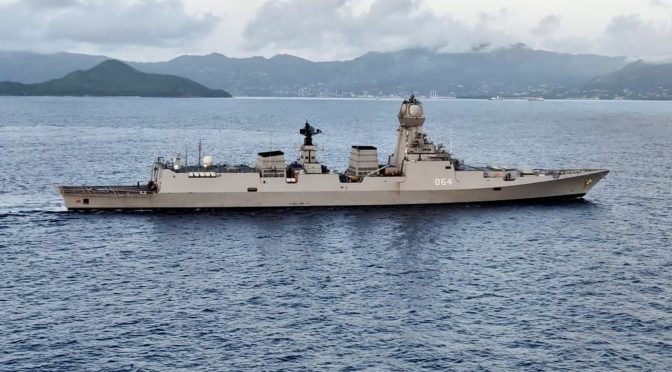
Featured Image: Indian Navy destroyer INS Kochi enters Port Victoria, Seychelles. (Photo via Indian Navy spokesperson Twitter)

Fostering the Discussion on Securing the Seas.