By Captain Michael Hanson, USMC
Summer 2026
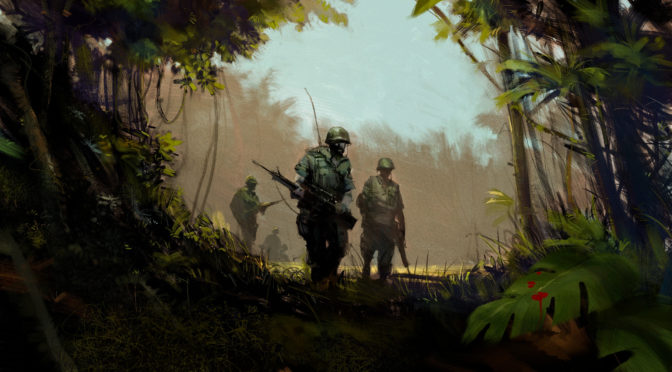
The Marines lay as still as rocks on the jungle floor. Sweat gushed from their every pore as insects crawled across their bodies and buzzed in their faces. But the Marines remained still. Not a single one moved an inch to wipe their brow or swat a buzzing nuisance. They remained as motionless as logs, and they blended in like logs as well. Their selection of excellent micro-terrain for their ambush site as well as their proficient application of camouflage made them undetectable in the jungle shadows. Their bodies covered in foliage, exposed skin and weapons smeared in earth tones, they were indistinguishable from the ground they occupied. Months of sustained combat in this harsh environment taught them that to survive in the jungle you had to be disciplined, or at least more disciplined than your enemy. They learned these lessons the hard way, by losing Marines. “You only make mistakes once in combat,” they reminded themselves while conducting precombat checks and inspections before going on patrol.
So they lay for hours, carefully watching a small clearing less than 50 meters away that widened their visibility in the thick vegetation. Suddenly they heard a faint rustling sound in the woods. A few seconds later they heard more. No one said a word. The foliage across the clearing shook and out stepped a Chinese infantryman. He slowly crept forward, as quietly and carefully as he could. Behind him three more Chinese soldiers came into view one by one, scanning the jungle ahead of them. Across the clearing, the U.S. Marines slowly switched their weapons off safe. They continued to wait.
Rac-kack-kack-kack-kack!
Suddenly the jungle exploded with fury. Dirt blasted up from the ground and tree limbs dropped, as red tracers tore into the unexpecting enemies. They crumpled to the ground and the firing stopped a second later. Leaves drifted to the ground and dust settled around the motionless bodies, the jungle was quiet again. After 30 seconds of calm two camouflaged U.S. Marines went forward, weapons at the ready, and approached the corpses. They were fast, first scooping up the fallen’s weapons before checking their pouches and pockets for anything of value. From one a radio was retrieved, off another a blood smeared map and a weathered notebook. That was going to be it. The search party looked up and nodded at the Marines covering them from the ambush site, before heading back in with the haul. Deliberately, they passed their buddies that were still in the prone, and pushed into the jungle. Slowly and individually, the Marines rose and the squad disappeared into the jungle. They left the bodies in place.
Assuredly there were other enemy patrols out, and undoubtedly any one that heard the burst of fire was heading for it to help their comrades. “Better not to stick around,” Sergeant Rodriguez thought to himself as he motioned to his Marines to head back to base. The point man acknowledged and picked up the pace.
Sergeant Rodriguez was the squad leader, with 10 Marines under his charge. However, he didn’t start out with this billet. When they landed in the jungle, the squad leader was a staff sergeant and had 12 Marines under him. But he had been wounded in a meeting engagement a month before. The squad made a chance encounter with the enemy on a jungle trail. The two opposing squads walked right into each other. The Staff Sergeant was on point, and wasn’t as fast with his weapon as the Chinese point man was with his. He took a burst of fire to the chest, and Sergeant Rodriguez took charge of the squad. They fought their way out of that engagement, taking another Marine slightly wounded. The casualty evacuation was a nightmare. They carried, dragged, and hauled the Staff Sergeant for hours through the jungle, constantly mindful that they could be overtaken by the enemy on their heels until they linked up with a friendly squad that rushed to assist them. It was pure luck that got them out of that one, though luck isn’t always enough in this environment. Skill and discipline are required to survive in the jungle. And in the months since Sergeant Rodriguez took the squad they improved in both. They adapted, they learned by doing, though they lost a few other Marines in other engagements.
They had been in this place for two months, but two months is a long time in the jungle. Plenty of time to learn how to fight and survive there. After two months in the jungle, Sergeant Rodriguez’s point man knew his business. It was hard though, those first several patrols, when he couldn’t get a signal to his wrist GPS device through the thick jungle canopy. They got lost, they wandered around on several occasions, but eventually he figured it out. Today, navigating by map, compass, pace count, and terrain association, he steered the squad on their course like he was driving a car back home. He was a professional, the best point man in the company, though they were all pretty good. One had to be in this environment.
_______________________________________
The war began by complete accident. Neither side was ready for it, but they jumped in with both feet. It started in the waters west of the Philippines. A Chinese naval vessel collided with a Filipino Navy ship after some reckless maneuvers. The whole thing probably could have been defused, but neither side backed down. A tense standoff ensued between ships of both navies, until the Filipinos fired on the next Chinese ship that came too close. The Chinese struck back, hard and fast, and sank several Filipino naval vessels. The shooting war had started and it quickly escalated.
The Philippines invoked its treaty alliance with the United States and American forces raced for the region. What followed was a scramble for key maritime terrain, with both sides attempting to control strategic chokepoints in the region. Long-ignored islands, reefs, peninsulas, straits, and channels became the scenes of posturing to gain advantage, as well as isolated clashes. U.S. Marines scattered across the Pacific to countless strategic points in the first island chain. They went on the surface and in the air. They traveled on small, hard-to-detect transports and in MV-22 Ospreys. They went to establish expeditionary advance bases, from which further operations could be conducted.
For the U.S., speed was crucial in such a distributed campaign, as Marines were quickly dispatched to reach myriad critical places first. There simply wasn’t enough Marine infantry to seize and defend all the key terrain identified. Nor was there time for Marine infantry to secure ground, turn it over to follow on forces, and redeploy in every location. The Americans accepted the risk of seizing ground with support forces in some places and sent their infantry to other places more likely to be contested.
On some locations, the Marines landed High Mobility Artillery Rocket Systems, or HIMARS, to threaten Chinese ships that came within range. On other sites the Marines established forward arming and refueling points, or FARPs, to threaten enemy ships and to serve as hubs to support other EABS from. In other locations, the Marines went to work from existing EABs established before hostilities erupted. A vast network of interlocking and mutually supporting bases designed to contain the Chinese Navy began to take shape.
However, the Chinese had plans of their own, and weren’t content to just let the Americans box them in. Chinese amphibious ready groups landed their own Marines on ground they deemed important as well, including some of the same islands the Americans prized. US Marine artillerymen found themselves fighting to defend their HIMARs sites from Chinese infantry, as did U.S. Marine FARP personnel. Unfortunately, many of these Marines were ill-trained or equipped to fight off attacks by determined enemy infantry. The American Marine infantry met their match as well. In many places they landed and found a bitter fight for control of terrain determined to be important by both sides.
Whether American or Chinese infantry made it to their objective first, vicious battles ensued. In some places, American platoons landed and encountered Chinese companies waiting for them. In others, American company landing teams arrived and secured their objectives, only to have a Chinese airborne battalion parachute in on top of them. U.S. Marines had not been outnumbered on the ground like this since Vietnam.
_______________________________________
The patrol snaked its way through the jungle following the path of a stream. It wasn’t a straight route, but navigating without the aid of GPS relies heavily on terrain association. Sergeant Rodriguez thought back to when his company arrived here. The news of war was sudden and interrupted an otherwise dull deployment. Within hours, his company was airborne in a flight of MV-22 Ospreys. Their mission was to seize a small island in the Philippine archipelago for use by follow-on forces. Whoever those forces were and what their mission was didn’t matter to him, he was going to set conditions for other Marines to exploit.
Sergeant Rodriguez’s platoon had been in the first wave to land on the island. Due to the limitations on space and weight in an air assault, they didn’t bring much. When the Osprey touched down in a grassy clearing, the Marines shuffled off only with what they could carry on their backs. Resupply would come in a few days after they established the preliminary defense for the EAB. Once the initial EAB was established a steady logistics effort would bring in more equipment and Marines until the node was built up and operational. A look at a map showed that this island was key to the network, so it was important that a lodgment be secured quickly. Unfortunately, things didn’t go according to plan.
The company landed without interference and seized their objective ahead of schedule. As planned, a few Ospreys dropped some pallets of chow to keep the Marines going until the next wave of resupply came in. Yet something else happened before anyone expected it to: a Chinese airborne battalion landed. The Marines uneasily watched hundreds of parachutes descend onto a relatively open part of the island. Attacking such a larger force was out of the question, the Marines hunkered down and hurriedly set about building a defense.
It was quickly apparent that the Chinese had established a lodgment on one side of the island while the Americans had one on the other, with a no man’s land of harsh wilderness in between. The U.S. Marines knew they were outnumbered and immediately requested reinforcement, but were told there would be none. The enemy had quickly and effectively established local superiority in naval, air, and land assets. These were active, and targeting friendly assets, even scoring a few hits. The loss of some important friendly assets had disrupted plans for this EAB. It would be an undetermined amount of time before any more Americans would be able to get through. The company had to hold on until the situation improved enough to get more support into the area.
Soon Chinese reconnaissance patrols would be searching for them. To keep them back and provide early warning, the U.S. Marines sent out patrols of their own. What ensued was a series of battles between squad-sized patrols in the jungles. A war of chance encounters, meeting engagements, and ambushes. It was a squad leader’s fight, as only small units could efficiently traverse the rugged hills and thick vegetation. Squads and fire teams could move nimbly and quickly in this environment, anything larger was slow and unwieldy.
Resupply was tenuous. In the first week a few Ospreys made it through to drop off a few pallets of chow and ammo. When they returned a week later a Chinese surface-to-air missile downed one of them, causing future air resupplies to cease. Eventually a system of unmanned cargo boats got through. Every so often, in a method so as not to set a recognizable pattern, a few autonomous boats full of chow and ammo reached the shore, each time in a different location. With their resupplies contested, the Marines were often hungry. Patrols would halt to fill their assault packs with bananas and other fruits. Patrols were dispatched specifically to harvest the jungle’s bounty. They soon learned to live off the land. Patrols went out to fill jugs with small pumps that allowed them to filter water from streams. At the company position Marines erected devices to collect rainwater. They turned to the jungle to survive the enemy’s interdiction efforts.
_______________________________________
As the patrol took a security halt near a pond, Sergeant Rodriguez took an MRE snack out of his pocket. He had been saving it since before the ambush but couldn’t wait any longer. He looked at his Marines, his eyes focusing on their load bearing vests and boonie covers. “It would have been smart to leave all the PPE and bring more chow and ammo when we came here,” he remarked in his mind, thinking of his 40-pound body armor kit staged back at the company’s position, untouched for more than a month. The Marines had long ago abandoned their heavy body armor after the first few exhausting patrols in the jungle and close fights with the enemy. The gear was impractical in this environment. It caused them to move slow, snagged on every branch, and decreased the range of their movements. By ditching it they moved faster, stayed out longer, covered more ground, and fought better. He wished his unit had trained this way before the war began.
The war turned out much differently than many thought it would. Operating and fighting in the jungle had changed the ways the Marines conducted their business. Many of the assets that gave them the edge in previous conflicts were of little use in this one. The thick vegetation, not only on the jungle floor but at the canopy as well, imposed severe restrictions on the Marines. In countless places they weren’t able to acquire signals from global positioning satellites, which forced them to navigate the old-fashioned way with a map and compass, pace counts, and terrain association.
The rugged terrain and foliage also inhibited their communications, acting as a barrier that blocked radio waves. What radio waves did get through were often picked up and traced back by the enemy who sought to locate Marine positions from their emissions. The company lost their 81mm mortars early in the operation when an enemy electronic warfare detachment locked on to a radio transmission from the gunline. The mortars were already limited in where they could set up, needing an opening in the jungle canopy to shoot through. But this did not matter when a salvo of enemy rockets hit their position. The guns were destroyed and the few surviving mortarmen were sent to one of the platoons as riflemen. The combination of the jungle wall and enemy electronic warfare capabilities prompted the Marines to use their radios mostly for listening.
The company headquarters limited its use of radios to mostly listening purposes for fear of being picked up, located, and targeted. This became the standard operating procedure shortly after a headquarters node on another island was taken out after poor emissions discipline. When the company needed to transmit, mainly to higher headquarters far away on another EAB, patrols went out to quickly set up their communication gear, transmit a bare bones message, break down the equipment, and displace back to the company’s position before they were located. To keep from being predictable, they did so in different locations each time.
Batteries became a significant problem when the resupplies slowed down, there were never enough charged batteries to facilitate continuous communications with so many distributed elements. The company made effective use of portable solar panels camouflaged and installed in the jungle canopy, but this didn’t alleviate all of their demands for recharging batteries. The Marines only solved the problem by decreasing the demand. Due to the environment, radios were rarely able to communicate anyways. When they could, it was a risk to transmit. So the Marines went back to their roots and followed Marine Corps doctrine, using mission command and commander’s intent to give patrol leaders wide but well-defined space to operate in. The system worked quite well.
Patrols took communications gear out but rarely used it. The environment often didn’t permit, and if they wanted to break through the canopy to talk they had to climb a tree to emplace a field expedient antenna, an untimely task. Still, there were rare occasions when this proved necessary, such as when a squad in another platoon discovered a large enemy patrol base and called in HIMARs from another EAB on top of them, destroying an enemy reinforced platoon. There was always the possibility for such targets of opportunity and the Marines searched for them, but most often patrols operated on strict radio silence.
The other rare event when patrols made radio transmissions was to evacuate casualties. The squad would erect a field expedient antenna through the canopy and push a standardized casevac request to the company headquarters. The request simply informed the listener monitoring the company’s radios the number, type of casualty, nature of injury, special equipment required, and the code name for a pre-designated checkpoint rather than a grid coordinate, that way the enemy couldn’t hunt them down. The company would dispatch another patrol with necessary equipment to link up at the reference point and bring the casualty back to the company aid station, which capabilities were significantly increased from when they arrived on the island. If the casualty needed to be evacuated from the island, a small autonomous boat could be arranged to link up at some point on the coast to take the casualty back to a higher level of care on another EAB. It was far from a perfect system, but it was the best the Marines had in this contested environment.
_______________________________________
Before resuming the patrol, Sergeant Rodriguez pulled his radio out of its pouch and looked it over, wondering when was the last time he used it. It was turned off, per current SOP, only to be used in a vitally important situation. Even the last time his squad took a casualty on patrol, he didn’t use it. He sent a buddy team of runners back to the company to guide another squad to a link up point. He thought about the other things they brought that ended up being of little use after sustained operations. Some of it turned out to be junk, like the exoskeletons designed to allow a Marine to carry 200 pounds of gear. Only a few sets had been issued which didn’t traverse the jungle very easily, and didn’t function as designed after a bullet went through it. They didn’t have the support system to repair them, so every set resided in a big heap back at the company position they called “the boneyard.” Worse yet, when the exoskeleton broke the Marines still had to figure out how to carry all the weight it was supposed to help transport. Other equipment they brought was good gear for a different environment, but did not last in the jungle. All the high-tech gizmos and gadgets ran on battery power they couldn’t produce, or had plasma screens that couldn’t handle the humidity, or electronic ports that shorted out in an environment that never dried.
Whether from humidity, rain, or the need to cross water features, the moisture took a heavy toll on the Marines and their equipment. Weapons rusted. Gear came apart. Skin rotted. The Marines took many casualties from immersion foot at first. They never quite cured it, they just learned to cope. Many had trench foot but patrolled anyways, they didn’t want their buddies going out without them. Then there were the snakes and the insects. The snakes were venomous and there was not much that could be done for a Marine that was bit by one. The insects were terrible, but like trench foot, the Marines just dealt with them. Last were the physical ailments the jungle inflicts on its prisoners. Malaria, disease, boils, and sores. No one had felt completely up to par since the day they landed, whether from a jungle ailment or from the side effects of the medicines Marines took to prevent these. Finally, there was the fatigue and stress from operating in this hot, wet, nerve wracking place. This steaming hellhole was in many Marines’ minds a blight on God’s creation. This awful place was enough to drive a man insane all on its own, without even considering the enemy that was somewhere out there tirelessly working to kill them.
Combat in the jungle turned out to be nothing like anything they had trained for. The learning curve was steep as the jungle demanded much from the Marines. Those that didn’t adapt didn’t survive. A Marine’s discipline is what kept him alive here. Even more so, a Marine’s discipline kept his buddy alive. There were many facets of discipline in the jungle. Whether it was common sense discipline, like not compromising one’s position with excessive noise and light. Or the hardness of body and mind that prevented a Marine from wiping his face or swatting at a bug in an ambush site, or the toughness required to continue to patrol on rotting feet and an empty stomach. This discipline showed itself when Marines continually improved their personal camouflage or that of their position. Though the Marines’ bodies had shed all of their excess pounds and seemed sickly and weak, their weapons were immaculate. Their discipline is what kept their weapons clean and in perfect working order in an environment that degraded anything foreign to it. They did all of these things without thinking, they just performed. In a way, they were almost like robots. The jungle did that to them, they had been programmed out of habit and repetition. The jungle is harsh, war in the jungle is even more so. Warriors in the jungle must be thorough professionals in every way.
Jungle combat was typically at close range and with direct fire weapons. Hasty and deliberate ambushes, counter ambushes, and meeting engagements were the standard action. Marines quickly became masters of the coup d’oeil, able to hear, see, or smell an approaching enemy, instantly recognize advantageous micro-terrain, and quickly deploy into a combat formation on the terrain that maximized their effect on that enemy. They knew how to use cover and concealment not only to hide from the enemy but to stalk him as well. To move through the jungle quickly and undetected, the Marines operated in small units, typically squads and fire teams. They often operated deep, and for extended periods. For long patrols, a platoon went out and established a patrol base. One squad patrolled further while another rested and the other maintained security. Sometimes fire teams split up and went out from the patrol base to cover more ground. They moved light, lived off the land and out of their packs. Every pound they carried was strictly intended for combat or sustainment. Their packs were surprisingly light. Gone were the days when they took enormous packs full to the seams with gear for every possible contingency, anything unnecessary had been discarded long ago. This was by no means a new type of warfare, only the weapons and equipment had changed.
Discipline in individual actions and proficiency in combat skills were key in this battle, and so was leadership. Leadership was the critical force multiplier here because leaders held everyone to the standard, the standard that separated life from death. Due to attrition, many Marines found themselves taking charge at a higher level than when they landed on the island. Riflemen became team leaders, team leaders became squad leaders, squad leaders became platoon sergeants, and platoon sergeants became platoon commanders. Every Marine had to be prepared to step up, and many did. The leaders in this fight had much more authority and autonomy than Marines of the same rank did in previous wars. It was not uncommon for a corporal to lead a fire team into the jungle for a day or two, or a sergeant to take a squad out or three.
Operations like this require trust. Company and platoon leadership could not go on every patrol with every element. Leaders had to trust their subordinate leaders that took units into the jungle. Once in the jungle, Marines had to trust each other, because in the jungle the only thing a Marine could count on was his fellow Marines. This was perhaps the harshest lesson the company learned since landing on this island, and the one the Marines at every level wished they had trained harder for in peacetime: developing effective teams that could operate on their own in distributed fashion. A team was only as good as its leader because strong leaders train strong teams, they hold their Marines accountable until the Marines hold themselves accountable. Unfortunately for many, they learned the hard lessons that made them effective in the jungle after the war began and not before, and they lost many leaders and teammates doing so.
_______________________________________
Sergeant Rodriguez halted the patrol. They were outside the company position. His eyes scanned the perimeter searching for the defensive posts, and he could see none. A complex integrated network of primary, alternate, and supplementary positions lay before him, but due to ingenious methods of field craft devised by the Marines, every post remained hidden in plain sight. The lost arts of field craft were quickly learned anew when the shooting war began. The pervasive intrusion of enemy intelligence, surveillance, and reconnaissance assets, whether drones or satellites, was omnipresent. At nearly all times and in almost all places there were eyes in the sky searching for anything that might indicate a significant asset or betray a unit’s location. When something was spotted and identified, long range fires rained down on the hapless target. Typically, the discovery was due to poor concealment, most often attributed to a lapse in judgment. However, a temporary lapse in judgement could still lead to a permanent end for those on the scene. All across the Pacific, the combatants on both sides grew wise to the threat of being spotted by the ubiquitous sensors and targeted by long range fires. Thus, the jungle became a refuge to shelter in. Troops on both sides stayed beneath the jungle canopy because it shielded them from detection. Though the sky above was awash with both sides’ ISR assets, these were usually strategic- and operational-level assets. The Marines on the ground had small unmanned aerial vehicles, but these were largely useless as they were short ranged and hard to control with the limitations of radio waves in this environment. If the Marines wanted to use them, they needed to find an opening in the jungle to launch out of and recover from. That could be hazardous. But the main reason why the small UAS was effectively grounded was because they just couldn’t see through the thick jungle canopy, and no one ventured out from under it.
Sergeant Rodriguez gave the near-far recognition signal to one of the posts that guarded the few portals to the company’s position. The post returned the signal, and the patrol moved forward. As they navigated the company engagement area, they passed obstacles designed to slow an attack and channel the enemy into designated kill zones. The ground was covered by machine guns organized into overlapping sectors of fire. Grid coordinates had been recorded for HIMARs targets, should the enemy get close to breaking through. In the event this happened, the forward posts would fall back to successive fighting positions to the rear.
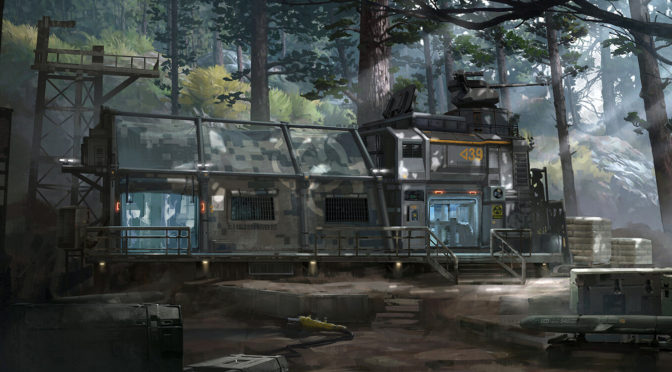
As the patrol pressed further into the company perimeter, the posts came into view. The closer the patrol came to them the more recognizable the posts became. Every fighting position had been firmly hardened and expertly camouflaged. They were dug chest deep into the ground with sandbags rising a meter above ground to form an aperture to fire from. Above this was a roof covered with more sandbags to provide overhead cover. To complete the emplacement, each was thoroughly camouflaged with nets, logs, and living foliage dug up and replanted around and on top of the positions. The only way an enemy would be able to spot one of these positions would be to follow the stream of red tracers pouring out of it, but by then that enemy would be in shock from the combined effect of this defensive network.
“One thing is sure,” Sergeant Rodriguez thought to himself, “There is going to be a hell of a fight here when the enemy finds this location and comes to seize it.” Only by reducing this strongpoint could the Chinese finally seize control of the island and refocus their efforts on the next one in the chain. To the Marines manning this strongpoint, it was a matter of when, not if. Unless they could continue to delay the enemy long enough that American naval and Marine forces could regain the initiative in the near littorals and reinforce them.
Until then, however, he and his fellow Marines would continue to endure the oppression of the jungle and the hardships imposed by the enemy. They existed on a shoestring, far forward, isolated, cut off, in an austere environment, well inside the enemy’s weapons engagement zone, and trying desperately to survive. As he made his way to the command post to hand over his captured items and debrief with the company-level intelligence cell, Sergeant Rodriguez remembered a book he read before the war began. He thought to himself, “This is like Guadalcanal all over again.”
Captain Michael A. Hanson, USMC, commissioned in 2013. He served at 1st Battalion 2d Marines at Camp Lejeune, NC from 2015-2017 as a Rifle Platoon and 81mm Mortar Platoon Commander. Following this assignment, he served at Tactical Training and Exercise Control Group in Twentynine Palms, CA as an Infantry Instructor from 2017-2020. He is currently a student at the Expeditionary Warfare School in Quantico, VA.
Featured Image: “Jungle” by Dan Milligan (via Artstation)