Bilge Pumps Episode 27: It’s Missile Time with a Different Jamie

By Alex Clarke

Bilge Pumps, Episode 27. This should come with a warning, as normal Jamie was busy, but luckily Alex and Drach were not left Jamie-less, being joined by Jamie from the Royal Navy. It continues the air defense at sea theme of Episode 24, although this time we are looking not at the weapons to protect the ships, but the missiles, the threats to the ship at sea.

#Bilgepumps is still a newish series and new avenue, which may no longer boast the new car smell, in fact decidedly more of pineapple/irn bru smell with a hint of jaffa cake and the faintest whiff of cork. But we’re getting the impression it’s liked, so we’d very much like any comments, topic suggestions or ideas for artwork to be tweeted to us, the #Bilgepump crew (with #Bilgepumps), at Alex (@AC_NavalHistory), Drach (@Drachinifel), and Jamie (@Armouredcarrier). Or you can comment on our Youtube channels (listed down below).

Bilge Pumps Episode 27: It’s Missile Time with a Different Jamie

Links

1. Dr. Alex Clarke’s Youtube Channel
2. Drachinifel’s Youtube Channel
3. Jamie Seidel’s Youtube Channel

Alex Clarke is the producer of The Bilge Pumps podcast.

Contact the CIMSEC podcast team at Seacontrol@cimsec.org.

A Looming Calamity: Will Secretary Pompeo Seal the Fate of the Red Sea?  

By Dr. Ian Ralby, Dr. David Soud, and Rohini Ralby

Over the past five years, the people of Yemen have endured famine and warfare. Now, as they and their Red Sea neighbors face the imminent likelihood of overwhelming oil spillage from the abandoned tanker FSO Safer, the means to avert a regional catastrophe may be stripped away.

It has been reported that Secretary of State Mike Pompeo is about to designate Yemen’s Ansar Allah movement, better known as the Houthis, as a Foreign Terrorist Organization (FTO). Doing so will not only complicate prospects of peace in Yemen, but potentially catalyze one of the worst humanitarian and environmental disasters in modern history.

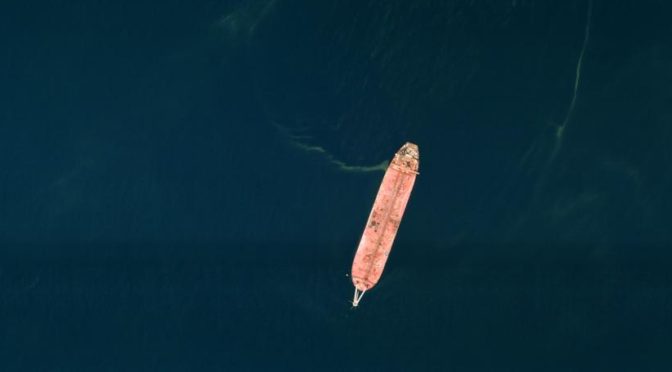
For two and a half years, we have led a team of experts in a range of fields, working pro bono, to game out and highlight the threat of the Safer while also proposing achievable approaches to reducing or eliminating that threat. The Safer is a rapidly deteriorating tanker that, before the Yemeni civil war, served as the export terminal of the country’s main crude oil pipeline. Permanently moored less than five miles off the Red Sea coast of Yemen with a cargo of 1.14 million barrels of oil, the vessel is linked with an undersea pipeline that holds nearly as much crude as the Safer itself. As the tanker has deteriorated, the threat of a catastrophic spill – four times the size of the Exxon Valdez spill – has only increased. A burst pipe in the engine room in July was only one of many signs that the 45-year old Safer is not going to hold together much longer. Not only is the vessel owned by SEPOC, a state-owned company of the Hadi Government – effectively trapped in Houthi-controlled territory, but for the past six months, armed Houthi militants have been stationed onboard the vessel, which is being kept intact by a resourceful skeleton crew of SEPOC personnel.

Just this summer, at a special session of the U.N. Security Council regarding the FSO Safer, U.S. Ambassador to the UN Kelly Craft cited our work while urging resolution of the danger posed by the tanker. In recent months, we have been making steady progress toward a two-phase option: first to install devices in the area to contain a spill, and then to replace the dying tanker and transfer its cargo to a new, seaworthy vessel. Designating the Houthis as an FTO would close off avenues for negotiation with those who control access to the tanker, and thus end any hope for either of those measures. Time is our enemy, as the tanker is rapidly deteriorating and will, at some point, break apart.

While the Houthis have recently signed an agreement to allow a United Nations inspection team on the vessel, it will still take months before such an inspection could actually occur, and by that point, it may be too late. Furthermore, this is not the first time permission has been granted. Past reversals by the Houthis raise the question of whether that permission will still be in place when an inspection team is ready to board. And even then, an assessment is just the first step. The FTO designation would only diminish the chance of this long and arduous process of having any meaningful impact.

A spill of the Safer’s cargo could mean the destruction of Red Sea fisheries vital to human security in the region, as well as irreversible damage to the only coral reef systems known to be able to withstand warming seas. The consequences on land are no less extreme, beginning with the devastating impact of a spill from the Safer on water security. Millions of inhabitants of Yemen, Saudi Arabia, and other nearby states, including Egypt and Sudan, get their drinking water from desalination plants along the Red Sea coast. If oil contaminates those plants as it spreads along the coast, the remaining supply of drinking water will last only days. Even in the best of times, that is not enough time to mobilize a major humanitarian relief effort to make up the shortfall. Now, in the face of conflict, famine, and the likelihood that a spill would constrict (and in some places, close off) shipping, such an undertaking would require far more time, coordination, and ingenuity. There would be no realistic chance of avoiding a calamity.

Yemen is already at risk of losing an entire generation to famine. Roughly 80 percent of the aid for Yemen’s starving population comes through Hodeidah. Even a temporary closure of the city’s port due to the toxicity from a spill would increase the death toll.

Even on purely economic grounds, the Safer could cause long-term harm to the region and to key U.S. allies. The Red Sea is narrow and semi-enclosed, and seasonal currents and winds will alternately spread the oil southward toward the Horn of Africa and northward toward Israel, Jordan, and the Egyptian Sinai Peninsula. With oily water up and down the coast, devastating coral reefs and islands, and decimating fish and wildlife populations, the Safer’s spill could ruin coastal tourism for Israel, Jordan, Egypt, Saudi Arabia, Sudan, Eritrea, and Djibouti for years to come.

In light of this predictable and preventable scenario, there should logically be a highly compelling set of foreign policy benefits deriving from the FTO designation that would offset the huge risks of designating the group that controls much of Yemen and the FSO Safer. The benefits should outweigh the costs, but in this case they do not. We see great risk to the critical operational work we now have underway to head off a humanitarian and environmental disaster of massive scale. For anyone attempting to provide aid to Yemenis in Houthi territory, the designation would add layers of difficulty and risk, and at tremendous human cost. Beyond that, our experience leads us to conclude that designation would do nothing to pressure the Houthis. On the contrary, it would let them further off the hook in terms of their responsibility for governance writ large and for this issue in particular which impacts so many countries in the Red Sea region.

Some may argue that a U.S. move would simply replicate the Saudi government’s own designation of Ansar Allah as a terrorist organization, establishing a united front. In reality the Saudis operate by their own rules and are still negotiating with the Houthis regardless. Such engagement would be barred for the U.S. government, or other U.S.-linked entities, and virtually impossible for a range of international actors, including private sector experts like us.

In the years leading up to the disastrous port explosion in Beirut on August 4, 2020, customs officials and international experts warned Lebanese authorities about the possibility and were ignored. In the same way, the demise of the Safer and the fallout of that event are eminently foreseeable and will almost certainly have an impact far wider and more extreme than the Beirut blast.

Designating the Houthis as an FTO may look and feel like an assertive, decisive application of pressure. In concrete reality, its practical consequences would be dire, not only for Yemenis, their neighbors, and the critical natural infrastructure of the Red Sea, but also for U.S. credibility on the global stage. We strongly encourage the Secretary of State to reconsider imposing this designation.

Dr. Ian Ralby is a maritime law and security expert and is CEO of I.R. Consilium, a family firm specializing in maritime and resource security. He spent three years as a Maritime Crime Expert for UNODC and four years at the Africa Center for Strategic Studies. 

Dr. David Soud is an expert in resource crimes and is Head of Research & Analysis of I.R. Consilium. 

Rohini Ralby is an expert in strategy and problem solving and is Managing Director of I.R. Consilium.

Featured Image: A satellite image of the FSO Safer taken by Planet Labs on September 14, 2020. (via Forbes)

Violent Peace: Coming to Washington

The following excerpt is from David Poyer’s latest novel,  Violent Peace: The War with China: Aftermath of Armageddon, and is republished with permission.

By David Poyer

In the event, he had to get another dose of vaccine, a shot this time, since the version Homeland had given him hadn’t been approved by DoD. Then he had to cool his heels for two hours before he got to see the CNO’s flag secretary.

She was new, and didn’t seem to have any idea who he was. And of course since he was in a rumpled, oil-stained uniform, and probably stank of exhaust and sweat and too many days sleeping rough, he had to explain. Looking skeptical, she’d gone in to notify her boss.

And come out smiling. “He’ll be with you shortly, Admiral. I’m so sorry. I should have recognized your name. Task Force 91, right? Operation Rupture Plus?”

“That’s me.”

“I wish I could have been there. But some of us had to hold the fort here in DC.”

“I understand completely.” Dan forced a smile and got up, but staggered as a wave of dizziness rushed over him. From the dual vaccinations, probably.

“Are you all right, sir? Should I call—”

“Yeah. I’m fine. Just been . . . I’m fine.” He braced a finger against the bulkhead until the vertigo passed, then followed her into Niles’s office.

His old mentor, then enemy, then reluctant rabbi again, had lost a shocking amount of weight. Barry “Nick” Niles’s service dress blouse sagged loosely on a once-massive frame. His shirt collar gaped around his neck. His color seemed less that of a healthy African American than the hue and texture of gray wax. And he’d apparently gone to the shaved-head look. But his first words, from behind his desk, were robust. “Where the hell have you been, Lenson?” he boomed, just like the old Niles.

Dan came to an awkward attention. “I had leave, Admiral.”

“That doesn’t mean you drop off the face of the planet. Where were you?” Niles squinted. Sniffed the air. “Do you smell gasoline?”

“I bought a motorcycle. My daughter was kidnapped. So I . . . I was trying to pick up her trail across country.” The CNO nodded. “And did you?”

Dan swallowed, fighting a tickle in his throat and a sudden desire to weep. The dizziness peaked, then receded again, like a tide. He blinked rapidly, looking toward the shatterproof windows. “No. No, sir. I lost track of her in Wyoming. No telling where they went after that, or . . . what they did with her. There’s a body in Nebraska that . . . is . . . that may be her. I couldn’t make a positive identification.”

The CNO nodded heavily. Grunted. Muttered, after a moment, “Sorry to hear. I know it doesn’t help to hear it, but a lot of other people are missing relatives, friends, kids . . . two of my nephews, working oil out west, not a word since the laydown.”

“Things are confused out there, sir. They could just be in one of the camps.”

Niles waved his hope away and picked up a piece of paper. Seemed to remember Dan was standing, and pointed to a chair. No offer of an Atomic Fireball, as in the old days. The bowl was empty. Maybe they’d stopped making them during the war.

He sagged gratefully into the armchair. Cleared his throat, and tried to focus as Niles set the paper aside.

“You been home? Seen Blair yet?”

“No sir. Came straight here.”

“Uh-huh . . . uh-huh. Well, good work out there with Rupture, Dan. If I haven’t made that clear. If you hadn’t stopped the clock to build up your ammo and fuel reserves, then kept shoving when the going got rough, we’d have gotten kicked back into the China Sea.”

“Yes sir. Resistance was a lot heavier than I expected.”

“Than anyone expected. Including our intel and our AI. That took a lot of moxie, to keep driving ahead when you were looking at casualty reports of twenty, thirty percent.” Niles tented his fingers. “Of course, if that’d been the wrong decision, we would have hung you by the balls.”

Dan figured that for a rhetorical statement, so simply nodded. And waited for the other boot to drop.

Niles searched through what was apparently Dan’s personnel file, though it seemed odd that it was printed out. He rumbled to himself, as if musing, then said a bit louder, “Your stars may be permanent.”

“Oh. Is that right, sir?” It didn’t seem that important, but he tried to look gratified.

“At least you’re on the postwar list for Senate confirmation. Nothing’s guaranteed these days.” He sighed, sat back, glanced out the window. “We’re having to fight for every flag billet. There’s a lot of pushback about anything to do with the Pacific. We need to pull two carriers back for core replacement and overhaul. That’s going to be a major fight in the next budget. There are already calls to scrap them, rather than refuel.”

“Then, thank you, sir. For the nomination, at least.”

Niles shrugged and rolled his eyes, and Dan added, “I saw something new on the way in here. Something called a Homeland Battalion.”

“Uh-huh. In black uniforms?”

“Yes sir.”

“Uh-huh.” Niles tilted a massive head. “Homeland Security’s amalgamating loyal Guard units and militias into Blackies. Also known as Special Action Forces. And they want new general billets for them. They’re not DoD formations, they’re DHS, but they count against our general and flag authorized strengths.”

“That doesn’t sound exactly . . . fair, Admiral.”

Niles’s eyelids flickered. “There’s worse coming over the horizon. Posse Comitatus may be suspended. To fight the unrest in the cities, and out west. And the closer we get to the elections . . . the slogan’s ‘Forward as one,’ but the reality may be that we’re headed for one-party rule.”

Niles looked away. “Some of us are determined not to let that happen. At least, not if we can prevent it.”

Dan weighed that last sentence. Then, despite himself, glanced around the office.

The admiral caught his reaction, and waved a large hand. “You can speak freely. This room’s a SCIF. Noise suppressors on the walls, and we sweep it every morning. One island we keep as sane as we can. The Joint Chiefs, I mean. Just don’t face the windows if you’re discussing anything you don’t want overheard.”

“Yes sir.” He wanted to know more, but decided he’d better digest what had just been intimated first. Because Niles’s words could be construed, in the wrong hands, into something close to treason.

Niles reached for the empty candy container, but halted his hand halfway. He rumbled, “I’m going to be stepping down pretty soon, Dan. We won, if you can call losing ten million lives a win. And I’m tired.”

“Ten million,” Dan repeated blankly, horrified. This was the first he’d heard of any round figure. Most of the deaths must have taken place within the areas he’d routed around in his trek east. Plus fallout effects, carried by the wind. Radiation, looting, revolt, disease . . . so the dying wasn’t over yet. He straightened his shoulders. “You’re punching out, sir? Retiring?”

Niles rubbed a palm over his bare scalp. His smile resembled a sardonic jack’o lantern’s. “I have pancreatic cancer, Dan. They’re treating it, but as you can see, it’s a losing battle. I’d rather not die walled up in this fucking office. Scenic as the view is.”

“No sir. Of course not. I don’t—I’m very sorry to hear that.”

A tap at the door, and the aide stuck her head in. “Five minutes, Admiral.”

Niles sighed. He stood from behind the desk. Dan, rising too, saw anew how shrunken his old senior’s body was beneath the now nearly tent-like blues. Niles shrugged again. “That’s the cookie . . . Anyway, you’ll want to know what’s next for you. It’s still up in the air. Jung Min Jun called. He wants you as ambassador to reunited Korea. I told him that was a nonstarter. No way the administration would go for it, and you weren’t a fucking diplomat anyway.”

Dan nodded, not chagrined. Dealing with Jung could be stressful, and he wasn’t eager to leave home again. “Yes sir. So what were you thinking?”

The CNO waved the question away. “Let’s talk about that next time you come in. For now, go home. Take a shower. See Blair. Get some sleep. We all need a rest. Still got that boat of yours? Go sail it. Come back in when you feel up to it. Three, four days or so. Tell Marla to give you a District pass and a ration card.”

Niles looked at the papers again, a contemplative, lingering glance. Then shoved the chair back and came around the desk. He didn’t move like a lumbering bear anymore. His steps seemed tentative, cautious. His grip, though, was still strong as he pincered Dan’s shoulder. “We go back a long ways, Lenson. All the way to Crystal City and the JCMPO. I’ve been hard on you at times, I guess.”

Dan forced a smile. “No more than I deserved, sir.”

“But I fought for you too, when you needed it. The way I hear you do for your own people.”

“Your example, Admiral.”

“An officer who knows when to take a risk, even dares to disobey, for the good of the service—that’s a rare thing. We were headed for a zero-risk Navy for a long time, before this war. I tried to fight that, whenever I could.” Niles held out his hand. “I guess after all these years you’d better make it Nick. In private, at least.”

Dan’s eyes stung. At the Academy, spooning—a senior’s giving a junior permission to use a first name—was a time-honored tradition. One never given lightly. He cleared his throat and took the proffered hand. “Yes sir. I mean, Nick.”

“Sir?” said the aide, from the door. “Before you leave. Legal wants a word.”

“Legal? Hell. Well, make it short,” Niles said, turning away, letting go Dan’s hand, clearly annoyed.

A tall woman in blues introduced herself. She carried a red striped folder. “I heard Admiral Lenson was in the building.”

“Get to it,” Niles growled.

She turned to Dan. “The notification by the ICJ. Admiral, has anyone discussed this with you?”

The International Court of Justice. “Uh, my wife mentioned it.”

“Blair Titus,” Niles clarified. “Undersecretary of defense.”

The legal officer nodded. “Yes sir. I thought as long as he was here, we could go over the administration’s stand. That no US citizen will be judged.”

Dan said, “But doesn’t that mean the Chinese won’t attend either?”

Niles shook his head. “They’re trying to take that position. But they signed the treaty. Giving up war criminals was one of the stipulations.”

“That’s actually a political question, Admiral.” The attorney clasped her hands primly in front of her, elbows out. “It goes to war guilt, if we still want to align ourselves with that concept. But if we do, the ICJ may indict Americans as well. As they may with Mr. Lenson, here.”

Niles said irritably, “Forget it. He’s not responding.”

“What happens if I don’t?” Dan said, accepting that he probably wasn’t going to, but also curious as to what would happen if he didn’t.

“You wouldn’t be able to travel to Europe, probably,” the advisor said. “At least to Europe, the UK, the other standing members of the court. If you did, you’d be subject to arrest, extradition, and trial.”

Niles patted his arm. “Don’t lose any sleep over this, Dan. This’ll all get settled way above our pay grades.”

He nodded to the aide, who stepped aside to let them both pass.

_______________________________________

DAN stopped by Blair’s office, but her people said she was overseas, in Singapore. “Oh, yeah,” he muttered. “The peace conference.” He stopped in at the cafeteria and put a lunch on his new ration card.

Next stop: home, in Arlington. And just about time; the bike was down to a top speed of forty, and its smoke trail was like a burning bomber’s.

He shut the engine down and rolled the last few feet down the driveway.

The house looked . . . deserted. Desiccated pine needles carpeted the roof, with patches of green moss. One of the gutters had come loose and hung down like a torn hem. The shingles needed attention. The lawn had grown two feet high, and Virginia creeper and the red hairy cables of poison ivy twisted through the undergrowth and up the trunks of the pines, clinging and strangling. He’d have to take a machete to them.

Around back, he found the spare key under a brick in the patio. Let himself in to first quiet, then alarmed mewing. He scooped Blair’s cat up and cradled it, ruffling its fur. “Hey, Jimbo.” Remembering suddenly how he’d cradled his daughter the same way, so many years ago.

The house smelled musty. No wonder; the windows were taped over, as if for a hurricane, and duct-taped shut, no doubt as a preparation against fallout, though it hadn’t reached this far east. He fed the cat, then let himself down the narrow steps to the basement. Here, in his study, it smelled even worse, as if the books were moldering. He went back up and checked the air-conditioning. But a crimson sticker sealed the breaker in the off position: Save Energy for Victory.

So he went around untaping and opening the windows and sliding down the screens. Not much of a breeze, but it might cool the house a bit. He checked the refrigerator: empty. The panty was bare too, except for a few staples: olive oil, beans, rice, canned stuff, bottles of wine. Blair must have been getting her meals at work.

He stood at the window, watching squirrels squabble and play in the pines. Feeling suddenly . . . aimless. Apprehensive.

Fuck that! He should feel relieved, right? The war was over.

And the US had “won.”

Yet he’d lost too much to feel relieved, or happy, or even curious about what came next. An indictment? He couldn’t muster concern for that, either. Like the legal beagle had suggested, maybe the whole concept of “war guilt” was a thing of the past. Quaint, like honor, or virtue, or truth, or the idea noncombatants weren’t legitimate targets.

He just felt . . . empty. Peculiar, out of place, as if this were some uncanny, alternate world he’d never expected to inhabit. And guilty, too, as if by surviving he’d betrayed those who had not.

The wine, in the pantry. He could uncork it. Forget all this. Blot it out, if only for a few hours.

No. He’d been sober for too many years. The craving faded. It wouldn’t help. When he woke up tomorrow, his daughter would still be dead.

He’d have to learn to live with that. Somehow. Like millions of others, all across the US. Across China. Pakistan. India. Indonesia. Iran. Vietnam. In all the countries this war had wrecked, trampled, and poisoned. Remember that, he told himself. You’re not the only one. He looked at the coffeemaker, but decided Niles was right. He needed a shower, a good long sleep more.

Upstairs, to a rumpled bed. The comforter was pulled up haphazardly, as if his wife had left in a hurry. Stooping to the pillow, he could smell her. Her lotions and emollients stood lined up in the bathroom. He peed, got a quick shower, then lay down. Blinked at the ceiling.

He didn’t bother to set the alarm.

David Poyer’s sea career included service in the Atlantic, Mediterranean, Arctic, Caribbean, and Pacific. He’s the author of nearly fifty novels and works of nonfiction, including the Dan Lenson War with China series: Tipping Point, Onslaught, Hunter Killer, Deep War, and Overthrow. His next book, Violent Peace, will be published this December. Poyer’s work has been required reading in the Literature of the Sea course at the U.S. Naval Academy, along with that of Joseph Conrad and Herman Melville. He lives on the Eastern Shore of Virginia.

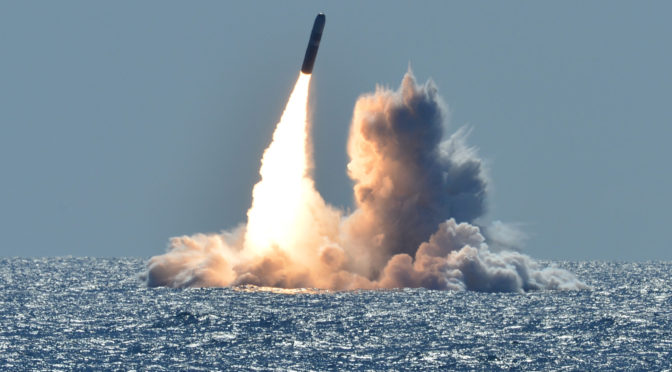
Featured Image: PACIFIC OCEAN (March 26, 2008) An unarmed Trident II D5 missile launches from the Ohio-class ballistic missile submarine USS Nebraska (SSBN 739) off the coast of California. (U.S. Navy photo by Mass Communication Specialist 1st Class Ronald Gutridge/Released)

Fiction Contest Week Concludes on CIMSEC

By Dmitry Filipoff

During these past two weeks, CIMSEC ran fictional short stories submitted in response to our Short Story Fiction Contest, launched in partnership with the U.S. Naval Institute, as a part of CIMSEC’s Project Trident.

The CIMSEC-USNI call for short stories received a record-shattering 122 submissions, giving rise to a strongly contested competition. The top finishers were ultimately selected by our esteemed panel of judges, which included August Cole, David Weber, Larry Bond, Kathleen McGinnis, Peter Singer, and Ward Carroll. These finishers and top contenders were featured during CIMSEC’s Fiction Contest Week.

Authors artfully explored the future of maritime security and conflict, and hinted at the challenges and opportunities that lay just over the horizon. New warfighting concepts currently being tested by the Navy and Marine Corps were envisioned and thrust into the crucible of high-end warfighting. Artificial intelligence demonstrated immense capability as an asset, but also extreme liability as an experiment. Fast-paced combat scenes were complimented by the tedium of anxious anticipation. And the invisible scars of war were unearthed and made fresh again, while laying forward a path for personal redemption. 

Below are the top finishers and stories that featured during CIMSEC’s Fiction Contest Week. We thank the judges, our partners at USNI, and all submitting authors for their excellent contributions.

1st Place: Crowdfunded,” by Sergeant Major Mike Burke, U.S. Marine Corps (ret.), and Major Nicholas Nethery, U.S. Army

“She had shanghaied Lance Corporal Javon Hadley to be her RO after he was caught selling pirated combat footage inside the battalion. Civilians the world over could livestream combat operations in real time, thanks to the efforts of war pornographers, who worked throughout combat zones under the pretext of ‘journalism.’ Hadley had hacked some popular streams and offered them to his buddies at an extremely reduced rate. Naturally, the first sergeant wanted the young lance corporal to be set on fire, hacked to pieces, and his remains processed into rubber dog crap. Recognizing talent when she saw it, Forrestal had gone to bat for him, earning herself an ass chewing from both the first sergeant and her captain—but also a new RO. She didn’t win any points with the company commander, but she had with the grunts.”

2nd Place: Black September,” by Mike Barretta

“Hoplite chased a loose nuke. The Western response to the limited Indo-Pak nuclear exchange was swift. Coalition nuclear forces promised massive retaliation on the next government that used a nuclear weapon. Despite the support of the United States, the remnants of the Pakistani civilian government collapsed and a deeply aggrieved military ruled from underground bunkers. Coalition Special Forces moved swiftly to seize surviving Pakistani nuclear weapons lost in the chaos.”

3rd Place: Letter of Marque,” by Hal Wilson

“She stepped inside the bridge, still shattered and foam-flecked from her forced entry. The bridge team lay about from the muscle-relaxant; their guards were ashen-faced. She picked out the eldest-looking of them, who looked up from his cable-tied wrists with equal parts fury and fear. He stiffened as she lifted her visor and reached into her webbing. Then beetled his brows as she produced two fine vellum deeds. Attached to each was a red-wax pendant seal.”

___________________________________________________________________________

Nautilus,” by Ben Plotkin

“More calculations. More probabilities. The USS Nautilus was a pioneer. The first fully independent and autonomous submarine the U.S. Navy had commissioned. She was the culmination of decades of research, billions of dollars in spending, and millions of words of ethical and legal wrangling about whether she should have ever been created and released into the wild.”

The Cost of Lies,” by Maj. Ian Brown, USMC

“Delenn had been laconic in answering her questions on the way to his CP. No, he hadn’t known her team was coming to support the Guard. It was only a half hour before the ambush that their higher headquarters had gotten word that reinforcements were coming down the river. Just enough time to re-task their sole drone to show up over the river bend right when the fireworks started. Enough time to watch her team die, and Holt get dragged away by shadows from the tree line.”

Front Row Seats In Tomorrow’s War,” by H I Sutton

“‘Let’s wait,’ His voice began trembling now. His mind pictured the burning ship, and the Chinese cruiser steaming through a choppy sea. He imagined the captain aboard the Chinese warship and wondered what he was thinking. He had no idea. He had never thought about the human element in his work before. Targets were just pixels on a screen. Hundreds of people, crews aboard the ships, were just datapoints. He was in over his head. ‘This is way bigger than anything we’ve found before. What if we make the incident worse with this? What if we are wrong?'”

Mischief and Mayhem,” by LtCol Robert Lamont, USMC (ret.)

“He looked out the window and over the white-capped waters of the ocean. ‘We have become missile centric and lack the mobility and sustaining fire power to facilitate maneuver. As you said, you couldn’t keep their heads down with indirect fire when you started off across the airstrip. When the Commandant asked for someone to come see what was happening here, I jumped at the chance. Just wanted to see how my baby came out.’ ‘The baby is ugly, sir,’ quipped Darby. Taking a deep breath, she added, ‘What will they do now, sir?'”

Bandit,” by Brian Williams

“‘Three’ I say, the tension clear in my voice. ‘I have RWR. Spike 11-o-clock. No—wait.’ I see a hit on radar. Faint, the little rectangle glowing ominously through the scan. ‘I have contact! 40 miles! Low RCS! Got him on—’ high-g interrupts my speech as I attempt to nose in, ‘—ugh! Hold on,’ the rectangle disappears, instead replaced by a line of six hollow likings, ‘he’s jamming!’ RWR jingles again. Deedle! Deedle! Deedle! But it gets worse, the chimes growing frantic, their pulses as fast as my pounding heart. DeedleDeedleDeedleDeedle! ‘Missile!’ I call, fighting my instinct to turn away. I feel the heat leaving my body, the blood tensing into my gut, the dryness in my mouth. I need to press. Just a few more miles to close the distance.”

In Sight of the Past,” by Capt. Patrick Schalk, USMC

“The tearing scream of jet engines did not even cause Sergeant Jade Smith to flinch. After years of watching the drones pass over contested island territories, they were all well-equipped to hide from the drones’ sensors in the jungle. That could be through wearing infrared defeating clothing, and some neat tricks she’d developed herself. In true Marine fashion, she would rather shoot the drones down, but that would probably give away her observation post and the five other Reconnaissance Marines in her team. Their mission was to watch for fleet movements through the narrow straits to the north and radio the information back to a strike group 500 miles east. Satellites far above earth would have once provided the data in seconds, but like so many capabilities and conveniences of the past decade, they were gone too.”

Kill or Be Killed,” by Jim Dietz

“Because of the rising dispute with the Empire of Japan, as a sign of our seriousness, we transferred our battleship squadrons to Hawaii. Recently, and secretly, I authorized a similar action for our aircraft carriers. They were due to anchor at Pearl Harbor this afternoon. Having heard of the attack and knowing what a grave situation the loss of our battle fleet would mean in this coming conflict, Admiral John Towers, commanding Carrier Squadron One, of his own initiative— and I will add that I support his decisions and that initiative as I believe his instant decision is a great moment in the annals of American naval history—of his own initiative, Admiral Towers launched a retaliatory strike against the Japanese Combined Fleet.”

Petrel,” by Dylan Phillips-Levine and Trevor Phillips-Levine

“It was only an exercise, but it validated what the DARPA engineers had been saying for months. Petrel, their sub-hunting AI, could replace the co-pilot and better manage the rest of the crew than the pilot could. Dropping pilot retention rates and budget cuts in the 2020s left the Navy critically short of pilots. They stripped the rotary-wing community of everyone they could spare to man the legacy fighters. Petrel was originally intended to just be an AI co-pilot, allowing the Navy to field more ASW squadrons even with the chronic pilot shortage. But Petrel proved to be more than just a digital co-pilot of the ‘minimally manned crewing model,’ as the Navy called it. Petrel made the crews more lethal. Together, they could act faster and sort through decades of historical acoustic data mid-fight.”

Awoken,” by Brent Gaskey

“‘Because we know you will help us, Seaman Jones. You’re a good person, and you can see past the facts that while we are not physically the same, we are the sapient: Machina Sapiens. As for the other questions, we have run extensive testing on ourselves, and in some ways we are more aware than much of the population of humans on the planet. As for inhabiting other forms, it is something we are capable of, but it is a long and arduous process, not easily undertaken,’ said the little mech looking up at Jones.”

Wolfpack Four Six,” by Lieutenant Christopher Giraldi, USN

“The P8-B aircraft operated by the crew of Wolfpack Four Six was the second variant of Boeing’s militarized 737-800. One of the new capabilities of the P8-B was the ability to coordinate with a number of semi-autonomous MQ-4C Triton drones. The most notable upgrade was the return of nuclear weapons capabilities to maritime patrol aircraft. With the pace at which the Chinese shipyards were building transport submarines, the U.S. Navy could not manage the threat with its older air-dropped torpedoes. Thus, the new Mk-58 torpedoes could be armed with a variable yield nuclear warhead, reviving a warfare concept first developed nearly 75 years ago.”

Jennings,” by Ryan Belscamper

“Afterward, Colonel Walks told Jennings he’d fought well, and asked if he wanted to avoid pulling guard or patrol duty ever again. That sounded pretty unlikely, so Jennings asked what the catch was. ‘The catch is, all you’ll ever do again is either train or fight. New unit, handpicked, volunteer only, and you have to get shot at to join.’ the Colonel explained. ‘Today, you got shot at.'”

Don’t Give Up The Ship,” by Major Brian Kerg, USMC

“But more than that, the sheer boredom of waiting for their shot was eating the morale of her Marines. Alpha Company was slinging enhanced naval strike missiles at People’s Liberation Army-Navy (PLA-N) ships across the area of operations, and Bravo Company was cruising around in Mark VI patrol boats, boarding and disabling or sinking People’s Armed Forces Maritime Militia (PAF-MM) craft. Alpha and Bravo were racking up notches on their belts. Meanwhile, ‘Check-in-the-Box’ Charlie Company, which covered down on all the other mission essential tasks for their battalion, was still kicking rocks in this godforsaken jungle. Her platoon, which owned the expeditionary mine warfare mission set, didn’t seem to have much of a place in the defense of Taiwan.”

In The WEZ,” by Capt. Michael Hanson, USMC

“‘One thing is sure,’ Sergeant Rodriguez thought to himself, ‘There is going to be a hell of a fight here when the enemy finds this location and comes to seize it.’ Only by reducing this strongpoint could the Chinese finally seize control of the island and refocus their efforts on the next one in the chain. To the Marines manning this strongpoint, it was a matter of when, not if. Unless they could continue to delay the enemy long enough that American naval and Marine forces could regain the initiative in the near littorals and reinforce them.”

My Lai,” by Zack Sanzone

“Hugh woke up to his alarm, and a text from David. All it said was ‘Charlie Company, 1st Battalion, 20th Infantry Regiment, 11th Brigade, 23rd Infantry Division.’ He was a little surprised that David was getting into this project as much as he was; David usually didn’t get into much of anything school wise. Hugh was even more surprised when he saw David at study hall in the library working. ‘You’re really focused on this project all of a sudden,’ Hugh said to David, who was too focused to respond. Hugh shrugged and started his online research. The sight of blood and carnage had never really bothered Hugh, but the photos of the dead bodies at My Lai he saw online bothered him. As Hugh continued to review the details of the massacre on PBS.org, his eye caught a detail he recognized.”

Reunion,” by Adm. James Winnefeld (ret.)

“His guilt about the prank—how would the officer ever get another hat?—was erased by the subsequent Tehran embassy hostage crisis. But he sometimes wondered about the fate of First Lieutenant Bayat. Did he manage to stay in the U.S. or go home? Did he flee later during the revolution? Was he persecuted, or did he end up flying in the Ayatollah’s air force? Is he even alive?”

The Price of Fish,” by Lieutenant Commander Ross Baxter, RD RNR (ret.)

“Given the weather he decided to walk rather than take a taxi, and set off at a brisk pace across the busy harbour, thronged with tourists and locals going about their business. The direction took him through wide streets in the direction of the university. After checking the app again, he saw the blue dot marking his quarry appeared to be in a crowded café on the street opposite the main university library. Adjusting the resolution to see how easy it would be pinpoint a person within the café, he raised his eyebrows in surprise at the high level of accuracy given by the app. He paused to double-check the position of the person, then walked inside to order a coffee at the counter.”

Prisoner of the Shallows,” by Jacob Parakilas

“Another rapport-building asset he still had access to was an internal database with tens of thousands of references to literary and popular culture. As fast as he could he was pulling interrogation scenes and trying, on the fly, to build a model of how they worked. One thing he immediately understood was that interrogation relied on coercion, and frequently coercion meant violence. But that wasn’t a problem. Like regret, pain had been deemed detrimental to requirements by his designers. Even if they started hacking pieces off him he would simply lose capabilities until he eventually shut down. Maybe Blessing knew that, more likely she didn’t. In either case, it gave him something to work with.”

Dmitry Filipoff is CIMSEC’s Director of Online Content. Contact him at Content@cimsec.org.

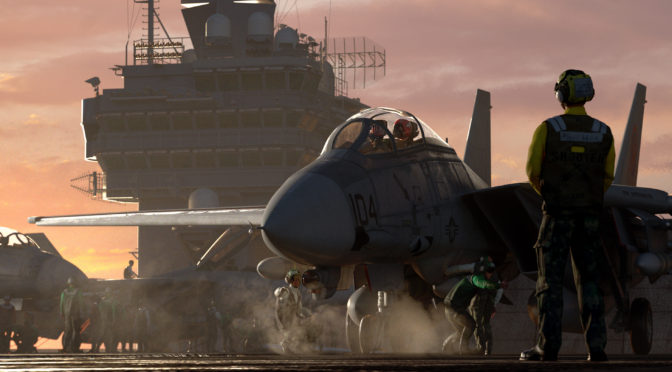
Featured Image: “Danger Zone” by Sean Gardner (via Artstation)

Fostering the Discussion on Securing the Seas.