Project Trident Call for Articles: Maritime Infrastructure and Trade

Submissions Due: April 19, 2021
Week Dates: May 3-7, 2021
Article Length: 1000-3000 words
Submit to: Content@cimsec.org

By Jimmy Drennan

CIMSEC is partnering with Maersk Line, Limited to launch the Project Trident call for articles on maritime infrastructure and trade! Maersk Line, Limited provides end-to-end transportation solutions to support the unique requirements of the U.S. government. As the largest owner and operator of U.S. flag vessels trading internationally and the largest participant in the VISA/MSP programs, these network ensures reliable and regular connection to all corners of the globe.

Security and prosperity go hand-in-hand, and as the complexity of the global economy grows, so too does its dependence on the maritime domain. The increasing connectedness of national and regional economies, combined with the COVID-19 pandemic, have highlighted the importance of infrastructure and trade in maritime security.

Last year, shipping carriers rejected U.S. agricultural exports worth hundreds of millions of dollars in favor of returning empty containers to China, which faces a container shortage due to a surge in consumer goods. Government stimulus packages and shifting consumer trends resulting from the pandemic have put a strain on global container capacity, and China is making it more profitable for shippers to bring back empty containers than American agricultural exports. Meanwhile, containers full of American goods stack up in slammed ports like Los Angeles and Long Beach. The growing intricacies of the global supply chain demonstrate the need for a coordinated maritime strategy.

Port capacity and accessibility is rapidly changing as the developing world increasingly becomes more urbanized and developed, thereby increasing their demand of the global maritime commons. The volume of commercial maritime traffic is ever increasing, and the ability of ports to keep pace is in flux. Ports have significant geopolitical value as well, especially as China is securing long-term leases on port infrastructure beyond its borders.

The global shipbuilding industrial base remains heavily concentrated in China, Japan, and South Korea, which account for around 90 percent of all ships launched in recent years. In 2018, the world’s global merchant fleet totaled 50,000 vessels with a combined value of $851 billion, and a total deadweight tonnage of 1 billion. The shipbuilding industrial base in the United States is dominated primarily by military shipbuilding contracts while large-scale commercial shipbuilding capacity has largely gone overseas. The shipbuilding industrial base of China, both commercial and military capacity combined, is overshadowing that of the United States, raising questions about their respective abilities to mobilize industry in a time of conflict.

Often overlooked is the critical, but often opaque world of shipping finance and insurance. For example, China is rapidly becoming the preferred option for ship financing as western banks exit the market space. U.S. Military Sealift Command contracts with foreign tanker companies to charter ships for some overseas operations. These ships are sometimes leased to tanker companies from Chinese banks, with little to no awareness by the U.S. government.

Data is the new lifeblood of global commerce and the shipping industry is in the midst of a digital revolution. The industry is looking to seize opportunities posed by emerging technologies and networks, but must be considerate of the associated cybersecurity concerns and the risks of failing to keep pace with change.

CIMSEC wants your ideas on how infrastructure and trade will impact the future of international maritime security. What could be the maritime security impacts of Sino-American economic interdependence, changing infrastructure capacity, rapid port development, decarbonization, digital revolution, and other trends and facets of global maritime infrastructure?

Authors are invited to answer these questions and more as we consider the future of maritime infrastructure and trade. Send all submissions to Content@cimsec.org.

Jimmy Drennan is the President of CIMSEC. Contact him at President@cimsec.org.

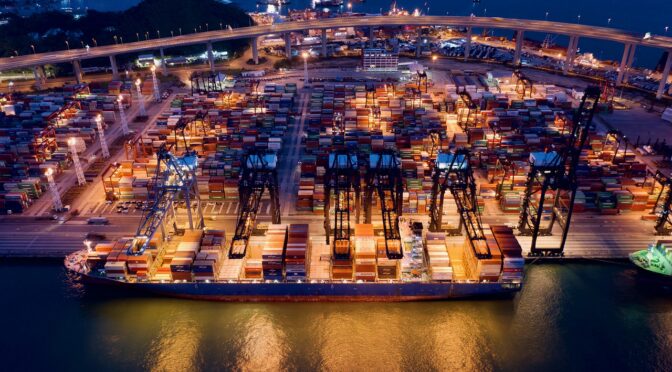
Featured Image: A container terminal (bellergy via Pixabay)

Russian Black Sea Fleet Activity in the Eastern Mediterranean Sea: Implications for the Israeli Navy

By CDR (ret.) Dr. Eyal Pinko

In recent years, and significantly since the 2011 Syrian uprising, the Russian Navy’s presence in the Eastern Mediterranean and Syria has expanded dramatically. The increasing Russian presence in Syria is part of Russia’s updated naval doctrine, which was first published in 2012, and revised in July 2016. This doctrine was called the Revised Russian Naval Doctrine up to 2030

As in the case of previous strategic doctrines, it defines the navy’s role as part of Russia’s security policy, its goals, its main directions for the buildup of naval forces, and the geographic areas of naval operations. The doctrine also includes and specifies an assessment of threats to Russian maritime security up to 2030. 

The doctrine states that the maritime domain’s main threat originates from the U.S. and NATO forces, which endeavor to dominate the ocean and achieve absolute superiority at sea. It also states that the Russian Navy must be ready to deal with technologically advanced adversarial navies, which are equipped with high-precision weaponry and missiles, and that Russia must strive for a situation in which its navy remains in second place regarding warfare capability. 

This aspiration expresses the Russian understanding that the U.S. Navy is the most advanced globally and that Russia does not intend to build a navy similar in size or quality. 

The new doctrine relates in a general way to the need for operational capability in all regions and ensuring the ability to maintain Russian naval forces’ long-term presence in strategically critical maritime arenas. It explicitly emphasizes the strategic importance, from the Russian government’s perspective, of naval presence in the Black Sea, the Mediterranean, and the Arctic.  

The Russian strategy in the Mediterranean Sea becomes more strategically important because of U.S. naval forces’ reduced presence in the Mediterranean arena in the last decade. It began under President Obama’s administration and continued with even greater intensity under President Trump’s administration. 

The reduction of the U.S. naval presence in the region results from a strategic decision made by the two U.S. presidents to transfer the bulk of its naval forces to Asia to view China and North Korea’s growing threat. 

The primary objective of Russia’s increased involvement in the region is to reposition itself as a world power. Through its focused and determined intervention in Syria, Russia demonstrated that it is a key player whose involvement is essential to resolving international issues. For more than four years, the West, which had failed to resolve a steadily exacerbating problem in Syria, was now forced to consider the Russian positions even more carefully and involve Moscow in resolving the crisis.1

The second objective of Russia’s involvement was to leverage the Syrian issue to resolve problems in other areas vital to it, mainly Europe in general and Ukraine in particular. Russian involvement in Syria intended to pressure the West to remove the sanctions imposed by the United States and Europe following Russian operations in Ukraine.2

The Russian naval presence in Syria is one of the significant ways in which Russia implements its maritime strategy. In practice, the implementation of the Russian maritime strategy in the Mediterranean is manifested in the expansion and upgrade of the Russian naval port at Tartus, the deployment of strategic weapon systems along the Syrian coast, such as the advanced S-300 and PANTSIR (SA-22) air defense systems, the SS-N-26 Yakhont shore-to-sea anti-ship missile systems, SS-26 Iskander short-range ballistic missile, long-range detection systems, and advanced electronic warfare systems.

The reinforced presence of Russian military forces in the Mediterranean and particularly in Cyprus and Syria also include the deployment of corvettes, submarines (equipped with Kalibr cruise missiles), fighter aircraft squadrons, and helicopters. 

The Russian aircraft squadrons, which are deployed at the Khmeimim base near Tartus’ port, are intended to provide an air ‘umbrella’ to the Russian Navy operating in the Mediterranean. 

In January 2017, Russia signed an agreement with the Syrian regime to lease a naval base within the Tartus port and the Khmeimim airport for 49 years with automatic renewal for another 25 years. Russia began constructing the port and its expansion to station 10 to 20 ships there and to provide maintenance capability. As part of the agreement, the defense of the base from sea and air attack is under Russian responsibility, while its physical protection on land in Syria’s commitment. 

The Russian maritime strategy’s implementation can be seen in the prolonged campaign in Syria, during which the Russian Black Sea Fleet demonstrated an intensive presence in the arena. The Black Sea Fleet performed patrols and was also responsible for supplying weapons systems and munitions from Russia to Syria using supply and auxiliary ships, which brought cargo from its base in the Black Sea to Tartus. 

Furthermore, during 2016-17 the Russian Navy carried out several attacks on high-quality ground targets in Syria using submarines and surface vessels firing cruise missiles from the Mediterranean, the Black Sea, and the Caspian Sea. 

In this context, it is worth mentioning the demonstration of power by the Russian aircraft carrier Admiral Kuznetsov in the Mediterranean and notably opposite the Syrian coast from November 2016 until late January 2017. The aircraft carrier, which was accompanied by a large task force (and perhaps even a submarine), was the platform from which attack aircraft took off for missions in Syria. 

Even though two aircraft that took off from its deck crashed and its exit from the Mediterranean was accompanied by black smoke seen coming out of the ship’s funnels, the Kuznetsov’s presence in the Mediterranean and primarily off the Syrian coast had significance from the perspective of Russia’s ability to project power and its desire to be an influential and dominant player in the Mediterranean arena. 

The Russian Navy’s presence in Syria enables Russian strategic and critical capabilities such as power projection with an air-defense umbrella, logistics basing for operations in the region, and securing oil transportation from Iraq or Syria to Russia.

Russian Mediterranean Activity  Impacts on the Israeli Navy 

For many years, the Israeli Navy operated secretly and discreetly in the Mediterranean as one of the area’s strongest navies. The Israeli Navy operated in this arena and executed its missions during peace and war times almost freely. However, the Israeli Navy is affected by the Russian Navy’s presence and operations in the arena on several operational levels

First, Russian intelligence gathering on Israeli naval activity affects the freedom of executing routine secret operations and will also affect the ability to perform them in crisis times. The intelligence gathered enables the Russians to build a maritime picture and evaluate the Israeli Navy’s routine operational activity (from this, it can also identify any non-routine activity it carries out).

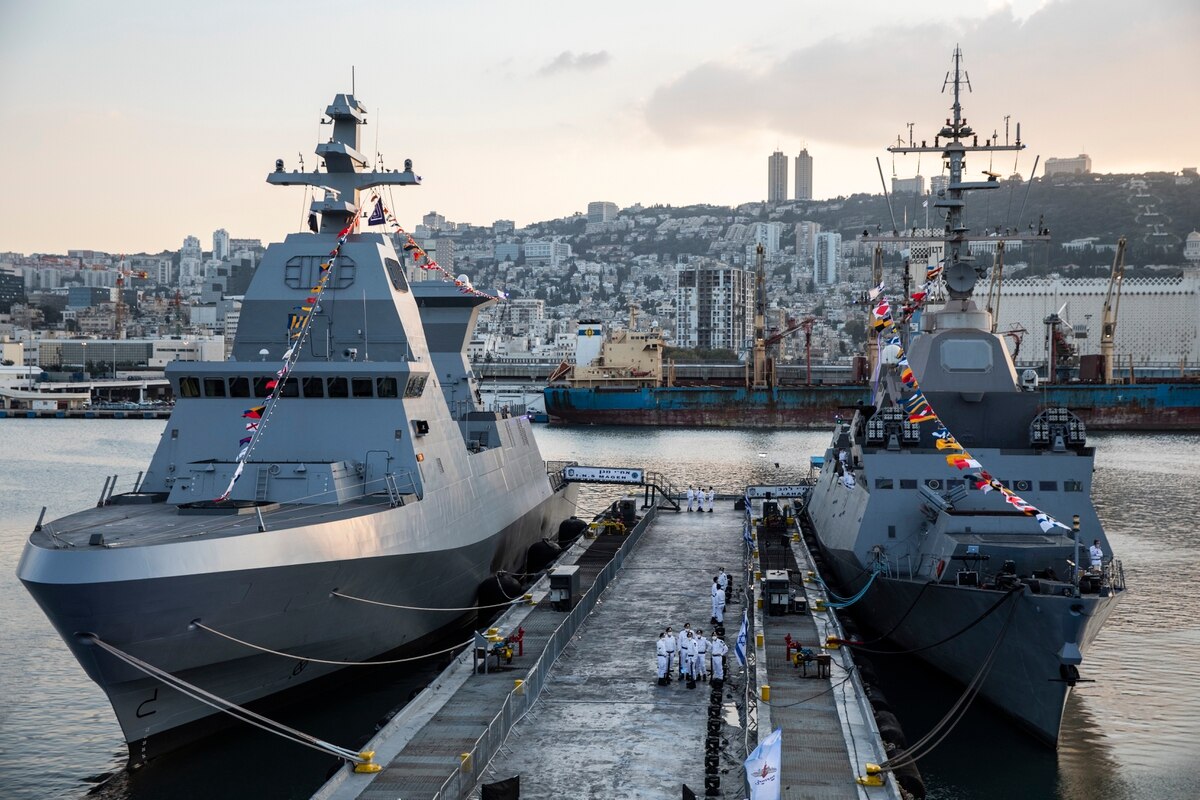
The first of four new Saar 6 ships, left, is docked in Haifa, Israel, on Dec. 2, 2020. (Photo via Heidi Levine/AP)

It can be assessed with high probability that intelligence gathered by the Russian Navy is also conveyed to Syrian and Iranian troops and indirectly even to the Hezbollah terror organization. 

Second, the presence of Russian vessels not only threatens the secrecy of Israeli navy operations in the arena but also exposes its ships to Russian forces (including Russian Navy firepower). This causes an inability for the Israeli Navy to maneuver freely in the arena where Russian vessels are present without prior coordination (deconfliction). 

The threat to the secrecy of Israeli naval operations will make it difficult to carry out intelligence missions and special operations both in peace and in war. In addition, it is reasonable to assume that in the case of war or conflict, the Israeli Navy will be highly challenged in attacking its adversaries’ vessels and coastal targets (both in Lebanon and in Syria) by the presence of Russian Navy vessels and aircraft. 

The Russian Navy’s presence and maritime control in the Mediterranean region threaten Israel’s vessels and aircraft operations, essentially constituting access denial operations carried out by the Russian Navy in the Mediterranean arena towards the Israeli Navy. 

Eyal Pinko served in the Israeli Navy for 23 years in operational, technological, and intelligence duties. He served for almost five more years as the head of the division at the prime minister’s office. He holds Israel’s Security Award, Prime Minister’s Decoration of Excellence, DDR&D Decoration of Excellence, and IDF Commander in Chief Decoration of Excellence. Eyal was a senior consultant at the Israeli National Cyber Directorate. He holds a bachelor’s degree with honor in Electronics Engineering and master’s degrees with honor in International Relationships, Management, and Organizational Development. Eyal holds a Ph.D. degree from Bar-Ilan University (Defense and Security Studies).

Endnotes

1. Yadlin Amos, “Russia in Syria and the Implications for Israel,” Strategic Assessment, Volume 19 No. 2 (7/2016): 9. 

2. Ibid.

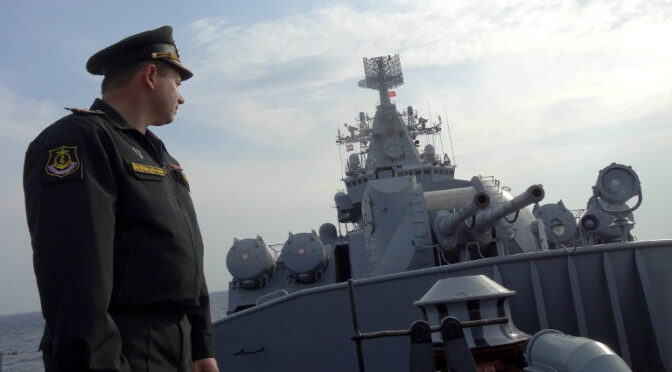
Featured Image: Russian Navy Captain Alexander Shvarts stands near the main gun system on the Russian missile cruiser Moskva as it patrols in the Mediterranean Sea, off the coast of Syria, on December 17, 2015. (Max Delany/AFP)

Maritime Cybersecurity Week Concludes on CIMSEC

By Dmitry Filipoff

CIMSEC recently featured a series of pieces submitted in response to our call for articles on maritime cybersecurity, issued in partnership with Cyber Nation Central as a part of Project Trident.

Authors highlighted the ever-changing landscape of cyber threats and countermeasures. The maritime sector is particularly critical to defend because of its extensive and broad linkages. Yet ships require steady upgrading of their systems and defenses in order to a pace threat that is constantly evolving. Crews require regular training to prepare for possible worst-case scenarios, many of which could be precipitated by a seemingly friendly email. As state and commercial actors seek to reinforce their resilience against cyber threats in the maritime domain, they can look to improve their cross-stakeholder relationships with one another, and consider enhancing international law to provide more common ground for interpretation and action.

Below are the authors who featured during the topic week. We thank them for their excellent contributions.

Sieges, Containerships, and Ecosystems: Rethinking Maritime Cybersecurity,” by LCDR Ryan Hilger

“…as cyberattacks only continue to grow in pace, scope, and impact, we must engineer and operate for resilience to ensure that the company or mission does not irrevocably lose the credibility and trust needed to survive in the ecosystem. Beyond practical approaches like expansive defense in depth, zero trust architectures, and redundancy or watchdog mechanisms to balance against complex or emergent behaviors, the approach must separate the systems from the information.”

Sea Blind: Pacing Cybersecurity’s Evolving Impact on Maritime Operations,” by Mark McIntyre and Joe DiPietro

“Just as the sextant enabled celestial navigation of ships far from shore, and signal flags and lights allowed ships to communicate with one another more effectively, the adoption of digital technology has allowed sailors to shoot, move, and communicate even more rapidly. While this technology allows seafarers to navigate more precisely and communicate and coordinate with others more easily, it introduces new vulnerabilities to modern warships. Just as these systems assist personnel onboard ships, they potentially offer nefarious actors an attack vector to introduce malicious code into these systems.”

Perils of A New Dimension: Socially Engineered Attacks in Maritime Cybersecurity,” by Leonid Vashchenko

“Their objective will be to obtain unsanctioned admittance into the vessel’s systems. The targeted person can either be blackmailed or contacted by a fake profile of a trusted contact with the aim of dispatching malware via the victim’s access. An untrained and unaware navigational officer could install the malicious software to the navigational computer, under the guise of ‘colleague’s friendly tip.’”  

Tackling Maritime Cyber Threats: A Call for Cross-Stakeholder Cooperation,” by Henrik Schilling

“Apart from the law itself, implementing cyber operations into international law would create a certain degree of consent between international actors regarding the handling and use of cyber operations. These measures will not solve illegal cyberattacks, but they might provide actors a common ground of action in terms of defending against such attacks or initiating consequences or counterattacks.”

Dmitry Filipoff is CIMSEC’s Director of Online Content. Contact him at Content@cimsec.org.

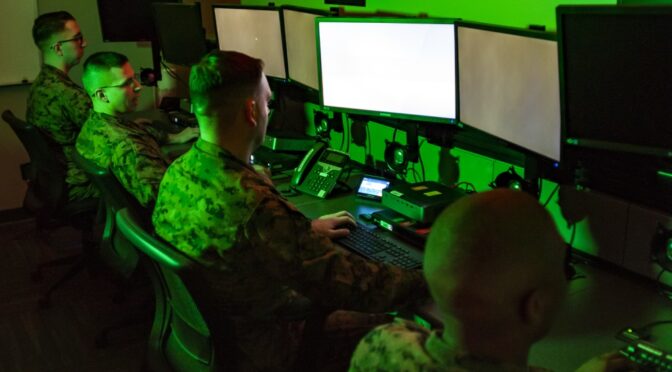
Featured Image: Marines with Marine Corps Forces Cyberspace Command pose for photos in cyber operations room at Lasswell Hall aboard Fort Meade, Maryland, Feb. 5, 2020. (USMC photo by Staff Sgt. Jacob Osborne)

Tackling Maritime Cyber Threats: A Call for Cross-Stakeholder Cooperation

Maritime Cybersecurity Topic Week

By Henrik Schilling

“Cyber War does not take place in the present, and […] it is unlikely that Cyber War will occur in the future,”1 stated German political scientist Thomas Rid several years ago, arguing that no cyberattack can be viewed as an act of war on its own. It does indeed seem difficult to imagine a war waged just by way of cyberattacks, although the quick development of new technologies makes predicting the possibilities of cyberattacks in the future increasingly difficult. What is already noticeable, however, is the sharp increase in attacks related to cyber incidents worldwide, with the maritime area being particularly affected. By the end of July 2020, cyber-attacks targeting the maritime sector had already risen by 400 percent since the outbreak of the coronavirus. The number of attacks in 2021 is likely to be much higher.

The maritime sector is especially vulnerable to cyberattacks because of its dependence on well-functioning technology for navigation, its communication requirements, and the logistics involved. The problem with cyberattacks is the multitude of challenges they present at different levels, requiring a multidimensional approach. It is insufficient to see cyberspace as a standalone domain. Even though NATO declared cyberspace as a fourth operational domain, stating that NATO “must defend itself [in cyberspace] as effectively as it does in the air, on land, and at sea,”2 this domain has the crucial feature of not only heavily affecting other domains but being directly linked to them. As the digitization and automation of systems progresses, this linking of cyberspace and all other classical operational domains will deepen even further. Moving from the technical to a more geographical and political perspective, cyber threats confront present even more problems that call for multidimensional analysis.

What Makes Cyberattacks so Harmful?

The irrelevance of geographical borders in cyberspace is connected to the dissolution of the linkage between attacks and a defined territory. Cyberattacks are not limited to defined geographical or political borders, and at the same time, no physical presence is needed for the execution of an attack. At the same time, increasingly wide range of possible actors are capable of performing cyberattacks, and cyber skillsets and capabilities are proliferating. While more sophisticated attacks require large financial and organizational resources and especially time, which makes them exclusive to state actors or their proxies, other types of attacks are becoming easier to perform for a range of actors. These factors can pose a challenge in how attacks can originate from even supposedly safe and stable regions. Military strategists know that attacking at the source of strength or the center of gravity is a viable approach, but even so, they might find it difficult to obtain political top cover for retaliation once they properly attribute cyber aggression.

The lack of a clearly identifiable actor in the cases of some cyberattacks presents states and private stakeholders with several problems. One of the most urgent difficulties is determining the consequences for such an attack. Without knowledge of the origin of the attack, possible responses, such as sanctions or counterattacks, are very difficult if not entirely impossible to implement. There is a lack of international contracts that define what kind of cyberattack is actually an act of war. The declaration of the need for immediate national defense of a country would be without real meaning without knowing the source of the attack.

The need for attribution is crucial because the consequences of such an attack vary depending on the attacker and their aim. While criminal groups may launch cyberattacks mainly for financial benefit, state actors could try to gain access to closely-held military-technological secrets, and competing business firms could launch attacks for the purpose of commercial espionage. Knowing the the origins of an attack establishes  options for responses.

The attribution and retaliation problem varies in its actionability for the private maritime sector. While state actors, especially national navies, should remain capable of answering an attack, private actors are often unable to answer a cyberattack appropriately, except for improving internal defenses. They usually cannot conduct offensive cyberattacks in retribution without fear of prosecution.

The indirect and often surprising nature of cyberattacks make any defense other than preemptive defense rather difficult. Even if an attack is detected, questions remain over when and how to respond to it. Should defenders try to deny access to a specific portion of a system, or should the whole system be taken offline? What should be done if an attack is only noticed when a system is already down? These are only some of the dilemmas that have to be taken into consideration and which are especially crucial for seaborne operating systems that cannot be easily shut down without major consequences.

The Vulnerability of the Maritime Domain to Cyberattacks

The key issue of maritime cybersecurity is the systemic need for reliable cyber technology while vessels’ onboard systems are aging as technology advances. While a cargo vessel is deeply dependent on communication systems while operating, it is challenging to reliably ensure a vessels’ cybersecurity during its whole lifespan. This is especially true when the average service life of a cargo vessel lies between 25 and 30 years, during which technology could have advanced greatly without the vessel’s own technological assets being updated to keep pace.  

The maritime domain consists of multiple additional gateways for cyber threats, especially related to critical infrastructure, such as facilities for energy, resource extraction and transportation, undersea cables and communications, as well as harbor and port infrastructure. Cyber threats are also becoming increasingly crucial for military purposes in the maritime domain, which cannot necessarily be neatly separated from the civil context of commercial maritime infrastructure. This is particularly evident when assessing the possibilities of blocking a critical geographic chokepoint, such as a canal, by manipulating the systems of a vessel in such a way that it physically blocks the channel, or manipulating the controls for the canal itself.

Another method would be the direct manipulation of the propulsion system of a vessel by either deactivating the propulsion or, for example, activating the bow thruster to maneuver a vessel crosswise to block a waterway. Another possibility, especially in canals or harbors that rely on locks, would consist of either manipulating these directly or causing a vessel to damage or obstruct locks, making these facilities even more predisposed to disruption. While the risk of attack against these structures are not new and the consequences are severe, as the blockages of the Suez Canal between 1967 and 1975 demonstrate, the key difference with cyberattacks is the lack of proximate physical presence of a perpetrator.

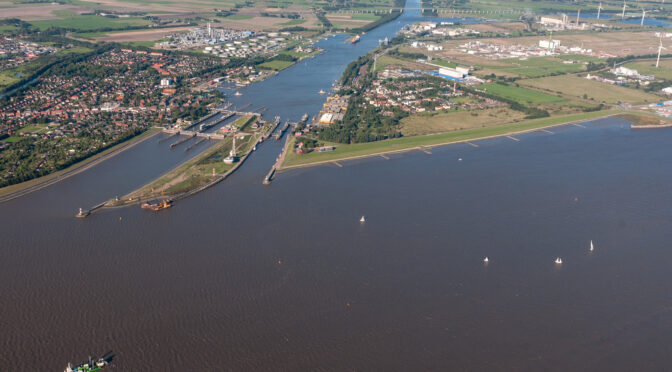
The implication that such attacks would have for both civilian and military actors can also be illustrated by the Kiel Canal in Northern Germany. By ship numbers it is the busiest artificial waterway of the world. The canal connects the North Sea with the Baltic Sea, and reduces the distance for vessels travelling from one region to the other by up to 250 nautical miles. Up to 140 million people live in the area. The importance of the canal for commercial shipping is evident, but a cyber-related closure of the canal could have major consequences strategically. It would make it more difficult for allied navies to enter the Baltic Sea in case of a crisis or conflict, thereby threatening timely access for potentially upholding alliance guarantees.

Proposals for a Multidimensional and Multi-Stakeholder Approach to Maritime Cyber Threats

These linkages between a broad set of actors that come together in the maritime domain, all depending on reliable cyber infrastructure, makes it indispensable to create a multidimensional cross-stakeholder approach to cyber threats. Multidimensional in this case means consisting of different defensive elements against cyberattacks, combining political, strategic, and legal components, while also keeping in mind the ability of cyber threats to compromise also all other domains. This makes it essential to cooperate with non-maritime stakeholders as well. Such an approach will require a considerable effort and will  confront difficulties regarding the ever-changing technical conditions and the ambiguity over the question of responsibilities in the defensive and offensive aspects of cyberspace.

International law shall be implemented to define rules regarding the offensive and defensive use of cyber operations. The Tallinn Manual 2.0, a broadly recognized publication on the relationship between international law and cyber operations, could inform the possibility of incorporating cyber operations into international maritime law.      

Apart from the law itself, implementing cyber operations into international law would create a certain degree of consent between international actors regarding the handling and use of cyber operations. These measures will not solve illegal cyberattacks, but they might provide actors a common ground of action in terms of defending against such attacks or initiating consequences or counterattacks.

Efforts should be made to clarify responsibilities for cybersecurity both within state and non-state levels. Cooperation between maritime stakeholders regarding cybersecurity is a major challenge, not because there is an unwillingness to cooperate, but because the structures and responsibilities for cybersecurity are often too complex, not clarified enough, or widely different, for example due to varying laws in different countries. A major reason for complexity is the outsourcing of cybersecurity, which is not as problematic in itself, but complicates the process of coordinating cybersecurity between stakeholders. Subsequently, the role that the state must play in ensuring cybersecurity for important maritime players should be examined critically.

This is of major importance for the naval forces of a state, which should have enough capability to defend themselves against cyberattacks and engage in cyberattacks themselves. The role of the state is also important  for private operators of harbors, critical infrastructures or energy suppliers, where service outages or interruptions would have a direct effect on national security. Therefore, reliable cybersecurity for key stakeholders of the maritime industry, infrastructure and naval forces is of high importance for the state itself, which should assess implementing methods of control or minimum standards to ensure its own national security.

One possibility of effectively connecting private and state, as well as multinational-actors, would be to conduct joint exercises or simulations. These would firstly encourage all stakeholders to ensure a comparable level of cybersecurity and secondly ensure a more efficient way of cooperative defense in case of an actual maritime cyberattack.

Joint exercises are already a key component for naval forces and ensure a level of professionalism and readiness. Some of the best examples are the numerous exercises that the Standing NATO Maritime Groups conduct year-round. Naval forces can become the prime victim of cyberattacks in case of a conflict, which makes it inevitable to include cyber defense measures into exercise programs. Such exercises would not need whole new structures since NATO has already created the basis for them by establishing its Centers for Excellence. While there are three different Centers for Excellence (COE) based on the maritime domain, there is a COE for Cyber Operations. Joint exercises between the two domains could therefore be conducted by the coordination of these Centers.

There are several ways a cyberattack can be aimed against naval forces. While some of them only affect a vessel in a non-physical way, like stealing intelligence-data, many cyberattacks will at some point affect the physical factors of a vessel. By manipulating a vessel’s systems directly, the propulsion, navigation, or weapons systems could be affected. A third-party vessel could also be attacked to cause harm to a target military vessel. This option is especially dangerous in frequently used waterways, canals, or even for vessels operating in civilian convoys or naval task groups. In a cyberattack conducted against a multinational aircraft carrier strike group, the vessel with the weakest cyber defenses could be attacked, such as a logistics vessel, even if the actual target would be the carrier. Gaining access to a target network through the weakest link could enable attacks against its strongest link.

While training against a solely non-physical attack may be of great difficulty, especially for smaller crewed vessels, it is possible to train for a cyberattack that culminates in a physical action. Since many cyberattacks can be classified as support operations to a physical attack, like manipulating a propulsion system to compromise navigation and safety, preparing for such attacks would be more feasible. At the same time, these exercises are becoming more and more urgent. More than a decade ago a computer virus was already able to ground French Navy fighters by simply compromising flight data downloads.

While the U.S. Navy is training its sailors in astronomic navigation again, which can indeed be very helpful in case of a cyber-related failure of digital navigation, the solution is not to return to pre-cyber era systems. Earning serious proficiency in offensive and defensive cyber capabilities will become fundamental. Especially in the maritime domain, with its vast interdependencies, cyber threats must be faced cooperatively to ensure a resilient and reliable cyberspace, which has become indispensable for the functioning of the global maritime commons.

Henrik Schilling is a research assistant at the Center for Maritime Strategy and Security (CMSS) at the Institute for Security Policy at Kiel University (ISPK), Germany. He is currently earning his Masters in International Politics and International Law and has recently published the German Navy Fleet Tracker Report for 2020 together with Dr. Sebastian Bruns.

References

1. Rid, Thomas: Cyber War Will Not Take Place. In: The Journal of Strategic Studies Vol. 35, No. 1, 5-32, February 2012

2. NATO Warsaw Summit Art. 70: https://www.nato.int/cps/en/natohq/official_texts_133169.htm

Featured Image: Locks at Brunsbüttel connecting the Kiel canal to the River Elbe estuary, and thence to the North Sea (Wikimedia Commons)

Fostering the Discussion on Securing the Seas.