By LCDR JR Dinglasan, USN
Introduction
To win the fight against a peer adversary, the navy’s surface warfare officer (SWO) community must display a level of warfighting proficiency – one of excellence – not yet seen in many years. The collisions of 2017 and continued near misses and actual mishaps since, such as the grounding of USS Howard (DDG 83) in 2023 and the Harry S. Truman (HST) Carrier Strike Group (CSG) friendly fire incident in 2024, reveal that the surface force lacks a high level of operating proficiency, in terms of both shiphandling and tactical skill. However, while sweeping reforms were swiftly implemented to increase shiphandling proficiency, the SWO community has not shown the same kind of fervor to implement the sweeping changes needed to dramatically increase tactical proficiency.
But this fervor and urgency is needed. Despite the groundbreaking success of the SWO warfare tactics instructor (WTI) program, it alone has not been enough to increase the overall floor of the surface force’s tactical proficiency. The HST CSG friendly fire incident is a symptom of a larger problem, not an exception to the rule. And it is not the only symptom. Despite the relatively successful performance of the surface force recently in the Red Sea (no ships have yet been struck by a Houthi anti-ship missile), there have been several unnecessary close calls. Additionally, ships enter SWATT (Surface Warfare Advanced Tactical Training) with varying levels of proficiency, with some ships entering at such a low level that precious underway days are spent on basic tactics.1 Today’s ships carry immense combat power and in very different forms, but SWOs are not effectively prepared to command them. A destroyer commander with little knowledge of the Aegis Weapon System, which is possible with today’s construct, will struggle to effectively lead their ship in great power combat. These symptoms indicate a flawed system of training and tactical development for SWOs, resulting in the community’s warfighting proficiency being far from a level needed to defeat the primary competitor of the era – the People’s Liberation Army (PLA).
Perhaps the most hotly debated reform to improve warfighting skill is the specialization of the SWO community – proposed in the wake of the 2017 collisions but not implemented. Of myriad proposals, SWO specialization is the single most effective structural change the community can undertake to substantially increase the surface force’s tactical proficiency in the long term.
SWOs as Generalists, the Pitfalls of Generalization, and the Subsequent Need to Specialize
Currently, SWOs are considered generalists, and this generalization is often debated in the SWO community. A 2021 Government Accountability Office (GAO) study on the SWO career path concludes that a large majority of SWOs believe that specialization is necessary, with 67% of those surveyed believing that specialization in some form is needed, as seen in the figure below:2
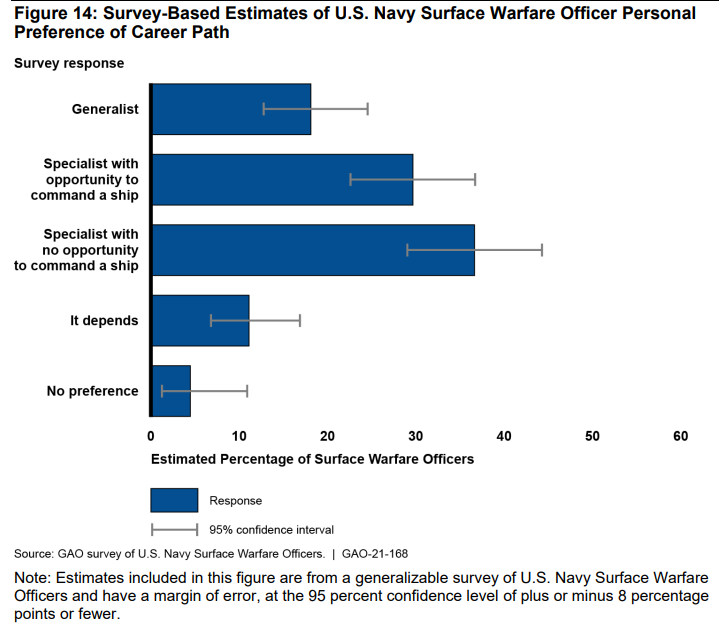 Figure 1. GAO Report Survey Summarizing SWO Personal Preference of Career Path
What is meant by SWOs being generalists? Or as SWOs like to call themselves, “jacks-of-all-trades”? Throughout a SWO’s career, a SWO can both 1) serve as any administrative billet on a ship (e.g., damage control assistant (DCA), weapons officer, chief engineer, training officer, etc.) and 2) serve their tours on any ship class, including cruisers, destroyers, amphibious assault ships, littoral combat ships (LCS), and mine countermeasures (MCM) ships.
Consider the following hypothetical example. A SWO starts their career as the gunnery officer on an LPD (landing platform dock) for their first division officer (DIVO) (1DV) tour, then serves their second DIVO (2DV) tour as the 1st Lieutenant on an MCM, then serves their first department head (DH) (1DH) tour as the chief engineer on an MCM, then their second department head (2DH) tour on a CG (guided-missile cruiser), which also serves as the air and missile defense commander (AMDC) for a carrier strike group (CSG). That 2DH would be expected to employ the highly complex Aegis Weapon System (AWS) and coordinate the air defense of an entire CSG during their watch, with very little previous experience in employing these highly advanced tactics. Then at the rank of Commander, that SWO could then potentially take command of an Aegis DDG (guided-missile destroyer), with only one previous tour employing Aegis, long-range surface fires, and advanced anti-submarine warfare capabilities such as the SQQ-89 ASW weapon system. Officers such as this SWO are stretched thin across a wide variety of highly complex systems and platforms. This stretching can increase as their career advances, all while being charged with progressively greater warfighting responsibility.
Another example further illustrates the issues with generalization. Imagine two newly-reporting department heads reporting to a DDG. Given equal talent and tactical training (let us assume that both attended the DH tactical action officer (TAO) course and neither one is a WTI), one might believe that two DHs who report at the same time would be equals at fighting the ship as TAOs. However, one did their first two DIVO tours on an LPD then an MCM, with no tactical qualifications achieved (since none are mandated at the DIVO level), while the other did both of their DIVO tours on a destroyer and then a cruiser, qualifying as AAWC and SUWC. The latter, armed with experience on the same platform, would be far more proficient than the former at employing that destroyer’s exquisite weapons systems, despite both being equally talented and trained.
This switching would be roughly akin to a naval aviator beginning their career as a DIVO in a rotary wing squadron, then conducting their DH tour in a fighter squadron, then their executive officer (XO) and commanding officer (CO) tours in an MPRA (maritime patrol reconnaissance aircraft) squadron. The aviation community prohibits this for many reasons, the most notable being the sheer lack of credibility and operational proficiency for that officer in command. This concept of serving on only one platform during a career is called the “type-model-series” concept. While it is possible to change platforms, it is quite rare, with the most common example being a transition to a more advanced platform that performs the same mission set, such as transitioning from the F/A-18 to F-35C.
What makes the generalist path so detrimental? The previous two examples illustrate DH TAOs and COs being disadvantaged by their lack of expertise. This lack of expertise – caused by a lack of specialized experience – seriously damages the credibility of many TAOs across the fleet, despite them being considered the most senior tactician in the combat information center (CIC). As controversial as it may sound, this is no mere hypothetical. The HST CSG friendly fire investigation report reveals that the AMDC liaison officer (LNO), who was a TAO-qualified DH from the AMDC ship, was only viewed as a communications conduit and not as a critical member of the air defense planning team on the carrier.3 Though not an official conclusion from the report, it appears that SWO TAOs are often perceived as not tactically proficient enough to be equals at the table. In short, the generalist path produces leaders that possess neither the skills nor the credibility to tactically employ their ships to their full combat potential.
This lack of proficiency also saps morale at the junior officer ranks because it creates a cadre of officers lacking confidence in their tactical proficiency and are unable to leverage a guaranteed amount of experience operating similar weapons systems. The GAO study reveals that low job satisfaction is caused in large part by a lack of operational proficiency and expertise. Another study shows that many junior SWOs do not feel ready for combat.4 If many of these JOs do not have confidence in themselves, then it stands to reason that they may not have confidence in each other. And they may not have confidence in their seniors. When SWOs look to their commanders whose formative career experience was the War on Terror and on many different platforms, are they confident their commanders could mentor them on how to fight China? Do they think their COs could hold their own?
Generalization results in generalized tactical training that lacks specificity and depth. Perhaps the most prominent example, the DH TAO course must cater to the lowest common denominator of students. It therefore serves as a generalized cursory introduction to tactical employment instead of the advanced tactics curriculum that it should be. It also heavily leverages a simulator called the Multi-Mission Team Trainer (MMTT), a low-fidelity combat system simulator intended to be a combat system agnostic method (not based on Aegis or the Ship Self-Defense System (SSDS)) to train new DHs as TAOs. Low-fidelity lessons and a low-fidelity simulator result in low-fidelity tactics learned at the DH level.
Generalization also results in a low return on investment for all the training that a SWO receives during their 1DV tour. Consider the final oral board to earn the SWO pin. On many ships, it naturally skews toward questions that focus on the class of ship they are on. A SWO training for a CRUDES-heavy set of questions, along with earning qualifications revolving around proficiency in that particular ship class, will develop a skillset that will be for naught if assigned to an amphibious ship, LCS, or MCM for their 2DV tour.
It also prevents the incentivization of intermediate tactical qualification. A common rebuttal to an article proposing extra slating points for warfare coordinator qualifications was the difficulty in achieving equity across all ship types. Skeptics argued that SWOs on certain types of platforms could be disadvantaged by being on a platform that was not as capable as another type. But equity occurs at the expense of lethality due to generalization.
We often claim that SWOs do a multitude of things – driving ships, fighting ships, leading Sailors (as part of a ship’s administrative chain of command), and steaming the ship (operating the engineering plant). While true on the surface, to claim that we do these things at similar levels of proficiency across all ship classes is extremely misguided. Modern ships have individually become far too sophisticated and complex in their weapons capabilities and tactics. This complexity is further complicated by the vast variability across ship classes in terms of mission sets, weapon systems, and engineering systems. Attempting to master this complexity and variability results in not only lower tactical proficiency, but across the board – in driving, fighting, leading, and steaming ships – and calls for a focused approach. In the classic work Fleet Tactics, CAPT Wayne Hughes effectively articulated this need via one of his six cornerstones to naval tactics: “to know tactics is to know technology.”5 With the technology vastly different across surface platforms, SWOs must specialize to achieve tactical proficiency.
But what are the different ways to specialize and what do those different approaches bring to the table? To begin answering that question, we must first explore the history of generalization versus specialization, how other navies and communities approach specialization, and lastly ask ourselves, “What is a SWO?” Or rather, “What should a SWO be?”
History of the U.S. SWO Generalist Model and a Primer on Different Specialization Approaches
CAPT James P. McGrath, USN (ret.) provides an excellent background on the history of generalization in the surface navy in his article “Engineer-Warriors or Engineers and Warriors?” and also compares how sister communities tackle specialization. Historically, engineer officers began as a separate community in the 1840s from line officers, with the rivalry between the two communities raging until Congress mandated the two communities merge in 1899.6 Engineering study dramatically increased for SWOs, with some arguing that it increased too much. CAPT McGrath also notes how other communities (aviation and submarine) and navies (e.g., the Royal Navy) approached the generalization dilemma differently than the U.S. surface community. McGrath’s article and the 2021 GAO study are critical primers on the topic of SWO specialization.
When it comes to specialization, there are multiple approaches implemented by different navies, naval officer communities, and services. Figure 2 below (a compilation of multiple figures from the 2021 GAO study) illustrates and succinctly summarizes these approaches.
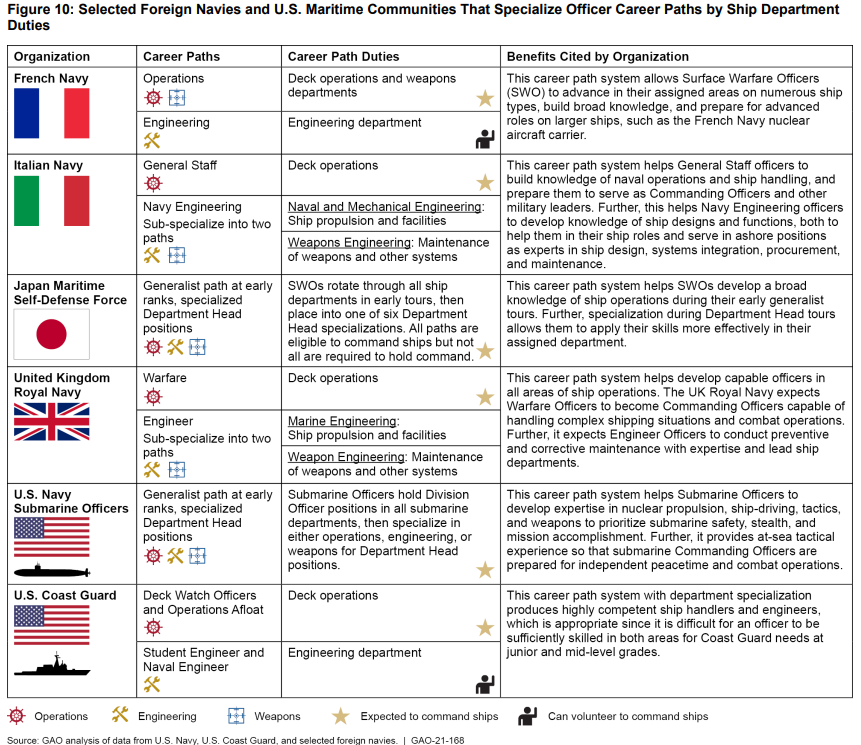

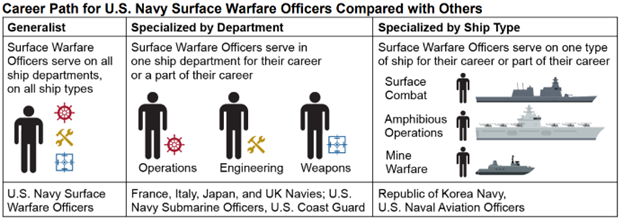 Figure 2. Comparison of Career Specialization Approaches Between Different Navies and Communities. Click to expand.
The GAO study examines where proficiency is held for the following three disciplines:
1. Operations (e.g., employment of weapons, ship driving).
2. Engineering (material readiness of the engineering plant, along with its operation).
3. Weapons (material readiness of weapons and combat systems onboard).
The GAO study then summarizes the three main approaches for proficiency in those three disciplines, as seen at the bottom of Figure 2:
1. Generalist, where SWOs practice the three disciplines above across any class of ship.
2. Specialization by department (often known as the “Royal Navy model”) where the three disciplines are split into three distinct officer communities.
3. Specialization by ship type, which is like approach #1 in which the three disciplines are practiced, but only within a particular class or type of ship.
The U.S. Navy SWO community, of course, falls under the first approach. The Republic of Korea (ROK) Navy (ROKN) employs the third – the ship type approach. Perhaps the most famous approach, the Royal Navy, directs that the operations discipline is held by the Principal Warfare Officer (PWO) community, the engineering discipline by marine engineer officers, and the weapons discipline by weapon engineers. Another notable approach is a twist on the Royal Navy approach – the French Navy approaches this by having the operations and weapons disciplines still part of their SWO community, while separating off marine engineer officers like in the Royal Navy model.
Those who argue for SWO specialization typically argue for the “Royal Navy model” – it is perhaps the most common proposal to implementing SWO specialization. But implementing only this approach to specialization for U.S. SWOs is flawed for two main reasons.
First, once a SWO/PWO becomes a CO, that officer possesses little experience in the force generation aspects of leading a ship. A ship cannot employ its weapons if it is not ready to fight and if its systems are in disrepair due to ineffective leadership. A CO could be a brilliant tactician but poor at material readiness – a skill still critical to being an effective CO. Personal discussions with officers in allied navies that employ the Royal Navy approach have revealed that this is a commonly identified drawback to this approach.
Second, the U.S. Navy possesses an extremely diverse surface fleet, more so than many other navies, with ship classes that vary widely in tonnage, armament, and capability. To say that an Avenger-class MCM is very different from an Arleigh Burke-class DDG with Aegis Baseline (BL) 9C is an immense understatement. It does not have any air search radar or any meaningful way to defend itself from air attack. In contrast, the DDG can intercept a ballistic missile in the exoatmosphere and possesses none of the minesweeping capability of the MCM. If a SWO followed the specialization proposal that the House’s version of the 2019 National Defense Authorization Act (NDAA) proposed, that SWO would still be a generalist, with no real depth in proficiency in a ship’s specific tactical capability, whether MIW, AMD, SUW, etc. A weapons/operations-specialized SWO in this proposal would still have a generalist career path as the examples mentioned earlier, because they would still be bouncing between many different platforms, like DDGs, LCSes, amphibious ships, MCMs, and so on. The only difference is that they would not have served as an engineer.
Moving strictly to the Royal Navy model will still result in a lack of tactical proficiency. Therefore, SWOs should specialize via a platform-based (ship type) approach first and foremost. To begin to understand why, we must first ask ourselves: “What is a SWO? Or what should a SWO be?”
What is a SWO? Or What Should a SWO Be?
Because there are many ways to specialize, we cannot answer the question of how exactly SWOs should specialize until we answer what a SWO currently is and what a SWO should be.
The military functions via two distinct chains of command – the administrative and operational chains of command. The administrative chain of command, which possesses administrative control (ADCON) of their subordinate forces, “mans, trains, and equips” those forces, a responsibility known as force generation. The operational chain of command then takes operational control (OPCON) and employs the forces generated by the administrative chain of command. A ship (as well as an aviation squadron or a submarine) also possesses these two chains of command, and Sailors on a ship have roles in both. For example, a SWO at the DIVO level can serve as the fire control officer (FCO) on an Aegis ship, and that SWO is responsible for the “force generation” of Aegis. However, that officer has no authority to employ the ship’s weapons, at least not in the capacity of the FCO. It is not until that SWO stands the watch, for example, as the anti-air warfare coordinator (AAWC) in the CIC, do they have the authority to employ the ship’s weapons. DIVOs and DHs serve as the heads of the ship’s administrative chain of command to ensure the ship’s combat and engineering systems are materially ready for employment by the operators: the TAO, AAWC, ASUWC, ADWC, MIW Evaluator, OOD, etc.
When asking an aviator how they professionally identify themselves or describe their job, they would likely answer first and foremost that they are an operator of a certain aircraft, not that they are, for example, the maintenance officer of a squadron. Aviators tend to emphasize the operational aspect of their designator, not the administrative aspect. SEALs, Marines, and other military communities do the same without becoming deficient in their man, train, and equip responsibilities.
When asked about what we do as SWOs, we tend to say, “I am the CSO, DCA, etc.” This common answer betrays how we think of ourselves as SWOs – we tend to identify ourselves as force generators, not force employers. In any reform of the SWO community, we must confront this fundamental dilemma. In the two chains of command on a ship, operational or administrative, which should we emphasize or identify by?
Specialization via ship type gets at specializing at the former and identifying ourselves foremost as warfighters, rather than as material managers. Specialization by department (the Royal Navy model) gets at the latter. The latter without the former is highly problematic. Implementing only the Royal Navy model in the U.S. Navy, with its vast variability in ship classes, means that an engineer officer from an LPD can serve a future tour on a CRUDES platform, which has vastly different engineering systems. It also means a PWO on an LPD could also serve as a PWO on a CRUDES platform, platforms that employ very different mission sets and combat systems (SSDS vs. Aegis). In these two examples, very little specialization, and therefore the advancement of tactical expertise, has arguably occurred.
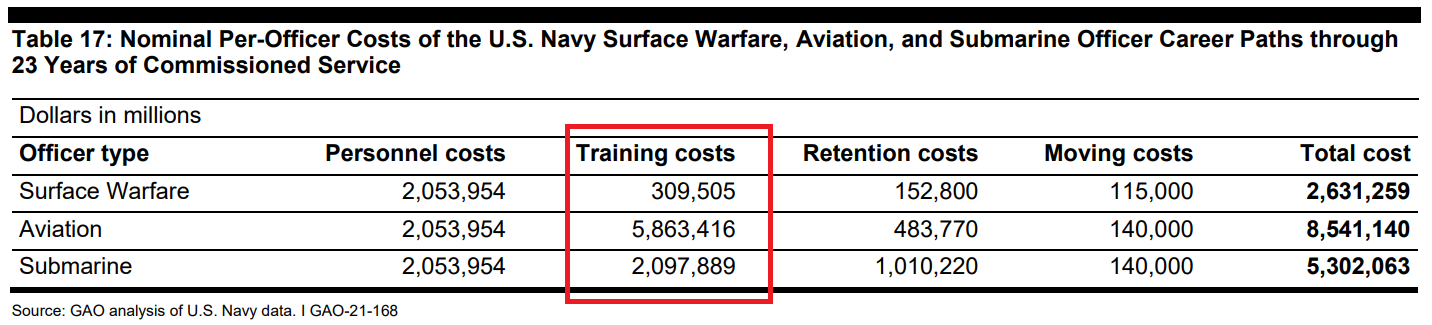
SWO culture has historically maintained that DHs are the tacticians, while JOs/DIVOs simply drive the ship and manage their Sailors. Fleet Tactics disagreed with this sentiment: “The young officer deals in tactics. That is what he cares about most. While he chafes against other duties, his first focus is meant to be the development of skills to bring combat power to bear on an enemy in circumstances of mortal danger.”7 This sentiment is keenly felt by SWO JOs, but results in frustration when their professional development does not emphasize warfighting as much as they believe necessary: “The approach to developing the warfighter mentality in the community was described as overly passive, with little to no direct or active efforts outside of entry-level indoctrination and training.”8 Indeed, the community provides little standardized tactical training to SWO JOs, with the only tactics course common to all SWOs at the DIVO level being the Advanced Division Officer Course (ADOC), which touches on tactics at a basic level. Table 17 of the 2021 GAO study shows that the SWO community already spends far less on training per officer than the submarine and aviation communities:
SWOs should not primarily be middle managers or “force generators” because it comes at the cost of the SWO’s warfighting proficiency and a subsequent decrease in the surface fleet’s combat power. The overemphasis on being material managers comes at an immense opportunity cost of proficiency at combat. While the force generation aspect is important, its overemphasis has heavily deprioritized other critical aspects, like tactical proficiency.9 We emphasize material readiness so much that we bemoan the amount of effort it takes to administratively prepare for inspections and wonder if we are more ready for inspection than for war.10 This is a symptom of being a peacetime Navy for many decades. SWOs should be the primary tacticians on a ship and embrace this identity. Put another way, SWOs must embrace the “warfare” aspect of “surface warfare officer.” The tactical proficiency of the entire surface force is dependent on the tactical proficiency of SWOs because SWOs are the primary tacticians aboard ships.
Therefore, to increase the lethality of the surface force for high-end combat operations, SWOs must embrace an identity as operators and create a career systematic approach to specialize by platform (the ROKN approach) since that is the approach that will optimize that identity. Specializing in this way would also yield many benefits, such as more efficient tactical training and increased retention among junior officers.
The Three Pillars of the Platform-Group Specialization Model
The platform-group specialization model based on groupings of ships, not individual ship classes, is a practical way to induce specialization while retaining enough flexibility in manpower management (which is one of the few benefits of the generalized model, at least from a manpower perspective). For example, having SWOs that only serve on the Arleigh Burke-class DDG would make officer inventory management far more difficult without a tangible benefit. The differences between a DDG and a CG are minimal, and transitioning between the two would still yield a substantial increase in tactical proficiency over generalization. CAPT McGrath’s proposal that SWOs specialize by singular ship class is therefore a bit too narrow.11
Instead, SWOs could specialize by platform via three categories: 1) cruiser/destroyer (CRUDES), 2) amphibious ships and capital ships, and 3) unmanned and small combatants (USC), sometimes known as small surface combatants (SSC). This would emulate the ROKN approach in which there are four groups to specialize in: surface combat, amphibious operations, mine warfare, and logistics ships. (The U.S. Navy already employs a separate community to operate its logistic ships.) These ship groupings generally possess similar propulsion systems, combat systems, and mission areas. Additionally, these groups typically deploy with certain types of naval task forces, such as CRUDES with a carrier strike group (CSG) and amphibious ships with an amphibious ready group (ARG), with SSCs tending to deploy independently. Specialization within a platform group will extend to specialization with force packages and their combined arms logic. Additionally, many navies already categorize their ships into these three categories, so it is a very logical way to specialize for tactical proficiency without being too restrictive by specializing in single classes.
The CRUDES platform group, primarily consisting of the Arleigh Burke-class DDG and a Ticonderoga-class guided-missile cruiser (CG) possess the following commonalities: the Aegis Weapon System (AWS), long-range fires in the form of Standard Missile-6 and the Tomahawk missile, an advanced ASW capability, gas turbine propulsion, and MH-60R aircraft. DDGs and CGs operate within a CSG.
The amphibious platform group, or “amphibs,” carries the following commonalities: the Ship Self-Defense System (SSDS) armed with short-range, terminal defense weapons such as the Evolved Sea Sparrow Missile (ESSM), integration with United States Marine Corps (USMC) aircraft and other assets, and proficiency in amphibious warfare. As large, slower ships with significant sail areas, they also possess ship maneuvering characteristics very different from the CRUDES or SSC platform groups. These ships also possess significant aviation capability, which is why an aviator can take major command of an LHD/LHA or an LPD. These platforms typically operate in amphibious ready groups, which have their own unique Optimized Fleet Response Plan (OFRP) cycle that differs significantly from a CSG’s OFRP cycle. Specialization here would allow for senior amphibious SWOs to have multiple ARG workup cycles under their belt, similar to senior CRUDES SWOs possessing multiple CSG cycles under theirs.
The last group, SSCs, possesses the greatest variability in systems, and include LCSs, mine countermeasures (MCM) ships, and unmanned surface vehicles (USV). Despite the higher degree of variance compared to the first two groupings of ship platforms, they possess the following common attributes: a focus on littoral warfare (MIW, short-range SUW), a higher degree of maneuverability commensurate with their size, and a tendency to deploy independently (not part of a CSG or ARG).
Semblances of platform-based specialization already exist, which is a tacit acknowledgement regarding the downsides of a generalized career path. One example is the general rule-of-thumb that a SWO will generally not slate for command of an Aegis DDG without Aegis experience. A SWO(N) serving on an amphib for their DIVO tour would only serve on an amphib for their 1DH tour. Furthermore, the navy’s Program Executive Offices (PEO) are subdivided by platform. Within PEO Ships, individual offices manage specific platforms or platform groups, such as the office for amphibs. There is also a separate PEO Unmanned and Small Combatants (USC) due to the unique nature of USVs, LCSs, and the like. If the unique nature of these platform groups necessitates separate offices, which are likely staffed by SWOs with extensive experience in these platforms, then we can logically deduce that the SWO community should probably codify this type of specialization in SWO career paths. Additionally, the well-known World War II-era law mandating that only naval aviators command aircraft carriers is founded on the notion that expertise in how a platform accomplishes its specific mission is key to command. This law is an embrace of specialization by platform.
Conclusion
Junior officers often feel that the surface force is not ready for combat.12 Junior officers do not want to only be administrators – they want to be operators that “deal with tactics.”13 They take far more pride in being tacticians than simply being administrators that spot check maintenance, conduct zone inspections, and write casualty reports (CASREP). Specializing by platform will drive toward an identity where SWOs are no longer considered as only middle managers or force generators, but as proficient tactical operators. Job satisfaction will increase dramatically when greater tactical expertise is being attained at the JO levels and beyond, and this satisfaction will yield better results for retention than bonus money will. Being able to fight the ship at a proficient, even expert level, will raise the sense of pride for the profession. It will yield the lethal DHs and COs we have sought for so long.
The surface force is far from the level of excellence in tactical proficiency needed to meet great power threats. It must increase dramatically to win the next high-end conflict. The best way to accomplish this is with a platform group-based approach, centered on three categories – CRUDES, amphibious ships, and SSCs. Specializing this way will certainly be challenging and take some time, but we must decisively reform the community for higher levels of warfighting skill. Specialization is necessary to make the fundamental structural changes that enable major increases in tactical skill, rather than settling for minor improvements on the margins of the current model. Attempts to achieve major warfighting improvement will fall short without specialization.
LCDR JR Dinglasan, USN, is a surface warfare officer (SWO) and an Integrated Air and Missile Defense (IAMD) Warfare Tactics Instructor (WTI). He is currently conducting his third WTI production tour/second post-department head tour (PD2) as the IAMD Tactics Development Lead at the Surface Advanced Warfighting School (SAWS) detachment of the Naval Surface and Mine Warfighting Development Center (SMWDC). He previously served as the IAMD WTI Course of Instruction (COI) Lead at SAWS. Afloat, he last served in 2023 as the Combat Systems Officer (CSO) aboard USS BENFOLD (DDG 65) as part of Forward Deployed Naval Forces (FDNF) Japan. He has authored a number of tactical publications, including a tactical bulletin on 5-inch gunnery air defense tactics and a tactical memorandum on SM-6 anti-surface warfare tactics.
References
1. Megan Eckstein, “US Navy Collecting Tactical Training Data It Once Shunned,” Defense News, July 6, 2022, https://www.defensenews.com/naval/2022/07/06/us-navy-collecting-tactical-training-data-it-once-shunned/
2. Cary Russell. Navy Readiness: Actions Needed to Evaluate and Improve Surface Warfare Officer Career Path, GAO-21-168 (Washington, DC: Government Accountability Office, 2021), https://www.gao.gov/assets/gao-21-168.pdf
3. RDML Kavon Hakimzadeh, Command Investigation into HSTCSG Friendly Fire Incident (FPO, AE: U.S. Naval Forces Central Command, 2025), 37, Findings #183-184, https://www.secnav.navy.mil/foia/readingroom/HotTopics/HST%20Investigation/Redacted_Full%20CI%20Friendly%20Fire%20HSTCSG%20(2)_Redacted.pdf
4. LT Judith Hee Rooney, USN, “The State of the Warfighter Mentality in the SWO Community,” CIMSEC, August 22, 2022, https://cimsec.org/the-state-of-the-warfighter-mentality-in-the-swo-community/
5. CAPT Wayne P. Hughes Jr. and RADM Robert P. Girrier, USN (Ret.), Fleet Tactics and Naval Operations, 3rd ed. (Annapolis, MD: Naval Institute Press: 2018), 23–24.
6. CAPT James P. McGrath, USN (ret.), “Engineer-Warriors or Engineers and Warriors?” Proceedings, January 2019, https://www.usni.org/magazines/proceedings/2019/january/engineer-warriors-or-engineers-and-warriors
7. Hughes and Girrier, Fleet Tactics and Naval Operations, xxi.
8. Rooney, “The State of the Warfighter Mentality in the SWO Community.”
9. LT Chris Rielage, USN, “Bring Out the Knives: A Programmatic Night Court for the Surface Navy,” CIMSEC, November 21, 2025, https://cimsec.org/bring-out-the-knives-a-programmatic-night-court-for-the-surface-navy/
10. GMCS Norman Mingo, USN, “The Navy Is Prepared for Inspections, Not War,” Proceedings, March 2021, https://www.usni.org/magazines/proceedings/2021/march/navy-prepared-inspections-not-war
11. McGrath, “Engineer-Warriors or Engineers and Warriors?”
12. Rooney, “The State of the Warfighter Mentality in the SWO Community.”
13. Hughes and Girrier, Fleet Tactics and Naval Operations, xxi.
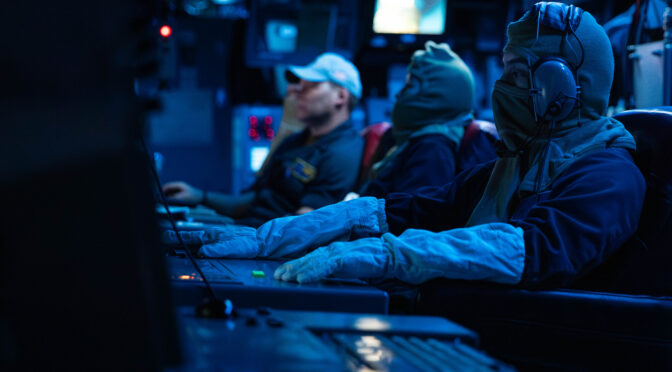
Featured Image: PHILIPPINE SEA (June 26, 2025) Sailors stand watch in the combat information center aboard the Arleigh Burke-class guided-missile destroyer USS Higgins (DDG 76) during a training drill in the Philippine Sea, June 26. (U.S. Navy photo by Mass Communication Specialist 3rd Class Trevor Hale)