Category Archives: History

Naval and maritime history section.

Winning the Cold War at Sea with Reagan-Era Navy Secretary John Lehman

By Dmitry Filipoff

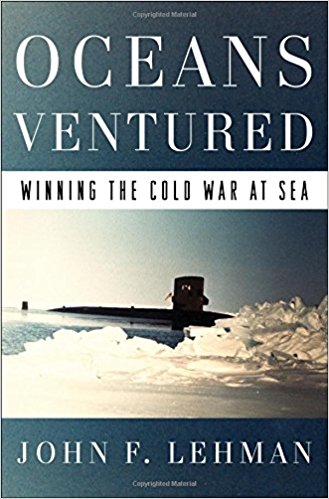
CIMSEC had the pleasure of asking The Honorable John F. Lehman, Secretary of the Navy under the Reagan Administration from 1981-1987, questions on his new book Oceans Ventured: Winning the Cold War at Sea 

Q: Your tenure as Navy Secretary was guided by President Reagan’s new national security strategy. How did the 1980s U.S. Navy operationalize this new strategy?

A: President Reagan was quite clear in his naval strategy and policy. Eight months before his election, he declared “We have to maintain a superior navy. We are a nation with vital interests and commitments overseas, and our navy must stay ahead of the Soviet buildup. This means commissioning the ships and developing technology which will enable the United States to command the oceans for decades to come.”  He believed strongly in the importance of confronting and negotiating with the Soviets from a position of strength – a position based on adequate and appropriate forces as well as the will and capability to use them should that ever be necessary. We in the Navy provided him that strategy. He fully embraced the force goal of a 600-ship Navy and its 15 carrier battle groups and 100 attack submarines, along with the tenets of The Maritime Strategy: Offensive, forward, global operations at sea and from the sea, as a critical component of an aggressive and forward total joint and allied strategy. In this he was fully supported by Secretary of Defense Cap Weinberger, myself as Secretary of the Navy, and a succession of Chiefs of Naval Operations. There was no daylight between any of us on these fundamentals.

The strategy was operationalized through accelerating the Navy’s building and deployment program; developing and promulgating suitable concepts and tactics; gaming those concepts and tactics at Newport and other institutions; and – most importantly and centrally – demonstrating, practicing, and analyzing them at sea, forward and throughout the world, from the very moment the President took office in 1981. This involved both a revamped forward exercise program as well as responding to real-world crises globally on a daily basis. In 1987, when the administration published its first formal public statement of its national security strategy, achieving and maintaining maritime superiority was enshrined as one of its bedrock ideas.

Q: How did the Soviets respond to the new Maritime Strategy and how did it influence their operations and diplomacy?

A:  They were aghast. At first, they didn’t know what to make of it, so they responded in kind: Throwing wave after wave of ships and aircraft at us wherever we popped up on their periphery – a periphery that they had long taken for granted as being their own backyard, and as vital launching space for further expansion. We were prepared for this, and indeed welcomed it, using their approaching forces as ‘targeting services’ to help refine our own tactics and to signal to them that the days of a free ride on the world’s oceans had come to an end. They also redoubled their own building program, putting their naval industrial base into overdrive – and in the process helping wreck their own economy. Then, when they saw we weren’t backing down, they began to tend to their own defenses, and started pulling in their horns, circling their wagons. This of course, was exactly what we had in mind, as it eased the pressure they had been putting on Norway, Japan, and other forward allies, and on American and allied forces facing them in Europe and Asia. They were particularly taken aback by the prowess of our commanders at sea in cover and deception operations. To kill a ship you need to find it first, and our commanders stayed up nights thinking up ways to bluff, trick, hide, and conceal their forces at sea so that they couldn’t be found. They also railed against The Maritime Strategy loudly and publicly. “Remarkably odious,” Izvestia snarled. “It is hardly possible to imagine anything worse.”

They had their own tricks, of course, in the form of American spies – sailors and government civilians – who were delivering our plans and orders to them by the trash bag-full. And they exploited these greed-heads to the maximum extent that they could. Finally—and this we hadn’t planned as extensively for – they started a massive propaganda campaign calling for a wide range of naval arms control measures that would barely affect their own capabilities but that would hamstring us to a fare-the-well. Fortunately, not just the U.S. Navy but the U.S. nation rose to that challenge, dismissing their proposals for what they were – ploys to cut and constrain our vital naval capabilities while giving them the protection they now craved, and leaving us vulnerable to Soviet challenges at sea. At the very end of the decade, they began shutting down their far forward operations and facilities in Africa and elsewhere, and scrapping hulls that they had kept in their inventory far past their useful lives. But they continued – right up until the Soviet Union disappeared – to throw a multitude of new well-armed hulls in the water – a challenge we had to pay attention to until their country was no more.

Q: How did American maritime superiority contribute to the end of the Cold War and the collapse of the Soviet Union?

A: American maritime superiority made essential contributions. It ensured that their far forward forces – like those in Cuba, Africa, and the Indian Ocean – would not be available in a fight, and that our own considerable allied and forward forces always would be, reinforced and resupplied from North America. Maritime superiority meant we could threaten them from all directions, at once or serially, flexing our forces to come at them in the Norwegian Sea, the Arctic, the eastern Mediterranean, and the western Pacific, and reinforcing their need to protect and defend their forces close to their homeland, instead of surging out into the broad oceans and threatening our own shores. American maritime superiority meant that their strategic ballistic missile submarine force – on which their warfighting doctrine relied as a necessary nuclear strategic reserve – was not going to survive the early days of a war, should our president so decide. Finally, American maritime superiority meant that they could never catch up. We would always strive to be ahead of them – and succeed, no matter how many new ship classes they constructed or spies they paid off. As President Gorbachev plaintively remarked in 1989 to President Bush on board the Soviet cruise ship Gorky off Malta, “We are encircled by your Navy.”

Q: The book takes its title from a major exercise, and it is heavily focused on exercises throughout. Why this specific focus? Why are these exercises valuable for naval forces and national security writ large?

A: The Maritime Strategy included a host of interlocking initiatives, but none were more important than the forward at-sea exercises. Like other exercises, they had a number of vital and worthy goals: To train, to test, to experiment, to practice, to hone. But much more importantly, these exercises – especially the very earliest ones like Ocean Venture ‘81 in the Norwegian Sea and its initial companion exercises in the North Pacific – were designed to – and did – send the most powerful of all signals to the Soviets: Presidential candidate Reagan’s “peace through strength” campaign motto was now firm U.S. policy, not a discarded slogan. They also signaled to the plucky Norwegians, our other NATO allies, the Japanese, the South Koreans and others that we once again “had their back.” We really did. And they signaled to those naysayers among the defeated Democrats and in ground combat-oriented American and allied headquarters to get on board, because this President and his like-minded appointed officials were serious, and in charge.

And yet – despite all that has been written about The Maritime Strategy and its effects – including my own work – there hasn’t been much attention paid to the exercises. Operators go to sea and scribes do the writing, and the scribes – even the operators among them – have short-changed the role of the exercises in favor of learned dissections of the role of secret intelligence or wargaming, or exegeses on the evolution of the documents, or any of the many other elements that came together to comprise the “perfect storm” of The Maritime Strategy. This book is intended to put some balance into what had become an important – but unbalanced – literature (see my bibliography). And to pay tribute to the brave and clever Navy operators who devised and carried out these maneuvers – many necessarily in atrocious weather – in the Arctic, the Barents, the Norwegian Sea, the Med, the Sea of O, the Sea of Japan, and elsewhere.

Q: These exercises were often led and designed by leaders with a wily reputation, leaders like Admirals Hank Mustin and Ace Lyons as you discuss in the book. What distinguishes great operational and tactical innovators such as these men?

A: The U.S. Navy is certainly fortunate to have among its numbers a goodly share of “operators” – seamen, aviators, and tacticians who enjoy going to sea and putting warships, aircraft, and their crews through their paces. For them, it’s the ultimate in “fun and zest,” as my old mentor Admiral Bud Zumwalt used to say. They aren’t hard to find in the Navy – everyone knows who the “sea dogs” and “good sticks” are. But it can be hard to place them in senior operational positions where their talents can shine. One of the most important jobs a Secretary of the Navy has to participate in is the identification of those stalwarts, and then ensuring they get assigned top jobs where they can do the most good. I spent a fair amount of time on that when I was secretary, and I believe most of my choices panned out well. And so did the Soviets (see the vignette in the book where post-Cold War Russian admirals are crowding a window to get a glimpse of Ace Lyons at a conference).
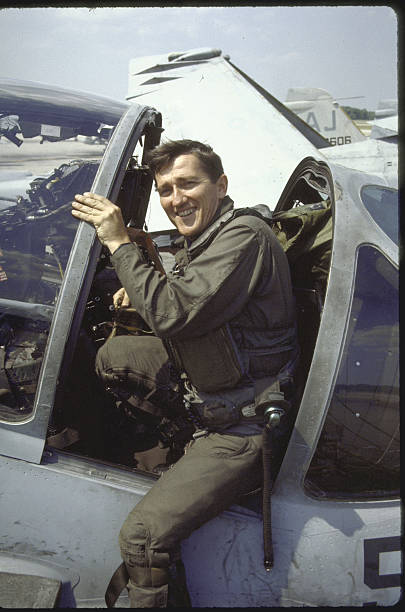
John Lehman (Secretary of Navy) posing beside attack plane & in cockpit after completing regulation training week as Naval Reserve commander at Oceana Naval Air Station. (Photo by Mark Meyer/Time & Life Pictures/)

Speaking of Ace, he illustrates another important point as well: Many of the Navy’s most skilled operators are also among its most well-educated and experienced in naval strategy, policy, and global fleet operations. Again, the trick is to identify these folks early on and develop them with alternating sea and shore tours and repeat tours in plans and policy billets so that they can get the necessary breadth and depth of experience once they reach high flag rank. Ace was a famous ship-driver and deception specialist at sea, but he also had had four tours in OP-06 (today’s N3/N5) before being promoted to flag (well before my time, incidentally), as well as tours as a student at both the Naval War College and the National War College. All that, plus his drive, brains and imagination, made him a formidable Navy leader. Hank Mustin –  the other famed mariner you mentioned – had a similar special background, including student tours at the Naval Postgraduate School and the Naval War College, a combat tour on the rivers of Vietnam, and several OPNAV tours in surface warfare planning and crafting CNO Zumwalt’s Project SIXTY – an ancestor of The Maritime Strategy. So the Navy has these men and women – with the right education, experience, aggressive mindset, and imagination. It’s up to the top leadership to develop their careers sensibly and move them quickly into the most demanding top positions, even if it means goring some sacred cows like cookie-cutter career patterns and “Buggins’s turn.”

Q: You described a “virtuous circle” that kept strategy current and evolving. As described in the book, it consisted of fleet exercises that fed into the work of key institutions like the Strategic Studies Group, the Center for Naval Analyses, the Naval War College, and others, who then informed new fleet exercises. Please discuss how this virtuous circle worked.

A: It worked in a number of ways, all essential. First of all, there were the formal linkages. For example, the Navy’s educated and experienced strategists in OP-603 crafted Maritime Strategy briefings that were used by OPNAV and the Secretariat to kick off the POM development cycle each year. Many OP-603 officers had had Naval War College or similar civilian educations that had taught them the principles of naval strategy. These experts also briefed their products to the CNOs and myself, to the Strategic Studies Group (SSG) and the professoriat at Newport, and to a host of others – in the other services, on the Hill and overseas, for example. They listened as much as they briefed, and brought useful new insights back with them to update and polish their briefings. Meanwhile, I was providing the essential political direction that was sorely needed to shift the Navy to a more aggressive posture, and my staff ensured that my speeches and other emanations found their way to OP-603, the SSG, and other homes to direct and influence the growing strategy and the 600-ship Navy program. It took a couple of years of this iterative process before the ever-changing and ever-improving slide decks could be converted to actual documents, but they eventually were. Having benefitted from all these inputs, they proved extraordinarily influential.

Meanwhile, the SSG used its freedom and high-level access to explore extensions, variants, and alternatives to facets of the strategy, and fed them to myself and the CNOs. Some then found their way into the next iteration of the strategy briefing. The fleet commanders – supported by their seagoing CNA operational analysts – debriefed their strategy-influenced exercises extensively, within the Pentagon and on the Hill. Programmers and budget-crafters thus heard firsthand how the strategy – and their programs – were faring forward at sea, facing off against Soviet Backfire regiments and submarines. And they learned what needed changing. Meanwhile once per year, the Naval War College convened a Global War Game to examine elements of the strategy. Players included SSG staff and fellows, Hill staffers, OP-603 strategists, Naval War College and Naval Postgraduate School professors, unified command reps and, of course, the fleets and others. They took back to their commands and offices and classrooms the insights they had gained from the games, and submitted recommendations to the gamers on what might be done better or different next year – and to OP-603 to revise their baseline. Overlaid on all of this were inputs from the Navy’s intelligence officers and CNA, which injected important and counter-intuitive “Red” views into the strategy concepts and media, and enabled the strategy to be further developed at various levels of classification.

Then too, The Maritime Strategy benefitted from the Navy’s rotation policies – when intelligently applied. Conceptualizers and practitioners swapped positions regularly. Examples abound: Ace Lyons went from running Ocean Venture and other Maritime Strategy exercises to serving as OP-06, responsible for updating the strategy briefings and documents, then on to the Pacific Fleet, to apply what he knew in the waters off Kamchatka and Vladivostok, through imaginative use of a revitalized and forward-operating Third Fleet. Hank Mustin likewise went from running imaginative exercises as COMSECONDFLT/ COMSTRKFLTLANT (“Mustin in the Fjords”) to OP-06. And it wasn’t only the flags: CAPT Larry Seaquist, for example, came down from the SSG to run the OP-603 strategy shop, then went on to command USS Iowa at sea in Maritime Strategy exercises, and then on to strategy staff positions on the Joint Staff and OSD. CDR Ray Conrad – one of the Navy’s pre-eminent NATO experts – moved from OP-603 to a destroyer command in which he “walked the talk” in frigid North Pacific exercises, and then moved on to NATO headquarters where he inculcated a generation of allied officers and civilians in the Maritime Strategy’s principles. He was joined there by Peter Swartz, with whom he had earlier worked in OP-603. Swartz subsequently was picked up by CJCS GEN Colin Powell as a Special Assistant during the Gulf War.

And so it went. By the end of the decade, the upper reaches of the Navy – and the Pentagon and the National Security Council Staff – were shot through with officers who had served in a variety of guises in developing and implementing the Strategy, and who also served as mentors to the follow-on generation.

Q: The Navy of 1980 was in many ways still suffering from a post-Vietnam War malaise and had to shift from a power projection focus toward sea control against a great-power adversary, while still maintaining full-spectrum competence. A similar problem exists today. What did it take to reset the Navy’s mindset and skills to meet this challenge?

A: Well, that’s not quite accurate for the 1980s, although it does square with CNO ADM Zumwalt’s views in the early 1970s. What we faced in the 80s was the need to plus-up and advance both sea control and power projection – and strategic deterrence, strategic sealift, and forward presence to boot. We needed more carriers and strike aircraft, more and better amphibs and landing craft, more attack submarines that could work under the ice, more prepositioning and sealift ships to get the Army, Air Force, and Marine Corps where they needed to go. Also, we needed to rapidly introduce into the fleet Tomahawk missiles, Aegis cruisers, Vertical Launching Systems (VLS), and a whole new family of strategic nuclear ballistic missile submarines. We had to do it all. We were up against the Soviet superpower, armed to the teeth and deployed worldwide. And not just their Navy, but the Red Army, Red Air Force, and Soviet allies and clients too.

What it took to reset the Navy’s mindset and skills were three things: 

(1) Development and promulgation of a global, forward, and aggressive Maritime Strategy that laid out what we needed to do and how and where we needed to do it, continually re-conceptualized, exercised, gamed, analyzed, discussed, and improved.

(2) A funded force goal of 600 ships, including 15 carrier battle groups, 4 battleship SAGs, 100 attack submarines, amphibious lift for a Marine Amphibious Force and a Marine Amphibious Brigade, and cruisers bristling with Tomahawks and Aegis.

(3) A vigorous campaign to drive and keep costs down, including restoring accountability and authority to officials, not bureaucracies, fixed price contracting, fostering competition, enforcing contract discipline, using common subsystems, technological innovation through block upgrades, terminating unproductive research and development programs, controlling gold-plating and design changes, and cutting bureaucratic layers.

Q: The United States has long been a maritime power. China, after millennia of focusing on continental power, is only recently but seriously focusing on developing its maritime power as a core component of its rise. Russia’s maritime power is a shadow of its Soviet past. What does history tell us about the value of maritime power for great powers and competition between them?

A: Great powers are not great powers without maritime power. And superpowers are not superpowers without maritime superiority. The United States – and, indeed, the entire world – has benefitted greatly from our acting as a superpower ever since World War II. That continues today. It would be a tragedy of the first order – for ourselves and all others—to allow our position as a superpower to slip. Central to maintaining superpower status, however, is maritime superiority. It is U.S. maritime superiority that guarantees freedom of the seas for the world’s commerce, connects us to our allies and innumerable interests around the world, and enables us to use the seas as a decisive global maneuver space, in peace and war.

In my six years in office, under President Reagan, America was spending almost six percent of our gross domestic product (GDP) on defense per year. That investment contributed mightily to our winning the Cold War. Today we are spending just a little over three percent. Given the plethora of challenges that Secretary of Defense Mattis laid out in his recent National Defense Strategy, it is difficult to understand how we will be able to continue to counter those challenges in the future, absent a deeper financial commitment from the American people and their representatives to maintain our maritime superiority and thus our status as the world’s essential superpower. It is the right and necessary thing to do, for ourselves and the world, and as the richest power on earth we can afford it. America can and should do this.

And that maritime superiority must be exercised worldwide and forward. Nelson beat Napoleon off Egypt and again off Spain, not off England. John Paul Jones fought the British off Yorkshire, not off New York. In the earliest and darkest days of World War II, we launched Army bombers from Navy carriers and bombed Tokyo. We won the Cold War at sea off the Kola, Kamchatka, Vladivostok, in the Eastern Med and under the Arctic ice, not off San Diego or Norfolk. Superpower maritime superiority demands forward operations “in harm’s way.” So we must be manned, trained, and equipped to fight and win globally and forward.

Q: Any final thoughts you would like to share?

A: I write this on Memorial Day. We can never forget those who sacrificed so much to bring us where we are in the world today. Sailors, Marines, Soldiers, Airmen, Coast Guardsmen, and civilian government workers and contractors have all given their lives to keep us strong, free, and prosperous. This includes some who died during the very exercises and operations I recounted in my book. They were critical to our winning the Cold War, and we must never forget them.

The Hon. John F. Lehman Jr. is Chairman of J.F. Lehman & Company, a private equity investment firm. He is a director of Ball Corporation, Verisk, Inc and EnerSys Corporation. Dr. Lehman was formerly an investment banker with PaineWebber Inc. Prior to joining PaineWebber, he served for six years as Secretary of the Navy. He was President of Abington Corporation between 1977 and 1981. He served 25 years in the naval reserve. He has served as staff member to Dr. Henry Kissinger on the National Security Council, as delegate to the Force Reductions Negotiations in Vienna and as Deputy Director of the U.S. Arms Control and Disarmament Agency. Dr. Lehman served as a member of the 9/11 Commission, and the National Defense Commission. Dr. Lehman holds a B.S. from St. Joseph’s University, a B.A. and M.A. from Cambridge University and a Ph.D. from the University of Pennsylvania. He is currently an Hon. Fellow of Gonville and Caius College, Cambridge University. Dr. Lehman has written numerous books, including On Seas of Glory, Command of the Seas, and Making War. He is Chairman of the Princess Grace Foundation USA and is a member of the Board of Overseers of the School of Engineering at the University of Pennsylvania.

Dmitry Filipoff is CIMSEC’s Director of Online Content. Contact him at Nextwar@cimsec.org.

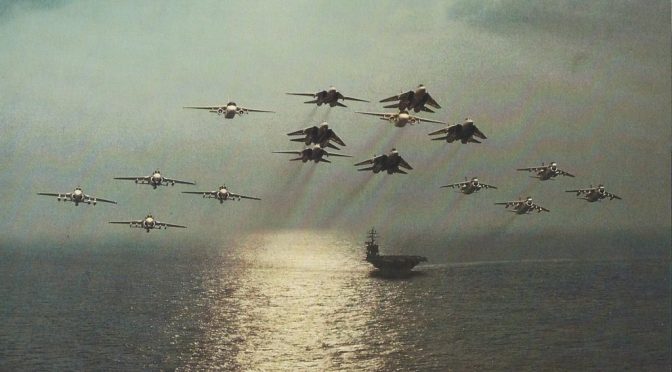
Featured Image: USS Nimitz (CVN-68) and part of Carrier Air Wing (CVW) 8: four A-6E Intruders, two S-3A Vikings, six F-14A Tomcats, and four A-7E Corsairs. Second half of 1984. (Newport News Shipbuilding photo)
The Nazi’s U-Boat Ace

By Christopher Nelson

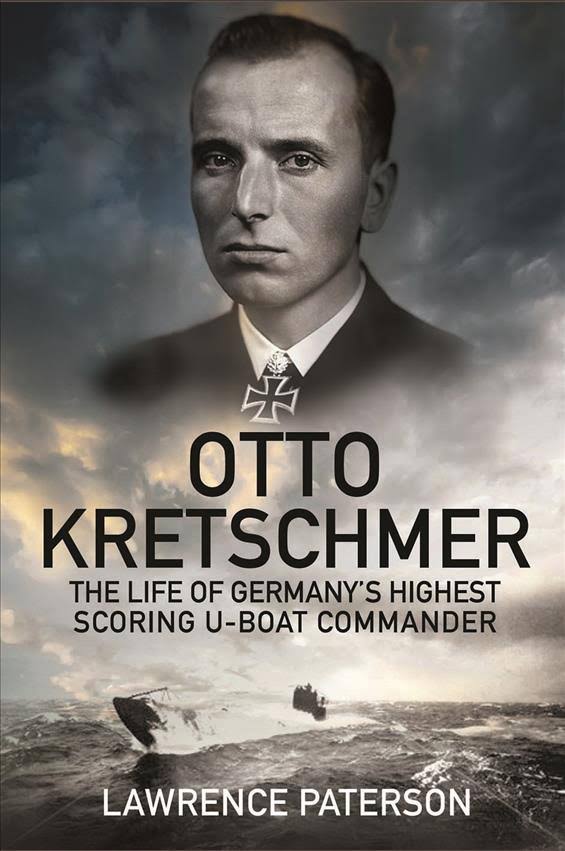
Author Larry Paterson joins us to discuss his new book, Otto Kretschmer: The Life of the Third Reich’s Highest Scoring U-Boat Commander

Nelson: Let’s start with you. You live in Italy, you’re a SCUBA instructor, a drummer for a heavy metal band, and you write books about naval history. I’ll admit, it is one of the more interesting author bios I’ve read on a book flap. So how did you end up writing books on naval history?

Paterson: It does seem to surprise people sometimes! Growing up in New Zealand, a lot of people we knew had served in Second World War and even the previous war. One of my grandfathers had gone ashore on the first day of Gallipoli in 1915 and then gone through the Somme, Passchendaele, and so on, while the other was ex-Royal Navy and Royal New Zealand Navy, and fought in the Mediterranean Sea, Atlantic, and Indian Oceans. So, the subject of military history was always around, and both of them taught me that it was never as simple as black and white, good and bad, when it came to warfare. Most people hated Germans, while both my grandfathers respected them. I suppose that my interest in the German side of Second World War stems from that.

I left New Zealand in 1988 to be a drummer in the UK (and to see Iron Maiden live because they kept canceling New Zealand tours), so found myself near most of the battlefields I had read about. I’ve been diving since I was a teenager, and I became an instructor, eventually running my own little operation in Brittany, France, which is littered with Kriegsmarine wrecks. The U-boat bunkers and Atlantic Wall are all still there and a friend of mine called Jon Gawne sent me a copy of the First U-Boat Flotilla’s War Diary, who were based in my area. The rest just seemed to come together after that really.   

Nelson: Your newest book is about one of the Nazi’s most successful U-Boat commanders. U-boats, I believe, are a subject in some of your other work. What is it about the German Navy of World War II, particularly U-boats, that fascinates you?

Paterson: I have studied – and continue to study –  all aspects of the Third Reich’s military machine, and specializing in the Kriegsmarine kind of came around by accident after receiving the War Diary and diving on a lot of Kriegsmarine wrecks. Of course, you can’t study one side of a military and political conflict in isolation, so Second World War warfare, in general, is fascinating. I’m glad I was able to know so many people that were actually there, because most are gone now.

Why am I fascinated with U-boats? I don’t honestly know. It’s an intensely interesting subject, as is the whole of the Wehrmacht. What motivated people to fight against such odds? I do not for one minute subscribe to the ‘all Germans were Nazis’ idea that people keep saying, as that provides purely political motivation as a driving factor. There were undoubtedly some like that, as there are now in overly nationalistic people, but in general, the Wehrmacht was made up of ordinary working people. Even the Waffen SS can’t be explained by running home to the ‘Nazi’ label. It was an extraordinary phenomenon, the military services of the Third Reich.

One of my all-time favorite historians Max Hastings writes very lucidly about it and claims, with (I believe) great validity, that the German forces were probably, as a whole and in general terms, the most militarily adept of the war. It’s hard to deny the fact though they were frequently led by chaotic orders, and with such finite resources and a regime despicable in its treatment of subjugated people (even their own) they were always bound to fail. This in no way denigrates other nations’ military. For example, I now live in Italy, a nation whose efforts in the Second World War are roundly mocked, and yet who had superb Special Forces, paratroopers, and torpedo bomber pilots. So…going back to your original question before I got sidetracked into the complexities of it all…why am I fascinated? I have no idea!      

Nelson: Who was Otto Kretschmer? Where does he sit in the ranking of other U-boat commanders when you refer to “scoring” in the subtitle of your book?

Paterson: Kretschmer was the most successful U-boat captain of the Second World War, and the term ‘scoring’ relates to the total tonnage of shipping that he sank while commander of both U23 and U99. It’s terminology that is frequently used in military books dealing with all branches of service, be it tank commanders, fighter pilots or U-boat skippers, but in reality, it is a rather glib way of putting it. Counting tonnage sunk was at the heart of Dönitz’s entire U-boat campaign which, in effect, was designed to sink more merchant shipping carrying capacity tonnage than could be replaced, thereby reducing the cargo carrying potential to Great Britain and correspondingly succeed in enforcing a blockade that could starve Britain into submission.

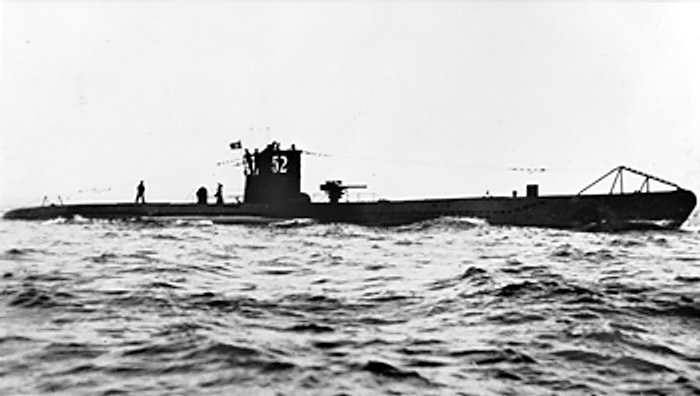
U-52, A Type VIIB German Submarine (Wikimedia Commons)

However, it has probably become a term that is used too freely in books that deal with the U-boat war. Every ship that was sunk was the home of those crewmen, and even those that went down with no casualties frequently involved a lot of fear, panic, the loss of belongings and even the stoppage of wages for many merchant seamen! Then there are the other ships that sank in flames with men killed and injured and frequently left to die. The other side of the coin is identical: U-boats being sunk with men trapped inside the hull and crushed by extreme pressure or dying through air starvation or the myriad other ways that killed three-quarters of the men of the U-boat service. As always, that is the reality of such a war, which can be somewhat ‘anesthetized’ by talking about a U-boat commander’s ‘score.’ Nevertheless, it is a quantifiable measure of military success, and Kretschmer ranks at the very top of that ‘league table.’ 

Having dived on many wrecks which are war graves, that moment gives you a sense of humility and gravity that I think is very important to remember. The same as standing at the cemetery near Omaha Beach. Truly sobering, and an important feeling for anybody who studies and writes about war to be aware of.

Nelson: What was the standard path for a German submariner to become a captain of their own boat? Did it differ greatly from the allies?

Paterson: Not particularly, though it accelerated greatly as the war dragged on and the ‘old guard’ were either posted ashore or lost in action. In the early stages, men enlisted as officer cadets, served as midshipmen, then junior officers before — if judged competent — given their own command. Often a training boat at first, though that morphed into a combat boat involved in training and trials before heading to the front. Kretschmer was amongst the ‘first wave’ of young captains, the men that served as his First Watch Officer amongst the ‘second wave’ and beyond that the entire process got quicker and quicker. Men were sometimes going to sea with little command experience, and with crews that had been drafted into the U-boats. The mythology of a force of volunteers is just that, a myth.     

Nelson: Did the Germans have better submarines than the allies? How quickly were the German’s able to innovate and field new submarines, and what types of submarines did Kretschmer serve on?

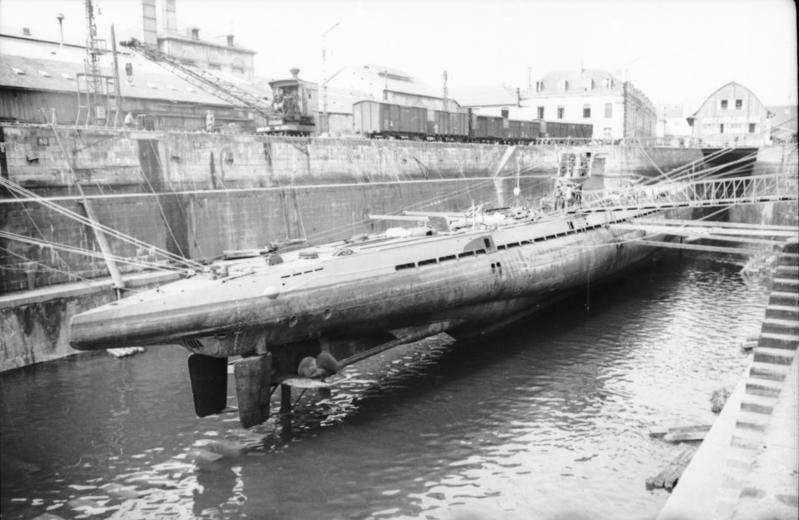
Paterson: Perhaps the Germans possessed better submarines in the early stages of the war. Certainly, the Type VIIB (like Kretschmer’s U99) was a finely-honed weapon, and the larger Type IX cruiser submarines well-suited to more distant operations. However, there hadn’t really been that much development between the wars and the types were reminiscent of those that served in the First World War. The Type II that Kretschmer started on a was a good coastal boat, but of limited endurance and weapon load. The Type VII was the backbone, particularly the later Type VIIC. These had excellent seakeeping qualities and a well-designed hull that gave it quite an extreme depth capability for a boat of its time. Creature comforts were few, but then that can be the story of the Wehrmacht. Conditions aboard a combat boat were difficult, particularly on a long voyage where living and working space was sacrificed for supplies, and yet people just dealt with it.

U-37, A type IXA U-Boat in Lorient (Wikimedia Commons)

As far as development after the war had begun, that proved a major stumbling block. Rather than create a completely new design, modifications to the existing frames were made so that by 1943 the boats were virtually obsolete. The Germans failed in the cypher war most spectacularly when they refused to concede the possibility of compromised codes and were frequently one step behind Allied countermeasures such as radar, the Leigh Light, and air superiority.

The finite resources that Germany waged war with sealed the fate of the entire Wehrmacht; the Luftwaffe declining quickly and unable to counterbalance Allied material and tactical strength. Things like the snorkel helped briefly but were never going to swing the tide of war, much as the German attack that became the Battle of the Bulge was never going to alter the outcome of the war but gave the Allies a momentary fright. The development of the Walther propulsion system never came to fruition and the Type XXI electro-boats would have had to come into service in early 1944 to make any appreciable difference, and even then it would be doubtful. They too were deeply flawed in their construction, due to the dislocation caused by Allied bombing. The Type XXIII electro-boat saw service and was an effective machine, but carried only two torpedoes! The same loadout as a Seehund midget submarine — and not really of much greater endurance. 

So, before the war had gone past 1941, the Germans were reacting to Allied technological and tactical advances rather than leading the field. Dönitz never had enough boats in action during the early years when they could have made a difference. He wanted 300 before war was declared — he started with 57. By the time he had the numbers, the U-boat war was already lost and the ‘greats’ who had captained the ‘Ace’ boats were gone.    

Nelson: I was fascinated to learn in your book that the Germans had their own problems with torpedoes. I’ve read about our own challenges with U.S. torpedoes in the early part of the war, but I wasn’t aware of the Kriegsmarine’s troubles. What exactly was the problem with German torpedo performance? Kretschmer experienced some of this, did he not?

Paterson: German torpedo performance was abysmal. It wasn’t just the Kriegsmarine that suffered this problem, it was the same with aerial torpedoes for the short-lived naval air arm and the Luftwaffe. A lack of rigorous testing and technological development rendered them next to useless. It was really a combination of things that damned the German torpedoes.

First, while the contact detonator that had been used during the First World War was simple and reliable, it had been redesigned between the wars to an overly complex series of levers that were supposed to provide a wider angle in which the trigger would fire, but in effect did not work. It was tested only twice before being issued, and even those tests did not go well.

So, U-boat skippers were advised to use magnetic pistols. However, not only did Allied degaussing provide a problem for them but geographical variations in the earth’s magnetic fields rendered them inoperable — as in Norwegian waters during 1940.

However, even if they had worked, the triggering of a magnetic detonator required the torpedo to pass beneath a ship’s keel at a set depth and German torpedo depth keeping was compromised by a leaking balance chamber. Original tests of the torpedo’s depth keeping had been done at ordinary atmospheric pressure, but the internal pressure of a U-boat differed, and this differential leaked into the chamber and caused torpedoes to run deeper than set and thereby not triggering. This problem wasn’t remedied until the end of 1942! Instead, commanders began to rely on pattern running and, later, acoustic-homing torpedoes that could be countered.      

Nelson: Another thing I read with fascination – again, because it is something that can plague any Joint Force today – and that’s Germany’s challenge of coordination between the navy and the air force. You write that on one deployment, the Luftwaffe attacks Kretschmer’s boat. What happened? And was this a problem throughout the entire war?

Paterson: Yes, indeed…For an effective military, they were extremely ineffective sometimes! The relationship between the Luftwaffe and Kriegsmarine was frequently strained; a situation that stemmed from the very top as Göring was vainglorious and boastful and despised the ‘cold’ and aristocratic Raeder. It is true that Raeder did not really value the U-boat service as much as his ‘big ships’ but he also failed to understand the potential of aircraft as an offensive maritime weapon, soon demonstrated by most other countries’ navies. Göring, on the other hand, wanted tight control of everything that flew in Germany and frequently engaged in the kind of petty political maneuvering that was rife within the upper echelons of the Wehrmacht and Third Reich as a whole, often at the expense of operational necessity.

Kretschmer’s U-boat was actually attacked by a floatplane from the Scharnhorst after it strayed unintentionally into a prescribed search and attack radius given by the battleship’s reconnaissance aircraft who were guarding against British submarines. But there were more deadly examples of the lack of cooperation between the two services such as when two destroyers were sunk as a result of a German bomber attack. That example was a combination of faulty Luftwaffe navigation — most of their crews not properly trained in nautical navigation — and lack of communication between Luftwaffe and Kriegsmarine commands as neither was made fully aware of the other’s movements in time to brief operational crews.   

It’s an interesting topic in itself and I’m actually working on a book about Luftwaffe maritime forces, a long and complicated story! The reality is that although aircraft like the Focke Wulf 200 Condor are (in)famous for their role in the Battle of the Atlantic, they were woefully unprepared, unsuitable, undertrained and underequipped. Thankfully, for the Allies! Proper air and sea coordination between better led, better equipped, and better-supplied forces could have been devastating.   

Nelson: How good was Kretschmer as a tactician? Did he prefer the surfaced night attack? If so, why?

Paterson: He was very good. He was unwilling to follow the norm and obey whatever operational protocol was being promoted. Like many of his generation of U-boat commanders, he thought outside the box and always had two overriding motivating factors: combat effectiveness (i.e. results) and crew welfare. He would not jeopardize his boat or crew without a good chance of survival and success.

His preference was to penetrate the convoy body itself, at night and on the surface. Once submerged, the U-boat was slow, detectable, and unwieldy. On the surface it was fast, well-armed, maneuverable and hard to see as he would sail with the hull trimmed as low as feasible providing very little silhouette. It took great concentration, quick thinking, efficient lookouts, and a good torpedo officer as the First Watch Officer actually aimed and fired while surfaced as the captain maintained the ‘overall look.’

He was not the only commander to adhere to the ‘one torpedo, one ship’ mantra, as Erich Topp and Günther Prien did, to name but two. But their methods were far more successful than the prevailing operational advice of firing a spread of torpedoes from outside the convoy escort screen and hoping for one or two hits.   

Nelson: He’s eventually captured and taken into captivity in Canada. Yet he almost escaped. Can you briefly tell us about that episode?

Paterson: He was captured and did end up in Canada. The escape attempt was relatively far-fetched as it required traversing a great distance to be picked up by a U-boat off the Canadian coast. Not impossible, though as it transpired, not workable either. The tunnel was discovered, although one man did make it over the wire in a separate attempt and managed to reach the area of the rendezvous. Of course, the Allies had discovered the entire plan, and were waiting to trap the U-boat, U536, that had been sent to rescue them. The U-boat skipper sensed the trap and retreated, and the single escaped prisoner was caught. In fact, U536 was soon sunk thereafter as well.  

Nelson: Kretschmer was never a fervid Nazi, was he? What did he do after the war?

Paterson: He wasn’t a particularly politically motivated man, though he was undoubtedly nationalistic. His roots were in Silesia so he would have felt the fractious relationship with Poland resulting from the previous war and was probably in favor of the Third Reich’s stated ambition of reuniting and reinvigorating Germany. But, I don’t want to guess at his thoughts on the matter, as it is indeed a complex area which is also, of course, very sensitive for people. After the war he returned to Germany, studied maritime law, and then joined the navy once more. That in itself would have been a difficult time for such veterans as the Germans attempted to distance themselves from militarism, and yet some of their senior officers were ex-Wehrmacht and extremely militaristic. Tricky.    

Nelson: Das Boot (the film) – underrated or overrated?

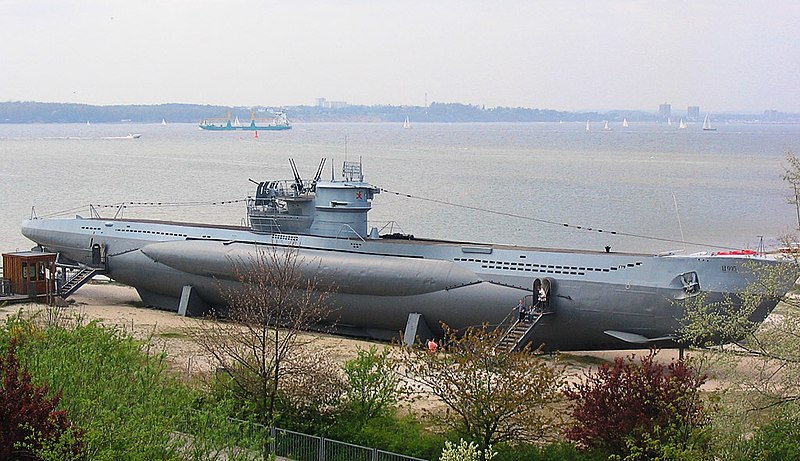
Paterson: Brilliant. I actually prefer it to the book. One of my stock questions for U-boat veterans was what they thought of the film. In general, they were all very positive, give or take a few scenes. Many did not like the bar scene and said they would have little respect for officers who passed out and vomited on themselves. Others said there was too much noise from the crew during depth charging, but in general, the consensus was that it is as close to reality as any film has been. Personally, I think it is a superb film in every way. I was lucky enough to get a private tour of the film sets that are at the Bavarian Film Studios and open to the public, and it is remarkably like being inside U995 at Kiel. On the other hand, the movie U571 is junk of the worst kind, in every possible way, apart from a great U-boat model!

U995 in Kiel (Wikimedia Commons)

Nelson: Das Boot (the book) – underrated or overrated?

Paterson: Great book but prefer the film. More U-boat men that I spoke to don’t like the book so much. Sometimes that is because they could not stand the author Buchheim, an ex-propaganda reporter during Second World War. A man that certainly divided opinion amongst the veterans I have spoken to!

Nelson: Who, in your opinion, are some of the other naval historians writing about the German Navy during World War II whose work you admire?

Paterson: There are a lot, I’m not really sure who to name. As I’ve said before, I really like the work done by Max Hastings, though his books are not specifically naval at all. But his studies of aspects of the entire war are truly excellent. He has a refreshing ability to apply clarity and reasoned argument to subjects that are often considered done and unalterable. His views are forthright, accurate, and well presented and I find his books inspirational as he is not afraid to approach subjects as they actually are, rather than repeating the ‘party line.’ It’s hard to make a voluminous study of the war so readable, but he does it. In a similar way that Cornelius Ryan used to with such great books as A Bridge Too Far and so on. Also, Chester Wilmot’s The Struggle For Europe takes some beating. My favorite authors about U-boats? Very hard to say…maybe Jak Mallmann Showell’s older books, Jordan Vause, Eberhard Rössler… I would find it easier to say which books I don’t like…but I’m not going to! 

Nelson: This is great. Thank you.

New Zealander Lawrence Paterson has written fifteen books related to the Wehrmacht during the Second World War – predominantly concerning German naval operations – and one about his time on the road as part of the Blaze Bayley band. He is working on two more books which mark something of a new direction; the first being a history of Luftwaffe maritime operations, and the other detailing Operation Colossus, the first British parachute drop of the war. He is also a scuba diving instructor after having first learnt to dive in New Zealand in 1984, and a touring heavy metal drummer, a career that he started at about the same time! He now lives in Puglia, Italy, with his wife, three cats, two drum kits and a library of books.

Christopher Nelson is a U.S. naval officer stationed at the U.S. Pacific Fleet Headquarters in Pearl Harbor, Hawaii. He is a graduate of the U.S. Naval War College and the Maritime Advanced Warfighting School in Newport, RI. He is a regular contributor to CIMSEC. The questions above are his own and do not reflect those of the U.S. Department of Defense or the U.S. Navy.

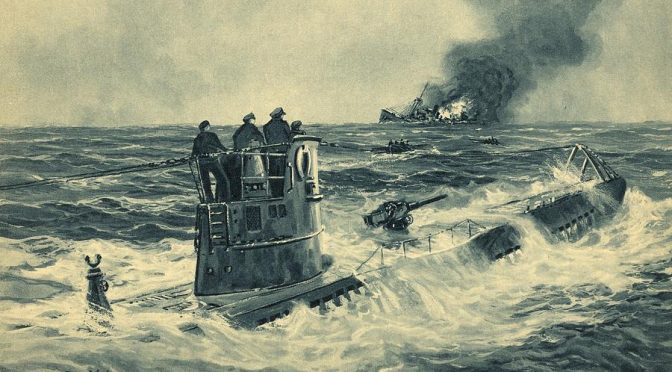
Featured Image: German U-boat attack, World War II. Artwork of German sailors on the conning tower of a U-boat (submarine) that has surfaced after sinking a British cargo ship during World War II (1939-1945). This 1941 painting is by German artist Adolf Bock (1890-1968).

The American Wolf Packs: A Case Study in Wartime Adaptation

This article originally featured on Joint Force Quarterly and is republished with permission. Read it in its original form here.

By Dr. F.G. Hoffman

To paraphrase an often ridiculed comment made by former Secretary of Defense Donald Rumsfeld, you go to war with the joint force you have, not necessarily the joint force you need. While some critics found the quip off base, this is actually a well-grounded historical reality. As one scholar has stressed, “War invariably throws up challenges that require states and their militaries to adapt. Indeed, it is virtually impossible for states and militaries to anticipate all of the problems they will face in war, however much they try to do so.”1 To succeed, most military organizations have to adapt in some way, whether in terms of doctrine, structure, weapons, or tasks.

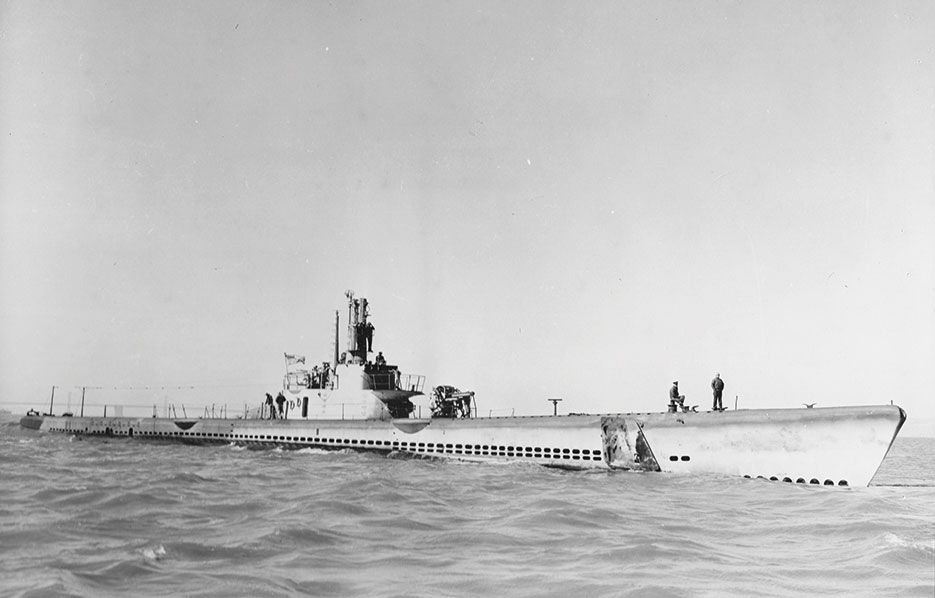
USS Steelhead (SS-280) refitted with 5.25-inch deck gun, April 10, 1945 (retouched by wartime censors) (U.S. Navy)USS Steelhead (SS-280) refitted with 5.25-inch deck gun, April 10, 1945 (retouched by wartime censors) (U.S. Navy)

The Joint Staff’s assessment of the last decade of war recognizes this and suggests that U.S. forces can improve upon their capacity to adapt.2 In particular, that assessment calls for a reinvigoration of lessons learned and shared best practices. But there is much more to truly learning lessons than documenting and sharing experiences immediately after a conflict. If we require an adaptive joint force for the next war, we need a common understanding of what generates rapid learning and adaptability.

The naval Services recently recognized the importance of adaptation. The latest maritime strategy, signed by the leadership of the U.S. Marine Corps, Navy, and Coast Guard, defines the need to create “a true learning competency,” including “realistic simulation and live, virtual, and constructive scenarios before our people deploy.”3 History teaches that learning does not stop once the fleet deploys and that a true learning competency is based not only on games, drills, and simulations but also on a culture that accepts learning and adaptation as part of war.

This lesson is ably demonstrated by the Navy’s refinement of wolf pack tactics during the Pacific campaign of World War II. The tragic story of defects in U.S. torpedoes is well known, but the Navy’s reluctant adoption of the German U-boat tactics against convoys is not often studied.4 There are lessons in this case study for our joint warfighting community.

The success of the U.S. submarine force in the Pacific is a familiar story. The Sailors of the submarine fleet comprised just 2 percent of the total of U.S. naval manpower, but their boats accounted for 55 percent of all Japanese shipping losses in the war. The 1,300 ships lost included 20 major naval combatants (8 carriers, 1 battleship, and 11 cruisers). Japanese shipping lost 5.5 million tons of cargo, with U.S. submarines accounting for almost 5 million tons.5 This exceeded the total sunk by the Navy’s surface vessels, its carriers, and the U.S. Army Air Corps bombers combined. By August 1944, the Japanese merchant marine was in tatters and unable to support the needs of the civilian economy.6 The submarine campaign (aided by other joint means) thoroughly crippled the Japanese economy.7

This critical contribution was not foreseen during the vaunted war games held in the Naval War College’s Sims Hall or during the annual fleet exercises in the decades preceding the war. Perhaps the Navy hoped to ambush some Japanese navy ships, but the damage to Japanese sea lines of communication was barely studied and never gamed, much less practiced. A blockade employing surface and submarine forces was supposed to be the culminating phase of War Plan Orange, the strategic plan for the Pacific, but it was never expected to be the opening component of U.S. strategy. Submarines were to be used as scouts to identify the enemy’s battle fleet so the modern dreadnoughts and carrier task forces could attack. Alfred Thayer Mahan had eschewed war against commerce, or guerre de course, in his lectures, and his ghost haunted the Navy’s plans for “decisive battles.”8

The postwar assessment from inside the submarine community was telling: “Neither by training nor indoctrination was the U.S. Submarine Force readied for unrestricted warfare.”9 Rather than supporting a campaign of cataclysmic salvos by battleships or opposing battle lines of carrier groups, theirs was a war of attrition enabled by continuous learning and adaptation to create the competencies needed for ultimate success. This learning was not confined to material fixes and technical improvements. The story of the torpedo deficiencies that plagued the fleet in the first 18 months of the Pacific war has been told repeatedly, but the development of the Navy’s own wolf pack tactics is not as familiar a tale. Yet this became one of the key adaptations that enabled the Silent Service to wreak such havoc upon the Japanese war effort. Ironically, a Navy that dismissed commerce raiding, and invested little intellectual effort in studying it, proved ruthlessly effective at pursuing it.10

Learning Culture

One of the Navy’s secret weapons in the interwar era was its learning culture, part of which was Newport’s rigorous education program coupled with war games and simulations. The interaction between the Naval War College and the fleet served to cycle innovative ideas among theorists, strategists, and operators. A tight process of research, strategic concepts, operational simulations, and exercises linked innovative ideas with the realities of naval warfare. The Navy’s Fleet Exercises (FLEXs) were a combination of training and experimentation in innovative tactics and technologies.11 Framed against a clear and explicit operational problem, these FLEXs were conducted under unscripted conditions with opposing sides. Rules were established for evaluating performance and effectiveness, and umpires were assigned to regulate the contest and gauge success at these once-a-year evolutions.

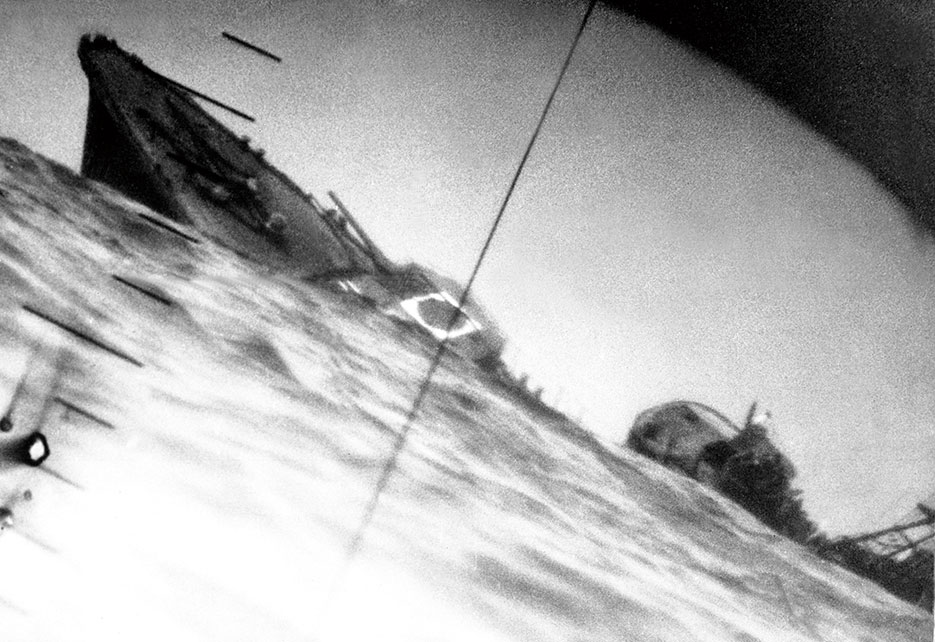
Torpedoed Japanese destroyer IJN Yamakaze photographed through periscope of USS Nautilus, June 25, 1942 (U.S. Navy)Torpedoed Japanese destroyer IJN Yamakaze photographed through periscope of USS Nautilus, June 25, 1942 (U.S. Navy)

Conceptually framed by war games, these exercises became the “enforcers of strategic realism.”12 They provided the Navy’s operational leaders with a realistic laboratory to test steel ships at sea instead of cardboard markers on the floor at Sims Hall. Unlike so many “live” exercises today, these were remarkably free-play, unscripted battle experiments. The fleet’s performance was rigorously explored, critiqued, and ultimately refined by the men who would actually implement War Plan Orange.13 Both the games and exercises “provided a medium that facilitated the transmission of lessons learned, nurtured organizational memory and reinforced the Navy’s organizational ethos.”14 Brutally candid postexercise critiques occurred in open forums in which junior and senior officers examined moves and countermoves. These reflected the Navy’s culture of tackling operational problems in an intellectual, honest, and transparent manner. The Navy benefited from the low-cost “failures” from these exercises.15

Limitations of Peacetime

The exercises, however, had peacetime artificialities that reduced realism and retarded the development of the submarine. These severely limited Navy submarine offensive operations in the early part of World War II.16 With extensive naval aviation participation, the exercises convinced the fleet that submarines were easily found from the air. Thus, the importance of avoiding detection, either from the air or in approaches, became paramount. In the run-up to the war, the Asiatic Squadron commander threatened the relief of submarine commanders if their periscopes were even sighted in exercises or drills.17 This belief in the need for extreme stealth led to the development of and reliance on submerged attack techniques that required commanders to identify and attack targets from under water based entirely on sound bearings. Given the quality of sound detection and sonar technologies of the time, this was a precariously limited tactic of dubious effectiveness.

Technological limitations restricted the Navy’s appreciation for what the submarine could do. The Navy’s operational plans were dominated by high-speed carrier groups and battleships operating at no less than 17 to 20 knots for extended periods, but the Navy’s interwar boats could not keep pace. They were capable of 12 knots on the surface and half that when submerged. They would be far in the wake of the fleet during extended operations. This inadvertently promoted plans to use submarines for more independent operations, which eventually became the mode employed against Japanese commercial shipping in the opening years of the war.

Though they were a highly valuable source of insights at the fleet and campaign levels, the FLEXs had not enforced operational or tactical realism for the submarine crews at the tactical/procedural level. In fact, a generation of crews never heard a live torpedo detonated, proving a perfect match for a generation of torpedoes that were never tested.18 Nor did the Navy practice night attacks in peacetime, although it was quite evident well before Pearl Harbor that German night surface attacks were effective.19 Worse, operating at night was deemed unsafe, and thus night training was overlooked before the war.20 The submarine community’s official history found that the “lack of night experience saddled the American submariners entering the war with a heavy cargo of unsolved combat problems.”21 Once the war began, however, the old tactics had to be quickly discarded, and new attack techniques had to be learned in contact.

Overall, while invaluable for exploring naval aviation’s growing capability, the exercises induced conservative tactics and risk avoidance in the submarine world that were at odds with what the Navy would eventually need in the Pacific. As one Sailor-scholar observed:

Submarines were to be confined to service as scouts and “ambushers.” They were placed under restrictive operating conditions when exercising with surface ships. Years of neglect led to the erosion of tactical expertise and the “calculated recklessness” needed in a successful submarine commander. In its place emerged a pandemic of excessive cautiousness, which spread from the operational realm into the psychology of the submarine community.22

Unrestricted Warfare

Ultimately, as conflict began to look likely, with a correlation of forces not in America’s favor, students and strategists at Newport began to study the use of the submarine’s offensive striking power by attacking Japan’s merchant marine.23 During the spring semester of 1939, strategists argued for the establishment of “war zones” around the fleet upon commencement of hostilities. These areas would be a type of diplomatic exclusion zone, ostensibly to support fleet defense during war. However, the proponents’ intent was to conduct unrestricted warfare aimed at Japan’s long and vulnerable shipping lines.24

Yet there was a gap between what submarines could do and what the emergent plans to conduct unrestricted warfare were calling for. Well before Pearl Harbor, the Navy’s senior leaders understood that unrestricted warfare was a strategic necessity. However, the implications of this change were not acted upon at lower levels in the Navy in the brief era before Pearl Harbor. Doctrine, training, and ample working torpedoes were all lacking. This created the conditions for operational adaptation under fire later.

The Campaign

Due to an insufficient number of boats, limited doctrine, and faulty torpedoes, the submarine force could not claim great success. By the end of 1942, the Pacific Fleet had sent out 350 patrols. Postwar analyses credit these patrols with 180 ships sunk, with a total of 725,000 tons of cargo.25 Although this sounds impressive, over the course of the year, the Navy had sunk the same amount as the German U-boats had in just 2 months in the North Atlantic. This level of achievement was against a Japanese navy that had limited antisubmarine warfare (ASW) expertise and little in the way of radar. The damage inflicted had no impact on Japan’s import of critical resources and commodities, and the campaign could not be seen as a success. The war’s senior submariner, Vice Admiral Charles Lockwood, admitted that the submarine force was operating below its potential contribution.26

Tasked with the ruthless elimination of Japanese shipping, the Pacific Fleet was not producing results fast enough. Some of this shortfall was the result of faulty weapons, and some was attributed to the cautious doctrine of the interwar era. Chief of Naval Operations Admiral Ernest King directed a new approach. He wrote to Admiral Chester Nimitz at Pearl Harbor on April 1, 1943, noting that “effectiveness of operations and availability of submarines indicate desirability, even necessity, to form a tactical group of 4 to 6 submarines trained and indoctrinated in coordinated action for operations such as now set up in Solomons, to be stationed singly or in groups in enemy ship approaches to critical areas.”27 Nimitz immediately directed the implementation of King’s suggestion.28 Interestingly, despite his experience combating U-boats in the Atlantic and protecting the vital sea lines of communication to Europe, King was still oriented toward the employment of submarines against Japanese naval combatants. But in line with the pre–Pearl Harbor vision of unrestricted warfare, the U.S. submarine force was following a strategy of attrition against Tokyo’s merchant shipping, and the Navy submarine force continued to emphasize individual patrols and independent command. They had not been successful in dealing with Japanese warships in critical battles such as Midway. King apparently believed that if they could be properly “trained and indoctrinated in coordinated action,” this shortcoming might be rectified.

At the same time, King was fully engaged with responding to German Kriegsmarine wolf pack tactics, or Rudeltaktik. He was painfully aware how effective they were and was being strongly encouraged by both President Franklin D. Roosevelt and Prime Minister Winston Churchill to adopt defensive measures since the U-boats critically impaired Great Britain’s war effort.29 Moreover, King was aware that the U.S. Navy was not generating the same aggregate tonnage results as the German navy, and he may have concluded that emulating the Germans could produce better results.30 Lockwood, the commander of Submarine Force Pacific (COMSUBPAC), was certainly well aware of the comparisons; in mid-1942, he wrote that “Germans getting 3 ships a day, Pac not getting one ship.”31 Furthermore, his predecessor as COMSUBPAC issued a five-page summary of German wolf pack tactics via a widely distributed bulletin in January 1943.32

Comparisons between theaters may have driven King to propose the shift, but he may have also detected trends in Japanese ASW that would eventually weaken U.S. submarine effectiveness if changes were not put in place. The operational and tactical context facing the submarine force was increasing in complexity. By 1943, Japanese convoys were becoming larger, more organized, and better protected. The escort command was employing more airplanes and newer techniques for detection and attack.

As Lockwood noted in his memoir, collective action was not unknown to the submarine force. Before the war, experiments had attempted simultaneous attacks by several submarines, but communications between boats were not good enough to ensure safety in peacetime operations. These tactics were cursorily explored late in 1941 but were abandoned due to fears of blue-on-blue incidents and limited communications capabilities.33

Now, however, conditions were different, radar had been perfected, high-frequency radio phones were installed, and communications were vastly improved.34 Coordination could be achieved, but the American submariners had little practice at it. The submarine force would have to investigate new tactics on the fly in the midst of the war. (Somewhat ironically, King called for emulating German submarine tactics just as that force was passing the apex of its operational effectiveness. May 1943 was considered the blackest month for the U-boats in the cruel Battle of the Atlantic.35)

King’s message eliminated debate, but the Pacific submarine fleet took its time to interpret fully the doctrinal and tactical implications of the new approach. As a result, the U.S. Navy did not employ the same approach as the Germans. U-boat wolf packs in the Kriegsmarine were ad hoc and fluid. When Admiral Karl Dönitz received intelligence about the location and character of a convoy, he would direct a number of boats to converge on an area where he expected the convoy to be. He would thus direct the assembly of the wolf pack and coordinate its attack from long distance. There was no on-scene commander or collective attack.36 The U-boats were simply sharks, swarming and attacking at will, or swarming to designated areas when directed. The Atlantic convoys were rather large (30 or more ships), encompassing a relatively wide area. A convergence could bring together as many as a dozen boats swarming around a big convoy but without any on-scene battle management.37 A single U-boat would be easily driven off, but a pack would not be. They would stalk the merchant shipping and pick off the slowest quarry every time.

King’s intervention about collective action proved timely. The Japanese navy did eventually enhance its ASW efforts, employing land-based surveillance, better radars, and more coordination. As the U.S. boats were drawing closer to Japan’s home islands, their targets were hugging closer to shallow waters and staying within air coverage. This raised the risk that American submarines would be identified and attacked.

Concerted action by the submarines could offset these changes in the operating context. Singular attacks would draw all the attention of an escort, ensuring that the U.S. boats were driven deep and away from their wounded targets. Coordination by multiple boats would allow continuous pressure on a Japanese shipping convoy and increase the strangulation that Lockwood was aiming to achieve. Multiple threats would distract the convoy’s protective screen and generate more opportunities out of each convoy that was found.

The U.S. Navy did not embrace German wolf pack doctrine or terminology; the accepted term for the tactic was coordinated attack group (CAG). An innovative submariner, Captain Charles “Swede” Momsen, developed the tactics and commanded the initial U.S. wolf pack in the early fall of 1943.38 American CAGs would initially have a senior commander on scene, but it would not be one of the boat’s skippers, as Lockwood desired to have his older division commanders get wartime experience on boats.39

The investigative phase was exhaustive and deliberate over several months. Experienced submarine commanders, not staff officers, developed the required tactics and communication techniques. In an echo of prewar Newport, discussions evolved into small war games on the floor of a converted hotel, which conveniently had a chessboard floor of black and white tiles. The officers who would conduct these patrols developed their own doctrine and tactics.40 The staff and prospective boat captains tested various ways both to scout for targets and then to assemble into a fighting force once a convoy was detected. War games, drills, and ultimately at-sea trials were conducted to refine a formal doctrine. Momsen drilled his captains in tactics, planning to have three boats attack successively—one boat making the first attack on a convoy, then acting as a trailer while the other two attacked alternately on either flank. He also developed a simple code for use on the new “Talk Between Ships” system so that boats could communicate with each other without being detected or intercepted by the Japanese.

The American approach rejected the rigid, centralized theater command and ad hoc tactical structure of the Germans.41 Consistent with its culture, the U.S. Navy took the opposite approach. CAGs comprised three to four boats under a common tactical commander who was present on scene. Unlike the Germans, these attack groups trained and deployed together as a distinctive element. They patrolled in a designated area under a senior commander and followed a generic attack plan. Other than intelligence regarding potential target convoys, orders came from the senior tactical commander on scene and not from the fleet commander. This tactical doctrine called for successive rather than swarming attacks.42 Subsequently scholars have been critical of these deliberate and sequential attack tactics, which negated surprise and simplified the job of Japanese escorts.43

Strangely, there seems to have been little urgency behind COMSUBPAC’s doctrinal and organizational adaptation. This top-down direction from afar (from Admiral King) appears to have been resisted until met with bottom-up evidence derived from experienced skippers. In the records of this period, Lockwood appears to be guilty of delaying tactics, but captains John “Babe” Brown and Swede Momsen convinced him to have “a change of heart.”44

Lockwood and his team at Submarine Force Pacific did not merely take King’s directive and implement it. He and the commander of U.S. submarines based in Australia, Rear Admiral Ralph Christie, were not in favor of the change in tactics. In his memoirs, Lockwood noted in a single sentence that he was directed to conduct wolf pack tactics by King. He did apply groups of four to six boats in his packs. And while he did develop the doctrine King tasked them to create, he did not apply it as King desired, against military shipping or approaches to critical operational areas. Instead, Lockwood deployed the CAGs to his ruthless campaign of attrition against Japanese commerce. The developmental process was entirely consistent with bottom-up adaptation. Lockwood was permitted to develop the command and control process, tactics, and training program on his own. Centralized command from Pearl Harbor was rejected, which reflected both the traditional Navy culture of command responsibility and autonomy and Lockwood’s appreciation for how Allied direction finding and signals intelligence in the Atlantic were fed by Dönitz’s centralized control and extensive communications.

Even after his change of heart, Lockwood and the submarine force took their time to work out the required doctrine and tactics in an intensive investigatory phase. The first attack group, comprised of the Cero (SS-225), Shad (SS-235), and Grayback (SS-208), was not formed until the summer of 1943. Momsen, who had never been on a combat patrol, was the commodore and rode in Cero. The pack finished its preparations and deployed from Pearl Harbor in late September on its combat patrol from Midway on October 1, 1943, exactly 6 months to the day from King’s message. This was hardly rapid adaptation, given the lessons from both the German success story in the Atlantic and the lack of success in the Pacific.

The initial cruise was deemed a success. Momsen’s CAG arrived in the East China Sea on October 6, 1943. It made a single collective attack on a convoy and was credited with sinking five Japanese ships for 88,000 tons and damaging eight more with a gross tonnage of 63,000 tons. While this met the measures of success that Lockwood wanted, the commanders involved were less than enthusiastic. The comments from the participating captains were generally mixed, with many indicating they would prefer to hunt alone rather than as a member of a group. They believed that the problems of communication were technologically unsolvable and that the risk of fratricide was unavoidable. Moreover, commanders preferred operating and attacking alone—consistent with the Navy’s traditional culture and the community’s enduring preference for independent action (and the rewards that came with it). Momsen, perhaps reflecting an appreciation of the complementing role high-level intelligence could play, recommended centralized command from Pearl Harbor rather than an on-the-scene commander, something Lockwood immediately overruled.45 But various packs were planned and began training. Ingrained conservatism and fear of firing on a friendly vessel framed the emerging tactics. These in practice emphasized “cooperative search” over collective attack.46

Figure 1.

The need to explore innovative tactics was directed from the top, but the Navy leadership was patient in letting local leaders figure out the “how.” The validity of coordinated action grew on commanders such as Lockwood. Whatever reservations they might have held, the American wolf packs continued during the remainder of the year and were a common tactic during 1944. Unlike Dönitz’s Operation Paukenschlag(Drumbeat) in the Atlantic in early 1943, Lockwood’s force began to win the war of attrition in the Pacific. The success was likely due to the combination of finally having defect-free torpedoes and employing new search tactics. But as Lockwood noted in a tactical bulletin, for the first time, tonnage totals between the German effort and that of the American submarine force “now compare favorably.”47

One dramatic case gives an example of how effective CAGs could be. In late July 1944, Commander Lawson “Red” Ramage commanded the USS Parche, part of a wolf pack labeled “Park’s Pirates” after Captain Lew Parks, also aboard the Parche. The Pirates included the USS Steelhead, skippered by Lieutenant Commander Dave Whechel, and the USS Hammerhead, whose skipper was Commander Jack Martin. After a patch of bad weather and poor radio reporting, the Pirates found their quarry. Although frustrated by miscommunications, Martin identified a large Japanese convoy on the evening of July 30. Although it was a long shot, Parks ordered Ramage to give chase, and for 8 hours the Parche chased down the fleeing convoy.

What happened next was a maritime melee. Ramage surfaced inside the convoy in the dark and began a methodical attack, slicing in and around the larger tankers and setting up shots that ranged from only 500 to 800 yards. Ramage’s boat passed within 50 feet of one Japanese corvette on an opposite tack that could not depress its guns enough to strike it.48 The Parche was almost rammed once and was subjected to fire from numerous vessels as it raised havoc with the 17 merchant ships and 6 escorts of Convoy MI-11.

Within 34 minutes, Ramage fired 19 torpedoes and got at least 14 hits. Lockwood credited Parche with 4 ships sunk and 34,000 tons, while the Steelhead got credit for 2 ships of 14,000 tons. Ramage’s epic night surface attack earned him the Medal of Honor.49 His daring rampage was a perfect example of a loosely coordinated attack relying on individual initiative (not unlike a classic U-boat commander’s approach in its execution) rather than formal tactics or a set piece approach that failed to overwhelm the escorts.50

After mid-1944, there were no major adaptations in submarine warfare during the remainder of the Pacific campaign. Ships, doctrine, training, and weapons were highly effective. In a sense, the U.S. submarine war did not truly begin until the CAGs went to sea in late 1943. Until then, it “had been a learning period, a time of testing, of weeding out, of fixing defects in weapons, strategy, and tactics, of waiting for sufficient numbers of submarines and workable torpedoes.”51 Yet within a few months, Japan’s economic lifeline was in tatters.

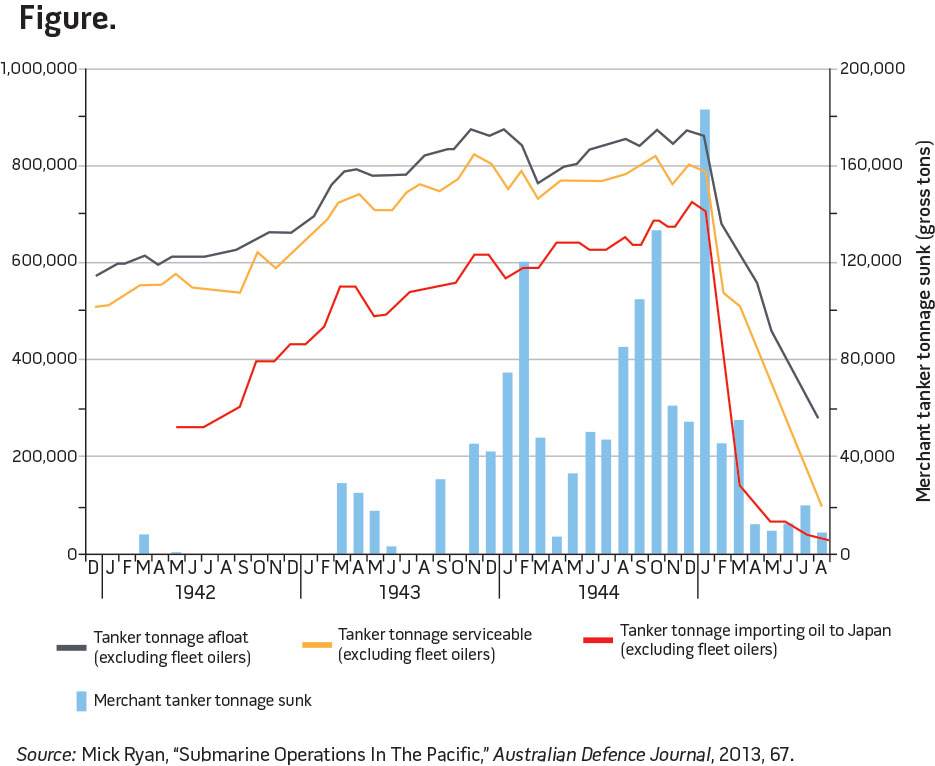
Exploiting an increased number of boats and the shorter patrol distances afforded by advanced bases in Guam and Saipan, U.S. patrol numbers increased by 50 percent to 520 patrols in 1944. These patrols fired over 6,000 torpedoes, which had become both functional and plentiful. They sank over 600 ships for nearly 3 million tons of shipping. They reduced Japan’s critical imports by 36 percent and cut the merchant fleet in half (from 4.1 million to 2 million tons). While Japanese oil tanker production increased, oil imports dropped severely (see figure).52

Lockwood took wolf packs to a new level in 1945. Now a firmly convinced advocate, he carefully planned an operation with nine boats, operating in three wolf packs, that would traverse the heavily mined entrances of the Sea of Japan.53 The development of an early version of mine-detecting FM sonar allowed boats to detect mines at 700 yards and bypass them. Submarines could now enter mined waters such as the Straits of Tsushima surreptitiously and operate in areas the Japanese mistakenly believed were secure, cutting off the crucial foodstuffs and coal shipments transiting from Korea to Japan. Lockwood’s staff meticulously planned this operation, partially motivated by his desire to avenge the loss of the heroic Commander Dudley Morton and the USS Wahoo in the northern Sea of Japan in fall 1943. Each of the U.S. boats was fitted with FM sonar, and the crews received detailed training in its use. Once they had made the passage and were at their assigned stations in the Sea of Japan, the submarines, working in groups of three, were scheduled to begin a timed attack throughout the area of operations at sunset on June 9. This collective action group was unique in that, instead of gaining an advantage by concentrating their combat power on a single target or convoy, the Hellcats concentrated as a group for their entrance through the narrow Tsushima and then disaggregated. Their simultaneous but distributed attack was designed to shock the Japanese and overwhelm their ability to respond.

In Operation Barney, nine boats led by Captain Earl Hydeman successfully surprised the Japanese and sank 27 vessels in their backyard.54 But it cost Lockwood one of his own boats, as the USS Bonefishunder Lieutenant Commander Lawrence Edge was lost with all hands.55

Without King’s top-down intervention, the adaptation to the use of CAGs may not have been initiated. The success of its adoption, however, was a function of letting local commanders develop their own doctrine. By the end of the war, Lockwood was more enthusiastic about the prospects of the American wolf packs. A total of 65 different wolf packs deployed from Hawaii, and additional groups patrolled out of Australia as well.56 Ironically, they never focused on King’s original intent of serving as ambushers against naval combatants. Instead, the packs remained true to Lockwood’s guerre de course against Japan’s economy.

Cross-Domain Synergies

The historical requirement to adapt in the future may be complicated by the evolving character of modern conflict and the expectation that the joint force will need to gain and exploit cross-domain synergies. The Chairman of the Joint Chiefs of Staff Capstone Concept for Joint Operations (CCJO) is predicated upon creating cross-domain synergies to overcome operational challenges. Another element is to seize, retain, and exploit the initiative in time and across domains.57 Some of this synergy will no doubt be gained in peacetime through concerted efforts to improve interoperability. But if cross-domain synergy is to “become a core operating concept,” as suggested by former Chairman General Martin Dempsey (Ret.) in the CCJO, then we need to also expect to seek out new synergies in wartime.58 Here again, the submarine case study—with its numerous technological adaptations (surface and air search radars, sonars, and improved torpedoes) and cooperation with signals intelligence and the Army Air Corps—is evidence that trans-domain learning is both necessary and feasible, even in combat conditions.

This raises a set of critical questions about joint adaptation in tomorrow’s wars. In future conflicts, how prepared will the joint community be to establish test units and create synergistic combinations on the fly? How prepared are we to actively adapt “under fire” as a joint warfighting community? Do we have the right learning mechanisms to create, harvest, and exploit lessons horizontally across the joint force during combat operations? Such horizontal learning has been crucial in successful examples of adaptation in the past.59 Based on this case study, and several others conducted in a formal case study of U.S. military operations, the following recommendations are offered.

Leadership Development. Senior officers should understand how enhanced operational performance is tied to collaborative and open command climates in which junior commanders can be creative, and plans and tactics can be challenged or altered. The importance of mission command should not excuse commanders from oversight or learning, from providing support, or from recognizing good or bad practices for absorption into praxis by other units. Professional military education (PME) programs should develop and promote leaders who remain flexible, question existing paradigms, and can work within teams of diverse backgrounds to generate collaboration and greater creativity. Case studies in military adaptation should be part of PME strategic leadership syllabi.

Cultural Flexibility over Doctrinal Compliance. Joint force commanders should instill cultures and command climates that embrace collaborative and creative problem-solving and display a tolerance for free or critical thinking. Cultures that are controlling or doctrinally dogmatic or that reinforce conformity should not be expected to be adaptive. Commanders should learn how to create climates in which ideas and the advocates of new ideas are stimulated rather than simply tolerated. If institutions are to be successful over the long haul or adaptive in adverse circumstances, promoting imaginative thinking and adaptation is a must.

Learning Mechanisms. Commanders should be prepared to use operations assessments to allow themselves to interpret the many signals and forms of feedback that occur in combat situations. If needed, they may elect to create special action teams or exploit formalized learning teams to identify, capture, and harvest examples of successful adaptation. These teams or units might have to be created to experiment with new tactics or technologies. Commanders should codify a standard process to collect lessons from current operations for rapid horizontal sharing. They have to be prepared to translate insights laterally into modified praxis to operational forces and not just institutionalize these lessons for future campaigns via postconflict changes in doctrine, organization, or education.

Chief Torpedo man Donald E. Walters receives Bronze Star for service aboard USS Parche (SS-384) (U.S. Navy/Darryl L. Baker)Chief Torpedo man Donald E. Walters receives Bronze Star for service aboard USS Parche (SS-384) (U.S. Navy/Darryl L. Baker)

Dissemination. Commanders should invest time in ensuring that lessons and best practices are shared widely and horizontally in real time to enhance performance and are not just loaded into formal information systems. The Israel Defense Forces are exploring practices that make commanders more conscious about recognizing changes in the operating environment from either their own forces or the opponent.60 There may be something to practicing learning in this way and making it the responsibility of a commander instead of a special staff officer.

Conclusion

As Ovid suggested long ago, one can learn from one’s enemies. The U.S. Navy certainly did. The Service did not just emulate the Kriegsmarine; it improved upon its doctrine with tailored tactics and better command and control capabilities. To do so, Navy submarine leaders had to hold some of their own mental models in suspended animation and experiment in theater with alternative concepts. Lessons were not simply harvested from existing patrols and combat experience and plugged into a Joint Universal Lessons Learned System, as is done today. The submarine force had to carve out the resources, staff, and time to investigate new methods in a holistic way from concept to war games to training against live ships.

Because the eventual role of the Silent Service was not anticipated with great foresight, the Americans had to learn while fighting. They accomplished this with great effectiveness, learning and adapting their tactics, training, and techniques. But the ultimate victory was not due entirely to the strategic planning of War Plan Orange. Some success must be credited to the adaptation of the intrepid submarine community.

Ultimately, the U.S. Navy’s superior organizational learning capacity, while at times painfully slow, was brought to bear. The Navy dominated the seas by the end of World War II, and there is much credit to assign to the strategies developed and tested at the Naval War College and the Fleet Exercises of the interwar era. However, a nod must also be given to the Navy’s learning culture of the submarine force during the war. The Service’s wartime “organizational learning dominance” was as critical as the foresight in the interwar period.61 To meet future demands successfully, the ability of our joint force to rapidly create new knowledge and disseminate changes in tactics, doctrine, and hardware will face the same test. 

Dr. F.G. Hoffman is a Senior Research Fellow in the Center for Strategic Research, Institute for National Strategic Studies, at the National Defense University. The author would like to thank Dr. T.X. Hammes, Dr. Williamson Murray, and Colonel Pat Garrett, USMC (Ret.), for input on this article.

Notes

Theo Farrell, Military Adaptation in Afghanistan, ed. Theo Farrell, Frans Osinga, and James Russell (Stanford: Stanford University Press, 2012), 18.

Joint and Coalition Operational Analysis, Decade of War: Enduring Lessons from the Past Decade of Operations, vol. 1 (Suffolk, VA: The Joint Staff, June 15, 2012).

A Cooperative Strategy for 21st Century Seapower (Washington, DC: Department of the Navy, March 2015), 31.

For a good overview, see Anthony Newpower, Iron Men and Tin Fish: The Race to Build a Better Torpedo During World War II (Westport, CT: Praeger, 2006).

Theodore Roscoe, United States Submarine Operations in World War II (Annapolis, MD: U.S. Naval Institute, 1949), 479.

Wilfred Jay Holmes, Undersea Victory: The Influence of Submarine Operations on the War in the Pacific (Garden City, NY: Doubleday, 1966), 351.

James M. Scott, “America’s Undersea War on Shipping,” Naval History, December 2014, 18–26.

Ian W. Toll, Pacific Crucible: War at Sea in the Pacific, 1941–1942 (New York: Norton, 2012), xxxiv.

Roscoe, 18.

10 Joel Ira Holwitt, “Unrestricted Submarine Victory: The U.S. Submarine Campaign against Japan,” in Commerce Raiding: Historical Case Studies, 1755–2009, ed. Bruce A. Elleman and S.C.M. Paine (Newport, RI: Naval War College Press, October 2013).

11 Albert A. Nofi, To Train the Fleet for War: The U.S. Navy Fleet Problems, 1923–1940 (Newport, RI: Naval War College Press, 2010).

12 Michael Vlahos, “Wargaming, an Enforcer of Strategic Realism,” Naval War College Review (March–April 1986), 7.

13 Nofi, 271.

14 Craig C. Felker, Testing American Sea Power: U.S. Navy Strategic Exercises, 1923–1940 (College Station: Texas A&M University Press, 2007), 6.

15 Stephen Peter Rosen, Winning the Next War: Innovation and the Modern Military (Ithaca, NY: Cornell University Press, 1994), 75.

16 Nofi, 307.

17 Holmes, 47.

18 Clay Blair, Silent Victory: The U.S. Submarine War Against Japan (New York: Lippincott, 1975), 41; Ronald H. Spector, Eagle Against the SunThe American War with Japan (New York: Free Press, 1985), 484.

19 Charles A. Lockwood, Sink ’Em All: Submarine Warfare in the Pacific (New York: Dutton, 1951), 52.

20 I.J. Galantin, Take Her Deep! A Submarine Against Japan in World War II (Annapolis, MD: Naval Institute Press, 2007), 18.

21 Roscoe, 57.

22 Felker, 62.

23 See J.E. Talbott, “Weapons Development, War Planning, and Policy: The U.S. Navy and the Submarine, 1917–1941,” Naval War College Review (May–June 1984), 53–71; Spector, 54–68, 478–480.

24 Joel Ira Holwitt, “Execute Against Japan”: Freedom-of-the-Seas, the U.S. Navy, Fleet Submarines, and the U.S. Decision to Conduct Unrestricted Warfare, 1919–1941 (College Station: Texas A&M University Press, 2009), 479.

25 Blair, Silent Victory, 334–345.

26 Lockwood, Sink ’Em All, 27.

27 Steven Trent Smith, Wolf Pack: The American Submarine Strategy That Helped Defeat Japan (Hoboken, NJ: John Wiley, 2003), 50; Lockwood, Sink ’Em All, 87.

28 Smith, 51.

29 Ibid.

30 Galantin, 126.

31 Library of Congress, Lockwood Papers, box 12, folder 63, letter, Lockwood to Admiral Leary, July 11, 1942.

32 National Archives and Records Administration (NARA), RG 313/A16 3 (1), Commander, Submarine Forces Pacific, Tactical Bulletin #1-43, January 2, 1943.

33 Roscoe, 240.

34 Charles A. Lockwood and Hans Christian Adamson, Hellcats of the Sea (New York: Bantam, 1988), 88.

35 Peter Padfield, War Beneath the Sea: Submarine Conflict During World War II (New York: Wiley & Sons, 1995), 308–336; Michael Gannon, Black May: The Epic Story of the Allies’ Defeat of the German U-boats in May 1943 (New York: HarperCollins, 1998).

36 Blair, Silent Victory, 360.

37 Clay Blair, The Hunters, 1939–1942 (New York: Random House, 1998); Michael Gannon, Operation DrumbeatThe Dramatic True Story of Germany’s First U-Boat Attacks Along the American Coast in World War II (New York: Harper & Row, 1990), 89–90.

38 Blair, Silent Victory, 511–516; Roscoe, 240.

39 Library of Congress, Lockwood Papers, box 13, folder 69, letter, Lockwood to Nimitz, May 4, 1943.

40 Galantin, 124–129.

41 Padfield, 85–130.

42 Galantin, 129.

43 Padfield, 404–405.

44 Blair, Silent Victory, 479–480.

45 Roscoe, 241.

46 Ibid., 341.

47 NARA, RG 38, Naval Command Files, box 357, Commander, Submarine Forces Pacific, Tactical Bulletin #6-43, November 22, 1943.

48 Stephen L. Moore, Battle Surface: Lawson “Red” Ramage and the War Patrols of the USS Parche (Annapolis, MD: Naval Institute Press, 2011), 116.

49 Ibid., 110–116.

50 Padfield, 433. On the engagement, see Moore, 101–118. See also War Patrol Report #2, August 1944, available at <http://issuu.com/hnsa/docs/ss-384_parche>.

51 Blair, Silent Victory, 524.

52 Ibid., 791–793; Roscoe, 432–433.

53 The operation is covered in detail in Peter Sasgen, Hellcats: The Epic Story of World War II’s Most Daring Submarine Raid (New York: Caliber, 2010).

54 Holmes, 459–461.

55 NARA, RG 38, Naval Command Files, box 358, “Operation Barney” in Submarine Bulletin II, no. 3 (September 1945), 10–16.

56 See the list at <www.valoratsea.com/wolfpacks.htm>.

57 “Chairman Releases Plan to Build Joint Force 2020,” new release, September 28, 2012, available at <www.defense.gov/news/newsarticle.aspx?id=118043>.

58 Cross-domain synergy is a key concept in joint concepts such as the Joint Operational Access Concept and the Chairman’s Concept for Joint Operations. See Capstone Concept for Joint Operations, Joint Force 2020 (Washington, DC: The Joint Staff, September 10, 2012), 13.

59 Robert T. Foley, “A Case Study in Horizontal Military Innovation: The German Army, 1916–1918,” Journal of Strategic Studies 35, no. 6 (December 2012), 799–827.

60 Raphael D. Marcus, “Military Innovation and Tactical Adaptation in the Israel-Hizbollah Conflict: The Institutionalization of Lesson-Learning in the IDF,” Journal of Strategic Studies 38, no. 4 (2014), 1–29.

61 R. Evan Ellis, “Organizational Learning Dominance,” Comparative Strategy 18, no. 2 (Summer 1999), 191–202.

Featured Image: USS Cuttlefish submerging. (Official USN photo # 80-G-K-3348)

The Forgotten Texas Navy: Heroes from the Gulf of Mexico

By LT Jason Lancaster, USN

 “It is no exaggeration to say that without the Texas Navy there probably would have been no Lone Star State, and possibly, the state of Texas would still be a part of Mexico.”

 – Brigadier General Theodore Roosevelt Jr.

Texan Independence and the First Texas Navy

Despite their integral part in the creation, defense, and maintenance of the Republic of Texas, today, the Texas Navy is a footnote in modern history. Mexican invasions that never happened and gunboat diplomacy criticized so heavily by President Houston destroyed the reputation of the Navy and erased their history from public memory.

In 1835, Texas’ population was small, rural, and dispersed across a vast territorial expanse. There was no industrial base to speak of; Texas imported everything by sea. Galveston Island, on the upper coast, was the most important city and port in Texas, followed by Velasco on the Brazos River, and Indianola on Matagorda Bay. Texas exported timber and cotton but imported everything else. To lose the ports would mean the destruction of the republic and the death knell of the Anglo-Texan dream.   

With the start of the Texas Revolution, Texans formed a provisional government and declared independence on March 2nd, 1836. Despite a provisional government primarily composed of farmers, ranchers, frontiersmen, and lawyers, some of the government’s first acts issued Letters of Marques to ship owners and laid the foundations for a navy. Officials debated how generous to make the terms for privateers, but viewed privateering as a temporary measure to protect the lifeline to New Orleans and fight the Mexican Navy while the provisional government created a regular navy.

With privateers guarding the coast, the hunt for ships began and eventually four ships were found. The flagship of the new navy was the 18-gun brig Independence, a former U.S. Revenue Cutter. The other ships were the Invincible, an eight-gun Baltimore slave ship, the Brutus, a 10-gun schooner, and the six-gun schooner Liberty, a former Texas privateer.1 The squadron quickly cleared the Gulf of Mexican ships. Following the major Texan defeats at the Alamo and Goliad, the navy shielded the Texan coast from invasion and prevented the Mexicans from using the Texan coast for resupply, forcing Mexican logistics to come overland from Matamoros and Laredo instead of landing supplies and men at Copano Bay in southern Texas.

The Texas Navy of the revolution was short lived. Texas won independence at the battle of San Jacinto. The Texas army captured Mexican President, General Antonio Lopez de Santa Ana and forced him to recognize Texas’ independence and withdrawal Mexican soldiers from Texas at the Treaty of Velasco. Despite the treaty, the two nations continued to spar at sea. In 1837, a numerically superior Mexican fleet attacked the Texas ships near Galveston Bay. The Mexican fleet captured the Independence, while the Brutus ran aground on a sandbar in Galveston Harbor and broke up in a storm. The Texas Navy was gone. Under President Sam Houston, there was no drive to procure replacements. Without a navy, the eight ships of the Mexican Navy were free to harass commerce and cut Texas off from New Orleans commerce. Fortunately for Texas, a diplomatic row between France and Mexico over the treatment of French citizens’ pastry shops resulted in France sending a large fleet to protect its interests. The French captured the Mexican navy and demolished the fortress at Vera Cruz. The Mexican naval threat had been eliminated… at least temporarily.

Republic of Texas Politics

From the beginning of Anglo settlement in Texas, there had been a faction desiring annexation into the United States. Annexation was a highly popular idea in revolutionary and republican Texas. However, there was a second party that believed Texas should be independent. This faction believed that Texas could be the greatest power on the North American continent, and should expand to the Pacific Ocean. American immigrants such as Mirabeau Lamar carried Manifest Destiny to Texas and dreamt that Texas could rival the United States in power.

In Texas, presidents could not serve consecutive terms, so after President Houston’s first term expired December 1, 1838, Mirabeau Buonaparte Lamar became president of the Republic of Texas. President Lamar’s vision for Texas was as expansive and glorious as his name would suggest. He believed in Texas’ own manifest destiny. Lamar’s policies as president reflected his belief in the republic. He sent military and trade expeditions to conquer Santa Fe and gain control of the overland trade routes to California, rebuilt the navy, and created alliances with rebelling Mexican provinces.

The Texas Navy was reborn. New warships were constructed in Baltimore, Maryland. Instead of enterprising merchant sailors, Texas searched for talented young American naval officers bored by slow promotion and the dull existence of the peacetime navy. Texas found Lieutenant Edwin Ward Moore to command the squadron with the title of Commodore and the rank of Post Captain.  

Former President and now Congressman Houston ridiculed these policies and accused Lamar of entangling Texas in foreign disputes irrelevant to the republic. Congressman Houston did not think Lamar should squander money on expansionist schemes, but save money and wait until the United States annexed Texas.

One of Lamar’s most controversial policies included interference with Mexican domestic politics. In the 1840s, Mexico possessed two major political philosophies: the Centralists, who favored a strong central government typically led by dictators such as General Santa Anna, and the Federalists, typically found in the extremities of Mexico on the Yucatan Peninsula and on the border with Texas. These states felt threatened by the strong central government. Their livelihoods were based primarily on commerce with foreign countries and any threat to international commerce threatened their livelihoods. The Centralists placed high tariffs on imported goods to support Mexican industrialization. The high tariffs affected the merchants in the Yucatan provinces and along the Rio Grande, who frequently rebelled against the Central Government. Both regions proclaimed themselves republics, the Republic of the Rio Grande centered on the now Texas city of Laredo, while the Republic of the Yucatan comprised the provinces of Tabasco, Campeche, Yucatan, and Quintana Roo. Both of the new republics asked for Texan support but only one republic was successful. President Lamar went on to conclude treaties of friendship with the Yucatecos. The Yucatecos offered to pay for the Texas Navy if it was employed on the Yucatan Coast. The only aid for the Republic of the Rio Grande was an unofficial army of filibusters formed in Texas, in support of the fledgling republic.

Lithograph in Huber, 1856. (Wikimedia Commons)

While serving as a Texas Congressman in between presidential terms Houston opposed almost everything that Lamar had done, and Houston’s political following constituted its own political party. Under his leadership, the congress disbanded the army and ignored issuing commissions for naval officers. For three years, the navy sailed without any official documents stating their legitimacy.2

President Lamar’s expansionist mindset was not without precedent. In the middle President Houston’s first term in July 1837, the Texas Navy under the command of Captain Thompson claimed the island of Cozumel, in the words of Captain Thompson, the “star spangled banner [referring to the Texas flag] was raised to a height of forty-five feet with acclamations both from inhabitants and our little patriotic band.”3 In addition to the island of Cozumel, the navy took possession of the Arcas Islands, a small island chain in the Gulf of Mexico. The Arcas islands proved a valuable halfway point between Galveston, the Yucatan, and Vera Cruz.  Only 250 miles separated them from Vera Cruz, while it was 623 miles from Galveston to Vera Cruz, or 789 miles from New Orleans.4 The Texans used these uninhabited islands as a rendezvous, recreational area, and supply base. The central position of the Arcas Islands allowed the Texans an easier time of blockading ports and intercepting Mexico’s commerce.

The Texas Navy used this advanced position to interdict Mexican trade and the navy seized British and American merchantmen carrying weapons and military supplies to Mexico. Often times these countries ignored their own pasts and demanded compensation from the fledgling republic. Similarly to how during the Napoleonic Wars the Royal Navy captured neutral ships with cargos bound to France, the Texas Navy was defending Texas from similar Mexican aggression and could therefore intercept neutral ships. Several times the Texas Navy captured vessels like the U.S. brig Pocket bound to Mexico with weapons and gunpowder hidden in barrels of flour. Houston cited occurrences such as these as examples of Texas Navy lawlessness and a  primary reason for the dissolution of the navy.

President Lamar sent expeditions to Santa Fe and other places claimed by Texas and Mexico. The Santa Fe expedition’s goal was to bring the city of Santa Fe under the jurisdiction of Texas. Santa Fe was a valuable trading center in the southwest. This expedition crossed several hundred miles of unexplored terrain to reach Santa Fe, but they lost all of their supplies, and were forced to surrender to the Mexican garrison of a village outside Santa Fe after encountering inhabitants resistant to the idea of becoming Texan. The prisoners were marched to Mexico City. The Santa Fe expedition, along with several others, taxed the resources of the republic. Arms, food, and accoutrements cost money and Texas could not raise the funds to pay for it because the government lacked the power of direct taxation. It was incredibly difficult to raise the means to make Manifest Destiny a reality. Instead of money, soldiers were paid in land bounties. The financial cost of empire proved to be the downfall of the Republic of Texas.

Recognition

The last act of President Jackson recognized Texas independence. However, this did not guarantee protection. On September 25, 1839, France became the first European power to recognize Texas signing a “Treaty of Amity, Navigation, and Commerce” with France. Trade did not guarantee protection. From 1836 until the annexation process began in 1844, Texans had to maintain their Independence by force. A navy is an expensive tool. But, when properly used, and properly supported, is well worth the investment. According to Captain A.T. Mahan, the “influence of the government should make itself felt, to build up for the nation a navy, which, if not capable of reaching distant countries, shall at least be able to keep clear the approaches to its own.”5 The close proximity of the Texas coast to the Mexican coast, combined with the relative poverty of both national governments, allowed two small naval forces to operate in the Gulf. Both navies combined never equaled more than fifteen men of war. Often times, they could never put more than two or three to sea at one time. The Texas Navy’s primary mission was to protect the independence of Texas, done through the blockading of the main Atlantic ports of Mexico.

The blockades strangled the commerce of Mexico, and forced British diplomatic recognition of Texas, followed quickly by Belgium and Holland. In 1840, the Mexicans were still recovering from the French assault in 1838. They had no navy to defend their shores from the Texans; however, they quickly and desperately searched for one. The Mexicans sought complete dominance over the western Gulf, and ordered two new steam ships of war. In addition to these, they found, armed, and commissioned several sailings ships.  

Mexican shipbuilding projects frightened Galvestonians. The Texas Navy was ill-used by President Houston. His hesitancy to spend money on maintenance, pay, and supplies caused the ships’ material condition to deteriorate and the crews to go unpaid. Her officers received pay only three times in as many years.

Mexico postured threateningly toward conquest of the Yucatan and then Texas, causing hysteria in Texas, and the hysteria increased because the navy was stuck in New Orleans without money to recruit crews, pay its debts, or maintain the ships. The navy did not even need Texan taxes, just President Houston’s support for the Yucatecos, who had been subsidizing the fleet for two years. Commodore Moore had operated continuously on the Mexican coast, blockading enemy ports, extracting ransom money from them, and disrupting trade with Europe. Houston simply had to allow subsidies to continue, as well as make periodic expenditures toward the upkeep of the navy in dry dock and refitting.

President Houston’s Militia Navy   

On the few occasions Houston desired the navy’s use, his orders for them were entirely improper for both the size and nature of the fleet vis-à-vis the opposing force. Houston’s experiences as a soldier led him to believe the best way to protect Galveston was to have the navy moored in port as a fleet-in-being. Following Houston’s orders meant the navy could be blockaded in Galveston by a superior force and rendered useless, similar to what had happened to the Brutus and the Invincible in the first navy during Houston’s last presidency.

There was a great debate on the measures necessary to protect the republic. President Houston had great experience with the use of militias on land, and believed that a naval militia would be an inexpensive and viable option for the fledgling republic. President Houston favored militias on land and sea to save money. However, a naval militia cannot accomplish the same objectives as a standing naval force commensurate with protecting Texas commerce. Sea control is the goal of a navy. The Texas Navy’s mission was to protect Texas’ international commerce, while disrupting the Mexican commerce by interdicting trade, and destroying or defeating the enemy’s fleet.

The use of militia ships proved to be complete and utter folly. The Englishman William Bollaert served as a volunteer “waister” aboard the steamer Lafitte, one of three militia ships operating out of Galveston. President Houston sent the militia squadron to interdict a rumored Mexican invasion fleet. The cruise was a complete fiasco, with the ships luckily failing in their mission to intercept the enemy force. The Lafitte did capture one small prize, but poor discipline and lack of naval training proved the ineffectiveness of a militia fleet. Mahan said that the best way for a fleet to protect a port was “drawing the enemy forces away from shores through offensive action on the high seas or forcing them to concentrate against a powerful if inferior force.”6 President Houston repeatedly defied common sense naval strategy; luckily, his defiance did not cost the life of the Republic.

President Houston and the Navy    

President Houston’s handling of naval affairs is incredibly controversial. Why was President Houston so belligerent toward his own navy? There are perceived reasons for Houston’s antipathy. The first Secretary of the Navy, Robert Potter proposed dismissing Sam Houston from his post as commander-in-chief after the battle of San Jacinto. Secretary Potter had opposed his appointment to the post to begin with.7 In addition to these actions in the wake of San Jacinto, Houston’s great victory, Secretary Potter had ordered the first Texas navy on a cruise forbidden by Houston, and then joined the cruise himself. Perhaps a part of the answer is that Secretary Potter’s actions had caused Houston to associate the navy with his disgust for Secretary Potter. When Houston was a member of the Texas Senate, he led his large faction in opposition to all large financial projects, including the navy.

(Sloop-of-war Austin, Republic of Texas Navy, in the Battle of Campeche.
Painting, San Jacinto Museum of History)

In 1842, Houston sent three naval commissioners to New Orleans where the fleet had been stuck for lack of funds, to order the fleet to return to Galveston, and for Moore to relinquish command to the next senior officer. Moore, alerted by Yucateco friends of the eminent fall of Campeche, persuaded Commissioner Morgan to allow him to engage the Mexican fleet and attempt to relieve Campeche, lest the Mexicans invade Galveston next. Commissioner Morgan concurred, and they proceeded to Campeche. Houston was outraged. He declared Moore a pirate, and asked the “naval powers of Christendom” to “seize… and bring them into the port of Galveston.”8  Another example of Houston’s continued anti-Moore stance comes from a speech he made after annexation in the United States Senate where spoke, “that miserable Commodore Moore… who would fall by his own poison, or be strangled by his own venom…  He, like a bloated maggot, can only live in his own corruption.”9 The Writings of Sam Houston, volume VI; contain a 32-page harangue of Moore’s actions as commodore. Houston successfully prevented Commodore Moore and the other Texas Naval Officers from receiving commissions in the United States Navy after Annexation. Houston won his feud, killing all memorials to the navy as well as pensions and land bounties to her sailors.

The Battle of Campeche

In 1843, before Moore was declared a pirate, he set sail to do battle with a greatly superior foe. The Mexican fleet consisted of two modern steam ships of war, officered and manned by Britons. In addition to these two steamers, the Mexicans kept four or five sailing ships blockading Campeche. Moore headed for Campeche with his two ships the Austin and the Wharton. After a long and brutal siege, the citizens of Campeche were preparing to capitulate, when in the distance they spied the Texan ships. They broke off negotiations with the Centralists, and cheered the approaching ships. The newly arrived Texans had a difficult task to accomplish. Outnumbered three to one, they sailed out of Campeche to meet the adversary. The Mexican ships refused to engage the Texans and continually withdrew in the face of the Texans, fighting a running battle with them.

The Campeche Campaign, 1843, Meed, pg 2. (Texas State Historical Association, Austin)

Eventually, the Texans were compelled to break off their actions in defense of their allies in Campeche and return to Galveston, not by enemy action, but betrayal at home. President Houston had declared his own Navy to be pirates and outlaws. Commodore Moore received a copy of Houston’s piracy declaration in Campeche, and was forced to return to Galveston. Moore had no desire to risk his men and ships to the consequences of piracy charges if captured by the Mexicans. Despite President Houston’s declaration of the navy as pirates, Commodore Moore’s squadron returned as heroes, the sheriff refused to arrest him; balls were thrown in honor of him and his officers.

Annexation

There were unconfirmed reports that President Jackson had sent his young protégé Sam Houston to Texas to bring her into the Union. Houston denied these reports, and proof has never surfaced. However, he used every trick in the book to encourage the United States to annex the state. He engaged in talks with European powers Britain and France, frequently conversing with European attaches such as Captain Charles Elliot R.N., and the Frenchmen, Viscount Craymayel and Dubois de Saligny. Viscount Craymayel believed all of the peace talks with Mexico completely futile. Moreover, he asserted that the only way “for Texas to escape from her precarious position would be… annexation, which has always been the desire of the population.”10 Craymayel also accused the United States of using Texas to drain Mexican resources to prevent them becoming a rival on the continent.

With annexation efforts decided in Washington D.C., instead of in Texas, Houston attempted annexation through another tack. He spent time with the British Charge d’Affaires in Texas, Captain Elliot, RN. At times, he hinted at emancipation, although never ever specifically saying such a thing. When word of this arrived in America, the newspapers went berserk claiming Britain was trying to defeat them from “within” 11 Sam Houston’s coy discussions with Britain helped persuade the United States to annex Texas. Houston explained his often-confusing diplomatic initiatives thusly “just as a woman with two suitors might use coquetry to prompt the interest of the one she favored, you must excuse me for using the same means to annex Texas to Uncle Sam.”12 The people loved Sam Houston’s explanation for his actions; the people loved, and still love Sam Houston. When it came time to vote for or against annexation, the people voted overwhelmingly for annexation. In the election on October 13, 1845, there were 4,254 votes for annexation with 267 votes against annexation. 

Conclusion

Today we often remember the heroes who fell at the Alamo, the men who were massacred at Goliad, and the men who charged the Mexican lines at San Jacinto on April 21, 1836. Save for a county named after Moore in the Texas panhandle, an entire pantheon of naval heroes has largely been ignored. If one goes to Galveston, there are no statues of Commodore Moore, but one sees memorials to Heros of the republic who fought at San Jacinto and a monument to Confederate Heroes. On the streets, no mention of the Texas Navy, no Moore Avenue runs adjacent to the Strand. The Texas Navy is largely forgotten, erased from memory by a vindictive president.

LT Jason Lancaster is a U.S. Navy Surface Warfare Officer. He is currently the Weapons Officer aboard USS STOUT (DDG 55). He holds a Masters degree in History from the University of Tulsa. His views are his alone and do not represent the stance of any U.S. government department or agency.

Bibliography

1.) Hill, Jim Dan, The Texas Navy, in Forgotten Battles and Shirtsleeve Diplomacy
University of Chicago Press, 1937; reprint, State House Press, Austin, Texas, 1987, 224p.

2.) Wells, Commander Tom Henderson, USN, retired, Commodore Moore & The Texas Navy, University of Texas Press, Austin, Texas, 1960, second printing 1988, 218p.

3.) Douglas, Claude L, Thunder on the Gulf, or, The Story of the Texas Navy, Old Army Press, Fort Collins, CO, 1973. 

4.) Francaviglia, Richard V., From Sail to Steam, Four Centuries of Texas Maritime 
 History 1500-1900, University of Texas Press, Austin, Texas, 1998, 324p. Company, 1936; reprint, Old Army Press, 1973, 128p.

5.) Meed, Douglas V., the Fighting Texas Navy, Republic of Texas Press, 2001, 250p.

6.) Devereaux, Linda Ericson, the Texas Navy, Ericson Books, Nacogdoches, Texas, 1983.

7.) Barker, Eugene, The Writings of Sam Houston, volumes I-VIII Pemberton Press, 1970.

8.) Barker, Nancy Nichols, The French Legation in Texas, volumes I-II Texas State Historical Association, 1973.

9.) Campbell, Randolph B, Sam Houston and the Southwest, Harper-Collins College Publishers, 1993.

10.) Sumida, Tetsuro Jon, Inventing Grand Strategy and Teaching Command: the Classic Works of Alfred Thayer Mahan, The Woodrow Wilson Center Press, Washington D.C. 1997.

11.) Mahan, A.T., the Influence of Sea Power upon History 1660-1783, Dover Publications, NY, 1987.

12.) Maberry, Robert Jr., Texas Flags, Texas A&M Press, College Station, 2001.

13.) Gulick, Charles Adams, Jr., the Papers of Mirabeau Buonaparte Lamar, volumes II-VI, AMS Press New York, 1972.

14.) Hollon, Eugene, W. William Bollaert’s Texas, University of Oklahoma Press, Norman, 1956. The Campeche Campaign, 1843, Meed, pg 2. (Texas State Historical Association, Austin) 

Texas Gulf Coastline, Francaviglia, Richard V., From Sail to Steam, Four Centuries of Texas Maritime History 1500-1900, pg 2. (Jeffery G Paine and Robert A. Morton, Shoreline and Vegetation-Line Movement: Texas Gulf Coast 197241882)

Endnotes

[1] Douglas, Thunder on the Gulf,  pg 17

[2] Jim Dan Hill, The Texas Navy,  pg 119

[3] Hill, pg 84

[4] Commander Tom Henderson Wells, Commodore Moore and the Texas Navy, pg 32

[5] John Tetsuro Sumida, Inventing Grand Strategy and Teaching Command, 1997

[6] Sumida, pg 48

[7] Campbell, 71

[8] Wells, pg 159

[9] Douglas V. Meed, The Fighting Texas Navy, pg 227 

[11] Nancy Barker, The French Legation in Texas, Volume II, pg 489

[12] Randolph Campbell, Sam Houston, pg 112-113

Featured Image: On a street in London, England at 4 St James’s Street sits the building which at one time served as the site of the Embassy of Texas. From 1842 until 1845, when Texas became a state, this is where the Republic of Texas did business in England and across from St. James Palace. (Photo by Luke Spencer)