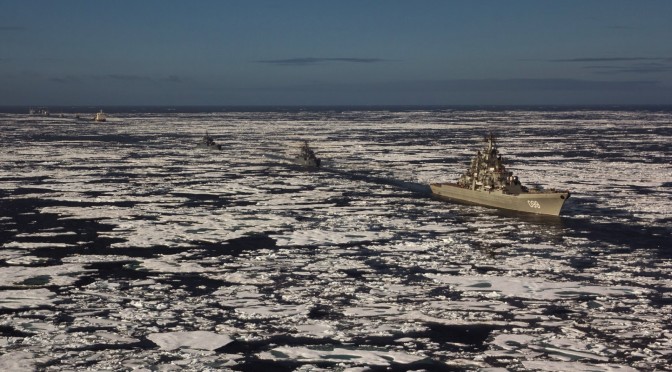
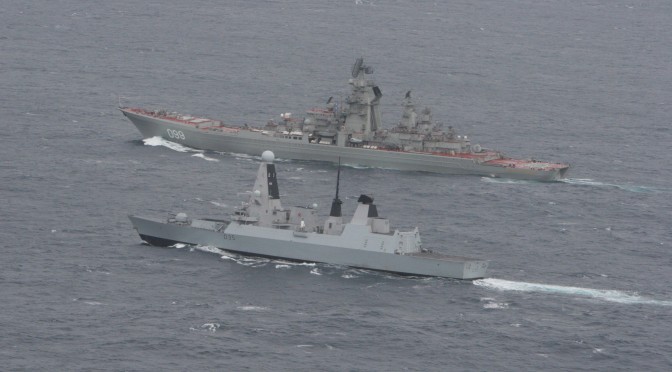
Category Archives: Global Analysis

A Geographical Breakdown of What’s Going on in the World

Russian & Soviet Fleets, 25 Years Apart

Russia Resurgent Topic Week

By Louis Martin-Vézian

In 2 parts:

PART 1
Soviet_Navy(1)

PART 2Soviet and Russian Navy blk(2)

Louis Martin-Vézian is the co-president of the French chapter at CIMSEC.org, and the founder of CIGeography, where he post his maps and infographics on various security and defense topics. He is currently studying Geography and Political Science in Lyon, France.

Read other contributions to Russia Resurgent Topic Week.

[otw_shortcode_button href=”https://cimsec.org/buying-cimsec-war-bonds/18115″ size=”medium” icon_position=”right” shape=”round” color_class=”otw-blue”]Donate to CIMSEC![/otw_shortcode_button]

Russia in the Arctic: aggressive or cooperative?

Russia Resurgent Topic Week

By Laguerre Corentin

Since the early 2000s, Russia has begun to pay more attention to the Arctic when its general socioeconomic situation had improved.1 With the ice melting, other Arctic and non-Arctic countries demonstrated their interest for the region, creating territorial disputes. In the High North, Russia is often seen as taking an aggressive approach to assert its sovereignty and the West have been worried about Russia’s involvement in the region, especially after the Ukrainian Crisis and the Russian position in Syria. However, is Russia aggressive in the Arctic? We argue that Moscow is likely to promote cooperation with the Arctic states, but with its interests and national security in mind. The Arctic is of strategic importance for Russia because of its natural resources. Indeed, since the end of the Soviet era, Moscow does not see the region as a potential theatre of a strategic struggle with the West. Moreover, in its history, Russia took care to avoid escalating incidents, favoured cooperation, and the respect of international law in the Arctic because it was in its interest. Russia has learned that it could use the law and international organisations to its advantages. Putin’s aggressive tone seems more to fulfil domestic purposes rather than represent Russia’s intentions in the Arctic. To support our thesis it is useful to look at the country’s historical reliance upon legislation and treaties in the region, its current interests, and its emphasis on cooperation in the resolution of disputes.

[otw_shortcode_button href=”https://cimsec.org/buying-cimsec-war-bonds/18115″ size=”medium” icon_position=”right” shape=”round” color_class=”otw-blue”]Donate to CIMSEC![/otw_shortcode_button]

A history of reliance on legislation

Lincoln E. Flake argues that Russia’s current posture on the Continental Shelf is “a natural extension of Tsarist and Early Soviet policies on Arctic land territory”. Russia’s approach to the arctic issues seems to be impacted by previous policies.2 The first experience in claiming land and maritime control in the greater Arctic region occurred in its North American territories with the 1821 Ukase of Alexander I that had both a land and a maritime component. When the neighbouring states rejected the maritime component of the decree, the sole attempt by the Russian government to enforce it was the seizure of the USS Pearl in 1822, but the vessel was released and the maritime component of the decree was abandoned. Each time the Tsarist government tried to enforce a contested decree; it yielded to pressure and abandoned its maritime claims.3 Later, the Soviet government took advantage of treaties to advance its positions. As an example, the 1920 Svalbard treaty assured the Norwegian recognition of the Soviet government. Inadvertently, this treaty was favourable to the USSR by creating a demilitarised zone at the door of its Arctic sector. This event likely demonstrated to the Kremlin that sovereignty issues could be resolved through international treaties to Russia’s advantage. Each time, the authorities used the law to respond to sovereignty issues. Moscow developed a more detailed legislation about its control over the North Sea Route when it was handicapped from preventing foreign military navigation along its Arctic coastline. Moreover, Russia engaged in efforts to arrive at international treaty-based regimes favourable to its claims. This approach led to international conferences that ultimately resulted in the 1982 UNCLOS agreement, which was a resounding victory for Soviet aims in the Arctic.4

Russia’s renewed interests in the Arctic

Today, Russia considers the Arctic as a region of strategic importance for its national security due to the presence of the two-thirds of the Russian sea-based nuclear bases, and the direct access to the Arctic and Atlantic oceans provided by the Kola Peninsula. However, with the end of the Cold War, the region has lost its former military strategic significance as a zone of potential confrontation with the US/NATO.5 Principally, the Arctic is relevant to Russia’s economy and security because Moscow views a prosperous and secure supply of energy as a means of projecting its power in the world. Thus, the Arctic is directly linked to its economic interests. Around 20 percent of its gross domestic product is generated north of the Arctic Circle, as are 20 percent of Russia’s total exports in energy.6 On 18 September 2008, then-President Dmitri Medvedev approved the Foundations of the State Policy of the Russian Federation in the Arctic Up to and Beyond 2020. The document defined the Russian interests in the region – developing the resources in the Arctic, turning the NSR into a unified national transport corridor, maintaining the region as a zone of peace and international cooperation and transforming the Arctic as a “leading strategic resource base”.7 In addition, Russia’s National Security Strategy to 2020, released in May 2009, confirms the importance of the energy sector and connects the country’s success with its status as an energy provider, noting that energy-related issues and regions like the Arctic, the Caspian Sea and Siberia are an important component of its security planning.8

An emphasis on cooperation

In line with the approach developed in the early 2000, the 2013 Concept directs foreign policy to “strengthen Russia’s trade and economic position within the system of world economic relations”, and to use the “capabilities of international and regional economic and financial organisations” to support its economic interests. The Concept shows Russian willingness to work with institutions – particularly the UN – and to be more active internationally. A stated objective of its foreign policy has therefore been to emphasise institutions and issues that elevate its power status. If Putin was critical of Western initiatives and opposed them while employing a more aggressive tone, Russia has committed to more multilateral governance in the Arctic than other countries. Moreover, the Foundations of the State Policy of the Russian Federation in the Arctic for the Period Up to and Beyond 2020 identifies the Arctic as a zone of cooperation. The document asserts Russia’s willingness to work bilaterally and within the framework of regional organisations. Moscow has also taken care not to allow minor skirmishes to escalate.9 These elements balance the plans to extend the Northern fleet’s operational radius and the reinforcement of combat readiness on the Arctic coast. Furthermore, different Russian documents reveal that military security is not a priority, the emphasis being placed on economic concerns. This approach suggests that Russian threat perception is less concerned with strategic confrontation than with challenges to navigational assertions. In this regard, Russian military developments in the Region can be seen as a response to an anxiety over navigational-related interests and not a militarization in anticipation of a struggle over natural resources. Indeed, many of the recent military moves, like the reopening of a Soviet-era base in the Arctic to “ensure the security and effective work of the NSR”, are aligning with the protection of maritime spaces.10 Moreover, Moscow seems more interested to project its power by economic means than military ones because a key source of its power and influence in the world comes from its energy sector. Thus, this reduces the need for an aggressive posture.11

Conclusion

In conclusion, Russia relied on international law and cooperation in the Arctic through different periods of its history. Today, Russia is still a strong supporter of the UNCLOS as a tool to resolve regional disputes and insists upon the scientific basis of its territorial claims. According to Dmitri Trenin, Russia bases its Arctic strategy upon international law and agreements, and its actions in the Arctic may have seemed aggressive in part because they occurred in a context of worsening relations with the West. Russia may oppose Western objectives, but there is a stated commitment to international law and Russia “has shown itself a committed, rule-abiding participant”.12 Moreover, Russia’s current interests in the region do not seem to promote an aggressive posture because they concern principally the economic sector. As 97 percent of the region’s oil and gas deposits are found in undisputed EEZ seabed of littoral states, with the Russian EEZ accounting for 80 percent of the gas, the risk of conflict around natural resources in the High North is likely to remain limited.13

Laguerre Corentin has a  M.A.  in War Studies from King’s College London and presently works as a research assistant at the Institut de Recherche Stratégique de l’Ecole Militaire (IRSEM), which depends from the French Ministry of Defense.

Read other contributions to Russia Resurgent Topic Week.

[otw_shortcode_button href=”https://cimsec.org/buying-cimsec-war-bonds/18115″ size=”medium” icon_position=”right” shape=”round” color_class=”otw-blue”]Donate to CIMSEC![/otw_shortcode_button]

1 Alexander Sergunin & Valery Konyshev, “Is Russia a Revisionist Military Power in the Arctic?”, Defense & Security Analysis 30:4 (2014), 327

2 Flake, “Forecasting Conflict in the Arctic: the Historical Context of Russia’s Security Intensions”,76-78

3 Idem, 80

4 Idem, 80-82, 86-87

5 Sergunin & Konyshev, “Is Russia a Revisionist Military Power in the Arctic?”, 324, 326

6 Kari Roberts, “Why Russia Will Play By the Rules in the Arctic”, Canadian Foreign Policy Journal 21:2 (2015), 119

7 Sergunin & Konyshev, “Is Russia a Revisionist Military Power in the Arctic?”, 327

8 Roberts, “Why Russia Will Play By the Rules in the Arctic”, 119

9 Idem, 116-119

10 Lincoln E. Flake, “Forecasting Conflict in the Arctic: the Historical Context of Russia’s Security Intensions”, The Journal of Slavic Military Studies 28:1 (2015), 91-92

11 Roberts, “Why Russia Will Play By the Rules in the Arctic”, 116-118

12 Idem, 114, 116

13 Flake, “Forecasting Conflict in the Arctic: the Historical Context of Russia’s Security Intensions”, 89

Bibliography

Flake, Lincoln E. 2015. “Forecasting Conflict in the Arctic: the Historical Context of Russia’s Security Intensions”. The Journal of Slavic Military Studies 28:1, 72-98

Roberts, Kari. 2015. “Why Russia Will Play By the Rules in the Arctic”. Canadian Foreign Policy Journal 21:2, 112-128

Sergunin, Alexander & Konyshev, Valery. 2015. “Is Russia a Revisionist Military Power in the Arctic?”. Defense & Security Analysis 30:4, 323-335
The Russian bear

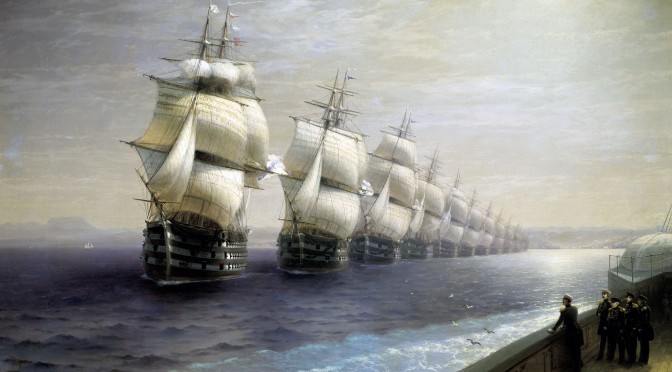
Is Russia’s Maritime Strategy Adrift?

By Ben Hernandez

This article originally appeared on The Strategy Bridge. You can read it in its original format here. This article originally featured on CIMSEC on Aug. 20, 2015, and has been updated for inclusion into the Russia Resurgent Topic Week. 

The Russian defense industry has always had a flair for the dramatic. The Soviet military-industrial complex carried so much sway in the Politiburo that at times, it operated with little oversight from the General Secretary.1 It produced wonder weapons and prestige platforms with little regard for their cost and strategic value.

The past few years have seen a resurgence of this mindset. Russia has embarked on a massive recapitalization project, seeking to replace aging Soviet-era platforms that were often built to lax production standards. Their military-industrial complex takes great pride in trumpeting its achievements and ambitious projects through Russian language media and state-owned foreign language outlets, such as RT.com. While it is important to listen to what an adversary is saying, it is also important to see what is behind the bluster. In fact, many of Russia’s wonder weapon projects are far too grand to come to fruition — and may even signal a revival of the same discord within the Russian defense industry that plagued the Soviet Union; a discord that acted as a key forcing-function in the destabilizing Cold War arms race that brought the world to the brink of ruin.

Evidently, the RFN has even grander designs: a squadron of what would effectively be nuclear powered battlecruisers.

Consider the notional future Russian Federation Navy (RFN). Their fleet, once outnumbering the U.S. Navy 3.5:1, now spends most of its time in port. 2 Russia’s major shipyards are now going full tilt, building frigates and nuclear powered — and armed — submarines. Evidently, the RFN has even grander designs: a squadron of what would effectively be nuclear powered battlecruisers.

Dubbed the Lider class, these warships would feature the nuclear power and armament capacity of the massive Soviet-era Kirov battlecruisers. For reference, the 28,000 ton Kirov class has thrice the displacement of and carries roughly twice the armament of its nominal U.S. Navy counterpart, the AEGIS cruiser. Cutting a distinctive silhouette, the Lider would easily outgun the largest ships in the US or Chinese arsenals. Their nuclear power plants would allow them to sortie worldwide, limited only by food and ammunition supplies — the finest naval power projection to be found outside of aircraft carriers.

Given the grandiose design of the ship, it is worth examining whether the Russian military intends for it to ever exist at all or if it is nothing but a propaganda piece. Recently, the Russians have announced truly fantastic projects, such as a fleet of supersonic stealth transport aircraft capable of covertly inserting an armored division overseas.3 Open sources show that the RFN has desired a next-generation, medium to large surface combatant for years, and that more reasonable proposals gained traction before losing out to the current design.4 Additionally, a video about the Lider focuses on the wide array of Russian corporations contributing to its construction rather than the ship’s actual capabilities. Moreover, it was produced by an industry-focused media concern rather than the expected propaganda outlets, such as RT.5

Building these battlecruisers will almost certainly devour the vast majority of Russia’s shipbuilding budget and capacity.

Russian officials announced they will build twelve of these battlecruisers.6Realistically, most observers should expect to see one or two. A ship’s size tends to drive the cost of constructing it, and there’s a catch to building ships with the massive weapons capacity and power plant of the old Soviet battlewagons: they’re probably going to be about the same size. Some sources suggest they’ve even been designed by the same firm responsible for the Kirovs.7 This implies the Lider will be a budget breaker like its predecessor.

Russian designs on this Lider class represent a gulf between strategic direction and capabilities. Building these battlecruisers will almost certainly devour the vast majority of Russia’s shipbuilding budget and capacity. If the RFN succeeds in acquiring them, it will find itself with a handful of massive power projection tools unsuited to any of the conflicts it is most likely to fight.

One side is building towards a strategically defensive Cold War-era doctrine, the other toward an essentially all new doctrine based on power projection.

The Russians are setting themselves up for a major discontinuity between ends and means. A recent statement by the CEO of Russia’s state owned shipbuilding conglomerate reveals that his view that future submarine construction should focus on defending ballistic missile submarines, a mission that would take place relatively near to Russian territorial waters.8The acquisition of the Lider battlecruisers — plus recently announced plans to acquire a nuclear powered supercarrier — may suggest the forces that drive the development of the surface fleet are not in synch with the forces driving the submarine fleet. One side is building towards a strategically defensive Cold War-era doctrine, the other toward an essentially all new doctrine based on power projection. Neither of these tracks would be of much value should Russia attempt to invade one of the Baltic states, a prospect that recently gained some overt support in the Russian government.9

The Russian military is at a conventional disadvantage against NATO. As oil money begins to dry up and sanctions take their bite, the Russians do not appear to be adjusting their acquisition efforts to compensate. On one hand, they appear to be gravely concerned about the security of their nuclear deterrent. The Strategic Rocket Forces, fearing US missile defense efforts, have invested heavily in new ICBMs. Similarly, the submarine force is building new ballistic missile submarines and advanced new missiles to go with them. On the other hand, the Russians are also attempting to achieve some kind of conventional parity with NATO by producing new stealth fighters, tanks, and apparently battlecruisers. A budget is by definition zero-sum, and as Russia’s economy slowly recovers from its free-fall, the money to build all their desired means simply will not exist. This could leave Russia with an arsenal of top-of-the-line nuclear weapons while intensifying its conventional disadvantage against NATO.

Russia’s plans to build nuclear-powered battlecruisers is emblematic of a dangerously non-coherent national military strategy which haphazardly fuses Cold War paranoia with modern revanchism.

So, what is there to worry about here? Why not celebrate as the Russians procure themselves into the hole, spending exorbitant sums to acquire prestige platforms that do not contribute to their strategy? Because Russia may well attempt to achieve its ends through whatever means are available. The weaker and less focused its conventional forces are, the more likely it is to resort to the use of tactical nuclear weapons to win a conflict with NATO. Painted into a corner by their belligerence and poor acquisition decisions, Russia may become dangerously prone to acting upon its “escalate to de-escalate” doctrine.

Russia’s plans to build nuclear-powered battlecruisers is emblematic of a dangerously non-coherent national military strategy which haphazardly fuses Cold War paranoia with modern revanchism. It seeks to achieve ends (building a “buffer zone” of pro-Russian states by force while protecting its nuclear deterrent) through dangerous ways (“hybrid” and conventional warfighting, with the option to “escalate to de-escalate”) without the means to fully execute those ways. The end result could be disastrous for all involved.


Ben Hernandez is one of the hundreds of students under instruction at Naval Station Newport, R.I. The views expressed here are the author’s alone and do not reflect those of the U.S. Navy, the Department of Defense or the U.S. Government.

Read other contributions to Russia Resurgent Topic Week.

1 Hoffman, David, The Dead Hand (Anchor Books, New York, N.Y., 2010)

2 Director of Central Intelligence William J. Casey, Soviet Naval Strategy and Programs through the 1990s, NIE 11–15–82/D. (CIA Historical Review Program, approved for release 31 January 1995)

3 RT.com, Future Russian Army Could Deploy Anywhere In the World — In 7 hours, 19 March 2015, accessed 17 July 2015, http://www.rt.com/news/242097-pak-ta-russian-army/

4 GlobalSecurity.org, New Construction Destroyer, accessed 17 July 2015,http://www.globalsecurity.org/military/world/russia/ddg-newcon.htm

5 Concern Agat — Russia Leader-Class Nuclear Guided Missile Destroyer Concept, 16 August 2014, https://www.youtube.com/watch?v=ORVVK6OCr74

6 Sputnik News, The Destroyer “Leader” and the Future of the Russian Navy, 16 March 2015, http://in.sputniknews.com/russia/20150316/1013781801.html

7 Hassan, Abbass, World Defense Review, Russian Navy approves the proposed future destroyer, 14 February 2013, accessed 17 July 2015.

8 Keck, Zachary, Russia’s New Nuclear Submarines to Target U.S. Aircraft Carriers, 6 July 2015, http://nationalinterest.org/blog/the-buzz/russia-building-aircraft-carrier-killer-nuclear-submarines-13266

9 Laurinavicius, Marius, Russia’s Dangerous Campaign in the Baltics, 16 July 2015, http://www.cepa.org/content/russias-dangerous-campaign-baltics

Cutting Through the Fog: Reflexive Control and Russian STRATCOM in Ukraine

Russia Resurgent Topic Week

By Robert C. Rasmussen

“But if I wanted to I could take Kiev in two weeks.” – President Vladimir Putin

Introduction

As the Russian Federation continues to fuel a protracted war in Ukraine, it is employing a method of strategic communication that has left policy makers, media outlets, and ordinary people confused and worried. The decades-old Soviet doctrine of Reflexive Control Theory1 is a method of information warfare at the strategic and operational levels. This use of Reflexive Control Theory is an attempt to influence the decision-making processes of the Ukrainian government, the rebels, the international community, and the Russian people.  It is designed to support Russia’s strategy of maintaining Ukraine as a semiautonomous region with independence as a mere formality.

[otw_shortcode_button href=”https://cimsec.org/buying-cimsec-war-bonds/18115″ size=”medium” icon_position=”right” shape=”round” color_class=”otw-blue”]Donate to CIMSEC![/otw_shortcode_button]

Reflexive Control Theory as Doctrine

Reflexive Control Theory was developed by Soviet military strategists in the 1960s. The premise is relatively simple: use deception and disinformation to shape an opponent’s perceptions of the situation so it voluntarily selects the courses of action most conducive to one’s own interests. It is exactly this type of application of Reflexive Control that a young Vladimir Putin would have learned in his early development at the 401st KGB School and in his career as a KGB/FSB officer. While in principle applicable at many levels, it particularly lends itself to communications at the strategic level.

Russia’s Use of Reflexive Control in Strategic Communications

Russia’s strategic communications regarding Ukraine are calculated to shape outside perception of Russian actions, and opponents’ reactions. In doing so, Russia hopes to induce actions that work in favor of the Russian government.2 A combination of the haze of battle and political obfuscation can help create whatever story Russia wants for whatever audience it wants. The targeted audiences for specific messaging campaigns are pro-Russian separatists, the international community, and lastly the Russian people.

Russia’s strategic communications towards the rebels in eastern Ukraine have focused on keeping them in the fight. Two key messages pushed by Russia to keep rebels fighting are the message about Ukrainians in power being anti-Russian fascists, and how Russian administration of their territory would be better for the people there. There has been additional focus on the damage caused by warfare and the disruption of the lives of ordinary people in order to continually focus the anger of the rebels and keep up their will to fight.

The focus on the international community seems to be deterrence from entering the conflict at all. By keeping the fog of war rolling over the combat zone and increasing chaos, the situation is unpredictable.  This unpredictability combined with a lack of political will effectively eliminates any possibility of direct action by an external actor.  Russian displeasure at international sanctions encourages other actors to take out their displeasure through sanctions instead of directly supporting Ukraine with personnel, equipment, and aid money. In a very real sense, sanctions are a diversion. Russia has a large territory with a large quantity of people. Russia has previously isolated and restructured its economy in a manner that ensured relative strategic successes, and this capability is within the generational memory of current leadership. Accepting sanctions in the short term is strategically analogous to giving up territory to Napoleonic and Nazi armies, knowing that time is on Russia’s side.

Messages to the domestic population create moral justification for supporting rebels and the prospect (now realized in an on-again, off-again fashion) of widespread combat operations in eastern Ukraine. The overwhelming majority of news media is either state-controlled or controlled by owners loyal to President Putin. Meanwhile Putin’s political party, United Russia, has a simple majority in the State Duma. There is an overwhelming support base that is loyal to Putin’s government. These elements, put together, create unquestioned messaging pushing the idea of a fascist government in Kiev that does not represent the views of even a plurality of Ukrainians. This “illegitimate” Ukrainian government, according to the message, is only in control due to the brute force of a small Euromaidan mob.  By sending humanitarian convoys with military escorts into Eastern Ukraine, Russia is trying to demonstrate its humanity. The point of this messaging is to focus popular rage on the Ukrainian government. Such rage can be channeled into support of sustained combat operations and weathering the effects of economic sanctions.

Conclusion

Russian strategic communications regarding Eastern Ukraine have involved messaging crafted with the doctrine of reflexive control in mind. The concept of reflexive control focuses on tricking an opponent or audience into making decisions that works to an actor’s advantage, and has been a core doctrine of Soviet and Russian security forces since the 1960s. This concept shows itself in the messaging that Russia has given to various audiences and its pronounced effects – it keeps separatists fighting, maintains popular support, and prevents foreign intervention.

Robert C. Rasmussen is a Second Lieutenant in the New York State Guard, and currently serves as Aide-de-Camp to a Brigadier General. He has a MA in International Relations and a Certificate of Advanced Studies in Security Studies from Syracuse University’s Maxwell School of Citizenship & Public Affairs. He also has a BA in International Relations & Geography from the SUNY College at Geneseo. He has previously worked as a Legislative Policy Fellow for the New York State Senate, a Research Intern at the U.S. Military Academy, and as a Research Intern the National Defense University. His views are his own and do not reflect the views of the New York State Guard or the New York State Division of Military & Naval Affairs.

Read other contributions to Russia Resurgent Topic Week.

[otw_shortcode_button href=”https://cimsec.org/buying-cimsec-war-bonds/18115″ size=”medium” icon_position=”right” shape=”round” color_class=”otw-blue”]Donate to CIMSEC![/otw_shortcode_button]

1 Thomas, Timothy L., “Russia’s Reflexive Control Theory and the Military,” Journal of Slavic Military Studies, Vol. 17: 2004, 237-256, http://www.rit.edu/~w-cmmc/literature/Thomas_2004.pdf, Accessed: 4 September 2014.

2 Ginos, Nathan D., “The Securitization of Russian Strategic Communication,”  U.S. Army School of Advanced Military Studies, Defense Technical Information Center, Fort Belvoir: 2010, http://www.dtic.mil/dtic/tr/fulltext/u2/a536578.pdf, Accessed: 4 September 2014.