Category Archives: Global Analysis

A Geographical Breakdown of What’s Going on in the World

Improve NATO’s Black Sea Maritime Posture Through Operation Sea Guardian

By Colin Barnard 

In a recent article for CIMSEC, I proposed three ways to improve U.S. maritime posture in Europe, including the forward basing of small surface combatants in the Baltic and Barents Seas. Due to the Montreux Convention, however, only littoral states are able to base warships in the Black Sea, which excludes the United States and all but three NATO members: Romania, Bulgaria, and Turkey. Recognizing this limitation and others on overall NATO maritime posture in the region, Russia has invested heavily in expanding and modernizing its Black Sea Fleet to maintain a position of relative strength and ensure its unfettered access to sea lanes, which it has used in recent years to continue its destabilization of Ukraine and Georgia and resupply its forces in Syria and Libya (the latter in violation of UN sanction regimes). 

In order to protect its members and their interests against the possibility of further Russian aggression in the region, as well as to safeguard maritime security in the Black Sea, NATO needs to enhance its maritime presence and improve its balance of forces with Russia. To this end, NATO must find a solution to address the current limitations of its Black Sea maritime posture, in particular the Montreux Convention, but also the low capacity of Black Sea NATO navies and the lack of sufficient NATO maritime command and control in the region. This article explains the extent of these limitations and proposes a solution: expanding NATO’s maritime security operation, Operation Sea Guardian, to the Black Sea. 

Limitations on NATO Black Sea Maritime Posture

The most significant limitation on NATO’s Black Sea maritime posture is the Montreux Convention. Some of the many stipulations of the convention are positive for NATO, e.g. giving Turkey control of the Bosporus and Dardanelles Straits. However, the agreement forbids non-littoral navies from forward basing warships in the Black Sea and restricts them to sailing there for a period of no more than 21 days. After the 21 days have passed, non-littoral navies must transit back through the Straits to the Aegean Sea in order to reset the clock. These restrictions are problems for NATO because only three of its members—Romania, Bulgaria, and Turkey—are allowed to operate navies in the Black Sea on a permanent basis. This is one of the reasons why neither the United States nor NATO had adequate presence and situational awareness at the start of the Russo-Georgia War in 2008 and the illegal annexation of Crimea in 2014, both of which involved significant Russian naval operations in the Black Sea.

The United States and NATO have since improved their ability to respond to a crisis in the region through NATO Assurance Measures, which include more frequent patrols by U.S. warships and NATO’s Standing Naval Forces (SNF) in the Black Sea, the latter of which is the maritime arm of NATO’s Very High Readiness Joint Task Force (established in 2014 after Russia’s annexation of Crimea). Unfortunately, the reality is that neither of these crises lasted long enough for such a response to matter.

More frequent patrols by U.S. and NATO warships in the Black Sea within Montreux’s 21-day limit are critical for conventional deterrence and reassurance to NATO allies and partners, but they are not enough on their own to achieve an adequate NATO maritime posture. Posture implies readiness to respond to the full range of threats, military and non-military, that Russia poses to the region. Effectively identifying and disrupting Russia’s use of criminal networks to destabilize NATO allies and partners alike, for example, requires permanent, sustained presence and situational awareness.

A second limitation on NATO’s Black Sea maritime presence is the low capacity of Black Sea NATO navies. The largest and most capable of the three is the Turkish Navy, which includes submarine forces, but even it cannot provide the presence and situational awareness across the Black Sea that NATO requires. This is due, at least in part, to the fact that Turkish naval forces must split their attention between the Black, Aegean, and Mediterranean Seas, where Turkey has numerous interests. Romania and Bulgaria, in contrast, operate only a small number of frigates, corvettes, and mine countermeasures ships between them. Romania has announced plans for four new multirole frigates, which will be useful once delivered, but Bulgaria appears only to be purchasing two, less capable offshore patrol two vessels. 

While these naval forces are a critical part of NATO’s order of battle (and indeed they routinely support NATO maritime activities), they lack the capacity to deter Russia’s Black Sea Fleet and enforce maritime security in the region when not supplemented by other NATO forces. Furthermore, as Russia has increased its air, submarine, and amphibious forces in the Black Sea, large multirole combatants, such as Romania’s two Type 22 frigates, are required in far greater numbers than Black Sea navies can currently field, especially when maintenance and training cycles are factored in. 

In addition to large combatants, more capable small combatants are required to bolster overall presence and perform maritime security tasks such as interdiction operations, which Romania’s new frigates and perhaps Bulgaria’s new patrol vessels, depending on their capability, will help address. Close NATO partners Ukraine and Georgia have the potential to add to the number provided by NATO navies, especially after the U.S. transfer of Island-class cutters to both states, and the planned transfer of Mk VI patrol boats to Ukraine. These platforms will expand Ukraine’s and Georgia’s range of patrolling their own maritime borders with Russia (for Ukraine, this includes inside the Sea of Azov), which benefits NATO as well.

Finally, NATO lacks sufficient maritime command and control (C2) in the Black Sea to conduct operations. Currently, NATO maintains what is called “Tailored Forward Presence” in the region. This presence is centered around a multinational division headquarters in Bucharest, which commands land forces also based in Romania, as well as two NATO Force Integration Units (NFIU), one in Romania and one in Bulgaria. None of these headquarters are maritime. The NFIUs, tasked with integrating NATO forces in the event of crisis and conflict, rely on the SNF to be the maritime arm of the VTJF under control of NATO’s Allied Maritime Command (MARCOM) in the United Kingdom. In peacetime and the outset of a crisis, NATO relies entirely on MARCOM to conduct maritime operations in the Black Sea. When the SNF is not in the Black Sea, however, MARCOM is not guaranteed to have control of naval forces in the region. This creates a lag, if not a gap entirely, in NATO’s situational awareness and ability to respond to maritime security incidents and crises in the Black Sea. 

Outside observers may argue unwittingly that warships operating under national authority of a NATO member can suffice for overall NATO presence and thus deterrence, but the NATO command structure is distinct from national command structures, with its own C2, classification categories, and so on. The public may not be able to see a difference between a U.S. maritime patrol in the Black Sea and a patrol by a NATO standing maritime group, but the difference matters. This is one reason I argued for NATO navies above the Arctic Circle to form a standing maritime group to provide steady presence and maritime security in the European Arctic. As in the Barents Sea, NATO via MARCOM requires a standing maritime group of some sort in the Black Sea, providing direct input to its operational picture (not via its national command first) and able to react immediately to security incidents and crises at or from the sea. 

Solutions to Improve NATO’s Black Sea Maritime Posture

Recommendations to mitigate the limitations above are aplenty, but common to all are proposals to increase and formalize the rotation of non-littoral NATO navies to the Black Sea, especially from European NATO members. What these proposals lack, however, is a pragmatic way to make such a rotation more appealing to the political leadership that must approve it. Enter Operation Sea Guardian (OSG). Rebranding the rotation in the name of maritime security rather than only a NATO deterrence initiative would likely appeal to politicians across NATO. The easiest way to accomplish this would be to increase the area of operations (AO) for OSG to include the Black Sea. OSG succeeded Operation Active Endeavour (OAE) in November 2016. Unlike OAE, which was focused on counter-terrorism, OSG was expanded to include additional maritime security tasks, three of which are permanently authorized: maritime situational awareness, counter-terrorism, and capacity building. If authorized, forces in support of OSG may also uphold freedom of navigation, conduct maritime interdiction, counter weapons of mass destruction, and protect critical infrastructure.

Currently, OSG’s AO only includes the Mediterranean Sea, but justification for expanding it is easy to find. OSG’s primary line of effort is maritime situational awareness, which entails a broad range of information and intelligence gathering activities, supported by submarines, surface ships, and aircraft. These activities naturally interact with both military and commercial vessels of interest, which do not always stay in the Mediterranean. The Black Sea in particular hosts a number of smuggling operations, most of which have been consolidated and expanded through Russia’s occupation of Ukraine and Georgia. These operations include the overt and covert transport of arms and fuel to Russian-associated forces in Syria and Libya. In the case of Syria, Ben Hodges, a former commander of Allied Land Command and current Pershing Chair at the Center for European Policy Analysis, tweeted that Germany, France, Turkey, and the United States should work together to prevent Russia’s use of its bases and ports in the Black Sea to support the Assad regime. 

Recognition of Russia’s use of ports and sea lanes in the Black Sea to support its forces and proxies not only in the Black Sea, but elsewhere, is important, but preventing it remains a challenge. One way could be to sanction and interdict non-Russian-flagged vessels supporting Russian resupply efforts. In truth, these vessels are already violating EU sanctions on Syria, yet the EU has done nothing to enforce them. OSG would be the ideal operation to support an embargo of non-Russian-flagged shipping supporting Russian resupply efforts. This would likely result in Russia reflagging much of this shipping, as Iran has done to prevent interdiction of its own shipping in European waters; but this would be a good result. Russia should be required to flag all shipping supporting its military and proxy engagements. This would make it easier for the UN, NATO, and the rest of the world to understand where and how Russia engages in the world, which could result in stronger international support against Russia when it undermines international law and norms.

If NATO pursues such an embargo operation, it would serve a more important recognition that maritime security and sanctions enforcement are important in competition with Russia. In his article with CIMSEC critiquing NATO’s 2011 Alliance Maritime Strategy, Ian Sundstrom advocated for a NATO maritime operation focused on Russian deterrence, which OSG currently is not. In fact, at present, NATO’s SNF are not the primary forces deployed in support of OSG, though they often augment OSG task groups, which usually means patrolling part of the area designated for an OSG focused operation (FOCOP). The forces which make up OSG task groups are instead volunteered from NATO navies on a rotational basis. MARCOM, which commands OSG, has operational control of these forces for specific periods of time. The reason the SNF are not the primary forces deployed for OSG is because of the prevailing notion in NATO that the task of maritime security is wholly separate from deterrence against Russia. 

This notion has been challenged time and again by crises in NATO’s backyard, yet it remains. For example, OSG has conducted FOCOPs in the Eastern and Central Mediterranean on numerous occasions during the ongoing civil wars in Syria and Libya, and the task of detecting vessels smuggling arms, fuel, or people in violation of international law has directly overlapped with the task of tracking Russian military activity. The concept of a competition continuum, recently adopted by the U.S. sea services in their latest maritime strategy, recognizes the role of low-end maritime security tasks in military competition. Competing daily against Russia and other malign actors requires not only conventional deterrence demonstrated through the deployment of high-end forces, but also constabulary presence to detect and disrupt “gray zone” activities. Rotational forces supporting OSG centered around the navies of Black Sea NATO members would be able to work together to this end, a framework that can and should be duplicated throughout the rest of Europe. 

An ancillary benefit of expanding OSG’s AO to include the Black Sea would be reassurance to Ukraine and Georgia. Since Russia’s annexation of Crimea in 2014 and, more recently, its de facto embargo of Ukrainian ports in the Sea of Azov highlighted by its temporary closure of the Kerch Strait in 2018, the United States and other NATO members have been supporting Ukraine and Georgia in their respective pursuance of NATO membership and deterrence posture against Russia. An OSG task group operating in the Black Sea would be able to sustain presence near the maritime boundaries Ukraine and Georgia share with Russia through exercising, information sharing, and patrolling with Ukrainian and Georgian naval and coast guard forces. Importantly, Georgia has maintained a liaison officer in MARCOM for years, whose role includes support to OSG. Both Georgia and Ukraine were active members of OAE, and the relationships that existed before Russia’s invasions of both countries could be quickly repaired under the umbrella of OSG. 

Caveats and Conclusion

An important caveat to the expansion of OSG to the Black Sea is the need for all NATO members to support it, especially Turkey, which is the prime mover for NATO in the region. OSG has already suffered a black eye in the Mediterranean because of disagreements between NATO members, specifically Turkey and France, over the course of the Libyan civil war. The disagreements culminated last year in an unsafe interaction off the coast of Libya involving the French frigate Courbet, flagship for an OSG task group, and three Turkish frigates operating under Turkish national control (though also, ironically, in associated support to OSG). When Courbet intercepted the Tanzanian-flagged (at the time) vehicle carrier, CIRKIN, identified as potentially carrying military cargo from Istanbul to Libya in violation of UN sanctions, a Turkish frigate used its fire control radar to track the French frigate, or so the French claim. The fallout of this interaction was France’s withdrawal from supporting OSG. 

This interaction should not have surprised anyone. NATO knew its members were increasingly at odds over the clash of interests in Libya, and that Turkey was actively shipping military equipment to its forces and proxies in Western Libya; yet NATO still allowed for an OSG patrol to take place off the coast of Libya. NATO usually suffers paralysis when its members do not agree, though in this case, it was not so much paralysis as it was a failure to address the elephant in the room. Whether one agrees with France or Turkey on its approach to Libyan civil war, the problem for OSG is that it is a maritime security operation, which implies it recognizes and upholds international law, including UN sanctions. Successful expansion of OSG to the Black Seaㅡi.e., providing NATO with rotational forces to enforce maritime security and erode Russia’s ability to destabilize the regionㅡwill require NATO consensus. If NATO cannot find consensus, then the advantage goes to Russia and other malign actors. 

NATO needs to enhance its maritime presence in the Black Sea and improve its balance of forces with Russia, despite the current limitations of the Montreux Convention, the low capacity of Black Sea NATO navies, and the lack of sufficient NATO maritime command and control in the region. These limitations can be mitigated by expanding OSG’s AO to include the Black Sea. An OSG task group supported by the rotation of non-littoral NATO navies, operating alongside Black Sea NATO and partner navies, would improve NATO’s maritime posture in the region to deter Russia and safeguard maritime security—two tasks which are often inseparable. 

Colin Barnard is a U.S. Navy foreign area officer currently in training for an exchange with the German Navy. He was formerly a staff operations and plans officer at NATO Maritime Command in the U.K. In addition to writing for the U.S. Naval Institute’s Proceedings and the Center for International Maritime Security, he is a PhD student at King’s College London with a focus on European maritime security. The views expressed in this publication are the author’s and do not imply endorsement by the U.S. Defense Department or U.S. Navy.

Featured Image: DARDANELLES STRAIT (Jan. 19, 2019) The Arleigh Burke-class guided-missile destroyer USS Donald Cook (DDG 75) transits the Dardanelles Strait, en route to the Black Sea, Jan. 19, 2019. (U.S. Navy photo by Mass Communication Specialist 2nd Class Ford Williams/Released)

The Baltic Sea is not Las Vegas: The Mare Balticum in Broader Context

By Sebastian Bruns and Julian Pawlak

“The Baltic Sea has grown to a never-seen strategic significance in the past years.” This is how Vice Admiral Andreas Krause, former Chief of the German Navy (2014-2021), described the current situation of what is sometimes referred to as a ‘flooded meadow’ in naval circles. This nickname for the Baltic Sea originated as a description for the marginal and shallow basin that characterizes the operating environment, but has also been used to describe the relative calm of this theatre between 1991 and 2014. It is remarkable that Krause, who joined the West German Cold War Bundesmarine as a career submariner, would attribute an even larger strategic role to the contemporary Baltic  than during the superpower confrontation.

In any event, almost 30 years since the end of the Cold War, the era of reconciliation has definitely come to an end. Russia’s aggressive foreign policy and spill-over effects from the war in Ukraine were met with a more robust NATO posture in the Mare Balticum, which by virtue of its geography is a maritime, not just a naval arena. The Baltic is once again at the forefront of the security policy agenda of its neighboring countries and the North Atlantic Treaty Organization. It now appears that German naval forces in particular intend to do justice to the area of responsibility, driven by the Deutsche Marine’s role in the security and defense of the Federal Republic as well as its position as the largest allied navy in the Baltic Sea. 

As early as 2015, the Baltic Commanders Conference (BCC), a consultation format, was launched in response to altered security policy constellations and was intended to strengthen communication and cooperation between the neighboring navies – including non-Baltic state Norway, but without Russia. 

The German Maritime Forces Staff (DEU MARFOR), established in 2019, bundles together the previous smaller task forces in Germany and, with German and international posts, will form the core staff of the Baltic Maritime Component Command (BMCC), which is currently being set up. From 2025 the German Navy intends to develop key maritime skills with the BMCC and seeks to be able to take over the tactical leadership of multinational units in the Baltic, the North Sea, and the North Atlantic. For this purpose, NATO’s unique “Baltic Sea Headquarters” will be offered as a command center for national and allied defense operations on the northern flank. 

Regionalization efforts show how the German Navy recognizes the Baltic as a special area of responsibility. Developing key skills and institutional measures will allow the Deutsche Marine to meet the expectations of its substantial role as a reliable force provider. However, by also emphasizing supra-regional and global operations, the Deutsche Marine will by no means be reduced to a “Baltic Sea Navy.”

From Marginal Sea to the Magnifying-Glass 

The Baltic Sea may be a geographically marginal European sea, but Baltic security policy affects the interests of the entire continent. The regular participation in exercises and ship visits, for example, by the British Royal Navy, the Benelux naval forces, or French and Spanish units, are only the most visible signs of a development which, by the way, is entirely in the tradition of the East-West conflict in the Cold War. In the 1960s and 1970s, interested parties in East and West floated the idea of turning the Baltic Sea into a “sea of peace.” The consequence of this would have been the separation of the sea area from overall strategic security policy. It would have turned the Baltic into a closed sea, undermining international law– and essentially forbidding third countries’ navies to enter. NATO naval activity in the Mare Balticum would have been prevented. This was one of the reasons for the emergence of the annual US BALTOPS naval exercise, conducted in the Baltic since 1971. 

Since 2014, the Baltic Sea has been the scene of the politics that articulated the NATO Maritime Strategy (2011) and the European Union’s Maritime Security Strategy (2015), including the corresponding Action Plan. For allies and the alliances, there is a need for a maritime presence, naval diplomacy and international cooperation, but also for conventional deterrence and the regaining of high-end warfighting capabilities as far as NATO members are concerned. This is three-dimensional: on, above and below the waves. In addition, it must not be overlooked that the Baltic Sea also has a naturally important economic role for Europe. The quintessential NATO and EU lake is one of the busiest of its kind in the world. 

In addition to numerous passenger, vehicle, and rail ferry connections, the Baltic hosts feeder traffic with its ships, the landside ports and their hinterland connections, and a wide range of leisure shipping. The cruise industry in Northeast Europe was booming pre-COVID-19 and ever larger ships were vying for space with heavily loaded tankers, bulk cargo, and container carriers in the sometimes difficult to navigate waters. The Kiel Canal is the most traveled artificial waterway in the world (by number of ships), and has lost little of its validity in the wake of the pandemic. 

Biodiversity is also on the agenda of the Baltic Sea experts, at least those in the EU, who have adopted a maritime approach to security versus NATO’s more focused naval one. The Baltic Sea is a habitat and natural space worth protecting, which in turn makes regulation sensible. In addition, much attention has been raised for unexploded ordnance on the seabed and for World War-era weapons dumps. The continuing need to map, dispose of, or recover ammunition and weapons from that period from the sea floor even eight decades later might bring attention to more contemporary Baltic naval matters, or could obstruct a proper 21st century response to challenges all the while. 

In this policy cacophony, the sometimes-conflicting interests of member states and neighbors cannot be concealed—just think of the controversial North Stream 2 gas pipeline, which is to connect Russia with the Federal Republic of Germany in the future. To say that the pipeline has affected German standing in the West led by the United States is an understatement. Compared to its predecessor, the Biden administration has moderated the tone of its criticism of the project, but not the substance. 

“Viva Las Vegas?”

The U.S. is also critical of the dependence on Russian raw materials and the resulting strategic implications. Washington, which would prefer to see US-funded liquefied petroleum gas replacing the Russian equivalent in Europe, is concerned about the monetary and political advantage for Moscow. Whilst a significant part of German politics still refers to the pipeline as a “purely economical” project, it does not change the geopolitical reality the global great power competition bears on the region. 

Shortly after the Biden administration took office, the New START arms control treaty was extended for another five years, giving the time to create a new contract between the parties, consequential also for the region’s strategic security. Despite the increasing demand of U.S. presence in the Asia-Pacific region, supporting the European security and defense fundament is a continuous task for the new American president. Engagement in European defense is vital not only to repairing transatlantic relations, but also to fortifying the Western deterrence pillar. 

In that regard, the US armed forces have increasingly focused on the Baltic Sea and north flank areas. US Marines have been training in inhospitable northern Norway, the Army is supporting NATO’s “Enhanced Forward Presence,” Air Force B-52 bombers are practicing deploying naval mines, and the US Navy is regularly showing increased presence in the region. 

The establishment of the US Second Fleet in Norfolk, Virginia, and the corresponding NATO commands on both sides of the Atlantic underscore that the Baltic Sea, as part of the alliance’s northern flank, must be viewed in global terms. 

Incidentally, there should also be consensus in China. In 2017, the People’s Republic Army Navy (PLAN) carried out naval exercises with Russia in the Baltic.1 The maritime presence here is evidence of Beijing’s global interests and increasing naval reach, which are also manifested in extensive strategic economic activities in Northeast Europe. Knowing about the universality of the maritime domain, China uses the Baltic Sea as a showcase of power and for training the operational and strategic skills of its navy. So far, “return visits” in the South China Sea have mainly been reserved for the Anglo-American maritime powers and—according to the declaration of intent—France. Germany’s first deployment to the region is scheduled for the late summer of 2021. It is obvious that the Las Vegas law does not apply to the Mare Balticum: what happens in the Baltic Sea does not stay in the Baltic Sea.

Recommendations 

To implement the prerequisites for credible national and alliance defense for the allies involved, armed forces and political decision makers should not only postulate politically “joint & combined,” but courageously promote overarching cooperation and integration. This ranges from joint exercises and maneuvers, to procurement measures and training, to the powerful and innovative set-up of true multinational units.2

With regard to the exercises in the region, a European BALTOPS counterpart could be considered: on the one hand, to strengthen the European capability development, which is also regularly brought to the fore politically, on the other hand, to practice high-intensity conflict scenarios beyond a single major maneuver. This can be expanded with the joint preparation for high intensity warfighting (especially with air forces). 

Joint procurements are primarily available in the area of mine defense associations and in maritime domain awareness. The expansion of already existing joint procurement and training programs, such as the submarine cooperation between Germany and Norway and the planned cooperation programs between the Federal Republic and Poland, offer further points of contact. 

The challenge for Germany is to punch at its weight in NATO and the EU while achieving the domestic majorities needed for its military and defense policy. Germany also must balance Baltic Sea responsibilities with the larger (and further afield) tasks in the North Atlantic and the Mediterranean, and its Indo-Pacific aspirations. At the same time, however, due to the large number of neighboring and partner countries, it is precisely the Baltic Sea which offers equally wide-ranging opportunities for cooperation.

Regional developments will continue to require maritime security in the future, even if the narrative – such as the VJTF (Very High Readiness Joint Task Force), whose leadership Germany will take over next time in 2023is land-centric. The Deutsche Marine is undertaking a remarkable effort to refashion its political and operational core skills towards the traditional fields of national and alliance defense (and away from exclusively looking at maritime security and humanitarian assistance). This also sends an important signal to the friendly states in the regional and transatlantic context. A lot of porcelain was broken here by the North Stream 2 and the Trump-era blame game for the amount of the German military contribution (where a more honest conversation about the measurements of German defense – beyond a percentage of GDP – should have happened). Both nationally and internationally, the Federal Republic is well advised to act as a reliable ally with a coherent political agenda. This underlines Germany’s role in the EU and NATO, but also in its ambitions in the United Nations.

Dr. Sebastian Bruns heads the Center for Maritime Strategy & Security (CMSS) at the Institute for Security Policy Kiel University (ISPK). Julian Pawlak is a research associate at the German Institute for Defence and Strategic Studies (GIDS) and the University of the Federal Armed Forces Hamburg. An earlier version of this article appeared in the German monthly journal MarineForum, June 2019. 

Endnotes

1. See Sebastian Bruns & Sarah Kirchberger, “The PLA Navy in the Baltic. A View from Kiel.” CIMSEC, 16 August 2017.

2. See Moritz Brake & Sebastian Bruns, “Towards a Standing European Union Auxiliary Navy.” Friedrich-Ebert-Foundation Brussels, 22 July 2020. 

Featured image: Thirty maritime unit ships from 12 nations maneuver in close formation for a photo exercise during Exercise Baltic Operations (BALTOPS) 2018 in the Baltic Sea. (U.S. Navy photo by Mass Communication Specialist 1st Class Justin Stumberg/Released)

Russian Black Sea Fleet Activity in the Eastern Mediterranean Sea: Implications for the Israeli Navy

By CDR (ret.) Dr. Eyal Pinko

In recent years, and significantly since the 2011 Syrian uprising, the Russian Navy’s presence in the Eastern Mediterranean and Syria has expanded dramatically. The increasing Russian presence in Syria is part of Russia’s updated naval doctrine, which was first published in 2012, and revised in July 2016. This doctrine was called the Revised Russian Naval Doctrine up to 2030

As in the case of previous strategic doctrines, it defines the navy’s role as part of Russia’s security policy, its goals, its main directions for the buildup of naval forces, and the geographic areas of naval operations. The doctrine also includes and specifies an assessment of threats to Russian maritime security up to 2030. 

The doctrine states that the maritime domain’s main threat originates from the U.S. and NATO forces, which endeavor to dominate the ocean and achieve absolute superiority at sea. It also states that the Russian Navy must be ready to deal with technologically advanced adversarial navies, which are equipped with high-precision weaponry and missiles, and that Russia must strive for a situation in which its navy remains in second place regarding warfare capability. 

This aspiration expresses the Russian understanding that the U.S. Navy is the most advanced globally and that Russia does not intend to build a navy similar in size or quality. 

The new doctrine relates in a general way to the need for operational capability in all regions and ensuring the ability to maintain Russian naval forces’ long-term presence in strategically critical maritime arenas. It explicitly emphasizes the strategic importance, from the Russian government’s perspective, of naval presence in the Black Sea, the Mediterranean, and the Arctic.  

The Russian strategy in the Mediterranean Sea becomes more strategically important because of U.S. naval forces’ reduced presence in the Mediterranean arena in the last decade. It began under President Obama’s administration and continued with even greater intensity under President Trump’s administration. 

The reduction of the U.S. naval presence in the region results from a strategic decision made by the two U.S. presidents to transfer the bulk of its naval forces to Asia to view China and North Korea’s growing threat. 

The primary objective of Russia’s increased involvement in the region is to reposition itself as a world power. Through its focused and determined intervention in Syria, Russia demonstrated that it is a key player whose involvement is essential to resolving international issues. For more than four years, the West, which had failed to resolve a steadily exacerbating problem in Syria, was now forced to consider the Russian positions even more carefully and involve Moscow in resolving the crisis.1

The second objective of Russia’s involvement was to leverage the Syrian issue to resolve problems in other areas vital to it, mainly Europe in general and Ukraine in particular. Russian involvement in Syria intended to pressure the West to remove the sanctions imposed by the United States and Europe following Russian operations in Ukraine.2

The Russian naval presence in Syria is one of the significant ways in which Russia implements its maritime strategy. In practice, the implementation of the Russian maritime strategy in the Mediterranean is manifested in the expansion and upgrade of the Russian naval port at Tartus, the deployment of strategic weapon systems along the Syrian coast, such as the advanced S-300 and PANTSIR (SA-22) air defense systems, the SS-N-26 Yakhont shore-to-sea anti-ship missile systems, SS-26 Iskander short-range ballistic missile, long-range detection systems, and advanced electronic warfare systems.

The reinforced presence of Russian military forces in the Mediterranean and particularly in Cyprus and Syria also include the deployment of corvettes, submarines (equipped with Kalibr cruise missiles), fighter aircraft squadrons, and helicopters. 

The Russian aircraft squadrons, which are deployed at the Khmeimim base near Tartus’ port, are intended to provide an air ‘umbrella’ to the Russian Navy operating in the Mediterranean. 

In January 2017, Russia signed an agreement with the Syrian regime to lease a naval base within the Tartus port and the Khmeimim airport for 49 years with automatic renewal for another 25 years. Russia began constructing the port and its expansion to station 10 to 20 ships there and to provide maintenance capability. As part of the agreement, the defense of the base from sea and air attack is under Russian responsibility, while its physical protection on land in Syria’s commitment. 

The Russian maritime strategy’s implementation can be seen in the prolonged campaign in Syria, during which the Russian Black Sea Fleet demonstrated an intensive presence in the arena. The Black Sea Fleet performed patrols and was also responsible for supplying weapons systems and munitions from Russia to Syria using supply and auxiliary ships, which brought cargo from its base in the Black Sea to Tartus. 

Furthermore, during 2016-17 the Russian Navy carried out several attacks on high-quality ground targets in Syria using submarines and surface vessels firing cruise missiles from the Mediterranean, the Black Sea, and the Caspian Sea. 

In this context, it is worth mentioning the demonstration of power by the Russian aircraft carrier Admiral Kuznetsov in the Mediterranean and notably opposite the Syrian coast from November 2016 until late January 2017. The aircraft carrier, which was accompanied by a large task force (and perhaps even a submarine), was the platform from which attack aircraft took off for missions in Syria. 

Even though two aircraft that took off from its deck crashed and its exit from the Mediterranean was accompanied by black smoke seen coming out of the ship’s funnels, the Kuznetsov’s presence in the Mediterranean and primarily off the Syrian coast had significance from the perspective of Russia’s ability to project power and its desire to be an influential and dominant player in the Mediterranean arena. 

The Russian Navy’s presence in Syria enables Russian strategic and critical capabilities such as power projection with an air-defense umbrella, logistics basing for operations in the region, and securing oil transportation from Iraq or Syria to Russia.

Russian Mediterranean Activity  Impacts on the Israeli Navy 

For many years, the Israeli Navy operated secretly and discreetly in the Mediterranean as one of the area’s strongest navies. The Israeli Navy operated in this arena and executed its missions during peace and war times almost freely. However, the Israeli Navy is affected by the Russian Navy’s presence and operations in the arena on several operational levels

First, Russian intelligence gathering on Israeli naval activity affects the freedom of executing routine secret operations and will also affect the ability to perform them in crisis times. The intelligence gathered enables the Russians to build a maritime picture and evaluate the Israeli Navy’s routine operational activity (from this, it can also identify any non-routine activity it carries out).

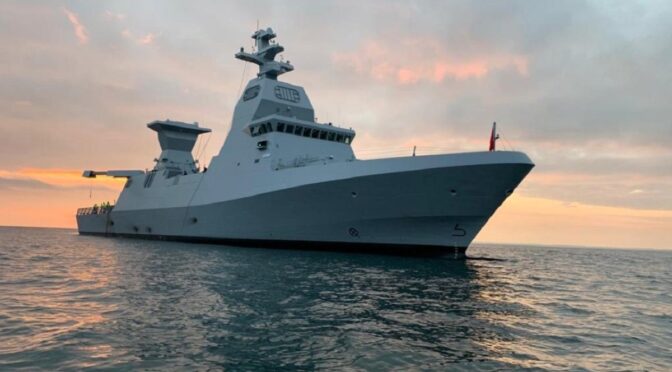
The first of four new Saar 6 ships, left, is docked in Haifa, Israel, on Dec. 2, 2020. (Photo via Heidi Levine/AP)

It can be assessed with high probability that intelligence gathered by the Russian Navy is also conveyed to Syrian and Iranian troops and indirectly even to the Hezbollah terror organization. 

Second, the presence of Russian vessels not only threatens the secrecy of Israeli navy operations in the arena but also exposes its ships to Russian forces (including Russian Navy firepower). This causes an inability for the Israeli Navy to maneuver freely in the arena where Russian vessels are present without prior coordination (deconfliction). 

The threat to the secrecy of Israeli naval operations will make it difficult to carry out intelligence missions and special operations both in peace and in war. In addition, it is reasonable to assume that in the case of war or conflict, the Israeli Navy will be highly challenged in attacking its adversaries’ vessels and coastal targets (both in Lebanon and in Syria) by the presence of Russian Navy vessels and aircraft. 

The Russian Navy’s presence and maritime control in the Mediterranean region threaten Israel’s vessels and aircraft operations, essentially constituting access denial operations carried out by the Russian Navy in the Mediterranean arena towards the Israeli Navy. 

Eyal Pinko served in the Israeli Navy for 23 years in operational, technological, and intelligence duties. He served for almost five more years as the head of the division at the prime minister’s office. He holds Israel’s Security Award, Prime Minister’s Decoration of Excellence, DDR&D Decoration of Excellence, and IDF Commander in Chief Decoration of Excellence. Eyal was a senior consultant at the Israeli National Cyber Directorate. He holds a bachelor’s degree with honor in Electronics Engineering and master’s degrees with honor in International Relationships, Management, and Organizational Development. Eyal holds a Ph.D. degree from Bar-Ilan University (Defense and Security Studies).

Endnotes

1. Yadlin Amos, “Russia in Syria and the Implications for Israel,” Strategic Assessment, Volume 19 No. 2 (7/2016): 9. 

2. Ibid.

Featured Image: Russian Navy Captain Alexander Shvarts stands near the main gun system on the Russian missile cruiser Moskva as it patrols in the Mediterranean Sea, off the coast of Syria, on December 17, 2015. (Max Delany/AFP)

Friends from Afar: U.S. and South Korea Coast Guards Help South America Combat IUU Fishing

The Southern Tide

Written by Wilder Alejandro Sanchez, The Southern Tide addresses maritime security issues throughout Latin America and the Caribbean. It discusses the challenges regional navies face including limited defense budgets, inter-state tensions, and transnational crimes. It also examines how these challenges influence current and future defense strategies, platform acquisitions, and relations with global powers.

“We focus on partnerships…Our partners want to work with us. They want the advantage of the United States education, training, exercises and military equipment. It’s the best in the world. And so it’s up to us to deliver that in a way that’s relevant and also provides a return on investment for American taxpayer. So that is our focus.” –Navy Adm. Craig S. Faller, commander of U.S. Southern Command, before the Senate Armed Services Committee July 9, 2019.

By Wilder Alejandro Sanchez

Introduction

A deployment by the U.S. Coast Guard cutter Stone (WMSL-758) to the South Atlantic, and two coast guard patrol vessels donated by the Korea Coast Guard (KCG) to the Ecuadorian Navy, are some of the latest initiatives by South America’s partners to help regional navies combat illegal, unreported, and unregulated (IUU) fishing. As large, extra-hemispheric fishing fleets continue to actively operate close to South American waters, often crossing into the Exclusive Economic Zones (EEZs) of regional states, navies require additional ships and the physical presence of partner navies to combat these crimes. In the vast waters of the South Pacific and South Atlantic, every ship counts.

The Current Status of the Extra-Regional Fleet

IUU is a constant problem across Latin American waters, both in the South Pacific and South Atlantic. At the time of this writing, the large, extra-hemispheric fishing fleet that operated in international waters close to Ecuador’s EEZ (see the author’s October 16, 2020 commentary “TIAR 21: Maritime security, the TIAR, and IUU fishing in the Western Hemisphere”) has crossed to the South Atlantic. The fleet gained international notoriety when it operated close to the Galapagos Islands, close to Ecuador, in mid-2020.

It has since then voyaged south, passing by Peru and Chile. After monitoring the fleet as it navigated close to its waters, the Chilean Navy reported that some 233 extra-hemispheric fishing vessels, mostly Chinese but also from South Korea and other nations, have crossed the Magellan Strait and Cape Horn to reach the South Atlantic. 

The U.S. Coast Guard Helps South American Partners 

The U.S. Coast Guard has deployed its new Legend-class cutter Stone to the South Atlantic to cooperate with the navies of Guyana, Brazil, Uruguay, Argentina, as well as Portugal, to help combat IUU fishing.

Stone departed from the U.S. in late December and has already passed by Guyana, where it carried out maneuvers with the coast guards of Guyana to combat IUU fishing in the area as part of Operation Southern Cross. In engaging with Brazil, the crew of the Stone “conducted engagements and training on communications and law enforcement procedures at the Mocangue Naval Complex in Rio de Janeiro. At sea, Stone worked with the patrol vessel Guaiba and the offshore patrol vessel Amazonas to patrol jointly and practice maneuvering together,” explained the U.S. Coast Guard to the author. Stone docked in Montevideo, Uruguay, in late January.

U.S. Coast Guard Lt. Cmdr. Jason McCarthey, operations officer of the USCGC Stone (WMSL 758), exchanges gifts with members of the Guyana Coast Guard off the coast of Guyana on Jan. 9, 2021. After enacting a bilateral agreement on Sep. 18, 2020, the U.S. Coast Guard and Guyana Coast Guard completed their first cooperative training exercise to practice combating illicit marine traffic. (U.S. Coast Guard photo by Petty Officer 3rd Class John Hightower) KCG retired Coast Guard ships are loaded onto a transport for delivery to Ecuador (Korean Coast Guard photo)

For Latin American states, it is always helpful when a (modern) vessel from one of its partners travels to the region to provide assistance with surveillance and, if necessary, interception operations of suspicious vessels that may be engaged in activities like IUU fishing, smuggling narcotics, among other maritime crimes. However, vessels like Stone cannot be in the South Atlantic perpetually, and so it is up to regional navies to cooperate with each other and improve their capacities to combat these crimes.

The Importance of Ports in the Fight Against IUU Fishing

A spokesperson from the State Department’s Bureau of Western Hemisphere Affairs explained to the author that the U.S. government “supports and promotes the implementation of the Agreement on Port State Measures (PSMA), a groundbreaking treaty designed to ensure catch from illegal, unreported, and unregulated (IUU) fishing vessels cannot be offloaded in ports and enter the global market.” If implemented in an effective manner, “the PSMA can ​close gaps and weak points so that fishing vessels conducting IUU fishing activities have minimal opportunities to circumvent the rules,” the spokesperson explained. South American countries like Chile, Ecuador, Guyana, Peru, and Uruguay are already parties to the PSMA.

Uruguay is an interesting case study of efforts to combat IUU fishing. The country has very limited naval assets and a vast sea that is plagued by IUU fishing (see the author’s October 12, 2016 commentary for CIMSEC: “The UNCLCS Ruling and the Future of the Uruguayan Navy”). Therefore, in a positive development, “the government of Uruguay, consistent with the Port State Measures Agreement, will require certification from all large fishing ships to demonstrate they have not been engaged in illegal, unreported, and unregulated fishing by requiring Vessel Monitoring System (VMS) location data. Uruguay is also increasing the number of its fishing vessel inspectors by 33 percent,” explained the Bureau to the author. The announcement was made during the 25-27 January visit of Stone to the South American nation.

Moreover, it is worth noting that Washington has an “ongoing multiyear partnership in the Caribbean with the [Food and Agriculture Organization] to support PSMA implementation and other instruments to combat IUU fishing in the Bahamas, Guyana, Jamaica, the Dominican Republic, and Trinidad and Tobago.” Extra-hemispheric fishing fleets (e.g. from China) do not operate in Caribbean waters, but the region still has to combat IUU fishing. Therefore, support from the U.S., particularly via the U.S. Coast Guard, but also from other agencies, is key to protecting Caribbean marine life.

The KCG Ecuadorian-Partnership

In mid-December, the Ecuadorian Navy presented its two new secondhand patrol boats. The vessels were operated by the Korean Coast Guard from the early 1990s until they were decommissioned in 2019 and 2020. The Haeuri-class vessels have an overall length of 54 meters, a displacement of 300 tons, and were manufactured by Hyundai Heavy Industries.

The two ships were transported from South Korea to Ecuador aboard the general cargo ship Atlantic Harmony; they departed South Korea in mid-November and arrived in mid-December. It is expected that the vessels will be commissioned into the fleet in early 2021.

Retired Korean Coast Guard ships are loaded onto a transport for delivery to Ecuador (Korean Coast Guard photo)

Prior to their commissioning, maintenance for the new ships will be provided by the Ecuadorian state-run shipyard ASTINAVE, a shipyard spokesperson explained to the author. The shipyard’s operations, like building new vessels and maintaining the rest of the fleet, make ASTINAVE a critical pillar of the country’s defense strategy, the spokesperson explained.

The two ships are a welcome addition to the Ecuadorian fleet for patrol operations. In fact, according to reports, the ships will be utilized to patrol the Galapagos Islands in order to protect these natural reserves from IUU fishing.

In a statement, Commissioner General of the Korea Coast Guard Kim Hong Hee highlighted the importance of this transfer: “previously, the vessels 302 and 303 had successfully completed the missions of protecting the marine resources and safeguarding the maritime sovereignty surrounding the Jeju island, South Korea. They will be once again serving the cause after arriving at the Guayaquil Port of Ecuador.”

Commissioner General of the Korea Coast Guard Kim Hong Hee (Korean Coast Guard photo)

Final Thoughts

Illegal, unreported, and unregulated fishing is a global problem that requires short- and long-term strategies, including greater cooperation between the governments of nations whose waters are constantly suffering from predatory fishing. This is the case of many Latin American nations, as navies are monitoring their EEZs to locate, shadow, and if necessary, intercept extra-hemispheric fishing vessels.

In 2020, a major international fishing fleet of over 300 vessels, many of them from China, made global headlines as they operated close to the cherished Galapagos Islands. However, while global media attention has moved on to other issues, the fleet is still close to South American waters, with some 233 vessels reportedly crossing from the South Pacific to the South Atlantic. The vast number of fishing vessels means that regional navies require more ships, not to mention more maritime patrol aircraft, to maintain a vigilant presence across vast bodies of water.

This is why the deployment of the U.S. Coast Guard cutter Stone, in addition to other support provided by Washington, and the donation by the Korea Coast Guard to the Ecuadorian Navy of two decommissioned patrol vessels, are welcome developments. “I hope that the two patrol vessels will become invaluable assets for Ecuador, which is also affected by the spread of the coronavirus, contributing to protecting the Galapagos islands designated as one of the UNESCO Natural Heritage sites,” commented KCG Commissioner General Kim Hong Hee in November as Atlantic Harmony departed for Latin America.

As extra-hemispheric fishing fleets will continue to operate in a predatory manner close, if not within the EEZs of South American nations, greater cooperation and an active physical presence in these vast waters will remain mandatory.

Wilder Alejandro Sánchez is an analyst who focuses on international security and geopolitics. The views expressed in this article belong to the author alone and do not necessarily reflect those of any institutions with which the author is associated.

Featured Image: Guyana Coast Guard small boats patrol alongside the USCGC Stone (WMSL 758) off Guyana’s coast on Jan. 9, 2021. (U.S. Coast Guard photo by Petty Officer 3rd Class John Hightower)