Category Archives: Middle East

Analysis related to USCENTCOM.

Afghanistan After America: China’s Next Adventure

By Micah Petersen and Addison McLamb

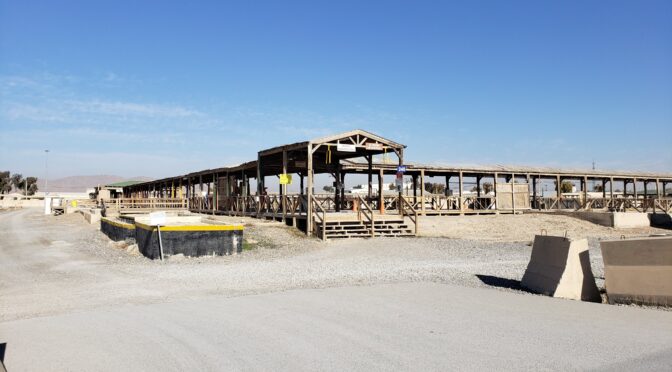
As the final boardwalk shop on Kandahar Airfield closed its doors for the last time, reality hit home: this time the United States was actually leaving Afghanistan. A decade ago, thousands dined at TGI Friday’s on the boardwalk and joined in for Salsa Night; but now the desert dust of Kandahar blew trash across the empty basketball court and into the barbed-wire fence surrounding it, deterring anyone from playing a game during the COVID-19 pandemic. Unlike the proposed closure of the airfield in 2015, the minimal numbers of U.S. troops throughout the country was indicative of an impending full withdraw. A nearby volleyball court, track, and soccer pitch—once part of a bustling complex of over 30,000 visitors—now sat empty in the sun, waiting for the revolving door of imperial powers to supply its next occupant.

The U.S. military began its first withdraw from Afghanistan in 2011, but 2,500 troops remained in the country at the start of 2020. In February 2020, as part of a U.S.-Taliban peace plan, former President Trump agreed to the full, conditional withdraw of all U.S. troops by May 2021. President Biden then delayed the date of withdraw until September 2021. With the withdraw now complete, continued instability in Afghanistan seems inevitable, and foreign stakeholders will vie for leverage as part of a larger Central Asian strategic competition for influence. Of these players, China is uniquely poised to fill Afghan power vacuums and pursue its foreign policy objectives in Afghanistan by leveraging its historic neutrality with the Taliban, capitalizing on existing Belt and Road Initiative (BRI) projects in Afghanistan, and backing Pakistan to consolidate gains in a post-American occupied Afghanistan.

China’s Central Asia Strategy

Predominantly populated by a European diaspora, the United States first sought its strongest foreign ties with the “Old World” of Europe. In contrast, as a civilization unto itself, China sought its strongest ties and influences with the areas most able to affect domestic wealth and power—in a word, its borders. Throughout history—perhaps inspired by a “Go” strategy of avoiding encirclement—China has sought to secure lines of communication (LOC) in zones of influence adjacent to its borders. Whether through the eastern “nine-dash line” or western clashes with India, China sees its borders less as boundaries, but more as the circumference of a territorial platform from which to project power in near-area zones of influence, thereby ensuring domestic security and buffering outside threats to the desired “Grand Society” envisioned by Confucius.

This realist approach to security has also been balanced with a partnership approach via bilateral relations under the BRI. The Chinese Communist Party (CCP) likely recognizes its western-focused BRI will necessitate power projection in Afghanistan. Beijing’s policy proposals often allude to Chinese cultural references or shared history (usually an attempt to nest the young Communist Party within ancient Chinese society), and the choice of Silk Road alliteration is not melodrama. China probably desires Central Asian resources and economic clientelism to offset any adversarial posturing from South Korea, Japan, or Taiwan. Beijing would also anticipate Pakistan’s help with any push to utilize LOCs in and around Afghanistan. As if to signal the depth of their alliance, Pakistan and China recently leaked an intelligence agreement between Pakistan’s Defense Ministry and China’s Central Military Commission, demonstrating their willingness to combine strategic effort with tactical collaboration. Overall, China recognizes that stabilization in Central Asia requires a stable Afghanistan.

Over the last two centuries, Beijing learned from previous Russian, British, and American occupations in Afghanistan. As a result, the CCP has neither taken an official political stance against the Taliban nor generated unilateral policy positions towards Afghanistan. Their “bilateral” relationship with Afghanistan (framed with the same grandeur and opacity as its nearly eighty other BRI “bilateral” partnerships) allows the CCP to exert paternalistic dominance in economic relationships whilst couching investment loans as indicative of symbiotic “global leadership.” With the Taliban now in control of most of Afghanistan, Beijing could use infrastructure investment and United Nations’ influence to support a Taliban-ruled Afghanistan. Supporting a Taliban regime could also allow China to excuse itself from foreign accusations of anti-Islamic bias. The Taliban is geographically postured to quell any potential uprisings against their CCP partners, allowing Xinjiang abuses to be cast as a purely secular effort to shore up public safety rather than as an Orwellian plan to crush recurring thought crime.

Overall, to China, Afghanistan likely reflects a ripe investment opportunity, credible hedge against criticism of anti-Islamic bias, and tantalizing opportunity to display international leadership. To Afghanistan, China likely represents a steady supply of invasion-free investment, a sympathetic ear within the United Nations Security Council, and a pan-Asian sense of durable partnership. Whether the relationship blossoms will be largely dependent on the real returns of each side’s commitment.

Infrastructure Investment

During America’s two-decade effort in Afghanistan, Beijing took advantage of waxing relations (especially in the Hu Jintao era) to quietly fund infrastructure investment throughout the country. This was not a new tactic for China—from the early 20th century through the 1980s, China bankrolled various African infrastructure projects and even supplied weapons to sub-Saharan tribes fighting for independence from their colonial invaders. China transitioned to more passive models for the next three decades (largely due to Deng Xiaoping’s famous “lie low” doctrine and Jiang Zemin’s “Shanghai Clique”opportunism), which culminated most recently in Xi Jinping’s hybrid BRI.

Modern Sino-Afghan relations were significantly shaped by Mao’s diplomacy in the 1960 Beijing-Kabul Non-Aggression Treaty. Despite sharing a slim border with Afghanistan; and even in comparison to the billions of dollars of United States’ aid since 2001, China nonetheless still holds rights to Afghanistan’s largest foreign investment project: the Aynak copper mine. Chinese payments for mineral exploitation fees alone guarantee the Afghan government an annual return of over $800 million. As strategic hubs like Kandahar Airfield are no longer controlled by foreign actors, China’s construction and operation of airports in Zimbabwe and other African states foreshadows interest in controlling and managing Afghan transportation networks. The Taliban lacks any experience in operating international airfields, and China is likely to offer its managerial expertise in hopes of establishing a similar control over transportation networks that it has with aforementioned African states. The durability of economic quid pro quo is questionable, but Chinese strategic intentions remain clear.

Infrastructure development in Afghanistan allows China to secure both profit and security. The Taliban has a history of supporting the Eastern Turkmenistan Movement, which is China’s largest terror threat in Xinjiang. Using Afghan infrastructure investment as an incentive—and domestic resources (like Aynak) as collateral—Beijing can field both carrots and sticks to dissuade Taliban support of Uighur Turkic groups. The mechanics of such negotiations can be nested within BRI projects and then marketed as skillful CCP maneuvering focused on both foreign and domestic outcomes.

Risk and Alliance

Chinese success in Afghanistan will be most reliant on its alliance with Pakistan. Kipling’s famous “Arithmetic on the Frontier” lyricizes the debilitative cost of attempting to stabilize a society that has been de facto tribal since the 14th century Durrani Empire. True to Kipling’s foreboding, it seems that durable stability in Afghanistan will only come when Pashto, Tajik, Hazara, Uzbek, and other minority tribes are aligned to a common national vision. China’s initial networking among some of Afghanistan’s most rugged and hardened regions—in concert with Pakistan—will pay dividends in their understanding of how to assess and realign competing visions.

The United States and Soviet Union both struggled in Afghanistan in part because of difficulties in suppressing insurgent activity from the ungoverned Federally Administered Tribal Areas (FATA) along the Afghanistan-Pakistan border. Relationships with powers like Pakistan are helpful for casting a wider, more effective net against regional terror activity, and China has a very strong and stable diplomatic relationship with Pakistan. Through this relationship, China has arguably set conditions to stabilize the infamous northeast provinces near the FATA. This could create a power dynamic where Beijing’s most significant negotiations would be with the Pashto and Taliban-dominated South—areas historically more aligned with kindred Pashtos in Pakistan. Northern stability and southern alliances may then serve as a platform to negotiate with a larger confederation of tribes (including those of the former Northern Alliance) to more quickly realize a Durrani redux and Afghan solidarity.

The crux of China’s involvement in Afghanistan relates primarily to security—both economic and domestic—and the risk tolerance of the CCP to flex global leadership aspirations in such a difficult environment. China will likely mitigate this risk by leveraging its existing infrastructure investments and strong alliance with Pakistan, while using BRI channels and domestic information control to frame the move as necessary for Central Asian prosperity and stability in Xinjiang. Furthermore, with the inevitability of the Taliban attaining at least some formal influence within Afghanistan governance, China remains the only permanent United Nations Security Council member whose relationship with the Taliban could bring benefits to both parties.

Conclusion

The U.S. military and NATO writ large made a lasting impact on the country of Afghanistan. Despite the fall of the Afghan government, other aspects of development such as female literacy rates, female employment, and significant overall growth of GDP per capita since 2001 are evidence that the NATO mission transformed the lives of Afghans. But long-term outcomes of western involvement remain ambiguous.

If history is any guide, U.S. troops will not be the last foreign soldiers to see shops close their doors at Kandahar Airfield. What we do know is that the discussion regarding Afghanistan’s future development is a conversation space that should not be dominated solely by the People’s Republic of China. The CCP’s expansion over the last decade, and its associated exploitation of countries in need of steady development, raises enough red flags to force the United States and its allies to consider how China will insert itself in Afghanistan over the coming years. Recognizing the incentives China possesses to influence Afghanistan is of the utmost importance and critical for the United States as it repositions itself within the Middle East.

Micah D. Petersen is a graduate of the University of Delaware with a BA in International Relations and an MA in Geography, focusing on Chinese migration to Africa. He is also a Schwarzman Scholar and currently serves as an Infantry Captain in the United States Army. He  has studied and traveled to over 25 countries and deployed to Kandahar, Afghanistan as the Aide-de-Camp to the Kandahar Airfield Commanding General.

Addison McLamb is a graduate of Wake Forest University with a BA in Chinese Language and  Culture, focusing on Chinese foreign policy. He is a Schwarzman Scholar (Class of 2017) and currently serves as an Intelligence Captain in the United States Army. The views expressed are those of the authors and do not reflect the official position of the Department of the Army or Department of Defense.

Featured image: December 2020 – Once the center for social activities, the Kandahar Boardwalk sat desolate before coalition forces handed it over to the Afghan government in January 2021. (Credit: authors)
The Next War: How the Israeli Navy Can Better Cooperate with Israel’s Air and Ground Forces

By Ehud Eilam

The Israeli Navy has several important tasks, including the protection of Israel’s population and industrial centers, its sea lines of communication in the Mediterranean and the Red Seas, and its gas rigs. As part of the Israel Defense Forces (IDF), the Israeli Navy must also combat Arab Non-State Actors (NSAs), namely Hezbollah and Hamas. Israel fought wars with Hezbollah in Lebanon from July to August 2006, and with Hamas in the Gaza Strip from December 2008 to January 2009, July to August 2014, and in May 2021. The Israeli Navy is composed of three flotillas. This article will examine their cooperation with the IDF’s air and ground forces in the next war with Hezbollah or Hamas and make recommendations to improve the Israeli Navy’s capabilities.

Reliance on Firepower

In the last two decades, the IDF has relied on firepower more than maneuver to reduce its combat casualties, due to the increasing precision of its weapons systems. By depending on firepower, the IDF is exploiting its advantage in technology over its adversaries, in particular Arab NSAs. However, this approach did not lead to success in the 2006, 2008-2009, and 2014 wars with Hezbollah and Hamas, all of which ended without a clear victory. The IDF is eager to ensure such a victory in the next war, but it will likely continue to prioritize firepower over maneuver, mostly from the Israeli Air Force (IAF).

While Hezbollah has significantly less firepower than the IDF, it has approximately 150,000 rockets and missiles with which it can target most of Israel. The IDF’s Home Front Commander, Major General Uri Gordin, warned on March 15, 2021, that during a war with Hezbollah, Israel might absorb as many as 2,000 rockets and missiles daily–which could hit any number of targets, including Israeli airfields. The IAF has been preparing for such a scenario so that it can continue to operate under fire. This problem was raised back in the 1990s, when the IDF was more focused on Arab militaries, particularly the Syrian military, rather than Arab NSAs.

Some in Israel suggested then to strengthen the Israeli Navy at the expense of the IAF, as a platform to strike adversaries from the sea. Their justification for investing in the navy was that warships can carry more weapons and operate for longer of periods of time than aircraft, which require more frequent rearming and refueling at airfields that are exposed to enemy fire. Yet warships also need to rearm and refuel at their bases that are exposed to enemy fire. Regardless, the IDF continues with its traditional doctrine of relying on the IAF, rather than the navy, for delivering massive firepower. The IAF has no strategic bombers, only fighter-bombers—the F-15, F-16, and F-35—but they can inflict a significant blow.

Assisting Ground Forces

In the 2006, 2008-2009, and 2014 wars, the Israeli Navy assisted ground forces by providing sea-to-shore fire support. The Israeli Navy has 76 and 20mm cannons and Spike-Er missiles, which is relatively less firepower than what the IAF can deliver. This firepower also has a short range, which limits the navy to striking targets at or near the coastline. However, more akin to artillery than aircraft, warships can maintain a longer presence at the battlefield, ready to fire at any time—which is essential if a ground unit needs immediate fire support. The IAF has significantly improved its availability for close fire support, but it is sometimes not enough. 

Gunships are useful in attacking various targets and would significantly improve the navy’s fire support for ground forces. In the IDF, almost all aircraft are under the control of the IAF. Since the Israeli Navy has no ability to strike targets from the air, it has needed to improvise. For example, on July 10, 1985, two MD-500, light gunships, took off from an Israeli missile corvette operating near the Lebanese coastline. The gunships bombed a base of a terror group and returned to the ship. The Israeli Navy could repeat such a mission with AH-64 gunships and warships large enough to embark them. The British Army Air Corps used AH-64s embarked aboard ships to strike targets in Libya in 2009.

The AH-64 has a range of less than 300 miles, but that should be more than enough against Hezbollah in Lebanon and Hamas in the Gaza Strip. Lebanon’s geography is such that all of Hezbollah’s bases there are within striking distance from the sea, if the IDF attacks them with gunships. The geography of the Gaza Strip is even more conducive for strikes from the sea, and its width is not more than seven miles. Therefore, every objective there could be hit from the sea by an AH-64.

The IAF can bomb every objective in Lebanon and the Gaza Strip by relying on its airfields, but gunships can land in many other areas, including on ships. An AH-64 that is sent to strike deep inside Lebanon can save fuel if it is launched from a ship located near the coastline. Having more fuel would allow the gunship to remain on station for longer periods, which sometimes can be crucial for the success of the mission. Furthermore, having the ability to launch an AH-64 from a ship would be helpful for operations farther away from Israel. 

The Israeli Navy also assists ground units with intelligence gathering activities. In general, the IDF has upgraded its ability to gather intelligence, most notably by assimilating various types of unmanned aerial vehicles (UAVs). The navy is also part of this effort. Operating with and without UAVs, its surface ships and submarines can escort ground units, conduct reconnaissance for them, warn them about threats ahead, advise how to bypass an obstacle, etc. Surface ships such as missile corvettes risk exposure to Hezbollah’s anti-ship missiles when supporting these activities, but Hezbollah lacks anti-submarine capabilities. However, the Israeli Navy cannot rely on submarines solely in gathering intelligence, let alone in a time of war, when information will be in high demand.

Hezbollah and Hamas plan to defend their positions from these activities. Their defense relies on mortars, improvised explosive devices, mines, and anti-tank missiles, such as the advanced 9M133 Kornet. The latter might also be used against Israeli ships operating near the coastline. Hezbollah has additional anti-ship missiles: the Yakhont and C-802. They will be met by Israel’s Barak-8, a long-range anti-missile system. The Israeli Navy also has the C-Dome to protect ships from drones, rockets, and missiles. The Barak-8 and C-Dome have not been tested in combat. Depending on how well those defense systems work, the IDF will decide how much the Israeli Navy can assist ground units in providing fire support and intelligence.

In the 2006 war, Hezbollah fired a C-802 missile that hit an Israeli missile corvette, killing four of its crew. In the first stage of the next war, the Israeli Navy and the IAF will try to destroy Hezbollah’s anti-ship missiles before they can be launched. Until then, the Israeli Navy might limit its operations in order to protect its ships. This is another factor that will affect how much support the Israeli Navy can provide to Israel’s ground forces.

Amphibious Capabilities

The IDF has carried out amphibious operations during and since its first war in 1948. However, the landings were quite limited, mostly aimed at delivering supplies and vehicles, such as in the 1956 war. In 1967, a relatively major amphibious operation was supposed to take place in northern Sinai, close to the border. It was canceled due to the rapid advance of Israel’s ground forces. In the 1973 war, the IDF had plans to conduct a large-scale amphibious operation in the Suez Bay, but they were eventually turned down. The IDF preferred to rely on crossing the Suez Canal, which was a daring and highly risky operation, but one that seemed less problematic than landing from the open sea.

In 1982, the IDF carried out its largest amphibious operation ever. It was conducted in Lebanon against the Palestine Liberation Organization (PLO). However, the IDF did not face much resistance since there were no PLO fortifications and almost no PLO forces in the landing zone. The PLO also did not have a navy, and the IDF enjoyed air superiority. Even the weather supported amphibious operations. Despite all those advantages, the IDF did not advance quickly from the beachhead. In 1993, the IDF took its few landing craft out of service, which were sold or used for target practice. The Israeli Navy concluded the landing craft were too vulnerable to enemy fire. The IDF could have dealt with this vulnerability by suppressing the enemy fire, buying better and faster landing craft, etc., but the IDF did not further invest in this warfare area.

In a war against Hezbollah or Hamas, establishing a beachhead in Lebanon or in the Gaza Strip could meet some resistance. However, while Hezbollah has a few dozen tanks, Hamas lacks capabilities to carry out a significant counterattack. They can only launch infantry to storm the beachhead. Conversely, the IDF can quickly deploy enough troops, backed by air power, to push back any counterattack. Hezbollah and Hamas have mortars and anti-tank missiles, but no heavy artillery. Therefore, the beachhead is not likely to face any danger of annihilation. Hezbollah and Hamas have also invested in building fortifications near their land border with Israel, assuming correctly that Israeli troops will attack there, as they have in previous wars.

In the last decades, the IDF’s naval commandos carried out raids, including from the sea. However, conducting a vast amphibious operation is distinct from such raids. The IDF is aware this will be a complicated task, which requires effective and tight cooperation between its sea, ground, and air forces. Even when Israel’s foe has been an NSA, and therefore lacking most capabilities of conventional armed forces, the IDF avoided investing in amphibious capabilities. It is a missed opportunity. With amphibious capabilities, the IDF can surprise its foe, which could help in achieving victory. The IDF can land in Lebanon or the Gaza Strip, bypass its enemy’s lines of defense, and attack their flanks and rear.

Coastal Defense

Most of Israel’s population and infrastructure are near its coastline, so coastal defense is a top priority for the IDF. In the 2014 war, the IDF was surprised by, but still managed to kill, a few Palestinian naval commandos, or frogmen, who penetrated southern Israel from the sea after swimming there from the nearby Gaza Strip. During the fight with Hamas in mid-2021, the IDF destroyed much of the equipment used by their frogmen, degrading their capability to strike Israel again. Depending on how much Hamas has rebuilt this capability, the IDF will probably repeat these strikes at the start of the next war.

In contrast with Hamas, Hezbollah has an increasingly capable naval unit, which receives significant funding and military assistance from Iran. Iran has provided this unit “with quality Iranian naval weapons, and trained [it] in Iranian Revolutionary Guards bases and training camps. “ Currently, Hezbollah has warehouses in Lebanon to sustain and enable its naval unit, “to have a continuous supply of weapons and access to the logistical and technological backbone.”

In the next war, Hezbollah or Hamas could attempt to penetrate Israel with frogmen, small boats, and perhaps even tiny submarines. They could inflict casualties among both troops and civilians, damaging IDF equipment near the coastline and disrupting operations. In recent years, following Israel’s conflict with Iran and its proxies, “Israel has invested in improved detection and defenses of its shores and maritime assets against various threats, such as missiles and most probably also underwater and fast-boat attacks.” This effort often requires close cooperation between sea, ground, and air forces.

The first line of coastal defense is of course at sea. The Israeli navy will try to block incursions, such as detecting fast boats and frogmen before they reach the Israeli coast. The Israeli Navy has the AS-565, a helicopter that operates from ships such as the Sa’ar-5 for a variety of missions, including reconnaissance and rescue. The AS-565 is essential when the ship is far away from Israel, where the IAF is not available.

In a time of war, the IAF will be busy with many tasks, so coastal defense may not be a priority. However, one of the IAF’s primary missions, achieving air superiority, should be relatively easy. Unlike Arab militaries, Arab NSAs lack air forces and significant air defenses. Hezbollah has some air defense capabilities for short range defense, such as SA-8, 14, 16, 17, and 22 anti-aircraft missiles. Hamas has much less. The IAF might lose a few aircraft, but it will not stop it from ruling the skies. Therefore, the IAF could focus on other tasks, such as destroying missiles and rockets before they are launched at Israel and supporting ground forces. Nevertheless, the IAF also must be prepared to allocate aircraft for naval missions, especially coastal defense.

The IAF could assist coastal defense efforts in several ways. UAVs can patrol across the coastline, looking for indications and warnings of an attack. UH-60 helicopters could land troops in every spot where there is an assault from the sea. The AH-64 could join them to provide fire support. Helicopters and gunships would be needed to support ground units on the frontline, but some helicopters and gunships could be assigned to patrol the coastline. In the 2006, 2008-2009, and 2014 wars, Israel postponed its ground offensive, sometimes by weeks, hoping heavy bombardments would be enough to bring victory. This approach might repeat itself in the next war, which means that helicopters and gunships could aid in coastal defense until the ground offensive starts.

Despite the importance of the sea to Israel, the IAF was not built to assist the navy. The IAF’s doctrine and weapon systems have been designed to defeat the air and ground forces of Arab militaries. While many Arab militaries have navies that could have attacked Israeli coastlines in past wars, they never tried. Therefore, the IDF focused on land invasion, worrying much less about an attack from the sea. NSAs cannot invade Israel from the sea, but their naval infiltrations could disrupt Israeli operations—or worse. The IAF must be ready to coordinate with the Israeli Navy to prevent this outcome. The priorities and development of the IAF will continue to be based on preparing for air combat and striking ground objectives, but the IAF should also invest in capabilities to locate and strike sea targets.

Conclusion

The IDF must be prepared to confront Arab NSAs in the next war. The Israeli Navy will have to provide fire support and intelligence to ground units, but it currently lacks the firepower it needs to be effective against ground targets. One way to improve the navy’s firepower is to launch AH-64s from ships at sea. The IDF should also consider reinvesting in amphibious capabilities for the Israeli Navy to surprise its adversaries from the rear. Ultimately, the IAF is likely to gain air superiority in a war against an Arab NSA, which will allow it to focus on other tasks, such as destroying missiles and rockets and assisting the IDF’s ground and sea forces. The IAF will decide if and how many aircraft will be allocated to carry out each mission, according to the priorities at hand. The Israeli Navy and IAF must be prepared to cooperate if one of those priorities is coastal defense.

Dr. Ehud Eilam has been dealing with and studying Israel’s national security for more than 25 years. He served in the Israeli military and later worked for the Israeli Ministry of Defense as a researcher. He has also  published six books in the United States and United Kingdom. His latest book is Containment in the Middle East.

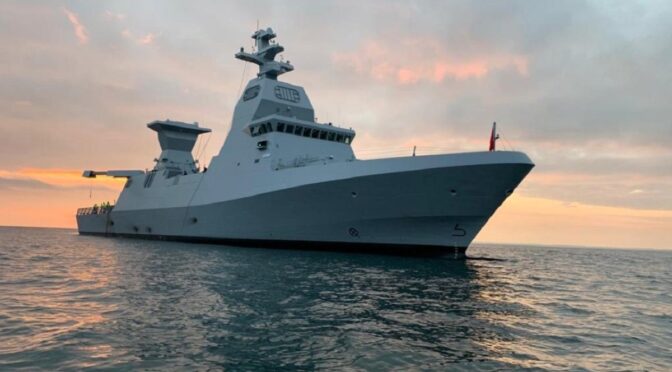
Feature image: INS Magen, the first of four new Sa’ar 6-class corvettes to be delivered to the Israeli Navy.  (Credit: Israeli Defense Forces)

Why Yemen Matters

By Jimmy Drennan

Introduction

On Sunday, Yemeni separatists known as the Southern Transitional Council (STC) seized 64 billion riyals ($260M USD) from a convoy belonging to the Central Bank of Yemen. This follows their withdrawal in April from a fragile treaty and declaration of autonomy in the southern port city of Aden. The STC’s proclamation threatens to throw Yemen into a fresh phase of bloody turmoil, even as the unmitigated spread of COVID-19 could devolve the world’s worst humanitarian crisis into catastrophe. Meanwhile, talks to end the war between Saudi Arabia and the Houthi rebels of northwestern Yemen drag on, with the Houthis indicating they may attempt to take pivotal territory in the oil-rich city of Marib. Why does any of this matter?

The stability of Yemen is not, in and of itself, one of our core national interests. Yet we continue to aid the Saudis in their war against the Houthis. Supported by international navies, we continue to patrol international waters in the southern Red Sea and Gulf of Aden. We are still pursuing Al Qaeda and ISIS throughout poorly governed regions in Yemen. Why? The answer is pragmatism.

While it is not practical, nor advisable, for the United States to commit blood and treasure to unilaterally resolve Yemen’s civil war, the instability that spills over Yemen’s borders threatens American interests. Now, with the STC potentially pitting its Emirati backers against the Saudis, who recognize the Republic of Yemen Government led by exiled President Abdrabbuh Mansour Hadi, the risk of Yemen’s festering instability igniting a larger regional conflict is greater than ever.

A Proxy Conflict Turns Central

Although a proxy war between Arab states, both of whom the United States relies on for critical military and economic access, would implicitly run counter to American interests, a hypothetical regional conflict still doesn’t explain why Yemen matters today. Even now, instability overflows from Yemen in the form of ballistic missiles, suicide drones, unmanned explosive speedboats, anti-ship cruise missiles, and sea mines. These attacks by the Houthis are generally aimed at the Saudi-led coalition (which does not include the United States), but the use of these weapons near international shipping lanes in the southern Red Sea threaten core national interests in maintaining the free flow of global commerce. The Houthis have credibly threatened to contest the Strait of Bab al Mandeb by attacking international shipping in recent years, including American warships in 2016 – which prompted swift retaliatory action against the launch sites. The strait is the sole southern gateway to the Suez Canal and therefore a strategic chokepoint for maritime trade between Europe and Asia, obviating the need to make the costly and time-consuming trip around the Cape of Good Hope.

Houthi ballistic missile and drone attacks in Saudi Arabia and the UAE threaten critical energy infrastructure, not to mention American citizens and military forces throughout the region. When considering the risk of regional Arab-on-Arab conflict, threats to freedom of navigation, and attacks on Arab energy infrastructure, another question harkens back to Ancient Rome with the Latin “cui bono?” Who benefits? In every case, the answer is Iran.

Iran publicly supports the Houthi effort to overthrow Yemen’s Hadi-led government. Having a proxy on Saudi Arabia’s southern border, or at least a like-minded partner with whom it can supply advanced conventional weapons, is of obvious benefit to Tehran. Arming the Houthis with anti-shipping weaponry allows Iran to threaten a second global maritime chokepoint, a crucial economic “ace in the hole” in its existential fight against the administration’s maximum pressure campaign. The United States, its international partners, and the United Nations have repeatedly exposed Iran’s illicit arms shipments to the Houthis; however, international sentiment is so heavily slanted against the Saudis (due largely to the early conduct of their air campaign) that Iran can quietly refute the allegations while the anti-Saudi narrative continues to resonate on Capitol Hill and social media. Meanwhile, the Houthis block humanitarian aid shipments and hold them for ransom as millions of Yemenis starve, and the world barely notices.

Iran has also learned valuable lessons on how to employ its growing arsenal in the event of a direct conflict with Saudi Arabia or the United States. In 2019, the British Government warned that Iran was using Yemen as a missile testing ground. “We’ve seen the UN panel of experts talk about the new Kamikaze drones that are coming out of Iran, we’ve had the Badr-1, which is the missile system that looks like a V2, being launched into Saudi Arabia and we have seen from technical reports that the enhancements that are being applied to that war by Iran are considerable,” Labour MP Graham Jones said.

In Yemen, Iran has deftly exerted influence below the threshold that would trigger direct U.S. retaliation, just as it has done in the Arabian Gulf over the last three decades since the Tanker War. The United States may lack the incentive to retaliate or intervene in Yemen, but ignores the failed state at its own peril. The most pragmatic approach is to help the Saudis focus on the primary source of instability in Yemen. Iran threatens Saudi Arabia from the east, north, and south, and now, with the STC’s declaration of autonomy, Tehran has the opportunity to further spread instability and division throughout the Gulf Cooperation Council states, which will only be exacerbated by global economic strain. Iran employed a similar tactic with Qatar in 2017, and now Turkey (whose relationship with Iran is ambiguous at best) appears to be joining with Qatar to finance the Muslim Brotherhood in southen Yemen.

A strategy explicitly focused on isolating the Houthis from Iranian support – militarily, diplomatically, and economically – would dramatically alter the Houthi and Iranian strategic calculus. The U.S. could organize an international effort to interdict illicit arms shipments through the Gulf of Aden (irrespective of origin). It must continue to expose Iranian malign influence in western Yemen, and work to disrupt and eventually quell Houthi revenue streams coming from Iran. Even with these efforts stability may still not “break out” in Yemen, and the Houthis are not likely to surrender the political and territorial gains they’ve earned over the last five years.  

However, as Saudi efforts shift upstream to stem the flow of Iranian aid at its source, the Houthis’ ability, and intent, to threaten American interests in partner nations and the international commons would significantly diminish. Supporting the Saudis in isolating the Houthis from Iran is pragmatic because it balances necessity with available resources and political will. Political support from Congress will be more forthcoming by shifting the focus away from western Yemen itself toward stabilizing the international commons, and broadening the scope to an international effort to eliminate illicit arms shipments and destabilizing influence.

Conclusion

Yemen and Saudi Arabia may be toxic topics in Washington, but ignoring them could be disastrous. If COVID-19 is the domino that turns a humanitarian crisis into widespread fatalities, the United States may be compelled to intervene at great cost and risk. In the event of armed conflict with Iran, western Yemen would be a second front and a second contested maritime chokepoint. Not only would ignoring Yemen allow threats to American interests to grow, it would jeopardize U.S. influence over a key partner in the global energy market. The Saudis demonstrated their clout in April by flooding the market with oil to punish Russia for refusing earlier cuts, with analysts predicting they will win the price war. On Easter, President Trump negotiated a deal for the Saudis to cut production, and while COVID-19 impacts continue to dominate the market, American influence on Saudi Arabia proved critical in softening the blow. Despite our progress toward energy independence, our relationship with the Saudis is still a major factor in our economic health.

Ultimately, the Holy Grail for securing American interests in the Middle East is for partner nations to provide for their own defense. Saudi Arabia is already a cultural and economic heavyweight, and its Vision 2030 has the potential to gradually bring it more in line with western Democratic ideals, and to improve its security and defense institutions. A functional Arab regional security architecture is among the greatest of Iranian fears. In Yemen, the United States can send a strong message to Iran and invest in Saudi Arabia’s future as a regional security leader and sustainably secure American interests more broadly. By doing more now the U.S. can do less in the Middle East in the future.

Iran certainly sees opportunity to sow further instability in the wake of the STC’s separatist declaration in Aden. Tehran will gauge Washington’s reaction closely, and the penalty for inaction on our part could be severe. It is time to decide whether Yemen matters more to us, or more to Tehran.

Jimmy Drennan is the President of CIMSEC. Contact him at President@cimsec.org. These views are the author’s alone and do not necessarily reflect the position of any government agency.

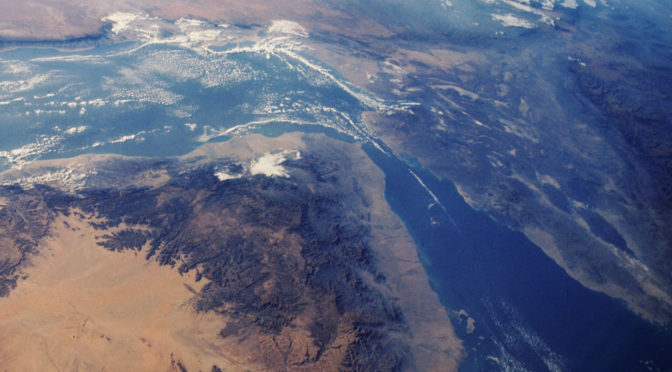
Featured Image: South-southwest-looking, high-oblique photograph taken during the Hubble Space telescope’s STS-61 servicing mission shows the southwestern Arabian Peninsula, the Gulf of Aden, the Red Sea. (NASA photo)

Arab Allies Must Step Up To Defend Freedom of Navigation in the Gulf

Securing the Gulf Topic Week

By Andrea Daolio

The Persian Gulf recently made headlines across the world due to clashes between Iran, the U.S., the U.K., and regional Arab states. Of grave concern, the Strait of Hormuz in the Persian Gulf is a chokepoint for global shipping routes where much of the world’s energy supply passes. While tensions have remained high in the region for quite some time, every incident bears some consequence for global stability.

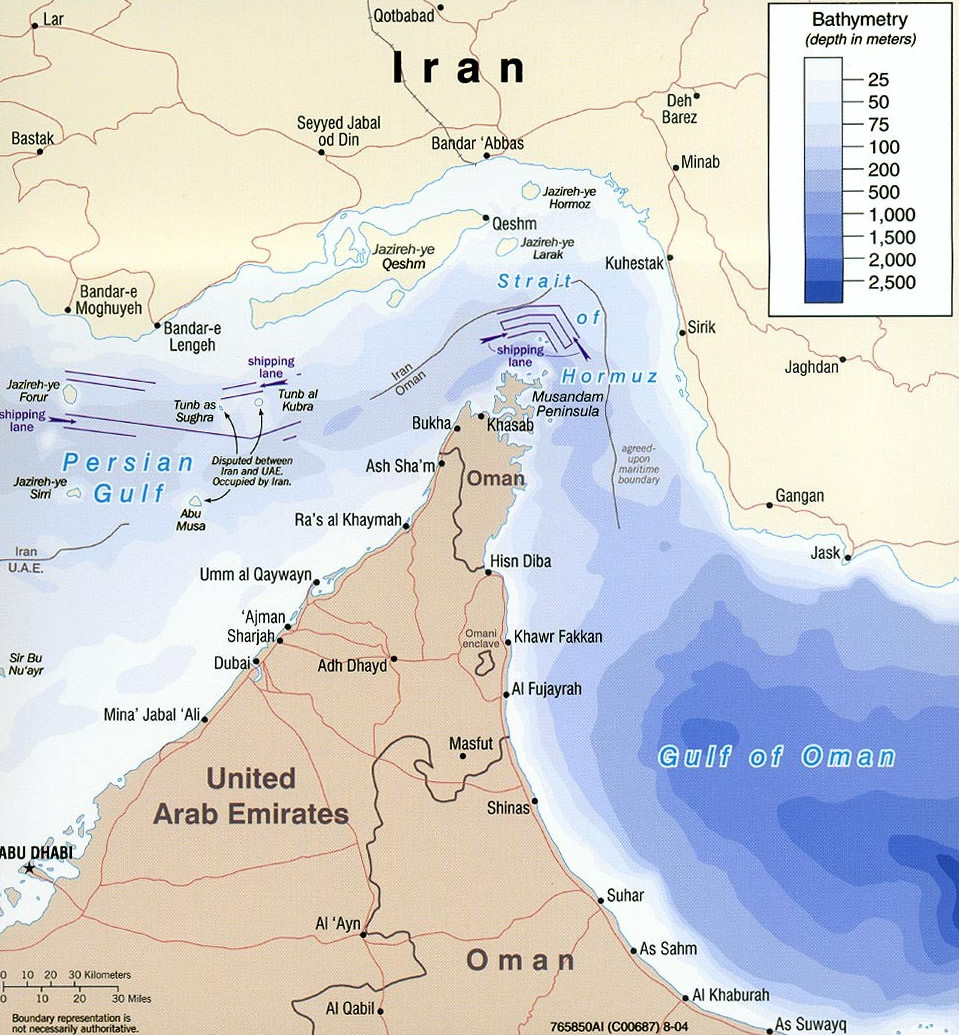
The Persian Gulf (or Arabian Gulf according to some Arab countries, showing how the rivalry also extends to the very name of the sea) is an inland sea that is connected to the Gulf of Oman and the Indian Ocean through the Strait of Hormuz, a feature that is only 21 miles wide at its narrowest point. With its powerful littoral navy homeported in bases all around the Strait, from the main base at Bandar Abbas to smaller ports at Jask, Qeshm and Abu Musa, Iran is clearly very well-positioned to attempt a closure of the Strait.

A map of the Strait of Hormuz and key shipping lanes. (Wikimedia Commons/Perry Castaneda Online Library, University of Texas)

Freedom of navigation has been long guaranteed by the United States Navy and its allies, but today this is increasingly challenged, from China in the South China Sea to Iran in the Persian Gulf. With respect to Iran the U.S. Navy already dealt a strong blow to the Iranian fleet in 1988 with Operation Praying Mantis, but the situation has radically changed since.1 In 1988 Iran was locked in a protracted bloody war with Iraq, and its forces were still trying to recover from the purges of the Islamic Revolution. Iran was also faced with a lack of supplies and spare parts for its largely American or European-built arsenal. It is no surprise then that American naval forces were able to sink or severely damage half of Iran’s operational fleet in a single day.

The Iranian Navy has changed plenty in the past three decades. Now the IRIN (Islamic Republic of Iran Navy) can field three Russian-built Kilo-class diesel-electric submarines and a vast array of small but deadly midget submarines that could prove extremely dangerous in the shallow waters of the Persian Gulf (that has an average depth of only 160 ft and a maximum depth of 300 ft). The Iranian surface fleet is still greatly inferior to the U.S. Navy and can only rely on a few small frigates. But it also includes a great number of small combatants, often of no more than 200 tons but armed with 2-4 modern anti-ship missiles with a range sufficient enough to hit almost any area on the opposite side of the Gulf from their home bases. But even the boats without ASMs can be a great threat in the confined waters of the Persian Gulf and attack enemy ships with surprise attacks and swarm tactics that could overwhelm even better armed American ships.2 To add to the threat, a large number of land-based anti-ship missiles and ballistic missiles are now in the inventory of the Iranian Armed Forces. These not only endanger ships in the Persian Gulf, but bases and infrastructure across the Arabian Peninsula are under threat.3

Moreover, Iran has maintained a mining capability that has already proven deadly for commercial ships and for the U.S. Navy back in the ‘80s. Since World War II, of the 19 U.S. ships sunk or seriously damaged by attack, mines were responsible for 15. Even old mines can pose a great threat to ships and will require extensive operations to clear them. Mines dropped from innocent-looking fishing boats can block shipping lanes, deter transits, all while giving the aggressor some cloak of deniability.

While these weapons are extremely dangerous for American forces in the area and Iran could carry out a deadly first strike against the U.S. and its allies, the Iranian regime is well aware that an American counter-attack could destroy their military. But if Iranian forces limit themselves to small-scale attacks that help maintain a semblance of deniability, then Iran can still cause havoc to shipping4 and destabilize the global economy as even small incidents can make oil prices and shipping insurance increase considerably.5

Expanding the Roles of Arab Allies

In order to reduce their dependence on the United States Navy, which is no longer looking to maintain a carrier strike group in the Gulf on a full-time basis, Arab Allies should concentrate more on fielding small and agile ships armed with ASMs missiles on the model of the Iranian Navy. But the trend for Gulf States in recent years has been to upgrade their navies with larger and more capable surface combatants,6 but while Saudi Arabia can base its more powerful ships in the Red Sea, Bahrain, Qatar and the United Arab Emirates can only place their ships a few miles from numerous Iranian missiles ready to strike them. If Arab states instead build a fleet of more numerous small and fast surface combatants they can hope to escape any first strike by Iran by distributing their forces and then countering Iran with reciprocal small-boat missile attacks. They must also look to expand their mine countermeasure forces to keep up with the platform-intensive activity of minesweeping.

While America and its Arab Allies can greatly contribute (and already are greatly contributing) to maintaining security in the Strait of Hormuz, Asian countries that are the main importers of Gulf oil should do their part. More than 75 percent of these crude oil exports are destined for Asian markets, with Japan, India, South Korea and China the largest importers. Moreover, Iranian actions are angering even those countries that showed support in the past to Iran or that refused to follow the American “maximum pressure” campaign of Sanctions. European countries that tried to save the Iran deal are now reconsidering their stance as Iran looks to continue enriching uranium and attack civilian shipping.7

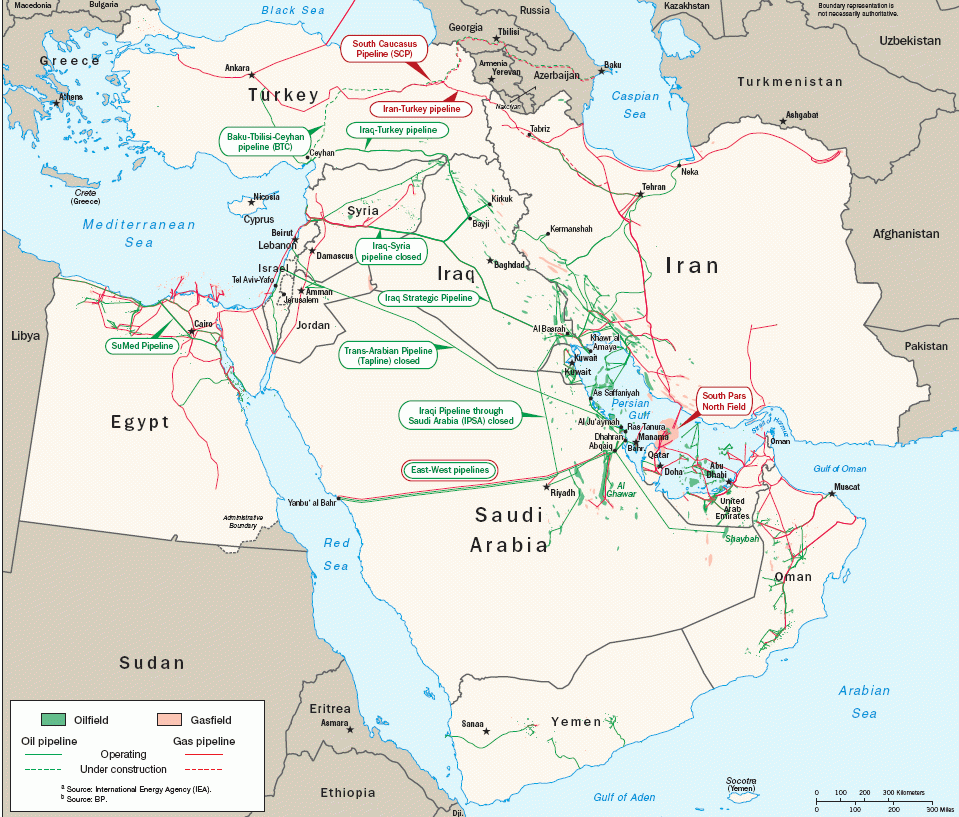
Iranian threats can be mitigated through innovating in energy infrastructure. Saudi Arabia already has a long East-West pipeline, connecting the oil fields near the Persian Gulf to the port of Yanbu on the Red Sea opposite Egypt. If more pipelines are built toward the port of Yanbu, and other ports on the Red Sea are adapted to service tankers, a large portion of Saudi Arabia’s oil and gas can be exported from this area, safe from Iranian naval threats. As the Saudi monarchy has close ties with many neighboring Arab countries, regional states could develop a joint plan to export their oil and gas from the Red Sea, in this way reducing their dependence on the Strait of Hormuz. Moreover, if Arab States export more oil and gas from the Red Sea, then Iran will increasingly become the only state that is truly dependent on the Strait of Hormuz.

Oil and gas pipelines in the Middle-East (Wikimedia Commons/Energy Information Agency) Click to expand. 

Conclusion

While the Iranian Armed Forces have greatly improved in recent decades and can be a serious threat to commercial and military assets transiting the Strait of Hormuz, there are many ways to counter these forces and maintain freedom of navigation. Since Iran has developed many asymmetric tactics to counter the U.S. and its allies, the best way to respond is to develop opposing asymmetric tactics and unconventional means, both military and political, to throw Iran off balance.

Andrea Daolio, from Italy, has an engineering background and a long-standing passion for wargaming and for geopolitical, historical and military topics. He has been a finalist in New York’s MTA Genius Transit Challenge. He is currently collaborating with video game developer Slitherine on the popular wargame Command: Modern Air/Naval Operations. His views are his own.

References

1. David B. Crist, “Gulf of Conflict: A History of U.S.-Iranian Confrontation at Sea,” June 2009, The Washington Institute. https://www.washingtoninstitute.org/uploads/Documents/pubs/PolicyFocus95.pdf.

2. Sune Engel Rsmussen, “Iran’s Fast Boats and Mines Bring Guerilla Tactics to Persian Gulf,” The Wall Street Journal, May 30, 2019. https://www.wsj.com/articles/irans-fast-boats-and-mines-bring-guerrilla-tactics-to-persian-gulf-11559208602

3. Anthony H. Cordesman and Abdullah Toukan, Iran and the Gulf Military Balance, Center for Strategic and International Studies, October 3, 2016. https://csis-prod.s3.amazonaws.com/s3fs-public/publication/161004_Iran_Gulf_Military_Balance.pdf

4. Vivian Yee, “Claim of Attacks on 4 Oil Vessels Raises Tensions in Middle East, The New York Times, May 13, 2019. https://www.nytimes.com/2019/05/13/world/middleeast/saudi-arabia-oil-tanker-sabotage.html

5. Jonathan Saul, “Ship Insurance Costs Soar After Middle East Tanker Attacks,” Reuters, June 14, 2019. https://www.reuters.com/article/mideast-attacks-insurance/ship-insurance-costs-soar-after-middle-east-tanker-attacks-idUSL8N23L2ND

6. Chuck Hill, “Saudi Navy Expansion Program,” Center for International Maritime Security, December 9, 2015. https://cimsec.org/saudi-navy-expansion-program/18474

7. Alexandra Ma, “Europe Reportedly Threatens to Activate Nuclear-Deal Clause that COULD Reimpose Sanctions and push Iran into China and Russia’s Arms,” Business Insider, July 5, 2019. https://www.businessinsider.com/iran-nuclear-deal-europe-could-activate-dispute-resolution-sanctions-report-2019-7?IR=T

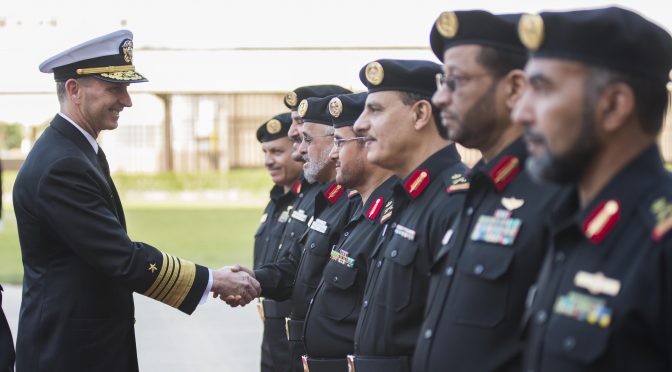
Featured Image: RIYADH, Kingdom of Saudi Arabia (Feb. 10, 2013) Chief of Naval Operations (CNO) Adm. Jonathan Greenert meets with heads of the Royal Saudi Naval Forces (RSNF) program at the RSNF head quarters building. (U.S. Navy photo by Mass Communication Specialist 1st Class Peter D. Lawlor/Released)