A New Darpa Advance Mass Might Offer Hope for Shipboard Injuries
A DARPA announcement today touted the initial results of the Wounded Statis Sytem. The pre-clinical tests showed injecting a polyurethane polymer foam into the chest cavity of an injured servicemember suffering from internal hemorrhaging could increase stoppage of blood loss 6-fold, and boost chances of survival at three hours post-injury from ~8% to 72%. Removing the foam in a singular solid chunk reportedly takes less than one minute after making a small incision.
While the press release is geared toward ground-combat survival, medical departments in the U.S. fleet would surely be just as interested in having a few of these injections on hand in the event of a singular of mass casualty incident requiring a medical evac for just this reason:
The Department of Defense’s medical system aspires to a standard known as the “Golden Hour” that dictates that troops wounded on the battlefield are moved to advanced-level treatment facilities within the first 60 minutes of being wounded. In advance of transport, initial battlefield medical care administered by first responders is often critical to injured servicemembers’ survival. In the case of internal abdominal injuries and resulting internal hemorrhaging, however, there is currently little that can be done to stanch bleeding before the patients reach necessary treatment facilities; internal wounds cannot be compressed the same way external wounds can, and tourniquets or hemostatic dressings are unsuitable because of the need to visualize the injury. The resulting blood loss often leads to death from what would otherwise be potentially survivable wounds.
DARPA launched its Wound Stasis System program in 2010 in the hopes of finding a technological solution that could mitigate damage from internal hemorrhaging. The program sought to identify a biological mechanism that could discriminate between wounded and healthy tissue, and bind to the wounded tissue. As the program evolved, an even better solution emerged: Wound Stasis performer Arsenal Medical, Inc. developed a foam-based product that can control hemorrhaging in a patient’s intact abdominal cavity for at least one hour, based on swine injury model data. The foam is designed to be administered on the battlefield by a combat medic, and is easily removable by doctors during surgical intervention at an appropriate facility, as demonstrated in testing.
Up next is clinical testing, and before long, someone you know may have an interesting memento bearing the faint impression of their internal organs.
LT Scott Cheney-Peters is a surface warfare officer in the U.S. Navy Reserve and the former editor of Surface Warfare magazine. He is the founding director of the Center for International Maritime Security and holds a master’s degree in National Security and Strategic Studies from the U.S. Naval War College.
The opinions and views expressed in this post are his alone and are presented in his personal capacity. They do not necessarily represent the views of U.S. Department of Defense or the U.S. Navy.
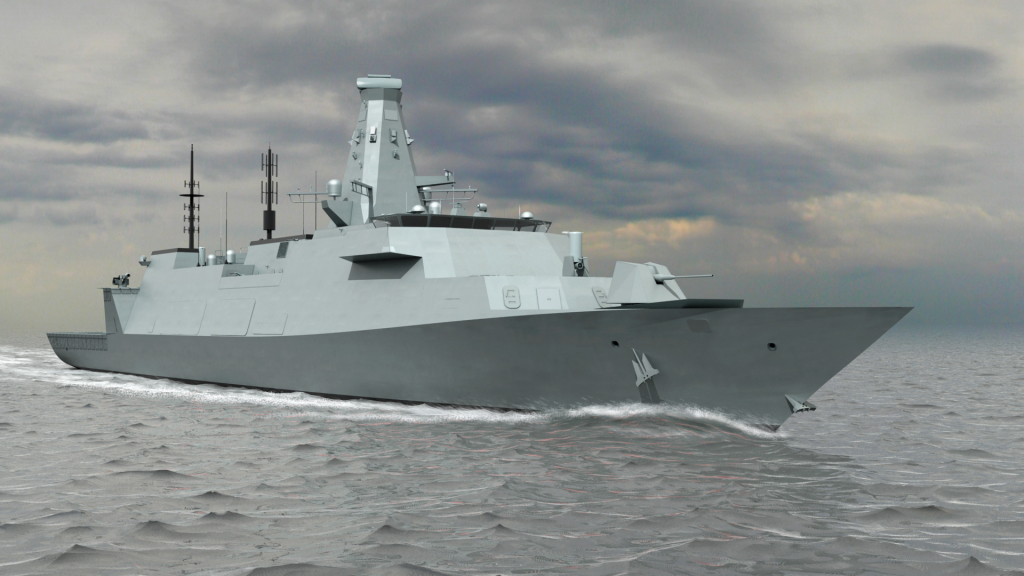
In 2020, the first of the new Royal Navy frigates – the Type 26 Global Combat Ships – will enter service, replacing the current fleet of 13 Type 23s. The ships are designed to be versatile and adaptable, making them useful within a broad range of strategic, operational, and tactical circumstances.
The First Sea Lord, Admiral Sir Mark Stanhope, said of the ships: “The T26 Global Combat Ship (GCS) will be a multi-mission warship designed for joint and multinational operations across the full spectrum of warfare, including complex combat operations, maritime security operations such as counter-piracy, as well as humanitarian and disaster relief work around the world… It will be capable of operating independently for significant periods or as part of a task group and will play a major role in the defence of this country for many years”1.
The Minister for Defence Equipment, Support and Technology, Peter Luff, also said of the ships: “The Type 26 Global Combat Ship will be the backbone of the Royal Navy for decades to come. It is designed to be adaptable and easily upgraded, reacting to threats as they change”2.
As individual units, the Type 26 frigates will no doubt be potent warships. The intended fleet of 13 Type 26 frigates do indeed represent a flexible and adaptable platform, ideal for ever-changing technological, diplomatic, strategic, operational, and tactical contexts. The proposed armament bears this out:
A hanger to accommodate a Merlin or Wildcat Helicopter (and underwater, surface and air drones)
Additional accommodation for Royal Marine detachments
The frigates is a concept, not just a particular type of ship. It is one that emphasizes wide-ranging utility, speed and cost-effectiveness. These fundamental functions have barely changed throughout the Royal Navy’s history. This quote from blogger Gabriele Molinelli posted on the Defence Management website supports this notion, “The Type 26 is going to reverse the Type 45 situation by adopting proven, legacy solutions for 80 percent of the design, and only innovating in the remaining 20 percent. This is an effort to stay within budget and get a minimum of 13 hulls into the water. Using existing and proven solutions whenever possible does not make the Type 26 obsolete. The ship will still be a great leap forwards in capability as it will be, effectively, the first true multi-mission ship of the “age of the drones” for the Royal Navy.’3. Considering the flexible nature of these warships and their obvious utility, they are understandably an exciting prospect for the Royal Navy and will represent the backbone of the fleet of the future.
But my concern is with numbers, concerns also felt at the highest levels of the military. Recent comments made by Chief of Defence Staff, General Sir David Richards, at an Oxford University talk revealed one of his biggest concerns in relation to Britain’s modern armed forces is the number of frigates and destroyers the Navy has4. We often hear talk of how advanced and flexible modern warships are, however, no matter how advanced a warship may be, numbers are of critical importance – there is quality in quantity – for a nation that wishes to retain global influence. With the Royal Navy due to commission two 65,000 tonne Queen Elizabeth-class aircraft carriers in 2016 and 2018, there is a chance of a distorted allocation of resources from the wider surface fleet.
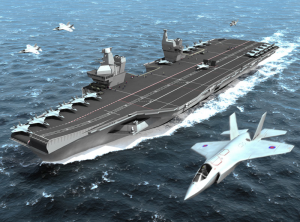
Concept image of the Queen Elizabeth aircraft carrier.
A current American carrier battle-group is at a minimum often comprised of, but not limited to, the carrier itself, two guided missile cruisers, 1-2 ASW destroyers or frigates, and up to two attack submarines. To lose one of the new carriers would be unthinkable, even more so because the loss of one would halve Britain’s seaborne strike capacity (or all of it if one of the carriers is sold to the French!). It would thus be fair to assume that the Royal Navy will need levels of protection similar to that which the American Navy affords their carriers when on deployment (additional protection in time of conflict or crisis). When you consider that there will be only 6 destroyers and 13 frigates (Type 23, then 26) for the foreseeable future, factoring in periods in re-fit, ships returning from operations and the sheer importance of these assets, deployment of just one carrier would seriously hamper the Royal Navy’s ability to meet its wider global commitments. Consider the analogy of a football team; a side consisting of only a few world-class players will still struggle to compete against a full team of average players; unable to respond to every manoeuvre on the pitch. If a warship is thousands of miles from a crisis, technological superiority counts for nothing. It is all well and good having an adaptable and flexible warship, but a flexible fleet is vital.
Limited numbers also means that should any ships be lost during a crisis, regenerating forces to replace those loses becomes problematic. We only need to recall the loses sustained during the Falklands; the modern Royal Naval fleet could not sustain such damage. With procurement timelines as they are (many sailors who serve on the new carriers and frigates were not yet born when they were first conceived), it is important the service fights tooth and nail to get its full allocation of 26s in the first round; the MOD and the Navy must learn from the Type 45 fiasco, where construction delays led to spiraling costs and a halving of the initial building programme of 12 ships. Unlike days of yore, we can’t acquire several new warships after an afternoon sparing with the French.
In addition to the routine but important ‘kinetic’ tasks carried out by Royal Navy frigates and highlighted by Admiral Stanhope in the quote above, maintaining influence through ‘showing the flag’ missions remains of critical importance. For a nation disillusioned with liberal interventionist principles, with little thirst for future foreign policy entanglements and yet a desire, and duty, to influence events abroad, soft-power should be of primary consideration for British policy-makers; something the Navy can uniquely provide. The Type 26 will be a valuable asset for providing such diplomatic leverage.
Unlike the Type 45, the Royal Navy must secure its full allocation of Type 26 warships to ensure Britain has the ability to shape events abroad, both in times of peace and conflict. Britain must not allow the fleet to shrink any further, otherwise London must accept its global influence will continue to diminish.
Simon Williams received a BA Hons in Contemporary History from the University of Leicester in 2008. In early 2011 he was awarded an MA in War Studies from King’s College London. His postgraduate dissertation was entitled The Second Boer War 1899-1902: A Triumph of British Sea Power. He organised the Navy is the Nation Conference, which was held in April 2012 in Portsmouth, UK. The aim of this event was to explore the impact of the Royal Navy on British culture and national identity.
[1] ‘Design unveiled of Royal Navy’s future warships’ 20 Aug 2012
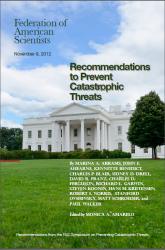
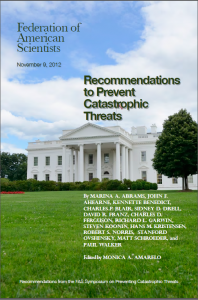
Earlier this month the Federation of American Scientists held its annual Symposium on Catastrophic Threats and Awards Ceremony at the National Press Club in Washington, D.C. The date – November 9th – was chosen to coincide with the November U.S. presidential election and provide a forum for policy recommendations to a newly elected administration. The symposium provided a wonderful venue for the discussion of the most-pressing threats facing the U.S. Panelists called for steps to prevent catastrophic events, and increase response planning and preparation to those possible dangers. These recommendations were published in a booklet, available electronically.
Because science plays such a critical role in underlying U.S. policies, from disaster preparation to farm subsidies, leaders must be armed with a science-based knowledge of the risks and opportunities policy choices present. To this end, the symposium featured moderated discussions of four-to-five distinguished experts, grouped into related threat-areas: Nuclear Weapons; Biological, Chemical, Conventional, and Cyber Threats; and Energy and Infrastructure.
The session devoted to nuclear threats reiterated the group’s long-held goals of stockpile reduction and eventual total disarmament. Senior FAS Fellow Charles Blair emphasized that the U.S. must start differentiating violent non-state actors in terms of their ability to pose a bona fide radiological or nuclear (R/N) threat, rather than treating all threats as possessing equal capabilities. Proper identification of the threat will allow targeted policies and avoid wasteful expenditures of time and resources on groups that do not pose significant R/N threats. Another FAS Fellow, Dr. Robert Norris, proposed that a fundamental alteration of Cold-War era nuclear doctrine is a prerequisite for arms reduction, with a minimal deterrence mission the only necessary use for the U.S. nuclear arsenal.
Lengthy discussions of biological-, chemical-, and conventional-weapons threats highlighted the need for increased accountability and controls, which are scarcer outside the United States. Perhaps the most significant threat in the chemical and biological weapons fields stems from the fact that there is a growing dearth of technical experts in the former Soviet Union to handle existing stockpiles of agents. Without the incentives of prestige and financial rewards available during the years of the thriving Soviet weapons programs, even fewer personnel with the requisite training will be available to handle and safeguard stockpiles in the future.
Those barrels full of chemicals looks safe to me!
The energy and infrastructure panel spoke in favor of nuclear energy with reminders that natural gas does not eliminate greenhouse gas production. They also reminded attendees that the U.S. will likely import oil from Canada long after it frees itself of overseas imports. Dr. Steven Koonin, of NYU, called for increased funding for alternative energy research and a reorganization of the Department of Energy to enable better understanding of markets and business policies. Notably absent from the discussion was an in-depth assessment of the impact that the Fukushima Daiichi incident will generally have on nuclear power endeavors in the future, and in Japan specifically.
One subject that stood out for immediate attention is developing a framework for rules and definitions in cyber security and warfare. The United States is ill-prepared to respond to a major denial of service attack aimed at critical infrastructure, especially in the cyber realm. Dr. Kennette Benedict, from the Bulletin of Atomic Scientists, explained that the field lacks clarity on responsibilities and acceptable scope for security. Increasingly sophisticated attacks on private and public networks demand a robust effort to ensure reliability and freedom from interference. While the private sector has tremendous incentives to shore up defenses against intrusion and would benefit from federal support in defending network architecture, transparency and trust are in short supply at this time.
As an illustration, were a major electrical grid or other critical infrastructure component attacked, resulting in losses of life and industrial output, how would the United States respond? Would this be defined an act of terror an act of war? Would the response be treated like a natural disaster? No clearly defined roles have been established for preventing and/or prosecuting major acts of cybercrime. No public forum exists to discuss the norms associated with cyber warfare, define acceptable measures that may be taken against individual or state-sponsored actors, or set limits to intrusion that occurs under the guise of security.
We can’t be hacked if we unplug it from the grid, right?
Not only will clarifying these issues benefit the private sector, but transparency will also pay major dividends in foreign policy negotiations. As with any new weapon, uncertainty will lead to mistrust and fear, which often precipitate wasteful arms races. U.S. leaders must come to the table with candor in order to develop policies that promote security with minimal interference for all. A massive blackout or disruption of services would be devastating for everyone; CIMSEC could be the group that suggests a way forward.
More information about the event can be found at the Federation of American Scientists’ website: www.fas.org
LT Drew Hamblen is a naval aviator in the U.S. Navy and graduate of Georgetown University. The opinions and views expressed in this post are his alone and are presented in his personal capacity. They do not necessarily represent the views of U.S. Department of Defense or the U.S. Navy.
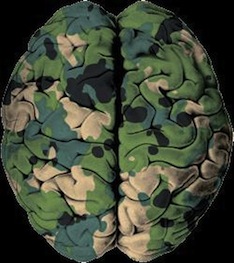
Neuro-Navy: Potential advances in cognitive functions, combat career screening, and treating combat-stress injuries.
In my current capacity as a military student, one of my requirements is to complete a master’s thesis focused on future warfare. This year I have decided to write on the implications of future neuroscience developments and the impact on naval warfare, (up to ~15 years out). Below is my thesis proposal, which I submit to your view in the hopes of starting a conversation. I look forward to your comments and further discourse.
Proposed Research Question: How will advances in neuroscience improve naval capabilities?
Proposed Thesis: Future advances in neuroscience research and development will improve naval capabilities in both the cognitive executive functions of decision makers and enhanced situational awareness through a melding of neurotechnology with biological sensory.
Discussion: Many discussions on the fog and friction of war relate to the common denominator of the human mind. Despite advances in unmanned and autonomous technology, the basis of all military strategy and campaigns is the ultimate execution by military personnel, reliant on cogent decision-making.
The field of neuroscience has seen drastic growth in the last decade. Exceeding its biological origins the field has exploded, infusing research with psychics, psychology, medicine, and computer science – to name a few. Through studies of the nervous system at numerous levels (functional, cellular, sensory), future neural research is gaining interest beyond traditional scientific communities and the implications for military development should be explored.
The continued research into genetic and environmental aspects of neural systems and decision-making explore the processes of the human nervous system and interaction with cognitive executive function. Through future neuroscience development, naval forces may be able to apply new technology and biological understanding to effectively screen young military leaders to categorize individual cognitive strengths and weaknesses. The ability to place these leaders in appropriate career positions may improve naval warfare communities that continually operate in high-risk environments. Furthermore, the ability to track cognitive weaknesses provides the opportunity for the naval training organization to produce brain fitness programs to improve these areas.
With the future development of cognitive screening, naval forces could develop programs (such as DARPA’s Enabling Stress Resistance program) to mitigate stress through behavioral and pharmacological interventions. The increase in this screening, combined with advances in neuropharmacology, will allow naval forces to complement battlefield simulators with individual-oriented stimulants, to increase the stressors on combat decision-makers while in a safe environment and approach a real-time fog of war.
Neurotechnology may also provide enhanced human intelligence analysis, through the development of brain-signal processing linked to visual intelligence as it occurs. This capability may increase the speed and accuracy of image analysis and improve operational assessments.
Preserving the most expensive naval weapon
In addition to cognitive development, the field of neuroscience may provide enhanced manpower recovery options to deployed expeditionary forces. Advances in clinical and evolutionary neuroscience are improving current naval medical corps’ ability to identify, diagnose, and treat PTSD. Continued research could produce an expeditionary force capable of preparing forces not only upcoming combat stressors, but follow-on operations that require increased time on station. The ability to prevent PTSD and keep military personnel on the battlefield will provide an advantage in future protracted conflicts. Future developments in prosthetic limbs, linked with effective neural links, will advance an operational force commander’s ability to limit his reserve force, assuming his naval ships have the capacity to treat injured personnel afloat.
Lastly, the possibility of employing non-kinetic neuro-weapons, developed in the field of cellular neuroscience, to make the enemy to believe that operations have occurred (pseudo-feint) may provide naval forces an advantage when planning major operations. The enemy’s belief that the war is lost may be enough for the friendly forces to declare victory – or further tactical/operational goals in the interim. The capacity to develop and employ such a weapon is worthy of further research and discussion.
A.J. “Squared-Away” is a husband, father, and U.S. Navy Surface Warfare Officer. He has deployed on patrol boats, destroyers, and aircraft carriers to the Mediterranean, Persian Gulf, and aboard Iraqi oil terminals. He is currently a student at an advanced military warfighting school. The opinions and views expressed in this post are his alone and are presented in his personal capacity. They do not necessarily represent the views of U.S. Department of Defense or the U.S. Navy.