Category Archives: Fiction

Maritime and naval fiction.

Enemy Mine

The following is an entry for the CIMSEC & Atlantic Council Fiction Contest on Autonomy and Future War. Winners will be announced 7 November.

By Mark Sable

   Alyssa Wexler always wanted to be captain of her own ship. She relished the idea of standing on a bridge, keeping a cool head in a crisis as the men and women beneath her looked to her for guidance.

   It was Star Trek: Voyager that had stoked her ambition. When she was a child, the sci-fi show envisioned a future where a woman could command a starship.  By the time Wexler was at the Naval Academy, there were no warp drives, but there were women Admirals.

   What Voyager didn’t imagine was autonomy. That when Wexler finally had a command, her crew would be a series of genderless unmanned systems. Her role was more IT manager than captain. The massive supertanker she guided around the Horn of Africa was nothing more than a ghost ship.

   It wasn’t until the automated sonar array picked up a signature it identify that Captain Wexler felt something resembling a purpose. But the anomalous signature was all-too familiar to her. And for the first time in recent memory, Wexler felt something else. Fear.

   The last time she’d felt that sensation so deeply was over 1500 miles to the Northeast, and more years in the past than she cared to admit. Then-Lieutenant Junior Grade Wexler was assigned to an escort vessel in a carrier group deployed to the Persian Gulf to oppose Iranian intervention in the Saudi Civil War. She’d never forget the sight of the Revolutionary Guard’s Nassar class patrol boats swarming the fleet like locusts.

   She wasn’t afraid of losing her Destroyer. Its R2-D2-like Phalanx and SeaRAM Close-In Weapons Systems shredded the IRGC speedboats with tungsten and vaporized them with Rolling Airframe Missiles. But even if they got danger-close, they weren’t after her ship. They were headed for the carrier.

   What she feared was far worse than death. She would have rather gone down with ship that let her fellow sailors down. Years later, she could still see the speed boats, driven by suicidal Guardsmen, explode against the carrier’s hull. Then the carrier listing, with aircraft and crew sliding off, before standing straight up like a skyscraper. And finally its plunge into the deep, sucking those Americans who’d made it off under with her.

   There was nothing she could have done, even had the destroyer – or the fleet for that matter – been under her command. But the guilt was still palpable over a decade later. She often wondered if it was why she had taken command of ship with no one aboard but her.

   That didn’t mean she wanted to lose her tanker now. And even though the sonar ping that so confused the AI did not belong to a speedboat, let alone a swarm of them, she knew immediately that it was a possibility.

   Speedboats would have actually made sense. Somali pirates still used them, even if they now were smart enough to operate them as drones. What didn’t make sense to Wexler’s sensors was the presence of a mine.

   Wexler had seen mines in her second tour in The Gulf, as a Lieutenant on an Avenger Class minesweeper operating out of Bahrain. With NATO and Emirati troops occupying the Eastern Saudi provinces, Iran was determined the West and their Sunni allies would not get a drop of oil out of the Gulf. So they mined the hell of it.

   Mines were part of the same asymmetrical Iranian war plan that produced the patrol boat swarms. Each cost no more than $10,000 but could take down billion dollar surface vessels. That never happened under Wexler’s watch.

   Lieutenant Wexler’s was in charge of her ship’s Knifefish, a specialized Bluefin-21 Unmanned Underwater Vehicle. She programmed it to hunt mines autonomously, and report back to her. It never let her down, and she never let her ship or her fleet down. The Avenger and its Knifefish were where her affinity for crewmates that lacked flesh and blood began.

   So it was, a decade later, with no small amount of guilt that Captain Wexler disengaged her tanker’s navigation system. She actually said “sorry” out loud as she shut the AI down, and began to manually steer her ship out of the path of the mine.

   It was no quick task, and not just because it was the first time Wexler had truly been at the helm of her ship. There’s a reason turning a big ship around is a metaphor for how hard it is to affect change a bloated bureaucracy, Wexler thought. Just like the international bodies that had been unable to change maritime law for the world she was living in. The same laws that prevented civilian ships like hers from being armed against pirates and other threats.

   Still, the sonar had detected the mine – and she’d recognized its distinct signature – while it was far enough away to give her all the time she needed. When her maneuver was complete, she turned to the display screen expecting to see that distance growing. Instead, she saw the mine was closing in on her.

   As if that wasn’t enough to disquiet Captain Wexler, the bridge soon became a cacophonous mixture of flashing lights and blaring klaxons as the ship’s various systems started arguing with one another. They simply could not comprehend what was chasing them. Even amidst the chaos, Wexler could understand the threat all too well.

   The underwater contact that was pursuing her vessel was no ordinary mine. It was a modified Sea Predator. Autonomous, capable of lying in wait for its prey and following it. And, once in range, more than willing to deliver a barrage of lethal self-propelled warheads.

   Wexler didn’t take any pride in her third Gulf tour. No one in the allied Navy did. By that time, The House of Saud had fallen completely, along with the other Gulf monarchies. The Gulf transformed into metaphorical gulf as well as a literal one. A string of failed states were on one side, and a weakened but still deadly Shia theocracy on the other.

   The President had determined that none of these entities would be supplied through the body of water that so many Americans had drowned in. And so it was that then-Commander Wexler – her wartime commissions on the previous tour bumping her two notches closer to her goal of Captain – went from mine-slayer to mine-layer.

   Because of their autonomy, the Sea Predators Wexler and her fellow seamen had left behind were able to hunt and kill surface vessels for years after America had withdrawn. Wexler didn’t like to think of the carnage she left in her wake. The nightmares of fishing vessels and pleasure boats being sunk by the UUVs she’d left behind were why her dream of becoming a captain could only be realized in the civilian sector.

   Years later, a multinational force led by the Indian and Chinese navies would return to The Gulf to find and disable the mines. But they never found, let alone disarmed, all of them. While minefields could be marked and sealed off, the ocean never stayed still. Currents made the Sea Predator’s kill-box a moving target that could never truly be eliminated.

   Captain Wexler imagined that it wasn’t just drift that brought the mine from the Gulf to the Horn, to her. She didn’t have to read Coleridge to know this was her albatross, and feel like she was deserving of its curse.

   But Wexler wanted to live. She didn’t want to go down with her ship. She didn’t want her ship to go down. It wasn’t out of any particular loyalty to her ever-shifting corporate paymasters. As grating as the sounds and lights flooding the bridge were, she had grown inexplicably fond of the systems behind them.

   Like the men and women she’d sailed with, the AI kept her alive and afloat. More than that, they were her raison d’etre. Even if for the majority of the voyage they were subordinate to her in name only, they were her crew. She would not let them down.

   Captain Wexler ordered her communications AI to make contact with the mine. She had programmed the mine – or one like it – and could tell it to stop pursuing her. Failing that, the AI was smart enough to brute force hack it.

   The mine did not to respond to the many frequencies Wexler and AI tried to hail it on. She remembered towards the end of the war that some officers had deliberately made the Sea Predators impossible to communicate with. In court-martials, they’d later claim it was to prevent the Russian hackers that were working with Iran from hijacking the Predators and use them in the Bering Strait.

   But that meant their orders couldn’t be rescinded. It was one of the major reasons why there was still no peace treaty between The U.S., The Islamic Republic of Iran or the various Caliphates. What kind of peace could they make with an enemy that had no ability to call off its attacks?

   Despite Wexler’s inability to disable the mine, the light and noise on the bridge began to subside. While it was slow to turn a massive ship around, once it was back on course it was able to move at a speed that a UUV simply could not match. Slowly but surely the distance between predator and prey grew. Soon the mine would lose track of her ship, and go back to its lonely patrol.

   Captain Wexler could have forwarded the ship’s log to corporate HQ in Singapore and angled for a bonus.  But something nagged at her. Why hadn’t the Sea Predator fired? Although categorized as a mine, it wasn’t the suicidal weapons platform that the Iranian speedboats were. It was capable of launching multiple self-propelled warheads.

   Perhaps it hadn’t been in range. The AI had spotted the anomaly quickly, Wexler identified the Sea Predator as a threat and course corrected almost immediately. Perhaps it had already emptied itself of its self-propelled warheads many years and nautical miles ago.

   But what if it hadn’t? What if the next captain – human or AI – didn’t share her knowledge, experience or initiative. Could she live with the consequences?

   The bridge began to erupt again, emitting more frantic warning stimuli as Captain Wexler did the unthinkable. She slowed down, allowing the predator to close in on her ship. Wexler had to literally rip wires out to disconnect systems designed to override a suicidal captain. Despite a robust entertainment suite, it wasn’t unheard of for someone to go crazy without human contact.

   Wexler was taking a risk neither her AI nor the shipping company’s shareholders would appreciate. But it was a calculated one. She didn’t intend this voyage to end with a sunken vessel. Or her death.

   The sonar was still active. She plugged in a series of personal recording devices and began downloading her ships acoustical signature over her diaries, music and podcasts. As soon as she’d copied the signature onto her devices, she hooked each one up to any speaker that wasn’t bolted down.

   Then Wexler made her way to the lifeboats. With a sole crewman, all but one were redundant. But the lifeboats were light enough that their extra weight didn’t cost the company enough fuel to risk pissing off the few skilled captains willing to take these lonesome jobs. So they remained anchored to the side, until this captain had placed a recording device and speaker in each one and set each to play on a loop.

   Captain Wexler ran back to the bridge. Her ship had slowed considerably, and if the Sea Predator wasn’t in firing range yet, it would be soon. She ordered the emergency AI to lower the lifeboats. All of them.

   The Sea Predator could have no warheads, or it could have a full payload. Saving one lifeboat for herself would mean that even if one hit, she’d have a chance at survival. But it would also mean she’d never know if she’d de-fanged the Predator she felt responsible for.

   The lifeboats soon splashed down and began to drift away from the tanker in multiple directions. Captain Wexler manually pushed her ships propulsion to the limit. Even though there was no one around, she still couldn’t bring herself to say “damn the torpedoes, full steam ahead.” But she thought it.

   It would have been appropriate. In part because the quote, attributed to Admiral Farragut in the Battle of Mobile Bay, was not actually referring to what modern naval officers would call torpedoes; in the Civil War those “torpedoes” were tethered naval mines. And in part because at that moment, The Sea Predator launched its full payload of self-propelled warheads.

   With the AI systems silenced, Captain Wexler watched in mute horror as the Predator’s warheads headed for the distinctive sound of her tankers turbine driven propellers. A sound Wexler – or any human – could not actually hear. Nevertheless, it was a sound not much different from the ones she’d programmed her Sea Predators to seek out in the Gulf.

   But then the warheads began to spread out. They had their own AI, which calculated a higher likelihood of success taking out multiple stationary targets emitting the same noise as the larger but faster moving tanker. What the warheads could not know was that those sounds were recordings, and those targets empty lifeboats.

   Captain Wexler couldn’t hear the warheads detonate behind her. She couldn’t see the explosions of wood, metal and fiberglass, or the sea spray they kicked up. All she could see were the blips on the sonar representing the warheads disappear one by one on her monitor.

   If she could have seen and heard the blasts, perhaps they would have erased the sights and sounds of the carrier she couldn’t save. She doubted it. As much as she cared for the AIs that she carefully – lovingly, even – plugged back in, neither they nor the tanker she saved could ever make up for sailors she’d seen the sea swallow that day.

   The ledger that contained the lives of the men and women her mines had taken was equally as large, if not more so. But as Wexler watched the disarmed Sea Predator slowly move towards the fringes of her sonar display, she thought that that maybe, just maybe, she’d finally put a mark down she could be proud of.

Mark Sable is a writer best known for the graphic novels Graveyard of Empires and Unthinkable, and has written Marvel and DC comics as well. He also works in film and television with experience at NBC, Fox, and Cartoon Network. He holds an MFA  from the NYU Tisch School of the Arts, a J.D. from the University of Southern California Law School, and teaches at The School of Visual Arts in New York. He can be found on twitter at @marksable.
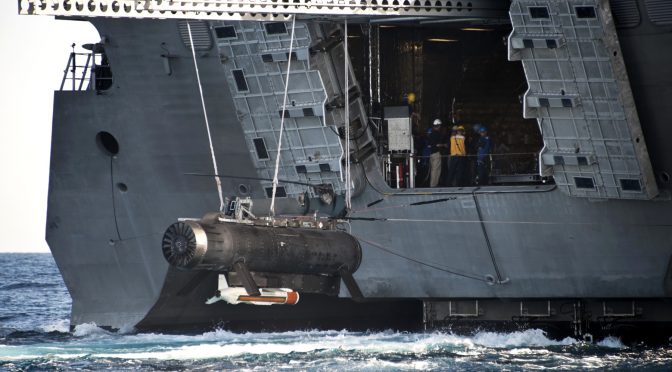
Featured Image: The littoral combat ship USS Independence (LCS-2) deploys a remote multi-mission vehicle (RMMV) while testing the ship’s mine countermeasures mission package (MCM). (US Navy Photo)

CIMSEC & Atlantic Council Fiction Contest on Autonomy and Future War Kicks Off

By Dmitry Filipoff

This week CIMSEC is publishing articles submitted to the CIMSEC & Atlantic Council Fiction Contest on Autonomy and Future War. The authors explore the various challenges and nuances of unmanned systems through their creative writing. We appreciate their submissions. The contest announcement may be read here.

Due to the higher-than-expected response at fifteen submissions, several changes were made. First, the judging was done in two rounds. The first round judges included Sally DeBoer, President of CIMSEC, James Hasik, a nonresident Senior Fellow at the Atlantic Council, and Claude Berube, an instructor at the U.S. Naval Academy and author of the Connor Stark series of novels. Submissions were evenly split between the judges who advanced their top two choices for the final round of judging by August Cole, Peter Singer, and Larry Bond. The results of the final round of judging and the winners of the contest will be announced on November 7. To ensure fair judging, bylines were removed prior to being forwarded to the judges by the CIMSEC editorial team. Second, instead of publishing only finalist entries as originally intended, it was decided that all articles submitted in response to the call for articles would be published.

Below is a list of articles that will publish during the week. The order of publication is random and in no way reflective of judging results.

Enemy Mine by Mark Sable
Fitness Function by Mark Jacobsen
Auto-Trope by Phil Reiman
Pets by Michael Hallett
Wishes by Mike Matson

A Dead Man’s Promise by Alec Meden
Cake by the Ocean by Sydney Freedberg
The JAGMAN Cometh by Tim McGeehan
Operation ALTRUISTIC CENTAUR by Chris O’Connor

Stroll in the Park by Scott Cheney-Peters
The Cod Squad by Hal Wilson
Container of Lies by Austin Reid
Autonomous War by Matthew Hipple
Looking Glass by Mike Barretta
Crossing a T by J. Overton

Dmitry Filipoff is CIMSEC’s Director of Online Content. Contact him at Nextwar@cimsec.org.

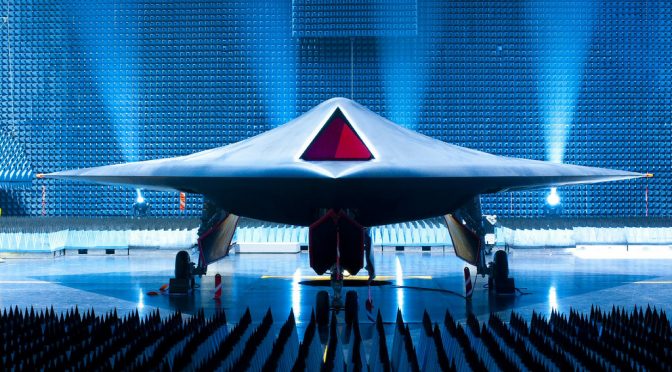
Featured Image: United Kingdom Taranis strike drone prototype (BAE Systems/Ministry of Defence)

CIMSEC And The Atlantic Council Launch Fiction Contest On Autonomy And Future War

Contest Publication Dates: October 31 – November 4
Submissions Due: October 21
Winners Announced: November 7

Article Length: 2,000 – 5,000 words
Submit to: Nextwar@cimsec.org
Prizes: $500 Grand Prize, $250 Runner-Up

By Sally DeBoer and August Cole

CIMSEC and The Atlantic Council’s Art of the Future Project are teaming to host a Fiction Contest on Autonomy and Future War. This contest will explore the nuances of unmanned naval systems employed in combat or crisis through creative fiction. Final Judges August Cole, Larry Bond, and Peter Singer will select one Grand Prize winner and one Runner-Up Prize winner. The Grand Prize winner will receive a cash prize of $500, while the Runner-Up will be awarded a cash prize of $250. A selection of outstanding entries will publish on CIMSEC beginning the week of October 31 with the winners announced on Monday, November 7. 

Autonomy and unmanned systems are increasingly present in today’s Navies – from assets acting in a surveillance, monitoring, or intelligence collection capacity like Northrop Grumman’s MQ-4C Triton and Hydroid’s REMUS, to low-crew combatants like the Zumwalt-class destroyer which operates with 147 sailors. The rapid pace and development of technologies such as machine learning algorithms indicates that unmanned systems will be able to take on an increasingly decisive role in future conflicts. How will more advanced autonomous and unmanned systems shape the future of naval forces – and what unique challenges will autonomous systems present for future Navy leaders?

Possible topics include (but are by no means limited to) the nature of military leadership in an age of Artificial Intelligence (AI), the ethical challenges of incorporating increasingly capable and automated systems, unique strategic or operational options, challenges, and scenarios afforded to warfighters by unmanned systems, limits or adjustments to Rules of Engagement, and the benefits and challenges associated with delegating authority to unmanned systems across varying degrees of autonomy. In addition, authors may wish to explore how unmanned systems will change shipboard life. 

While the topic of unmanned systems in combat is truly broad, entries should focus on human dynamics such as interactions between warfighters and autonomous systems whether in terms of leadership, shipboard life, decisionmaking, and imposed limits on unmanned systems.

Authors should feel free to be creative in their submission. Formats such as traditional narrative fiction, Captain’s logs, after action reports, and visual art/media are acceptable. 

Interested authors can find creative cues from the Defense Science Board’s recently released report on autonomy, Guru Banavar’s address from the 2015 Nobel Week Dialogue, or from the following quote from Patrick O’Brien’s The Ionian Mission:

“It is only that I dislike the whole notion of subordination. The corporal lurks in almost every bosom, and each man tends to use authority when he has it, thus destroying his natural relationship with his fellows, a disastrous state of affairs for both sides. Do away with subordination and you do away with tyranny: without subordination we should have no Neros, no Tamerlanes, no Buonapartes.’ ‘Stuff,’ said Jack. ‘Subordination is the natural order: there is subordination in Heaven – Thrones and Dominions take precedence over Powers and Principalities, Archangels and ordinary foremast angels; and so it is in the Navy. You have come to the wrong shop for anarchy, brother.”

Submissions should be no less than 2,000 words and no more than 5,000 words. Authors should submit their work via e-mail to nextwar@cimsec.org and must be received no later than October 21. Submissions must be final drafts and will not receive editorial support from CIMSEC or the Atlantic Council other than basic formatting for finalist submissions publishing during the week of October 31. The Fiction Contest will feature in place of a monthly CIMSEC topic week for the month of October. Questions and concerns can be directed to Sally DeBoer at president@cimsec.org.

Editor’s Note: This contest has since concluded and writings submitted into response to this call for articles may be viewed here

Sally DeBoer is currently serving as the 2016-2017 President of CIMSEC. She can be reached at president@cimsec.org.

August Cole directs the Art of the Future Project at the Atlantic Council’s Brent Scowcroft Center on International Security. He is a non-resident fellow at the Modern War Institute at West Point. He is also writer-in-residence at Avascent, an independent strategy and management consulting firm. A former reporter for the Wall Street Journal, he is the co-author with Peter W. Singer of Ghost Fleet: A Novel of the Next World War.

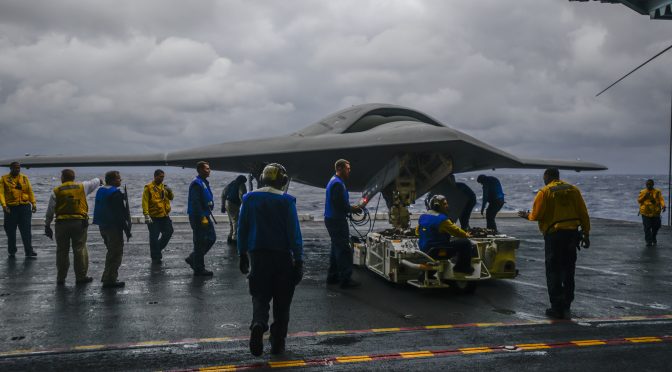
Featured Image: ATLANTIC OCEAN (Dec. 13, 2012) An X-47B Unmanned Combat Air System (UCAS) demonstrator aircraft is transported on an aircraft elevator aboard the aircraft carrier Harry S. Truman (CVN 75). (U.S. Navy photo courtesy of Northrop Grumman by Alan Radecki)

Re-Fighting the Battle of Hoth: An Engineer’s Perspective

By Angry Staff Officer for CIMSEC’s “Movie Re-Fights Week”

Anyone familiar with the late Galactic Civil War will remember the outstanding triumph by the Rebel Alliance at the Battle of Hoth. Many had considered that this would be a last stand by the Alliance, or at the very least a mere draw if enough transports were able to get away before the Imperial Fleet bore down on them. However, the Alliance was able develop a battle plan that was built on an analysis of the Imperial ground forces’ tactics, techniques, and procedures from years of fighting. This plan emphasized the Alliance’s maneuverability and the terrain that they had chosen for the engagement.

[otw_shortcode_button href=”https://cimsec.org/buying-cimsec-war-bonds/18115″ size=”medium” icon_position=”right” shape=”round” color_class=”otw-blue”]Donate to CIMSEC![/otw_shortcode_button]

Prior to the engagement, the general staff for the Rebel Alliance had wargamed possible enemy avenues of approach and strike group composition. Because they had effectively shielded their base on the snow-bound planet of Hoth, they knew that the Empire would have to land a strike force on the planet to try to knock out the shield generator. Attempts to enter the battlespace with air assets could be nullified by the Alliance’s Ion Cannon. Additionally, early warning sensors were placed both on the planet’s surface as well as in the atmosphere.

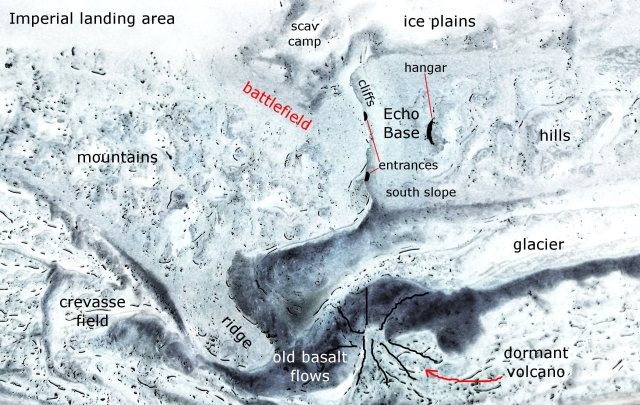
Echo Base Rendering, Courtesy https://echostation57.files.wordpress.com/2014/01/hoth-player-map.jpg?w=640&h=405

The Alliance’s Echo Base and shield generator were safely harbored inside a draw with only one ground avenue of approach. This site was carefully selected after a thorough intelligence preparation of the battlefield by Alliance engineers and intelligence officers. They could thus canalize any approaching ground force between two ridges of ice and rock. Analyzing the Imperial task organization from past battles, Alliance intel officers theorized that they would most likely attempt to infiltrate with heavy All Terrain Armored Transport (AT-AT) Imperial Walkers and dismounted ground troops to exploit gaps. This would leave them vulnerable on their flanks and rear to air sorties from Alliance T-47 snowspeeders.

Additional preparations included the development of an engagement area in the draw, with obstacle emplacement and fields of fire picked out for concealed heavy weapons. Deep pits were dug and camouflaged with hologram imagery to make the ground appear level. These were offset between lanes of massive tanglefoot: lengths of wire attached to deep stakes sunk into the ice that would impede vehicular movement. Additionally, two belts of landmines were placed in the expected Imperial landing area to disrupt the attack at its outset. Heavy weapons emplacements were dug into the slopes of the surrounding hills to strike at any vulnerabilities in the AT-AT’s armor. In the enemy’s immediate front, several dummy gun emplacements were created to draw the Imperial troops into the trap. The goal was to create as much havoc as possible to the Imperial heavy armor to degrade the morale of their dismounted troops.

The ground forces commander established his heavy weapons fields of fire and coordinated with the Alliance air wings of snowspeeders, specifically Rogue Squadron, to define their flight patterns, where they would infiltrate the battlefield, and where they would exfiltrate, thus avoiding any friendly fire. They gambled that they would have immediate air superiority as the Empire would wait until the shield was down before sending in any air assets. Final protective fires were set at the entrance to Echo Base, where Alliance planners hoped that they could at the very minimum establish a choke point with destroyed Imperial vehicles. Rather than commit to a linear defense, the Alliance relied on a defence in depth, which allowed greater freedom of movement for their dismounted infantry to avoid the heavy guns of the AT-ATs.

The Alliance commander on Hoth, General Carlist Rieeken, assumed a certain amount of risk committing his forces to the battle. He maintained his contingency plan of escape from the planet via transports to assuage his conscience that was still plagued by the loss of Alderaan. Princess Leia Organa emphasized that Hoth was the ideal place to deliver the empire a dramatic defeat that would resound throughout the Galaxy, and Rieeken reluctantly went along with the plan.

Upon the Empire’s discovery of the Rebel base on Hoth, Lord Darth Vader devised a plan whereby the Imperial fleet would come out of hyperspace at some distance from Hoth and bring its heavy weapons to bear upon the planet. However, when Admiral Kendal Ozzel, commander of the Empire’s Death Squadron, brought the his ships out of hyperspace, they immediately triggered the Alliance’s early warning systems in planetary orbit. The shield was activated and Vader was forced to commit to a ground attack. As predicted, the Empire landed heavy armor along with several battalions of the 501st Legion’s snowtroopers on Hoth, at the only available entrance to Echo Base.

Major General Maximilian Veers had overall command of the Imperial ground force. An armor officer by trade, Veers had been stuck at the rank of colonel for some time. His last assignment had been as an instructor at the armor schoolhouse; with the destruction of the first Death Star, so many senior Imperial commanders had been killed that Veers was elevated to major general. Thus, he was entering his first major ground operation with little field experience in the current operating environment. This was perhaps why he walked right into the trap that the Alliance had lain for him.

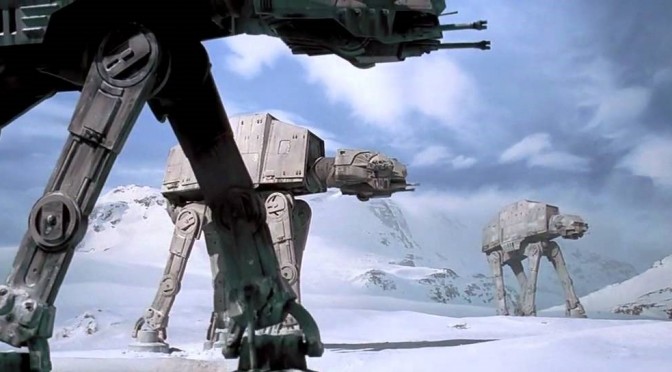
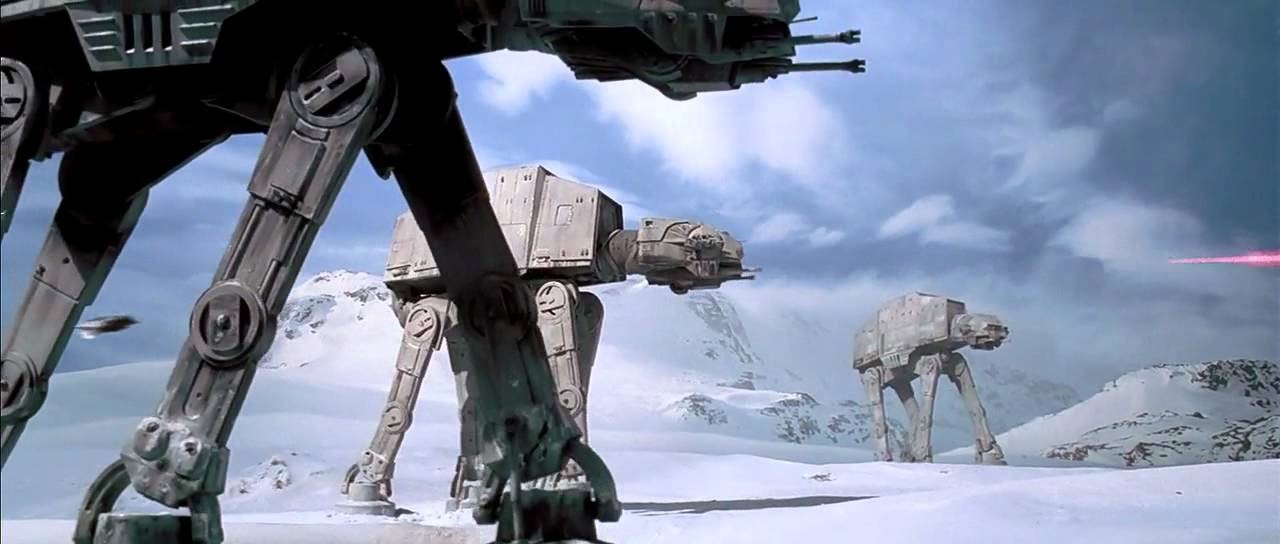
Imperial Walkers deploying in line, entering the engagement area on Hoth (Lucasfilm, Ltd)

He deployed his AT-AT’s in line abreast into the draw, with the dismounted 501st troopers behind them. Because of this, his first line of armor suffered significantly from the first two mine belts. Veers then moved two companies of infantry forward of his armor, to check for additional traps and mines. As the terrain constricted them into the draw, the infantry bunched up, and were immediately engaged by Alliance crew served weapons concealed on the flanks, causing heavy casualties amongst the snowtroopers. Veers ordered his lead AT-AT’s forward to knock out the Alliance weapons positions, but two were immediately lost when they stumbled into the pits. The top-heavy nature of the Imperial armor caused the walkers to completely collapse when they encountered the pits, rendering them useless and causing severe casualties to the troops trapped inside. In frustration, Veers ordered all his infantry to dismount to get eyes on the Alliance positions.

The dismounted infantry surged forward, encountering the tanglefoot. Company commanders reported obstacle locations back to Veers, who put his armor into single file as Imperial engineers began to slowly breach their way through the obstacles, taking catastrophic losses from Alliance positions. With his armor’s linear firepower thus limited, Veers could only watch in horror as Rogue Squadron struck from his left, their cannons decimating his ground troops. The second wave of snowspeeders were able to neutralize the rear AT-AT with the cables on their speeders, pinning the entire Imperial task force inside the engagement area. Veers panicked and ordered his armor to fan out to engage the targets that they could identify. This decimated the entire armored force, as they could not maneuver out of the engagement area. The armor took 90% losses, with the entirety immobilized inside the engagement area. Veers’ command vehicle was decapitated by concentrated Alliance firepower and he died in flames.

From space, Vader’s rage increased by the second as he monitored the battle below. When he lost communications with Veers, he flew into a fury and committed two more battalions of ground troops. These arrived to observe the last moments of the first task force, which disappeared under sustained blaster fire. Rather than walk into certain death, these two battalions elected to defect from the Empire in their transports.

Vader ordered the planet blockaded and called for reinforcements. However, word of the Imperial disaster on Hoth spread like wildfire around the galaxy. Revolts erupted in nearly every system, tying down all available ground troops and star destroyers. The Imperial blockade winnowed away due to attrition from small Alliance strike groups that ate away at it. In frustration, Vader abandoned the blockade and retreated to where the beginnings of the second Death Star were taking shape. Superior Alliance intelligence tracked him there, and the Death Star was destroyed before it could ever become operational. Battle damage assessments calculated that Vader was on board when it was destroyed, but could not confirm his death. His body was never found. The Empire vanished in the fire and destruction of the insurgency that began with the victory on Hoth.

Angry Staff Officer is an engineer officer in the Army National Guard with an enlisted infantry background. He has blogged under the name ‘Angry Staff Officer’ since 2014 and is a member of the Military Writer’s Guild. He has served in multiple positions in both staff and line units, at the company, battalion, and division levels, and served one tour in Afghanistan. Angry Staff Officer holds his master’s degree in history. He enjoys snark, satire, cynicism, history, and over analyzing foreign policy. He writes at www.AngryStaffOfficer.com and can be found on Twitter @pptsapper.

[otw_shortcode_button href=”https://cimsec.org/buying-cimsec-war-bonds/18115″ size=”medium” icon_position=”right” shape=”round” color_class=”otw-blue”]Donate to CIMSEC![/otw_shortcode_button]