
By Jake Brantley
As great power competition expands into new domains and climate change alters global geography, the Arctic and Antarctica have become central pieces of the national security conversation. However, the conversation around these strategic regions often lacks a nuanced understanding of the distinct governance frameworks that regulate each polar region. There is a frequent, yet flawed, tendency to view “the poles” as a single, uniform operational environment.
While both the Arctic and Antarctic regions are remote, extreme, and unforgiving maritime environments characterized by a history of cooperative scientific exploration, their legal, political, and geographic structures are fundamentally different. Navigating these regions requires more than just icebreakers and cold-weather gear; it requires a clear understanding of rules-based order that governs them.
This article provides a comprehensive yet concise overview of the primary governing mechanisms for both the Arctic and Antarctica, aiming to equip national security practitioners with the foundational knowledge necessary to operate within and strategize for these regions. For a deeper understanding, readers are encouraged to dig into the authoritative legal documents governing the Arctic, Antarctic and global maritime trade.
Why Governance Matters
Before analyzing the specific legal mechanisms, it is important to understand why these frameworks matter to the modern national security expert. Both polar regions are transitioning from peripheral zones of scientific curiosity to central arenas of geopolitical competition.
In the North, receding sea ice is opening new trans-polar shipping routes—such as the Northern Sea Route and the Northwest Passage — that drastically reduce transit times between Asia and Europe. Simultaneously, the region is rich in untapped hydrocarbons, critical minerals, and migrating fish stocks. Commercial shipping, resource extraction, and emerging military opportunities will shape the future Arctic geo-strategic environment. These factors have already prompted renewed militarization by Russia and the assertion of “Near-Arctic State” status by China, as both countries seek to secure economic and strategic advantages.
In the South, Antarctica remains a demilitarized global commons, but it is not immune to strategic competition. The proliferation of scientific research stations has raised concerns regarding “dual-use” technologies, where scientific infrastructure—such as satellite tracking facilities—may be leveraged for military intelligence and space operations. Furthermore, the increasing demand for marine resources has tested the limits of Antarctic fisheries management. Understanding how to counter malign behavior in Antarctica requires a firm grasp of the legal architecture that defines norms and acceptable state behavior.
Adding to complexity, revisionist state pressure to undermine the rules-based order is increasing while region-specific enforcement options remain geopolitically limiting. Physically, extreme weather, logistics, and remote geography limit access and response time for nations to protect their interests in both regions. Legally, the Arctic affords relatively broad enforcement choices rooted in sovereign maritime jurisdiction. Conversely, Antarctica’s strict demilitarization restricts enforcement options primarily to diplomatic means—deviations from which risk validating Russian and Chinese “salami-slicing” tactics. To effectively project presence and achieve strategic priorities, security practitioners must account for the tyranny of distance, global narrative control, and legal nuance.
The Arctic
Geographically, the Arctic is an ocean surrounded by the sovereign landmasses of eight nations (the United States, Canada, Russia, Norway, Denmark/Greenland, Iceland, Sweden, and Finland). Consequently, it is governed primarily by national sovereignty and a multi-layered framework of maritime law and executive agreements.
Given the region’s fundamental nature as a maritime domain, Arctic governance is dominated by the United Nations Convention on the Law of the Sea (UNCLOS). UNCLOS dictates territorial seas, Exclusive Economic Zones, and the rules for defining the extended continental shelf (Article 76)—the mechanism by which many Arctic states lay claim to the seabed and its resources. While the United States has not formally ratified UNCLOS, it recognizes its navigational and maritime zone provisions as customary international law. Alongside UNCLOS, the International Convention for the Safety of Life at Sea (SOLAS) and the International Convention for the Prevention of Pollution from Ships (MARPOL)—including the specialized IMO Polar Code—are critical to regulating maritime traffic and safety.
At the policy level, the Arctic Council serves as the preeminent high-level intergovernmental forum. It promotes cooperation, coordination, and interaction among the eight Arctic states, six Indigenous Peoples’ organizations (Permanent Participants), and 38 non-Arctic observers. Notably, the 1996 Ottawa Declaration that established the Council explicitly excludes matters related to military security. Although the Council does not discuss military matters, there are no legally binding agreements to prohibit military activity. While the Council is highly influential in drafting policy and fostering diplomacy, it is not a regulatory body and does not supersede the authority of sovereign states or legally binding agreements.
The tangible governance of the Arctic is heavily reliant on three principal executive agreements negotiated under the auspices of the Arctic Council:
1. Agreement on Cooperation on Aeronautical and Maritime Search and Rescue (SAR) in the Arctic (2011): This 20-article agreement represents the first legally binding instrument negotiated among all eight Arctic states. The vast tyranny of distance and lack of infrastructure in the high north make SAR a daunting operational challenge. Key provisions establish specific regions of SAR responsibility, mandate the development of national capabilities and coordination centers, and provide vital guidelines for joint operations, information sharing, and cross-border assistance during mass-casualty events.
2. Agreement on Cooperation on Marine Oil Pollution Preparedness and Response in the Arctic (2013): As maritime traffic increases, so does the risk of environmental disaster. This 22-article agreement strengthens mutual assistance for oil spill preparedness and response. It requires parties to maintain a robust national response system, proactively notify other nations of pollution incidents, and provides operational guidance for joint response efforts, including the cross-border movement of cleanup assets.
3. Agreement on Enhancing International Arctic Scientific Cooperation (2017): This agreement aims to facilitate the movement of researchers and equipment across borders. It protects intellectual property, ensures access to research infrastructure and data, and promotes the integration of traditional and local knowledge into scientific endeavors, ensuring that indigenous populations have a voice in the region’s future.
Antarctica
In contrast to the Arctic, Antarctica is a massive continent surrounded by the Southern Ocean. It is a global commons, governed by a single, comprehensive legal regime known as the Antarctic Treaty System (ATS).
Originally signed in 1959 at the height of the Cold War by twelve nations (including the US and the Soviet Union), the Antarctic Treaty was a masterclass in diplomatic pragmatism. Today, adhered to by 56 parties, the treaty establishes the legal framework for the entire continent. It is built upon three foundational principles:
1. The use of Antarctica for peaceful purposes only.
2. The absolute freedom of scientific investigation and cooperation.
3. The mandatory free exchange and availability of scientific observations and results.
The treaty consists of 14 articles. For the national security practitioner, the most consequential are:
Article 1: Explicitly prohibits any measures of a military nature, such as the establishment of military bases and fortifications, the carrying out of military maneuvers, as well as the testing of any type of weapons. (Note: It does allow for the use of military personnel or equipment for scientific research or for any other peaceful purpose, which is how militaries operate logistics in the region today).
Article 4: Freezes all historical territorial claims (asserted by seven nations) and prohibits the assertion of new ones while the treaty is in force.
Article 5: Prohibits nuclear explosions and the disposal of radioactive waste.
Article 7: Establishes a rigorous system of observation. It grants designated observers’ complete freedom of access to all areas, stations, installations, and equipment in Antarctica, as well as to all ships and aircraft discharging or embarking cargoes or personnel, ensuring compliance with the treaty’s demilitarization provisions.
The broader ATS includes subsequent additions that carry immense strategic weight. Most notable is the 1991 Protocol on Environmental Protection (The Madrid Protocol), which designates Antarctica as a “natural reserve, devoted to peace and science” and outright bans all commercial mining and mineral resource activity. Furthermore, the Convention on the Conservation of Antarctic Marine Living Resources governs the region’s fisheries, attempting to balance conservation with the growing global demand for marine resources, such as krill.
Conclusion
Effective planning requires a clear understanding of the operating environment. Without a foundational knowledge of polar legal governance, defense professionals will be unable to develop acceptable and fully informed strategies.
The Arctic is a sovereign maritime domain bordered by the territory of eight nations. It is governed by a multi-layered framework of international maritime law and targeted executive agreements. Security and sovereignty are paramount, and the region is an active theater for great power competition. In contrast, Antarctica is a vast, unpopulated landmass governed by a single, comprehensive treaty system that explicitly prohibits military activity, freezes territorial claims, and bans resource extraction.
This distinction dictates operational legality, the rules of engagement, and informs the strategic approaches required to protect U.S. and Allied polar interests. Both regions demand highly specialized assets to project presence, conduct scientific research, and ensure safety of life at sea. However, presence alone is not enough.
You cannot secure a domain you do not fully understand. As the strategic environment evolves, a working understanding of these complex legal and political landscapes is no longer an academic luxury, but an operational prerequisite for the modern national security professional.
CDR Jake Brantley currently serves as Deputy Chief – Coast Guard Office of Future Plans and Operations (CG-35) at CG Headquarters where he develops CG solutions to global maritime missions. Prior to staff, he served as a CG rescue pilot, civil engineer, and ships officer throughout North America.
The views expressed in this article are those of the author and do not reflect the official policy or position of the the U.S. Coast Guard or any other organization or official with which the author is affiliated.
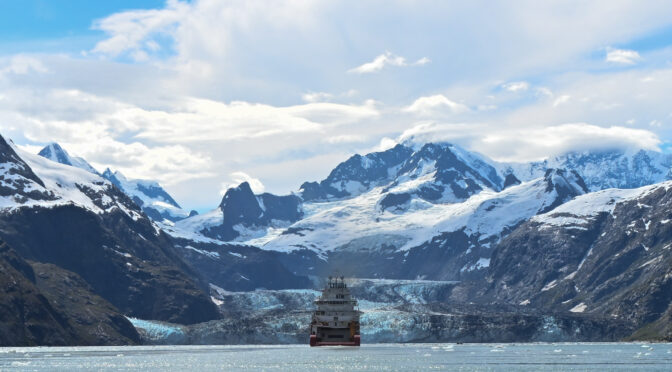
Featured image: The U.S. Coast Guard Cutter Storis transits to Johns Hopkins Glacier in Glacier Bay National Park and Preserve.(U.S. Coast Guard photo by Petty Officer 3rd Class Ashly Murphy)


