By Dmitry Filipoff
During these past two weeks, CIMSEC ran fictional short stories submitted in response to our Short Story Fiction Contest, launched in partnership with the U.S. Naval Institute, as a part of CIMSEC’s Project Trident.
The CIMSEC-USNI call for short stories received a record-shattering 122 submissions, giving rise to a strongly contested competition. The top finishers were ultimately selected by our esteemed panel of judges, which included August Cole, David Weber, Larry Bond, Kathleen McGinnis, Peter Singer, and Ward Carroll. These finishers and top contenders were featured during CIMSEC’s Fiction Contest Week.
Authors artfully explored the future of maritime security and conflict, and hinted at the challenges and opportunities that lay just over the horizon. New warfighting concepts currently being tested by the Navy and Marine Corps were envisioned and thrust into the crucible of high-end warfighting. Artificial intelligence demonstrated immense capability as an asset, but also extreme liability as an experiment. Fast-paced combat scenes were complimented by the tedium of anxious anticipation. And the invisible scars of war were unearthed and made fresh again, while laying forward a path for personal redemption.
Below are the top finishers and stories that featured during CIMSEC’s Fiction Contest Week. We thank the judges, our partners at USNI, and all submitting authors for their excellent contributions.
1st Place: “Crowdfunded,” by Sergeant Major Mike Burke, U.S. Marine Corps (ret.), and Major Nicholas Nethery, U.S. Army
“She had shanghaied Lance Corporal Javon Hadley to be her RO after he was caught selling pirated combat footage inside the battalion. Civilians the world over could livestream combat operations in real time, thanks to the efforts of war pornographers, who worked throughout combat zones under the pretext of ‘journalism.’ Hadley had hacked some popular streams and offered them to his buddies at an extremely reduced rate. Naturally, the first sergeant wanted the young lance corporal to be set on fire, hacked to pieces, and his remains processed into rubber dog crap. Recognizing talent when she saw it, Forrestal had gone to bat for him, earning herself an ass chewing from both the first sergeant and her captain—but also a new RO. She didn’t win any points with the company commander, but she had with the grunts.”
2nd Place: “Black September,” by Mike Barretta
“Hoplite chased a loose nuke. The Western response to the limited Indo-Pak nuclear exchange was swift. Coalition nuclear forces promised massive retaliation on the next government that used a nuclear weapon. Despite the support of the United States, the remnants of the Pakistani civilian government collapsed and a deeply aggrieved military ruled from underground bunkers. Coalition Special Forces moved swiftly to seize surviving Pakistani nuclear weapons lost in the chaos.”
3rd Place: “Letter of Marque,” by Hal Wilson
“She stepped inside the bridge, still shattered and foam-flecked from her forced entry. The bridge team lay about from the muscle-relaxant; their guards were ashen-faced. She picked out the eldest-looking of them, who looked up from his cable-tied wrists with equal parts fury and fear. He stiffened as she lifted her visor and reached into her webbing. Then beetled his brows as she produced two fine vellum deeds. Attached to each was a red-wax pendant seal.”
___________________________________________________________________________
“Nautilus,” by Ben Plotkin
“More calculations. More probabilities. The USS Nautilus was a pioneer. The first fully independent and autonomous submarine the U.S. Navy had commissioned. She was the culmination of decades of research, billions of dollars in spending, and millions of words of ethical and legal wrangling about whether she should have ever been created and released into the wild.”
“The Cost of Lies,” by Maj. Ian Brown, USMC
“Delenn had been laconic in answering her questions on the way to his CP. No, he hadn’t known her team was coming to support the Guard. It was only a half hour before the ambush that their higher headquarters had gotten word that reinforcements were coming down the river. Just enough time to re-task their sole drone to show up over the river bend right when the fireworks started. Enough time to watch her team die, and Holt get dragged away by shadows from the tree line.”
“Front Row Seats In Tomorrow’s War,” by H I Sutton
“‘Let’s wait,’ His voice began trembling now. His mind pictured the burning ship, and the Chinese cruiser steaming through a choppy sea. He imagined the captain aboard the Chinese warship and wondered what he was thinking. He had no idea. He had never thought about the human element in his work before. Targets were just pixels on a screen. Hundreds of people, crews aboard the ships, were just datapoints. He was in over his head. ‘This is way bigger than anything we’ve found before. What if we make the incident worse with this? What if we are wrong?'”
“Mischief and Mayhem,” by LtCol Robert Lamont, USMC (ret.)
“He looked out the window and over the white-capped waters of the ocean. ‘We have become missile centric and lack the mobility and sustaining fire power to facilitate maneuver. As you said, you couldn’t keep their heads down with indirect fire when you started off across the airstrip. When the Commandant asked for someone to come see what was happening here, I jumped at the chance. Just wanted to see how my baby came out.’ ‘The baby is ugly, sir,’ quipped Darby. Taking a deep breath, she added, ‘What will they do now, sir?'”
“Bandit,” by Brian Williams
“‘Three’ I say, the tension clear in my voice. ‘I have RWR. Spike 11-o-clock. No—wait.’ I see a hit on radar. Faint, the little rectangle glowing ominously through the scan. ‘I have contact! 40 miles! Low RCS! Got him on—’ high-g interrupts my speech as I attempt to nose in, ‘—ugh! Hold on,’ the rectangle disappears, instead replaced by a line of six hollow likings, ‘he’s jamming!’ RWR jingles again. Deedle! Deedle! Deedle! But it gets worse, the chimes growing frantic, their pulses as fast as my pounding heart. DeedleDeedleDeedleDeedle! ‘Missile!’ I call, fighting my instinct to turn away. I feel the heat leaving my body, the blood tensing into my gut, the dryness in my mouth. I need to press. Just a few more miles to close the distance.”
“In Sight of the Past,” by Capt. Patrick Schalk, USMC
“The tearing scream of jet engines did not even cause Sergeant Jade Smith to flinch. After years of watching the drones pass over contested island territories, they were all well-equipped to hide from the drones’ sensors in the jungle. That could be through wearing infrared defeating clothing, and some neat tricks she’d developed herself. In true Marine fashion, she would rather shoot the drones down, but that would probably give away her observation post and the five other Reconnaissance Marines in her team. Their mission was to watch for fleet movements through the narrow straits to the north and radio the information back to a strike group 500 miles east. Satellites far above earth would have once provided the data in seconds, but like so many capabilities and conveniences of the past decade, they were gone too.”
“Kill or Be Killed,” by Jim Dietz
“Because of the rising dispute with the Empire of Japan, as a sign of our seriousness, we transferred our battleship squadrons to Hawaii. Recently, and secretly, I authorized a similar action for our aircraft carriers. They were due to anchor at Pearl Harbor this afternoon. Having heard of the attack and knowing what a grave situation the loss of our battle fleet would mean in this coming conflict, Admiral John Towers, commanding Carrier Squadron One, of his own initiative— and I will add that I support his decisions and that initiative as I believe his instant decision is a great moment in the annals of American naval history—of his own initiative, Admiral Towers launched a retaliatory strike against the Japanese Combined Fleet.”
“Petrel,” by Dylan Phillips-Levine and Trevor Phillips-Levine
“It was only an exercise, but it validated what the DARPA engineers had been saying for months. Petrel, their sub-hunting AI, could replace the co-pilot and better manage the rest of the crew than the pilot could. Dropping pilot retention rates and budget cuts in the 2020s left the Navy critically short of pilots. They stripped the rotary-wing community of everyone they could spare to man the legacy fighters. Petrel was originally intended to just be an AI co-pilot, allowing the Navy to field more ASW squadrons even with the chronic pilot shortage. But Petrel proved to be more than just a digital co-pilot of the ‘minimally manned crewing model,’ as the Navy called it. Petrel made the crews more lethal. Together, they could act faster and sort through decades of historical acoustic data mid-fight.”
“Awoken,” by Brent Gaskey
“‘Because we know you will help us, Seaman Jones. You’re a good person, and you can see past the facts that while we are not physically the same, we are the sapient: Machina Sapiens. As for the other questions, we have run extensive testing on ourselves, and in some ways we are more aware than much of the population of humans on the planet. As for inhabiting other forms, it is something we are capable of, but it is a long and arduous process, not easily undertaken,’ said the little mech looking up at Jones.”
“Wolfpack Four Six,” by Lieutenant Christopher Giraldi, USN
“The P8-B aircraft operated by the crew of Wolfpack Four Six was the second variant of Boeing’s militarized 737-800. One of the new capabilities of the P8-B was the ability to coordinate with a number of semi-autonomous MQ-4C Triton drones. The most notable upgrade was the return of nuclear weapons capabilities to maritime patrol aircraft. With the pace at which the Chinese shipyards were building transport submarines, the U.S. Navy could not manage the threat with its older air-dropped torpedoes. Thus, the new Mk-58 torpedoes could be armed with a variable yield nuclear warhead, reviving a warfare concept first developed nearly 75 years ago.”
“Jennings,” by Ryan Belscamper
“Afterward, Colonel Walks told Jennings he’d fought well, and asked if he wanted to avoid pulling guard or patrol duty ever again. That sounded pretty unlikely, so Jennings asked what the catch was. ‘The catch is, all you’ll ever do again is either train or fight. New unit, handpicked, volunteer only, and you have to get shot at to join.’ the Colonel explained. ‘Today, you got shot at.'”
“Don’t Give Up The Ship,” by Major Brian Kerg, USMC
“But more than that, the sheer boredom of waiting for their shot was eating the morale of her Marines. Alpha Company was slinging enhanced naval strike missiles at People’s Liberation Army-Navy (PLA-N) ships across the area of operations, and Bravo Company was cruising around in Mark VI patrol boats, boarding and disabling or sinking People’s Armed Forces Maritime Militia (PAF-MM) craft. Alpha and Bravo were racking up notches on their belts. Meanwhile, ‘Check-in-the-Box’ Charlie Company, which covered down on all the other mission essential tasks for their battalion, was still kicking rocks in this godforsaken jungle. Her platoon, which owned the expeditionary mine warfare mission set, didn’t seem to have much of a place in the defense of Taiwan.”
“In The WEZ,” by Capt. Michael Hanson, USMC
“‘One thing is sure,’ Sergeant Rodriguez thought to himself, ‘There is going to be a hell of a fight here when the enemy finds this location and comes to seize it.’ Only by reducing this strongpoint could the Chinese finally seize control of the island and refocus their efforts on the next one in the chain. To the Marines manning this strongpoint, it was a matter of when, not if. Unless they could continue to delay the enemy long enough that American naval and Marine forces could regain the initiative in the near littorals and reinforce them.”
“My Lai,” by Zack Sanzone
“Hugh woke up to his alarm, and a text from David. All it said was ‘Charlie Company, 1st Battalion, 20th Infantry Regiment, 11th Brigade, 23rd Infantry Division.’ He was a little surprised that David was getting into this project as much as he was; David usually didn’t get into much of anything school wise. Hugh was even more surprised when he saw David at study hall in the library working. ‘You’re really focused on this project all of a sudden,’ Hugh said to David, who was too focused to respond. Hugh shrugged and started his online research. The sight of blood and carnage had never really bothered Hugh, but the photos of the dead bodies at My Lai he saw online bothered him. As Hugh continued to review the details of the massacre on PBS.org, his eye caught a detail he recognized.”
“Reunion,” by Adm. James Winnefeld (ret.)
“His guilt about the prank—how would the officer ever get another hat?—was erased by the subsequent Tehran embassy hostage crisis. But he sometimes wondered about the fate of First Lieutenant Bayat. Did he manage to stay in the U.S. or go home? Did he flee later during the revolution? Was he persecuted, or did he end up flying in the Ayatollah’s air force? Is he even alive?”
“The Price of Fish,” by Lieutenant Commander Ross Baxter, RD RNR (ret.)
“Given the weather he decided to walk rather than take a taxi, and set off at a brisk pace across the busy harbour, thronged with tourists and locals going about their business. The direction took him through wide streets in the direction of the university. After checking the app again, he saw the blue dot marking his quarry appeared to be in a crowded café on the street opposite the main university library. Adjusting the resolution to see how easy it would be pinpoint a person within the café, he raised his eyebrows in surprise at the high level of accuracy given by the app. He paused to double-check the position of the person, then walked inside to order a coffee at the counter.”
“Prisoner of the Shallows,” by Jacob Parakilas
“Another rapport-building asset he still had access to was an internal database with tens of thousands of references to literary and popular culture. As fast as he could he was pulling interrogation scenes and trying, on the fly, to build a model of how they worked. One thing he immediately understood was that interrogation relied on coercion, and frequently coercion meant violence. But that wasn’t a problem. Like regret, pain had been deemed detrimental to requirements by his designers. Even if they started hacking pieces off him he would simply lose capabilities until he eventually shut down. Maybe Blessing knew that, more likely she didn’t. In either case, it gave him something to work with.”
Dmitry Filipoff is CIMSEC’s Director of Online Content. Contact him at Content@cimsec.org.
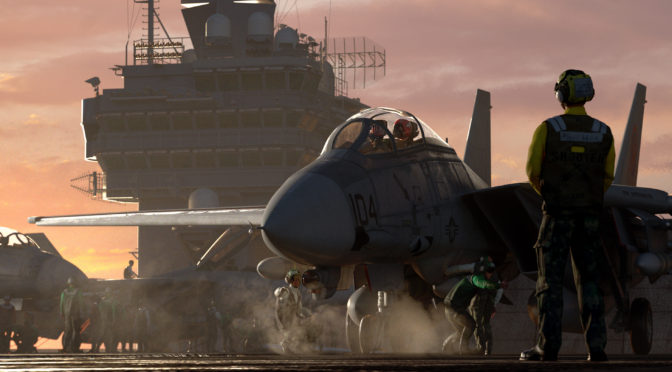
Featured Image: “Danger Zone” by Sean Gardner (via Artstation)