All posts by Guest Author

Transparency as Strategy: The Maritime Security Initiative and the South China Sea

The following article is adapted from a report by the Center for a New American Security (CNAS): Networked Transparency: Constructing a Common Operational Picture of the South China Sea.

By Dr. Van Jackson, Dr. Mira Rapp-Hooper, Paul Scharre, Harry Krejsa, and Jeff Chism.

South China Sea watchers know it as a strategically important and resource-rich area, crucial to the lifeblood of U.S. and Indo-Pacific economies. It is also a highly contested space, and the proximate sources of tensions are well-known. Ongoing sovereignty disputes among China, the Philippines, Vietnam, Taiwan, Malaysia, and Brunei lead to competition over hundreds of islands, reefs, and reclaimed land.

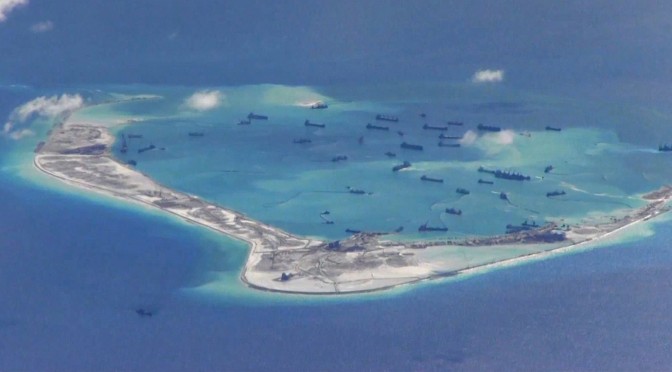
Yet underlying these resource and sovereignty tensions is something even more pernicious: The South China Sea is an opaque, low-information environment. Most South China Sea islets are hundreds of miles from shore, making it especially difficult for governments and commercial entities to monitor events at sea when they occur. This dearth of situational awareness worsens regional competition in the South China Sea. The region is already rife with rapid military modernization, resurgent nationalism, the blurring of economic and security interests, and heightened geopolitical wrangling with China (by great and small powers alike). Left unchecked, these pressures make conflict more likely by tempting major military accidents and crises that could drag down the economic and political future of the region.

These negative trends converging in the South China Sea also create missed opportunities among regional stakeholders for positive gains. South China Sea stakeholders have many transnational and economic interests of growing importance in common – from counterpiracy to maritime commerce and disaster response – but the competitive nature of the South China Sea today impedes collective action to solve shared problems. States have trouble engaging in cooperation, even when it would advance shared interests. This challenges the foundations of a stable regional order. The more states believe they live in an anarchical neighborhood, the more likely the region sees the worst of geopolitics: security dilemmas, arms races, and policies motivated by fear and greed rather than reason and restraint. 

There is no silver bullet to entirely resolve the historical, strategic, and technological factors that are contributing to a more contentious security environment in Asia. Nevertheless, there remain practical and politically viable initiatives that could have a substantial effect in mitigating insecurities while fostering cooperation on issues of common interest.

Our new report with the Center for a New American Security—Networked Transparency: Constructing a Common Operational Picture of the South China Sea—proposes that enhanced, shared maritime domain awareness (MDA) among ASEAN states is a realistic means of addressing some of the underlying and proximate problems facing this strategic waterway. An MDA architecture may engender cooperation in a region devoid of trust, prevent misunderstandings, encourage operational transparency, and lead to capacity-building efforts that contribute to the regional public good. Our report explores how advances in commercial technology services, regional information-sharing, and security cooperation can contribute to enhanced regional security. We believe these advances can do so by moving the region closer to establishing a common, layered, and regularly updated picture of air and maritime activity in the South China Sea – a common operational picture (COP) for a tempestuous domain. 

Transparency: The Next Phase of the Rebalance

Over the past year, U.S. policymakers made two major public commitments linking South China Sea transparency to larger goals of stability and assured access. The first, the Asia-Pacific Maritime Security Strategy, lays out what the Department of Defense sees as the most pressing challenges facing the region, as well as the most promising openings for future collaboration and improvement. The second, the Maritime Security Initiative, seeks to make these opportunities reality, funding regional capacity-building efforts to the tune of $425 million. Both initiatives rightly prioritize enhancing local partner military abilities, regional cooperation, and maritime domain awareness in the South China Sea, but they focus much more on framing past actions and justifying present initiatives than on laying out a road map for the future.

Our report builds on these initiatives, prescribing for the United States a maritime domain awareness road map comprising four broad lines of effort:

  • Coordinated capacity-building among a concert of outside stakeholder powers;
  • A U.S.-centric effort relying heavily on U.S.-controlled information collection and distribution;
  • Expansion of the capacity and reach of extant institutions that perform maritime awareness and information-sharing functions in the region; and
  • An inclusive approach that empowers regional institutions and relies on private-sector partnerships.

Each of these strategies—detailed at length in our report—prioritizes different ways of enhancing maritime domain awareness, and each has distinct benefits and drawbacks. In aggregate, the types of activities constituting these strategies offer policymakers menus from which they can pick and choose to build better maritime domain awareness given political realities, cost constraints, trust, and other salient conditions that may shift over time. Advancing shared situational awareness in practice will likely require drawing on all four strategic approaches, and our report identifies several key near-term tasks for policymakers and operators to render the region’s most volatile waterway into an open, transparent, and stable one. 

Read the full report: Networked Transparency: Constructing a Common Operational Picture of the South China Sea.

Dr. Van Jackson is an Adjunct Senior Fellow at CNAS and an Associate Professor in the College of Security Studies at the Daniel K. Inouye Asia-Pacific Center for Security Studies. The views expressed are his own.

Dr. Mira Rapp-Hooper is a Senior Fellow with the Asia-Pacific Security program at CNAS.

Paul Scharre is a Senior Fellow and Director of the 20YY Warfare Initiative at CNAS.

Harry Krejsa is a Research Associate with the Asia-Pacific Security program at CNAS.

Jeff Chism is a Commander in the U.S. Navy and at the time of writing was a Military Fellow at CNAS. The views expressed are his own.

Members’ Roundup: March 2016 Part One

By Sam Cohen

Welcome to part one of the March 2016 members’ roundup. Over the past month CIMSEC members have examined several international maritime security issues, including an increase in Russian naval activities and deployments, recent U.S. naval exercises demonstrating the Fleets’ application of the distributed lethality concept, laser technologies and the U.S. defense acquisition program and as usual, the increasingly tense security environment in the Asia-Pacific.  

Paul Pryce begins the roundup in the Asia-Pacific with a discussion, on what he refers to as, the new era in Singaporean defense procurement. In his article at Offiziere, Mr. Pryce highlights that previous procurement strategies for the country’s Navy have focused on acquiring mainly European designed vessels, either built specifically for Singapore or purchased following a short period of service in the initial European country. However, the planned construction of eight indigenous Independence-class littoral mission vessels beginning in 2016 and the expected procurement of a domestically built light aircraft carrier through 2021 suggests that the Singapore’s shipbuilding capacity and overall maritime force projection capabilities are becoming increasingly strengthened – a significant implication for Singapore’s role in South East Asian security dynamics.

[otw_shortcode_button href=”https://cimsec.org/buying-cimsec-war-bonds/18115″ size=”medium” icon_position=”right” shape=”round” color_class=”otw-blue”]Donate to CIMSEC![/otw_shortcode_button]

Alex Calvo, for Asian Military Review, discusses the challenge Taiwan faces in securing a replacement for its four aged hunter-killer submarines (SSKs), two of which are vintage Tench-class World War II boats while the other two were commissioned in the Netherlands in 1987 and 1988. Mr. Calvo explains how Europe has become reluctant to support Taiwanese military procurement needs for fear of angering China while the United States no longer produces SSKs. He suggests that Taiwan may look to Japan as an alternative source for its SSK replacement largely due to recent efforts by the Japanese shipbuilding industry to win the contract for the Royal Australian Navy’s SSK procurement requirements while also noting a lack of other feasible alternatives.

Kyle Mizokami, for Popular Mechanics, discusses China’s plans to establish aircraft carrier battle groups tasked with defense of the country’s territorial sovereignty, maritime rights and overseas interests both regionally and perhaps globally. Mr. Mizokami highlights the nature of China’s first operational aircraft carrier, the Liaoning, as he explains its training role and limited capacity to carry large numbers of combat capable aircraft. However, he also notes that China has confirmed the construction of the Dalian carrier, which will have more hangar space for support and combat aircraft – but will still only displace about 50 000 tons, or half that of a modern U.S. carrier.

Leaving the Asia-Pacific, Dave Majumdar outlines the implications of Russia’s planned massive live-fire nuclear exercise being conducted by two Project 955 Borei-class ballistic missile submarines deployed with the Northern Fleet. In his article at The National Interest, Mr. Majumdar explains how one of the missile boats will sequentially launch all sixteen of its RSM-56 Bulava missiles at a depth of 164ft while highlighting that such an exercise, whether a U.S. or Russian ballistic missile boat, would only launch their entire payload in conflict as part of full-scale retaliatory or offensive nuclear strike. In a second article at The National Interest, Mr. Majumdar discusses the spotting of a Russian Project 667 BDRM Delfin-class ballistic missile submarine near French territorial waters – the boat carries sixteen missiles capable of carrying four nuclear warheads each with a range of 7500 miles.

Bryan McGrath, for the War on the Rocks, provides the ‘First Principles’ that will help guide the difficult task of structuring the U.S. Navy’s future fleet. Mr. McGrath emphasizes that the Navy must be sized and shaped into a fleet that allows for both combat-credible and presence forces to be positioned globally in a manner that secures national interests while effectively deterring major power conflict. He also mentions the implementation of the distributed lethality concept, where individual platform lethality is increased even as the force becomes geographically dispersed. On this point, Mr. McGrath argues that an individual combat capacity increase should not compel policy makers to reduce the size of the fleet, as one does not necessarily balance the others strategic importance. On the same topic at The National Interest, Dave Majumdar describes a recent test of the SM-6 missile where it was revealed that the system now retains effective anti-surface capability, a major step for distributed lethality implementation across the fleet.

Members at CIMSEC were also active elsewhere during the first part of March:

CIMSEC has also recently (February) published a compendium discussing a range of strategies, challenges and policy options concerning Distributed Lethality. You can find a download link for all of the articles here.

At CIMSEC we encourage members to continue writing, either here on CIMSEC or through other means. You can assist us by emailing your works to dmp@cimsec.org.

Sam Cohen is currently studying Honors Specialization Political Science at Western University in Canada. His interests are in the fields of strategic studies and defense policy and management.

[otw_shortcode_button href=”https://cimsec.org/buying-cimsec-war-bonds/18115″ size=”medium” icon_position=”right” shape=”round” color_class=”otw-blue”]Donate to CIMSEC![/otw_shortcode_button]

21st Century Maritime Operations Under Cyber-Electromagnetic Opposition The Finale

The following article is part of our cross-posting partnership with Information Dissemination’s Jon Solomon.  It is republished here with the author’s permission.  You can read it in its original form here.

Read part one, part two, and part three of the series.

By Jon Solomon

Candidate Principle #6: Technical Degradation is Temporary, Psychological Effects can be Enduring

It must be appreciated that the greatest damage caused by an adversary’s successful cyber-electromagnetic attack may not be in how it degrades a system or network’s performance, opens the door to kinetic attacks against a force, or even tricks commanders into making operationally or tactically-sub-optimal decisions. All of these are generally temporary effects and can be recoverable with flexible plans, resiliency-embracing doctrine, and crafty tactics. Rather, as renowned naval analyst Norman Friedman has hypothesized, it could very well be the shattering of commanders’ and operators’ trust in their systems and networks that is most destructive. If personnel are not conditioned to anticipate their systems’ and networks’ disruption in combat, an attack’s lasting effect may be a morale-corroding fatalism. Likewise, if they are deceived just once by a manipulated situational picture, and even then not necessarily in a majorly harmful way, they may still hesitate to take needed actions in subsequent engagements out of fear of deception even when none is present. Either of these consequences could result in ceding the tactical if not operational initiative. In a short conflict, this might be catastrophic. Doctrinal collapse might also result, which would be especially debilitating if force structure is designed so tightly around a given doctrine that it severely limits options for creating or adapting operating concepts on the fly.[i]

Interestingly, similar effects might conceivably occur even when a system’s or network’s electronic protection and information assurance measures cause a cyber-electromagnetic attack to only achieve a relatively minor degree of immediate ‘damage.’ In fact, near-continuous cyber-electromagnetic harassment in the form of noise jamming, incessant yet readily parried cyber penetration attempts, situational picture-manipulation attacks that the target’s operators can quickly discover and reverse, intermittent system crashes or network connectivity interruptions that are quickly recovered from, or even severe disruptions of non-critical systems and network services may wear a force’s commanders and crews down mentally even if their critical systems and networks remain fully capable. A clever adversary might actually find this psychological degradation more exploitable (and more likely to be available for use at any given time) than technical degradation. Indeed, cyber-electromagnetic warfare’s psychological applications may well be where it finds its greatest utility.

Assessing the Implications

As the Chief of Naval Operations and others have asserted, the cyber and electromagnetic domains have become equally important to the physical domains in waging modern war.[ii] The cyber-electromagnetic fight will extend throughout all phases of major future conflicts, may begin well before open hostilities break out as an adversary attempts to ‘prepare’ the battle space, and accordingly may be particularly pivotal during a war’s opening phase. Indeed, high-impact anti-network operations with major maritime strategic implications date back as far as the opening moments of the First World War. Just as a belligerent might not be able to win a war with naval dominance alone but could easily lose without it, so it will be for cyber-electromagnetic dominance. It follows that a naval force’s ability to operate within a contested maritime zone will be highly questionable if it cannot effectively suppress or exploit the adversary’s force-level networks while simultaneously parrying the adversary’s own cyber-electromagnetic attacks. This will even extend to operations featuring stealth platforms, as such assets have long needed direct EW support to achieve maximal effectiveness.[iv] Should the U.S. Navy under-appreciate a potential adversary’s integration of cyber-electromagnetic warfare within combined arms doctrine, in a future conflict it would risk facing attrition rates on par with what it endured in the Solomon Islands from summer 1942 through summer 1943—something that its contemporary force structure simply could not endure.[v]

Assuming the candidate principles we have outlined are validated, they will influence future maritime warfare in at least five general ways. First, they will confirm leading tactical theorist Wayne Hughes’s hypothesis from over a decade ago that the next major maritime fight will be defined by the belligerents’ struggle for scouting superiority.[vi] This will represent a drastic change from the U.S. Navy’s post-Second World War combat experiences, in which the absence of threats to its sea control allowed it to focus on maximizing the efficiency and persistence of power projection ashore. Regardless of whether a tactical action pits two naval battleforces against each other, or one against a land-based force, the victor will likely be the side that is able to achieve high-confidence classification, identification, and targeting against his opponent’s forces first, thereby enabling effective attack.[vii] Cyber-electromagnetic discipline and capabilities will clearly be central to the success of the scouting/anti-scouting phases of any future operation.

Second, the above signifies that a force will need to extend its effective scouting and anti-scouting reach beyond that of its opponent. This is not achieved solely by covering a given area with more sensors than the opponent, or deploying scouts at greater ranges than the opponent. Rather, as suggested earlier, a sensor network’s effectiveness is equally a function of its architecture. This means the availability of difficult-to-intercept communications pathways and backup communications infrastructure will be just as important as raw coverage volume, lest key sensors be cut off from the network or the situational picture they feed be decisively manipulated. This also means the network must employ multiple sensor types. For surveillance, this translates into multi-phenomenology sensors positioned (or covering areas) as far as possible forward within the battle space, with some using sensing methodologies and platform characteristics that allow them to avoid (or at least delay) counter-detection. For reconnaissance, this requires sensors capable of penetrating the opponent’s force to support the confident confirmation of a given contact’s classification and identity. The U.S. Navy simply cannot afford to waste precious inventories of advanced weapons by falling for deception in a future battle. In this light, the Navy’s proposed Unmanned Carrier Launched Airborne Surveillance and Strike (UCLASS) system could be a critical enabler for effectively employing the proposed Long Range Anti-Ship Missile (LRASM), beyond visual range anti-air missiles, and similar network-enhanced standoff-range maritime weapons. It should not be overlooked that UCLASS, a scouting and attack asset that will be organic to the battleforce, can be designed to support expanded operations on interior lines of networking.

Third, if there is to be a reasonable chance that any degradation will be graceful, cyber-electromagnetic resilience must become a defining attribute of systems’ and networks’ designs. Strong electronic protection and information assurance features are certainly vital, with the latter applying just as much to ‘engineering plant’ systems as to the warfare systems they support. Nevertheless, as no system or network can ever be unexploitable, those central to a force’s tactical capabilities must contain additional design features that allow for quick restoration, graceful degradation, or capability expansion when subjected to withering cyber-electromagnetic attacks. Systems’ avoidance of network-dependency will also help greatly to this end.

Fourth, operations within opposed cyber-electromagnetic environments will demand C2 decentralization, as a higher echelon’s ability to assert direct, secure control over subordinate units under such circumstances will be dubious. Even if possible, this kind of close control will almost certainly be inadvisable if only for force concealment and counter-exploitation considerations. Instead, maritime forces will need to re-embrace ‘command-by-negation’ doctrine, or rather the broad empowerment of lower-level commanders to exercise initiative in accordance with their higher commander’s pre-disseminated intentions, if they are to fight effectively. Relatedly, aggressive experimentation will be needed to find the proper balance between operating on interior and exterior lines of networking when inside a contested zone—and will probably reveal that the bias should be towards the former.

Lastly, forces capable of operating under command-by-negation and in opposed cyber-electromagnetic environments are not developed overnight. Frequent and intensive training under realistic combat conditions will be needed if the requisite force-wide skills are to be developed.[viii] In particular, much as we have traditionally done to cultivate physical damage control readiness, commanders and crews on the deck plates must be regularly conditioned to expect, recognize, and fight-through cyber-electromagnetic attacks. A force’s cyber-electromagnetic resilience will depend in no small way upon its personnel’s technical, tactical, and psychological preparation for operating with critical systems and networks degraded if not compromised, and with situational pictures that have been manipulated. Likewise, a force’s ability to successfully deceive the adversary—not to mention successfully employ countermeasures against the adversary’s weapons—will depend upon the cyber-electromagnetic tactical skills the force’s personnel cultivate through routinized peacetime training. Emission control discipline, decoy placement relative to defended assets, precision evasive maneuvers, precision timing and sequencing of tactics, and the like require frequent practice if commanders and crews are to gain and then maintain just the minimum proficiencies needed to survive in modern maritime battle. The Navy’s next Strategy for Achieving Information Dominance needs to make it clear that cyber-electromagnetic competence must not be isolated to its Information Dominance Corps, and instead must be ingrained within the total force.

While cyber-electromagnetic risks hardly invalidate the use of advanced sensor and networking technologies, they do caution us not to take for granted that our systems and networks will be secure, functional, and reliable when needed. Our doctrine, contingency operational plans, and tactics must be structured around the assumption each of our warfare systems contain exploitable cyber-electromagnetic vulnerabilities that may prevent us from using them to their fullest—or at all—when most needed. We must not allow ourselves to build and field a force that can only fight effectively when its systems and networks are unhindered and uncompromised.

Jon Solomon is a Senior Systems and Technology Analyst at Systems Planning and Analysis, Inc. in Alexandria, VA. He can be reached at jfsolo107@gmail.com. The views expressed herein are solely those of the author and are presented in his personal capacity on his own initiative. They do not reflect the official positions of Systems Planning and Analysis, Inc. and to the author’s knowledge do not reflect the policies or positions of the U.S. Department of Defense, any U.S. armed service, or any other U.S. Government agency. These views have not been coordinated with, and are not offered in the interest of, Systems Planning and Analysis, Inc. or any of its customers.

[i] Norman Friedman. “Trust but Verify.” Naval Institute Proceedings 134, No. 11 (November 2008), 90-91.

[ii] ADM Jonathan Greenert, USN. “Imminent Domain.” Naval Institute Proceedings 138, No. 12 (December 2012), 17.

[iii] LCDR James T. Westwood, USN. “Electronic Warfare and Signals Intelligence at the Outset of World War I.” U.S. National Security Agency, undated, accessed 1/31/14, http://www.nsa.gov/public_info/_files/cryptologic_spectrum/electronic_warfare.pdf

[iv] See 1. ADM Jonathan Greenert, USN. “Payloads Over Platforms: Charting a New Course.” Naval Institute Proceedings 138, No. 7 (July 2012), 18-19; 2. Gordon and Trainor, 213-215, 217; 3. Arend G. Westra. “Radar Versus Stealth: Passive Radar and the Future of U.S. Military Power.” Joint Forces Quarterly 55 (October 2009), 136-143.

[v] Thomas G. Mahnken. “China’s Anti-Access Strategy in Historical and Theoretical Perspective.” Journal of Strategic Studies 34, No. 3 (June 2011), 310.

[vi] CAPT Wayne Hughes, Jr, USN (Ret). Fleet Tactics and Coastal Combat, 2nd Ed. (Annapolis, MD: Naval Institute Press, 2000), 201-202, 210-212.

[vii] Ibid, 40-44.

[viii] Solomon, “Maritime Deception and Concealment,” 104-106.

America’s Dilemma in Avoiding Confrontation in the East Asian Littoral

By David Hervey

The recent innocent passage of USS Lassen through waters claimed by China in the South China Sea, billed as a freedom of navigation operation (FONOP) by the United States, highlights the inefficiency of US policy in the Asia-­Pacific.

As has been widely reported, while the US government portrayed the voyage of Lassen through the waters around Subi Reef as a freedom of navigation exercise to challenge Chinese claims to those waters under international law, Lassen conducted an innocent passage, which would have been allowed even in territorial waters under the UN Convention on the Law of the Sea, and therefore not a challenge to Chinese claims. This compromised the US government’s stated goals for the operation.

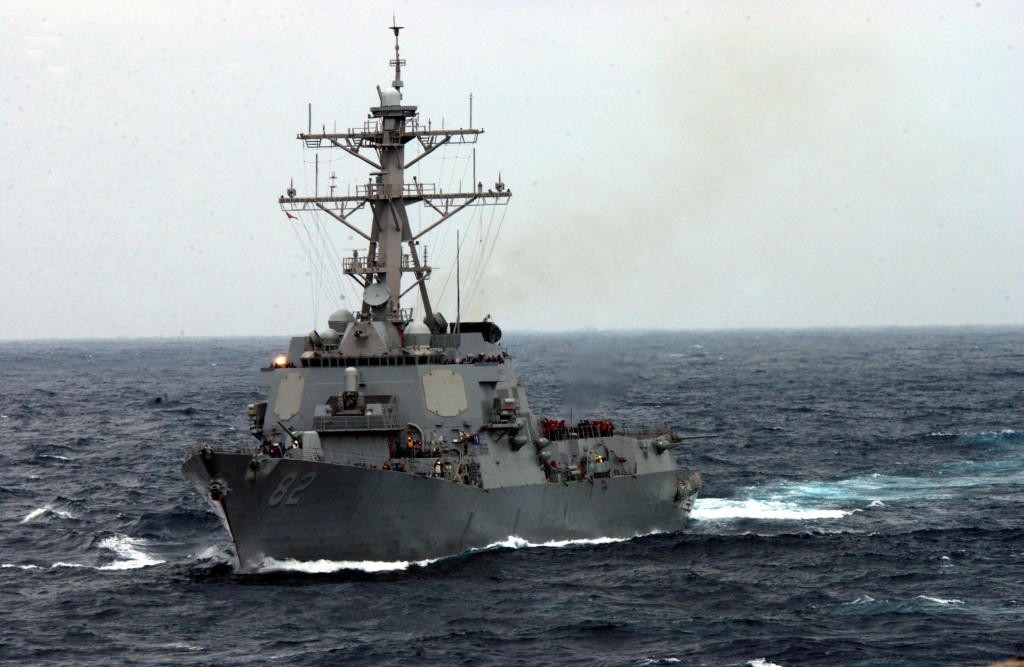
030328-N-7265L-025 East China Sea (Mar. 28, 2003) - The guided missile destroyer USS Lassen (DDG 82) sails through the rough seas. Lassen is part of the USS Carl Vinson Battle Group that just recently completed participating in the joint exercise FOAL EAGLE and is continuing a scheduled deployment in the western Pacific Ocean. U.S. Navy Photo by Photographer's Mate 2nd Class Inez Lawson. (RELEASED)
East China Sea (Mar. 28, 2003) – The guided missile destroyer USS Lassen (DDG 82) sails through the rough seas. Lassen is part of the USS Carl Vinson Battle Group that just recently completed participating in the joint exercise FOAL EAGLE and is continuing a scheduled deployment in the western Pacific Ocean. U.S. Navy Photo by Photographer’s Mate 2nd Class Inez Lawson.

This raises an important question of why the US intentionally compromised its objectives. It is unlikely that this was a result of neglect or ignorance, given the fact that everyone from officers on the ship to the Washington higher­ups who planned and approved the operation are familiar with international law and the protocol of an innocent passage. The most apparent intention of the US decision to conduct an innocent passage rather than a true FONOP is in an attempt to show restraint, and to avoid serious provocation of China. An important question, then, is whether the US, through its apparent restraint, succeeded in not provoking China.

At the moment, the US appears to have failed. One way of determining whether the FONOP­lite provoked China is by examining statements from the Chinese Government and state media about the operation. Admittedly, this isn’t a perfect measure because the Chinese Communist Party is a relatively opaque organization, and it is inherently tough to parse the posturing from the genuine signalling, ­­especially in party-­run media outlets. But these statements can point observers in the right direction. Regardless of whether such credit is due, the United States has not gotten any credit in the Chinese press or from officials for its apparent attempt to show restraint. Indeed, op­eds in the People’s Daily accuse the US of using FONOPs as “a cover­up for the US to destroy peace and stability in the South China Sea” and officials “[urge] the US to stop sowing dissension and deliberately stirring up tension and stop deeds and actions that undermine peace and stability in the region.”

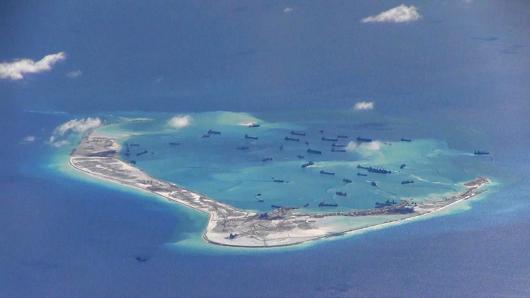
SCS
Subi Reef, a disputed land feature in the South China Sea, pictured in May 2015, and undergoing land reclamation to enlarge the island. Such activities have been a controversial development. (Source: US Navy).

Furthermore, the actions and words of the Chinese government agree with each other. Even if their statements were posturing, the pace of Chinese militarization of the sea has quickened. This is clear from recent announcements of new missile deployments, a radar station, and the flight of fighter jets to the sea. The interesting thing about all these developments is that none were announced by the Chinese government. If China was stoking nationalist fervor in an attempt to please citizens who would have been otherwise inclined towards dissent as a result of the recent economic slowdown the Chinese government would have announced these developments itself, and loudly publicize them. However, given its initial decision to keep quiet, observers can reasonably infer that China’s recent actions are driven by considerations of power rather public opinion. This lends even more credibility to the Communist Party’s public statements.

To an extent, the Chinese government has a point. If a foreign warship sailed within twelve nautical miles of US land, even if American claims to that land were questionable, most of the press and politicians of both parties would be outraged. A rough analogy is the Cuban Missile Crisis. The US had nuclear missiles in Turkey at about the same distance from the Soviet Union as Cuba is from Florida, but when Soviet missiles came to Cuba, there was widespread furor in America. Thus, it is questionable whether the FONOP could have been perceived as anything but a provocation.

Yet the FONOP’s true goal (making a statement under international law) was compromised in an attempt to allay Chinese concerns. If it is impossible to avoid provoking China, but the US desires to make a statement, it should do so more vocally and less equivocally. If, to avoid confrontation, the US compromises the legal goals of the FONOP, there is little substantive argument for the FONOP to be carried out at all.  This paradox reveals a fundamental problem with US strategy and policy in East Asia – committing to a strategy neither of engagement nor of confrontation is futile because such a strategy will inevitably be interpreted as a strategy of confrontation. The assets necessary for the current “neither ­here­ nor ­there” strategy ­­ such as warships, fighter jets, and the like ­­ can easily, in China’s view, be repurposed towards a strategy of confrontation and encirclement. President Obama’s “pivot” can be seen in the same light, because while it diplomatic on the one hand, it has significant military aspects.

This is, to a large extent, a manifestation of the Security Dilemma, in which the actions taken by one state for the purposes of strengthening its defense against hypothetical future attacks is interpreted by another state, usually a regional or geopolitical rival, as proactive preparation for future conflict. The security dilemma spurs the rival state to strengthen their defences, beginning a cycle of military upgrades popularly called an arms race. This dynamic unfortunately appears to be at work in East Asia even with defensive weapons, given given China’s vocal opposition to South Korea’s

A test launch of the THAAD missile defense system. (Source: US Army).

acquisition of the THAAD missile defense system. Whether China’s opposition is warranted is beside the point,­­ the fact is that it exists, and China considers THAAD to be an attempt to negate its capabilities, much in the same way that Russia considered a plan for ballistic missile defense systems in Eastern European countries to be a provocation, despite these defenses being plausibly directed toward Iran rather than Russia, leading to significant changes to the deployment of missile defense systems in Europe.

The security dilemma is closely related to the Thucydides Trap, a dynamic taking its name from at the end of Book 1, Chapter 1 of Thucydides’ History of the Peloponnesian War, stating that the most important cause of war between Athens and Sparta was the rise of Athens’ power relative to that of Sparta, which the Spartans considered to be an existential threat to their city­state. The Thucydides Trap is often referenced in the context of US­China relations. While the Thucydides Trap is an example of the Security Dilemma, they are not exactly the same. The Thucydides Trap refers to relative shifts of the balance of state power, and the Security Dilemma, on the other hand, is usually used to refer to deployment of weapons systems, rather than state power in general. The distinction is precise, but it exists nonetheless.

How, then, can the United States maneuver around the Thucydides Trap? The current “neither­-here-­nor-­there” policy is probably not the best option, given the fact that tensions in the South China Sea continue to rise. A cursory analysis would suggest that America’s options are binary ­­confrontation or conciliation. But this would be oversimplifying the available options. State politics are not binary, there is a wide spectrum of possible actions (hence Clausewitz’s famous “War is merely the continuation of policy by other means”). A committed strategy of confrontation is not optimal, and even if it was, it would be politically impossible. A tack toward conciliation would probably require concessions on too many national security interests to be a viable strategy.

A better strategy would require constant communication with China about not only current developments in the area, but clarifications that US and allied actions are purely defensive in nature, rather than attempts at encirclement. Observers can reasonably conclude that such communication already occurs, but it should be stepped up. US and Chinese leaders should be in contact as close as US and Soviet Leaders were at the height of the Cold War. Many deployments by US allies and partners of defensive systems, such as THAAD, are in direct response to threats other than China (namely North Korea) so their deployment should be explicable to Chinese officials. The only place where a such a strategy of communication would fall short is where US and Chinese interests are in direct and irreconcilable conflict, as they are in the case of Taiwan. However, the status quo established by the Shanghai Communique, in which the United States acknowledged the One-China Policy and stated its support to a peaceful solution to the question of Taiwan’s status,  seems to be acceptable to the US and to China, at least over the short­ to medium­ term, so barring the unforeseeable, this asymmetry of interests should not be fatal to a strategy of increased communication.

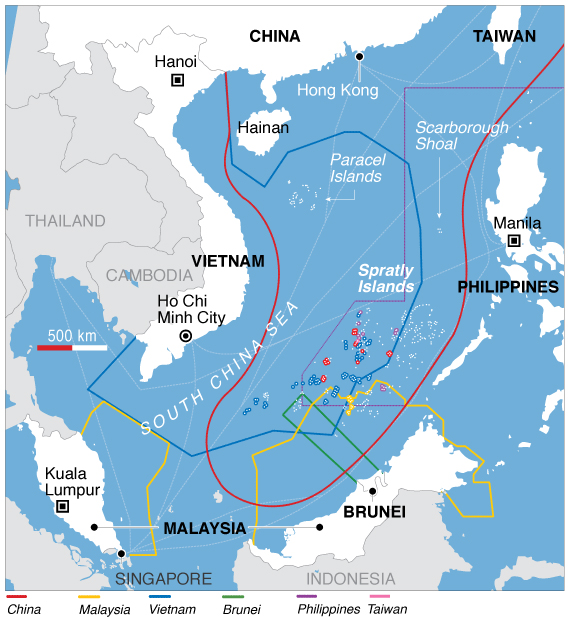
 A map showing territorial claims in the South China Sea (Source: VOA News)
A map showing territorial claims in the South China Sea (Source: VOA News)

While it is probably too late for the Obama administration to make a lasting initiative to rationalize diplomacy in the East Asian Littoral, this makes it all the more necessary for the next administration to have a clear vision, no matter what that administration’s party affiliation happens to be. Its vision must be not only clear, but decisive, because a strategy of both engagement and confrontation is not an effective way of pursuing either. A tack to either direction, but not to either extreme, is necessary. This requires an evaluation of US interests in the region. Of course, regional stability and safety of merchant shipping in the area are vital US national security interests, as is continued reassurance of allies. What all of this entails ought to be the subject of further discussion. More importantly, the US needs to envision and debate the status of other interests in the region, and the cost of achieving or protecting them. A strategy of increased engagement would likely require concessions on some non­vital interests, while a more confrontational strategy would entail significant risk. Either way, the current US policy has limited viability over the long term, and carries with it all the risks, but few of the benefits, of a more purposeful strategy.

David Hervey is an undergraduate in his third year at Emory University in Atlanta, Georgia. He is studying Political Science and Economics, with research interests including political philosophy, low-intensity conflict, and the Asia-Pacific region.