

By William C. Spears
It has been twenty years since the passing of Vice Admiral James Bond Stockdale, a celebrated American leader and moralist whose heroic example continues to inspire new generations.
Stockdale’s story is commonly regarded at a surface level, reduced to that told in his citation for the Congressional Medal of Honor. The simplified account goes something like this: As the senior officer among American POWs in Vietnam, he exhibited unyielding courage and resilience in the face of brutal captivity and torture. Learning he would soon be forced to reveal information that would compromise a resistance network and endanger his comrades, Stockdale attempted suicide to prevent this outcome. His act not only demonstrated moral resolve but also led to the cessation of torture by the North Vietnamese. Many former POWs now credit their survival to his actions.
Although Stockdale is now upheld within the U.S. military as a prototypical model of moral leadership, the real story is more complex than widely understood, or what can be captured in any award citation. To fully appreciate it requires a venture into the North Vietnamese prison system as well as the deeper philosophical underpinnings of Stockdale’s leadership practice.
The etymological connection between “morality” and “morale” offers a point of departure. Both words share a root in the Latin moralis, derived from mos (plural mores), meaning “custom” or “way of life.” Moralis originally referred to proper conduct aligned with societal norms, while “morale” later entered English through French, describing the collective emotional or mental state of a group bound by shared values. Both concepts hinge on the ancient concept of a telos — the purpose, or mission that defines what individuals and groups are meant to be or achieve.
Morality, then, is not merely things like honesty and decency, though these are certainly part of it. It encompasses everything that a mature individual is supposed to be: wise, just, brave, and self-controlled. Similarly, morale refers to what a group is supposed to be: not just cheerful but also disciplined, internally cooperative, and successful in the fulfillment of shared purpose. Thus, no losing team ever possesses high morale, even if they might look happy, and morale cannot be possessed by an individual. Furthermore, whether the group in question is a small crew or an entire country, a crisis in morale is definitionally a crisis in morality on a collective scale.
To convert individual qualities into collective qualities is precisely what a leader does. This is something I have witnessed firsthand as a tactical evaluator of nuclear submarines, where I observed numerous crews operating under intense pressure. A crew inevitably absorbs the personality traits of its captain, with these traits manifesting in both visible behaviors and intangible attitudes. A disorganized or perpetually victimized captain will likely lead a similarly disorganized or victimized crew, while one preoccupied with reputation and appearances may foster an environment where flaws are concealed rather than addressed. Conversely, a crew marked by unwavering professional discipline or an indomitable warrior spirit will almost always reflect a similarly dispositioned leader. These shared traits are normally detectable within minutes of stepping aboard a ship.
The literature of management and organizational psychology tacitly acknowledges this phenomenon within academic concepts like ‘leader imprinting’ and ‘organizational culture.’ Yet, it has been intuitively understood by those who lead humans since ships were powered by oars. It represents the enduring responsibility of moral leadership: defining through example what an individual — and, by extension, the group — is supposed to be.
Stockdale’s crew was the POW colony. Command of this organization was not a position he sought, nor was it a privilege. There was no added pay or prestige, only the immense pressure that came with being the senior officer present, responsible to hold everyone together despite his own natural impulses to fall apart. His means of communication was encoded wall taps, relayed from cell to cell.
The crisis Stockdale faced was a re-education program of diabolical genius. Through a calculated combination of torture and promises of special favor, prisoners would be compelled to reveal harmful information. Then, placed before cameras, they would “confess” to “war crimes” and denounce their country’s policy as immoral and illegal. This testimony would be broadcast to receptive audiences worldwide, attacking the national will to fight in the living rooms of American citizens. This exploited a strategic flaw in the American war effort, in that it was founded upon false — and therefore immoral — pretenses. Stockdale would later point to the disaster in Vietnam, and the attendant collapse in morale at every societal level, as the bitter consequence of untruthful leadership:
“To take a nation to war on the basis of any provocation that bears the smell of fraud is to risk losing national leadership’s commitment when the going gets tough… Moral corners were cut in Washington in our top leaders’ interpretation of the events of August 4th at sea in order to get the Tonkin Gulf Resolution through Congress in a hurry.” –James Stockdale, 1995.
While the exploitation program was conceived for strategic effect, from the perspective of the individual prisoner, the effect was decidedly tactical: It left them psychologically isolated. After being exploited, a broken prisoner would be returned to their cell, now clothed in the indignity of guilt and remorse. “You don’t want to talk to me,” they would respond to a tapped inquiry. “I’m a traitor.”
“Snap out of it, man,” would come the reply. “There are no virgins here.”

The telos — or what philosophers would call the overriding mission or purpose — of the POW organization was the survival of its members. As the commander of this organization, Stockdale understood that mere physical survival was inadequate and fleeting. To truly endure, one had to preserve their identity — as an American and as a human being. A permanent loss of this identity amounted to kind of moral death, which was usually soon followed by physical death. This presented a dilemma: under torture, any action, no matter how degrading, could be compelled. Everybody broke. The commander’s role, then, was to find some way to preserve a sense of agency and dignity, even in those forced to betray their own countrymen, in word if not deed.
Stockdale’s answer was to throw out the rulebook and create a new one. Instead of a rigid list of prohibited actions — unrealistic under the circumstances — Stockdale directed that one must accept torture to acquiesce to certain demands from the enemy, such as revealing information or participating in the propaganda machine. The critical principle was this: you had to make them torture you. Thus, to survive torture became an act of resistance and will.
Stockdale survived it himself on fifteen occasions, and yet the enemy never got him on camera . He bashed his own face in when they tried.
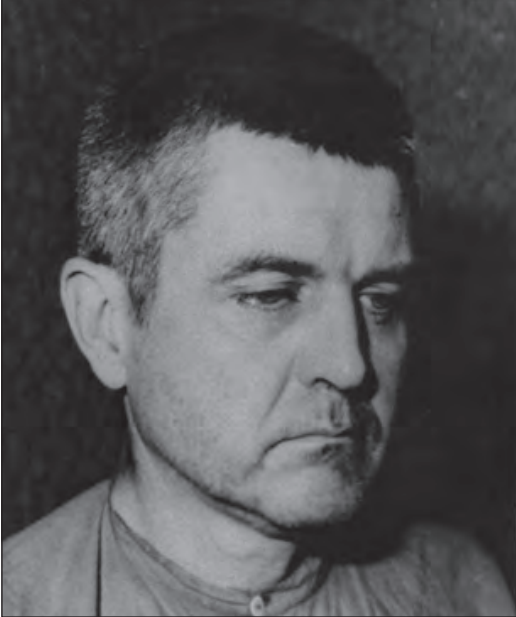
The new code created a psychological permission structure for POWs: breaking could not be a source of shame because everyone would eventually break. What mattered was how one endured and resisted until that point. There would be no sympathy for one’s enemy — one’s torturer — no deals. One does not ‘act reasonably’ toward a torturer or ‘meet them halfway.’ A prisoner could return from a session with head unbowed, confident they had done everything within their power. Their agency and dignity would ripple through the prison colony, fortifying the collective spirit of resistance. To their captors, this behavior was bizarre and incomprehensible.
From Stockdale, the American POWs absorbed moral clarity, fortitude, and the unshakable confidence that they would survive their ordeal and return with honor. Such qualities cannot be faked or imposed by fiat; they can only be transmitted through unmistakable personal example.
Stockdale, then, is far more than a war hero. He serves as the ultimate benchmark for what we should expect from leaders and what we should value when selecting them, clarifying that the ideal leader is, always and everywhere, an ideal human. Stockdale’s legacy endures, not through statues or memorials, but through the lasting power of example.
This article originally appeared at the William C. Spears blog on the 20th anniversary of VADM Stockdale’s passing and is republished with permission. Read it in its original form here.
Commander William C. Spears is a submarine warfare officer in the U.S. Navy and the author of Stoicism as a Warrior Philosophy: Insights on the Morality of Military Service, forthcoming in November by Casemate Publishers.
Featured Image: March 4, 1976: President Gerald R. Ford presents the Medal of Honor to Rear Admiral James B. Stockdale, USN, during an awards ceremony in the East Room of the White House. (U.S. Navy photo)
Discover more from Center for International Maritime Security
Subscribe to get the latest posts sent to your email.