Category Archives: Strategic Outlook

Predictions and forecasting.

Welcome to Wargaming Week


wargames

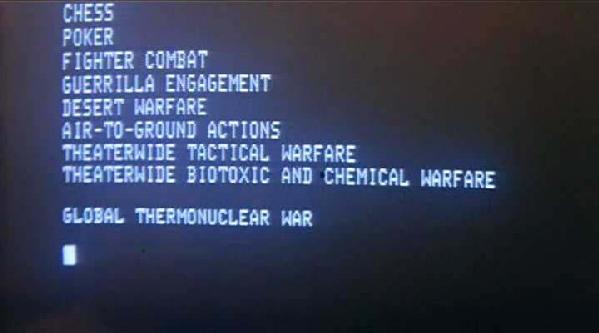
Checkers, Risk, Command & Conquer, and Fencing…since childhood, humans are exposed to games in various forms. From basic to advanced and from purely fun to cut-throat poker matches – we are continuously given opportunities to challenge ourselves and compete against fellow man in the arena (or on the screen).

The United States military has numerous, robust and mature wargaming departments that have been developing complex scenarios for more than 75 years. It is not just recreating history merely for recreational purposes, but instead it captures the vast capabilities of Naval Fleets of today, placed at the hands of military professionals to face wicked problems and thinking enemies. This week CIMSEC will explore how wargaming specifically has been used by military and security professionals for gaming’s intrinsic conflict qualities and also why Wargaming is still relevant. This week we will ask readers to consider the strengths and weaknesses of current wargaming endeavors and to propose games that we are not playing, but are inherently part of maritime security.

As we look to the future, how shall we best capture the gaming process and synchronize the structure with technology? During peacetime, gaming is one effective tool for testing the commander for the friction of combat (See Sumida on Clausewitz). This week we ask what else can and should be considered in future wargames to fully challenge the commander-of-tomorrow and to prepare the forces for the demands of confrontation in the maritime domain. What can future technology bring to further enhance our cognitive ability and challenge the profession of arms?

We look forward to your comments, critiques, and discourse.
 

Sea Control 25 – Crimean Crisis

seacontrolemblemSea Control discusses the Crimean Crisis, with three CIMSEC writers: Dave Blair, Viribus Unitis, and Robert Rasmussen. We discuss Russia’s aims and tactics, the Maidan movement, Ukrainian governance and passive resistance, and what this crisis means for Russia and the EU/NATO.
DOWNLOAD: Sea Control 25 – Crimean Crisis

We are available on Itunes, Stitcher Stream Radio, etc… Remeber to subscribe, leave a comment and a 5-star rating.


Sea Control 15 – Auld Lang Syne

seacontrolnewyearThe global system doesn’t stop just because we’re all staying up late to drink Champagne… which means Sea Control doesn’t stop either. Matt and Scott discuss the last and next year of CIMSEC in this New Year’s mini-edition of Sea Control. Yeah, 30 minutes isn’t really “mini”, but we do it up big here at CIMSEC. Download last week’s fantastic episode and this week’s for your trip back home! Enjoy our 15th episode of Sea Control, Auld Lang Syn (download)!
East Asian Geopolitics: Not on Holiday

No Rest for the Wary

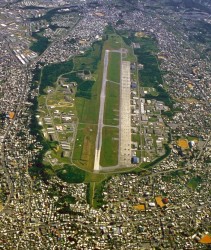
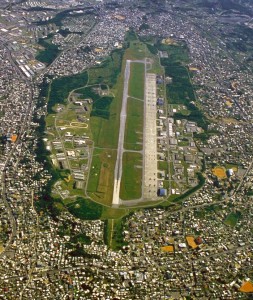
MCAS Futenma
Rough Landing: MCAS Futenma

While many look to the year’s end as a time of respite, Japanese Prime Minister Shinzo Abe may have looked to the end of this year as a time to maneuver. On December 26th, Abe visited the Yasukuni Shinto shrine, honoring the spirits of 2.5 million Japanese war dead, including over a dozen class-A war criminals. The Economist’s Banyan blog details the sharply negative regional reaction (notably from China, South Korea, and somewhat unprecedentedly, the United States), and also points to the speculation that this visit not coincidentally occurred on the same day as the announcement that Okinawa’s governor had tentatively agreed to an internal relocation of the USMC Air Station (MCAS) Futenma – a long-sought U.S. goal.

So who are the winners and losers of these moves?

Winners:

Shinzo Abe: In buying bilateral political capital with the U.S. through the Futenma deal, Abe was able to visit the Yasukuni shrine to shore up support among his conservative and far-right supporter base. Although he still provoked a public rebuke from the U.S., it is unlikely to cause any lasting damage to the relationship. The same cannot be said for those with the PRC and ROK. The moves to watch are whether Abe tries to mend these relationships, or continues to revisit the shrine on an annual basis. Although there are indications Abe is attempting to “normalize” the visits as akin to a trip to Arlington National Cemetery by a U.S. president, without a (highly unlikely) large-scale war apology PR effort by the Japanese government such visits will always send the wrong signal regionally.

China: Roughly a month ago China committed the unforced error of including Socotra Island in its ADIZ declaration. Since the “island” (really a submerged rock) is disputed with South Korea, the move thereby nipped the burgeoning PRC-ROK ties in the bud and caused South Korea to make common cause with Japan. With yesterday’s moves, Japan has given China the diplomatic advantage by displacing it as the more worrisome neighbor.

Losers:

Regional Cooperation: As my colleague Kyle Mizokami says, Abe is now “radioactive.” Even before the shrine visit, the South Sudan ammo cooperation fiasco highlighted the difficulty of boosting the Japanese-ROK ties. But whether Abe has killed all hopes of progress for the duration of his time in office is largely contingent on his moves in the coming year(s) – whether he makes sincere efforts at damage control or instead unapologetically continues to visit the shrine. The smart money is on the latter, but the former is not impossible.

United States: While the MCAS Futenma deal is a nominal victory, forestalling the need to relocate the Marines to another Asian facility, the setback to Japanese-ROK ties outweighs the win. Much of the U.S. Asia-Pacific strategy relies on leveraging its key regional allies, and there is little that would shore up U.S. grand strategy more than robust cooperation between Japan and South Korea. While greater ties can appear quixotic at the best of times, Abe’s visit has ensured that the most wonderful time of the year this is not.