Category Archives: History

Naval and maritime history section.

The New York Naval Militia in Operation Sandy

By CDR Art McCormick (ret.)

Super Storm Sandy

On 26 October, 2012, as Super Storm Sandy, the largest tropical storm in area ever recorded in the Atlantic Ocean roared up the eastern seaboard of the eastern seaboard of the United States Governor Andrew Cuomo declared a state of emergency in New York.1 Preparations included the 24-hour activation of the state’s emergency operation center (EOC) with major participating components, including the Division of Military and Naval Affairs (DMNA), ready to respond. A Warning Order was issued by Major General Patrick Murphy, the Adjutant General (TAG), to all components of the DMNA which comprises the NY Army National Guard, the NY Air National Guard, the NY State Guard, and the NY Naval Militia (NYNM). A Warning Order for the Naval Militia had been issued by the NYNM Deputy Commander for Operations on 25 October 2012. Three days later Gov. Cuomo ordered the mobilization of NY Military Forces (NYMF). The mobilization included members of the Naval Militia.2

On the same day, the U.S. Secretary of Defense, with the consent of the Governor, authorized the appointment of a Dual Status Commander (DSC) for NY, thereby allowing a pre-certified National Guard officer to command both state and federal forces within the state.3 This command was executed at 1128 on 3 November, 2012. This was the first large-scale unplanned contingency utilizing a DSC since the concept was established in 2009.4

Establishing the NY Naval Militia

Article 1 Section 8 of the United States Constitution authorizes states to establish militias which can be called forth by Congress “to execute the laws of the union, suppress insurrections and repel invasions.” The states are reserved the right to appoint officers of their militias and authorize training “according to the discipline prescribed by Congress.” Title 10 of the U.S. Code (USC) Sec.311, established by Congress, defines the organized militia as the National Guard and the Naval Militia.5 NY State Military Law Article 1, Sec. 6 “authorizes the Governor in event of invasion, disaster, insurrection, riot, breach of peace, or imminent danger thereof, to order all or part of the organized militia into active service.”6

Article 1 Sec. 8 of the U.S. Constitution also directs the Congress to “provide and maintain a navy.” In the late nineteenth century states began reestablishing Naval Militias, originally created and then disbanded in the early 19th century, to support the mandated federal Navy. In times of national emergencies states provided their naval militias for federal service. New York Governor David Hill signed a bill creating the NY Naval Militia on June 14, 1889.7 The 1st Battalion stood up two years later.8 The Naval Militia Act (NMA) of February 1914 put the State Naval Militias under the supervision of the Secretary of the Navy.9 This preceded the launching of the Naval Reserves by two years.10 With the establishment of the Navy Reserves, and later the Marine Reserves, federal support of naval militias ended and most states abolished their organizations.11

New York is unique in continuously maintaining its federally recognized Naval Militia. Title 10 USC does not include the Naval Militia as a reserve component but does authorize the Secretary of the Navy to set standards that the Naval Militia must meet, including the requirement that 95 percent of unit members be U.S. Navy (USN) or U.S. Marine Corps (USMC) reservists, to qualify for federal material support.12 NY State Military Law also requires 95 percent of Naval Militia members to be federal reservists13 and that the organization parallels that of the Navy and Marine Corps Reserves.14 Additionally, Memoranda of Understanding (MOU) between the NYNM and the USN (1996),15 the USMC (1996)16 and the U.S. Coast Guard (1997) have been signed, reaffirming continued cooperation while also permitting Coast Guard Reservists to join the NYNM.  Federal responsibilities supersede NYNM activation. A January, 2007 Defense Department report, Critical Homeland Infrastructure Protection, discusses the benefits “of the Federal Government providing immediate access to Navy and Marine reservists during State and Local emergencies, at no cost to the DoD.”17

History of NY Naval Militia Disaster Response

The NYNM can trace its disaster response history back to when it was mobilized to “protect steam ship passengers during the 1892 cholera quarantine at Fire Island.”18 120 years later the NYNM would again be at Fire Island performing Defense Support to Civilian Authorities (DSCA) missions. A more recent operation includes the TWA 800 recovery in 1996. The U.S. Coast Guard (USCG) was the lead agency in the massive recovery operation with significant USN support. Over 30 NYNM members, mostly stevedores from the USN 6th Cargo Handling Battalion, along with Marines, were activated for three to four weeks to load, unload, and drive trucks. 

When the North Country Ice Storm of 1998 struck in January 15 NYNM members were on State Active Duty (SAD) for five weeks assisting primarily with logistics and supplying staff officers. Naval Militia Construction Battalion (SeaBees) members served under the NY National Guard 152nd Engineer Support Company and used National Guard heavy equipment.

The most significant NYNM state activation occurred immediately after the World Trade Center terrorist attack on September 11, 2001. Naval Militia personnel were on site within hours and remained in Lower Manhattan for ten months. A total of 560 personnel were called to SAD. A decade later, nearly 200 NYNM members were mobilized when Hurricane Irene struck in August 2011. Non-disaster activations included assisting with maritime security for the 2004 Republican National Convention when NYNM SAD members served alongside National Guard Title 32 and Title 10 troops.

Joint Task Force Sandy       

As the NY community was still reeling from the ravaging effects of “Sandy,” a Nor’easter (named “Athena” by The Weather Channel) struck the NY metropolitan area on 8 November, delivering 7-13 inches of snow, a four-foot tide surge, high winds, and additional power outages. Although a relatively minor snow storm as far as Nor’easters are concerned, the timing could not have been more demoralizing with snow accumulations breaking records for this early date. At the peak of operations there were over 4000 military personnel under state control with the majority being on SAD, some under Title 32, which allows the governor to retain command and control (C2) while the federal government assumes the financial burden, and nearly 700 Federal Title 10 forces (federal active duty personnel under C2 of the Secretary of Defense/President of the U.S.). Brigadier General Mike Swezey, a pre-designated DSC, was the only individual in both Operation Sandy chains of command: one leading up to the president, who retained C2 of Title 10 forces, and down to the active duty troops serving within NY. The other lead up to the Governor of NY, who retained C2 of Title 32 and SAD troops, and down to the state forces responding.

Orders were accepted by over 200 NY Naval Militia members during the Operation Sandy response with 25 to 85 personnel on SAD at a time. Duration of activations ranged from 1 day to over 30 days from 29 October to 30 November, with the majority serving from five to nine days. Most of the NYNM members were integrated into the state’s military task forces whose missions included security, sheltering displace citizens, food and clothing distribution, and the evacuation of hospitals and nursing homes. Additionally, the NY Naval Militia Military Emergency Boat Service (MEBS) performed safety reconnaissance operations in Jamaica Bay to help identify maritime hazards along with security patrols around Fire Island at the request of local law enforcement agencies until emergency utilities could be restored and access roads made passable. Naval Militia members were also integrated into the DMNA Joint Task Forces Headquarters (JTFHQ) and the Operation Sandy Joint Operations Centers (JOC) respectively.

The NYNM warning order of 25 October 2012 directed the activation of the Personnel Action Team (PAT) to begin identifying and contacting members in preparation of expected activation. Liaison Officers were also advised to be ready to respond to anticipated mobilization execution order (EXORD). General NYNM activation directives require members recalled to DSCA SAD to be self-sufficient for up to 72 hours if necessary. The EXORD was given on 28 October and the JTF Sandy Liason Officer (LNO) team reported the next day. A NYNM LNO would be present at the JTF Sandy JOC from 29 October until 19 November when liaison duties would be handled locally by the senior militiamen in the area of responsibility (AOR). NYNM LNOs would also be manning the JFHQs JOC in Latham, NY. Within a few days the JTF Sandy JOC would include representatives from the NY Army National Guard (NYARNG), the NY Air National Guard (NYANG), the exclusively state NY Guard (NYG) and the NYNM. In addition, representatives from the U.S. Northern Command (USNORTHCOM), Army North, the National Guard Bureau, and the USS Wasp Amphibious Battle Group (ABG) would be occupying seats within the JOC. On 3 November, the USS Wasp (LHD-1), accompanied by the USS San Antonio (LPD-17) and the USS Carter Hall (LSD-50), arrived off the coast of New York and New Jersey with embarked Marines and Sailors from the 26th MEU along with detachments from Marine Heavy Helicopter Squadron (HMH) 366 and Marine Light Attack Helicopter Squadron (HMLA) 467. They operated in support of Hurricane Sandy disaster relief efforts. Title 10 personnel from the U.S. Army, Air Force, Navy, and Marines were among the responders:

  •  Air Force teams completed unwatering operations at Rockaway Wastewater Treatment facility, and East School in Long Beach, N.Y., and provided teams to support fire departments conducting unwatering operations in Breezy Point, N.Y.
  • Army divers repaired the pier system at Caven Point, N.J. Additionally, divers continue to assist the New York City Fire Department unwater the PATH tunnel at the World Trade Center and unwater the Long Beach High School and Recreation Center, N.Y.
  • Marines continued assessments with Army engineers in Far Rockaway, N.Y., and pumped 90,000 gallons of water from apartment buildings there. About 750,000 gallons were pumped from affected homes and parks in Breezy Point, N.Y.
  • Navy dive detachments continue to support the World Trade Center site and Marine Corps pump teams are assisting pumping operations at Breezy Point.

Helicopters from the 26th Marine Expeditionary Unit were transporting and relocating generators in the area at the direction of the Federal Emergency Management Agency. Navy Seabees and Marine personnel restored the beach at Coast Guard Station Sandy Hook; and supporting debris clearance operations at locations in Bayonne, N.J. and the Battery, N.Y.19

Also, National Guardsmen from Florida, Delaware, Georgia, Kansas, Massachusetts, Maine, Ohio, Pennsylvania and West Virginia arrived in NY through Emergency Management Agreement Compacts. With such a diverse force responding to the disaster, the Governor, with input from the Adjutant General (TAG), and the Secretary of Defense  consented to the activation of a DSC to command Title 10, Title 32, and SAD forces within the state. The DSC was executed on 3 November and the NYNM was a part of this historic event.

Naval Militia members, after reporting to the Joint Reception Staging Onward Movement and Integration (JRSOI) site and being scanned into the system, were then put to work where needed according to their skillsets. Seven members arrived with air transportation provided by the 109AW and then proceeded with the Air Guard command down range to Floyd Bennet Field in Brooklyn which quickly became the main logistical point for supplies and equipment being used and distributed by the various responding agencies. The majority of the mobilized force was sent to the Lexington Avenue Armory where they were integrated into Task Force 69.

According to one Meritorious Commendation citation awarded during the period:

“The NY Naval Militia element of Task Force 69 was responsible for saving numerous lives at Belleview Hospital during Super-storm SANDY. On 30 October 2012, the NY Naval Militia contingent, part of the Task Force, completed a mission at Belleview Hospital to keep critical hospital functions operational. In conjunction with Officers of the New York Police Department, this element kept the hospital’s generators operating overnight. Utilizing a bucket-brigade and 5-gallon buckets they hauled 100 gallons of fuel per hour from a 1400 gallon fuel truck to generators on the 13th floor of the hospital. Additionally, Task Force 69 assisted hospital staff by keeping food and water supplied throughout the hospital. When it was determined that Bellevue Hospital should be evacuated, 4-5 man teams carried patients down multiple flights of stairs to awaiting ambulances.”20

Two young Marine NYNM members that were qualified Humvee drivers spent a month chauffeuring the TAG and DSC throughout the AOR. MEBS-qualified truck and trailer drivers along with boat teams were kept busy early in the operation ensuring the safety of the vessels and equipment from storm damage. Boats needed to be taken out of the water and brought to higher ground where feasible and if not, taken underway to safer anchorages. If not for the conscientious meritorious efforts of the MEBS teams significant damage would have resulted. This would have hampered the security patrols that were to follow.

On 5 November, a request from Suffolk County for maritime security patrols with local law enforcement officers off Fire Island was routed through the JFHQ. It was determined that the NYNM could accomplish this mission and two vessels, trucks, and trailers, along with 15 qualified boat personnel, were soon on their way. They would perform what was quickly labeled “Vampire Patrols” from 1600 until dawn for 14 days commencing on 8 November. Although the first patrol had to be cancelled due to dangerous seas, security patrols from Kismet to Davis Park were completed. This area was without electrical power and the roads were impassable due to the super storm making the homes vulnerable to looters and any remaining civilians without emergency assistance. These patrols greatly reduced the risks. Flexibility was key as fuel and anchorage had to be secured for the vessels along with berthing and messing facilities for the crews. Assistance from the local authorities, including the nearby U.S. Coast Guard station was critical to the mission’s success.

Immediately after the 11 September, 2001 attacks, JTF Empire Shield (JTFES) was stood up and has remained active since. Simultaneously, the NYNM MEBS command was established with resources committed to JTFES mission. At the time of Superstorm Sandy’s arrival, 2 MEBS vessels were assigned to Empire Shield. One vessel, with armed National Guard personnel onboard, assisted with security at the Indian Point nuclear power station just up the Hudson River from NYC. The other boat was utilized for safety and security checks of vessels entering NY Harbor with a U.S. Coast Guard inspection team embarked. This was done through a unique agreement between NY and the Coast Guard. When Sandy struck, both MEBS boats were taken off the Empire Shield mission and given over to JTF Sandy to be used by the DSC as needed. This allowed the boats to be available if conditions permitted while allowing them to be relocated to safer anchorage. Within a few days, when it was determined that sufficient MEBS resources could be mobilized for Operation Sandy, both boats were returned to Empire Shield to continue their normal missions.

The final mission assignment for members of the NYNM involved going door-to-door in the ravaged coastal areas of Rockaway, Brooklyn, and Staten Island to ascertain the well-being of citizens whose lives were devastated by this catastrophic event. This was accomplished through the Thanksgiving Holiday.

The Current Force    

As the federal maritime forces in NY have decreased, so has the NYNM membership. The recent Strength Report dated March 1, 2012, counts total enrollment at 2206, (compared to approximately 4500 on 9/11), with 209 officers, 22 warrants, and 1975 enlisted.21 The majority of members are selected reservists (SELRES) from the USN (1300), followed by USMC SELRES (655), and USCG SELRES (106). Retired reservists under 60 years of age on the Federal Component List (94) and 5-percenters on the State Active List (51) make up the rest of the force. NY State educational assistance entices recruitment.22 Prior to the September 11, 2001 attacks, all training was provided by the federal government through the reserve system.

A new Joint Operations Center (JOC) with direct communications with the U.S. Northern Command (USNORTHCOM) was dedicated at DMNA Headquarters in 2008.23 The NYNM, along with the other components of the DMNA JTFHQ, mans a position at the JOC, continuing to stand the watch for not only New York, but all of America.

Arthur McCormick CDR (ret) NY Naval Militia is a US Navy veteran having served on active duty as a Radioman from 1966 to 1970 and then as a reserve Hospital Corpsman from 1987 to 1990. Shortly after 9/11/01 he was recalled to state active duty into the federally recognized NY Naval Militia in support of the World Trade Center disaster response. He served in lower Manhattan. He subsequently accepted a state commission in 2003. CDR McCormick served as Senior Joint Task Force 3 Liaison Officer on the staff of the Dual Status Commander for Hurricane Irene (DSC authorized but not activated) and Superstorm Sandy (DSC activated). CDR McCormick graduated from the US Naval War College with Joint Professional Military Education Phase 1 certification in 2008. CDR McCormick retired from the NY Naval Militia in 2016. On the civilian side Dr. McCormick is a retired veterinarian having graduated from the NY State College of Veterinary Medicine, Cornell University in 1979. He may be reached at artmccormick@hotmail.com.

References

[1] Governor Cuomo Declares State of Emergency in New York in Preparation for Potential impact of Hurricane Sandy. http://www.governor.ny.gov/press/10262012-sandystateofemergencecy  Oct 26, 2012.

[2] Governor Cuomo Directs New York Army and Air National Guard to Mobilize for Hurricane Sandy. http://www.governor.ny.gov/press/10282012nationalguardmobilized  Oct 12, 2012

[3] Panetta Appoints ‘Dual’ Commanders for Hurricane Relief. American Forces Press Service. http://www.defense.gov/news/newsarticle.aspx?id=118366 Oct 28, 2012

[4] Hurricane Sandy Puts New National Guard Command Mechanism to Work. National Defense Industrial Association. http://www.nationaldefensemagazine.org/archive/2012/December/Pages/HurricaneSandyPutsNewNationalGuardCommandMechanismtoWork.aspx December 2012

[5] Title 10 Sec. 311 USC. http://www.law.cornell.edu/uscode/10/311.html

[6] NYS Military Law Art 1 Sec 6. http://codes.lp.findlaw.com/nycode/MIL/1/6

[7] NY Times. June 15, 1889. http://query.nytimes.com/mem/archive-free/pdf?_r=2&res=9404E3DE133AE033A25756C1A9609C94689FD7CF

[8] New York Naval Militia Turns 120 on June 23 2011. http://dmna.ny.gov/news/news.php?id=1308832192

[9] NYNM. http://www.dmna.state.ny.us/nynm/naval.php?id=about  

[10] TNR. MAR 2010. History of the Navy Reserves, p. 18. http://www.navyreserve.navy.mil/Publications/2010/TNRmar10.pdf

[11] National Archives. Records of the Bureau of Naval Personnel. 24.6.2 Records of the Division of Naval Militia Affairs. http://www.archives.gov/research/guide-fed-records/groups/024.html#24.6.2

[12] Title 10 Sec. 7854.  http://www.law.cornell.edu/uscode/html/uscode10/usc_sec_10_00007854—-000-.html

[13] NYS Mil Law. http://codes.lp.findlaw.com/nycode/MIL/2/43

[14] Ibid.

[15] Dept of Defense (DoD). http://www.defenselink.mil/news/newsarticle.aspx?id=40825

[16] MARINE CORPS ORDER 5725R.7C ASSOCIATION OF MEMBERS OF THE SELECTED MARINE CORPS RESERVE (SMCR) WITH A STATE NAVAL MILITIA 7JUN96. http://www.marines.mil/news/publications/Documents/MCO%205725R.7C.pdf

[17] Defense Science Board Task Force, p19. http://www.acq.osd.mil/dsb/reports/2007-01-Critical_Homeland_Infrastructure_Protection.pdf

[18] NYNM. http://www.dmna.state.ny.us/nynm/naval.php?id=about

[19] US DoD News. Pentagon Provides Sandy Response Update. Nov 9, 2012. http://www.defense.gov/News/NewsArticle.aspx?ID=118496

[20] Meritorious Commendation Award citation. EO1 Thomas Gray. For meritorious service during the period 29 October 2012 – 8 November 2012.

[21] NYNM HQ. Latham, NY 12MAR2012.

[22] NYNM Education.  http://www.dmna.state.ny.us/nynm/naval.php?id=education

[23] NYNG Media Advisory. http://www.dmna.state.ny.us/pressroom/presindx.php?id=1203072420

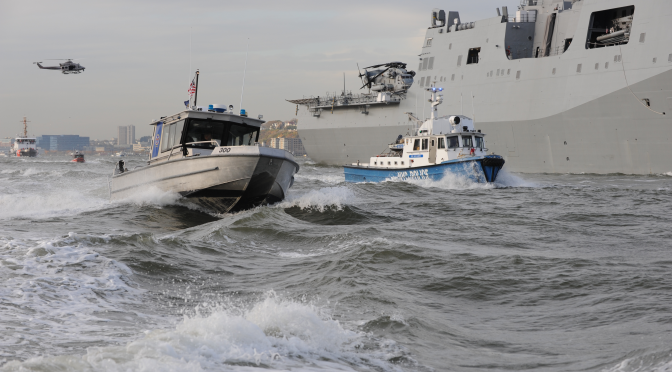
Featured Image: Crews from the Coast Guard Cutter Sturgeon Bay, Coast Guard Marine Safety and Security Team Boston, Coast Guard Station New York, the New Jersey State Police and the New York City Police Department escort the Pre-Commissioning Unit (PCU) New York as the ship sails into New York Harbor. The nearest patrol boat is  NYNM PB 300 escorting the USS New York (LPD-21) into NY harbor for it’s commissioning ceremony in November 2009.
Crimes of Command in the U.S. Navy – A Conversation with Michael Junge

By Christopher Nelson

Recently, Captain Michael Junge published an interesting book on why and under what circumstances the U.S. Navy relieves commanding officers. His book, Crimes of Command, begins in 1945 and proceeds through numerous historical case studies up to the modern era. I think many people – not only those in the surface warfare community – but commanders, leaders, and sailors in other communities will find our exchange interesting.

The book is worth your time – and it is a perennial topic that deserves attention.

Nelson: Would you briefly describe what the book is about and why you wanted to write it?

Junge: In short, it’s about why the Navy removes commanding officers from command – the incidents that lead to removal, the individuals removed, and what the Navy does about the incident and the individual. But instead of a look at just one or two contemporary cases, I went back to 1945 and looked across seven decades to see what was the same and what changed.

Nelson: In the book, when referring to the process of relieving commanding officers, you talk about words like “accountability,” “culpability,” and “responsibility.” These words, you say, matter when talking about why commanding officers are relieved. Why do they matter and how do they differ?

Junge: The common usage blends all three into one – accountability. We see this with the press reports on last summer’s collisions – the Navy’s actions are referred to as accountability actions.” Most people, I think, read that line as “punitive actions” mostly because that’s what they are. But accountability isn’t about punishment – it’s about being accountable, which is to give an accounting of what happened, to explain one’s actions and thoughts and decisions. The investigations themselves are an accountability action. The investigations are supposed to determine who was responsible for the problem, what happened, who was at fault, and then determine if within that responsibility and fault there is also culpability.

Culpability is about blame – accountability is not, even if we use it as such. In investigations, when you mix culpability, blame, and accountability together end up being about finding fault and levying punishment instead of finding out what happened. That keeps us from learning from the incident and preventing future occurrences. We’ve completely lost that last part over the past few decades if we even had it to begin with. Every collision I looked at, for example, had four or five things that were the same – over seven decades.

Nelson: Later in the book, you say that as virtues, honor, courage, and commitment are not enough. How should we reexamine those virtues? Isn’t this always the challenge – the challenge of the pithy motto vs. the substantive truth, that’s what I was getting at. And it’s not that there is some truth to the motto or slogan, but rarely are they sufficient alone – yes?

Junge: Honor, courage, and commitment make for a great slogan, but will only be inculcated in the force when our leaders routinely say them and live by them. I wrote a piece for USNI Proceedings in 2013 that commented on how naval leaders rarely used those words. That hasn’t changed. If they are used it’s in prepared text and often used as a cudgel. Leaders need to exemplify virtues – we learn from their example – and if they don’t use the words we don’t really know if they believe in them. But they are a great start, and they are ours – both Navy and Marine Corps.

What I meant in the book is that honor, courage, and commitment aren’t enough for an exploration of virtues in general. For the Navy, they are an acceptable starting point. For individual officers, or for the Naval profession, we need to think deeper and far more introspectively. My latest project is looking at the naval profession and a professional ethic. My personal belief is that we don’t need, or want, an ethical code. Or if we have one it needs to be like the Pirate Code – more as guidelines than rules. There’s science behind this which is beyond our scope here, but rules make for bad virtues and worse ethics. Rules tend to remove thought and press for compliance. At one level that’s great, but compliance tends to weed out initiative and combat leaders need initiative.

Nelson: So, after studying the historical data and specific events from 1945 to 2015, what did you conclude? Why are there more commanding officers relieved today than there were fifty years ago?

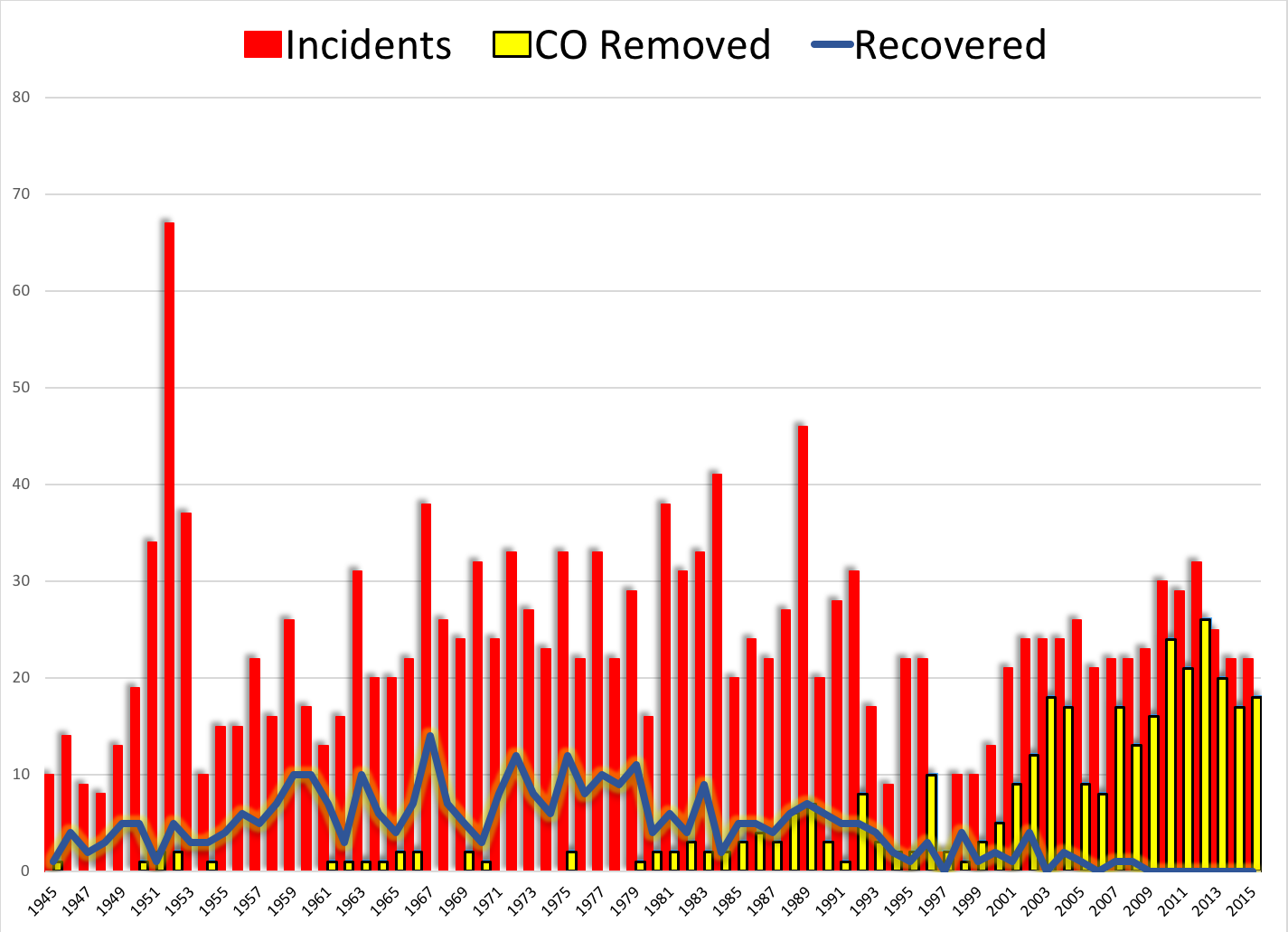
Junge: Even after all the research and the writing, this is a tough one for me to encapsulate. In my dissertation defense, I made a joke at the end that the reason we remove more officers now is complicated. And it is. Every removal is a little different from the others. That makes linking details difficult. But, when you lift back a little and take a really long view, I could find some trends. Not only do we remove more commanders today, we do it for more reasons, and we have almost completely ended any sort of recovery for officers removed from command.

Chart courtesy of the author.

Without giving too much away, because I do want people to read the actual book, today’s removals come down to a couple of things – press, damage (material or emotional) to the Navy, and the commander’s chain of command. If the chain of command relationship is poor, the press gets a story, and there is some level of damage to the Navy (metal bent, people hurt, or image tarnished) then the commander is likely to go. But it’s not a direct line. Sometimes the information comes out later – we saw this with USS Shiloh last year and in one of the cases I covered, the helicopter crash in USS William P Lawrence. Neither commander was removed from command, but both careers were halted after the investigations were done and the administrative side of the Navy took over. If those incidents happened in the 1950s or 1960s, both commanding officers would have unquestionably moved forward with their careers. Whether that would be good or bad depends entirely on what those officers might have done with the knowledge gained from the investigations that challenged their leadership and individual character but we won’t know anymore. Maybe we should.

Nelson: When you started this book and after looking at the data, did anything surprise you? Did you go in with particular opinions or develop a theory that the data disproved or clarified?

Junge: When I started this I was pretty sure there were differences. One of the reasons I pulled all the data together was because in 2004 the Navy Inspector General issued a report that said, in essence, that a one percent removal rate was normal. If one percent was normal in 2004, when we had fewer than 300 ships, then we should have heard something about removing COs when we had 1000, or 3000, ships. But, we didn’t. So that there was a change wasn’t surprising.

I started off thinking that Tailhook was a major inflection point. I intended a whole chapter on the incident and investigation. In the end, the data didn’t support it – the inflection had already happened and Tailhook, especially its aftermath, was indicative of the change. I’m not minimizing the impact Tailhook had on Navy culture – we are still dealing with echoes twenty-five years later – but for the trend of removing commanders, it wasn’t a watershed. Likewise, I thought the late 1960s to early 1970s might be an inflection point – we had a rough couple years with major collisions, attacks, fires, Vietnam – but the data showed it wasn’t the turning point I expected.

It wasn’t until I plotted the information out that I saw the inflection of the early 1980s. When I saw the changes in the graph I had to go back to the research to sort out why. It was both frustrating and encouraging. It showed me I wasn’t trying to force data to fit a pre-selected answer, but it also meant leaving a lot of research behind.

Nelson: You go into some detail in your book about court-martials. Historically, why does the navy rarely take commanding officers to court martial?

Junge: The simple reason is that the Navy has a difficult time proving criminal acts by commanding officers. It’s not a new problem. When officers are taught to think for themselves and have sets and reps thinking critically, then when on a jury they are likely to take the evidence and make their own minds up. And that conclusion may run counter to what Navy leadership wants. Getting courts-martial into that real true arbiter of guilt and innocence was a major win for the post-World War II military. But, since leaders can’t control courts-martial anymore we now see this major abuse of administrative investigations, which runs counter to our own regulations on how we are supposed to handle investigations of major incidents and accidents.

Nelson: In fact, you threw in an anecdote in your book about Nimitz issuing letters of reprimand to the jury members on Eliot Loughlin’s court-martial. This was fascinating. What happened in that case?

Junge: In April 1945, Lieutenant Commander Charles Elliot Loughlin sank a ship without visually identifying it. The ship turned out to be a protected aid transport with 2,000 civilians aboard. Nimitz removed Loughlin from command and ordered his court-martial. The court found Loughlin guilty but only sentenced him to Secretarial Letter of Admonition. Nimitz was reportedly furious and issued letters of reprimand to the members of the court. In just answering this question I realize I never dug deep into what happened to those members – I might need to do that.   

Anyway, that was a rare case of Nimitz being angry. And in retrospect, I wonder if he was angry, or if he was protecting the court from the CNO Admiral King. There’s a story I’ve been percolating on in how Nimitz and King had differing ideas of responsibility and culpability. King was a hardliner – King could be seen as the archetype for modern culpability and punishment. There were some exceptions but he was pretty binary – screw up, get relieved. Nimitz was the opposite. Halsey put Nimitz into multiple tough spots where Halsey probably should have been removed from command – but Nimitz knew Halsey and erred on the side of that knowledge rather than get caught up in an arbitrary standard. That’s why I think those letters were out of character. But I have to temper that with the very real knowledge that Loughlin committed a war crime, was pretty blasé about it, blamed others, very likely put American prisoners of war in more danger than they already were, and might have endangered the war termination effort. Those conclusions run counter to the modern mythology around Loughlin, but are in keeping with the actual historical record.

Nelson: And if I recall, there was an XO that chose court martial rather than NJP ten or so years ago after a sailor on the ship was killed during a small boat operation. The XO was exonerated and cleared from any wrongdoing by the jury. Fleet Forces ended up putting a statement out how he disagreed with the verdict.

Junge: USS San Antonio – LCDR Sean Kearns. Sean remains one of my heroes for forcing the system to do what it says it will do. I firmly believe that Admiral Harvey stepped well outside his professional role and made his persecution of Sean a personal matter when he issued some messages and letters after the acquittal. I know among many SWOs that Harvey’s actions after the verdict really altered their opinions of him. Sean’s case is also major reason I am in favor of the Navy ending the “vessel exception” which precludes anyone assigned to a sea-going command from refusing non-judicial punishment and demanding a court-martial. Too many Navy leaders abuse this option. I know of a story where an officer was flown from his homeport to Newport, RI for non-judicial punishment, and another where an officer was flown from Guam to Norfolk for NJP. There are more cases where officers were removed from command, but kept assigned to sea duty so that they could not refuse NJP. That this even happens completely belies the intent behind the vessel exception.  

Nelson: You also talk in some detail about Admiral Rickover and the culture he fostered and how that culture affected command. Overall, how did he affect command culture?

Junge: This was my biggest surprise. If you’d talked to me before I started and asked about Rickover I’d have easily said he had nothing to do with the changes. Wow –that was wrong. I’m not sure how I could ever think that someone who served almost 30 years as a flag officer, hand selected each and every nuclear-trained officer, and personally inspected each and every nuclear ship for decades didn’t influence Navy culture. Rickover ends up with the better part of a chapter in a story I didn’t think he was even part of. But, the culture we have today is, I think, not the one he intended. Maybe.

Rickover was, and remains, an individual who brings up conflicted memories and has a conflicted legacy. Like many controversial figures, the stories about him often eclipse the reality behind them. I’ll paraphrase a student who spoke of my colleague, Milan Vego, and his writings – you have to read about Rickover because if you just reject him completely, that’s wrong – and if you just accept him at face value, that’s wrong – you have to read and think and read some more, then come to your own conclusion. I can tell you that in the professional ethic piece I am working on, I expect Rickover’s legacy to play an important part.

Nelson: If I recall, I believe you self-published this book. How was that process? Would you recommend it for other writers? What did you learn when going through this process for publication?

Junge: The process, for me, was pretty simple. Getting to the process was very difficult. We know the adage of judging a book by its cover – well there’s also a stigma of judging a book by its publisher.

Actually getting a book published through an established publisher, the conventional process, takes well over a year and is full of norms and conventions that, from the outside, seem unusual. In the same way that we wonder “how did that movie get made?” when you go through the process of publishing, you start to wonder “how did that book get published?” I have a long time friend who is a two-time New York Times bestselling author who gave me some great advice on the conventional route. Just getting the basics can take up to an hour of discussion.

I tried the conventional route but after sending dozens of emails to book agents and getting only a few responses back, all negative, I checked with a shoremate who self-published his own fiction and decided to take that route partly out of impatience, frustration, and curiosity. I’m just good enough at all the skills you need to self-publish that it worked out to be pretty easy, with one exception – publicity. I’m not good at self-promotion so even asking friends to read the book and write reviews was a challenge.

Anyway, whether I recommend the self-publication process – it depends entirely on your own goals and desires. I wanted my book read – that was my core focus. To do that I could have just posted a PDF and moved on. But, I also wanted to make a few dollars in the process – and people who pay for a book are a little more likely to read it. This book grew out of my doctoral dissertation and I have a friend who is doing the same thing – but his goals were different. His core goals are different – he’s a full-on academic and needs the credibility of an academic publishing house for his curriculum vitae. We both defended around the same time – his book comes out sometime next year. I’m happy to spend more time talking about what I learned in the process, but the best advice I can give is for authors to figure out their objectives first. That is probably the most important thing. Everything else can fall into place after that.

Nelson: I ask this question in many of my interviews, particularly of naval officers – if you had ten minutes with the CNO, and if he hadn’t read your book, what would you tell him about Crimes of Command? What would you recommend he do to change the culture if change was necessary?

Junge: I really thought about punting on this one and running the note our Staff Judge Advocate has been running about Article 88 and Article 89 of the UCMJ (contemptuous words and disrespect toward senior commissioned officers). If I had ten minutes with CNO I doubt I would get 60 seconds of speaking time. My conclusions run completely counter to Navy lore about accountability and 10 minutes isn’t enough time to change anyone’s mind. But, as I thought about it I think I would say this: “CNO, we have really got to follow our own instructions. If an instruction says ‘do this’ then we need to do it, or change the instruction. We can’t have flag officers making personal decisions about this rule or that based on short-term ideas and feelings. If the situation doesn’t fit the rule, either follow the rule with pure intent or change the rule. But we can’t just ignore it. That’s an example that leads us, as a profession, down bad roads.” I would hope that question would then lead to a conversation of leadership by example that would include everything from Boards of Inquiry to travel claims to General Military Training.

Nelson: Sir, thanks for taking the time.

Michael Junge is an active duty Navy Captain with degrees from the United States Naval Academy, United States Naval War College, the George Washington University, and Salve Regina University.  He served afloat in USS MOOSBRUGGER (DD 980), USS UNDERWOOD (FFG 36), USS WASP (LHD 1), USS THE SULLIVANS (DDG 68) and was the 14th Commanding Officer of USS WHIDBEY ISLAND (LSD 41). Ashore he served with Navy Recruiting; Assault Craft Unit FOUR; Deputy Commandant for Programs and Resources, Headquarters, Marine Corps; Deputy Chief of Naval Operations for Communication Networks (N6); and with the Office of the Secretary of Defense. He has written extensively with articles appearing in the United States Naval Institute Proceedings magazine, US Naval War College’s Luce.nt, and online at Information Dissemination, War on the Rocks, Defense One, and CIMSEC. The comments and opinions here are his own.

Christopher Nelson is an intelligence officer in the United States Navy.  He is a regular contributor to CIMSEC and is a graduate of the U.S. Naval War College and the Maritime Advanced Warfighting School in Newport, Rhode Island. The questions and views here are his own.

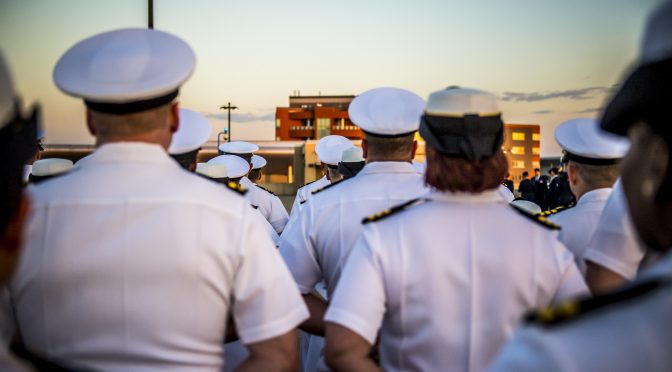
Featured Image:  (FORT BELVOIR, Va. (May 04, 2017) Hundreds of service members at Fort Belvoir Community Hospital gathered before daybreak and celebrated their unique service cultures and bonds as one of the only two joint military medical facilities in the U.S. during a spring formation and uniform transition ceremony May 4, 2017. (Department of Defense photos by Reese Brown)

British Amphibious Operations in Egypt, 1801: A JP 3-02 Perspective, Pt. 1

By Jason Lancaster

Introduction

“Amphibious Warfare requires the closest practicable cooperation by all the combatant services both in planning and execution, and a command organization which definitely assigns responsibility for major decisions throughout all stages of the operation.”– Admiral Henry K. Hewitt, USN1

By late 1800, the French Revolution was going poorly for the British. Britain’s economy was in distress, her allies had been driven from the war, Russia was shifting to support France, and neutral Baltic nations were arming to enforce their maritime rights and neutrality. Yet despite all this Britain fought on alone against France.

British armed forces were a tale of two branches. The Royal Navy had cleared the seas of French warships, blockaded the coasts of France, and was well respected. By way of contrast, the British Army had performed poorly ashore in northern Europe, had suffered catastrophic casualties while campaigning in the West Indies, and was universally derided by other European armies.2 Britain needed a military victory to solidify the government’s political position at home and abroad as well as to demonstrate the capability of the newly reformed British Army. The British amphibious operation in Egypt was what the nation needed.

Since July 1798, French forces had occupied Egypt. In August 1798, Nelson’s fleet obliterated the French fleet, cutting the French army off from France. After a year of campaigning in Egypt and Syria, Napoleon returned to France. Yet, the French army remained in Egypt, a permanent threat to British India. Britain needed a victory on land to secure room for negotiations at the expected peace conference.

The British joint campaign in Egypt has languished in relative obscurity, overshadowed by Admiral Nelson’s epic naval battle in 1798. When viewed through U.S. Joint Publication 3-02 Amphibious Operations, this campaign provides several lessons on the successful conduct of an amphibious operation.  

Despite the successful execution of the landing and British victory in the campaign, mistakes made by the national command authority, in intelligence, logistics, planning, and the relationship between the commanding general and admiral caused problems throughout the operation. Even though U.S. amphibious doctrine was developed and refined in the Second World War era and Joint Publication 3-02 is the evolution of those experiences, this essay argues that the principles of a successful amphibious campaign as defined by JP 3-02 are applicable regardless of time period and this historic case study can be analyzed through this doctrine.

Planning

“The planning phase normally denotes the period extending from the issuance of an initiating directive that triggers planning for a specific operation and ends with the embarkation of landing forces. However, planning is continuous throughout the operation.” – JP 3-02 3

British politicians agreed that they needed a victory, but where Britain should strike was a matter of debate. The Prime Minister and cabinet debated whether to support another royalist uprising in France, another landing in Holland, Egypt, or somewhere else.4 Surprisingly, despite Britain’s recent support of failed French royalist uprisings and landings in Holland both options were initially more popular than Egypt.

Secretary of State for War Sir Henry Dundas spent years improving Britain’s position in India, and did not want French interference to threaten his work. Secretary Dundas and Napoleon agreed Egypt was the key to India. The French Consul in Egypt stated 10,000 French troops could proceed down the Red Sea to India and take Bengal from the British in one campaign. In London, intelligence on French force levels in Egypt were scarce, but estimates were 13,000 French troops demoralized and crippled by the plague. Intelligence Reports stated the garrison of Alexandria numbered 3,000, and scattered through Upper Egypt and Syria were 10,000 more French troops. 5 In reality, the French army in Egypt was closer to 25,000 soldiers, and despite sacrifices and hardship, their morale was high.6 Britain planned to send an army of 15,000 to Egypt.7 Britain also planned to send an additional 3,000 troops from India, but there was little likelihood of coordination between the two forces, and a failed landing would have enabled the French to defeat both forces piecemeal. This faulty intelligence could have proved disastrous to the landing force. British diplomats in Constantinople also believed they had coordinated Ottoman logistical support for horses and gunboats.  

Secretary Dundas, turned to his fellow Scot, General Sir Ralph Abercromby, to lead the expedition and turn the tide of the war. General Abercromby was an experienced general who had successfully conducted several amphibious operations in the West Indies earlier in the war. At 65, he was an innovative soldier despite his age who mixed the best of the American light infantry and Prussian close order drill schools of British military thought. His protégé, another Scot, General Sir John Moore, pioneered British light infantry tactics, and had served with General Abercromby throughout the West Indian campaigns seizing sugar islands from the French. He served as a division commander throughout this campaign and represented the army’s interests in planning the ship-to-shore movements of the campaign.8

The naval leadership was no less capable and distinguished. Admiral George Elphinstone, 1st Viscount Keith, successfully negotiated with the mutineers at the Nore in 1798. He served as deputy Commander-in-Chief, Mediterranean under Admiral Lord St Vincent before himself assuming the command in November 1799. Lord Keith experienced amphibious operations during the siege of Charleston in the American Revolution and in 1795, an expedition that captured the Dutch Cape Colony. Lord Keith’s deputy for planning the ship to shore movement was Captain Alexander Cochrane, uncle of Admiral Lord Thomas Cochrane and a distinguished future admiral in his own right. He had served on the American station during the Revolutionary War and was commanding officer of HMS Ajax, a 74-gun ship of the line.

“The focus of the planning process is to link the employment of the amphibious force to the attainment of operational and strategic objectives.”9  Initially clear direction for operational and strategic objectives was not given. Campaigns in the Netherlands, France, and Egypt were proposed. Finally, Secretary Dundas tasked General Abercromby and Lord Keith to conduct a landing in Egypt. Secretary Dundas gave the commanders four objectives: eject French forces, restore Ottoman rule in Egypt, protect British interests in India, and secure a better negotiating position for a future peace conference. Secretary Dundas directed the joint force to attempt to seize the Spanish Fleet at anchor in Cadiz before proceeding to Marmorice Bay to receive promised logistical support from the Ottoman Empire and then to defeat the French forces in Egypt accomplish British objectives.

Operational planning for the expedition began when General Abercromby arrived in Gibraltar. According to JP 3-02, top down planning, unity of effort, and integrated planning are the key components of the planning phase. General Abercromby’s presence in the planning was keenly felt, however Lord Keith displayed little interest in the planning. General Abercromby spoke with naval officers who had served on the Egyptian coast. These conversations helped shape the campaign and narrow the landing sites to the Aboukir Peninsula or Rosetta. Aboukir would enable the British fleet to provide logistical support and the army’s flanks would be protected by water during the advance on Alexandria. A landing at Rosetta would enable the British army to link up with the Ottoman army and advance together toward the French.10  

Initial reports led General Abercromby to believe that his army would find potable water on the Aboukir Peninsula. Eventually, General Abercromby learned through captured letters that all water would have to come from the amphibious shipping. During a council of war aboard HMS Foudroyant naval officers familiar with the coast explained, “when anchored in Aboukir Bay, [the fleet] would be able to land a sufficient quantity of water and provisions for the army.” As the army advanced, “it would always be within a mile of [the coast], boats with water and provisions might attend.”11 If the fleet was destroyed in battle or forced off station by gales, “the army would die of thirst.” While the force was anchored in Marmorice Bay, General Moore was sent to Syria to speak with Captain Sir Sydney Smith RN, serving with the Ottoman forces fighting the French. General Moore assessed the Ottoman forces as disorganized, poorly trained, and disease-ridden. General Abercromby selected Aboukir for the landing site. The condition of the Ottoman army played a major role in that decision. Despite the water supply risk, Aboukir Peninsula was closer to Alexandria, and the waters of the bay and lake protected the army’s flanks from French cavalry.12

Embarkation

“The embarkation phase is the period during which the landing force with its equipment and supplies embark in assigned shipping.” – JP 3-02

Despite almost a decade of war, in 1801, the British army remained small. To create an expedition of 15,000 troops involved redeploying  from British deployments around Great Britain, Ireland, and Europe. Not all regiments in the British Army were designated for service outside Europe. Some regiments, particularly militia regiments, were able to volunteer for active service, but only in Europe. High casualty rates in the West Indies meant that few militia regiments volunteered to serve outside Europe. British troops embarked from Ireland and Britain, including units who would not participate in the campaign, but would relieve units in Gibraltar and Minorca that would participate in the campaign.13 The complex embarkation plan shuffled soldiers across Europe, resulted in some soldiers spending months cramped inside troopships waiting to get ashore.     

The expeditionary force also lacked cavalry mounts. British forces often deployed without horses and purchased them locally since horses take up a large amount of space aboard ships and there was a great difficulty keeping horses healthy for long voyages. The Ottoman Empire promised the British army an ample supply of horses. In reality, British diplomats and supply officers were unable to procure a sufficient number of quality mounts for the cavalry, artillery, and wagon train. The horses provided proved to be subpar, and the strongest horses were given to the artillery to pull cannons. The poor quality mounts meant that the French cavalry would outclass the British cavalry in Egypt.14

Rehearsal

“The rehearsal phase is the period during which the prospective operation is rehearsed to: test the adequacy of plans, timing of detailed operations, and combat readiness of participating forces; provide time for all echelons to become familiar with plans; and test all communications and information systems.” – JP 3-02

The British attempt to land a force to seize the Spanish Fleet at Cadiz was a fiasco. A large portion of that was because there had been no time for a rehearsal. Boats went to the wrong transport, it took hours for soldiers to embark the boats, and then they did not form up properly. The landing was called off and the following day a storm scattered the fleet, and the invasion of Cadiz was over. When the fleet arrived in Marmorice, they planned to spend just a few days to rendezvous with Ottoman naval forces and supplies before proceeding to Egypt. Instead, the expected logistical support from the Ottomans never materialized and the expedition spent almost two months waiting.15 General Abercromby used this time to good effect drilling his troops. This time enabled the force to learn and rehearse their ship-to-shore movement to great effect. For seven weeks, the troops practiced ship-to-shore movements, boats going to the right transport, soldiers embarking the boats, boats forming waves, and soldiers forming line of battle from the boats.

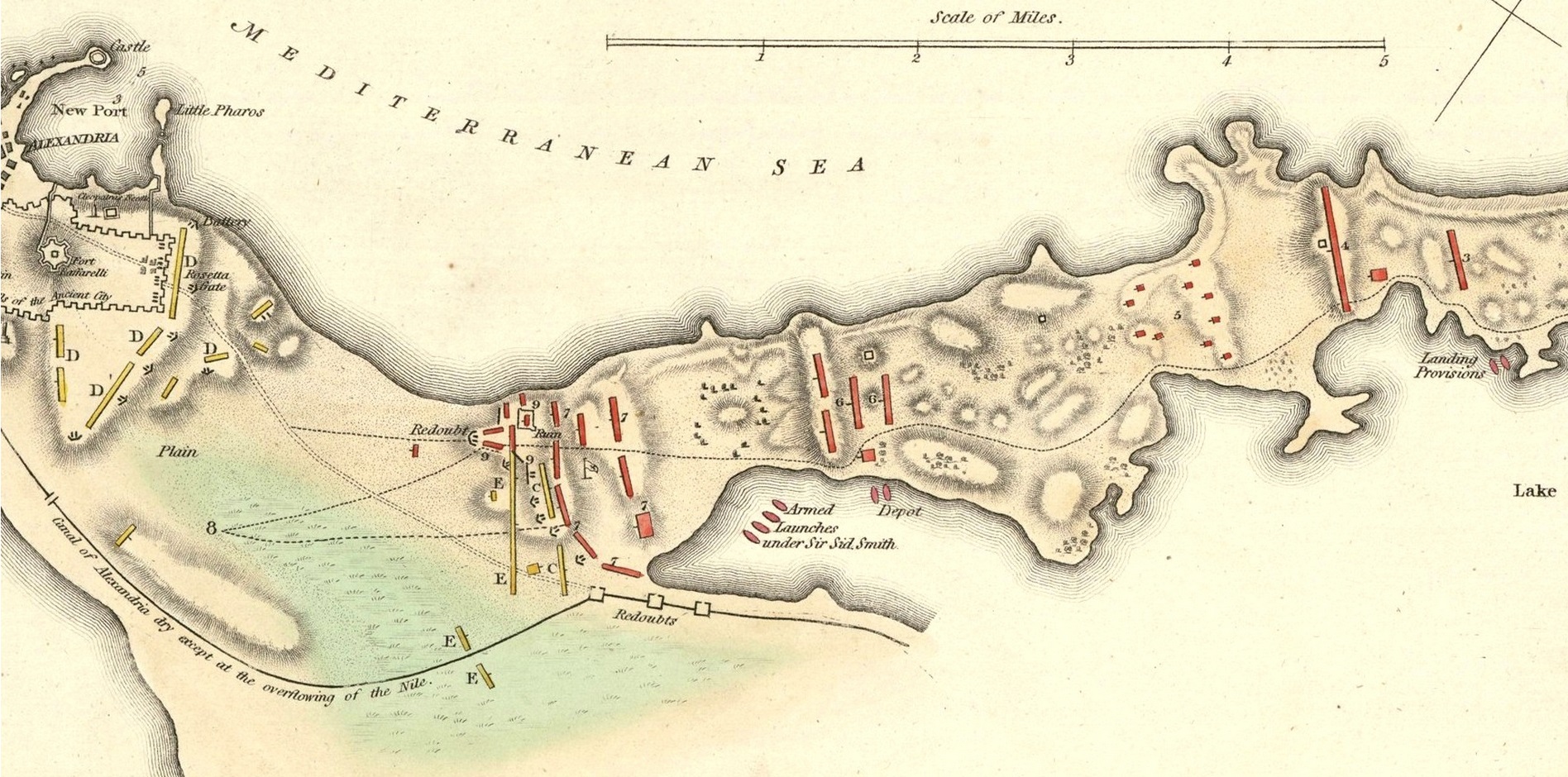
A detail of a plan of the Operations of the British Forces in Egypt from the landing in Aboukir Bay on th 8th of March to the Battle of Alexandria March 21st inclusive. (William Fadden, Geographer to His Majesty & to His Royal Highness the Prince of Wales/Wikimedia Commons)

The boats were organized into three waves. The first wave comprised 58 flatboats. Each flatboat carried 50 soldiers. The second wave encompassed 81 cutters and the third wave comprised 37 launches. Artillery in boats followed in the fourth wave, the cannons would be disembarked and crewed by sailors.16  The troops practiced disembarking from ships into the landing craft and forming into line of battle on the beach. The soldiers were instructed to enter the flatboats as expeditiously as possible, sit down, and keep their muskets unloaded until formed into line on the beach. Officers’ servants were instructed to bear arms in the ranks and to carry no more than their own equipage.17 The boat crews practiced maintaining the assault boat spacing of 50 feet and the movement from ship-to-shore.18

Movement

“The movement phase is the period during which various elements of the amphibious force move from the points of embarkation or from a forward deployed position to the operational area.” – JP 3-02

The expedition’s movement phase consisted of three phases. Phase 1 consisted of the movement from Great Britain and Ireland to Gibraltar and Minorca where the forces were gathering. This phase included the failed attempt to seize the Spanish fleet at Cadiz.

Phase 2 consisted of the movement from Gibraltar and Minorca to Marmorice Bay. Following the Cadiz debacle, the expedition watered and victualed in Africa, and proceeded to Marmorice Bay, Turkey. During this phase a terrible storm scattered the fleet and several days were spent bringing the transports back to the fleet.19 After several weeks, the fleet arrived in Marmorice Bay, whose deep waters and high cliffs proved an excellent anchorage.

Phase 3 was the movement from Marmorice Bay to Egypt. The expedition encountered a storm that frightened the Turkish gunboats, which left the expedition. On 1 March, the expedition arrived off Alexandria – sailing in so close that the masts of the French ships in harbor were visible – and proceeded down the coast to Aboukir; however, weather conditions prevented the landings until the 8th of March.20 This alerted the French, gave General Menou eight days to concentrate troops and entrench them on Aboukir Peninsula. While French troops were rushed to the scene, including 2,000 soldiers to Aboukir Peninsula, there was confusion in the French army as Captain Moiret described, “various movements so numerous as to be impossible – as well as pointless.”21

Now that the expedition was off the coast, the Royal Engineers conducted a beach reconnaissance. Unfortunately, the good works of Majors Fletcher and Mackerras was to no avail. Major Fletcher was captured and Major Mackerras was killed by artillery during their reconnaissance. When the fleet arrived, General Abercromby undertook the reconnaissance himself.22 

LT Jason Lancaster is a U.S. Navy Surface Warfare Officer. He is currently the Weapons Officer aboard USS STOUT (DDG 55). He holds a Masters degree in History from the University of Tulsa. His views are his alone and do not represent the stance of any U.S. government department or agency.

References    

[1] Joint Publication 3-02: Amphibious Operations, 18 July 2014, pg II-1

[2] Michael Glover, Peninsular Preparations, (Cambridge, 1963),pg  3.

[3] Joint Publication 3-02 Amphibious Operations, (2014), I-7

[4] (Mackesy 2010, 5)

[5] John Fortescue, A History of the British Army Vol. IV, (MacMillan, 1915), pg 800.

[6] Joseph –Marie Moiret, Memoirs of Napoleon’s Egyptian Expedition, 1798-1801, (Green Hill, 2001), pg 160.

[7] Piers Mackesy British Victory in Egypt, (TPP 2010), pg 13.

[8] Piers Mackesy British Victory in Egypt, (TPP 2010), pg 14.

[9] JP 3-02, pg III-2.

[10] John Moore, The Diary of Sir John Moore, (Arnold, 1904), pp 397-398.

[11] Moore, 397.

[12] Fortescue, pg 809.

[13] Fortescue pg 804.

[14] Mackesy, pg 100.

[15] James Lowry, Fiddlers and Whores, (Chatham, 2006), pg 59.

[16] John Creswell, Generals and Admirals, (Longman’s, 1952), pg 101

[17] Aeneas Anderson, Journal Of the Forces, ( Debrett, 1802), pg 201.

[18] Moore, pg 399.

[19] Lowry, pg 59.

[20] Lowry, pp 70-71.

[21] Moiret, pg 161.

[22] Anderson, pp 213-215.

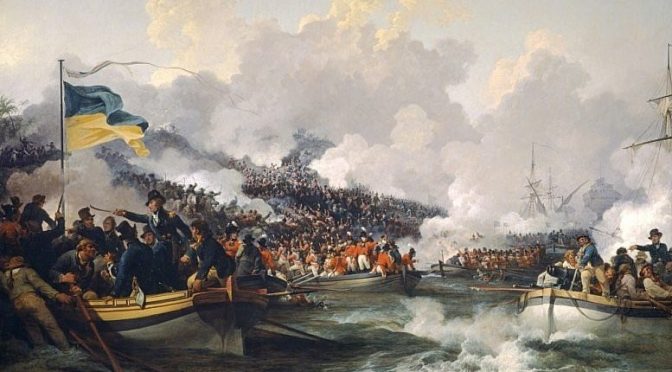
Featured Image: British Troops Landing at Aboukir by Philip James de Loutherbourg (Wikimedia Commons)

Learning War and The Evolution of U.S. Navy Fighting Doctrine with Author Trent Hone

By Christopher Nelson

Author Trent Hone joins us today to talk about his new book Learning War: The Evolution of Fighting Doctrine in the U.S. Navy, 1898-1945. This is a great book. And as others have noted, it’s a fine compliment to John Kuehn’s work on the Navy General Staff, Scott Mobley’s book Progressives in Navy Blue, and I would add, Albert Nofi’s To Train The Fleet For War: The U.S. Navy Fleet Problems, 1923-1940.

We talk about everything from Admiral Frank “Friday” Fletcher to “safe-to-fail” systems vs. “fail-safe” systems. And stick around to the end. Trent Hone offers some advice to the CNO on how we can build a better learning organization.

Nelson: For the readers, could you tell us briefly what your book is about?

Hone: My book investigates how the U.S. Navy of the early twentieth century learned to innovate. I explore how the Navy invented new technologies, created new tactics, and found ways to rapidly evolve its combat doctrine based on peacetime exercises and wartime experience. Today, we would describe the Navy of that era as a “learning organization.” I explain what that means and describe the mechanisms the Navy used to effectively learn and innovate. I believe there are lessons from that time that are very relevant for today’s organizations, both military and civilian.

Nelson: Why did you want to write this book?

Hone: I’ve been interested in naval tactics for a long time. I remember reading Wayne Hughes’s Fleet Tactics when it first came out in the 1980s and being fascinated (It’s a great book now on its third edition). In the 1990s, I decided to explore the Navy’s surface warfare tactics before and during World War II. I wanted to know what Admiral Husband E. Kimmel might have done if Pearl Harbor hadn’t been attacked. That research led to a series of articles on the development of Navy tactics—including a prize-winning one in the Naval War College Reviewand, ultimately, began to overlap with other work I was doing. 

I started my career as a software engineer. As I assumed positions of greater responsibility, what became most interesting to me was not the development of the software, but how teams organized to create software and do innovative work. I studied various techniques and methods to improve the teams I supervised and eventually transitioned into advising and coaching organizations to help them get better at learning and innovating. 

As I continued looking at the evolution of the Navy’s tactical doctrine in the early twentieth century, I saw patterns that resonated with today’s most-effective learning techniques. The language was quite different, and the specific processes were different, but some of the underlying principles were remarkably similar. I realized it was a story that had to be told. I describe an arc of innovative creativity that stretches back decades by charting the evolution of surface warfare tactics.

Nelson: Early in the book you talk about “fail-safe” systems and “safe to fail” systems. The latter, you say, are best for a culture that encourages innovation. With this in mind, what would you say Rickover’s submarine culture consisted of? Is he a rare exception in the case of a system that is “fail-safe” yet innovative?

Hone: I’m glad you brought this up. Alicia Juarrero’s term “safe to fail” gives us a new way to think about failure modes and how to account for them. The key difference between the two is that with “fail-safe” we attempt to anticipate possible failure modes and design ways to mitigate them. With “safe to fail,” we recognize unanticipated failure modes will occur and organize to ensure survival when they do. This has relevance to organizations because when we want to learn and innovate, we are going to fail. A “safe to fail” organization finds ways to explore new ideas and experiment with them without endangering its long-term survival. The Navy was good at that in the early twentieth century. 

I’m less familiar with Rickover’s time, but from what I understand, it would be inaccurate to describe the culture he developed as primarily “fail-safe.” Certainly, it used procedures with rigidly prescribed steps in order to prevent known failures, so in that sense it was “fail-safe.” However, he recognized that unanticipated failure modes can and will occur. Defined procedures are inadequate to account for these circumstances. Instead, it’s essential to rely on the collective skill and experience of people, so the culture integrated crewmembers together. Layers of human observation and experience became the means to identify, anticipate, and address unforeseen circumstances. In that sense, the culture has a “safe to fail” component. Things will go wrong; people will make mistakes. But trust and experience become the means to identify and resolve them. 

As it turns out, that’s the most effective way to deal with problems in complex environments. Standard procedures and automated routines free our mental capacity so that when unforeseen circumstances arise, we can quickly identify and address them. That’s what made the Combat Information Center (CIC) and its successors effective: the artful integration of standard processes, technology, and human judgment. I worry that with the increasing emphasis on automated systems, we might be taking the talents of our people too far out of the loop. There’s no substitute for human experience and skill when the unanticipated occurs. 

Nelson: What is the “edge of chaos” and why does it matter to any organization that is trying to be innovative?

Hone: The concept of the “edge of chaos” is easily misunderstood, so I’ll try to explain it succinctly. In any complex system—like a corporation or a military service—there are processes, procedures, and rules. In the language of complexity, these are called “constraints.” They channel and limit behavior. When constraints are restrictive, they inhibit the ability of people to experiment and try something new. Obviously, that’s a problem if you want to innovate. But the other end of the spectrum is problematic also. If constraints are too loose, there’s no coherence; it becomes difficult to assign cause and effect or make sense of an experiment. The “edge of chaos” is located between these two extremes. It is a space where constraints are sufficiently loose to allow room to explore new ideas and concepts but also rigid enough to focus that exploration and provide feedback on its effectiveness. 

Many of us intuitively understand this from our own experience. Software teams, for example, are most innovative (and generally most effective) when they’re given a clear objective and the creative freedom to determine how best to accomplish it. The objective serves as a constraint and focuses their energy. They use their initiative to explore several potential solutions, often arriving at the best combination of technologies that addresses the need. That’s why there’s been such an emphasis on moving away from rigidly detailed requirements documents; they overly constrain teams and limit their creativity. The parallels to military command, and the importance of well-written orders that foster the initiative of subordinates, are obvious. 

Nelson: What was the importance of the 1921 Destroyer Instructions?

Hone: The Atlantic Fleet’s 1921 Destroyer Instructions were important for two reasons. It was the first Navy doctrinal manual produced by a deliberately created system of learning. Immediately after World War I, the Navy was transitioning back to peacetime. Many valuable lessons had been learned during the war and officers set out to capture them. Two “colleges” were established, one in the Atlantic Fleet and another in the Pacific Fleet. They combined exercises at sea, wargames ashore, and experience from the recent war to devise new approaches. A regular correspondence was maintained between these two fleet colleges and the Naval War College. The result of their collective learning was incorporated into the Destroyer Instructions. 

The Destroyer Instructions were also important because they assumed individual commands—each destroyer squadron—would develop their own specific doctrines that reflected the strength of their ships and men. The Instructions were deliberately written to foster creativity within subordinate commands and avoid being overly prescriptive. The War Instructions of 1923 took the same approach, so Navy officers spent the interwar period exploring a variety of options for how to coordinate and employ their forces, leading to new and innovative techniques.

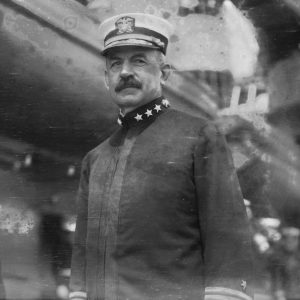
Nelson: Who was Admiral Frank Friday Fletcher? What were his battle instructions? And why are they an important milestone in naval history?

Hone: Frank Friday Fletcher led the intervention at Veracruz, Mexico, in April 1914 and was awarded the Medal of Honor for his conduct. In September 1914, he became commander of the Atlantic Fleet, which contained the Navy’s most modern ships. The Atlantic Fleet had been regularly conducting exercises to work out how best to operate in battle, and Fletcher continued that practice. By May 1916, he and his staff had gained enough experience to issue a set of Battle Instructions. 

Admiral Frank Friday Fletcher.

Fletcher’s Instructions marked a departure from previous approaches. He assumed battle was fundamentally uncertain and that centralized control would likely be impossible; this led him to emphasize two things. The first was the use of a plan that would outline objectives for subordinates. Fletcher wanted to encourage their individual initiative and creativity without overly constraining them. Second, Fletcher stressed the coordinated use of all weapons. Previous battle plans had emphasized battleship gunnery. Fletcher recognized that other weapons were coming into their own, particularly destroyer torpedoes. He planned to use his destroyer squadrons very aggressively. These two concepts—the use of a plan and coordinated employment of all arms—remained central to Navy tactical doctrine through World War II.  

Nelson: I enjoyed your comment about “type commanders.” You note in your book that during World War II that minor actions were neglected.  This mattered. And type commanders were born in light of these shortcomings. What were these “minor actions” and how did the type commanders address them?

Hone: The Navy’s primary focus in the interwar period (1919-1939) was a trans-Pacific campaign. It was expected to culminate in a “major action”—a large fleet battle—somewhere in the central Pacific. Accordingly, most of the fleet-level tactical doctrine focused on “major action.” Tactics for “minor actions”—engagements between smaller task forces—were left to subordinate commanders. It was assumed that these lower-level commanders would have time to develop doctrines for their forces, and, during peacetime, this assumption was largely correct. 

However, there were shortcomings. This led to the introduction of the type commands in 1930.

Type commands became responsible for identifying and capturing new tactical approaches for each various type—destroyers, cruisers, battleships, etc.—and there is evidence that new approaches were more rapidly developed after that date. The real problem, though, was the assumption that subordinate commands would be able to develop specific doctrines for their forces. 

In 1942, that process fell apart during the battles off Guadalcanal. Ships and commanders moved about too rapidly to develop cohesion. “Scratch teams” were formed and they often performed poorly, as you might expect. The Pacific Fleet addressed the problem by applying some of the same techniques used for “major tactics” to “minor tactics” and leveraging the type commands to rapidly share and disseminate lessons. 

Nelson: During World War II, how did the Fleet quickly inform commanders with updated doctrine? This is a problem throughout history, is it not? We make some assessments on what will or will not work in war, and inevitably we will be surprised. What would you recommend to a staff today on how to prepare for such things?

Hone: I love this question because when I first started my research decades ago, I thought that manuals—published doctrinal materials—would be the key to understanding tactical doctrine. I learned very quickly that’s not the case. Doctrine is a set of assumptions and mental models. The documentation provides a backdrop, but what really matters is how individuals think about problems and work together. During World War II, the Navy effectively used personal connections, like in-person conversations and conferences, to rapidly share and disseminate new ideas. There were formal means to do this (like Joseph C. Wylie being brought back from the South Pacific to help develop the CIC) but informal mechanisms were at least as important. Published doctrine tended to lag behind the information shared through these informal networks.

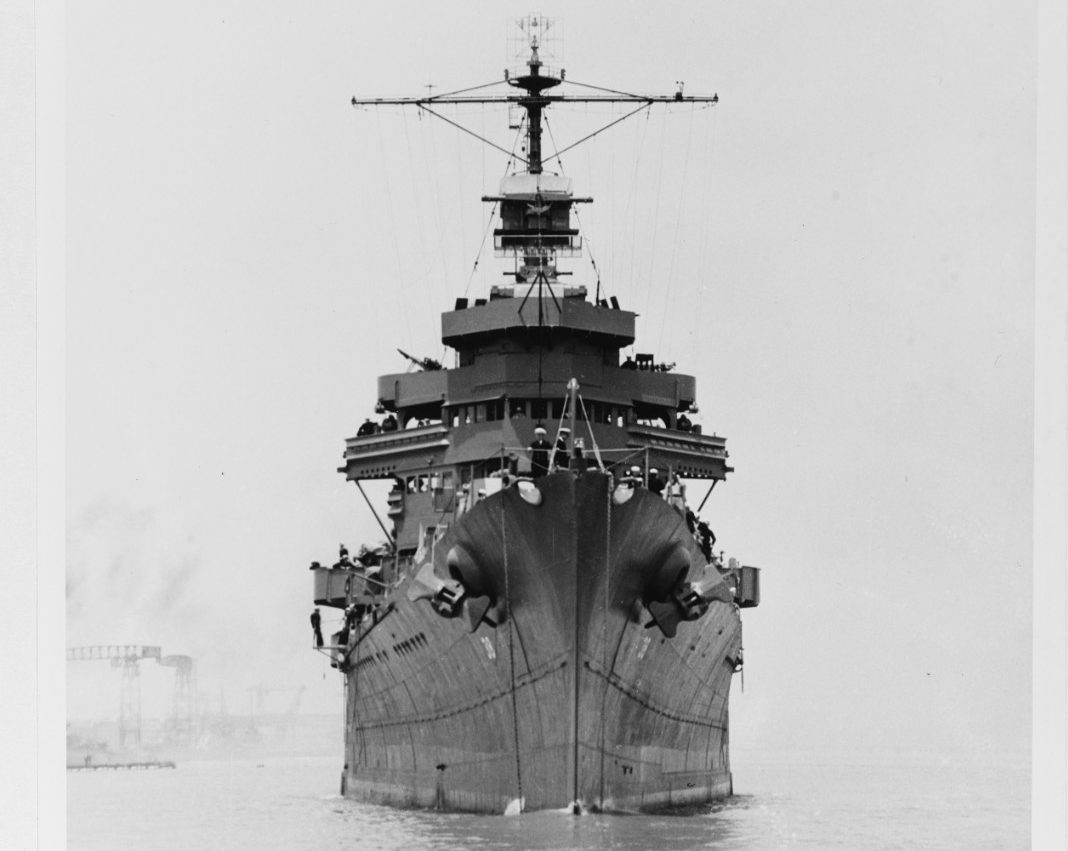
USS SAN FRANCISCO (CA-38) At the Mare Island Navy Yard, 20 May 1942. (Photo via Naval History and Heritage Command)

If I were making recommendations, I’d stress the importance of informal mechanisms. Staffs can easily create mountains of briefings and other documentation. What’s more difficult is creating an environment where subordinates can readily exchange information, learn together, and build on the knowledge of their colleagues. I think a staff should actively work on enabling that. It’s not just about creating space and time; it’s about introducing the appropriate constraints to enable creativity to flourish. Then, once that is in place, the staff needs to keep tabs on what’s happening. New, more effective ideas will arise. When they do, the staff needs to act quickly to exploit them and make them available to the entire command. 

Nelson: How does the size of a navy – the number of ships and sailors – affect innovation? Quick growth, during World War II, for example, and steep reductions – ship numbers from the 80s to today for instance, do these affect innovation in different ways? How?

Hone: I think both offer serious challenges. The rapid growth in World War II made it very difficult to maintain the effective culture the Navy had nurtured during the early twentieth century. Rapid “scaling” (as we call it in the software world) tends to increase centralization, reduce flexibility, and inhibit innovation. That happened to the Navy as it grew during the war. 

The challenge I see with steep reductions is overburdening. Organizations often reduce their size without an equivalent reduction in their commitments. This leads to overwork: people become spread too thin; maintenance gets delayed; and equipment is overutilized. Individuals may still be able to sustain the pace of operations, but they frequently lose the ability to experiment with new ideas. Innovation slows as a result. When commitments are reduced along with reductions in size—as with the Navy after World War I—this can be avoided. 

Nelson: Trent, to close, if you had ten minutes with the Chief of Naval Operations and he asked you what he needed to do to create a learning organization – what would you say?

Hone: I had about thirty seconds with Admiral Richardson last year when he presented me with the second-place award for his Naval History Essay Contest, and in those thirty seconds, I encouraged him to read my book. If I had ten minutes, I’d urge him to introduce a set of integrated feedback loops that couple regular experimentation regarding the nature of future war (tactics, technology, etc.) and OPNAV’s programming process. The goals would be twofold. First, officers need to be encouraged to regularly experiment to vary their tactical approaches to discover new, more effective techniques. They need to become accustomed to adjusting to unanticipated circumstances and leveraging the creativity of their commands. Second, the lessons from their experimentation need to revise and guide the Navy’s program so that force structure and procurement reflect—and ultimately anticipate—the new learning. 

We’re all familiar with the interwar Fleet Problems. What made them really powerful—what allowed them to transform the Navy—was the way they were integrated into the Navy’s planning and procurement processes. The second CNO, Admiral Robert E. Coontz, was primarily responsible for that. He created the feedback loops that allowed the Navy to not just experiment with new tactical doctrines, but to evolve force structure and war plans in light of emerging lessons. If Admiral Richardson wants “high-velocity learning,” if he wants to fully leverage the skills of the Navy’s officers, he needs to devise a set of similar mechanisms. Given the organizational changes since Coontz left office in 1923, a new set of structures and interfaces would have to be introduced. I have faith Admiral Richardson could do that, if he sets his mind to it. 

Trent Hone is an award-winning naval historian and a Managing Consultant with Excella in Arlington, VA. He is an expert on U.S. Navy tactics and doctrine. His article, “U.S. Navy Surface Battle Doctrine and Victory in the Pacific” was awarded the U.S. Naval War College’s Edward S. Miller Prize and the Naval History and Heritage Command’s Ernest M. Eller Prize. His essay, “Guadalcanal Proved Experimentation Works” earned second place in the 2017 Chief of Naval Operations Naval History Essay Contest. He regularly writes and speaks about organizational learning, doctrine, strategy, and how the three interrelate. His latest book, Learning War: The Evolution of Fighting Doctrine in the U.S. Navy, 1898–1945, was published by the U.S. Naval Institute in June 2018.

Christopher Nelson is a U.S. Naval Officer stationed at the U.S. Pacific Fleet Headquarters. He is a graduate of the U.S. Naval War College and the Maritime Advanced Warfighting School. He is a regular contributor to CIMSEC. The questions and views here are his own.

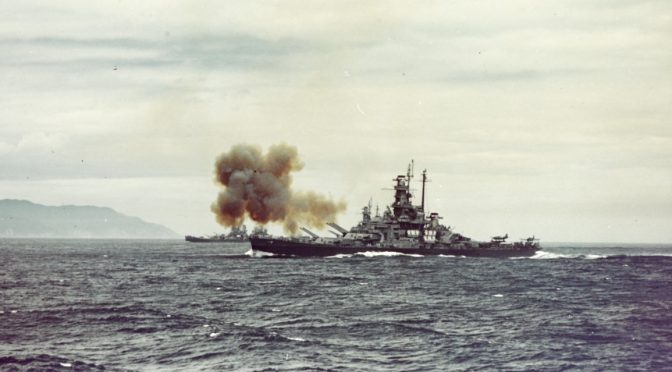
Featured Image: USS Indiana (BB-58) fires a salvo from her forward 16″/45 guns at the Kamaishi Plant of the Japan Iron Company, 250 miles north of Tokyo.