Category Archives: Current Operations

On-going Naval Ops or Maritime Current Events

What Does the New Administration Need to Know About the U.S. Navy?

By Dmitry Filipoff

Week Dates: Jan. 16 – Jan. 20.
Responses Due: Jan. 15
Response Length: 400 Words or Less

As various bureaucracies orient themselves around the incoming administration, they must transmit a clear message describing their purpose in serving the nation, the challenges they face, and how new leadership offers opportunity for change. Please respond below to share your thoughts on how the U.S. Navy may answer these key questions in 400 words or less. Respondents can opt to reply anonymously if so desired. We ask that submissions be objective and nonpartisan. CIMSEC will publish top responses as a topic week beginning Jan. 16 in the days leading up to the presidential inauguration. If the online form does not work for you please direct your responses to Nextwar@cimsec.org.

Dmitry Filipoff is CIMSEC’s Director of Online Content. Contact him at Nextwar@cimsec.org.

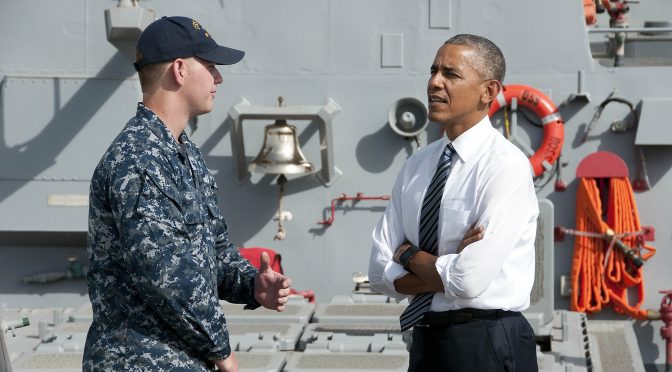
Featured Image: NAVAL STATION ROTA, Spain (July 10, 2016) – Gunner’s Mate 2nd Class Garrett Nelson speaks with President Barack Obama during his visit to USS Ross (DDG 71) July 10. (U.S. Navy photo by Mass Communication Specialist 1st Class Brian Dietrick/Released)

A Discussion on Grand Strategy and International Order with Barry Posen

By Mina Pollmann

Barry Posen is Ford International Professor of Political Science at MIT, Director of the MIT Security Studies Program, and serves on the Executive Committee of Seminar XXI. Currently on leave, he is presently serving as the Henry A. Kissinger Chair in Foreign Policy and International Relations at the Library of Congress John W. Kluge Center for the 2016-2017 term. In his most recent book, Restraint: A New Foundation for U.S. Grand Strategy (2015), Dr. Posen critiques Liberal Hegemony, the intellectual foundation of current U.S. grand strategy. He presents a bold new vision, a Grand Strategy of Restraint, as an alternative to Liberal Hegemony, and argues that the U.S. ought to focus on pursuing its security through an emphasis on command of the commons, a strategy with a considerable maritime component. CIMSEC spoke with Dr. Posen to get his take on how his arguments can be applied to the world’s emerging strategic defense dilemmas.

Q: Many have suggested that the U.S. is lacking a coherent strategy, including incoming Secretary of Defense James Mattis, who has testified that the U.S. is suffering from “strategic atrophy.” To what extent do you agree with such statements? Is it that the U.S. lacks strategic vision, or that the chaotic nature of the world makes the pursuit of any set strategic goals a fruitless exercise?

A: The United States has had the same strategy since the end of the Cold War. That strategy is Liberal Hegemony. It has two purposes: preserve to the extent possible the immediate post Cold War U.S. power and influence advantage relative to other nation states (dubbed the “unipolar moment”) and promote the spread of democratic forms of governance, market economies, and the rule of law—both within societies and at the level of the international system. This is a revolutionary strategy: it is meant to ensure U.S. security by transforming international politics.

These goals are very ambitious, and confront many moving targets. First, the economic and technological bases for power are diffusing to other countries and to groups, making it inherently difficult to preserve U.S. power and influence relative to them. Second, other peoples may not wish to emulate our forms of governance and economic organization. Nationalism is a strong force, making societies resistant to external tutelage. In some places, there simply is no obvious path to a liberal future. The Middle East is perhaps the most obvious example. There is a strong tension between the preservation of U.S. interests, power, and the spread of democracy. Indeed, there is not even sufficient cause-effect understandings about how to construct democracies.

Q: The U.S. identifies its adversaries in a 4+1 construct: revisionist regional powers such as China and Russia, rogue states that make wild threats and are pursuing or have pursued weapons of mass destruction such as Iran and North Korea, and the condition of widespread extremism and insurgent conflict. Under a Grand Strategy of Restraint, what would be the priorities among these threats?

A: The U.S. needs to think about what are the main threats to its safety, sovereignty, territorial integrity, and to its ability to generate sufficient power to defend these.  If China or Russia were to establish hegemony in their regions, that would be a problem for the U.S. Russia is not powerful enough to do so in Europe. China may grow to be powerful enough to do so in Asia. So China is the main problem, though a full court press of containment seems premature.

“Rogue” states are not major problems for U.S. security; they may be problems for U.S. allies and if those allies lack the power to deal with them, then the U.S. can lend a hand. Extremism can be a problem, when it manifests itself in terrorist organizations with global ambitions. But this threat cannot be addressed as we have tried to address it, by reforming societies at the source. Instead the best the U.S. can do is keep pressure on such groups to divert their energies to their own defense, and to put defensive barriers between them and the U.S. This will not stop every problem, but efforts to go to the source, as attempted in Afghanistan and Iraq seem to create new terrorists as fast as the U.S. eliminates old ones.

Q: What is the force structure that a Strategy of Restraint recommends?

A: Restraint focuses U.S. security efforts on the most important threats to U.S. security. And it chooses military forces that are most appropriate to address those threats. Though ‘terrorists of global reach’ are a threat to U.S. safety, the chosen remedy of the last fifteen years—sending large numbers of ground forces to democratize and reform riven societies at gunpoint has proven wildly expensive and largely ineffective. Restraint cuts the ground forces that have been employed for this purpose. Restraint does oppose other great powers who might try to establish hegemony in Eurasia. To maintain the capability to act in Asia, the U.S. must retain command of the sea, and of course sufficient command of air and of space to be able to move forces across the ocean, should that become necessary.

At this time, the most survivable warship in the U.S. inventory is the nuclear attack submarine. When forward deployed, it makes a critical contribution to blocking other great powers access to the open oceans. The aircraft carrier provides a mobile, strategic reserve, to assist threatened allies, and to help sustain command of the air over the open oceans. That said, the carrier is increasingly vulnerable to a range of weapon systems deployed ashore. Thus, in wars with peer competitors, carrier forces must be used in strength and also with care. Except against much weaker states, they can no longer be viewed as airfields that can simply linger offshore for extended periods. U.S. strategic decision makers—civilian and military—must confront the strong possibility that in a serious conflict, some carriers will be lost. The U.S. began WW2 with six carriers; by the end of 1942 four were sunk; and two were badly damaged. Command of the sea does not come cheap.

Q: How important is it for the U.S. to assert itself in the South China Sea? What strategic interests and precedents are at stake? What is the value of freedom of navigation operations there and what other means can the U.S. employ to shape the environment?

A: The U.S. relies on the sea to access the rest of the world, not just for trade, but more importantly to ensure against the rise of a continental hegemon. Thus the U.S. should protect freedom of the seas. States are tempted to bootstrap historical claims and the fine print of the Convention on the Law of the Sea to assert control over quite a lot of sea space. The U.S. should ratify the Convention and continue to assert its right to sail in those waters where others’ claims seem beyond what the Convention allows.

Q: You severely criticize “buck-passing diplomacy” by U.S. allies in your book. Yet there are partners who have been working well with the U.S. (e.g. Singapore) or that the U.S. could be doing more with (e.g. Australia). How can the U.S. better leverage security relationships with such prospective partners? Are there any lessons the U.S. can learn from these relationships that can be applied to the U.S.’s relationships with less forthcoming partners?

A: Most U.S. allies invest much smaller shares of GDP in defense than does the U.S.  This arises from their confidence that the U.S. will defend them, and perhaps also their true doubts about the imminence of security threats. They may complain about those threats, but they may not be as concerned as they pretend to be. Australia is one of the allies that under-invests. To the extent that some allies do more than others, this arises from either their proximity to threats, or their history of having been abandoned, or nearly abandoned by past protectors. 

There are three lessons for the U.S. First, when your allies tell you they are frightened, ask them what they intend to do about it before offering to solve the problem for them.  If the answer is not much, then do not rush to address the problem. Second, make burden sharing a central issue of alliance diplomacy. Third, remind allies that the U.S. is inherently a very secure country. And the U.S. retains command of the sea. We have more options than they do. They need to earn our support.

Q: Donald Trump, on the campaign trail, suggested that the U.S. provide less security to allies unless they paid more, and hinted that Japan, South Korea, and other countries, should acquire nuclear weapons. If Donald Trump sustains pressure on U.S. allies to increase burden sharing, how may these alliances evolve?

A: Eliciting a more equitable sharing of defense burdens requires a strategy. If the President simply sends an irate tweet every now and then, he will accomplish very little.

There are two ways this can go. First, the President can complain and at the same time unilaterally reduce U.S. military contributions to the alliance. If the U.S. simply disengages, my prediction is that U.S. allies, who are quite rich, will learn to defend themselves. But the process could be rocky. This could include getting nuclear weapons. We may wish for prudential reasons to attempt serious reform first. Or, the U.S. can make burden sharing a central issue in the alliances, hinting that our contributions depend on theirs.

The President and U.S. cabinet officials and diplomats must communicate regularly and publicly with allies on this issue. The alliances must set actual concrete military goals. Many of these should be public. The performance of allies must be assessed in public. The Congress must hold hearings on the matter. The press needs to be induced to cover the issue. The allies need to be made to believe that this is very, very serious. If they value U.S. help, they must show that they care about their own defense. They must be made to believe that without evidence to this effect, the alliances will fray, and they will find themselves on their own. Few people remember that this is what the U.S. did with NATO in the late 1970s and early 1980s. It did not work perfectly, but it worked better than anything attempted in recent years.

Q: In the conclusion of your book, you remark that change can happen through one of three ways. The Strategy of Restraint could be adopted through astute politicians listening to proponents of the Strategy of Restraint and having a “eureka” moment; through crisis; or through incremental changes. Is Trump’s election more like a “eureka” moment, or just the first step in a longer process of redirecting U.S. security policy?

A: It is very difficult to read the actual foreign policy orientation of the Trump administration. It does not look to me as if this is a ‘eureka’ moment for the “Restraint” strategy. Instead, this looks a bit like hegemony without liberalism. President-elect Trump has promised to increase U.S. military spending. This is not consistent with Restraint. His appointees seem to be people who wish to militarily confront those states and groups who challenge the U.S. in any way. China and Iran seem to be at the head of the list. Some of his appointees seem hostile to Russia as well. The President-elect seems to wish to do something more aggressive vis-a-vis Al Qaeda and ISIL than the outgoing administration. It is hard to see how this many military confrontations would be consistent with Restraint. With this many under-thought confrontations underway, it is likely that one or more will go awry. The costs will mount, and future administrations will find they have even less public support for a forward grand strategy. This is how I imagine the U.S. could ultimately shift to a more restrained grand strategy.

Barry Posen is Ford International Professor of Political Science at MIT, Director of the MIT Security Studies Program, and serves on the Executive Committee of Seminar XXI. He is presently serving as the Henry A. Kissinger Chair in Foreign Policy and International Relations at the Library of Congress John W. Kluge Center.

Mina Pollmann is CIMSEC’s Director of External Relations.

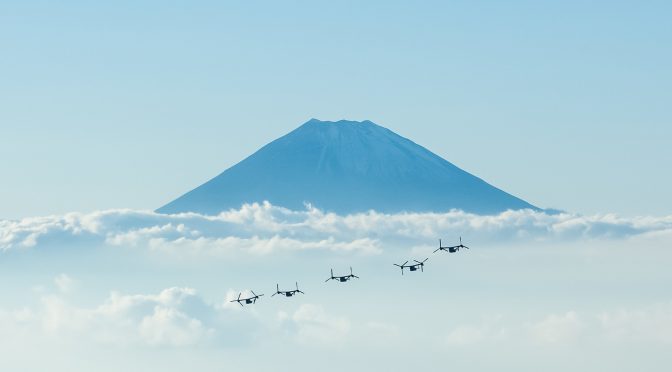
Featured Image: CAMP FUJI, Japan (Nov. 4, 2016) MV-22B Osprey tiltrotor aircraft return after a long-range raid from Combined Arms Training Center, Camp Fuji, Japan to Marine Corps Air Station Futenma, Okinawa as part of Blue Chromite 2017, Nov. 4, 2016. (U.S. Marine Corps photo by Sergeant Major Michael Cato/released)

Sea Control 126 – End of the Year Episode 2016

By Matthew Merighi

It’s the end of the year, so the CIMSEC team gets together to talk about the events of 2016 and does its best to look into the crystal ball to see what is on the horizon in 2017.

Happy New Year from the entire CIMSEC team!

Matthew Merighi is the Senior Producer for Sea Control and the Host of Sea Control: North America. He works as Assistant Director of Maritime Studies at the Fletcher School of Law and Diplomacy.

Dangerous Waters: The Situation in the Bab el-Mandeb Strait

By James Pothecary

Introduction

On 25 October 2016, the Spanish-flagged merchant tanker Galicia Spirit came under fire when a rocket-propelled grenade (RPG) was fired at it from a small speedboat that had interdicted the vessel. The tanker was then attacked with small arms fire. The merchant vessel escaped catastrophic damage, and was able to continue its journey onward. However, only two days later, the liquefied natural gas (LNG) tanker Melati Satu was attacked in the same area, also with RPGs. The Tuvalu-flagged Melati Satu’s crew sent out a distress call, were rescued by a Saudi Arabian naval vessel, and were subsequently escorted to safety. Both ships had been traversing the Bab el-Mandeb strait between south-western Yemen and north-eastern Djibouti. This small waterway must be negotiated to access or egress the Egyptian-controlled Suez Canal, which sits at the northern end of the Red Sea.

In a related development, throughout October this year there were several attacks on U.S. warships in or near the Bab el-Mandeb from sites along the Yemeni coastline. The USS Mason and USS Ponce both came under attack by assailants of unconfirmed origin, forcing the warships to deploy anti-missile countermeasures and prompting U.S. forces to launch cruise missile strikes against targets in Yemen.

The Question of Responsibility

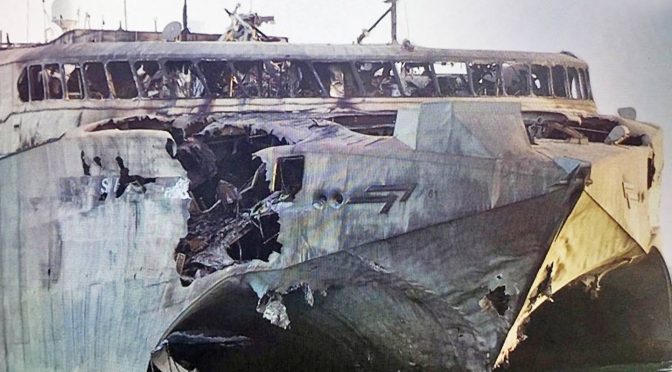
The most prominent non-state armed group (NSAG) operating in Yemeni territory contiguous to the Bab el-Mandeb is the Houthi rebel movement, which is opposed to the internationally recognized government of President Abd Rabbuh Mansur. It is not definitively known whether the speedboats that attacked merchant shipping were rebel forces or pirates. Furthermore, although the attacks on U.S. warships came from rebel-held territory and the U.S. responded by attacking rebel installations, Houthi officials denied involvement. However, Houthi forces had previously claimed responsibility for a 1 October 2016 missile attack on HSV-2 Swift, a United Arab Emirates (UAE)-flagged vessel, which was extensively damaged in the incident, and rendered inoperable. Due to the similarity of the tactics involved, as well as the fact these attacks occurred off the Yemeni coast, Allan & Associates (A2) assesses that Houthi forces were likely responsible for the attacks on vessels in the Bab el-Mandeb strait.

https://www.youtube.com/watch?v=X8DSAsMTooE

Footage of attack on HSV-2 Swift

Security Risks: The Threat to Shipping

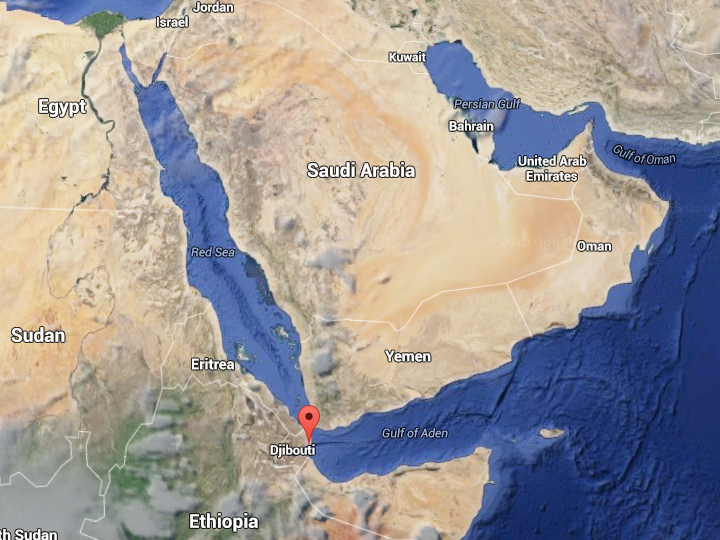
The attackers’ identities are of secondary importance, however, compared to the risk that the attacks themselves represent. The implications of a declining security environment in the Bab el-Mandeb are substantial. The strait is one of a few strategic maritime choke points worldwide, a narrow but vital waterway that sea traffic must be able to navigate for maritime trade to function effectively. The Bab el-Mandeb is, at its narrowest point, only 29km across, and therefore even small craft launched from the Yemeni coast will be able to interdict all traffic passing through it. Almost all maritime trade between Europe and Asia, approximately USD700 billion annually, passes through this narrow waterway. Any security threats in this location would disproportionally affect global maritime trade routes and the security of sea lines of communication. As maritime shipping is approximately 90 percent of how the world’s goods are transported, interference at these choke points is a serious threat to international business.

thediplomat_2015-05-12_18-48-38
The Bab el-Mandeb Strait (Google Earth)

In April 2015, the United States Energy Information Administration estimated that 4.7 million barrels of crude oil and petroleum passed through the strait daily in the previous year. All traffic through the Suez Canal, the quickest route for European shipping to reach Asia, must pass through Bab el-Mandeb to reach the Gulf of Aden, and subsequently the Indian Ocean. In March of this year alone, 1,454,000 metric tons of shipping, carried on 80,495 vessels, transited the Suez Canal. A security threat in the Bab el-Mandeb, therefore, will have serious economic consequences for global trade, and could pose significant problems both for merchant fleets and for the companies that rely on their goods and commodities. Shipping lines must either re-route away from the Red Sea for Europe-Asia routes, or continue to use the strait at increased cost and risk. 

Business Risks: The Dilemma of Re-Routing

The quickest alternative route for European-Asian traffic, circumnavigating Africa via the Cape of Good Hope, would add at least 3,000 nautical miles to shipping. The additional time it will take to cover this route means vessels can fit in fewer trips, and therefore earn less revenue than they could otherwise in the one-year outlook. Although this cost is somewhat offset by the currently low price of crude oil, this still represents a substantial business risk to shipping companies, which could see their revenues and profits decline. Even with low oil prices, additional costs will have to be borne by maritime companies due to wage payments for at-sea staff, and increased distances will increase the amount of shipboard and dockyard maintenance required to keep vessels seaworthy.

However, even if merchant vessels brave the strait, they will still face substantial additional costs. These range from higher insurance premiums, to the cost of close-protection deployments on-board, and possibly additional payments to employees to compensate for the heightened levels of risk. Furthermore, if future attacks manage to cause substantial damage or loss of life on a civilian vessel, maritime logistics operators will be at risk of legal consequences on the grounds of failure to ensure adequate duty-of-care for their crews. Until the situation in the strait normalizes, merchant shipping must cover increased costs regardless of whether they choose to traverse the Bab el-Mandeb.

Ancillary Risks: The Limits of a Naval Response

The economic and security risks to shipping companies are compounded by the difficulty naval forces will have in neutralizing the threat in the Bab el-Mandeb. That said, major naval powers have seriously responded to the escalating threat in the strait. The U.S. Navy has already reinforced its presence in the surrounding area, and it is likely that the U.K. Maritime Component Command, which controls operations in Middle Eastern waters, will deploy additional assets to the region imminently.

The use of speedboats, which are quick, difficult to detect, and hard to interdict, presents challenges to even major naval powers operating in the region. Furthermore, the use of coastal sites to launch attacks on U.S. warships complicates military responses as the extremely poor security environment in southwest Yemen means that small teams could easily strike shipping and disappear before naval units can respond. 

If it is confirmed that Houthi rebel forces are behind the incidents, any concerted naval action in the area will face determined resistance. Unlike the Somali pirates of the late 2000s, Houthi fighters are ideologically motivated, trained, battle-hardened, and well-armed. Moreover, they have freedom of movement in areas of south-western Yemen under their control. While international naval power, supported by air power and special forces, will likely be able to contain the threat, full elimination of Houthi capability is an unrealistic objective without substantially more committed resourcing

Therefore, the difficulties of a naval response preclude an easy solution to the crisis and therefore increase the risk facing civilian merchant shipping operators. This is because it is unlikely a military solution will be sufficient in itself to quickly neutralize the attackers and restore security.

Security Recommendations for Merchant Shipping

A2 recommends that maritime logistics and security managers consider the southern Red Sea and Gulf of Aden a high-threat area until the situation stabilizes, and this should be immediately communicated to relevant bridge officers. Shipping that continues to ply this route in the interim should undertake mitigatory strategies.

This includes increasing ship speed, when possible traversing only during daylight hours, enhancing all watchkeeping procedures, and ensuring damage-control crews are kept on stand-by. Contact with international naval forces in the area should be maintained at all times. Maritime security officers should be considered while close to Yemeni waters. Security officers could be taken on-board at Egypt, Madagascar, the Maldives, or Oman depending on shipping route, to keep costs minimal. Maritime operators should also ensure ship crews are trained on actions to take in the event of coming under RPG or small-arms fire.

Mohamed Dahir/AFP/Getty Images
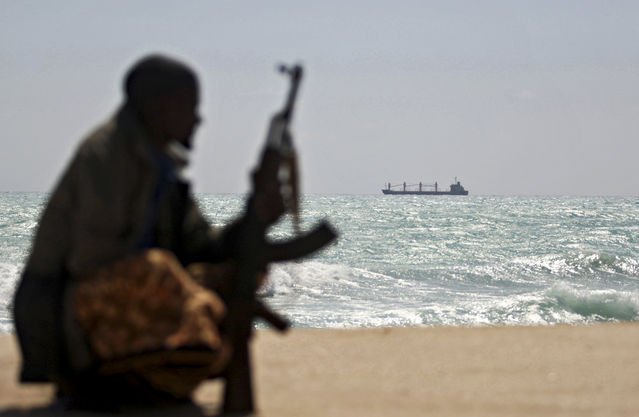
A militant stands by on a beach as a commercial vessel transits nearby. (Mohamed Dahir/AFP/Getty Images)

Slow vessels with low freeboards which lack the ability to evade potential attack should consider re-routing. This will include small pleasure craft as private individuals are very unlikely to have the training or resources to mitigate the potential threat. Due to the additional transportation time involved with this approach,render re-routing a last-resort measure, however.

A2 reminds managers considering deploying armed security personnel to obey all relevant national legislation pertaining to the ownership and use of weapons by civilians in order to avoid potential legal reprisals from national coastguard and law enforcement agencies.

Conclusion

The situation in the strait is likely to escalate, leaving both naval and civilian vessels at risk. The seriousness of this is compounded by the trouble naval forces will have in effectively responding to the asymmetric threat. Shipping companies therefore must make a cost-benefit analysis between continuing to use the strait or re-routing around the African coastline and consider the risks of each approach. A2 recommends maritime logistics entities consider the above security advice, and prepare for  further deterioration in the security environment of the Bab el-Mandeb. 

James Pothecary is a Political Risk Analyst specializing in the Middle East with Allan & Associates, an international security consultancy which provides a range of protective services including political and security risk assessments, security policy design and crisis management response.

Feature Image: HSV-2 Swift exhibiting damage after being struck by an anti-ship missile launched from the Yemeni coast. (PLG WAM)