
Articles Due: January 18, 2027
Series Dates: February 15-19, 2027
Article Length: 1,5000-3,000 Words
Submit to: Content@cimsec.org
By Brian Kerg
The rapid proliferation of artificial intelligence (AI) is reshaping the maritime domain and naval warfighting. From automated target recognition systems enabling autonomous swarm attacks in the Black Sea and the Red Sea, to predictive maintenance models keeping aging surface combatants mission-ready, artificial intelligence is expanding across naval operations.
Yet, as AI transitions into a core instrument of naval power, it introduces structural vulnerabilities and escalation risks that military leaders and policymakers are only beginning to grapple with.
These vulnerabilities have drawn sharp attention on Capitol Hill. In debates over recent defense legislation, U.S. congressional leaders and defense committees expressed rising alarm regarding the unvetted deployment of military AI. Lawmakers warn that rushing unverified algorithms onto the digital high seas could result in unintended escalation, catastrophic system failures, or friendly-fire events. These risks have led Congress to demand strict AI assessment frameworks, mandatory cyber-governance rules, and sandboxed testing environments before systems are fielded.
Whether considering opportunities or risks, the operational integration of AI offers profound implications for naval operations and doctrine. Given the many promises and dangers of AI to naval warfare, how should leaders respond?
How should the Navy balance the operational demand for rapid fielding of AI with the rigorous testing and sandboxed environments necessary for safe deployment as mandated by Congress? How should adversary AI deployments and escalations affect our own escalation calculus and rules of engagement? How do we reform the training of our warfighters to prevent a dangerous gap between rapid AI adoption and actual warfighter understanding, ensuring operators at the tactical edge have the readiness to effectively trust, override, or troubleshoot autonomous actions in combat circumstances?
Authors are invited to consider these topics and more as they explore the benefits and dangers of naval AI. Authors can cover matters of technology, strategy, ethics, policy, or any other related area. Authors should strive to go beyond solely identifying risks and propose thought-provoking, concrete solutions to the issues they raise.
Send all submissions to Content@cimsec.org.
Brian Kerg is CIMSEC’s Managing Editor.
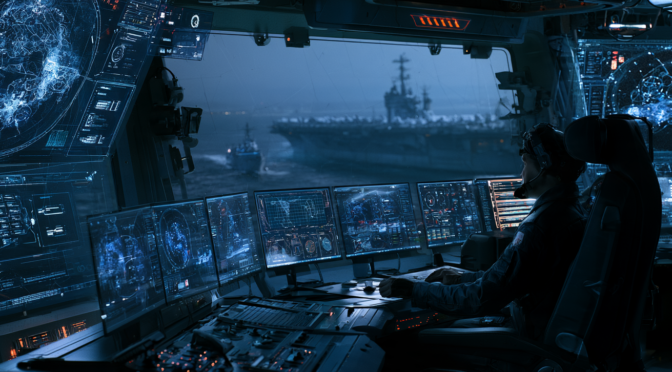
Featured image: Art created with Midjourney AI.
Discover more from Center for International Maritime Security
Subscribe to get the latest posts sent to your email.
The emphasis on rigorous testing, governance, and the ability of human operators to override or troubleshoot AI decisions is particularly important. In high-stakes environments, deploying a system quickly should never take priority over understanding its limitations and failure modes. I think the same principle applies, in a different context, to enterprise conversational AI: organisations need clear boundaries around data access, system behaviour, and accountability. Enterprise AI governance and enterprise chatbot architecture should be considered from the beginning rather than added after deployment. This related article from Mobisoft Infotech explores the question of ownership in AI chatbot development: https://mobisoftinfotech.com/resources/blog/ai-development/ai-chatbot-development-who-owns-intelligence
Solid write-up. Been following this subject casually for a while and this is one of the better breakdowns I’ve seen. Will be checking back for more.