
By Jonathan Robinson
Introduction
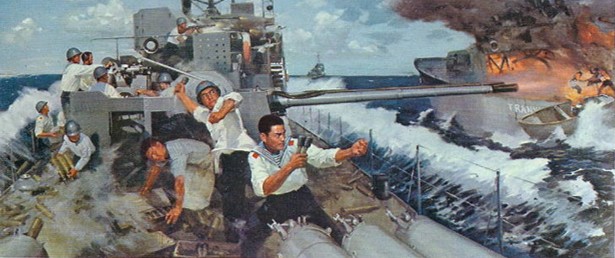
In January 1974, in the tail end of the Vietnam War, the People’s Liberation Army Navy (PLAN) and Republic of Vietnam Navy briefly clashed over control of the Paracel Islands in what became known in the People’s Republic of China (PRC) as the Battle of the Paracels (Figure 1). Despite Beijing securing their grip on the archipelago after the battle, the victory exposed a severe operational vulnerability. The PLAN was unable to rapidly evacuate and stabilize casualties from the conflict zone for follow-on care ashore. It also exposed the limits of the PRC ability to sustain their maritime power close to home.
This operational gap served as a catalyst for the development of the PLAN’s first ever hospital ships being launched in 1991, that today has grown into a fleet of twelve vessels. Operating across a range of environments, from blue water to littoral areas, the PLAN’s medical fleet is shaped by the legacy of their engagement in the Paracels, something that makes the PLAN’s vessels distinct from how U.S Navy platforms were developed.
Exploring the evolution of the PLAN’s hospital ship fleet since the 1970s, this article will argue the PLAN has not only resolved their historical maritime medical shortfalls today but could now also leverage lessons from newly launched forward-deployed civilian expeditionary assets – such as the Pinglan – to further strengthen their capabilities for sustaining combat operations at sea into the future.
Adaptation and Experimentation: PLAN’s Early Hospital Ships | 1991 – 2006
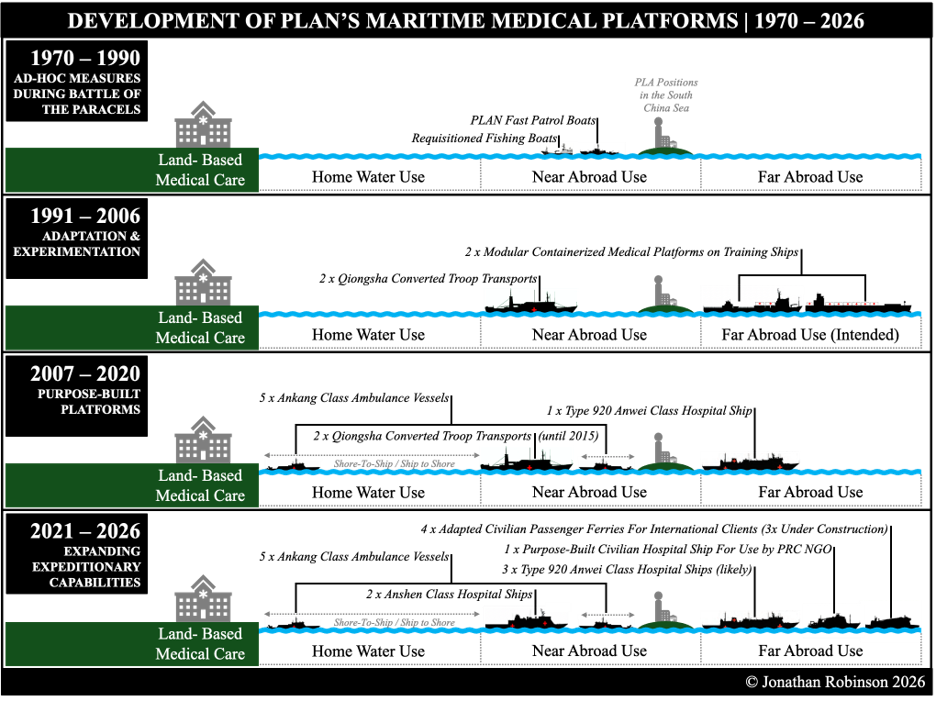
Prior to 1991, the PLAN did not operate a single dedicated hospital ship. In comparison, the U.S. Navy had been operating such vessels for over one hundred years. However, the short-lived Battle of the Paracel Islands changed this. While a tactical victory for the PLAN, the clash exposed severe maritime medical shortcomings. A PRC journal published at the time noted that the PLAN lacked specialized ships to rescue, rapidly treat, or evacuate the wounded, relying instead on requisitioned fishing boats and PLAN fast patrol boats. As a consequence, wounded sailors often waited up to 48 hours before being properly treated, leading to a number of PLAN personnel dying of infection and other preventable injuries.
Recognizing this shortfall could undermine Beijing’s ability to sustain their aggressive island-holding strategy in the South China Sea, the PLAN’s South Sea Fleet and Medical Logistics Department formally proposed in 1976 that the Central Military Commission acquire dedicated hospital ships. However, progress was hindered by the devastating aftermath of Chairman Mao Zedong’s devastating cultural revolution in the late 1970s and 1980s. In this resource scarce environment, the PLAN prioritized the development of combatant ships over auxiliary platforms as state spending focused on national economic reconstruction and countering land-based threats to the PRC.
But by 1991, this initiative delivered. Two Qiongsha class troop transports were adapted into two Nan Kang class hospital ships; the Nan Kang (832) and Bei Kang (833). These vessels began providing dedicated maritime medical support to PLA garrisons on islands in the South China Sea, laying the foundation for sustaining the PLAN’s forward power projection in the region.
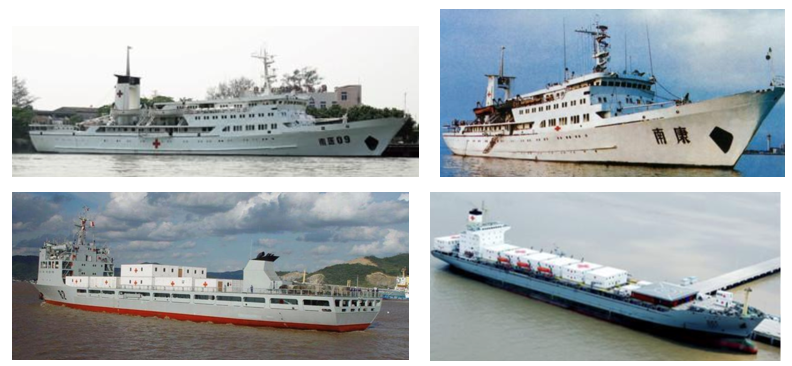
Following these beginnings, in the late 1990s and early 2000s the PLAN began experimenting with modular containerized medical platforms to augment the capacity of their Qiongsha class hospital ships. This concept involved placing standard shipping containers painted white with red crosses and outfitted with clinical capabilities onto the decks of two PLAN auxiliary training vessels; the multi-role training ship Shichang (82) and the cargo transport Village River (865).
Although these modified platforms were confined to near-shore testing rather than real world deployments, their deeper drafts and greater lengths offered significantly larger capacity to treat and transport mass casualties over greater distances than the two Nan Kang vessels (Figure 2). This development signaled an important doctrinal shift. Moving the PLAN’s maritime medical ambitions away from purely localized island-and-reef medical support towards grander aspirations to support fleets in distant waters. However, the PLAN’s early solutions remained hindered by the reliance on aging or non-dedicated hulls, something that could affect the PLAN’s ability to sustain medical operations at sea into the future.
From Adaptation to Purpose Built: PLAN’s Dedicated Hospital Ship Fleet | 2007 – 2020
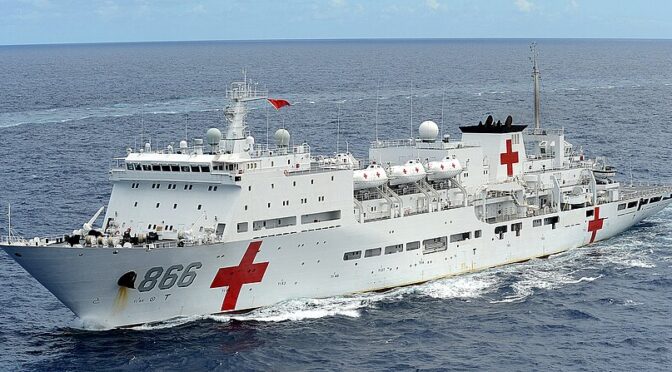
By mid 2000s, the PLAN moved beyond their reliance on makeshift platforms. They began constructing purpose-built solutions to addressing future maritime medical needs. This included launching the first Type 920 Anwei class vessel – Peace Ark (866) – in 2007 that completed a series of sea trials and a domestic medical mission, before transitioning to the high-profile maritime medical diplomacy missions around the world it is now widely recognized for. Since 2010, the ship has conducted ten of these Harmonious Missions, provided foreign humanitarian assistance in the aftermath of Typhoon Haiyan in the Philippines, and conducted at least one real world search and rescue mission.
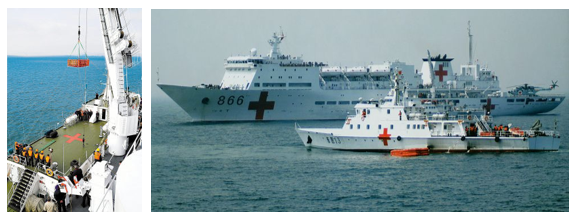
While a common narrative is that the Peace Ark’s development was in reaction to the PLAN’s inability to respond to the nearby Indian Ocean Tsunami in December 2004, there are signs from that time that the PLAN was being more deliberate in their thinking. In May 2004, six months prior to the disaster, the PLA’s Naval General Hospital established a specialized 150-person maritime medical team tasked with supporting “new, under-construction, or reconstructed hospital ships”. The Peace Ark’s design was also being finalized before the 2004 tsunami and featured extensive triage spaces, multiple operating theaters, and advanced diagnostic suits as well as a relatively narrow hull. Coinciding with this, five Ankang class ambulance transport vessels were also being built for use in the North Sea, East Sea, and South Sea Fleets by the 2010s. These key logistical connectors enhanced the rapid transfer of casualties from a littoral or island combat zone to a larger medical platform before receiving definitive care ashore. Early versions of these shore-to-ship vessels have been documented exercising with the Peace Ark as early as 2009 (Figure 3).
Taken as a whole, the above-mentioned purpose-built ecosystem that was optimized for rapid casualty evacuation underscores the view that this development was the result of a deliberate choice by the PLAN to address the operational gaps identified from the Battle of the Paracels rather than a reactionary decision to a nearby humanitarian disaster. It also indicates that the PLAN’s experimental modular medical platforms and aging Qiongsha-class hospital ships from the 1990s were not satisfactory for the PLAN’s long-term operational requirements. Ultimately, the commissioning of the Peace Ark and supporting Ankang class ambulance vessels cemented the PLAN’s strategic shift away from solely providing medical support to PLA troops stationed in the South China Sea. It signaled the PLAN’s aspiration to become a true blue-water navy, capable of projecting soft power and medical combat support in near and distant seas.
Next Generation: Expanding the PLAN’s Expeditionary Capabilities 2021 – 2025
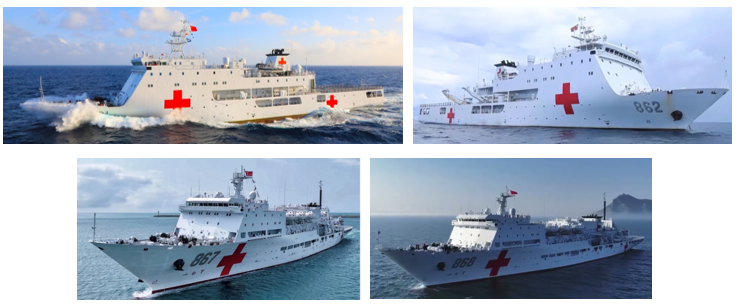
In the 2020s the PLAN began significantly expanding their fleet of purpose-built hospital ships (Figure 4). Between 2021 and 2023, two new Type 919 Anshen class vessels were put into service; Friendship (861) and Friendly (862). Still designed for speed, these ships are slightly smaller than the Peace Ark and replaced the long-obsolete Nan Kang class ships previously operating in the South China Sea. In building and deploying these vessels, with the support of the Ankang-class ambulance transports, the PLAN firmly closed the operational gap identified after the Battle of the Paracels and ensured reliable maritime medical support from dedicated platforms for island garrisons in the South China Sea into the future.
By the end of 2025, the PLAN also launched two additional Type 920 Anwei-class hospital ships – Silk Road Ark (867) and the Auspicious Ark (868). Sister ships to the Peace Ark, these platforms significantly increased the PLAN’s operational depth in blue ocean environments. The Silk Road Ark recently concluded the eleventh Harmonious Mission in 2025 – 2026, visiting ten countries in the Pacific, Caribbean, and Latin America. The 234-day mission marked the longest cruise by this type of vessel to date and highlighted its role in consolidating the Peace Ark’s previous soft power gains from its ten previous Harmonious Missions between 2010 and 2024. With the Auspicious Ark’s recent medical support mission to the South China Sea mirroring deployments of the Peace Ark and Silk Road Ark prior to their involvement in Harmonious Missions, it implies this vessel’s transition to distant water operations could be forthcoming. It also gives the PLAN the capacity to conduct at least two concurrent maritime medical diplomacy missions a year, comparable to the scope of the U.S Navy’s Pacific Partnership and Continuing Promise global health engagement missions.
The three Type 920 class hospital ships have boosted the PLAN’s distant theatre medical support capabilities, ending a reliance on a single flag ship. Instead, the PLAN has transitioned to a model where multiple dedicated platforms can sustain maritime medical needs to fleets operating far from the mainland. This expeditionary capability has already been demonstrated in 2010, 2013, 2017 and 2024 when the Peace Ark provided medical services to the PLAN’s counter-piracy escort task force in the Gulf of Aden. Such deployments not only enhance the PLAN’s ability to project maritime soft power abroad but also strengthen reliable, forward-deployed medical care in distant theatres, a hallmark of a navy with global, rather than regional, ambitions.
Looking Ahead: Civil-Military Augmentation | 2026 onwards
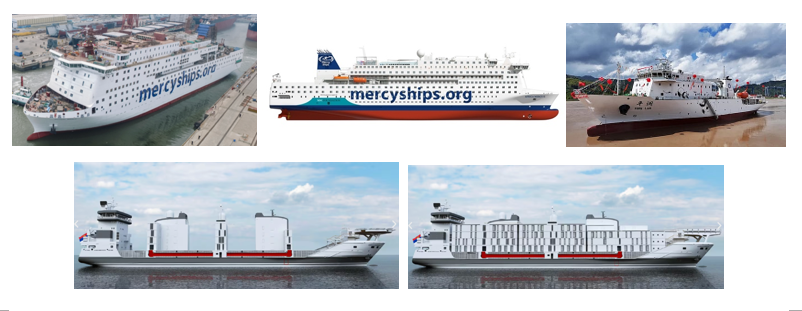
The PLAN’s future maritime medical capacity will likely benefit from the growing number of civilian-built medical vessels emerging from the PRC’s shipbuilding sector. Recent years have seen the launch of several adapted passenger ferries by the China State Shipbuilding Corporation (CSSC) for international humanitarian organizations. These include the Global Mercy and Africa Mercy II (currently under development) for the U.S. charity Mercy Ships, as well as two unnamed vessels currently being constructed for the German non-governmental organization (NGO) Worldwide Hospitals.
These ships provide the PLAN with a valuable blueprint for scaling up maritime medical platforms in times of conflict, especially if stable, long term casualty support is needed (Figure 5). Designed with this in mind, these civilian vessels address a gap not currently met by the PLAN’s existing hospital ship fleet. Adding to this, in late 2025 the PRC launched the Pinglan. The first purpose-built civilian run hospital ship in the country’s history, it will be used by the Beijing Peaceland Foundation. Appearing to be modeled on the Type 919 class design, the ship will be reportedly used for long-range expeditionary missions to Africa, the Middle East, and Asia.
By observing the implementation of these civilian platforms, the PLAN could gain valuable data on the endurance and logistical support required to maintain these types of vessels during long-term, expeditionary forward deployments. In particular, the two Mercy Ships that will be stationed in West Africa will offer the PLAN an opportunity to study how these types of hospital ships perform far from the support of home ports and established logistics chains. Should the Pinglan successfully adopt a permanent forward-deployed posture like the two Mercy Ships, it could provide the PLAN with an additional data point in testing the expeditionary capabilities of a hull closely resembling their Type 919 class vessels.
These civilian operated platforms not only strengthen the PRC’s ability to project maritime soft power across the civilian and military realms but also provide a redundancy within the PLAN’s overall maritime medical network. In the event of a conflict, the PLAN could rapidly augment their existing dedicated hospital ship fleet with these civilian platforms to support maritime medical needs in both near and far waters. This redundancy moves the PLAN beyond the medical gaps identified from the Battle of the Paracels and into a new era of modernization.
Conclusion
The evolution of the PLAN’s maritime medical platforms from the 1970s to the present day is a study in implementing a methodical and deliberate modernization strategy. From the complete absence of dedicated maritime medical capabilities in the Battle of the Paracels, the PLAN’s trajectory has taken it to makeshift adaptations in the 1990s and early 2000s, to a robust, layered network of twelve dedicated vessels today. This fleet looks set to be increasingly augmented by a growing PRC-built civilian capability, providing a blueprint for scaling up platforms as required (Figure 6). This diverse ecosystem provides the PLAN with a dependable maritime medical capacity for routine operations in the South China Sea; a dedicated capability to rapidly service large numbers of casualties in the event of a regional contingency close to the mainland (such as a Taiwan conflict scenario), as well as support PLAN ambitions to project maritime power around the world in the coming years.
A central thread throughout the PLAN’s evolution of their maritime medical platforms has been the unwavering focus on addressing the gaps identified after the conflict in the Paracels. That was the need to have hospital ships that can rapidly transport casualties away from the conflict zone and can also sustain island garrisons in the South China Sea. These origins fundamentally shaped the PLAN’s design philosophy, marking their hospital ship fleet distinct from the U.S. Navy, which historically prioritized large, stable platforms capable of long-distance transport across the Pacific or Atlantic Oceans based on experiences from the World Wars.
However, the growth in PRC’s civilian medical platforms in recent years that mirror this U.S design philosophy indicates another strategic shift in the PLAN’s maritime medical development could be underway. If lessons from the expeditionary performance of these forward-deployed civilian vessels are successfully integrated into the PLAN’s fleet in the future, it will provide an even more robust underpinning for their ongoing transformation from a regional-focused force to a truly global navy.
Jonathan Robinson is an assistant professor in International Programs at the U.S. Naval War College. A specialist in civilian-military operations, conflict analysis, and human security, Jonathan has provided operational advice and in-depth analysis to numerous U.S. and international organizations for over 15 years, including spending a decade working in conflict and post-conflict settings in the Middle East. He has also supported pre-deployment efforts for the U.S. Navy’s Pacific Partnership missions in 2021, 2022, and 2024. His research currently focuses on the PLAN’s maritime medical platforms and Russia’s use of humanitarian aid as a soft power tool.
Opinions, conclusions, and recommendations expressed or implied within are solely those of the author and do not necessarily represent the views of the U.S. Naval War College, the Department of the Navy, the Department of Defense, any other U.S. government agency, or any of the author’s previous employers.
Featured image: People’s Republic of China, People’s Liberation Army (Navy) ship Peace Ark (T-AH 866) steams in close formation as one of 42 ships and submarines representing 15 international partner nations during Rim of the Pacific (RIMPAC) Exercise 2014. (U.S. Navy photo by Mass Communication Specialist 1st Class Shannon Renfroe)
Discover more from Center for International Maritime Security
Subscribe to get the latest posts sent to your email.