
Tag Archives: drones

Defeating Floating IEDs with USVs

By CDR Jeremy Thompson, USN

This concept proposal explores a technology solution to the problem of risk to first responders when identifying, neutralizing, and exploiting “surface-floating” maritime improvised explosive devices (SF/MIEDs).
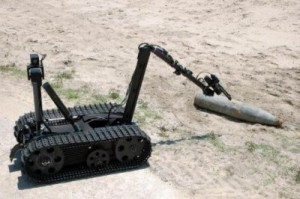
Does the Navy need a maritime equivalent of the Talon Counter-IED robot?

When considering the proliferation of technology for use against land-based improvised explosive devices (IEDs), it may be puzzling to many observers why remote IED Defeat (IEDD) technologies, particularly robots, have yet to fully cross over into the maritime domain. Although some unmanned underwater vehicle programs designed for limpet mine-like object detection on ships are in development, much less attention has been given to countering SF/MIEDs. In general, the purpose of MIEDs is to destroy, incapacitate, harass, divert, or distract targets such as ships, maritime critical infrastructure and key resources (CI/KR), and personnel. MIEDs may also present obstacles (real or perceived) with the purpose of area denial or egress denial. As a subset of the MIED family, the “surface-floating” MIED operates on the water’s surface in environments such as harbors, the littorals, the riparian, and the open ocean. It may be either free floating or self-propelled, with remote control (manual or pre-programmed) or with no control (moves with the current). It is a tempting low-tech, low-cost option for an adversary.

Thankfully, SF/MIED incidents have been rare in recent times, the last significant use occurring during the Vietnam war. Nonetheless, a capability gap is highlighted by the challenge they represent—namely, that a human must unnecessarily expose themselves to the object. One material solution to a surface-floating IED may be to develop an IED Defeat Unmanned Surface Vessel (USV) around a design philosophy based on IEDD robots used in land warfare. Protection of high value units and critical infrastructure / key resources would be its primary missions along with counter-area denial. Its most likely operating environment would be CI/KR dense areas such as harbors and seaports as well as the riparian environment since rivers are constricted in the water space available to shipping to maneuver around SF/MIED threats. A key element of design philosophy in an IEDD USV would be to meet the expectations of the customer—the first responder. Military explosive ordnance disposal (EOD) units and civilian bomb squads are much more likely to accept a platform in which the console and all other human interface features are nearly identical in look, placement, feel, and responsiveness as the most popular robots they have been accustomed to operating such as the TALON robot by QinetiQ and Packbot by iRobot.

A functional hierarchy could be drawn around major tasks such as reacquisition of a suspected surface-floating IED, identify/classify, threat removal, neutralization, and recovery of the IED for exploitation. Modularized payload packages to execute these tasks may include a towing package, an attachments package (e.g. hooks, magnets), a neutralization tool package to include both precision and general disruption EOD tools, an explosives, chemical, and radiological detection package, and an electronic counter-measures package.

Numerous trade-offs between weight, power, stability, and the complexity of modular packages would need to be considered and tested, however, variants like a “high-low” combination of a complex and simple USV working together may minimize some of the trade-off risk. If an IEDD USV were to be developed key recommendations include:

  • Official liaison between NAVSEA (US Naval Sea Systems Command) between PMS-406 (Unmanned Maritime Systems) and PMS-408 (EOD/CREW program) to ensure the transfer of USV expertise between PMS divisions.
  • A DOTMLPF assessment to determine whether limpet mines or surface-floating IEDs are more likely and more dangerous to U.S. assets and personnel given the uncertainty of future naval operations.
  • Including civilian bomb squads in the design and development process early to increase the potential for demand and cross-over with the law enforcement sector and therefore reduced long-term program costs.

Current UUV programs under development include the Hull UUV Localization System (HULS) and Hovering Autonomous Underwater Vehicle (HAUV).

This article was re-posted by permission from, and appeared in its original form at NavalDrones.com.
What’s at Stake in the Remote Aviation Culture Debate

It has been written that it is difficult to become sentimental about . . . the new type of seaman—the man of the engine and boiler rooms. This idea is born of the belief that he deals with material things and takes no part in the glorious possibilities of war or in the victories that are won from storms. This theory is absolutely false . . . for there is music as well as the embodiment of power about the mechanisms that drive the great ships of today.

—Capt Frank Bennett, USN
The Steam Navy of the United States, 1897

Hunting for a wingman
                                      Hunting for a wingman

From our flyboy friends in the U.S. Air Force comes the article “The Swarm, the Cloud, and the Importance of Getting There First” in the July/Aug issue of the Air & Space Power Journal (including the lead-in excerpt). In it, friend-of-CIMSEC Maj David Blair and his partner Capt Nick Helms, both manned-aircraft and drone pilots, address their vision for the future of the aviation warfare concept of operations and the cultural sea changes that must take place to accommodate it. Needless to say, such a vision is also relevant to the future of naval aviation. So if you’ve got some beach-reading time ahead of you, dig in. The link above includes the full article:

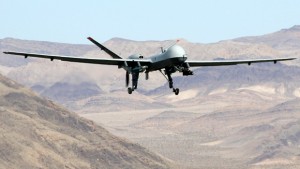
This article advocates an aviation future of manned–remotely piloted synergy in which automation amplifies rather than replaces the role of aviators in aviation. In this vision, aviators are judged solely by their effects on the battlefield. Amidst this new standard of decentralized execution is the “swarm,” a flock of highly sophisticated unmanned combat aerial vehicles that serve as “loyal wingmen” for manned strike aircraft. Here, every striker is a formation flexibly primed to concentrate effects at the most decisive times and locations. This future also includes the “cloud,” a mass of persistent remotely piloted aircraft (RPA) that provide vertical dominance through wholesale fire support from airspace cleared by the swarm. Fusion amplifies the human capacity for judgment by delegating routine tasks to automation and “demanding” versatile effects in response to fog and friction rather than “commanding” inputs.

The challenge is not technological but cultural. To realize this future, we first must accept remote aviation as a legitimate part of the Air Force story, and then we must look to deep streams of airpower thought in order to understand it. First, Gen Henry “Hap” Arnold teaches us air-mindedness—to fully leverage a technology, we must develop both humans and hardware. Second, Gen Elwood Quesada describes an aviator’s relationship with technology—the discussion is never “human versus machine”; rather, it concerns the relationship between humans and machines. Instead of a cybernetic view in which automation reduces the role of humans in the world, we argue for a capabilities-based perspective that uses automation to empower aviators to better control the battlespace. Third, Col John Boyd reminds us that identities are always in flux in response to changing technical possibilities.

Thus, the F-22 and the RPA are more akin than we realize since both embrace the power of advanced processors and networked data links. An Airman’s view of RPA futures enables manned–remotely piloted fusion, and both traditional and remote aviators must build that future together as equals. The friendly lives saved and enemy lives taken by RPAs in the air campaigns of the last decade merit this acceptance. 

Dave also recommends the article “Why Drones Work: The Case for Washington’s Weapon of Choice” by Daniel Byman.

Drones for Maritime Activisim


Phase 1: Stop illegal driftnet fishing in the Med. Phase 2: Keep those pesky children out of my flowerbeds.
First we stop driftnet fishing in the Med, then we get those pesky children out of my flowerbeds.

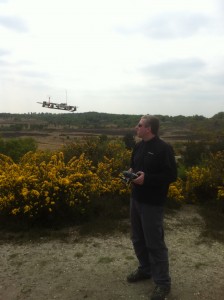
The Black Fish is a non-governmental organization (NGO) “working for the oceans that has integrated the use of unmanned air vehicles in support of its marine wildlife protection operations.  Blackfish’s UAS were provided by Laurens De Groot’s organization ShadowView, which supplies UAVs to non-profits for conservation projects.  The group flew initial demonstration sorties with a quad-rotor over a harbor and is looking to improve their UAS capabilities to fly longer-range missions over the open water in an effort to expose illegal driftnet fishing in the Mediterranean
 
The Black Fish joins the ranks of a growing number of NGOs using drones for maritime activism, specifically UAVs for surveillance operations, including Sea Shepherd Conservation Society, Earthrace Conservation, and Greenpeace.

This article was re-posted by permission from, and appeared in its original form at NavalDrones.com.

Assessing UAV Survivability

An oft-cited draw-back of unmanned air systems is their vulnerability to a variety of threats both physical, such as anti-aircraft fire, and electronic, including jamming. Researchers and industry are beginning to more seriously examine these threats as the number of drones operating proliferates.

How do UAVs stack up against these various threats, especially in the maritime environment?

On the physical front, depending on at what altitude they are operating, maritime UAVs face similar threats to helicopters and patrol aircraft. Small tactical UAS flying surveillance missions at relatively low altitudes over land or water are vulnerable to the simplest anti-aircraft threat, small arms fire. In 2011, a Fire Scout UAV operating from USS Halyburton (FFG 40) over Libya was shot down by some sort of ground fire. While flying over-water, drones might face close-in-weapons systems ranging from 20-30mm to larger naval guns in the 57mm-to-155mm range. Recently, Naval Post Graduate School (NPS) Systems Engineering – Test Pilot School Co-Op students Lieutenants Jacob King and Jared Wolcott completed research on ScanEagle survivability against small arms. Their analysis shows that the overall probability of kill (pk) in a given scenario may exceed 50% against a 12.7mm (.50 caliber) weapon, and that the greatest driving factor in the UAV’s survivability is its slant range to the threat. They recommend upgrades to optics modules to allow the aircraft to operate at higher altitudes which will reduce the probability of detection, increase aiming error and ballistic dispersion, and possibly eliminate small-arms threats altogether by flying above and outside enemy weapons range. Future low-altitude maritime UAS will also be vulnerable to shoot-down from directed energy weapons, such as the laser system which will deploy onboard USS Ponce (AFSB(I) 15) later this summer.

Moving up the spectrum of vulnerabilities, there are several publically released incidents which provide anecdotal evidence on combat losses of UAVs from surface-to-air missiles and manned aircraft. In August 1995, a Predator was shot down over Bosnia. Another Pred was shot down over Kosovo in May 1999 by a 1960s-era Soviet Strela surface-to-air missile. An Iraqi Mig-25 downed another MQ-1 over Iraq on December 23, 2002. The Air Force equipped some Predators with Stinger air-to-air missiles in 2002, but had little success countering the Iraqi air threat. In 2012, Iranian SU-25s tried unsuccessfully to shoot down U.S. Predators over the Arabian Gulf. Also in 2012, Israeli F-16s shot down an Iranian tactical UAV over Israeli territory, then did so again off the coast of Haifa in April 2013. Against modern naval SAMs, lower, slower-flying UAVs would likely be highly vulnerable.

There is little reason that compact chaff and flare systems could not be integrated onto most medium- and large-size UAS platforms to offer them some passive protection from these threats. Perhaps the highest-end protective system against shoulder-launched surface-to-air missiles is the Directional Infrared Countermeasures (DIRCM), which has been fitted on a variety of U.S. fixed- and rotary-wing aircraft. DIRCM detects, tracks, and jams infra-red guided missiles using a FLIR and laser. Raytheon’s Common Infrared Counter-Measures (CIRCM) is designed to be lightweight enough for large UAS platforms. Higher-end UAVs, such as the X-47B, feature infrared and radar signature reduction characteristics, though these measures are not cost-effective on tactical UAVs.

Jamming, spoofing, and environments where communications links and even GPS navigation are jammed are an emerging threat to UAVs. On 4 December 2011, Iran’s cyber warfare unit allegedly brought down a U.S. RQ-170 surveillance UAV in some sort of controlled manner. Enhancing autonomy is one way to add resiliency to UAS operating in an electromagnetically-contested environment. Boeing performed some interesting work on bio-inspired autonomy with ScanEagles, one of the most numerous UAVs operating at sea today. The goal of this experimentation was for the UAVs operating in a swarm of vehicles to form a beyond line of site (BLOS) relay network. In addition to relaying UAV surveillance data and telemetry over-the-horizon without the use of satellite communications, the project demonstrated the ability of a ScanEagle to fly autonomously through a jammed environment, then exfiltrate the data collected via the BLOS relay once it exited the denied area. Read more here on UAV communications relays.

One primary desirable attribute of unmanned aircraft, especially smaller, less expensive types, is that combat losses are much more acceptable than with manned aircraft. Though as the NPS study notes, “the loss of a small UAV does not incur any loss of life or a large cost, the potential loss of the ISR mission it performs is becoming increasingly important to the combatant commanders. The survivability discipline must be applied to UAVs to ensure that these assets become more survivable and can complete their assigned missions in a higher threat environment.”

This article was re-posted by permission from, and appeared in its original form at NavalDrones.com.