
Poland’s New Year Defense Resolutions

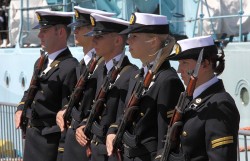
800px-Polish_Navy_sailors_2Tomasz Siemoniak, Poland’s Minister of Defense, was asked by the Polish web site “All the Essentials” what he considers the key ideas for 2014. This made for a very short list, but there are some interesting details. The main points he raised are:

1. Still the United States! Despite many talking about the decline of American power and influence, Mr. Siemoniak believes this view premature and that Washington will remain a center for setting global security trends. He adds, however: “hopefully without further pivots and resets.” To be sure, U.S. presence in Europe remains crucial for Poland.

2. Cyber Defense. Siemoniak’s observations that effective cyberattacks can send victims directly to the Stone Age are not without a sense of humor. But that is perhaps the right tool in what he believes necessary-raising awareness among decision makers, the military, the press, and ordinary citizens. The storm caused by Snowden resulted in Sea State 1 in Poland. “Hard compromises between security and privacy are unavoidable.”

3. How Many Divisions? The message is that we need to diverge from the old paradigm of troop numbers, equipment, and the talents of commanders in determining the robustness of a state’s security. The economy, culture attractiveness, energy resources, and “even people ready to defend on Twitter our arguments in English or Russian” are important ingredients of a country potential.

4. Polish Fangs. This literary expression describes a shift in Poland’s security strategy that occurred last June. The elements of conventional deterrence form a basis for the armed forces modernization plan. The concept is a bit fluid and contains some elements of A2/AD, but despite modern acronyms the roots of the strategy can be traced to the classic book of B.H. Liddell Hart, Strategy:

The acquisitive state, inherently unsatisfied, needs to gain victory in order to gain its object – and must therefore court greater risk in the attempt. The conservative state can achieve its object by merely inducing the aggressor to drop his attempt at conquest – by convincing him that “the game is not worth the candle.”

2013 was not a bad year for the Polish Armed Forces, but this short list of ideas demonstrates how the concepts of national security and defense evolved and becomes ever broader.

Przemek Krajewski alias Viribus Unitis is a blogger In Poland.  His area of interest is the context, purpose, and structure of navies – and promoting discussion on these subjects in his country.
Education of the 21st Century Naval Commander: More with CAPT Moore

seacontrolemblemWe’re looking for YOUR questions and input!
CAPT Moore (USN Ret), CEO of Small Unit Aviation LLC, is joining us for a regular installments on Sea Control based on his “Breakout Naval Leadership” talk at the Defense Entrepreneurs Forum. We’re calling it “More with CAPT Moore”.

His talks will first center around the foundations, content, and process of decision-making. Our first installment will be “The Training and Education of the 21st Century Naval Commander.”

The podcast will start with an opening definition on methods of internal control: operational and tactical.

It will be followed by a discussion on leadership traits of successful mission commanders. CAPT Moore initially suggested the examples of Nelson, the Battle of Jutland, LT Sims, and Gen Mattis but is open to more suggestions and questions from online

We will close out by considering integrity, trust, appreciation, and Leadership.

CAPT Daniel Moore, USN (Ret) spent 29 Years Active Duty as a naval aviator, including VFA squadron command. He has spent 7 years in the aerospace industry. He holds a BA in History from Northwestern University and is a former Professor of Naval Science.

CAPT Moore has kindly provided a list of readings that have informed his perspective on this topic. As we’re always looking for new reading at CIMSEC:
Naval Doctrine Publication 6 — Naval Command and Control
Andrew Gordon’s The Rules of the Game
John R. Boyd’s Organic Design for Command & Control
George Gilder’s Knowledge and Power

Send us your comments and ideas for this podcast! We’ll go through questions sent to nextwar@cimsec.org and those posted in the comment section below.

Sea Control 15 – Auld Lang Syne

seacontrolnewyearThe global system doesn’t stop just because we’re all staying up late to drink Champagne… which means Sea Control doesn’t stop either. Matt and Scott discuss the last and next year of CIMSEC in this New Year’s mini-edition of Sea Control. Yeah, 30 minutes isn’t really “mini”, but we do it up big here at CIMSEC. Download last week’s fantastic episode and this week’s for your trip back home! Enjoy our 15th episode of Sea Control, Auld Lang Syn (download)!
East Asian Geopolitics: Not on Holiday

No Rest for the Wary

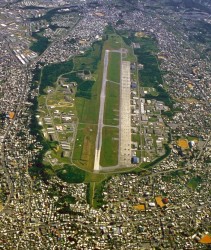
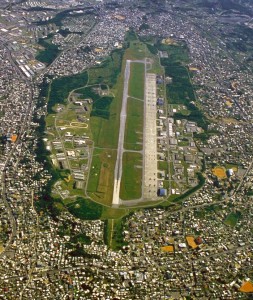
MCAS Futenma
Rough Landing: MCAS Futenma

While many look to the year’s end as a time of respite, Japanese Prime Minister Shinzo Abe may have looked to the end of this year as a time to maneuver. On December 26th, Abe visited the Yasukuni Shinto shrine, honoring the spirits of 2.5 million Japanese war dead, including over a dozen class-A war criminals. The Economist’s Banyan blog details the sharply negative regional reaction (notably from China, South Korea, and somewhat unprecedentedly, the United States), and also points to the speculation that this visit not coincidentally occurred on the same day as the announcement that Okinawa’s governor had tentatively agreed to an internal relocation of the USMC Air Station (MCAS) Futenma – a long-sought U.S. goal.

So who are the winners and losers of these moves?

Winners:

Shinzo Abe: In buying bilateral political capital with the U.S. through the Futenma deal, Abe was able to visit the Yasukuni shrine to shore up support among his conservative and far-right supporter base. Although he still provoked a public rebuke from the U.S., it is unlikely to cause any lasting damage to the relationship. The same cannot be said for those with the PRC and ROK. The moves to watch are whether Abe tries to mend these relationships, or continues to revisit the shrine on an annual basis. Although there are indications Abe is attempting to “normalize” the visits as akin to a trip to Arlington National Cemetery by a U.S. president, without a (highly unlikely) large-scale war apology PR effort by the Japanese government such visits will always send the wrong signal regionally.

China: Roughly a month ago China committed the unforced error of including Socotra Island in its ADIZ declaration. Since the “island” (really a submerged rock) is disputed with South Korea, the move thereby nipped the burgeoning PRC-ROK ties in the bud and caused South Korea to make common cause with Japan. With yesterday’s moves, Japan has given China the diplomatic advantage by displacing it as the more worrisome neighbor.

Losers:

Regional Cooperation: As my colleague Kyle Mizokami says, Abe is now “radioactive.” Even before the shrine visit, the South Sudan ammo cooperation fiasco highlighted the difficulty of boosting the Japanese-ROK ties. But whether Abe has killed all hopes of progress for the duration of his time in office is largely contingent on his moves in the coming year(s) – whether he makes sincere efforts at damage control or instead unapologetically continues to visit the shrine. The smart money is on the latter, but the former is not impossible.

United States: While the MCAS Futenma deal is a nominal victory, forestalling the need to relocate the Marines to another Asian facility, the setback to Japanese-ROK ties outweighs the win. Much of the U.S. Asia-Pacific strategy relies on leveraging its key regional allies, and there is little that would shore up U.S. grand strategy more than robust cooperation between Japan and South Korea. While greater ties can appear quixotic at the best of times, Abe’s visit has ensured that the most wonderful time of the year this is not.

Fostering the Discussion on Securing the Seas.