China Is Rehearsing More Than Amphibious Landings

By Jason Wang, Marvin Bernardo, Pei-Jhen Wu, and Andrew S. Erickson

For years, the public debate over a possible Chinese Communist invasion of Taiwan has focused on a single question: Does the People’s Liberation Army have sufficient amphibious lift to move an invasion force across the Taiwan Strait? That question remains important. However, recent Chinese exercises suggest that the People’s Liberation Army is not simply trying to solve the problem of getting forces onto a Taiwanese beach. It is rehearsing how to move, sustain, and conceal a large amphibious campaign across multiple locations.

In August 2025, the People’s Liberation Army conducted a large-scale amphibious capstone exercise along China’s southeastern coastline. Commercial satellite imagery and Automatic Identification System data indicates the exercise consolidated several previously separate training exercises into a more coherent campaign simulation. The operation included synchronized amphibious activity across multiple geographic locations, direct-to-shore landing by civilian landing craft tank vessels, use of a floating causeway, offshore deployment of amphibious fighting vehicles from roll-on/roll-off ferries, port offloading, and operations around aquaculture structures and beach obstacles.

The most important lesson is not that China has solved the Taiwan invasion problem. It has not… yet. Amphibious operations remain among the most difficult military operations to conduct, and the 2025 exercise still occurred under favorable sea and weather conditions. The People’s Liberation Army is making visible progress in rehearsing the operational mechanics of a Taiwan-relevant amphibious campaign. Observers should therefore pay less attention to whether any single exercise proves invasion readiness and more attention to what each exercise reveals about evolving Chinese assumptions, logistics concepts, geographic options, and campaign design.

From Lift Gap to Civil-Military Logistics

Much of the debate over China’s amphibious capability centers on the People’s Liberation Army Navy’s shortage of dedicated gray-hull amphibious ships. But the People’s Liberation Army is actively experimenting with and integrating civilian maritime assets into military logistics to solve this limitation for a range of geographic locations. China’s large commercial fleet can at-scale augment the People’s Liberation Army military lift with roll-on/roll-off ferries, deck cargo ships, landing craft tanks, and other vessels.

The 2025 exercise shows that these civilian vessels are no longer peripheral. They are part of the operational concept. During the August capstone exercise, the People’s Liberation Army used multiple categories of dual-use vessels. Civilian roll-on/roll-off ferries supported offshore deployment and recovery of amphibious fighting vehicles. Landing craft tank vessels conducted direct-to-beach offloading. Other civilian vessels worked in concert with military hovercraft to support floating causeway operations. This mix gives the People’s Liberation Army more than additional capacity. It gives Chinese leadership with low-observable options.

Dedicated military amphibious ships are scarce and highly visible. Civilian vessels tasked with military equipment are a different story. In a crisis, their mobilization could complicate indications and warnings. A buildup distributed across multiple smaller commercial ports would be harder to distinguish from routine maritime activity. Invariably, this increases the monitoring cost burden on Taiwan, the United States, and regional partners. The People’s Liberation Army appears to be experimenting with various solutions to this problem: how to generate large-scale lift while minimizing unmistakable military signatures.

A More Complex Campaign Simulation

The 2025 capstone exercise unfolded in two broad phases. The first phase took place around Honghai Bay near Shanwei. There, the People’s Liberation Army practiced several methods of moving vehicles and equipment ashore: direct-to-port unloading, the use of a floating causeway, direct beach landings by shallow-draft landing craft tanks, and probable offshore deployment of amphibious fighting vehicles from a roll-on/roll-off ferry.

The second phase was more revealing. After the first phase, vessels dispersed northward to separate locations along the Fujian coast, including Hougang Bay, Qianhu Bay, and Houcai Bay. At these sites, roll-on/roll-off ferries deployed and recovered amphibious vehicles across geographically separated areas. The exercise thus simulated not only landing at a single beach but coordinating activity across multiple axes. This is a significant evolution. In previous years, People’s Liberation Army amphibious exercises often demonstrated discrete pieces of the sustainment problem: ferry integration, floating causeways, or offshore vehicle deployment. The 2025 exercise brought these pieces together, suggesting a shift from technical experimentation toward operational integration.

The People’s Liberation Army also appears to have rehearsed different solutions for different landing environments. At Honghai Bay, landing craft tanks conducted direct-to-shore landings. At the northern sites, roll-on/roll-off ferries supported amphibious vehicle activity in waters with heavier aquaculture obstacles. This variation suggests the People’s Liberation Army is developing a menu of approaches tailored to different beaches, ports, offshore distances, and obstacle environments.

The Geography Matters

The exercise’s geography is as important as the range of platforms used. Stretching roughly 360 kilometers from the southernmost to northernmost locations, the distance is comparable to Taiwan’s western coastline from Taipei to Kaohsiung. While the exercise locations were not perfect analogues for specific invasion locations on Taiwan, the spacing, orientation, and concentration of activity opposite Taiwan suggest more than generic amphibious training. This matters because militaries train not only tasks, but also campaign geometry. Distance, sequencing, timing, and logistics routes are operational variables. If the People’s Liberation Army practices across distances that approximate Taiwan’s western coastline, it may be testing how to coordinate a distributed amphibious campaign across a Taiwan-relevant battlespace. However, we must caution against direct geographic comparison or expectation of replication of Taiwan’s coastal defense at this stage of development. The insight derived from these exercises is a growing sophistication in the logistical integration of civilian vessels in amphibious lift capacity that is now being rehearsed in a similar geographical scope as its possible target.

Navigating Obstacles Are Becoming Part of the Training

Another important development includes environmental and tactical obstacles. In previous exercises, personnel often removed nearshore aquaculture rafts before amphibious vehicle exercises. In 2025, People’s Liberation Army vehicles appeared to maneuver through or around aquaculture structures at multiple locations. Taiwan’s western coastline features dense aquaculture zones, mudflats, and other features that could complicate amphibious operations. Civilian maritime structures may not be military defenses, but they can still obstruct movement, create navigational hazards disabling vessels even before they reach the beachhead. The People’s Liberation Army also trained near shoreline anti-landing barriers and apparent beach obstacles. All of these features increase realism by forcing amphibious units to deal with cluttered, constrained, and defended littoral environments. Their inclusion suggests the People’s Liberation Army is moving beyond idealized landings toward more realistic invasion conditions.

Even so, there are limits. The exercise took place under relatively calm sea conditions, with ferries remaining offshore while deploying amphibious vehicles in a controlled environment. To date, the People’s Liberation Army has not demonstrated the ability to conduct comparable operations under contested air and maritime conditions. Nevertheless, the exercise still reflects moving from basic training towards integration of elements into a single simulated logistics operation. A logical next step would be more complex scenarios conducted under contested conditions. However, in peacetime training, there are practical limits to how far such exercises are likely to go: commanders would be unlikely to risk personnel and equipment in severe weather or rough sea states merely to replicate the most challenging conditions for a Taiwan Strait crossing. As a result, any near-term exercises are likely to show greater operational complexity, but only within relatively controlled environmental conditions.

What Analysts Should Watch For in 2026

Analysts should understand the 2025 capstone exercise as part of a broader People’s Liberation Army effort to improve realistic combat training, joint command, and civil-military logistics. It does not prove that China can successfully invade Taiwan. But it does show that the People’s Liberation Army’s systematic experimentation working through the practical challenges such a future operation poses.

Observers should scrutinize the next capstone exercise for five indicators.  First, does the People’s Liberation Army deploy a wider range of vessels, locations, and dispersion techniques across a wider range of locations? Does the spacing continue to resemble the geography of Taiwan, Japan, or the Philippines? Second, analysts should track civilian roll-on/roll-off ferries, landing barges (a.k.a. Shuiqiaos), and landing craft tanks appear in more complex sealift combinations. Third, they should examine the integrated use of multiple equipment deployment methods by both sea and air. In particular, whether they incorporate heavy airlift or air cavalry insertions at or nearby locations. Fourth, monitor whether future exercises occur under more difficult sea or weather conditions. Finally, they should watch for more deliberate efforts to operate around sophisticated anti-landing techniques beyond aquaculture fields, beach obstacles, and port-denial conditions that include simulated precision-strike capabilities of the Taiwanese.

The point is not to predict an invasion date from an exercise. It is to identify what the People’s Liberation Army is prioritizing, practicing and most importantly, what operational assumptions possibly underlie its campaign design. China’s August 2025 exercise suggests that the People’s Liberation Army is no longer merely demonstrating amphibious capacity in isolated drills. It is rehearsing how civilian lift, military landing forces, offshore deployment, port access, floating infrastructure, and dispersed command and control might fit together in a First Island Chain-relevant campaign. Taiwan is merely one objective in China’s intention to assert control over the Indo-Pacific. That should sharpen the focus of allied intelligence, planning, and denial strategies.

The debate over China’s amphibious lift gap is not obsolete. But it should be reframed. The key question is no longer simply whether China has enough ships. It is whether the People’s Liberation Army can coordinate and sustain its warfighters using a unique combination of military and civilian assets, quickly enough, with minimum signature across enough locations before Taiwan and its partners can disrupt it. 

Taiwan and the countries within the First Island Chain must continue investing in traditional and asymmetric capabilities that deter the People’s Liberation Army.  Traditional capabilities of course include coastal defense missiles, mines, mobile artillery and drone swarms.  However, Taiwan and First Island Chain countries must look beyond traditional kinetic solutions, such as the development of intelligence capabilities that can scale to identify troops and materiel mass at civilian ports. Special attention should be given to capabilities that can identify and disrupt temporary logistic nodes, i.e. smaller civilian ports that can be easily accessed using dual use vessels. Defense planning to address China’s irregular warfare must treat China’s civilian maritime sector as part of the wider strategic problem. This does not mean that every Chinese civilian vessel is a military asset, but certain classes of vessels, companies, ports, and movement patterns should be integrated into surveillance and defense planning. Exposing China’s irregular warfare tactics, techniques, procedures, can create the radical transparency that will asymmetrically complicate PLA war planning and counter CCP narratives.

Disclaimer

This article distills key insights from a detailed study: Jason Wang, Marvin Hamor Bernardo, Pei-Jhen Wu, and Andrew S. Erickson, Everything Everywhere All at Once: The Growing Complexity of PLA Amphibious Exercises, China Maritime Report #52 (Newport, RI: Naval War College China Maritime Studies Institute, 22 April 2026), https://digital-commons.usnwc.edu/cmsi-maritime-reports/52/. The views expressed here, based solely on open-source research, are those of the authors alone and do not represent those of any organization with which they are affiliated.

Jason Wang is a national security researcher and COO of ingeniSPACE, a Silicon Valley geo-intelligence analytics house.

Marvin Hamor Bernardo is a PhD candidate at the National Chengchi University, Taiwan, and serves as a maritime domain analyst at ingeniSPACE.

Pei-Jhen Wu is a national security researcher and imagery analyst at ingeniSPACE.

Andrew S. Erickson, Ph.D. is Professor of Strategy at the Naval War College’s China Maritime Studies Institute and a Visiting Scholar at Harvard University’s Asia Center.

Featured Image: Composite of Honghai Bay on 23 August 2025 at 1004 CST. (ingeniSPACE composite)

SWOs Assume Amphibious Command: Why it Matters

By Captain Kevin Eyer, USN (Ret.)

Amphibious Command Reform

In an April 24, 2026 directive, Chief of Naval Operations Daryl Caudle ordered that, beginning in Fiscal Year 2028, command of all amphibious warships will be assigned exclusively to Surface Warfare Officers (SWOs). This includes Landing Helicopter Assault (LHA), Landing Helicopter Dock (LHD), Amphibious Transport Dock (LPD), and Dock Landing Ship (LSD) classes.

The decision represents a significant institutional realignment in naval command structure, ending a long-standing dual-community model in which both aviators and Surface Warfare Officers (SWOs) were eligible for amphibious command. The CNO’s rationale is grounded in sustained concerns over amphibious readiness, maintenance execution, engineering discipline, and material condition—areas that have remained below Navy standards for an extended period.

As articulated in the directive, effective amphibious command requires “exquisite knowledge of readiness, maintenance procedures, component design and failure modes, damage control, and operational procedures,” as well as the ability to remain in command long enough to impose sustained correction. The conclusion is clear: Surface Warfare Officers are purpose-built for that responsibility. 

Resistance from the Aviation community was immediate and significant, including among senior aviators within U.S. Pacific Fleet and U.S. Fleet Forces Command. While concerns centered publicly on career progression and institutional balance, the debate also reflected disagreement with the premise that aviator command contributed materially to amphibious readiness shortfalls.

Still, beneath the institutional friction lies a broader reality. This is, at least in significant part, a fight over major command billets—assignments understood as essential for any officer hoping to achieve flag rank. The change will unquestionably reduce command and major command opportunities available to aviators. At the same time, the Navy’s inventory of traditional SWO major command ships continues to shrink. As these opportunities contract across the fleet, in both communities, institutional pressure over how remaining billets are allocated was inevitable. Something ultimately had to give.

Yet beyond these parochial issues, the Navy appears to have reached a larger operational conclusion which renders that argument moot: the amphibious force is too important to the Marine Corps’ warfighting capability to continue treating these ships as shared command territory.

The Amphibious Force and Its Operational Role

The U.S. Navy operates approximately 31 amphibious warfare ships, including nine large-deck amphibious assault ships that form the backbone of the Expeditionary Strike Group construct.

These platforms are essential to the Marine Corps’ core mission: the ability to project combat power from the sea. Amphibious ships transport embarked Marines, vehicles, landing craft, and aviation assets into contested environments where shore-based infrastructure is unavailable, degraded, or denied. Additionally, amphibious ships serve as floating expeditionary bases capable of command and control, medical support, logistics sustainment, and crisis-response missions.

Depending upon the class, modern U.S. amphibious warfare ships routinely employ the Landing Craft Air Cushion (LCAC), Ship-to-Shore Connector (SSC), Landing Craft Utility (LCU), Landing Craft Mechanized (LCM-8), and Combat Rubber Raiding Craft (CRRC) to transport Marines, vehicles, equipment, and supplies from ship to shore during amphibious operations. In addition, and especially relevant to this discussion, they also embark MV-22B Ospreys, CH-53K heavy-lift helicopters, AH-1Z/UH-1Y rotary-wing aircraft, and F-35B short takeoff/vertical landing fighters to support expeditionary operations ashore. Together, these systems enable distributed maneuver, vertical assault, close air support, and sustained operations in contested environments.

There are, however, substantial operational differences among amphibious ship classes, particularly with respect to aviation operations. The large-deck LHA and LHD classes conduct highly complex fixed-wing and tiltrotor aviation operations involving F-35Bs and MV-22s, including high-tempo launch and recovery cycles, advanced aviation fueling and weapons handling, and the integration of tactical air operations with expeditionary objectives. As for the LPD, while the class does not currently support F-35Bs, it does carry MV-22s. Amongst the “amphibs,” the single class that embarks only traditional helicopters, whose operation is significantly less complex than sustained fixed-wing and tiltrotor aviation operations, is the LSD class.

This distinction explains why LHA, LHD, and LPD classes are categorized as “major command” ships commanded by Captains on their second at-sea command tour, while LSDs are “Commander command” ships led by Commanders during their first command tour at sea.

These ships are the Navy’s most important fleet assets supporting Marine Corps operations. Consequently, the material readiness of amphibious ships directly affects Marine Corps operational effectiveness. Degraded ship availability constrains embarkation, delays deployment cycles, and reduces the Marine Corps’ ability to execute its expeditionary mission set. Amphibious readiness is therefore not solely a naval concern—it is foundational to the Marine Corps’ warfighting capability.

The Marines’ Perspective

At the 2026 Sea-Air-Space Conference, the Commandant of the Marine Corps, Gen. Eric Smith, indicated that the Navy and Marine Corps were determined to work together with a “unified sense of purpose” to increase the size and availability of the U.S. amphibious fleet:

“We’re in complete agreement that our current inventory of 31 amphibious ships is not sufficient to meet our new presence that our combatant commanders are requesting and requiring.”

In 2025, amphibious ships’ readiness rate dropped to 41 percent, according to Navy Times. This metric is derived from a lack of ships deployable that caused a five-month delay in Marine Expeditionary Unit (MEU) deployments —critically impacting the Marine Corps’ ability to execute its mission. 

To address this, General Smith spoke to optimizing maintenance schedules, as well as investing in service life extensions for a number of ships. Moreover, he stated that the Navy-Marine Corps team is moving forward with the procurement of new and more capable ships. While the form that these new ships takes, beyond perhaps the now-planned Landing Ship Medium (LSM), remains to be seen, what is plain is that the Marines are keenly interested in the sustainability of the amphibious fleet, and specifically, availability of these ships when called upon. 

What is an Air Boss?

Aviation-capable amphibious ships have an Air Department Head or “Air Boss” assigned to them. This officer serves as the Commanding Officer’s principal aviation authority and senior manager of all flight operations.

Operating through Primary Flight Control (“PriFly”), the Air Boss oversees launch and recovery operations, flight deck sequencing, aircraft movement, fueling and arming cycles, sortie generation, airspace coordination, and aviation safety enforcement.

The Air Boss integrates continuously with the bridge, Combat Information Center, Marine aviation elements, and embarked air traffic control personnel to ensure safe and efficient aviation operations. He or she translates the Commanding Officer’s intent into executable aviation activity while maintaining strict control of flight deck risk and safety. This structure ensures that aviation expertise remains continuously embedded within the ship’s command organization at the Department Head level.

This is central to the Navy’s revised command logic: aviation execution aboard amphibious ships is already fully professionalized and continuously managed. The Air Boss construct therefore provides the operational depth and specialization required without necessitating an aviator in command.

In practical terms, aviation is not removed from command—it is delegated to a dedicated expert authority within a now SWO-led command structure. For this reason, it is imperative to the success of this new construct that the Aviation community assign only its best and brightest post-command aviators to this billet going forward. To do other is to court failure of the Marine mission.

In short, the Air Boss position effectively obviates the need for a uniquely assigned Aviator as commanding officer of the ship. This is analogous to the Reactor Department Head aboard an aircraft carrier being a nuclear-trained SWO. In that case, the SWO responsible for overseeing the carrier’s immensely complex nuclear propulsion plant eliminates the need for a SWO Commanding Officer solely to provide engineering and reactor expertise. Extending the analogy further, while every CVN Commanding Officer is nuclear-qualified, every SWO Commanding Officer has likewise spent an entire career intimately involved with the operations of helicopters from the decks of surface combatants across the fleet.

How Aviators Got to Amphibs

Over time, aviators were increasingly assigned to amphibious ship command primarily as part of the Aviation community’s officer development pipeline.

As the Navy’s largest unrestricted line community among SWOs, submariners, and aviators, the Aviation community has long relied upon amphibious ship command opportunities—both at the Commander and Captain level—to provide upward career progression for its most promising officers.

Squadron command is the standard Commander-level milestone for Naval Aviators. Officers selected for further operational command may proceed into major aviation leadership billets or into deep-draft command pipelines. aviators — particularly rotary-wing and tiltrotor officers associated with amphibious operations — have commonly served as Executive Officer/Commanding Officer (XO/CO) of LHAs and LHDs via the fleet-up process, while tactical jet aviators have more often followed the aircraft carrier and carrier strike group command track. However, there is considerable overlap and flexibility depending on community, timing, and Navy needs.

At the same time, LHA and LHD ships increasingly evolved toward aviation-centric operations, particularly with the introduction of the F-35B and expanded MV-22 integration. This has, with time, strengthened the Aviation community’s argument for continued command of large-deck amphibious ships.

The bottom line is that amphibious ships became an important career-development mechanism within the Aviation community, while the increasing sophistication of the aircraft embarked on some amphibs justified these assignments.

Still, it is important to distinguish between the aviation complexity of LHA and LHD operations and that of the remainder of the amphibious fleet. Commanding Officers aboard LHAs and LHDs oversee high-tempo fixed-wing and tilt-rotor flight operations in densely congested deck environments, including the integration of F-35B and MV-22 operations into expeditionary combat missions. By contrast, LPDs and LSDs, while fully aviation capable, conduct comparatively limited helicopter operations and do not execute sustained tactical fixed-wing aviation missions.

The Navy now appears to have concluded that while aviation expertise remains indispensable aboard amphibious ships, the commanding officer’s foremost responsibility is the sustained readiness and fighting condition of the ship itself. That responsibility aligns more naturally with the professional orientation and career-long preparation of the Surface Warfare community. As for the increasing complexity of air operations in major command amphibs, high-grade Air Bosses will ensure the safety and effectivity of those.

Carrier Command: A Structural Distinction

This naturally raises the question of why SWOs are not permitted to command aircraft carriers.

Unlike amphibious ships, command of nuclear aircraft carriers is restricted exclusively to Naval Aviators who are also nuclear-qualified. This is not simply a matter of tradition. It reflects the carrier’s unique identity as both a nuclear-powered warship and a floating aviation combat platform. More than that, it is the law.

Since the Act of June 24, 1926, federal law has required that officers commanding U.S. Navy aircraft carriers be qualified naval aviators. The original provision, enacted as part of early naval aviation legislation and formerly codified at 34 U.S.C. § 735, was intended in part to ensure that naval aviators had a viable path to senior operational command within the fleet. Through later recodifications of federal military law, the requirement became 10 U.S.C. § 5942 and is now codified at 10 U.S.C. § 8162. The current statute provides that, to be eligible to command an aircraft carrier, an officer must be “an officer in the line of the Navy who is designated as a naval aviator or naval flight officer and who is otherwise qualified.” As a result, non-aviator Surface Warfare Officers are legally barred from commanding active U.S. aircraft carriers. In the case of nuclear-powered carriers (CVNs), Commanding Officers must additionally meet nuclear propulsion qualification requirements established under Executive Order 12344 and subsequent statutory authorities governing the Naval Reactors program. 

In order to command a carrier, an officer must understand nuclear propulsion operations, ship-wide engineering integration, reactor safety oversight, navigation, combat systems, and full-spectrum warship command responsibilities. Aviators selected for carrier command therefore undergo nuclear power training, complete demanding XO tours aboard carriers, and typically command another ship at sea before assuming CVN command.

Yet the technical explanation alone does not fully answer the question. A Surface Warfare Officer can be trained to understand aviation operations to the level necessary for safe ship command. What a SWO can never fully possess, however, is the lived cockpit perspective that defines naval aviation.

That distinction matters because, unlike the amphibious ship, the entire purpose of the aircraft carrier is the launch and recovery of aircraft and the projection of aviation combat power. Every major operational function aboard the carrier ultimately serves the air wing. The commanding officer must therefore possess not only technical competence as a warship commander and nuclear operator, but also an instinctive appreciation for what is occurring in the cockpit during launch, recovery, tanker operations, bolters, emergency procedures, and combat tasking.

Carrier aviation involves judgment about risk, weather, fatigue, deck cycles, aircraft performance margins, and human decision-making under extreme operational pressure. Those realities cannot be fully learned from outside the Aviation community.

Accordingly, the Navy’s judgment has long been that while a SWO can learn enough about aviation to safely command a carrier, only an aviator can fully understand the operational and human dimensions of carrier aviation combat operations. For that reason, aircraft carrier command remains restricted to aviators who are also nuclear-qualified through specialized training and career preparation.

The amphibious force is different. Aviation aboard these ships is critically important, but the ship itself exists primarily to deliver and sustain Marine combat power ashore. Aviation supports that mission; it does not wholly define it in the way aviation defines the aircraft carrier.

The Flight III DDG Issue 

Today, with the retirement of the Ticonderoga-class cruisers, there is a sudden shortage of major command opportunities available for SWOs.

While the assignment of major command is being experimented with using Flight III destroyers, significant questions remain regarding whether those ships possess the capability and capacity to meaningfully fill the role once occupied by Aegis cruisers. The cruiser was not only larger and possessed greater magazine depth, but was also specifically designed to support the commanding officer’s duties as Air Warfare Commander (AWC) for a Carrier Strike Group (CSG) or Area Air Defense Commander (AADC) for a joint force. In an era of rapidly evolving air and missile threats, AWC/AADC remains the most critical warfare commander function within the CSG for the Surface Warfare community.

To fulfill those responsibilities, the Ticonderoga-class cruiser was built with an especially large combat information center and extensive command-and-control systems. Flight III DDGs remain highly capable warships, but they do not fully replicate the cruiser’s command-and-control capacity. Compounding the issue, destroyer production rates remain too slow to offset the loss of cruiser major command billets.

Amphibious command under SWO leadership therefore also serves to preserve leadership depth and major command opportunities within the Surface Warfare community. Critics will reasonably argue that this institutional reality influenced the decision. They are likely correct.

Yet this does not invalidate the operational logic behind the reform. If anything, it reinforces a broader truth: these are surface warships, and the Navy increasingly believes they should be commanded by officers whose professional expertise centers on sustaining and fighting surface ships.

Implications for the Aviation Community

For naval aviation, the policy reduces at-sea major command opportunities outside the carrier force.

Rotary-wing, and to a lesser extent Patrol Squadron (MPA) Aviators are most directly affected, as amphibious ships historically represented a key pathway for MPA, helicopter and tiltrotor officers to achieve major command.

The situation for aviators was already worsening prior to the loss of amphibious ship command opportunities for aviators. A major blow came earlier with the Navy’s transfer of its auxiliary fleet—including oilers and replenishment ships—to Military Sealift Command control, a transition completed in 2010. Since then, nearly the entire Combat Logistics Force has been operated by MSC rather than by commissioned Navy crews, eliminating a significant number of traditional command billets for aviators. Today, the only auxiliary-type vessels still under direct Navy Sailor command are a small number of highly specialized ships, such as submarine tenders and command ships.

To offset this, aviators will continue to be assigned to command selected platforms such as Amphibious Command Ships (LCCs), Expeditionary Sea Bases (ESBs), which were shifted from MSC control to Navy commands in 2019, and selected auxiliary ships. These assignments preserve meaningful at-sea command experience, particularly for aviators selected for future carrier command.

The objective is to ensure that aviators selected for carrier command possess not only aviation expertise, but also a comprehensive understanding of ship operations prior to assuming command of a nuclear-powered warship. Having said that, in any decision of this sort, there are winners and losers, and the plain losers in this, in terms of major command billets, are helicopter aviators. 

Conclusion

It is worthy of note that the Navy has tried this before. In the post–Cold War period, particularly during the 1990s and early 2000s, the Navy effectively attempted to phase aviators out of amphibious ship command by increasingly favoring Surface Warfare Officers as amphibious platforms became more maintenance-intensive and aligned with surface warfare competencies. The intent was to concentrate command responsibility with SWOs who were viewed as better suited to long-term material readiness and ship stewardship. However, the effort did not fully take hold because amphibious ships simultaneously evolved into increasingly aviation-centric platforms, especially with the growth of MV-22 and F-35B operations. As a result, the dual-path command structure persisted, and aviators remained integral to amphibious leadership rather than being fully displaced. 

This of course begs the question as to whether this effort will be fully and persistently implemented. Nevertheless, from the perspective of the Navy’s interest in aligning command authority with the primary determinants of amphibious ship readiness and operational availability, it appears to be the right decision for the health of the ships and ability of the Marines to accomplish their mission.

Amphibious ships are to be increasingly treated as surface warfare commands in which long-term material condition, engineering discipline, maintenance execution, and readiness management are the Commanding Officer’s central responsibilities. Aviation remains fully integrated, but is professionally executed through the Air Boss structure, ensuring operational effectiveness without requiring aviator command authority.

The change carries real and acknowledged costs for the Aviation community, particularly among rotary-wing aviators whose command opportunities are reduced. It also reshapes long-standing cross-community pathways at sea.

At the same time, the policy does not diminish the importance of aviation expertise. Rather, it concentrates that expertise where it is operationally most valuable. On aircraft carriers, the Commanding Officer must possess a deep appreciation of what occurs in the cockpit because the carrier exists fundamentally to enable aviation combat power. That is why only aviators command aircraft carriers.

Within the amphibious force, meanwhile, the Air Boss becomes even more important under this new command structure. Particularly aboard LHA and LHD platforms conducting complex MV-22 and F-35B operations, the Air Boss is not a secondary billet but a central warfighting function. The Aviation community must therefore ensure that only top-tier, post-command aviators are assigned to these positions. They must be fully capable of advising—and when necessary, forcefully challenging—a commanding officer who will not inherently possess cockpit-level understanding of aviation timing, risk, and execution.

The Surface Fleet must help maximize the Marine Corps’ ability to execute its mission from the sea. That mission remains the foundation of the amphibious force, and every institutional decision surrounding amphibious command must be judged—without stint or reference to parochialism—against that standard.

Captain Kevin Eyer is a retired Surface Warfare Officer who served on active duty for 27 years. He deployed in seven cruisers and commanded three Aegis cruisers—the USS Thomas S. Gates (CG-51), Shiloh (CG-67), and Chancellorsville (CG-62). He completed tours on both the Navy Staff and Joint Staff and attained a Master of Arts from the Fletcher School of Law and Diplomacy at Tufts University. He was the U.S. Naval Institute Proceedings Author of the Year in 2017, and three-time winner of the Surface Navy Association’s Literary Award.

Featured image: USS Ashland Returns to Naval Base San Diego,” 01 June 2026. (U.S. Navy photo by Petty Officer 2nd Class Aja Campbell)

The Weapon of Frozen Assets: A New Instrument of Maritime Financial Warfare

By Valery Bonakhau

Financial warfare is conventionally understood as an instrument applied to declared, identifiable assets. Common tactics include freezing accounts, cutting off correspondent banking access, and market delisting of entities. The Hormuz conflict of March 2026 introduced a structurally distinct mechanism operating on none of those principles. What follows is an analysis of that mechanism — how it emerged, how it functions, and why existing maritime security frameworks are not adapted to recognize it.

Executive Summary

In March 2026, the Hormuz conflict introduced a financial warfare instrument that most strategic analysts have not yet identified. Not the oil price shock. Not the insurance premium surge. This new instrument was the systematic immobilization of cargo in transit as active leverage. At peak, approximately 140 million barrels of oil were rendered undeliverable in the Persian Gulf.

This constitutes a new class of coercive instrument distinct from sanctions and asset seizure which shall be termed the weapon of frozen assets. The weapon of frozen assets is defined as a condition in which a supply chain position becomes illiquid through the convergence of three independent constraint systems. No freezing authority issues an order. No asset is formally declared blocked. The system constructs itself empirically.

The Mechanism: Frozen Assets as Active Leverage

Conventional financial warfare operates on declared assets: accounts frozen by executive order, correspondent banking access removed, entities delisted. The target knows what has been frozen. The freezing authority controls the instrument. What emerged in March 2026 is structurally different.

The blocked assets are not declared. They are positional.

A positional asset is a contractual, logistical, or financial state that becomes unrealizable under specific conditions. A vessel at anchor awaiting Iranian permission is a positional asset. How many such vessels are waiting — UKMTO, Kpler, and Lloyd’s List count them. The fact is recorded. The mechanism is not. Monitoring systems see the symptom: the vessel is stationary. Why every possible exit is simultaneously blocked — without a single official order, without a sanctions list, without a formal prohibition — is a question they do not ask. This is why the weapon of frozen assets went unidentified.

A very large crude carrier (VLCC), a supertanker exceeding 200,000 deadweight tons, carrying two million barrels of Abu Dhabi crude in transit becomes an unrealizable asset the moment it cannot deliver cargo, cannot obtain war-risk coverage for forward transit, or return to port without losses exceeding the cargo value. Returning is not a neutral option as the vessel has already paid freight, fuel, and port fees. A reversal means a new charter back, penalties for breach of the delivery contract, and the loss of sums already paid. The operator had done everything correctly. The cargo was legitimate. The documentation was clean. None of that mattered.

This is the weapon of frozen assets, and countermeasures have not been found.

In any conflict, equipment and personnel losses are counted. Financial warfare produces losses of a different kind: 1,600 vessels at anchor, billions of dollars of cargo going nowhere, and tens of thousands of trapped mariners. Kpler records these losses via satellite.

However, losses are not the weapon but the consequence of its use.

The weapon is the mechanism that created them. Three systems operate simultaneously without a single official order: a permit regime, an insurance barrier, and legislative formalization. None of them formally blocks a vessel, but together they make forward progress impossible.

Jask & the Architecture of Asymmetry

The weapon of frozen assets functions only if Iran can credibly threaten Hormuz while maintaining its own export capability. Without that asymmetry, mutual blockade produces symmetric damage, and the weapon loses its leverage.

Forty years of sanctions were not wasted. Iran spent four decades preparing for this scenario. The scale of Iranian preparation was systematically underestimated by external analysts.

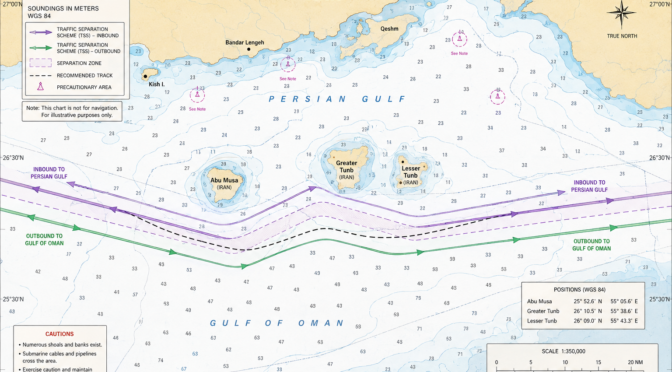
The centerpiece is Jask, Iran’s only oil export terminal located outside the Strait of Hormuz. Crude reaches Jask via the Goreh-Jask pipeline from Bushehr province. Kpler data shows the terminal’s first loading in the current conflict was on March 7, 2026: tanker Dore, 2 million barrels. Design capacity is 1 million barrels per day, and effective capacity is estimated by the EIA and Kpler at approximately 300,000 barrels per day. Inside the Gulf, Iran also operates smaller terminals at Lavan Island, Sirri Island, and Soroosh. These terminals are primarily for cargo top-ups and are typically unable to receive fully loaded VLCCs.

This asymmetry is not incidental. It is the structural condition that makes the weapon of frozen assets viable as a sustained instrument rather than a one-time escalation. Iran can impose transit uncertainty on all other operators while maintaining its own revenue flow. This is not mutual deterrence. It is a directional weapon.

The asymmetry gives Iran a sorting mechanism. States that acquiesce receive access. Adversaries pay an uncertainty premium. Those undecided find their exposure used as an argument for compliance.

There is one further dimension that external analysis has underweighted. Fortune reports that Iran is exploring rail shipments of petroleum products to China via the China-Iran freight corridor, a 5,300-kilometer route through Turkmenistan and Kazakhstan that cuts transit time from 30-40 days by sea to 14-15 days by land. The critical caveat is that railways cannot transport bulk crude oil on an industrial scale. The rail corridor handles petroleum products, petrochemicals, and high-value goods. It is a contingency channel, not a replacement for tanker volumes. Nonetheless, its existence means Iran has built redundancy into its trade architecture that was not present in any previous standoff.

The Insurance Architecture as Operationalization

Within the first week of the conflict, Lloyd’s of London syndicates sharply repriced Hormuz transit coverage. War-risk premiums reached 2.5% to 5% of hull value per transit — $10 to $14 million for a single VLCC voyage. The Lloyd’s Market Association confirmed on March 23, 2026 that insurance was not withdrawn outright and coverage remained technically available. However, at rates approximately sixty times pre-conflict levels, the practical effect was identical to withdrawal. Operators consistently report that the primary constraint is physical danger to crew. The insurance architecture amplified that constraint into a financial impossibility for most commercial transits.

New coverage was available only through the DFC (U.S. International Development Finance Corporation) reinsurance facility and only for U.S.-flagged vessels or vessels with U.S. commercial interests at premium levels that rendered most commercial transits economically unviable. The two-tier structure was partly a design choice and partly a capacity constraint that no one had modeled in advance. On April 3, DFC expanded the program to $40 billion, adding six new underwriters. There is little evidence of actual utilization. The mechanics of this structure and its limits are analyzed in detail in RUSI Commentary on April 2, 2026.

Iranian legislative action on Hormuz transit developed in stages. In late March 2026, the parliamentary National Security and Foreign Policy Commission approved a 12-article bill titled “Consolidation of Iran’s Sovereignty in the Strait of Hormuz” and forwarded it to the Presidium of the Majlis. On March 31, the commission chairman stated: “47 years of hospitality are over forever.” As of May 7, 2026, the bill has not yet passed a full plenary vote — but Tehran has not waited for the law to implement its provisions operationally.

On May 5, 2026, Iran launched the Persian Gulf Strait Authority (PGSA): an official body with a formal email address providing a single window for arranging transit authorization with the IRGC Navy. Vessels must complete a “Vessel Information Declaration” disclosing ownership, insurance, crew manifests, and intended routes before receiving a transit permit. CNN obtained the form from Lloyd’s List. Richard Meade, editor-in-chief of Lloyd’s List, stated that Iran had positioned the PGSA as “the only valid authority to grant permission to ships transiting the straits,” per AGBI. As Splash247 noted, the creation of the authority gives Iran’s toll regime a veneer of bureaucratic legitimacy but resolves none of its legal problems as the IRGC remains a U.S.-designated foreign terrorist organization.

The convergence of three conditions — permit-based transit access, insurance-conditioned financial viability, and legislative formalization — produced the situation described above. A vessel operator simultaneously facing a permit fee demand, a repriced insurance market, and a formally constituted Iranian transit authority has no commercially viable path forward. Remove any one of those three constraints and the trap does not hold at scale. As of this writing, all three remain in force.

In existing analytical literature, this mechanism has not been described as a distinct instrument. It is not a single mechanism. It is what occurs when three independently operating constraint systems act simultaneously.

The $2 Million Question: Sanctions Exposure

The closest historical analogy is the ongoing management of the Suez Canal. Egypt has collected billions for passage through a waterway that geography created and lawyers formalized. What Iran did in March 2026 is structurally near identical with one distinction: the Suez Canal Authority holds a legal mandate. The Iranian corridor does not.

The $2 million is not the central issue. The central issue is that someone paid it. That payment is the precedent.

According to verified Bloomberg data, the Islamic Revolutionary Guard Corps’ (IRGC) base rate is $1 per barrel of crude, which translates to $2 million per transit for a VLCC-class vessel. On April 2, the container vessel CMA CGM Kribi, flagged in Malta and operated by French carrier CMA CGM, became the first Western European-operated vessel to transit Hormuz since the conflict began. The payment mechanism has not been officially disclosed. That same day, France vetoed a UN Security Council resolution that would have authorized military reopening of the strait. The timing is not coincidental.

In a single day, Paris appears to have settled its transit terms and blocked the resolution that would have rendered those terms unnecessary. This is the first documented instance of a NATO member acting openly at variance with allied positions based on national commercial interest alone. The precedent was not set by Tehran. It was set by Paris.

Payments were routed in Chinese yuan or through stablecoins, cryptocurrencies pegged to fiat currency values. Not dollars. This is deliberate architecture. The IRGC has constructed a five-tier system that ranks flag states by degree of political alignment. Yuan-denominated transactions fall entirely outside the dollar clearing system. Stablecoins settle on blockchain rails, circumventing traditional bank intermediaries.

Secretary Bessent’s March 16 statement addressed oil flows, not payment flows. On March 20, OFAC issued General License U (GL U), authorizing transactions necessary for the delivery and sale of Iranian-origin crude loaded prior to March 20 through April 19. GL U addressed oil flows. No authority addressed payment flows at that time. Baker McKenzie analysis confirms GL U was the first OFAC general license broadly authorizing transactions involving Iranian-origin crude oil.

That gap has since been partially closed — but only for U.S. persons. On May 7, 2026, OFAC updated its FAQ, stating: “Payments to the government of Iran or the Islamic Revolutionary Guard Corps (IRGC), directly or indirectly, for safe passage through the Strait of Hormuz would not be authorized for US persons, including US financial institutions, or for US-owned or -controlled foreign entities.” For non-U.S. operators, the legal ambiguity persists. GL U itself expired on April 19, 2026 and was not renewed — Secretary Bessent announced on April 15: “We will not be renewing the general license on Iranian oil.” Financial institutions are left with a compliance question Washington has answered only partially.

Implications for Maritime Security Planning

The situation described above is a structural trap. Documentation was clean. Cargo was legitimate. Every obligation was met. Yet the environment developed a permit system with no legal foundation, an insurance market repriced beyond commercial viability, and a sanctions framework that no authority is applying consistently to non-U.S. operators.

Four implications follow that current maritime security frameworks do not yet account for:

First, the unit of analysis for financial warfare in maritime conflict is the position, not the asset. Existing frameworks are designed around declared, identifiable assets. The weapon of frozen assets operates on positions — contractual, logistical, and financial states that become impossible to exit under specific conditions. A vessel at anchor awaiting an Iranian permit does not trigger any standard financial warfare indicator. This category of exposure is invisible to frameworks built for a different instrument.

Second, the DFC facility has set a precedent. Beijing and Tehran will both model the DFC response as a baseline constraint on U.S. escalation tolerance. The template is now established, and one can only wonder how this precedent will impact future action in the Taiwan Strait, the South China Sea, or the Turkish Straits. The RUSI analysis of the first DFC cycle examines this in detail. France demonstrated the practical consequence: when transit access is available at a price, commercial interest overrides coalition position.

Third, the weapon is self-sustaining once deployed. It does not require active maintenance. The permit regime, the insurance repricing, and the legislative structure each reinforce the others. Dismantling any single layer does not dissolve the trap as the Project Freedom experience confirms.

Finally, the legal architecture is deliberately ambiguous for non-U.S. operators. Tehran has structured the toll regime to create maximum uncertainty for third-country shipping firms: pay and risk U.S. secondary sanctions or refuse and remain stranded. That ambiguity is not a design failure. It is the instrument.

Conclusion

On May 4, the United States launched Operation Project Freedom, deploying guided-missile destroyers, over 100 aircraft, and 15,000 service members to guide neutral vessels out of the Persian Gulf. The operation was paused within 48 hours. Only two vessels transited through the Gulf. Approximately 1,600 remain stranded with the IMO reporting approximately 20,000 mariners aboard nearly 2,000 vessels trapped in the Gulf. Pre-war traffic through Hormuz averaged 120 crossings per day. The same day Project Freedom was paused, Iran launched the Persian Gulf Strait Authority, a formal bureaucratic structure with an official email address, application forms, and a stated mandate to regulate all Hormuz transit. The convergence of three constraints that produced the weapon of frozen assets has not been dismantled. It has received institutional form and will continue to evolve the longer the situation in the Gulf continues.

Valery Bonakhau is an Independent Analyst in Dubai. He spent two decades in capital management across Commonwealth of Independent States (CIS) and United Arab Emirates (UAE) markets before transitioning to independent research. His work applies financial mechanism analysis to geopolitical forecasting, identifying the structural constraints that force political decisions before they occur.

Featured Image: U.S. forces disabled M/T Sevda, an Iranian oil tanker, on May 8 prior to it entering an Iranian port on the Gulf of Oman in violation of the U.S. blockade of Iranian ports and the Strait of Hormuz. (U.S. Central Command photo)

Latin America: Donations and Sales of Second-hand Hulls

By W. Alejandro Sánchez

Written by Wilder Alejandro Sanchez, The Southern Tide addresses maritime security issues throughout Latin America and the Caribbean. It discusses the challenges regional navies face including limited defense budgets, inter-state tensions, and transnational crimes. It also examines how these challenges influence current and future defense strategies, platform acquisitions, and relations with global powers.

Analyses of the status and strength of the US Navy, the Chinese Navy, and other global navies focus not only on the size of their respective fleets but also on the modernity of their hulls and their new capabilities, particularly vis-à-vis integrating new technologies. But what happens to decommissioned platforms that global naval powerhouses no longer operate? Some are kept in reserve or sent to scrapyards. However, many decommissioned vessels find a second life when sold or donated to partners and allies.

As the author of this analysis has written for CIMSEC and other publications over several years (“The Rise Of The Latin American Shipyard”), Latin American shipyards are undergoing a golden age, with a variety of platforms being produced regionally. This trend includes submarines, frigates, corvettes, and patrol vessels. Brand-new platforms from extra-regional suppliers are also being procured. However, second-hand platforms are cost-effective alternatives that provide additional capabilities to the fleet and serve as a stopgap until other procurement projects are completed. Donation of vessels serves to strengthen alliances or create new partnerships.

Latin American Navies: A Brief Overview

Navies worldwide need to constantly evolve and acquire new hulls and technologies to maintain deterrence and win the next war. The US Navy, for example, is turning to uncrewed maritime systems (uncrewed surface vessels and uncrewed underwater vehicles) and aims to deploy them across the Asia-Pacific to support crewed ships. The US Navy’s Chief of Naval Operations, Admiral Daryl Caudle, has called this a “hedge strategy.” Meanwhile, China is rapidly expanding its fleet, not just to challenge the US but to gain a bigger presence across the Western Pacific.

Latin American navies have their own strategies, though at a much more domestic and regional level. Geopolitics matter, as Latin America has not experienced interstate warfare in decades. The last armed conflict between two Latin American states was in 1995, between Peru and Ecuador, while the last inter-state conflict with a maritime theater of operations was the Falklands/Malvinas War in 1982, between Argentina and the United Kingdom. The most recent inter-state military operation in the region was Operation Absolute Resolve, which resulted in the extraction and arrest of Venezuelan President Nicolás Maduro.

While there are some outstanding border disputes across Latin America and the Caribbean, there is no arms race, and inter-state relations are calm. There are also confidence-building mechanisms that promote good relations between civilian governments and militaries. For example, in early March in Uruguay, the Argentine Navy took command of the Coordination for the South Atlantic Area (Coordinación del Área Marítima del Atlántico Sur: CAMAS), a multinational entity created in 1957 composed of Argentina, Brazil, Paraguay, and Uruguay. The goal of CAMAS is to promote cooperation, peace, and stability in the South Atlantic.

Nowadays, the primary role of Latin American navies is to maintain basic deterrence capabilities and readiness in the event of an inter-state conflict. Navies are also heavily engaged in combating maritime crimes, particularly drug trafficking and illegal, undocumented, or unreported fishing. The fleets are also incredibly involved in humanitarian assistance and disaster relief operations.

It is beyond the objective of this analysis to discuss the strategies and aspirations of each Latin American navy. Suffice to say, regional navies are generally focused on operations within their borders. Ships and submarines regularly participate in regional multinational exercises, including the US-sponsored RIMPAC, UNITAS, and SUBDIEX.

Only the Brazilian Navy (Marinha do Brasil: MB) has extra-regional and power projection aspirations. Brazil annually sends a warship to West Africa to train with regional navies. During its visit to Africa, the Brazilian ship participates in the US-sponsored regional exercise, Obangame Express, while the Brazilian Navy also sponsors its own exercise with African navies, Guinex. Dr. Andrea Resende, professor at Brazil’s University of Belo Horizonte (Centro Universitário de Belo Horizonte: UNIBH) and Una Betim University (Centro Universitário Una Betim: UNA), told CIMSEC that Brazil “has also cooperated” with the Namibian Navy and Marine Corps and also worked alongside South Africa to develop the A-Darter missiles. Brazil also “signed an agreement with South Africa for defense, and there is a possibility to expand naval and technical cooperation with South Africa.”

Finally, Mexico and several South American shipyards are currently producing a variety of platforms and reducing reliance on extra-regional suppliers. Brazil has built four Scorpene-class submarines and is now building a nuclear-powered submarine as well as corvettes. Colombia’s COTECMAR (Corporación de Ciencia y Tecnología para el Desarrollo de la Industria Naval, Marítima y Fluvial) and Peru’s SIMA (Servicios Industriales de la Marina) are manufacturing frigates as well as other vessels. Mexico’s ASTIMAR (Astilleros de la Secretaría de Marina) began construction of a patrol vessel, Ecuador’s ASTINAVE (Astilleros Navales Ecuatorianos) is slowly building a multipurpose vessel, and Chile’s ASMAR (Astilleros y Maestranzas de la Armada) is producing four multi-role transport vessels.

These projects demonstrate the level of maturity regional shipyards have reached. However, even regional shipyards cannot build all the complex platforms navies require to modernize their fleets. Several Latin American navies cannot even produce their own vessels, namely the Central American states, Uruguay, and, surprisingly, Argentina (their shipyards have very limited capabilities). These countries will continue to rely on the acquisition of brand-new or second-hand vessels from external suppliers.

Why purchase a second-hand vessel?

There are several reasons why Latin American navies may choose to buy second-hand vessels. Providing additional capabilities is a major reason. Many Latin American navies seek capabilities such as submarine fleets for underwater operations or well-equipped warships for power projection and deterrence. However, in the case of submarines, building one sub alone is a complex engineering project and a long, arduous process. So far, Brazil is the only Latin American country to have mastered this technique via a partnership with France’s Naval Group. According to Resende, Brazil first announced its plans to build subs back in 2008, though the program dates back to the 1970s. It took almost 20 years to complete four conventional submarines, while the nuclear-powered submarine began construction only in 2023. Peru is also very interested in developing submarines via a partnership with South Korea’s HD Hyundai Heavy Industries.

As it currently stands, other Latin American navies are likely to continue to buy used subs if new platforms are too expensive. For example, in 2012, Colombia purchased two of the German Navy’s U-206 subs, now called ARC Intrépido and ARC Indomable. Meanwhile, Argentina does not have an operational submarine: the ARA San Juan sank tragically in 2017, the ARA Santa Cruz has been rusting away in a hangar for over a decade, and the ARA Salta is over five decades old and probably not seaworthy. The service wants to regain its underwater capabilities, and some media reports have suggested Argentina is considering buying new subs from Naval Group or used ones as a short-term solution.

Other fleets have also acquired second-hand vessels to enhance their capabilities. Brazil has a history of using second-hand carriers: the NAeL Minas Gerais carrier was purchased from the United Kingdom in the late 1950s and served until the late 1990s. The next carrier was the NAe São Paulo, purchased from France. After São Paulo was decommissioned around 2018, the Marinha do Brasil still wanted a carrier as its flagship, so Brasilia purchased the HMS Ocean, a Landing Platform Helicopter (LPH) carrier previously operated by the Royal Navy. The ship has been renamed NAM Atlântico.

As for more recent acquisitions, Brazil purchased the HMS Bulwark, an Albion-class amphibious assault ship from the Royal Navy in 2025. Minister of Defense José Mucio Monteiro Filho traveled to Plymouth, United Kingdom, in February to supervise repairs and upgrades to Bulwark. The ship will be renamed NDM Oiapoque and is scheduled to arrive in Brazil in late June 2026. With a length of 176 meters and the capability to transport armored vehicles and as many as seven hundred troops, the second-hand ship will be the Brazilian fleet’s second-largest after the carrier, Atlântico.

Acquiring used warships also serves as a short-term solution for navies while they prepare to buy new platforms. For example, in 2020, Chile bought two frigates previously owned by the Royal Australian Navy. The two ships are now known as Capitán Prat and Almirante Latorre. The used-but-still modern frigates will help Chile maintain deterrence capabilities for the rest of the decade while the Chilean shipyard, ASMAR, completes other projects. During the current decade, ASMAR has manufactured the icebreaker Almirante Viel and is building four multi-role transport vessels. The Chilean Navy now aims to domestically manufacture frigates in the early 2030s, which means the two Australian frigates will continue to operate until future ships are commissioned.

Similarly, in 2014, the Peruvian Navy acquired the replenishment support vessel HNLMS Amsterdam, which was later renamed BAP Tacna. Tacna was the primary support ship of the Peruvian fleet for years until the commissioning of the landing platform docks BAP Pisco (2018) and BAP Paita (2025). The Tacna served as a heavy replenishment vessel until the Makassar-class ships, manufactured by the local shipyard SIMA, began operating.

Donations

Donations serve different purposes. Donors can help reduce unwanted inventory and potentially cement alliances with receiving nations. The US military has a history of donating various technologies to partners across the Western Hemisphere. In February, US Southern Command donated M4 carbines, pistols, night-vision equipment, and other technology to the joint special forces battalion of the Paraguayan armed forces. The US government has also donated decommissioned US Coast Guard cutters to Costa Rica, Ecuador, and Uruguay. In fact, the US donated a cutter, formerly called the USCG Orcas, to Ecuador this past May. The ship is now called Isla Puná.

South Korea is also donating decommissioned vessels to Latin American navies. Over the past decade, South Korea has donated Pohang-class corvettes BAP Ferre and BAP Guise to Peru and two corvettes, the ARC Nariño (Donghae-class) and ARC Tono (Pohang-class), to Colombia. In 2024, the Uruguayan Navy received a PKM 318 Chamsuri-class patrol vessel, now operating as ROU 10 Huracán. South Korea also donated a multipurpose ship to Ecuador; the now-called BAE Jambelí was formally commissioned on 7 May. In a mid-April press release, the Ecuadorian Ministry of Defense labeled the Jambelí as a “mega warship and the first multi-role ship of the country” while the Navy similarly explained, during the recent commissioning ceremony, that Jambelí is the fleet’s first-ever multipurpose platform.

China and the US

The United States and China deserve a special discussion, though this analysis is not intended to examine the strategies, including procurement and decommissioning strategies, of either the US Navy or the People’s Liberation Army Navy.

Besides Venezuela, and to a much lesser degree, Bolivia, China has not managed to find clients for its military technology in Latin America and the Caribbean. Of note, recent attempts to sell armored vehicles and warplanes to Argentina were unsuccessful. However, over the past decade, Beijing has donated non-lethal military technology to several regional armed forces to build goodwill and improve military relations. In the maritime realm, Beijing donated small patrol craft and speedboats to Ecuador and Guyana. It also sold one large, new patrol vessel to Trinidad and Tobago in 2014. It is worth highlighting that there are no readily available examples of the sale or donation of second-hand warships from Beijing to Latin America.

As for the United States, it is curious that recent transfers of decommissioned vessels are overwhelmingly Coast Guard cutters. Latin American navies were no strangers to acquiring decommissioned US warships several decades ago, many of which remain operational. For example, the Peruvian Navy still operates the landing vessel BAP Eten, formerly the USS Traverse County (LST-1160), which was acquired over four decades ago. Ecuador received the USS Chowanoc (ATF-100), a tugboat, and renamed it the BAE Chimborazo. Another example is the Mexican Navy’s landing ship, ARM Papaloapan, which was previously called the USS Newport (LST-1179). Papaloapan is still very much operational: it participated in the recent UNITAS 2025 multinational exercises.

There are no publicly available examples of decommissioned US warships sold or donated to Latin America in the past five years, excluding the Coast Guard cutters. This is intriguing as Washington continues to enjoy strong diplomatic and military relations with the majority of Latin American and Caribbean states. The acquisition of decommissioned Australian and British ships as well as German submarines indicates an ongoing preference for Western technology.

Discussion and conclusions

One notable detail that arose from this analysis is that there are few scholarly or in-depth analyses of the sale (or donation) of second-hand naval assets. Without a doubt, there is plenty of information about navies buying brand-new warships and submarines. Similarly, whenever a second-hand vessel is acquired (via sale or donation), the media of the respective Latin American country receiving the ship (or sub) will publish about it. However, a broad analysis of the market for second-hand warships and submarines is a missing link in discussions of maritime strategies and procurement trends. One of the few publicly available in-depth studies on this topic is the 2024 PhD dissertation by Dr. Eva Ziegler, titled “International Transfers of Second-Hand Major Conventional Weapons Patterns, Determinants and Consequences,” for the University of Munich. The defense news agency Defensa.com also wrote about this topic in 2019 while another defense news agency, Infodefensa, did so in 2023. It is worth noting that research for this analysis was conducted in English, Portuguese, and Spanish. It is very possible that this topic has been researched in other languages or that the research is not publicly available.

The outlook on the market for second-hand warships and submarines in Latin America remains positive. Argentina is a country to monitor as its navy seeks to regain underwater capabilities. There have been many rumors that Buenos Aires is purchasing decommissioned submarines from countries such as Brazil and Turkey to regain this capability. If a sale by Brazil were to occur, it would be a huge milestone as the two countries have been historical rivals vying to be leaders of South America. Meanwhile, countries with limited budgets and/or naval infrastructure will also continue to welcome donations of small, multi-role ships, such as patrol vessels, cutters, or corvettes, that can aid in monitoring territorial waters and exclusive economic zones.

Moreover, the Brazilian Navy’s acquisition of the Oiapoque demonstrates that even the most advanced navy in the region has no qualms about acquiring a used-but-modern warship. The Brazilian government announced an ambitious defense expenditure plan of USD$151 billion (R$ 800 billion) over 15 years. The plan will likely focus heavily on the Brazilian defense industrial base and domestically produced equipment. However, certain high-tech, second-hand assets may also be purchased. Heavy multipurpose and transport vessels are two types of ships that Brazilian shipyards do not focus on producing, so they could be purchased, even second-hand.

Even though many Latin American shipyards are currently building new transport vessels, frigates, patrol vessels, and even submarines, the market for used hulls will remain attractive for regaining or augmenting capabilities by purchasing modern platforms at a lower cost or receiving them via donations. 

Wilder Alejandro Sánchez is an analyst who focuses on international defense, security, and geopolitical issues across the Western Hemisphere, Central Asia, and Eastern Europe. He is the President of Second Floor Strategies, a consulting firm in Washington, DC, and a non-resident Senior Associate at the Americas Program, Center for Strategic and International Studies (CSIS). Follow him on X/Twitter: @W_Alex_Sanchez.

The opinions expressed are those of the author and do not reflect the views or policy of CSIS or any other organization with which the author is affiliated.  

Featured image: Chilean Navy Adelaide-Class guided-missile frigate CNS Capitán Prat and Arleigh Burke-class guided-missile destroyer USS Gridley steam together during a bilateral maritime engagement in the Pacific Ocean, April 21, 2026. Chile bought the frigate second-hand from the Royal Australian Navy in 2020. (U.S. Navy photo by Mass Communication Specialist Seaman Matthew C. Wolf)

Fostering the Discussion on Securing the Seas.