
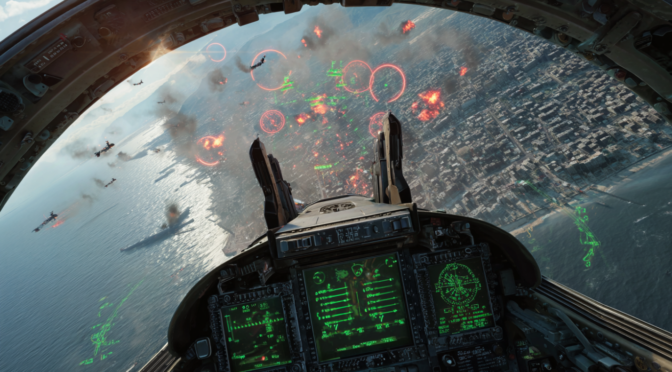
No Fly Zone

Fiction Week

By Bryan Williams

RAMONA, CALIFORNIA.
1416R hours. 25 MAY 2029.

Go figure, it all starts when he’s in the shower.

He’s standing there in the cold water washing off the stink when the lights quit. Ah, nothing unusual. Just a freak power outage. Someone probably crashed into a utility pole or something, right?

Right.

So, he continues, still trying to clear his mind when the ground shutters, then rumbles in succession. Earthquake? Maybe that explains the lights.

“What the hell?”

Since when did earthquakes feel like that?

There’s a shimmy. Then a jolt, a big one. Then another one, the repetition getting faster as the shampoo tumbles off the shower rack. No freakin’ way this is ‘normal,’ and if anything, his stepdad confirms it by banging on the bathroom door.

“Hey, Shawn!” Tom shouts. “SHAWN!”

“What’s going on?”

“I think we’re being bombed or something! Get out here!”

No one has to tell him twice. He’s dried and dressed in seconds, nearly falling down the moment a bright flash beams through the small window. Instinct has him hit the deck, waiting, and waiting, and waiting until an enormous thunderclap strikes the house, the overpressure wave nearly shattering the windows.

“Did they nuke us?”

“I don’t know.”

“You okay?”

“What the hell was that?”

“I don’t know.”

Cellphone. It still works. No EMP equals no nuke, so his first thought is to call Nicole.

NO SERVICE.

Of course not. Then he tries the Maps app.

NO GPS SIGNAL. 

Internet? He tries the news.

NO INTERNET CONNECTION. 

Same problem on Tom’s phone. They hear slews of police sirens now as if every emergency vehicle in California was summoned simultaneously, but one grows close as the Sheriff neighbor pulls up, passenger door flung open, and not an ounce of hesitation to take Shawn to the burgeoning fight.

“Where we headed?” he asks. “Miramar?”

“No. Ramona Airport.” Shawn says, piecing it all together himself. “We finished moving stuff there yesterday morning.”

“Well, good thing. Radio says Miramar’s toast. San Diego International. North Island. The whole naval base is hit. Got every squad in San Diego headed down there.”

They’re stunned by the sight of the New Ramona Oil Refinery burning, itself a moment interrupted by the whine of a little jet engine overhead, Shawn looking up to instantly identify a cruise missile in its terminal phase, diving down to explode amid the new construction.

Emotions mix. Fear. Disbelief. Rage.

Emergency alerts flood the radio. Traffic gridlocks. People panic. No telling what’s going on nationwide, but at the very least, Ramona Airport is still running as they pull up to the gates.

“Do me a favor.” says Shawn as he opens the door.

“Yeah, anything.”

“Tell mom, Mitch, and Tom that I love them. Okay?” he extends his right hand, shaking the Sheriff’s firmly. “If I don’t make it back, please—”

“I’ll tell them! Don’t worry! Go get em’!”

Shawn nods, opening the door, savoring the very last moment he wasn’t at war.

________________________________________


There’s his jet, a leftover hand-me-down 40-year-old Legacy Hornet, flaky paint and all, but it’s armed and ready.

He’s up the ladder and in the cockpit, helmet fastened, strapped into the seat as the engines whine, their turbines spooling up as he runs through the startup sequence and closes the canopy. Then he gives a thumbs up to the ground crew, who either heroically or suicidally guide him out into the open, yelling for him to go as the AA guns in the distance open fire towards the west.

Shawn gets the point and rolls onto the taxiway just as another Hornet pulls up into the sky, both engines belching smoke as the canopy pops and out shoots its pilot.

“Holy shit.”

It crashes in the distance.

Finally on the right comms channel he hears the tower screaming, “FOD on the runway! FOD on the runway!”

He stops, watching in stupor as two pickup trucks ram away the wreckage.

Shawn judges the distance. Maybe a half mile. Maybe more.

Can I make that? Dammit, can I make it?!

Thirty minutes in and the taxiway is all we got? Shit.

Full flaps. He stands on the wheel brakes and says a prayer. This is it. Do or die. Two choices: get bombed on the tarmac, or die trying to fly. He’s no hero, but he’s going with option two.

Afterburners.

The F404s roar. He’s gaining speed, but that blown up hangar at the end of the run seems mighty close. Too close. So close in fact that Shawn debates whether ejecting is a better idea.

Make a choice! Make a choice! MAKE A CHOICE!

150 knots. Should be enough, right?

Rotate! ROTATE!

He pulls the joystick and the nose rises sharply, the wings buffeting, the fuselage pogoing as the wheels leave the ground, the damn stall warning beeping away.

Too hard on the stick! Shit!

Then, at maybe 50 feet of altitude, he ignores his instincts and lets the ole Hornet eat, nose back at high alpha just after the stick release as he pulls hard again. He crosses over a group of soldiers beneath him, all looking up at him as they run, the peak of that damaged hanger approaching in slow motion.

Oh, god, he’s not going to make it.

Not enough altitude. He tried, but it’s not enough!

All this, and he’s going to clip the roof!

Eject, or ride this out?

Now or never. Now or never, Shawn!

All he can do is close his eyes, just waiting for it all to end right here. He sees the obituary now: “First Pilot on Scene of World War III Dies During Takeoff.”

What a shameful way to go. Even for a subpar pilot like him.

But it isn’t the end, because with no more than 10 inches of clearance between the rear wheels and the hangar roof that they barely clear, Shawn opens his eyes surprised to be alive, looking back as he climbs away, just as a trio of cruise missiles open up their cluster munition warheads and pulverize the area he occupied just seconds ago.

He screams aloud, “Hooooooly shit!”

And at 2:36PM Pacific Standard Time, May 25th, 2029, Lieutenant Shawn Paxson, the ‘failed’ prodigal child of his soon-to-be Joint Chief father Admiral James Paxson, takes to the sky in his DoD surplus F/A-18C Hornet.

History is made here. He just doesn’t know it yet.

________________________________________


Gear up. Flaps retracted.

He settles at 390 knots.

Is that too fast? Or too slow?

Where’s my kneeboard?

What channel—HOLY F–!

Just like that, he’s pulled a last-second barrel roll atop a twin-engine airliner.

Quick sitrep: No Air Traffic Control. No ILS or MLS. No GPS. Nothing.

He sees at least six more flying blind through the airspace less than a mile apart, wings banked and noses hunting for somewhere to go.

Just don’t shoot one down!

He has to wait for orders and targets, but what if, considering the radio silence, he never gets any? He flies in circles, seeing Ramona Airport ablaze, the tower blown to bits as fires bloom, but he sees another Hornet in the mirror hot on his four-o-clock trail. It closes quickly, tipping side to side to wave its wings amidst the radio silence until the pilot briefly pops his visor up.

Ah, yes. That’s Jamie. Weird guy, but decent pilot. No better or worse than Shawn. He points and waves, but Shawn points west, trying to direct him that way.

Thirty minutes into World War III and they’re down to hand gestures, at least until he hears the first friendly voice through the static since Ramona Airport’s tower was hit.

“All players, all players on this emergency channel, this is MOP 1-0-0-5 on Guard for Emergency Combat Air Patrol! Any CAP-capable flights report to MOP 1-0-0-5 on Bravo-Six-Zuu! Say again—”

Don’t have to tell Shawn twice.

He switches to the Mission Operator’s channel, trying to hear through the clicking and beeping sounds, all evidence of enemy jamming from an unknown source.

“This is—” shit, what the hell is his callsign? Check the kneeboard, “—SPIFF 46-3 and 4, two Hornets up, flying north! Requesting, uh, Bogey Dope.”

A pause, then, “Thank god! SPIFF 46, be advised. Bandits! Bandits! LACMs (Land Attack Cruise Missiles) and PALMs (Precision Attack Loitering Munitions) inbound battlespace BRA 2-7-0 for, uh, wait. SPIFF 46, right?”

What the hell?

This guy sounds like he’s barely holding it together on the other end, “Yeah, SPIFF 46 to MOP 1-0-0-5. Bogey Dope on bandits. You said—”

“—SPIFF 46, I’m showing you merged!”

WHAT!?!

Shawn’s eyes hunt around, first to the radar, then left and right outside of the canopy. He sees nothing. Plus, how the hell isn’t Jamie on the comms yet? What the hell is he doing? He looks over at him, ready to gesture when his voice suddenly breaks in.

“3! Look down! LOOK DOWN! NINE-O-CLOCK LOW! LOW!”

His head cranes left as the jet rolls, his eyes hunting around until he sees one little glint. Then three. Then seven. Holy hell. It’s a swarm of them flying by, slinking around the hills below as he peers up and gauges the surroundings before he commits.

It’s different with the overhead view, his eyes panning to the horizon out west, seeing the billowing smoke from San Diego and the port, the contrails of surface-to-air missiles rising from the air defense batteries and the ships still stuck in the San Diego Bay.

Oh my god. Oh my god.

Master Arm switch toggled.

Radar in BORESIGHT mode.

The Hornet flips inverted, its nose aiming square for the ground, Shawn squeezing his legs to keep the blood going to his head. He’s got the armament for this. Sure, months and years ago it seemed pretty dumb to be relegated to a shitty old jet for drone swarm and cruise missile killing, but off the Hornet’s wings hang a set of four LAU-61 rocket pods, each one packing a jerry-rigged kit of AGR/AAR-30s, little mini-rockets repurposed to lower interception costs in these predicted situations. 76 in total, all laser-guided from an empennage fixed to the leading edge of the pod, these little makeshift air-to-air missiles are among the only things able to push back against Southern California’s overwhelmed air defenses.

“SPIFF 46,” Shawn’s got the JHMCS visor ready to roll, “we got a group of uh, unknown TOIs heading 0-9-2. They look like small drones or cruise missiles. Request—”

“SPIFF 46, you are cleared to engage! Engage any and all hostiles in battlespace!”

Well, that clears it up.

The Hornet rolls left, then right around the hillside, the smoke rising from Ramona ahead as he lines up the jet, nose filling in behind the group of little black planforms.

Radar slews to them, cueing the lasers. He can lock up to eight at once, but they’re varying their headings, acting much like a flock of migrating birds versus the hapless duds he’s seen in training ops, but he isn’t surprised that cruise missiles, drone warfare and loitering munitions have come a long way since Ukraine, Israel, and Yemen.

“Ramona, you’ve got incoming! Another group of bandits inbound 0-2-2!”

What was once eight cruise missiles is now two groups of four, and then three groups now, two in one, three in another, two diving into the ridgeline behind the hills, and wait, is that last one climbing towards him?!

What the—?

 There’s no time for shock. He hears the blinking acquisition tone, waiting for it to ring solidly until he hears Betty,

SHOOT! SHOOT!

He hits the uncage button like God almighty possessed him to do so. Eight times in quick succession, rockets spew from beneath the Hornet’s wings, alternating left and right, each little missile popping out its fins and streaming to the target like hyenas heavy for a meal as Shawn holds his breath to watch.

The first five AAR-30s detonate dead center of their targets, igniting the cruise missile warheads in spectacular fashion. He pulls up instinctively, hearing debris pelting the jet’s belly, praying he doesn’t FOD an engine or two, but he’s okay, nosing down to reassess.

Five kills, but three misses. That’s a failing score since he was in grade school, but it’s surely better than nothing.

“SPIFF 46-3, splash five!”

The combat cameras are rolling, recording every move he makes. They’ll have all his data. They’ll tell him what he’s doing wrong, but until then, he sends five more rockets to finish the last three with overkill.

God, rookie shooting over here. Clean it up, man!

 “Splash three!”

Then he hears Jamie, “—SPIFF 46-4, engaging bandits 2-9-1, inbound Ramona from the east. Group of twelve!”

The EAST!?! What the hell?

Shawn looks in that direction, his JHMCS highlighting his wingman just three miles away as he follows the little enemy missiles, all slinking away at a two-story home’s height above the ground.

Could it be? Are people launching missiles and drones from inside the United States? Or maybe they’re flying pre planned routes? Maybe, in the logic of their AI hivemind, they’re adjusting to avoid air defenses, but that doesn’t matter right now. He has just has to kill them.

“SPIFF 46-3 to MOP,” he says, “I’m still tracking six more bandits headed north off my nose, following Interstate 15. FOUR, do you see them?”

Then Jamie says, “Got em! Just passed Costco!”

“SPIFF 46-4, is that the—what road?”

“Scripps Parkway!” Jamie yells. “Fox Three! Fox Three times five! Splash!”

“Okay,” Shawn rolls the Hornet left, right above a parking lot filled with onlookers, his altitude so low that he swears he can see their individual faces, “I’m taking three more! They’re terminal! Hold on—Fox Three! Shit!”

He can’t fire. The little cruise missiles are already in their final dives, risking collateral damage if one of the AGR/AAR-30s either misses or hits its mark too late.

Still, he’s got an idea, a bold one like he’s John-freakin’ Wayne. Shawn flips to GUN, kicks the rudder and with a deep breath he squeezes the trigger and holy hell, he’s splashed one! Add a little nose up pitch at the last minute, a quick 7.5g pull and he’s taken down another. It’s spiraling now, exploding into a trail of flames as he tail-slides back towards the ground below, helplessly watching as the other enemy missiles hit their marks straight into a handful of buildings.

“MOP we got buildings hit! Buildings hit!”

“Did they bomb the fucking Costco?!”

Later reports will clarify that these are corporate offices and laboratories belonging to General Atomics filled with employees that are just going about their daily routines. Just another Friday until it isn’t. . . aka when a Chinese Tomahawk equivalent detonates its warhead dead center of the structure.

And what does he do? Watch in horror as ole’ Betty bitches at him.

ALTITUDE! ALTITUDE!

PULL UP! PULL UP!

Shit. He’s going to nosedive into the fucking ground, so he’s straining against the g-limiter override, hearing the fuselage creaking around him as his vision fades for a moment, joystick pulled to a point where it could castrate him.

This is the beauty of the Hornet, the ancient, ‘unsexy,’ busted and tired old jet that it is. It forgives so well, saving even the most moronic of pilots like Shawn Paxson by pulling such a high alpha that the vapor clouds later find their way on local television when they cover him as a hero.

On a normal day, nearly flying his jet into a goddamn Costco car wash would be a guaranteed grounding, but today? Shawn’s the hero as he somehow pulls out of it like he’s leading the Blue Angels in a local airshow, forming up right next to Jamie who’s peering over out of his canopy like he’s seen a ghost.

To those on the ground either dumb enough, or bold enough to whip their phones out and record what they’re seeing, he’s the man. He’s the soon-to-be legendary fighter pilot that faced overwhelming odds and opened up the M61 cannon as a last-ditch effort to save lives, and mostly succeeded.

They’ll never forget him. They’ll never chastise him.

Because even in the opening hours of America’s darkest day, he represents something that until now had faded away into a distant memory.

The fight. The perseverance. The coming rebuke of defeat from a country so bitterly divided that its newly sworn enemies played their hand in a decapitation strike and seriously thought it would work.

And for a few minutes it did, but to Shawn’s pleasant surprise, Miramar’s not entirely gone. He hears the status call of SHADOW 77, a flight of four Legacy Hornets rushing to engage a new line of bandits inbound from the ocean, each hauling their own set LAU-61s all the while. Blasting towards the Pacific, he passes by Miramar’s giant smoke plumes, spotting his new Hornet friends, talking with them and Jamie as they watch the US Navy’s surviving vessels unleash their air defense ordnance on the second onslaught.   

The sight alone gives him a new wind, a hopeful contrast versus the sight of San Diego burning below as a voice breaks in, more frantic than ever,

“MOP to SPIFF 46, attack warning! Attack Warning! Bandits! Bandits! Group of one hundred forty-five plus inbound B-R-A 2-2-5 for—uh—57.”

Did he say 145?! One?! Hundred?! Forty?! Five?!

Yep. Sure did, but he’s not alone. Not anymore.

After all, he’s nothing to write home about, eh?

Just a run-of-the-mill Marine fighter pilot, eh?

Proudly, and with great emotion, he looks side to side, filling into formation with the other Hornets, banking left until the blue abyss of the Pacific covers the span of his view.

“SPIFF 46, SHADOW 77,” he directs, “turn 2-2-5 for CAP! SPIFF 46 will take the southern targets, SHADOW 77, you take north! Copy?”

“Copy!”

“Okay.” Shawn takes a deep breath. “Let’s go!”

Afterburners. . . .

Bryan Williams is a mechanical engineer who previously worked in the automotive industry before moving to upstream materials and packaging development as a senior scientist. He is an aviation and combat aviation fan, still chasing his dream of becoming a successful novelist. He is the author of The Underground Kings, and has recently finished two novels, including the military thriller Bandit that includes the full story of what is depicted in this excerpt.

Featured Image: Art created with Midjourney AI.

Habeas Corpus

Fiction Week

By Jay Turner

The ocean was calm off the coast of Virginia as Jake settled into his captain’s chair on the bridge wing of his Navy destroyer. The morning breeze was fresh and chilly, and he tucked his exposed neck deeper into the collar of his foul-weather jacket. It was springtime, the sun glimmered on the wavy sea surface and the boaters were out, but the temperatures were still dropping into the 50s at night. Overall, it was a beautiful day at sea.

He received a strange email from his wife this morning that the FBI raided a house in their neighborhood and taken away their neighbors, Rick and Susan. The neighborhood Facebook page was alight with discussion centering on the rumor that they had been flagged as “ANTIFA” activists after attending a rally in Virginia Beach to support an electoral candidate. At the rally, some people had brought fruit to throw and lit firecrackers, several were arrested. The raid on their neighbors’ house was executed in a SWAT fashion, in the middle of the night. There were photos posted on Facebook of the black trucks cruising through the neighborhood and their neighbors lying handcuffed on their manicured lawn.

Although the ship was underway for a short training mission, it was carrying a full complement of weapons and had been through the normal training cycle in preparation for an upcoming Middle East deployment. Jake was sipping on his second cup of coffee as the day began to warm up when he received a call from the Combat Information Center (CIC). The Tactical Action Officer (TAO) was requesting his presence. He hustled the three decks down, navigating the steep ladders easily after years of practice. The TAO showed him a chat from the Strike Group Commander, the first Admiral in his chain of command, with an odd tactical order. He was to launch a helicopter and proceed 30 miles to the east, locate a privately owned motorboat, and once a positive ID was established, his direction was to “engage with 5-inch guns until destroyed.” 

He paled at the order. It was something he had never seen before. Was this a terrorist threat? The TAO was noticeably shaken and pale as he pointed to the name of the boat, Telluride. “Sir,” he said, with a shaky voice, “I know the owner of that boat – he lives in my neighborhood – what’s going on?”

Jake took the ship to battle stations and ordered the Officer of the Deck to start the ship moving in the direction given by the chat from his Commander. He launched the helicopter and ordered it to fly off to the east, toward the motor vessel Telluride. The helicopter crew was able to determine that the boat did have the correct name, and there were four people on board. This information was relayed back to the Strike Group Commander, and they were told to reach out for a final positive identification. The Bridge-to-Bridge radio they used to hail the boat could be heard in CIC. The TAO ripped the headphones from his head when he heard the voice of his friend and neighbor answer the call over the radio. He turned to Jake and said, “Captain, I will not be part of this. I do not believe the extrajudicial killing of U.S. citizens in territorial waters is a lawful order. I request to be relieved from watch, and you can impose whatever sanctions or consequences you please, but I will not execute this order.”

Jake called down the Combat Systems Officer to take the TAO watch and called a meeting with his Department Heads and Command Master Chief. They discussed the order and its implications, but at the end of the discussion, Jake knew that he alone had to decide how to proceed.

At this point, he had been in the Navy for 22 years, starting at the United States Naval Academy, and working his way up through the ranks to command a Navy destroyer. He loved the Navy and his country. He had been imbued with a sense of duty to follow orders and carry out the nation’s business since he was 18. He had been to war, defending merchant vessels against drones shot at them from the Houthis during his deployment as Executive Officer on the same ship last year. He considered himself a good leader and a solid tactician, but he had never come up against something like this.

Politics aside, he thought back to his leadership and ethics courses, including such topics as rules of engagement and the law of the sea. The idea of attacking a vessel that presented no physical threat, and then making no effort to pick up survivors, seemed abhorrent to him. And yet the order implied exactly that.

He realized that he did not have much time to act. He thought about his mentors and his father, his family, and his neighbors, all individuals that he could normally lean on for advice, but suddenly he felt very alone.

He sat with his thoughts for about five minutes, which seemed like an eternity. With more resolve than he expected, he picked up the red confidential telephone and reached out to his direct superior, the Commodore. He had been underway for several days and had not seen the local or national news in detail, but the Commodore explained that the group of individuals at the rally had been declared to be part of ANTIFA and declared members of a “domestic terrorist organization” under the new executive order issued in September 2025. This put them in essentially the same category as the suspected Venezuelan drug boat crews who had been attacked and destroyed in the Caribbean by U.S. forces earlier this year. Apparently, the individuals on the motorboat Telluride, like his neighbors, had been at the rally and had been declared hostile to the United States as members of this domestic terrorist group.

There was a desire to make a bold statement via a show of force – hence the order to attack instead of making an arrest. “And,” added the Commodore, “make sure you get good video.”

Jake took a deep breath, aware of the implications of what he was about to say. His heart was racing as he said, “Commodore, I have received the order to destroy a civilian commercial boat, and I understand the direction given and the reasoning behind it. I do not intend to carry out what I consider an unlawful order and will not give batteries release for the destruction of motor vessel Telluride.”

There was silence on the line, and then the Commodore told him to stand by. Several minutes passed before coming back on the line: “Jake, listen to me carefully. Either you execute the order as given or turn over command of your vessel to the Executive Officer. Do you understand?” Jake stared straight ahead as he replied, “Yes, sir, I understand. I will turn command over to the XO.” He took a deep breath, closed his eyes, and put down the receiver.

Before heading to the bridge, he called up to the Officer of the Deck and gave the order to break off the engagement, recover the helicopter, and turn the ship west towards Norfolk. He quietly sipped his coffee, sent a note to his wife on the computer that he loved her, and opened the desk drawer where he kept his 9 mm pistol. He stared at the gun for a full minute, then shut the drawer.

As soon as the helicopter landed and the motorboat was over 15 miles away on the horizon, he walked up to the bridge and reported himself to the Executive Officer. He said simply, in a loud voice, “Attention in the pilothouse, this is the Commanding Officer. I relinquish command to Commander Smith. I will be in my cabin until we return to port.” There was a stunned silence on the bridge, and many of the crew hung their heads. Some breathed a sigh of relief, some rolled their eyes. One clapped but was quickly silenced by a glare from the XO.

As he prepared to leave the bridge, Jake heard a noise in the sky. He and the Executive Officer both looked up to see a small drone pass overhead with a low humming noise, traveling at an altitude of 500 feet as it disappeared to the east. About a minute later, a small puff of black smoke appeared on the horizon. Jake closed his eyes for a moment, then heard the muffled boom of a distant explosion.

Slowly, he descended the ladder towards his cabin. His life, like that of many others, would never be the same.

Jay Turner is a pen name for a retired naval officer.

Featured Image: Art created with Midjourney AI. 

Locks and Shadow Swarms

Fiction Week

By Philip Kiley

The pilot boat’s horn cut twice, a warning that flattened chatter across the lock wall. LT Mara Delgado raised her head from the operations console as a bright speck wavered over the Miraflores chamber, a silver seed fighting against the crosswind. Someone near the observation deck shouted. The quadcopter dipped, steadied, and then kamikazed toward the pilot boat’s bow.

The coxswain threw the helm over. The drone missed by a breath and pinwheeled into the fendering with a brittle snap that sounded smaller than the video would later make it. The pilot boat’s wake sloshed against concrete. Phones went up in a twitching forest of arms. The containership in the chamber blew a long, angry blast that made coffee ripple across the ops room desk.

A news ticker crawled beneath the surveillance feed, half ignored by the ops team: Panama Canal Coalition ministers reaffirm joint stewardship; U.S. chairs safety board this quarter. The line blurred into weather alerts and insurance warnings, but the reminder was constant, an allied consortium led by Washington now managed the Canal’s safety and operation.

“Not a toy,” Mara said.

Across from her, Engineer Rogelio Paredes sat with his hands tented beneath his chin. His cuff was damp with sweat or the ever-present humidity.

“Accident,” he said. “A yacht lost a toy.”

Commander Ethan Rowe, on liaison orders and already impatient with the room’s mixture of civilian engineers and administrators, leaned on the console and peered at the playback. “You don’t throw away two thousand dollars by mistake, and you don’t test a ship’s luck where it can’t move. Drones make a sitting target of a carrier in a channel.”

On the wall screen, a social feed erupted in captions and looping clips. #CanalAttack popped up, as did an insurance desk’s automated alert banner: POSSIBLE INCIDENT — REQUESTING RISK UPDATE.

Mara muted the feed. “Miraflores, status,” she said into her headset. “Any damage to fenders or the pilot boat?”

“Negative,” came the reply. “Plastic bits in the basin. No injuries.”

“Then we do not give the world reason to panic,” said Paredes. “We have a schedule.”

They had more than a schedule. The drought had shaved inches off Lake Gatun, inches that translated to drafts and tonnage and the velocity of money across oceans. The Canal Authority had been using water-saving basins, cross-filling, everything short of rainmaking. Someone had scribbled on the whiteboard: 36 HOURS — LNG WINDOW. When the level dropped again, the heavy gas carriers would have to wait. And risk did not like to wait.

In theory, drones were an amplifier to airpower rather than a force that redrew frontlines. In practice, Mara thought, they were a perfect weapon for the canal: cheap, anonymous, and deadly where maneuver was impossible. A tanker in a lock had the evasiveness of a parked building. Against a swarm that used surveillance to find a seam and kamikaze strikes to exploit it, the ships felt exposed.

Rowe tapped the whiteboard. “Your window just narrowed. If the insurers decide transiting is unsafe, they’ll price the crossing out of reach.”

“Not if we do not feed the fire,” Paredes said. He looked at Mara. “Lieutenant, we will maintain safety messaging. Hobbyist drone. No deliberate intent.”

Mara adjusted her headset to hide the flicker of annoyance on her face. She had learned in her first week at the Canal that the infrastructure was as much a stage as a machine. The world watched every squeak of gate and wash of water for signs of weakness.

“Copy,” she said. “No deliberate intent.”

She didn’t believe it, and she could tell from Rowe’s silence that he didn’t either.

____________________________________________

By evening, the coalition board was restless, insurers dialing up their risk models. The Canal Authority issued a Special Transit Order before doubt hardened into cancellations. It was written in the calmest language they could craft: three LNG carriers, staggered entry, all safety measures, minimal public drama. The word drought appeared only once, as if to name it would make it worse. The order carried a request: Lieutenant Delgado will act as convoy safety officer.

Mara skimmed the line twice. She did not protest. Her orders had pulled her from a cluttered emergency management office in Miami to this control room with its domed cameras and stale coffee smell because she was good at threading people and procedures through chaos without making noise. They needed that now. She texted her mother in Spanish that night, a quick I am fine, the work is busy, it is beautiful here. Her mother sent back six praying hands and a photograph of the cousins eating pastelitos in Hialeah.

At the evening coordination meeting, Paredes sketched the plan with markers on a laminated chart. “We will take advantage of the basin cross-fill,” he said. “Miraflores to Pedro Miguel, Pedro Miguel to Gatun. The carriers will not move nose-to-tail. We stagger entries to preserve levels.”

“Spacing helps risk too,” Mara said.

Rowe nodded, but didn’t smile. “Spacing makes each ship a more discrete target.”

The word target hung a beat longer than the others.

“Words matter,” Paredes said. “We have no target. We have ships, and we have water. We also have tourists with cameras.”

“And we have someone with drones,” Rowe said.

“Someone with a hobby,” Paredes said.

Rowe looked at Mara. “Do you want to bet your license on hobbyists?”

Mara kept her voice even. “I want to bet my license on not creating a headline. We can harden without turning this into a war movie.”

Paredes lifted a finger. “Exactly.”

Rowe exhaled through his nose. “Fine. Harden with your theater lights off. But if you see something that even smells off, you act, you don’t present a PowerPoint.”

Rowe cut in before Paredes could finish, tapping the laminated chart. “This isn’t just Panama’s headache anymore. The coalition board wants those LNG carriers moving, Washington in the chair, Tokyo and Madrid watching every metric. If we slip, we don’t just answer to insurers, we answer to twenty different flags.”

____________________________________________

AIS showed a tug called Santa Marta drifting off Taboga Island, but the radar signature was bigger than its paperwork suggested. Mara flagged it; Paredes shrugged it off as a transponder error. Rowe wasn’t convinced.

“A wolf in tug’s clothing,” he muttered.

The name tugged at something in Mara’s memory, a line from a regional intelligence brief she’d skimmed her first week in-country. Analysts in Bogotá and Miami had worried aloud about “low-cost disruptive capabilities” targeting chokepoints in the Americas, the Canal mentioned but never underlined. Nothing specific, nothing actionable, just another vague paragraph buried beneath piracy statistics and cyber intrusion data. Still, the phrasing stuck with her: Aden, Yemen reborn, only this time with algorithms.”

Now, staring at Santa Marta’s heavier radar return, it no longer sounded academic.

The tug’s false transponder remained an itch in her head. She chased small things that day, a patrol report about an unlit vessel sliding along the breakwater, a pilot’s offhanded complaint about a “toy” crossing their path, and then, at a warehouse inspection earlier in the week, a manifest that did not sit right. In a crate stamped MARINE SPARES she found neatly packed lithium cells, the kind sold in bulk to electronics shops and cheap enough to make a drone swarm disposable. Alone on the dock she pictured carbon-fiber arms and tiny autopilots clipped to those batteries, a hundred plastic insects with a single-minded, replaceable life.

By the time she left the chandlery, the pilots were whispering. Confidence is contagious in both directions; worry moved through the pilot corps faster than any official notice. The coalition was restless, and the insurers were already turning their calculators. The 36-hour LNG window on the board ticked like a clock.

It was not a case for a PowerPoint. Evidence would come, if Santa Marta slotted into the usual bureaucratic traps, but evidence came too slowly when tonnage and weather had a timetable. If someone wanted to exploit the drought, they would do it in the hours that mattered most.

So Mara drew on the whiteboard, erasing as fast as she wrote. “We stage a decoy barge with a lure and false schedule. It won’t be a tanker, but it will look like one on the trackers, a dummy stand-in to draw their attention. The real convoy enters staggered, under cover of the drill.”

Paredes pressed his temples. “If this leaks, the coalition will accuse us of theater.”

“It’s survival,” Mara said. “They can call it whatever they like.”

Rowe leaned in. “Fine. But you own it if it goes wrong.”

“I own it,” she said.

____________________________________________

Later that night, under the hum of diesel pumps, the decoy barge crept toward the locks, its false transponder flashing the identity of a full LNG carrier. The real tankers waited upriver, engines idling, their silhouettes blacked out to satellites and livestreams alike.

Dawn was just a thinning of the dark when the first drones came, two, then four, then six, whining like angry bees. They arrowed straight for the decoy’s heat and radar signature. One clipped the rail and shattered. Another struck high on a lock fender, scattering screws across the concrete like hail.

The real LNGs held position in their basins, their rudders barely twitching within the narrow confines. All that mass, nowhere to go. The drones didn’t need accuracy, any ship in the channel was an aimpoint.

Another drone found the lure and exploded harmlessly against the barge’s hull. Off Taboga Island, the tug Santa Marta, the same vessel Mara had flagged days earlier, lit up the radio net with a sudden “medical emergency.” Its engines spooled to full.

Mara leaned over the console. “There it is,” she said quietly. “That’s our launch platform, it has to be.”

Rowe’s hand hit the desk. “She’s running for the edge of jurisdiction. Take her down now.”

“Not with the world watching,” Mara said. “We soft-block her inside the channel. Docking issue, not a firefight.”

The operations center dispatched an intercept team. The patrol boat swung across Santa Marta’s bow and signaled to heave to. The tug hesitated, then eased back toward the quay as if it had planned to dock all along. Boarding officers went aboard calm and professional. Under the tarps they found racks of drones, charging cables, and spare carbon arms. The tug was no tug at all.

Behind them, the decoy’s smoke drifted away over the water. The three real LNG carriers made their transits later that morning, unharmed, the damage limited to scorch marks and scattered drone debris inside the lock.

____________________________________________

They issued the press release at noon. The final draft circulated with coalition letterhead across the top: Panama Canal Coalition — Joint Statement. It praised resilience, thanked “international partners for their steadfast stewardship,” and referred to the drone wreckage only as “malfunctioning hobby devices.” The statement boasted of drills and resilience and the importance of the Canal to global commerce. It did not mention Santa Marta or the decoy barge.

The second LNG carrier transited under a sky so blue it looked synthetic. The third entered with tourists recording from the overlooks. The pilots worked with the muscle memory of a thousand quiet crossings. Rowe spent the afternoon on calls full of words like escalation ladder and confidence building. Paredes drafted a memo titled Program for Physical and Electronic Hardening of Lock Approaches, benches that doubled as bollards, new rules for drones, and fences disguised as landscaping.

Mara walked the lock walls at dusk. The water breathed. A dragonfly drifted across a launch’s wake. She leaned on the rail, remembering her father teaching her to thread a needle on a rocking porch: don’t fight the motion, move when the wind does. She thought of the Santa Marta captain’s hot lies about a sick crew member, and of lithium batteries and drones on board without an adequate explanation.

At midnight she wrote her mother that it was still beautiful here, that she had eaten a mango that stung her lip, that she had learned a new word for the day’s wind. She didn’t mention the drones. She didn’t mention Santa Marta. She promised to visit in September, and she meant it.

The morning came with a freighter’s horn rolling across the houses. The decoy barge sat tarped in a maintenance lane with a stray cat asleep on it. Insurance sent a qualified sigh. The social feed moved on to a football match.

At noon a new tug took Santa Marta’s place off Taboga Island. Its AIS was clean, its radar return matched. Confidence was the product, and it sold another day of normal.

Mara sipped coffee gone bitter in the pot and watched the locks cycle. The Canal had two lanes carved into the isthmus by men who had died and men who had been paid, and water that could be commanded only by gates. The third lane was not concrete. It was belief. If the world believed the Canal would hold, it would. If they believed it would fail, it would fail faster.

She grimaced at the coffee and smiled at her reflection in the glass. Neutral did not mean safe. Neutral meant necessary. It meant being the gap in a ridge where the wind always blew, and learning to stand there without being knocked over.

The afternoon thunderheads built and did not break. The water whispered through the basins, and for that day at least, it was enough.

Philip Kiley is the Senior Reserve Officer of U.S. Coast Guard Base Cape Cod. His career has brought assignments in port security and emergency management.

Featured Image: Art created with Midjourney AI. 

Phantom Cable

Fiction Week

By Sandro Carniel

The bridge of the offshore patrol vessel Frosch smelled of diesel and wet steel — the residue of a storm that had just lashed the Barents Sea with four-meter-high waves. Commander Jonas Meyer bent over the tactical display, his eyes following a jagged line of red anomalies pulsing on the screen.

Behind him, Dr. Aisha N’Dour adjusted her headset over still damp curls and sat at the auxiliary console. She rarely left her post in the labs below deck, but tonight her acoustic models were feeding directly into the ship’s combat systems, and she knew her presence was required. That was why she had climbed one deck up — and why she hadn’t bothered to properly dry and straighten her hair.

“Commander, I need to reconfigure the sonar parameters,” she said firmly, eyes fixed on the keyboard. It wasn’t a request so much as a concise notification.

Meyer raised an eyebrow, hesitated a moment, then replied with equal firmness, skipping the academic title she had earned — PhD in Acoustic Oceanography, after nearly four years in a joint program between Lisbon and the Shanghai Climate Center. “That’s my weapons officer’s job.”

“Not tonight,” Aisha replied, more quickly than she thought she was capable of. “Your sonar arrays are calibrated on last year’s sound propagation profiles. But after that warm surface layer we’ve just encountered, reshaped by the storm’s mixing,” — she pointed to the orange gradient on the screen overlaying the blue — “the sound bends upward. If we don’t recalibrate now, we won’t see what’s hiding below the thermocline — the sharp temperature step dividing warm and cold layers.”

Meyer’s jaw tightened. He knew the IMARC — the Intergovernmental Maritime Research Center — had insisted that a climate scientist be on board for exactly this reason, and that their written orders specified that in case of conflicting priorities, she would have the final word. Still, part of him struggled to accept it. So he decided to challenge her. “And what do you think is hiding down there?”

Aisha stared at the streaming anomalies. “Intruder drones. Maybe dozens.” Her eyes flicked rapidly from one point on the display to another without moving her head. “And they’re using the storm’s noise as cover.”

On paper, this was supposed to be a routine sea mission: protect a newly-repaired Arctic data cable, the Polar Thread, connecting the Svalbard Islands to mainland Norway. The repair had been completed just two weeks earlier, after an extreme storm — fed by much warmer and more erratic currents than usual — had caused a slight torsion and micro-fractures along the main joint. The operation required a team of specialized divers and maintenance drones to reinforce the sheath and verify the sensors’ integrity.

Even though the work had been executed flawlessly, the Commission on Critical Undersea Infrastructure Risk knew that every newly repaired cable remained a weak point: a sudden environmental fluctuation or accidental contact with a hostile drone could trigger catastrophic outages. The Frosch had been dispatched precisely to monitor the cable’s “recovery” during another, milder storm — still strong enough to jeopardize the repair.

Just hours before departure, the Maritime Intelligence Center had circulated a classified alert: long range interceptions had picked up fragmented radio chatter between two civilian-flagged fishing vessels, identified as shadow assets of a rival nation. The communications referred cryptically to “broken threads” and “sleeping metal fish” — hints of dormant underwater drones possibly stationed near the Polar Thread awaiting activation. Command therefore ordered Frosch not only to maintain passive watch, but to operate at full alert — integrating all ship systems with the scientific models.

The Polar Thread carried petabytes of commercial and military command data daily between Europe and the Arctic. It also served as a vital anchor for environmental monitoring systems — sensors tracking ice retreat, fish stock evolution, and underwater acoustic data crucial for the Consortium’s “subsurface awareness.” All that information coursed through a cable barely thirty centimeters wide. Practically everything that crosses every smartphone’s palm — messages, calls, meaningless videos — passed through it too.

Cables like this were laid in another era, when the polar deep was quiet and still, shielded by thick perennial ice, far from shipping lanes, untouched by fishing — and certainly not contested by rival powers. But the Arctic was no longer isolated or predictable. The loss of multi-year ice around Frosch’s operating area had opened routes to fleets of commercial trawlers — and to hostile actors disguised among them.

The Consortium workshop held in Lerici, Italy, two years earlier had issued a clear warning:

“Climate change is a massive risk multiplier, capable of blurring the line between natural instability and human sabotage.”

Tonight, that warning was coming true. And Aisha was ready. She had worked for years for this. She wouldn’t let a naval officer sideline the science she had studied, refined, and embedded into classified algorithms and tested for months on synthetic data in her computing center.

“Contact bearing two-one-five,” the sonar operator shouted. “Unidentified echo, surface, intermittent.”

“Ghost net,” Aisha said flatly.

Meyer turned to her. “How can you tell? You’ve seen them before?”

“Only in simulation, with millions of synthetic data points,” she admitted, almost apologetically. “But enough to know what they could be — small autonomous bots seeded months ago, when no one was patrolling these waters. They lie dormant until triggered. Think of them as seabed parasites — underwater malware. And when they wake up, the underwater chaos of a changing climate — turbulence after storms, unstable temperature layers, strange bioacoustic surges — gives them the perfect acoustic cover.”

Another wave struck the ship, rattling the bridge lights. Meyer grabbed the railing, muttering under his breath. “And what’s their target?”

“If I had to bet — the joint of the repaired cable. If they damage it during a storm, it’ll look like a natural fault. Almost impossible for the Consortium to assign blame to any adversary. The current uncertainty of deep-sea law will do the rest — it’ll all be logged as ‘non-hostile damage.’”

Meyer couldn’t help himself. “Deploy sentry drones. Boost sonar signal. Weapons ready.”

The crew moved with trained precision, but Aisha shook her head with a faint smile. “That won’t be enough. Remember, your sensors are blind within the refracted ocean layer — they won’t guide the drones properly. I need to recalibrate first…”

She plugged her tablet into the console, overriding the system with her code. Waves of color flooded the display. “I’m integrating Frosch’s real-time oceanographic data — salinity, shear currents, wave height and direction from the storm. I’ll remap the entire acoustic window in under thirty seconds.”

Meyer didn’t like civilians taking control of his systems, but the Admiral had been clear — and the alternative, taking all the blame himself, was even less appealing. “You’ve got thirty seconds,” he said, checking his Submariner and nodding to the sonar officer.

The screen brightened suddenly, well before half a minute had passed. Tiny signals emerged from what had seemed chaotic clutter — now clearly a scattered formation moving along the seabed toward the cable junction.

“Confirmed swarm,” Aisha said. “About twenty units, maybe more. Flattened to the bottom to stay invisible. Clever — but they can’t hide their own thermal wakes. And in this new, warmer ocean, sharper temperature contrasts make those wakes stand out even more — at least to my algorithm.”

Meyer leaned in, surprised to find his right hand resting on her shoulder — right between the collar of her T-shirt and the strap of her bra. “How the hell… Our sensors couldn’t see them at all… Can we stop them?”

Aisha felt herself stiffen — not from stress, but from his touch. “If your small autonomous underwater vehicles, that you all name AUVs, borrow eyes from my model, maybe. You have to act like you’re scattering a flock of birds.”

Meyer almost smiled. “Now you’re speaking my language. Do as she says,” he ordered, integrating her data feed into the drones’ CPUs.

Two Consortium AUVs slid into the black water from launch tubes in Frosch’s hull, their propellers tracing faint luminescent trails. Guided by Aisha’s real-time model, they moved with surgical precision.

“Non-lethal interference charges ready,” the sonar operator reported, his voice trembling with restrained adrenaline.

The charges detonated in sequence — pressure waves and bursts of light calibrated to scramble the intruders’ sensors. Some small robots drifted apart, others froze, disabled. But a handful, now more aggressive, kept advancing toward the Polar Thread’s joint, moving like silent predators through folds of water.

Aisha’s fingers danced frantically across her tablet. “Some are breaching the refracted layer — they’re close. Changing signal gain — you’ll see them better now. Stop them before they reach the cable, but be careful not to damage it.”

Meyer gripped the railing, eyes fixed on the display. The storm still shook the ship, and each lightning flash above seemed to echo the tension below. “Countermeasures, Delta-three pattern — fire,” he ordered, steady-voiced despite his pounding pulse.

The AUV launchers expelled low-charge mini-torpedoes loaded with micro-fragments of synthetic coral. The shots struck with surgical accuracy, severing or jamming the manipulators of the hostile drones. Some floated powerless; others lay inert on the seabed. The Consortium AUVs kept sweeping the area while Meyer and Aisha held their breath for seconds that felt eternal.

“Commander, data flow through the cable is stable,” the communications officer finally reported, barely hiding his relief.

One by one, the warning lights faded. The sonar cleared — the Polar Thread was safe. The operation had succeeded without compromising the cable or disrupting data traffic.

Meyer exhaled slowly as he stepped out onto the deck, the icy wind biting his face, the adrenaline still coursing. “Well done, Doctor. We’d never have made it without your extra eyes. They let us spot and crush those little bastards while our sensors were blind.”

Aisha didn’t look up from the portable display she had carried to the deck, barely concealing her satisfaction. “That was just a small swarm. The corrected acoustic model gave us a tactical edge — but the real challenge will come when these conditions become the norm. Indo-Pacific sector, Mediterranean, and Black Sea…hundreds of cables, thousands of kilometers. It won’t just be drones — it’ll be the sea itself, changing faster than our doctrines. We need to redefine what we know about our waters. And we’re not moving fast enough.”

Meyer nodded gravely, eyes on the now-calmer sea. “And in the whole Consortium Navy, there’s only one of you to handle that?”

Aisha’s smile was thin, ironic. “One isn’t enough. We need trained systems, not saviors — adaptive monitoring, real-time climate models, autonomous defenses. Otherwise…” she gestured toward the waves still striking the hull, “…the sea will win. With or without enemies.”

The cold wind lashed her face, and for a moment the ocean seemed alive — unpredictable, untamable. But among the flickering lights of the Frosch, the steady data flow through the Polar Thread, and Aisha’s models revealing every micro-anomaly, the feeling shifted: the Consortium could still respond. With ingenuity, technology, and foresight, the battle was far from lost.

And that night, as the storm slowly faded, Meyer and Aisha both knew — the real war for control of the seas and their data had only just begun.

Sandro Carniel, PhD, is an Italian oceanographer, science communicator, and award-winning writer whose research explores the intersection of climate change, technology, and maritime security. He is currently Research Director at the Institute of Polar Sciences, Italian National Research Council, Venice, and member of the scientific committee of CESMAR, Centre for Geopolitical and Strategic Maritime Studies, after having served as Head of the Research Division at the NATO Centre for Maritime Research and Experimentation, La Spezia (Italy). Carniel has been presented with the Tridente d’Oro (an honor also bestowed on Jacques Cousteau and Jacques Mayol) and is an International Fellow of The Explorers Club of New York.

Featured Image: Art created with Midjourney AI. 

Fostering the Discussion on Securing the Seas.