
By Admiral Massimo Vianello, Italian Navy (Ret.) and Master Chief Petty Officer Giovanni Giorguli, Italian Navy (Ret.)
Introduction
Throughout naval history, few weapons have demonstrated the strategic endurance of the naval mine. Despite successive advances in military technology, it remains a highly effective instrument of sea denial, enabling even conventionally inferior actors to constrain the freedom of maneuver of technologically superior fleets and disrupt critical maritime lines of communication.
In the ongoing transformation of naval power, driven by the proliferation of Artificial Intelligence (AI), autonomous systems, and distributed architectures, mine warfare is not losing relevance; rather, it is acquiring new operational possibilities. The growing availability of relatively simple means for deploying underwater ordnance has also reinforced the role of mining within contemporary hybrid strategies. As in the past, naval mines are not merely one component of a broader combat system, used to constrain enemy forces and interdict logistical flows; they are also instruments capable of shaping maritime economic interdependence. As Professor G. Till has observed, contemporary naval warfare is concerned not only with the destruction of opposing forces, but also with control over the maritime spaces essential to the economic and strategic resilience of states.1
Paradoxically, therefore, even as navies invest heavily in autonomous systems and digitalization, the requirement for a credible Mine Countermeasures (MCM) Force remains unchanged. Freedom of action and safe access to the maritime domain — Assured Access — still depend on the ability to counter one of the oldest and most persistent naval threats.
The military value of the naval mine lies not only in its destructive potential, but also in the uncertainty it creates. Even a minefield composed of legacy ordnance can slow operational tempo, compel the adversary to commit specialized assets, and require formal clearance and verification before freedom of navigation can be safely restored.2
This characteristic produces an outstandingly favorable cost-effectiveness ratio when the cost of a mine is compared with the resources required to detect and neutralize it, including advanced sonar systems, autonomous vehicles, dedicated vessels, and highly trained personnel.
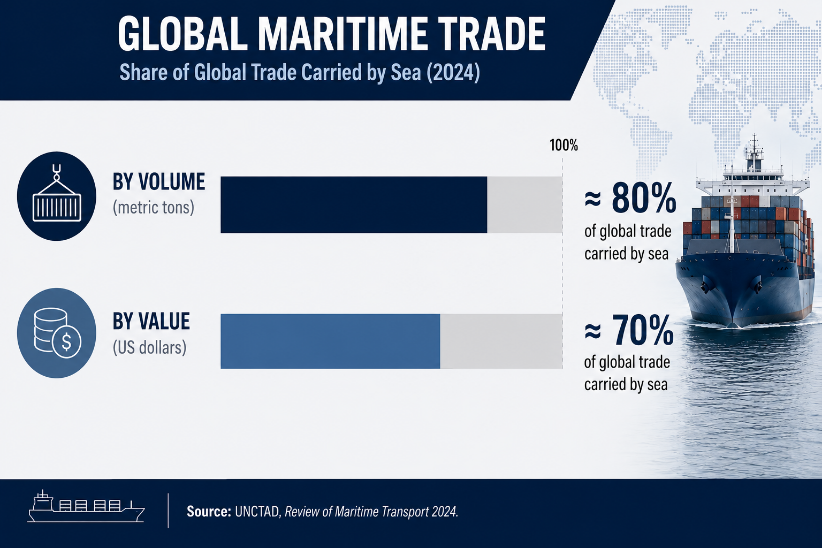
The economic implications are equally significant. With approximately 80 percent of global trade by volume and more than 70 percent by value transported by sea (Fig. 1), any disruption — or even an increase in perceived risk — at a strategic maritime chokepoint can generate economic consequences far beyond the area directly affected by the mine threat. Given the deep interdependence of modern economies, such effects can rapidly propagate through global supply chains, energy markets, and financial systems.3
The Strait of Hormuz provides the most significant example. The recent crisis has shown how the mere perception of possible interdiction — even in the absence of confirmed mining — can increase war-risk premiums, raise shipping costs, and discourage commercial operators. Paradoxically, a Sea Line of Communication (SLOC) may therefore remain militarily passable while simultaneously becoming economically interdicted.
From this perspective, the effective opening of a strait depends not only on the ability to prevail militarily, but also on the risk assessments made by ship-owners, insurers, and markets, as LtCol James Jackson recently observed in an article.4
Uncertainty itself can thus become an instrument of strategic coercion.
It follows that neutralizing the threat is not sufficient; an adequate level of assurance must also be re-established in order to restore confidence in commercial navigation.
Accordingly, in post-conflict mine-clearance operations — usually conducted by multinational coalitions — it is crucial to maintain a credible and deployable MCM capability able to operate effectively in conflict-affected theatres. This is a key factor in restoring the confidence of ship-owners, insurers, and markets in the shortest possible time.
The Role of Naval Mines in Recent Middle Eastern and Russo-Ukrainian Conflicts
Recent conflicts, particularly those still ongoing, have underscored the critical role of naval mines not only in denying maritime space to naval forces, but also in shaping broader geo-economic balances. Beyond Hormuz, naval mines — though their role has received comparatively less attention — have also featured prominently in the Russo-Ukrainian conflict, initially as a means of deterring amphibious operations and constraining the freedom of maneuver of Russian naval forces. They have likewise been employed off Yemen’s Red Sea coast during the conflict between the Houthis and the Saudi-led coalition. In the latter case, also generated significant collateral economic effects by disrupting fishing activity, one of the principal sources of livelihood for coastal communities.
The Strait of Hormuz: From the Tanker War to Maritime Coercion in the Age of A2/AD Strategies
The Strait of Hormuz remains one of the clearest illustrations of the enduring strategic relevance of mine warfare in the twenty-first century. Its importance lies in the convergence of three structural factors: the concentration of global energy flows, the severe constraints imposed on naval maneuver by its confined geography, and the vulnerability of a Sea Line of Communication (SLOC) that is vital to the functioning of the global economy.
On average, between 20 and 25 percent of global oil trade transits Hormuz, together with a significant share of liquefied natural gas (LNG) exports, making the Strait one of the world’s principal maritime chokepoints. In a global environment shaped by high energy dependence and deeply interconnected supply chains, any disruption to freedom of navigation through this critical maritime corridor can rapidly reverberate across financial markets, energy prices, and the wider international economic system.5
The vulnerability of the Strait had already been starkly demonstrated during the Tanker War (1984–1988), when Iranian mining of key shipping routes prompted the United States to undertake Operation Earnest Will to escort commercial traffic and, later, Operation Praying Mantis in response to Iranian actions. The severe damage suffered by the frigate USS Samuel B. Roberts in April 1988 further underscored the vulnerability of even modern combatants to the mine threat.
The contemporary scenario, however, is considerably more complex. The threat no longer stems solely from the potential laying of minefields, but from the integration of mine warfare into a broader strategy of maritime coercion and Anti-Access/Area Denial (A2/AD). Naval mines, anti-ship missiles, unmanned systems, electronic-warfare capabilities, and persistent surveillance increasingly operate as mutually reinforcing elements of an integrated denial architecture, creating a highly contested and operationally demanding maritime environment.
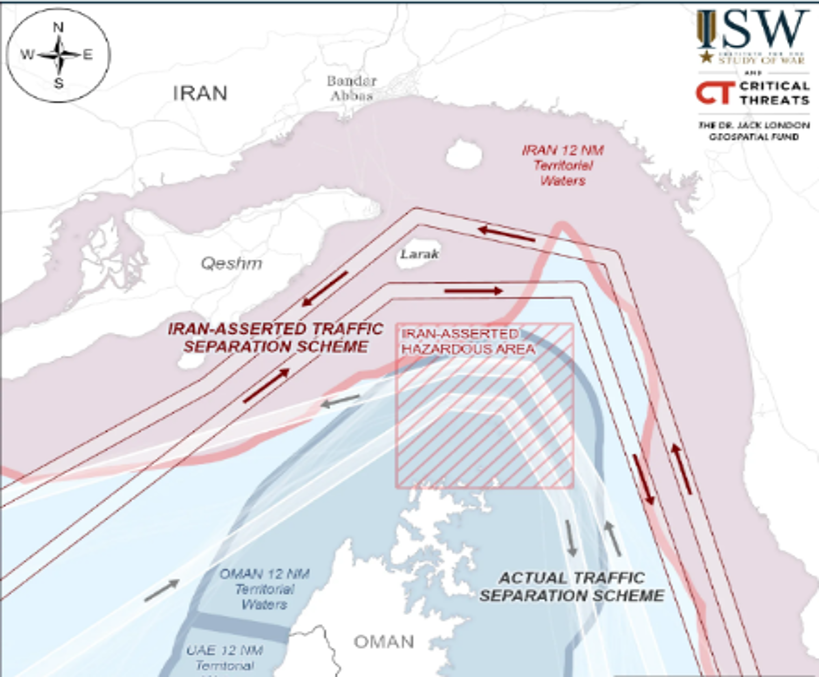
Iran’s recent declaration of an extensive Hazardous Area in the Strait of Hormuz (Fig. 2) has, in practice, expanded its effective area of operational control well beyond the internationally recognized Traffic Separation Scheme. While the measure does not amount to a legally recognized interdiction of navigation, it has increased uncertainty for commercial shipping and strengthened Iran’s politico-strategic leverage. In this context, the mine threat acquires an additional coercive dimension: the burden shifts to the adversary to demonstrate the absence of the threat.
This situation highlights the growing tension between the principle of freedom of navigation and unilateral measures adopted by coastal states on national-security grounds. It creates an environment in which the boundaries between military threat, navigational control, and economic coercion become increasingly blurred, thereby reinforcing the strategic importance of naval presence and persistent maritime surveillance.
In summary, the Strait of Hormuz epitomizes the dynamics of modern maritime competition. It demonstrates that, in the age of Artificial Intelligence and autonomous systems, MCM capabilities are no longer merely tactical enablers of naval operations, but an integral component of maritime deterrence and collective security. From a strategic perspective, maintaining a credible, technologically advanced, and rapidly deployable Mine Countermeasures Force is therefore essential—not only to preserve naval freedom of maneuver, but also to safeguard global supply chains, energy security, and international economic stability.
The Black Sea: Naval Mines as an Instrument of Defense
Russia’s 2022 invasion of Ukraine demonstrated that, even in a high-intensity conventional conflict dominated by hypersonic weapons, autonomous systems, and Artificial Intelligence, traditional capabilities such as naval mines can retain substantial strategic relevance. Minefields constrained the freedom of maneuver of Russian naval forces and subsequently affected commercial traffic to and from Ukrainian ports. Although mine warfare remained largely below the threshold of public attention, overshadowed by land, air, and wider maritime operations, the mine threat nevertheless generated significant military, economic, and political effects.6 Before the war, Ukraine was among the world’s leading agricultural exporters and, according to FAO and UNCTAD data, played a major role in global wheat, corn, and sunflower-oil markets, particularly for countries in the Middle East and North Africa.7
Faced with the prospect of a Russian amphibious operation along the coastline between Crimea and the Danube Delta, Ukraine appears to have adopted a protective mining strategy, focusing primarily on the approaches to its major ports and on coastal sectors suitable for amphibious landings. Russian forces, in turn, reportedly conducted exploratory minesweeping operations off Odesa, likely to assess the presence and extent of Ukrainian minefields and support potential amphibious planning.8 Once the mine threat had been established, Russian naval forces progressively increased their stand-off distance from the coast, effectively reducing the feasibility of any large-scale amphibious operation.
The subsequent drifting of moored contact mines, which caused limited damage to merchant shipping, nevertheless generated a sufficient perception of risk to disrupt commercial navigation and contribute to higher maritime insurance costs.9
The Black Sea case therefore confirms the enduring force-equalizing effect of naval mines: even relatively simple or legacy weapons can impose significant operational constraints on a technologically superior naval force.
The Red Sea: The Houthis and Naval Mines
The Houthi case provides a particularly significant example of how a non-state actor can develop a sea-denial capability capable of generating operational and strategic effects disproportionate to the resources employed. During the Yemeni civil war and the prolonged confrontation with the Saudi-led coalition10, and later throughout the Red Sea crisis following the Israel-Hamas conflict, the Houthis progressively integrated naval mines into a broader arsenal of anti-ship missiles, aerial drones, and unmanned surface systems, thereby developing an increasingly diversified maritime-denial capability.11
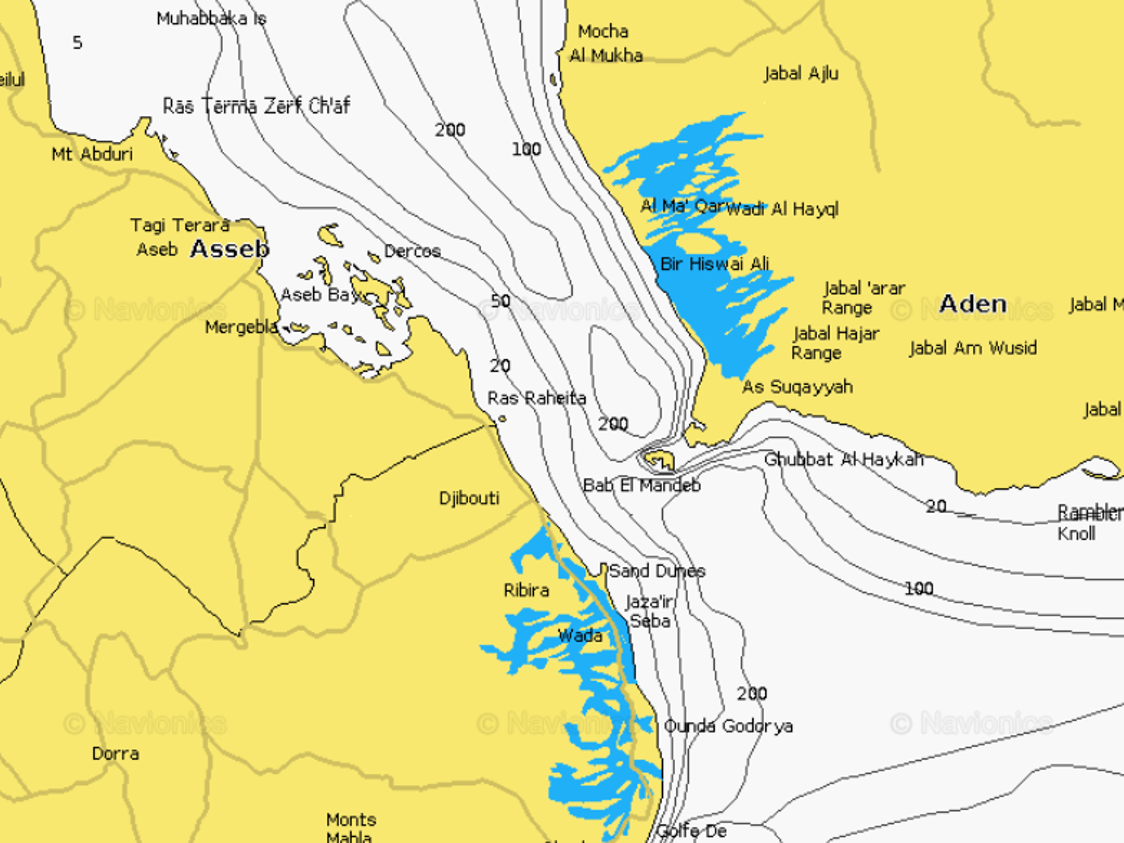
The strategic significance of the Houthi case is amplified by the geography of Bab el-Mandeb — Arabic for “Gate of Tears” (Fig. 3). Perim Island (aka Mayyun), divides the strait into two channels: the deeper Dact el-Mayun, used by larger commercial vessels, and the narrower, shallower Bab Iskander. In the Bab Iskander Channel and adjacent coastal waters, Houthi mining activity has caused serious disruption, including significant damage to the predominantly fishing-based economy of Yemen’s western Red Sea coast.
By contrast, covert mine-laying in the deeper and more heavily trafficked Dact el-Mayun would present a considerably more demanding operational challenge. Although external support, potentially involving Iranian Gadir – or Nahang- class midget submarines, cannot be entirely ruled out in such a scenario, the Houthis have so far appeared to favor other asymmetric options in this area, including underwater unmanned systems and sabotage against submarine fiber-optic communications cables which provide intercontinental digital connectivity between Europe, the Middle East, Africa, and Asia.12
The broader mine threat nonetheless remains significant. Soviet and Iranian-derived naval mines supplied to the Houthis, combined with the indigenous production capability developed over time, have compelled Saudi Arabia to field an MCM capability commensurate with the threat. The risks are not confined to naval operations: MASAM, the Saudi humanitarian land mine-clearance project in Yemen, has on several occasions also been required to deal with naval ordnance that broke free from its moorings and washed ashore.13
A common feature of recent conflicts involving major powers — including Ukraine and the Strait of Hormuz — is that, even when opposing mine stockpiles were struck and mine-laying platforms neutralized, Mine Countermeasures assets remained essential to determine whether minefields had been laid and to assess their extent. In the Black Sea, the Russian Navy conducted exploratory minesweeping operations, while in the Strait of Hormuz the US Navy employed unmanned systems to assess the credibility of Iranian claims, pending the possible conduct of a broader post-conflict mine-clearance effort by an international coalition.
Across the three cases examined — the Strait of Hormuz, the Black Sea, and the Red Sea — a consistent strategic pattern emerges: regardless of the geopolitical context, the naval mine remains a force multiplier for the actor that employs it and a cost multiplier for the actor required to counter it. In the age of Artificial Intelligence and autonomous systems, therefore, the relevance of a credible Mine Countermeasures Force does not diminish; rather, it increases. At the same time, Emerging and Disruptive Technologies (EDTs) are progressively transforming MCM itself, enhancing its effectiveness, stand-off capability, operational reach, and survivability.
The International Legal Framework
The 1907 Hague Convention VIII, which remains the principal legal reference governing naval mine warfare, establishes the obligation to remove mines following the cessation of hostilities. This principle was applied on a particularly extensive scale in the aftermath of the Second World War, when major post-conflict mine-clearance campaigns highlighted the requirement to maintain a Mine Countermeasures (MCM) Force commensurate with the scale and complexity of the task. Today, the San Remo Manual, reflecting both technological developments and the evolution of international law, provides widely recognised interpretations of the Convention and further reinforces this principle by advocating coordination among States and alliances in the conduct of mine-clearance operations aimed at restoring freedom of navigation. It follows that the availability of an effective MCM capability remains a critical enabling factor in contributing to the restoration of safe and unrestricted navigation. It is therefore no coincidence that this recommendation has informed the numerous post-conflict mine-clearance operations conducted by multinational coalitions, whose participating nations have contributed their own assets to establish dedicated MCM forces.
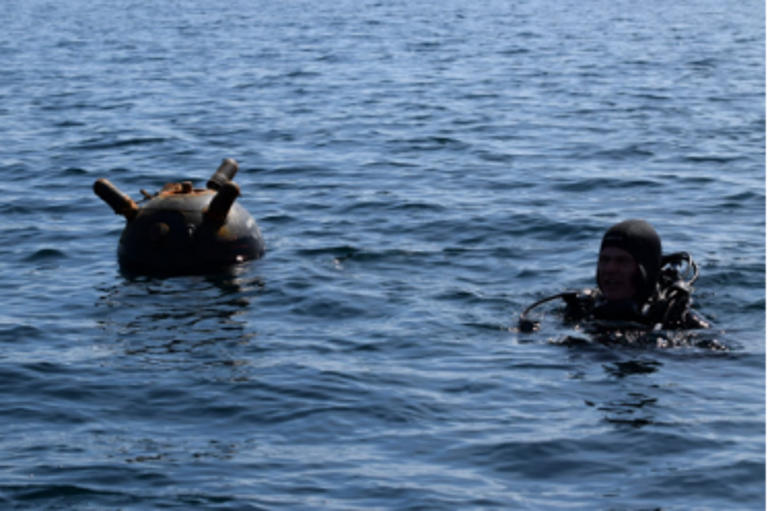
Moreover, following the reported breakaway of Ukrainian mines from their moorings on 18 March 2023, the resulting loss of control over previously laid weapons — an issue addressed by a further principle of the Convention and subsequently invoked by the Russian Federation — provided an additional illustration of the requirement for adequate MCM assets to safeguard neutral shipping and protect littoral States not party to the conflict (Fig. 4).14
Artificial Intelligence and the Transformation of Mine Countermeasures
Modern Navies cannot dispense with an effective Mine Countermeasures Force, and the broader shift toward unmanned systems and Artificial Intelligence is transforming MCM as well. In minehunting, the main areas of development include Automatic Target Recognition, multisensor fusion, autonomous mission planning, adaptive AUV behavior, predictive analysis, and collaborative employment of uncrewed systems.
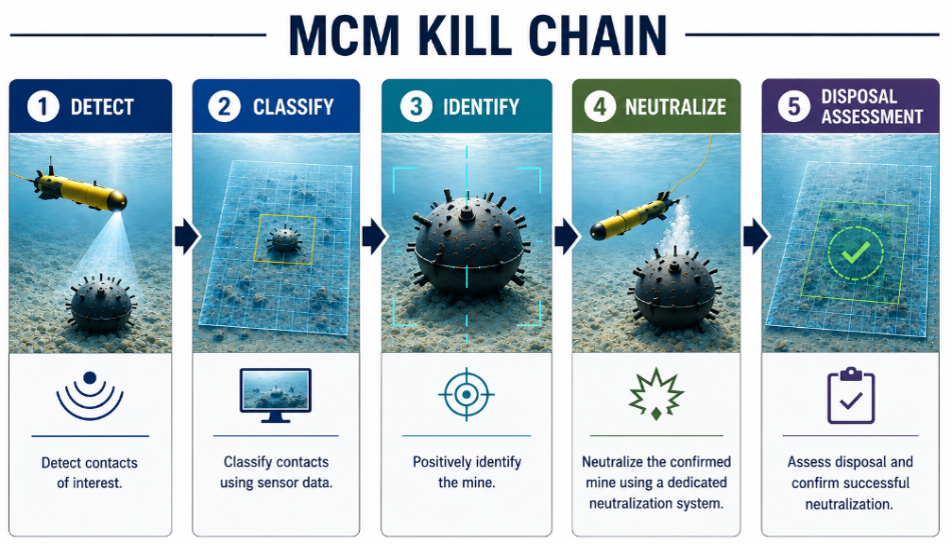
However, while the high degree of autonomy enabled by Artificial Intelligence can significantly reduce personnel exposure to risk, a widely shared view among analysts and subject-matter experts is that current technology does not yet provide the reliability, completeness, and decision confidence required to execute the entire MCM kill chain — detect, classify, identify, neutralize — and the subsequent disposal assessment, whose purpose is to confirm that the threat has been effectively removed and that navigation can safely resume (Fig. 5).
As A. Perry, a well-known sector analyst, has highlighted, the risk inherent in digital transformation is to confuse the ability to collect information with the ability to complete the entire operational chain effectively.15
From this perspective, the transformation of the US Navy’s MCM capabilities provides an emblematic case study.
The Littoral Combat Ship Mine Countermeasures Mission Package was intended to support a transition toward a more distributed, stand-off, and highly automated model consistent with the concept of Man Out of the Minefield. Experience, however, demonstrated that replacing a mature specialist capability requires longer technology-maturation and integration timelines than originally anticipated. Delays in the development of uncrewed systems and difficulties in integrating individual components highlighted the risk of creating a capability gap during the transition from legacy to future systems.
The lesson is straightforward: autonomy should complement specialist MCM capability before it can progressively replace selected functions within it.
Likewise, the ability to embark autonomous MCM systems on larger, non-specialist combatants — thereby avoiding the cost and complexity of dedicated hull characteristics — does not in itself transform those platforms into minehunters.
For this reason, a broadly shared view among analysts and subject-matter experts is that only a gradual and capability-driven transition can allow Emerging and Disruptive Technologies (EDTs) to mature toward the eventual objective of highly autonomous — and ultimately fully autonomous — MCM systems without compromising operational effectiveness during the transformation..
Conclusions
The Persian Gulf, Black Sea, and Red Sea all confirm that naval mines remain capable of generating military, economic, and political effects far disproportionate to their cost. A credible, reliable, balanced, and threat-proportionate MCM Force is therefore not a residual capability, but a critical enabler of Assured Access and, more broadly, of maritime power.
In the age of Artificial Intelligence, modern Navies do not need Mine Countermeasures less; they need them differently. The future MCM Force will increasingly take the form of a distributed, collaborative System of Systems, integrating crewed platforms, autonomous systems, advanced sensors, and AI-enabled decision-support tools to ensure continuity, reliability, and sufficient decision confidence across the entire MCM kill chain.
As Navies transition from the ‘conventional’ to the ‘autonomous,’ states have launched modernization programs reflecting different levels of ambition.
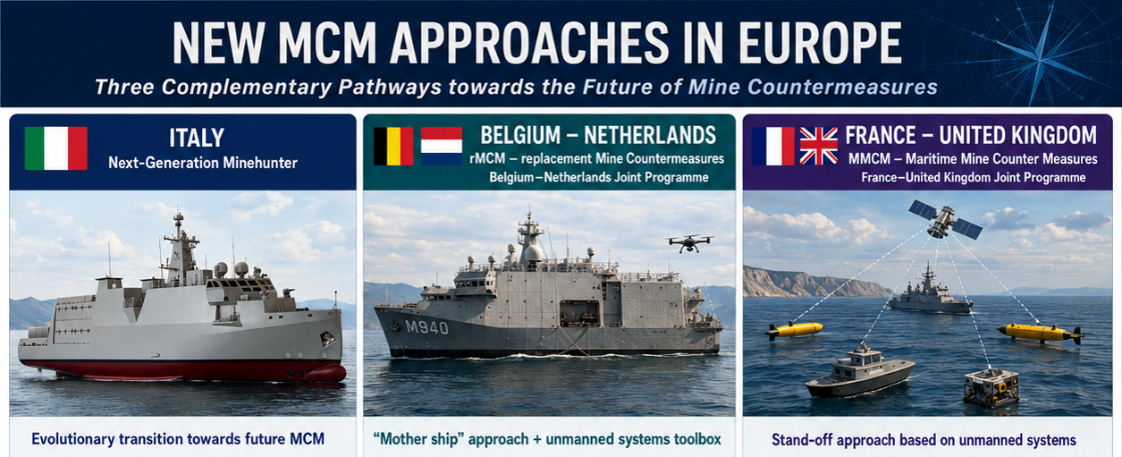
It is no coincidence that European MCM modernization reflects a common imperative for transformation, although pursued through different solutions (Fig. 6). The Belgian-Dutch replacement Mine Counter Measures (rMCM) program is built around a purpose-designed, steel-hulled MCM mothership equipped with mine avoidance sonar and conceived to deploy an extensive toolbox of unmanned systems into the area of operations. These systems are intended to conduct MCM tasks autonomously, while the mothership coordinates their employment from outside the minefield.
The Franco-British Maritime Mine Counter Measures (MMCM) cooperation program follows a broadly similar operational concept, but relies on a different stand-off MCM toolbox. These systems can be supported by an Offshore Support Vessel (OSV) or a Bâtiment de Guerre des Mines (BGDM) and, in the longer term, may also be controlled from a shore-based Command-and-Control Centre.16
The Italian Navy has adopted a more measured approach to the transition toward future MCM. Its solution retains a purpose-built minehunter featuring a non-magnetic Glass-Reinforced Plastic (GRP) hull, high shock resistance, and a dedicated mine-detection and classification sonar. While designed to integrate autonomous systems, the platform retains the ability, when operational circumstances demand, to enter the minefield and complete the MCM kill chain directly.
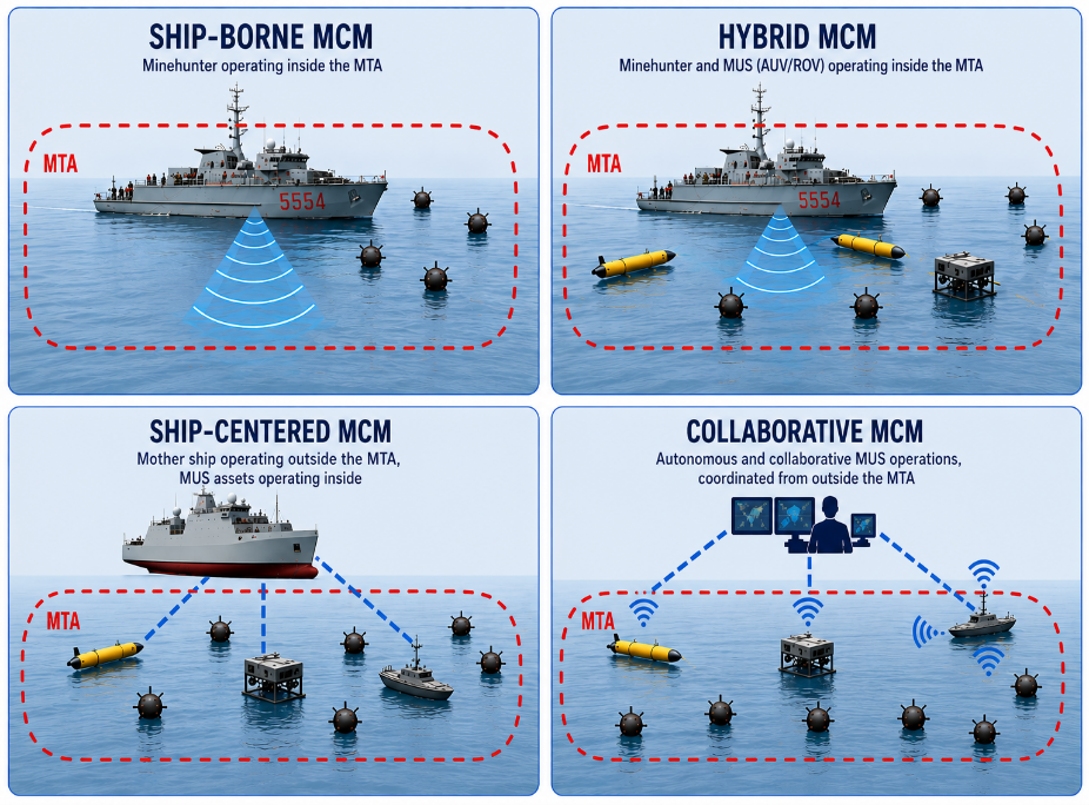
This approach provides a bridge from the current ship-borne/hybrid model toward collaborative MCM, with the ship-centred concept serving as an intermediate step (Fig. 7). By preserving a specialist platform throughout the transition, it reduces the risk of capability gaps while allowing emerging technologies to mature to the level required across the full range of operational conditions.
Taken together, these models — along with those being pursued by other navies — indicate that the future of MCM will be increasingly characterized by the integration of crewed platforms, autonomous systems, and distributed capabilities. This technological evolution, however, should not obscure another essential operational requirement: the ability to deploy and sustain MCM forces beyond national waters when states are called upon to safeguard the shared interest of freedom of navigation.
This requires platforms with sufficient range, endurance, speed, and seaworthiness to support timely redeployment to distant theatres without excessive reliance on prolonged forward positioning, which can become operationally inefficient and logistically demanding. In the twenty-first century, naval superiority will depend not only on the ability to strike an adversary, but also on the ability to keep the sea open.
Massimo Vianello is a retired Italian Navy Admiral who graduated from the Italian Naval Academy. Specializing in underwater weaponry and Mine Countermeasures (MCM), he has commanded coastal minehunters, a frigate, and the sailing vessel Amerigo Vespucci. His extensive operational experience spans critical theaters, from the First Persian Gulf War and Operation Allied Force to Operation Mare Nostrum. As a former Commander of both the Mine Countermeasures Forces and the 29th Naval Task Group, Admiral Vianello now leverages his expertise as an Analyst for the Center for Geopolitical and Strategic Maritime Studies (CESMAR), where he serves as a leading subject matter expert on sub-surface warfare and undersea security.
Giovanni Giorguli is a retired Italian Navy Master Chief Petty Officer and an Autonomous Underwater Vehicles (AUVs) pioneer with almost 40 years of expertise in Mine Countermeasures and underwater technology. He is a veteran of international operations such as those in the Persian Gulf, Operation Allied Force, various NATO missions, and the 2022 FIFA World Cup security framework in Qatar. Throughout his career, he served as a key instructor and searider, shaping Italy’s national underwater tactics and doctrine. A Knight of the Order of Merit of the Italian Republic, he has authored and contributed to publications on Seabed Warfare and subsea infrastructure protection. He is currently an analyst at the Center for Geopolitical and Strategic Maritime Studies (CESMAR).
References
1. Till, G., “Seapower: A Guide for the Twenty-First Century”, Routledge, 2018.
2. San Remo Manual on International Law Applicable to Armed Conflicts at Sea, 1994.
3. UNCTAD, Review of Maritime Transport, 2024.
4. LtCol James Jackson, “The Price of Doubt: Sea Control in the Strait of Hormuz” CIMSEC, 22 June 2026.
5. U.S. Energy Information Administration (EIA), World Oil Transit Chokepoints, 2024.
6. Tayfun Ozberk, “Is there a serious sea mine Threat in the Black Sea?”, Naval News, 27 March 2022.
7. TG COM 24, “Draghi: due settimane per sminare porti o sarà una catastrofe”, 16 June 2024.
8. H.I. Sutton, “Russian Navy landing ships seem approaching Ukrainian coast near Odessa”, Naval News, 15 March 2022.
9. Charlie Dunlap – Raoul P. Pedrozo, “Dangerous waters: use of naval mines in the Russia – Ukraine conflict”, Duke University School of Law, 15 Juane 2022.
10. ISPI (Istituto per gli Studi di Politica Internazionale), “Houthi: chi sono e cosa vogliono i miliziani dello Yemen”, ISPI,15 Juanuary 2024.
11. A. Mucedola, “A clear and present danger: le mine degli Houthi, la morte galleggiante”, Difesa on line, 28 December 2024.
12. S,Biagio; “Danni ai cavi sottomarini nel Mar Rosso, Si teme un attacco degli Houthi”; Il sole 24 ore, 27 Febbrary 2024;
13. Denise Morenghi; “Lo Stretto di Bab El Mandeb tra tensioni geopolitiche e nuove minacce securitarie”, CESI (Centro Studi Internazionali), 19 July 2020;
14. On 18 March 2022, the Novorossiysk coastal station issued Notice to Mariners No. 116, warning of the potential danger posed by drifting mines in the western Black Sea following reports that a storm had caused Ukrainian moored mines to break free. The notice identified the approaches to Odesa, Ochakiv, Chornomorsk, and Yuzhny as potentially affected, referred to an estimated 420 mines, and identified the devices as YAM- and YARM-type moored contact mines.
15. Perry, A., “The MCM Kill Chain: Are we deluding ourselves?”, 2023.
16. Naval News Staff, “Belgian, Dutch and French ink agreement to adjust MCM vessel to French needs”, Naval News, 28 February 2025.
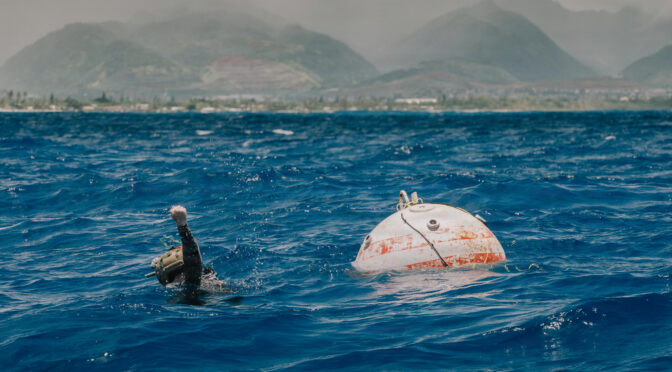
Featured image: A U.S. Navy explosive ordnance disposal technician assigned to Explosive Ordnance Disposal Mobile Unit 11 conducts mine countermeasures training during Exercise Rim of the Pacific 2026 off the coast of Oahu, Hawaii, July 2, 2026. (U.S. Navy Photograph by Mass Communication Specialist 2nd Class Nicholas Russell)
Discover more from Center for International Maritime Security
Subscribe to get the latest posts sent to your email.