
By Admiral Massimo Vianello (Ret.) and Master Chief Petty Officer Giovanni Giorguli (Ret.)
The conflict between Iran and the Israel-United States alliance confirms that conventional armed forces must currently confront asymmetric threats that subvert the logic of traditional power projection. In the maritime domain, naval mines, sabotage, and unmanned systems (UAVs, USVs, and UUVs) offer a highly favorable cost-benefit ratio for the weaker actor: low-cost attritable swarms can saturate adversary defenses, effectively neutralizing the overall technological gap.
These threats, once categorized as one-off tactics employed in isolation, are now weighted by indigenous industrial capacities and employed at scale by Iran and its proxy networks. They are systematically integrated with cyber operations and strategic disinformation campaigns designed to destabilize financial markets, energy security, and global communication architectures.
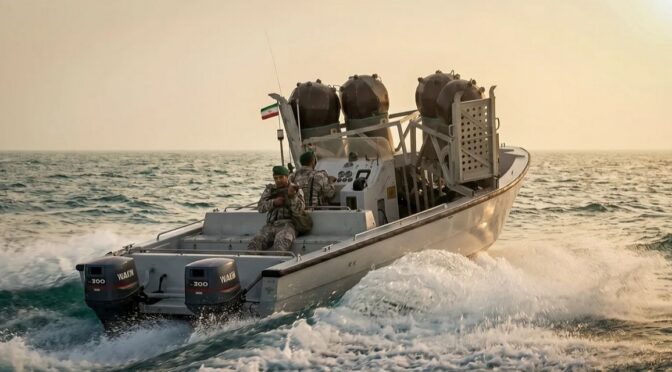
In the Middle Eastern theater, Iran exercises strategic control over the Strait of Hormuz through the employment of Unmanned Aerial Vehicles (UAVs), sea mines, coastal defense cruise missiles (CDCMs), and Fast Inshore Attack Craft (FIAC), deliberately avoiding a conventional naval engagement that would result in its defeat. The global economic fallout – reduced energy availability, supply chain disruption, and the escalation of insurance premiums and fuel costs – generates political instability and constrains international relations. When such a posture is sustained by great powers, it can be maintained over the long term, as demonstrated in the Ukrainian theater where Western-funded mines, drones, and missiles have effectively contained the Russian navy’s operational freedom.
The shifting paradigm of maritime engagement in the Middle Eastern theater, specifically within the Strait of Hormuz, underscores a transition from traditional naval confrontation to a sophisticated asymmetric and multi-domain posture. This analysis examines the Iranian threat profile, characterized by the integration of Anti-Access/Area Denial (A2/AD) strategies, and highlights the critical role of naval mining and the proliferation of unmanned systems. Furthermore, this article explores the emergence of seabed warfare as a critical operational domain, highlighting the vulnerability of Critical Undersea Infrastructure (CUI) and the necessity for persistent Seabed-to-Space Situational Awareness (S3A). By evaluating the integration of Emerging Disruptive Technologies (EDTs) and artificial intelligence driven autonomous systems, this paper argues for a balanced, gradual evolution toward autonomous systems, while addressing the operational, legal, and ethical challenges posed by the robotization of the maritime battlespace.
The Profile of the Iranian Threat
Following the 1979 Islamic Revolution, Iran adopted a posture of radical ideological and strategic hostility toward Israel, severing all diplomatic ties. Refusing to recognize the Jewish state, Tehran has employed rhetoric calling for its destruction and has long conducted a proxy war against Israel through a network of militarily and financially supported affiliates (Hezbollah, Hamas, and the Houthis). Tehran pursues a nuclear program, which Israel perceives as an existential threat. Furthermore, Iran views the United States as a threat to its sovereign survival. Consequently, Iran has consistently prioritized the development of A2/AD capabilities. This strategy encompasses not only the nuclear sector but also strategic missile deterrence and non-conventional capabilities, including the subsurface domain.
Specifically, drawing from the operational lessons of the Tanker War and Operation Desert Storm, the Islamic Revolutionary Guard Corps Navy (IRGCN) assigns a pivotal role to naval mines for the strategic control of the Strait of Hormuz and the Persian Gulf. Sophisticated mining techniques result from exercises focused on pre-planned measures to blockade or interdict maritime traffic using indigenous and Russian-derived moored and bottom mines, as well as Chinese-manufactured self-propelled mines. While Iran’s primary maritime area of interest is the Strait of Hormuz, its regional interests are projected elsewhere via support for terrorist factions, such as the Houthi operations in the Red Sea.1
Iran has developed a subsurface component based on small, heavily armed platforms capable of executing asymmetric and saturation tactics, which can be suitable for seabed warfare operations.
The underwater order of battle (ORBAT) includes three 1990s-era Kilo I class submarines, one Fateh class coastal submarine, and between 14 and 17 midget submarines (one Nahang class and approximately 16 North Korean/indigenous Ghadir class). These are augmented by locally produced Swimmer Delivery Vehicles (SDVs) of the Al-Sabehat and Ghavasi types for Special Operations Forces (SOF) tasks.2,3 Recently, the inventory has expanded to include the Nazir-1 Extra Large Unmanned Underwater Vehicle (XLUUV) and weaponized UUVs (small-scale, long-range slow torpedoes).4,5
While the opacity of the maritime environment provides opportunities for covert subsurface operations – ranging from SOF insertion to mine-laying via surface units and midget craft – the overall underwater component also appears to maintain credible anti-ship capabilities (ASuW).
Countering Asymmetric Threats
The IRGCN and the Islamic Republic of Iran Navy (IRIN, or NEDAJA) function as two distinct naval entities, operating across different geographical Areas of Interest (AOIs) and employing divergent tactical doctrines. The former, an integral branch of the Revolutionary Guard, holds primary responsibility for asymmetric defense within the Persian Gulf and the Strait of Hormuz. The latter is focused on the protection of long-range maritime interests, blue-water patrolling, and counter-piracy operations.
Given that the IRIN’s surface combatant capability was effectively neutralized following engagements with U.S. forces, Iran’s national defense now rests fundamentally upon coastal missile batteries and the IRGCN. Consequently, it is characterized by a pronounced asymmetric posture that currently maintains a degree of containment against American military superiority.
Naval Mines
Although it is estimated that only a limited number of devices have been deployed in Hormuz to date, Iran possesses a substantial inventory of underwater ordnance (ranging between 2,000 and 6,000 units), consisting of indigenous designs and Russian or Chinese-derived systems. Therefore, the mine threat in the Strait of Hormuz must be assessed as substantial. Furthermore, it cannot be ruled out that Iran might resort to protective mining of its territorial waters, utilizing influence mines such as the MAHAM 7 (a mine that strikingly similar to the Italian Manta) and MAHAM 5, as well as contact mines like the Sadaf 01 – specifically in the approaches to Kharg Island and Bandar Abbas – to deter amphibious landings.
Additionally, the IRGCN’s asymmetric doctrine suggests the potential for Special Forces/combat diver attacks against naval units in port or at anchor, utilizing MAHAM 4-type timed limpet mines.
Under these operational conditions, Counter-Mine (CM) strategies must be conducted through preliminary left-of-launch strikes against storage depots and minelaying platforms – a tactic employed by both the USN and the Russian Federation in the Ukrainian conflict – followed by MCM (Mine Countermeasures) operations against deployed ordnance. In this latter phase, while Unmanned Underwater Vehicles (UUVs) provide significant utility for Search, Detection, and Classification (SDC), international subject matter experts maintain that effective Mine Warfare (MW) still requires specialized platforms capable of operating in high-risk contested environments where minefield boundaries remain ill-defined. This requirement is underscored by the fact that, despite the loss of primary minelaying vessels to U.S. strikes, Iran retains the capacity to seed or refresh minefields using small, fast-attack craft or Craft of Opportunity (COOP) operated by the Pasdaran.
It is therefore critical that MCM vessels are either deployable alongside the main fleet or pre-positioned in contested chokepoints. Given the persistent asymmetric threat, traditional clearance operations should ideally be reserved for the post-conflict phase to reopen commercial Sea Lines of Communication (SLOCs). During active hostilities, UUVs should be utilized for contingency interventions or risk reduction within temporary break-in channels to facilitate power projection ashore, should conditions permit.
The Houthi movement also possesses a significant naval mine arsenal. However, due to bathymetric constraints, these are primarily deployable along the Yemeni littoral to counter Saudi Coalition forces, rather than for the strategic interdiction of the Bab El Mandeb – a task for which they employ other asymmetric vectors in synergy with Iran.
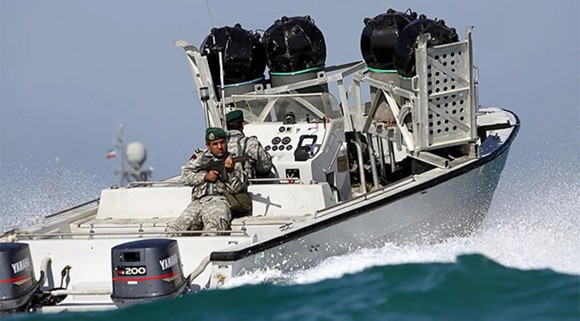
In a broader sense, the deployment of naval mines generates a psychological impact that analysts have cogently summarized: “The mined area does not have to be everywhere, to be everywhere in the minds of those who must transit it…” implying that even a negligible number of mines can precipitate complex, high-intensity crisis scenarios.6
Unmanned Systems: The Proliferation of Multi-Domain Robotic Warfare
The proliferation of unmanned systems has cross-sectionally impacted all warfare domains – land, air, and sea. The operational effectiveness demonstrated by Ukrainian maritime drone strikes against Russian Federation naval units, both in ports of origin and on the high seas, serves as a definitive case study of the evolving nature of naval engagement.
In the underwater dimension, despite persistent challenges related to acoustic propagation for communications, unmanned platforms are driving significant shifts in tactical procedures and are increasingly integrated with traditional naval assets.
Beyond the extensive use of Unmanned Aerial Vehicles (UAVs) for ISR (Intelligence, Surveillance, and Reconnaissance) and risk-mitigation for personnel, these platforms are now being effectively deployed as offensive vectors. This is further evidenced by the emergence of Unmanned Combat Underwater Vehicles (UCUVs), reportedly integrated into the inventories of the Al-Qassam brigades and Houthi militants.
To counter aerial threats, Counter-Unmanned Aircraft Systems (C-UAS) have rapidly evolved ranging from soft kill solutions (electronic jamming, spoofing, and hijacking) to hard kill capabilities. These range from interceptor drones equipped with net-capture to High Energy Laser (HEL) systems, kinetic effectors, and High Power Microwave (HPM) systems. The latter utilize high-intensity electromagnetic pulses to irreparably damage a platform’s electronic circuitry, resulting in immediate loss of control and neutralization.
Furthermore, the implementation of Remote ID regulations in the civil sector provides a framework that may enhance military tracking and identification Friend-or-Foe (IFF) protocols.
Regarding underwater threats, electronic countermeasures such as the Mobile Jammer Target Emulator (MJTE) are under development to counter UCUV attacks, while several nations have initiated regulatory frameworks for the governance and management of underwater battlespace.
A critical requirement remains the enhancement of capabilities to counter swarms of low-cost unmanned vehicles operating in a coordinated manner, which can saturate or severely degrade traditional defensive layers. In this context, HPM systems – which require only electrical power and offer continuous duty cycles without cooling – induced downtime – appear to be the most viable long-term solution for swarm interdiction, where conventional kinetic or laser engagement is often too slow or cost-prohibitive.
Moreover, Chinese research suggests that even fiber-optic guided drones – which have proven resilient to traditional Electronic Warfare (EW) in the Ukrainian theater – would likely succumb to high-power microwave pulses.
Attacks on Critical Undersea Infrastructure (CUI)
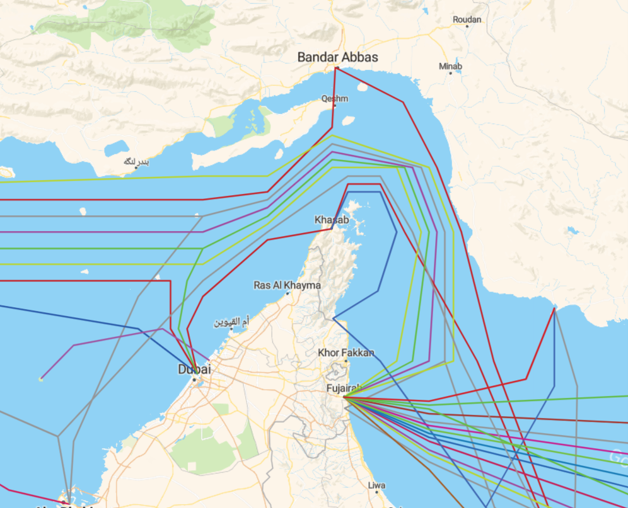
Strategic submarine fiber-optic cables traverse both the Strait of Hormuz and the Bab El Mandeb, where they are highly vulnerable to proxy-led interdiction – either via the accidental dragging of anchors by seemingly innocuous vessels or through deliberate underwater sabotage, similar to the Nord Stream gas pipeline kinetic strikes in the Baltic Sea.
This evolving threat landscape is driving the emergence of a new operational doctrine known as Seabed Warfare, central to this doctrine is the persistent maintenance of Seabed-to-Space Situational Awareness (S3A). This framework is designed to detect anomalous behavior, triggering subsequent inspection and exploration of the seabed where Critical Undersea Infrastructure (CUI) is located, primarily through the deployment of UUVs to mitigate threats or assess damage.
This new warfare paradigm requires the seamless integration of all assets operating within the underwater battlespace, traditionally involving Anti-Submarine Warfare (ASW), MW, and diving operations.
However, deploying unmanned systems in the subsurface dimension entails greater technical challenges than surface operations, primarily due to acoustic propagation constraints which limit communication bandwidth and range. This has spurred intensive Research and Development (R&D) efforts, often in synergy with civilian research centers, to enhance the mission endurance and operational autonomy of underwater drones across vast CUI networks.
Consequently, it is crucial to consolidate capabilities in automated underwater docking stations (for power recharging and mission data transfer), underwater mesh networks (Internet of Underwater Things – IoUT), and Machine Learning (ML) algorithms. By providing unmanned platforms with increased autonomous decision-making capacity, these technologies compensate for the inherent sub-surface communication latency.
Simultaneously, seafloor sensor arrays and the dual-use of fiber-optic cables via Distributed Acoustic Sensing (DAS) technology are becoming essential for the detection and tracking of sub-surface threat vectors.
In summary, while there is an urgent requirement to counter threats that interdict commercial transit through maritime chokepoints and disrupt hydrocarbon flows, there is an equally pressing need to protect both the sub-sea cables – which serve as the backbone of global economic interconnectivity –and the physical sub-surface infrastructure for energy transfer, such as gas and oil pipelines.
Conclusion
As noted by prominent geopolitical analysts Dario Fabbri, the geostrategic postulate remains more valid than ever:
“He who commands the sea possesses a distinct advantage, both offensively and defensively. He commands communication lines that require neither creation nor maintenance, can evade inland-originated aggression, establish the primary defensive perimeter within the depths, deprive adversaries of logistics, and lead the international system by regulating the flow of global commerce.”7
Contemporary maritime dominance mandates that great powers exercise effective thalassocracy: controlling strategic chokepoints, ensuring Freedom of Navigation (FONOPs), and maintaining indispensability to allied networks. For the United States, restoring secure transit through the Strait of Hormuz is not merely an energy security concern, but a strategic imperative to maintain hegemony over global markets before the rapidly expanding People’s Liberation Army Navy (PLAN) occupies the resulting power vacuums. While great powers pursue these objectives through complex and diversified carrier strike groups and fleet architectures, regional actors such as Iran pursue them via asymmetric warfare. This demonstrates that the technological gap can be mitigated through the integrated employment of naval mines, unmanned systems, coastal defense missiles, and FIAC (Fast Inshore Attack Craft) swarms.
In this landscape, the persistent availability of ISR-T (Intelligence, Surveillance, Reconnaissance, and Targeting) capabilities – encapsulated in the S3A framework – and the rigorous monitoring of pattern of life” constitute the essential prerequisites for modern maritime operations. The Hormuz theater has specifically underscored the necessity for robust MCM capabilities capable of executing the full MCM kill chain – detect, classify, identify, and neutralize – integrated with sub-surface surveillance arrays and fiber-optic technologies such as Distributed Acoustic Sensing (DAS). The multi-layered threat environment – comprising mines, missiles, UAVs/USVs, and fast-attack craft – demands a sophisticated multi-threat response capability and increasingly seamless interoperability with the civilian infrastructures managing sub-sea communications.
The prevailing trend toward casualty cross-reduction is accelerating the deployment of robotic and autonomous systems (RAS). The operational success already demonstrated by surface and underwater drones across multiple conflict theaters provides an unequivocal signal regarding the future trajectory of naval combat. However, overly ambitious transitions from conventional to fully autonomous architectures may prove counterproductive: unmanned systems possess tangible vulnerabilities – such as entanglement nets, floating cables, and physical hostile seizure – and face significant operational constraints in harsh sea state conditions. Consequently, a phased approach to remote integration is required, validated through realistic operational exercises such as those conducted by NATO, which embed military subject matter experts alongside industrial technicians in high-fidelity field conditions.
The consolidation of emerging and disruptive technologies – artificial intelligence, big data analytics, and quantum computing – will finalize this transformation, enabling levels of automation capable of autonomously managing system responses and asset coordination. This process necessitates a parallel evolution of international law – ranging from UNCLOS to international humanitarian law – to define the legal status of unmanned platforms and address the inevitable ethical dilemmas posed by lethal autonomous weapons systems capable of kinetic engagement without direct human intervention.
Massimo Vianello is a retired Italian Navy Admiral who graduated from the Italian Naval Academy. Specializing in underwater weaponry and Mine Countermeasures (MCM), he has commanded coastal minehunters, a frigate, and the sailing vessel Amerigo Vespucci. His extensive operational experience spans critical theaters, from the First Persian Gulf War and Operation Allied Force to Operation Mare Nostrum. As a former Commander of both the Mine Countermeasures Forces and the 29th Naval Task Group, Admiral Vianello now leverages his expertise as an Analyst for the Center for Geopolitical and Strategic Maritime Studies (CESMAR), where he serves as a leading subject matter expert on sub-surface warfare and undersea security.
Giovanni Giorguli is a retired Italian Navy Master Chief Petty Officer and an Autonomous Underwater Vehicles (AUVs) pioneer with almost 40 years of expertise in Mine Countermeasures and underwater technology. He is a veteran of international operations such as those in the Persian Gulf, Operation Allied Force, various NATO missions, and the 2022 FIFA World Cup security framework in Qatar. Throughout his career, he served as a key instructor and searider, shaping Italy’s national underwater tactics and doctrine. A Knight of the Order of Merit of the Italian Republic, he has authored and contributed to publications on Seabed Warfare and subsea infrastructure protection. He is currently an analyst at the Center for Geopolitical and Strategic Maritime Studies (CESMAR).
The opinions expressed are those of the authors and do not reflect the views or policy of any organization with which they are affiliated. No organizational endorsement is implied or intended.
References
1. Various Authors, “Visione Strategica dell’Underwater warfare”, Rome, Italian Navy General Staff, 2019. https://www.aljazeera.com/economy/2026/4/13/what-do-we-know-about-sea-mines-in-and-around-the-strait-of-hormuz.
2. H I Sutton, “Iranian submarine forces”, Covert Shores, 16 May 2019.
3. H I Sutton, “Demystified new low profile Iranian SDV”, Covert Shores, 10 May 2015.
4. H I Sutton, “Iranian Nazir-1 XLUUV submarine drone”, Covert Shores, 11 July 2020.
5. H I Sutton, “New Iranian weaponized underwater drone”, Covert Shores, 16 March 2022.
6. Mohammad Mansour, “What do we know about sea mines in and around the Strait of Hormuz?”, Al Jazeera, 13 April 2026, https://www.aljazeera.com/economy/2026/4/13/what-do-we-know-about-sea-mines-in-and-around-the-strait-of-hormuz.
7. Dario Fabbri, “Geopolitica umana”, Milan, Edizioni Gribaudo, 2024.
Featured image: An IRGCN fast patrol boat with naval mines. (Courtesy of Tasnim News Agency)
Discover more from Center for International Maritime Security
Subscribe to get the latest posts sent to your email.