
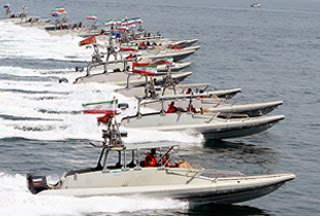
This week Foreign Policy posted a new article by Navy Postgraduate School professor John Arquilla, in which he discusses the how “swarm” tactics employed by the Russians caused the failure of Napoleon’s 1812 invasion.
Arquilla is a prolific author who regularly writes about swarms and “net-centric” operations. In the above piece he cites successful maritime employment of swarm tactics such as German submarine “wolf-packs” in the Second World War and the Sri Lankan Navy’s fight against maritime elements of the Liberation Tigers of Tamil Eelam (LTTE, or “Tamil Tigers”) earlier this decade.
It is unclear how Arquilla’s example of the Russian defeat of Napoleon is applicable to a broad range of operations at sea, however. When swarms are discussed in terms of maritime operations, it is generally in the context of an asymmetric fight within a constrained body of water, such as Iranian plans to use swarms of small boats or the Chinese Type 22 Houbei fast attack craft. Napoleon’s Grand Armee was vulnerable to Russian swarm attacks on the march back from Moscow because of its extended supply lines. In contrast, one of the primary advantages of sea power is that it provides the space for strategic maneuver and the ability to avoid such exposure to swarms. Swarms and Anti-Access/Area Denial (A2AD) weapons and tactics could still threaten naval forces within specific areas in which the ability to maneuver is restricted, or are within the range of weapons on land, but they do not take away one of the main advantages of sea power, the ability for a state to choose where to best deploy its forces.
Lieutenant Commander Mark Munson is a Naval Intelligence Officer and currently serves on the OPNAV staff. He has previously served at Naval Special Warfare Group FOUR, the Office of Naval Intelligence and onboard USS ESSEX (LHD 2). The views expressed are solely those of the author and do not reflect the official viewpoints or policies of the Department of Defense or the U.S. Government.